All images courtesy of LIMBO ACCRA
In 1995, the French anthropologist Marc Augé developed the neologistic notion of non-place: a transitional space devoid of any entrenched territorial, relational or historical significance. If Augé’s concept refers to spaces deemed societally neutral and transitory, such as hotels or motorways, it concedes that such impartiality is not hardwired and can be swayed by the zephyr of human footprint – much like capital itself, architectural anonymity persists, but migrates.
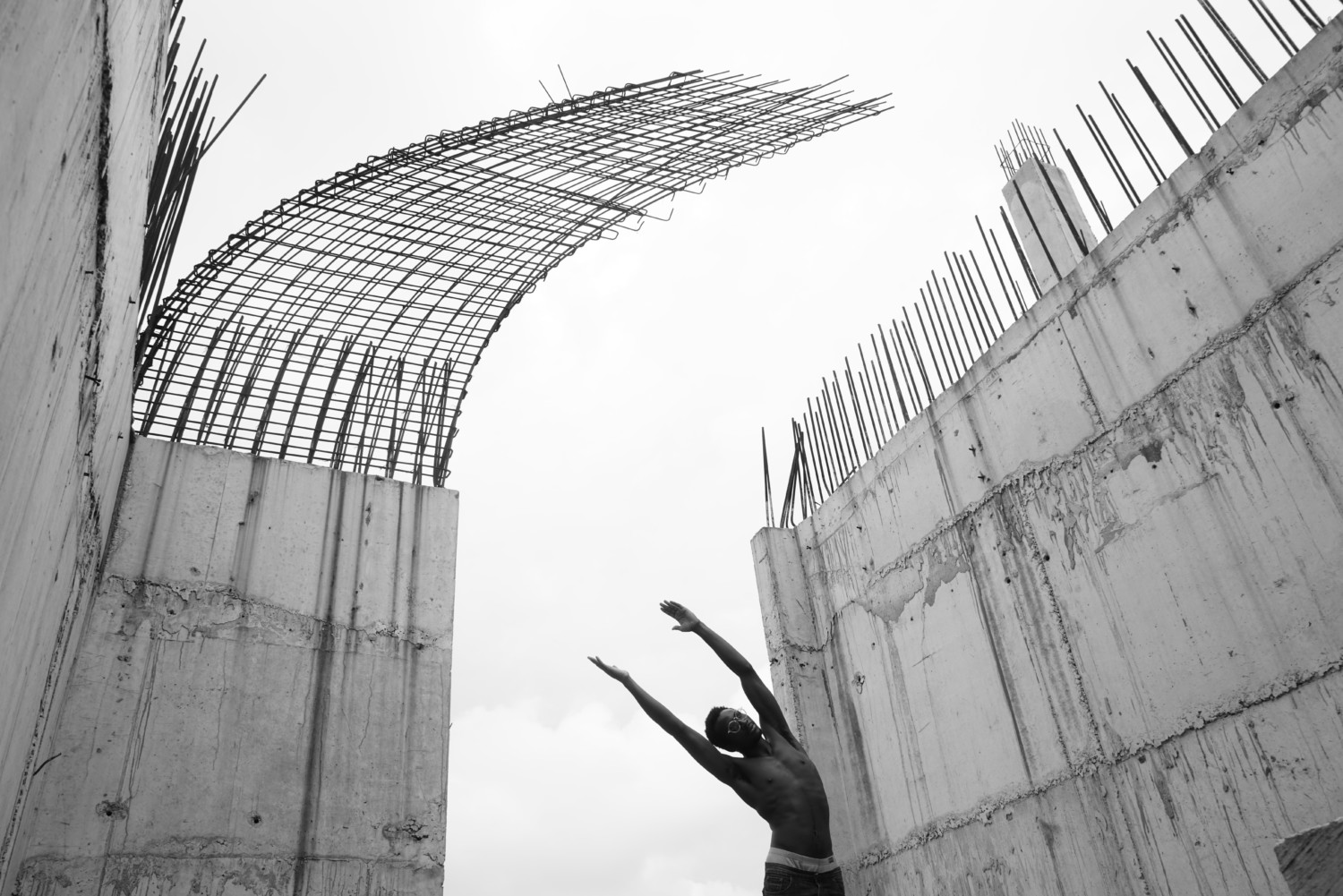
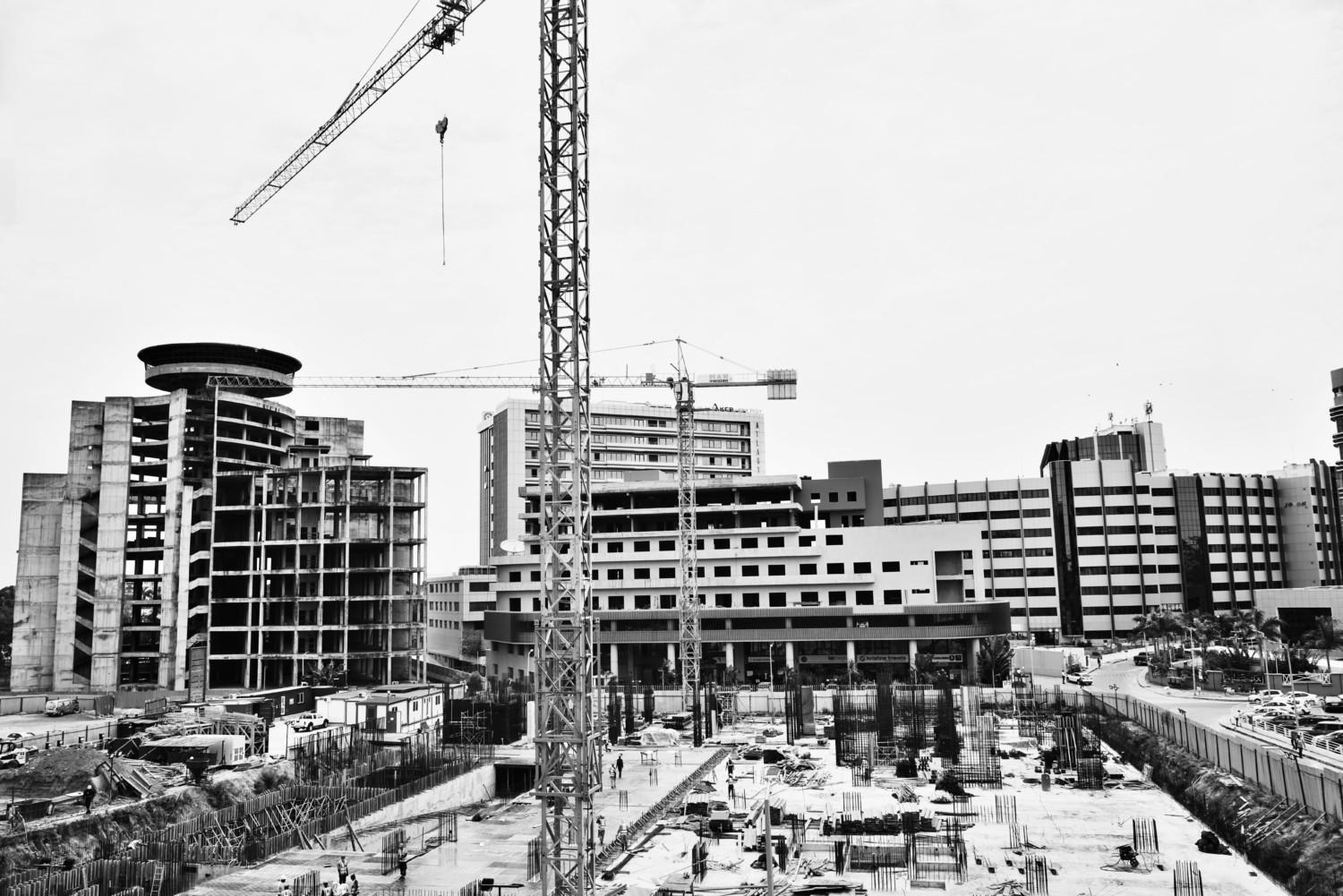
What happens when the irresistibly potent current of accelerated modernisation — supermodernity, in Augé’s words — reconfigures the entire urban fabric of a city, a country, a continent? This question provides the theoretical skeleton upon which Limbo Accra, a global spatial art platform rooted in the architectural development of the West African city of its name, have built their practice; an artistic reflection on the anthropological weight and unexplored potential of limbo spaces, carried out by way of dynamic public art installations showcasing prominent and emerging figures that run the gamut of the contemporary African art discourse. The experimental spatial design platform founded by artists Dominique Petit-Frère and Emil Grip was a direct response to the high rates of urban modernisation undergone by West African Metropolises in recent decades, leaving cityscapes brimming with skeletal structures caught between past and future. With a new exhibition currently on view at Berlin’s Haus der Statistik in partnership with THX AGAIN, we took the opportunity to observe the transcontinental parallels between the role and use of spectral concrete structures – from Ghana to Germany.
Your work has been featured in galleries, and is often showcased in exhibitions. In the era where Forensic Architecture or Lawrence Abu Hamdan, whose work is mostly investigative, are Turner Prize contenders how would you situate your practice as a collective: is it closer to art, curation, architecture, or urban research?
The spatial practice of LIMBO ACCRA lies at the intersection of art, architectural play and urban research. LIMBO was founded in 2018 as a response to the urban and spatial challenges the city of Accra is experiencing and has been for the past 50 years and more. By engaging with the metamorphosis of Accra, we work to amplify the personal and collective experience in this complex urban space, through imagining hybrid social spaces of cultivating a communal atmosphere that priorities creativity and citizen engagement.
Are those differences or categorisations still relevant today?
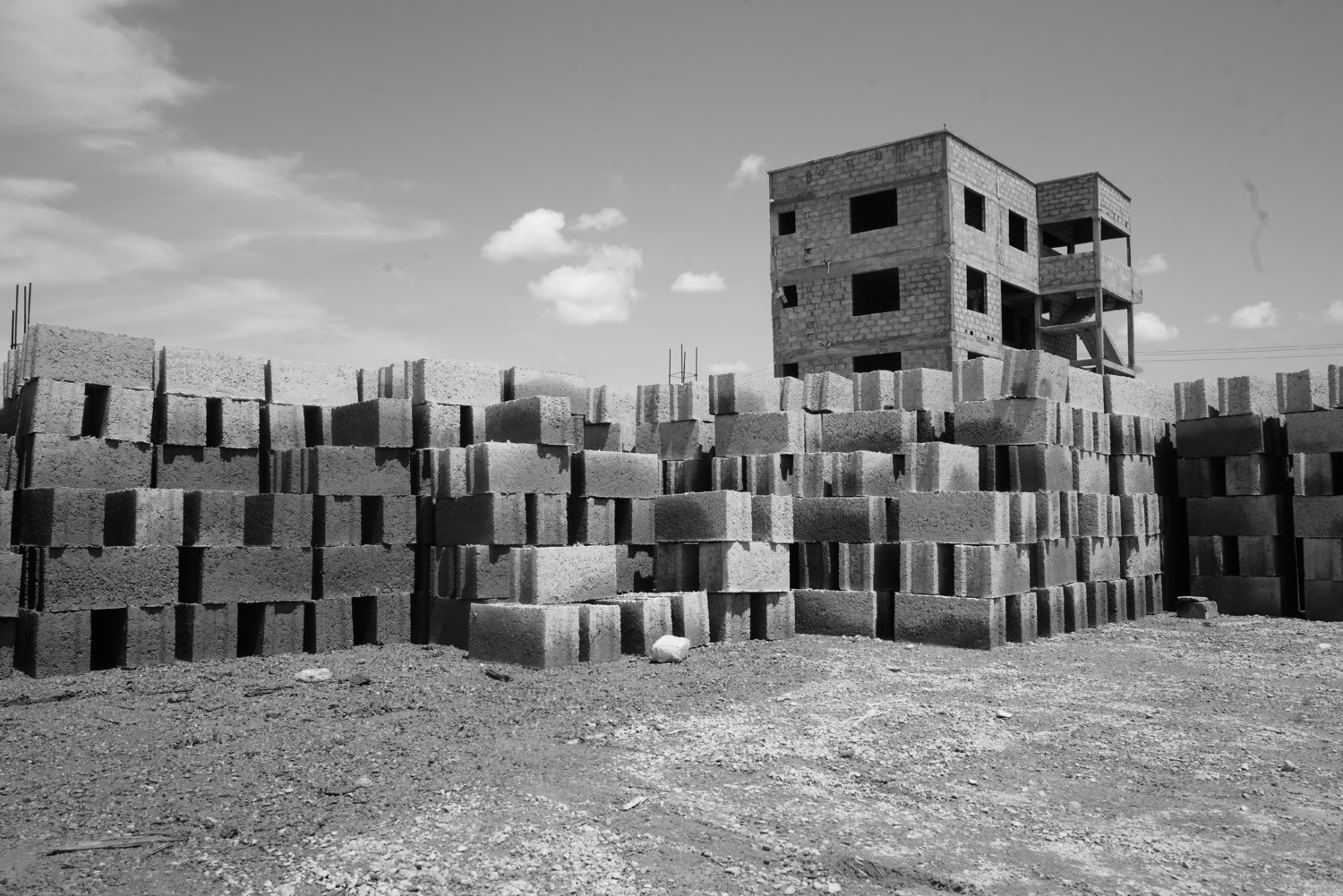
Completely. We find the categorisation of the three principles of art, architectural play and urban research integral especially in the context of an emerging city like Accra which has undergone tremendous change in little time. The city is home to more than four million people and in the built environment, 30% of initiated building projects end up incomplete. With this increase we find it inspiring, and feel as though there are new opportunities for the creative youth and architects in Accra to play with and design for a new spatial reality outside of the modernist schemes that are operating through evictions and unrestrained gentrification.
The work of Limbo Accra primarily focuses on the liminal, or transitional “concrete skeletons” resulting from accelerated urban modernisation and uneven flow of capital across the African continent. With your current exhibition taking place in Berlin — a city having had its own history with concrete skeletons — why did you feel the German capital was a good place to showcase your work?
As we know, many urban spaces around the world are caught in a state of limbo. While buildings in West Africa are yet to be finished, existing structures across Europe are waiting to be modernised and/or repurposed. In 2006, a cooperation of partners from both civil society and public administration collectively joined forces to reclaim and regenerate the carcass of a former GDR building Haus der Statistik into a space for work and communal living. For us at LIMBO, this was the perfect location to host a bi-continental dialogue of “Space” and turn the conversation upside down by exhibiting our goals of sustainable, community-led spatial design in brutal concrete structures in West Africa.
What parallels have you noticed between the politics of vacant spaces in Accra and Berlin — for instance, African hyper-modernisation and European gentrification?
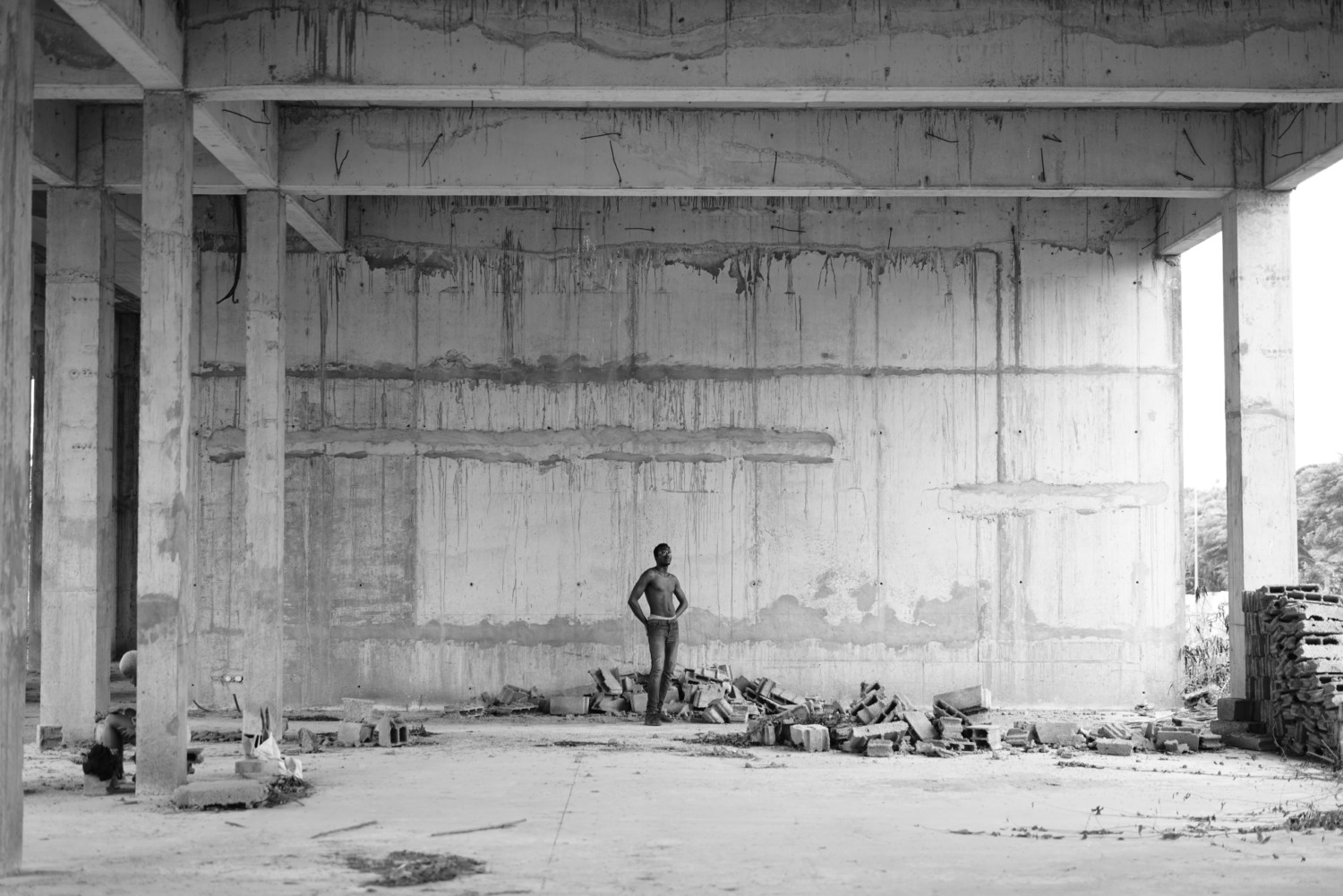
In a Berlin context, most “concrete skeletons” have already served their initial purpose. Haus der Statistik for example was built and utilised as a governmental office for decades, but was afterwards abandoned and left in limbo. In West Africa and Accra specifically, these concrete structures that we occupy had never got to the stage of fulfilling its purpose, simply because they were never completed. One can therefore say that the meaning and purpose of the concrete limbo structures in Accra were never really manifested, and their signal to society is an even more brutal example of capitalism in an urban setting. For us, that was the base for how the intervention in Berlin came to be. As spatial practitioners working in the urban limbo, we feel as though theres a global and shared responsibility with every new directive to readjust, realign and reconfigure the way in which we navigate and occupy a city through these structures.
I’m interested in how you perceive the role of artists in these liminal spatial politics, and how capitalism and the artistic community intersect — are artists anti-capitalist allies of the urban limbo, or are they its unsuspected enemy? I’m referring mostly to the contradictory roles artists have had, historically, within the urban space.
We can only speak of the artists we engage with in Ghana and so for the first activation in Accra, we invited nine Ghanaian artists who we felt aligned with our vision of creating a new spatial reality for alternative art production. At the very core of LIMBO, we wanted to make sure that our framework within this space is accessible and inviting of collaborations to champion the creative potentials of our time. One of the artists we chose to work with is Serge Attukwei Clottey who curated a 360° open studio exhibition in the indigenous settlement of Labadi displaying the influence of his work in everyday life through large scale installations. We also collaborated with Patrick Tagoe-Turkson, an artist who manipulates and reconstructs recycled sandals into installation tapestries. Exhibiting their respective work in LIMBO demonstrated our collective interest in taking artistic engagement outside of the gallery and outside of the designated geographic limits of the city’s affluence and into a space where our artistic interaction with the city and one another is accessible to all.
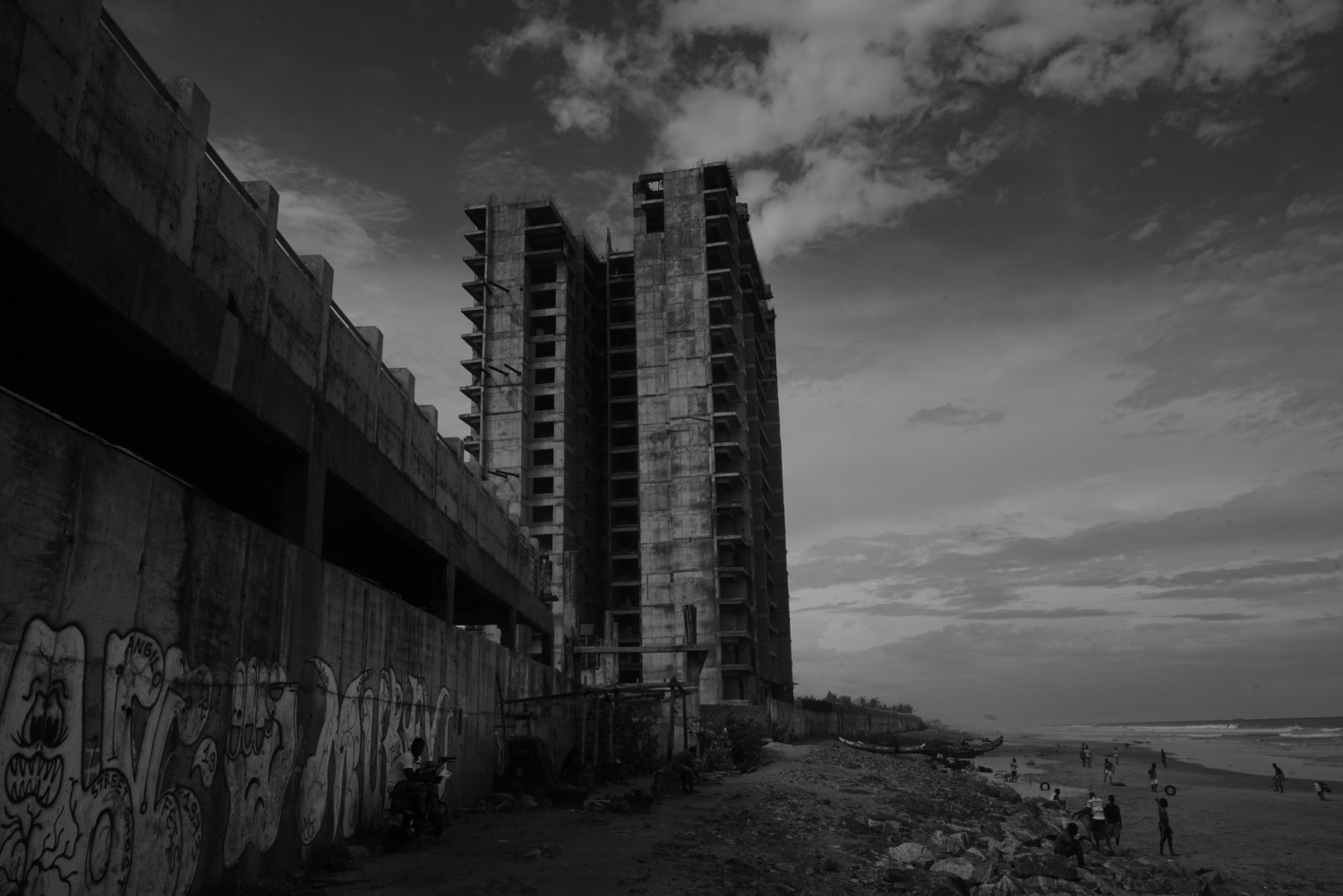
The meaning and purpose of the concrete limbo structures in Accra were never really manifested, and their signal to society is an even more brutal example of capitalism in an urban setting.
How did you select the artists taking part in the Berlin exhibition, and what draws you to specific practices ?
To add to our previous response, the selection of Ghanaian-based artist for our current show were also apart of the very first LIMBO activation in 2018. The names of the artist are: David Alabo, Elihu Ashong, Nana Osei Kwadwao, Ofoe Amegavie, Owusu-Ankomah, Patrick Tagoe-Turkson, Serge Attukwei Clottey, Sierra Nallo.
In addition to these 8, we also wanted to amplify our mission of increasing a global awareness towards West Africa’s spatial environs and help establish a trans-continental dialogue of space and responsibility. We invited artist Laila Hida and Simohammed Fettaka who also explored the regenerative power or reclaiming incomplete architecture in their home city Marrakech. The title of their installation is called Haram: The Sound of Concrete. At our exhibition in Berlin, it was beautiful to see the symbiosis of our individual practice from two completely different countries on the African continent translated into the carcass of a reclaimed concrete structure in Berlin.
Do you consider yourselves Beuysians in your understanding of the role and need for accessibility of contemporary art practices?
In our work we have not been familiar with Joseph Beuys, but his concept of Social Sculpture as a transformer for societal change seems similar to LIMBO’s practice.
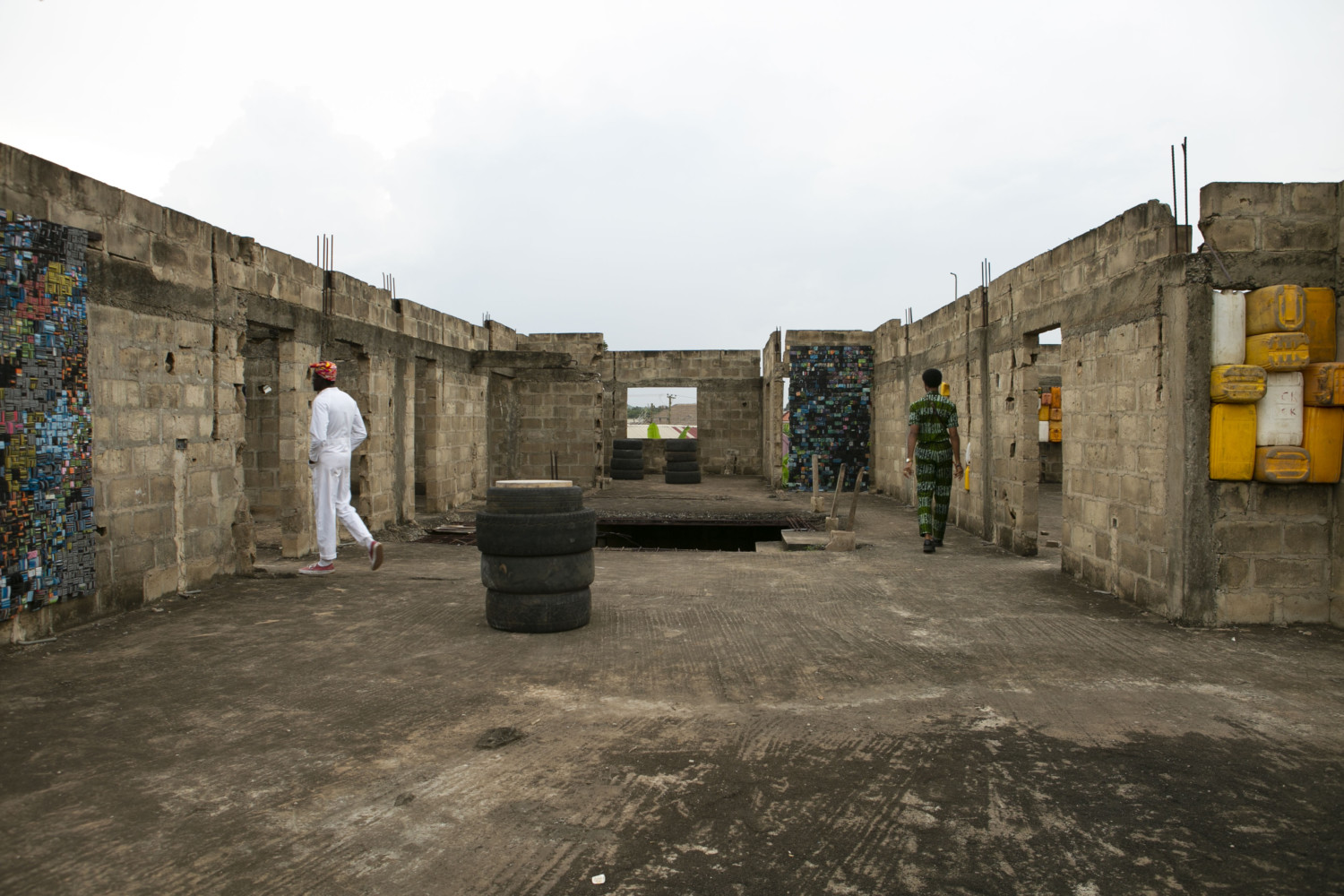
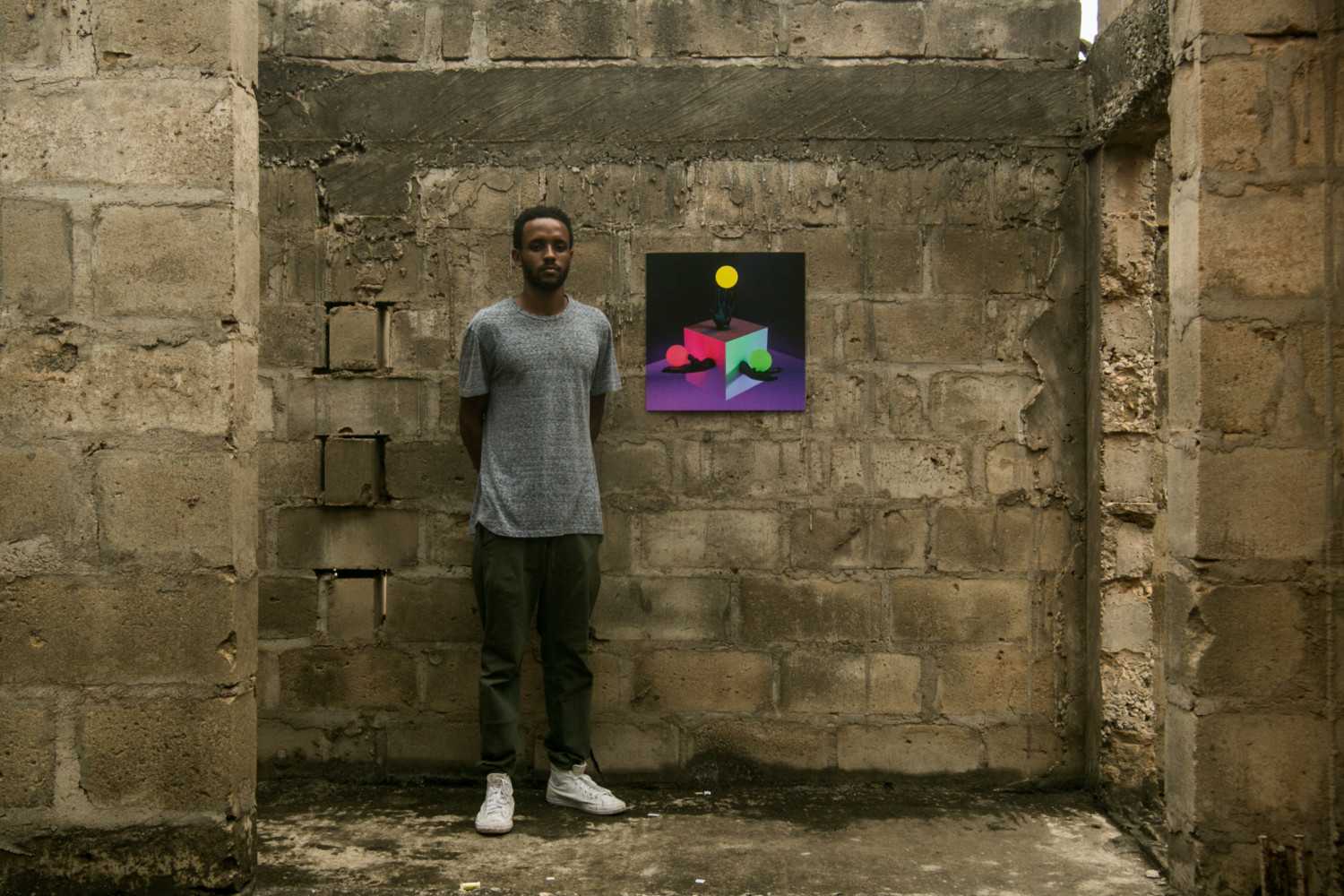
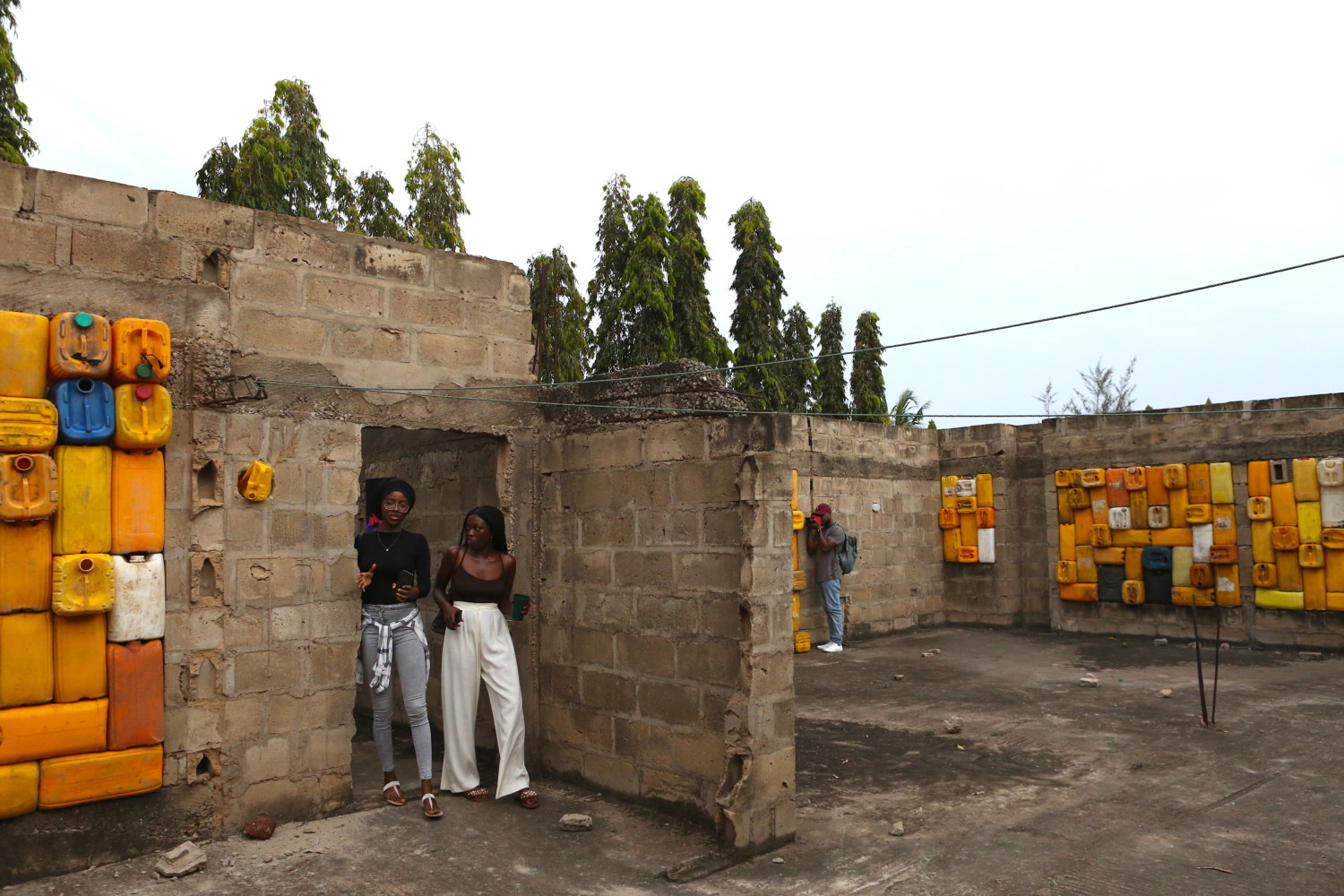
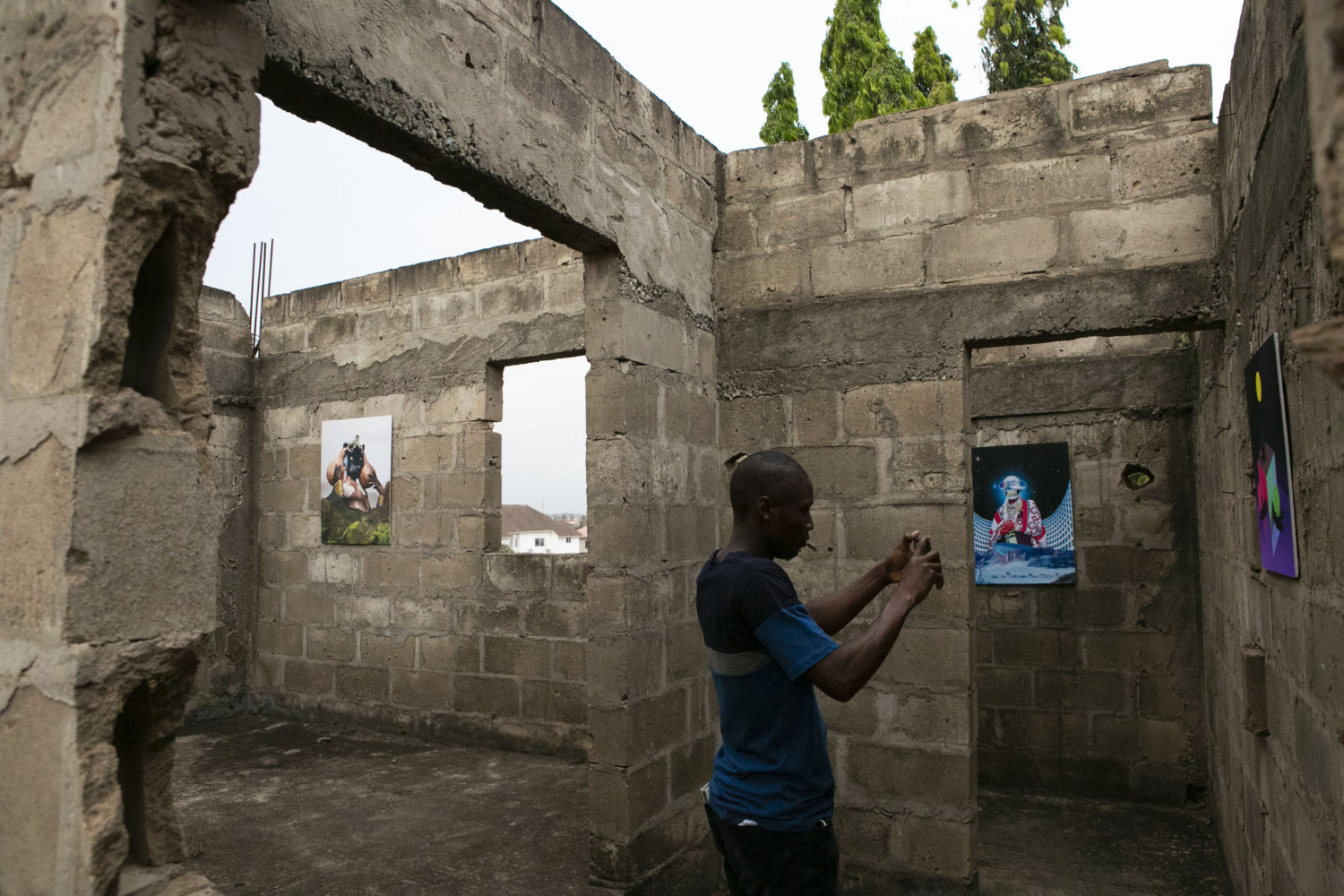
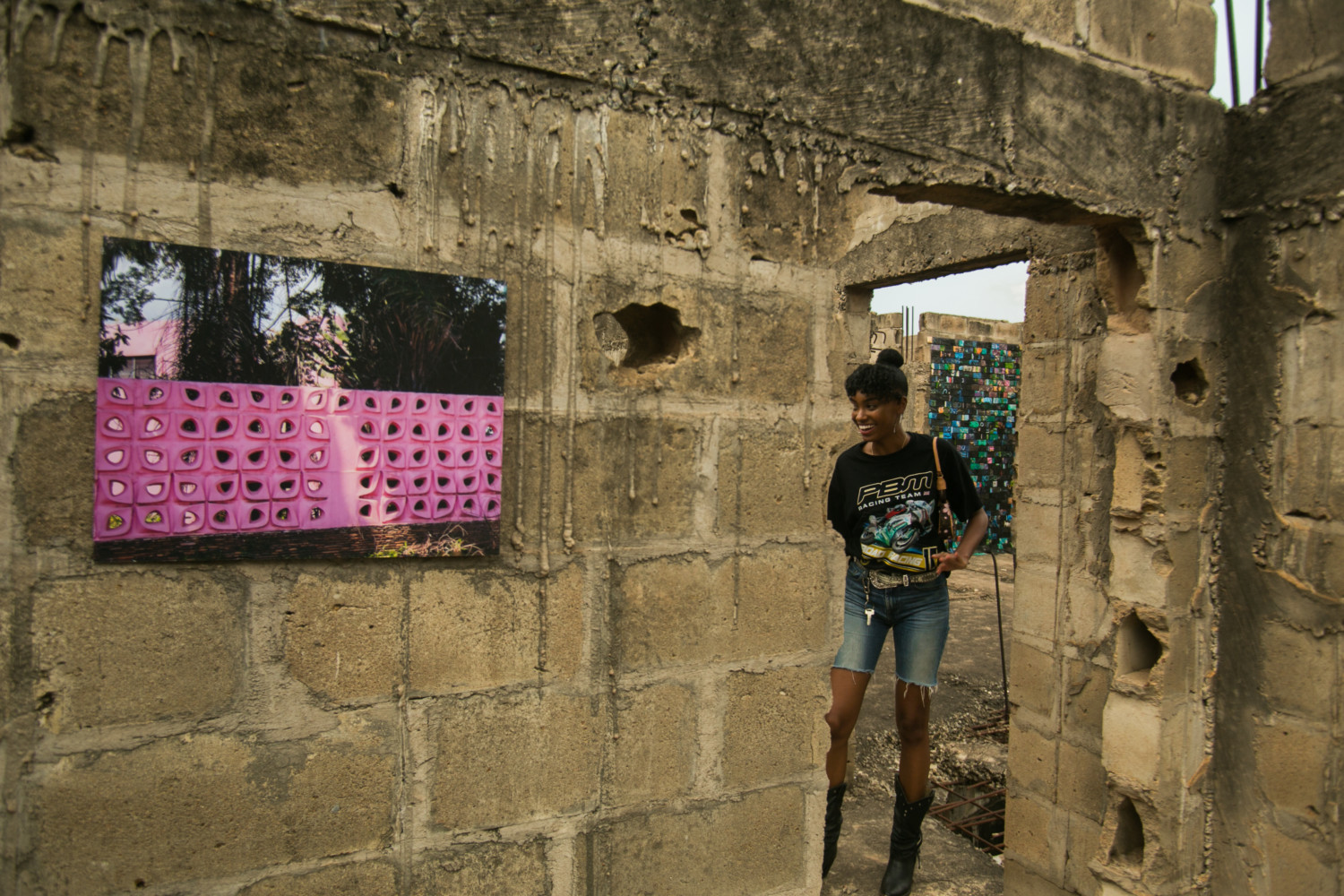
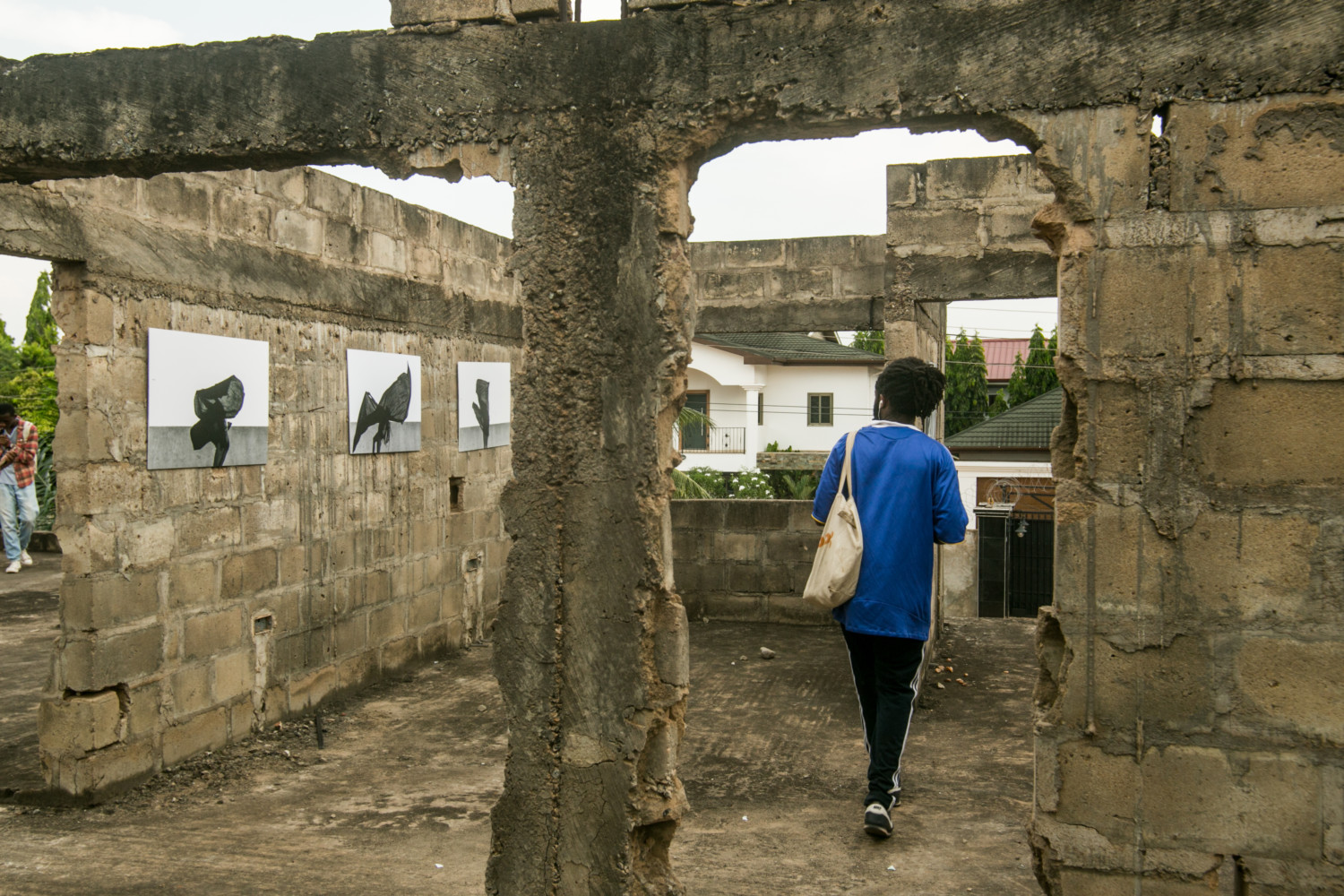
Concrete Limbo curated by LIMBO ACCRA and Benjamin Merten runs through to the 25 October, 2020 at Haus der Statistik.
Credits
Photography by Sierra Nallo, Anthony Badu & Ofoe Amegavie