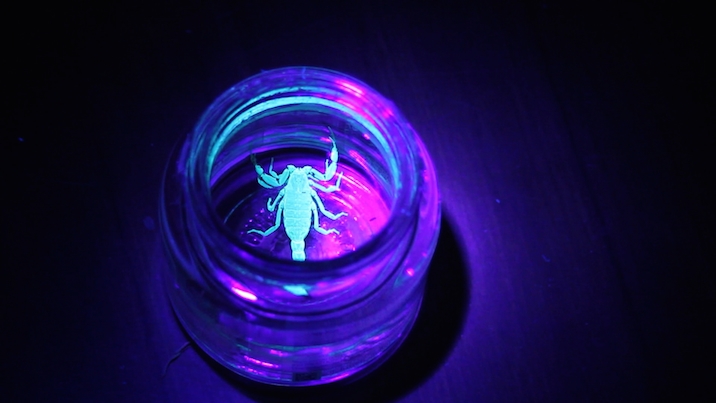
 Tobias Zielony, 2014, Video, 6min edit by Janina Herhoffer. Courtesy Tobias Zielony and Galerie KOW, Berlin. Copyright the artist.
Putting his very own spin on a strand described as “social documentarism”, German photographer Tobias Zielony’s work touches on such topics as male and female prostitution, poverty and class in developed countries, organised crime, juvenile delinquency and urban life in the abject leftovers of modernist utopias. His work departs from documentarism to intimate a gaze that questions rather than asserts – a signature style gained through allowing himself the long process of getting to know his subjects, and motivated by openness to coincidences (he calls it “accident”). Sleek spoke to the artist on his recent return from the West Bank, where he produced his latest video.
SleekYou recently returned from a two-month residency in Ramallah. What took you there?
Tobias Zielony: It was actually an accident. I was asked to apply [for a residency] in Los Angeles with the Goethe Institute, but then they said they couldn’t give me a stipend for LA but would I like to go to Ramallah instead? It took me a few seconds to understand where they wanted to send me. “Oh, you mean in the West Bank?” Of course, I said yes.
Going to Ramallah as a German artist is a loaded topic. Did you have certain expectations, images in your head or the kernel of an idea about the work you’d make?
I’ve never been to the region, I was trying to look for images from Ramallah online and there’s no Google Street View, for example. It’s really hard to find any images that are not of the Separation Wall or the conflict. I read “Disko Ramallah” by [German House DJ] Hans Nieswandt, who went there in 2007. Then I read a critique by a German leftist who used the term “Settler colonialism” for the situation in the West Bank. It was a hardcore introduction to a discussion on the conflict from a specific political perspective. But when I got there, of course, it was very different from what I had expected.
Tell us about the work you made there.
I made a video. I’ve done a number of videos in the past, and some of them were stop-motion animations, and this work brings video and animation together in a roundabout way. There’s a project called “Animating Palestine”, run by two artists and supported by NGOs, where teachers learn how to teach pupils to make tabletop animations. Meanwhile, I’m participating in a show in Munich called “The Sting of the Scorpion” at Villa Stuck. It relates to the film “L’Age d’Or” by Luis Buñuel, and six video artists were asked to recreate each of the film’s episodes. I was assigned the first one, which is about scorpions. In Palestine at least there are real scorpions! Then I found out that one of the participants in the animation project is a biology teacher and I made the connection between animation, biology and scorpions! (laughs).
 Tobias Zielony. Portrait by Claudia Klein.
Was the video a participatory project?
I worked with four girls aged 14 to 15, and the teacher. They were happy not to go to normal class so they loved the workshop. They had some dead scorpions in the biology room, but I wanted to go out with them at night looking for scorpions using UV lights, as scorpions are fluorescent. The parents wouldn’t allow that of course, and it turned out scorpions hibernate that time of year. I decided to use UV light anyway, so the whole film is made with black light. It shows the girls making the animation. But we also “re-animate” a dead scorpion.
Did you actively try to avoid making work that contextualises the conflict?
It was hard for me to react to the conflict in general. You need a lot of time to figure out what’s going on. You want to understand it on many levels, historical and personal. And there are two sides, or more! It took a long time before I felt I could even somehow talk about the conflict; making a work is much more difficult. As a photographer, at least the way I work, you’re “stuck” to things that are there. You decide where to go to take a picture. Of course you can go to the checkpoint, the wall, or a demonstration. I was surprised to see, looking at press pictures, how much iconography is repeated again and again. My question was, is there anything that’s not related to the conflict or occupation? It’s a political issue though, to suggest there’s such a thing as a normal life. Some people say it’s important to affirm the continuation of normal life, others would argue that by showing that, you ignore the larger political framework.
is there a hierarchy for you between video, animation and photography?
I made my first video in 2005, as part of the “Big Sexyland” work about male prostitution in Berlin. Then another video in Canada, again an accident! I visited a prison and they told me I wasn’t allowed to take pictures, so I brought a Super 8 camera instead. Then more consciously in the “Vele” video from Naples, which is a photo-animation using 7,000 single images. I’ve made a few animations this way; I’m still experimenting with the technique. You’re aware that you’re seeing single images, but they create some kind of illusion of a flow. I can deal with time differently, fall out of time or go faster or slower; with this animation technology there’s no real time in a sense. You’re thrown back at yourself, aware that this is a construction. You’re watching something that’s made for your eyes so you’d better not believe everything you see.
It’s the nature of photography to convey one specific glimpse. But your work seems to circumvent that, and to relate to more complex stories.
There are no certainties. I don’t believe in sociological or political frameworks only when contextualising aspects of everyday life. It wouldn’t be enough. Trying to avoid that, you’re dealing with ambiguity, that’s how you create a space for empathy.
And yet your work is always thematically related to sociological or political issues. Take “Jenny, Jenny”, where you make a truly emphatic work about prostitution – what is the discussion you want to encourage around it?
That case was very special. It started from meeting individual women and learning about their life. I also tried to find what photography can do in this situation, what role it can have. This is my reversed way of working; rather than coming up with a big idea and then looking for examples, I meet people on a very personal level, and by gathering experience I might go back and create the bigger series. Like working from very close at the beginning and slowly looking at a wider context. I was generally very happy with the reactions to “Jenny, Jenny”, but also disappointed that people didn’t question whether a male photographer could do this kind of work. I was surprised I wasn’t being criticised for that.
 Tobias Zielony, 2014, Video, 6min edit by Janina Herhoffer. Courtesy Tobias Zielony and Galerie KOW, Berlin. Copyright the artist.
Do you think that as a male photographer you can make this kind of work?
The work started as an accident, meeting one of the women. I found it interesting to make this work as a man. Most of the women’s work is with men. My pictures deal with questions of stereotypical gender identities and heterosexual role models.
It can’t all be accidental! Ramallah, “Jenny, Jenny” – you must have some fatal attraction to specific contested themes…
I see what you mean… I like accidents in the sense that I find myself in places I never thought of before. But obviously I’m open to getting myself into certain situations. I think my work is trying to deal with what’s left of the documentary, or the tools and ideas behind it. I wouldn’t call myself a documentary photographer, but I make art that refers to its history and ideas, also in terms of my topics. I’m also interested in people I wouldn’t normally meet. I don’t believe you can change the world through photography or journalism, but I’m dealing with people who I think are interesting to show and talk about. At the same time I’m interested in questioning how you can do that. The problems of representation that go with photography are integral to my project.
When people describe your work, Nan Goldin is always mentioned as a reference.
I interviewed Goldin not too long ago. She’s a big hero and an influence. She told me, without being pretentious, that her “Ballad of Sexual Dependency” changed photography. And it did! When I think about my life and photography and what kind of pictures I want to see, stylistically it always refers to Goldin. She created this style of imagery. You sometimes forget that it wasn’t like that before her.
Text by Hili Perlson
Taken from Sleek Magazine 41: What & Why
“Dream Lovers” by Tobias Zielony will be shown at KOW from 6 December 2014 until 14 February 2015.