
.
It should be a joke to write this text like it was a joke by Alison Bechdel in the first place, but apparently it isn’t, since film critics seem to have forgotten the irony of it all. The idea that the Bechdel-Wallace-Test, as superficial and flawed as it is, could be the sole measure of gender inequality is laughable. Hollywood film productions, and the ways in which women and our relationships with each other are represented and projected onto the screen, have real consequences beyond fiction. They shape how we perceive ourselves and each other, further reinforcing patriarchal and gender norms.
“I have this rule, see. I only go to see a movie if it satisfies three basic requirements. One, it has to have at least two women in it who, two, talk to each other about, three, something besides a man“, said a lesbian heroine of the comic strip called Dykes to Watch Out For, created by American cartoonist Bechdel in 1985. She got the idea from her friend Liz Wallace, hence she persists on renaming the test to the Bechdel-Wallace-Test, which would also reinforce the idea of itself, since two women spoke about it. Originally intended as a joke by Wallace, the requirements for the test were inspired by Virginia Woolf’s 1929 essay A Room of Ones Own, pointing out that women in literature are almost always depicted in relation to men.
Although the rules of the test seem embarrassingly easy to pass, it has become the standard by which critics judge television, movies, books, and other media. In 2013, the European film funding organization Eurimages made it one of its criteria for awarding grants, as well as the Swedish Film Institute, that has sine then been incorporating the test into its analysis of Swedish feature films. As the test gained mainstream attention, it led to the creation of bechdeltest.com, a user-edited database analyzing thousands of films accordingly to the three simple rules of the Bechdel-Wallace Test, in addition to the condition that both women have to be named.
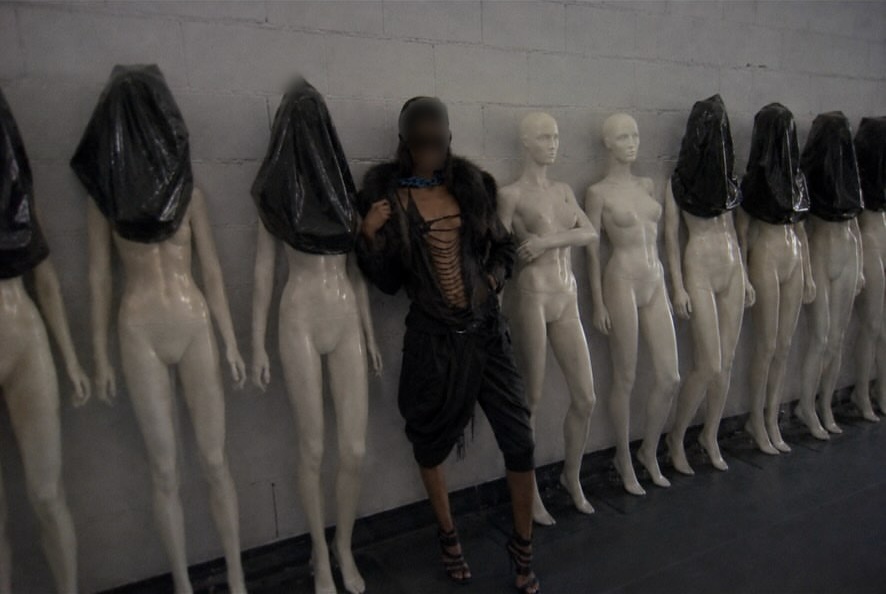
Photography by Yaroslav Diakon for Sextaz
Though, the test is a basic, vague baseline to measure the representation of women in film, passing it has nothing to say about the actual artistic or feminist quality of a film, certainly nothing about the substance and storytelling aspect of the film itself. It’s irrelevant how important and complex the roles of women actually have to be. They could be talking about a random topic for less than a minute, contributing nothing to the storyline and the film would still pass. A film also doesn’t necessarily need actresses to be worthwhile or to be of great artistic and thematic value. Sometimes it doesn’t even make any sense for the story for two women to talk to each other. Yet, the Bechdel-Wallace Test is the film critics benchmark when it comes to measuring gender diversity. Which should also include every gender, not just women, and most of all incorporate intersectionality, but it appears like that would be too much to ask for, since there isn’t even a reliable measure of representation inequality for cisgender women. This means a studio could produce a male dominated, even misogynistic film with a biased, shallow representation of two women talking, pass the test and move on. And yet it is astonishing how many films coming out today actually manage to fail this joke of a test. Among: Backrooms (2026) (directed by Kane Parson), The Odyssey (2026) (directed by Christopher Nolan), Megalopolis (2024) (directed by Francis Ford Coppola) or Frankenstein (2025) (directed by Guillermo del Toro).
Do you notice how every director is a man? According to the research paper Hollywood’s Gender Divide and its Effect on Films by Lyle Friedman, Matt Daniels and Ilia Blinderman, when writing teams are entirely male, about 50% of films fail the Bechdel-Wallace Test. When one single woman is part of the writing team, only a third of films fail. Considering that Hollywood Productions have the most capital and social influence, and according to the Living Archive: The Celluloid Ceiling Study by Dr. Martha Lauzen, on average 80% of film producers, directors, writers, editors and cinematographers in the US being men, it’s plausible as to why most films still fail the test.
.
When there is a woman on the team, it’s typically on small-market indie films. On top-grossing films, Hollywood has as many women directors per capita as the US military has women generals. According to the Department of Defence 2024 report, women comprise 8% of general and flag officers, while according to the USC Annenberg Inclusion Initiative, women accounted for just 8.1% of directors of the 100 highest-grossing U.S. films in 2025. So besides women being underrepresented in front of cameras, taking a look behind of them, there is not much to see either.
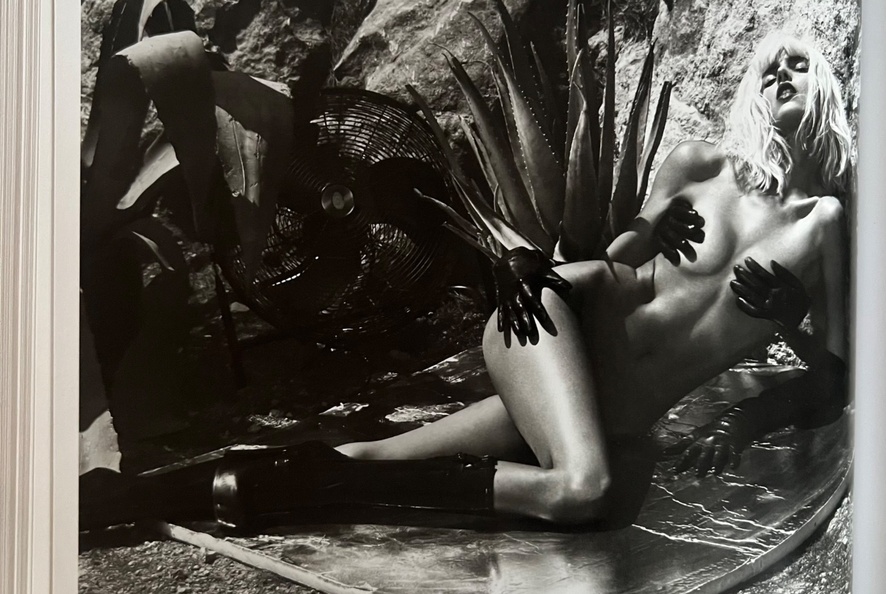
When primarily men get hired to produce, direct and write films, it’s primarily them deciding on which stories are worth telling, and how they are told. Film theorist Laura Mulvey described this in her essay Visual Pleasure and Narrative Cinema as the male gaze as early as 1975, arguing that mainstream cinema presents women from the viewpoint of a heterosexual man, reducing them to subordinate, passive objects of male visual pleasure, rather than being the subject of their own stories. Meanwhile men remain active, driving characters. She argues that the camera as well as the male characters portray and view women that way, inviting the audience to do the same, since cinema is directed from- and targeted to the viewpoint of a heterosexual man.
The problem isn’t only what ends up on screen, but also what it teaches us. Men projecting their viewpoint onto stories reinforces gender stereotypes and patriarchal norms, which are normalized with every film that treats this perspective as neutral, universal, and therefore unremarkable. Viewers, women included, learn to see women through this narrow, men-made lens, leading to women seeing and adjusting themselves to the way the camera sees them. So while the Bechdel-Wallace Test asks whether women speak to each other, the male gaze asks how they are seen. A film can pass the first and still fail the second, which further emphasizes the deficiency of the Bechdel-Wallace Test.
.
Most times, if there actually is a woman character, she’s either the sexualized fantasy of the male protagonist, a mother to- or a wife of-. Fortunately those limitations of what an actress could be have evolved over the decades, resulting in the latest kind of stereotype: the manic pixie dream girl. The mysterious, misunderstood supporting role to a male protagonist. Maybe she’s allowed to be portrayed as creative, crazy, wild, maybe even free spirited. But she won’t be allowed to save, feel, fight, dare to even speak. At least not to another woman, at least not about something else than a man. And if she’s allowed to speak, according to the USC Annenberg Inclusion Initiative, she counts to the incredible 33.6% of all speaking or named characters in 2025 that were women or girls. Maybe you’ve seen 500 Days of Summer (2009) (directed by Marc Webb), Elizabethtown (2005) (directed by Cameron Crowe) or Garden State (2004) (directed by Zach Braff) or before.
In all three, the woman is defined by adjectives (upbeat, reckless, insane) rather than by agency. The audience learns almost nothing about her that isn’t in service of the male protagonist’s arc; no own storyline, no independent goals, no interiority outside the relationship. It shifted from men sexualizing women for their appearances to men objectifying and using women for their thoughts, thoughts that were mostly or entirely written by men.
It’s frightening that almost a hundred years after Virginia Woolf first wrote about women only being portrayed in relation to men, the mainstream film industry today still being frozen in time. And it’s telling, as well as exhausting, that decades later, the film critics benchmark conversation is still stuck on whether two random women happened to speak to each other on screen, as if that were the bar to clear. Meanwhile, the conversations that should matter, about the actual characters of women and how complex they are portrayed, the fact that there are almost only men being employed for top-grossing film productions and the effects of them deciding on which stories are worth telling, barely register. The Bechdel-Wallace Test started as a joke and somehow still is, except that the joke is on us.