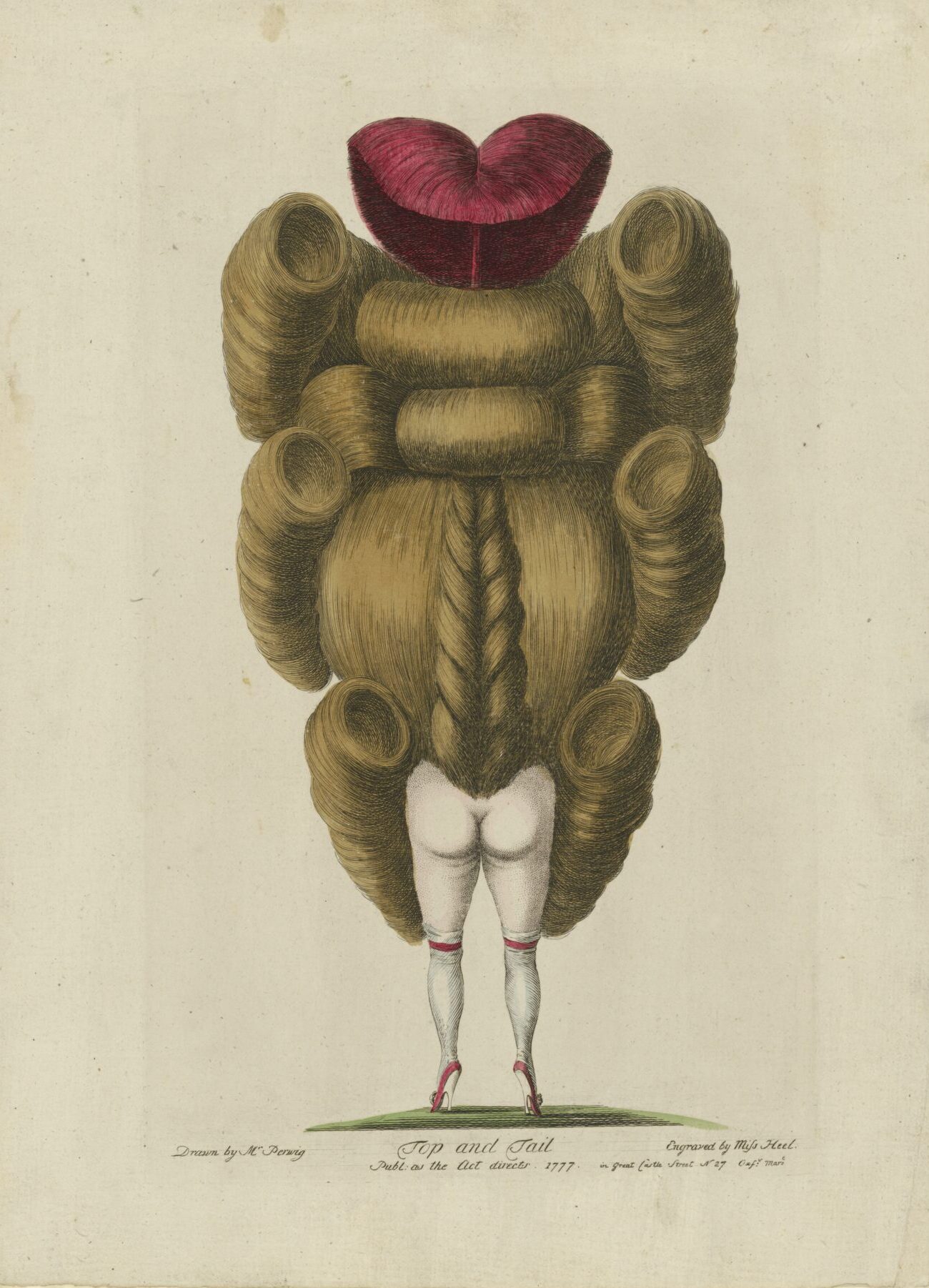
1. Top and Tail, 1777
THE IRRESISTIBLE ALLURE OF THE STRANGE AND THE DESIRE TO ESCAPE THE ORDINARY
The word bizarre is making its debut in Berlin at the turn of the year: for the first time, it is the subject of an exhibition in its own right. Terms such as classical, romantic and surreal have long been explored in the histories of art and literature. Bizarre, by contrast, has always remained an outsider, its many facets yet to be fully examined. As curator of this exhibition, I have followed the traces of the bizarre across seven centuries, with a fervour that has increasingly led those around me to fear for my mental health. What siren-like temptation has this man succumbed to? What has the word bizarre done to him? Will he ever be normal again? This issue of SLEEK offers me an opportunity to look back on this episode of obsession and seek an answer to the question of where the seductive power of the bizarre truly lies.
Since its emergence, bizarre has described that which radically challenges the boundaries of normality: madness and dreams, wonders of nature and monsters, anomalies and wild ideas. The word’s history begins in the 14th century with Dante’s (1265–1321) Divina Commedia. There, the poet encounters the short-tempered Filippo Argenti, a “spirito bizzarro” (bizarre spirit), who tears himself apart in river of hell Styx. Dante’s bizzarro probably derives from bizza, an onomatopoeic expression for fury or rage. At the origins of the bizarre, then, lies not some whimsical curiosity, but a violent outburst of anger. Despite the repulsive spectacle of self-devouring, this literary birth scene of the bizarre possesses a peculiar seductive power. Dante does not avert his gaze. He observes the escalating fury with disgust, satisfaction and undisguised voyeuristic fascination, and we do the same as we read. This voyeurism is hardly unfamiliar to us today, too. Here, someone overcome by madness loses all control, while we can witness the spectacle from a safe distance. Therein lies one of the oldest pleasures of the bizarre: it opens up a space in which the rules are suspended, without requiring us to pay the price ourselves.
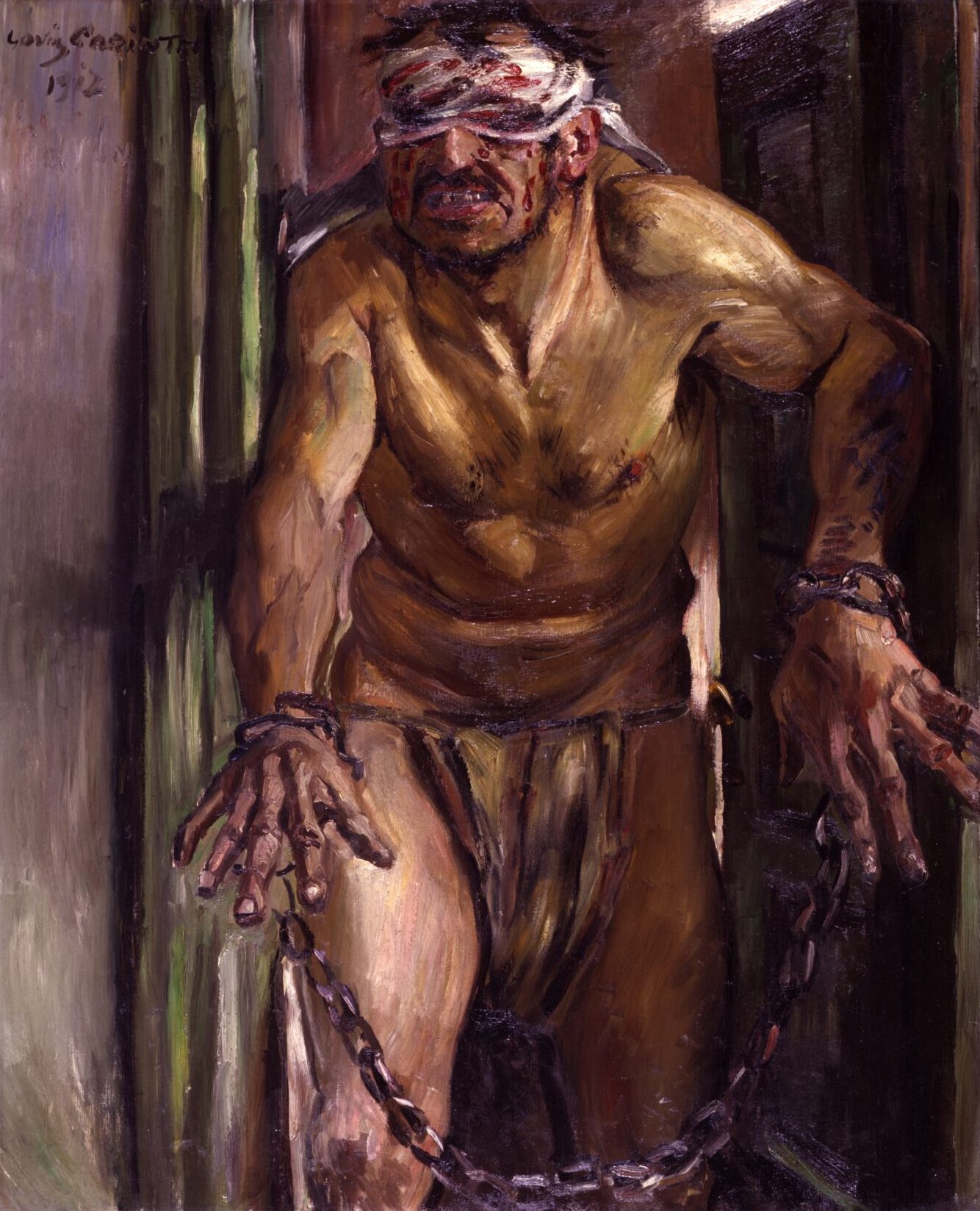
.
Such extraordinary states of mind exerted a particular fascination on the visual arts. Furore was regarded as a primal force endowed with creative potential. It was believed that the artist’s madness could unleash visual ideas that the sober mind would never have allowed. “Bizarro e fantastico” became a popular expression of praise for extraordinary feats of artistic imagination. By the 16th century at the latest, bizarre was no longer merely a word associated with rage, but a mark of distinction for an imagination capable of opening up new horizons and inspiring awe.
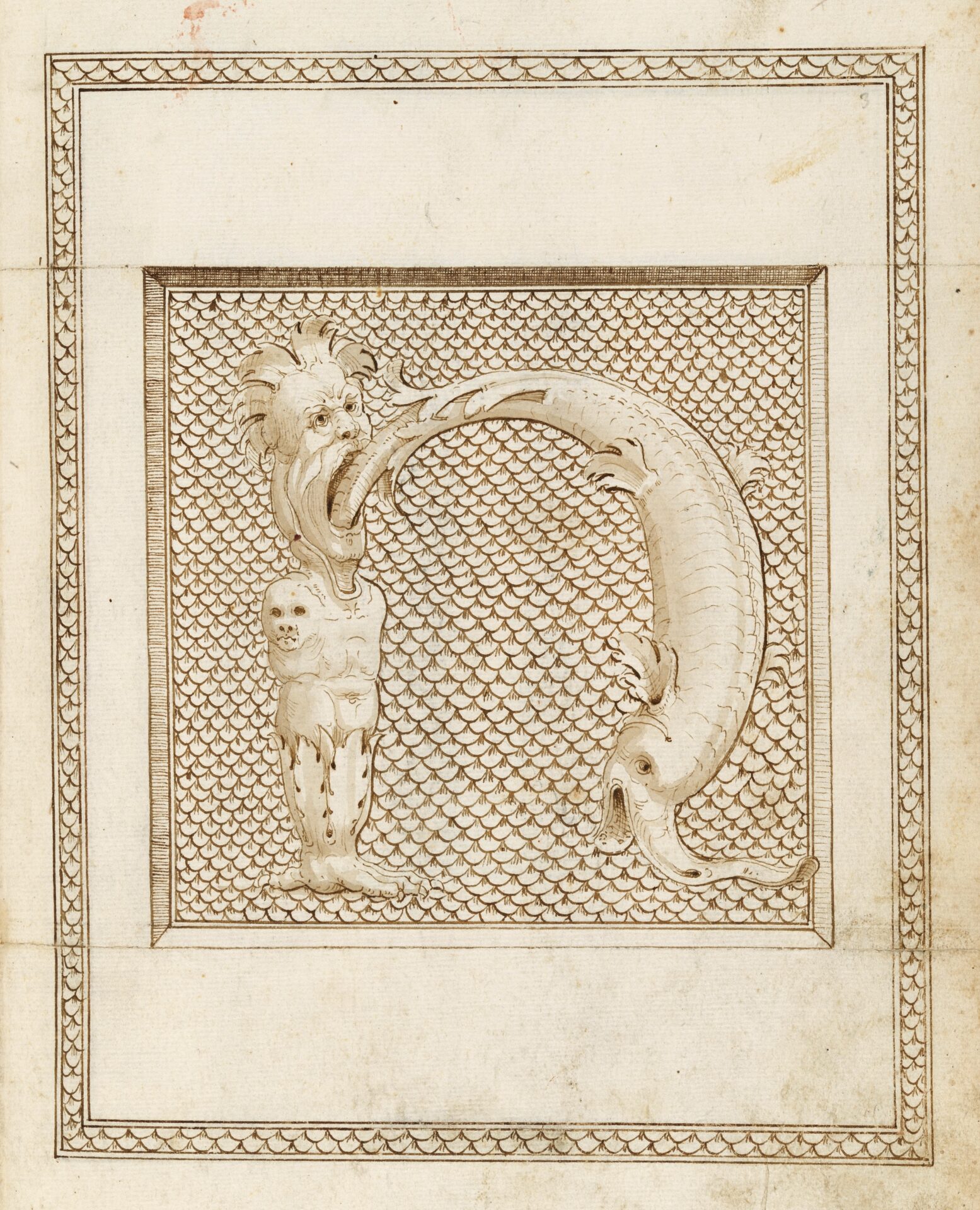
Few artistic forms have given more vivid expression to this delight in the unleashing of powerful forces than the grotesque [6]. This distinctive form of ornament takes its name from the grottoes of buried Roman ruins, where treasure hunters discovered mysterious wall paintings towards the end of the 15th century. Illuminated by torchlight, the ornaments appeared as though they had begun to dream during humanity’s long absence. They were poetically described as “sogni della pittura” (dreams of painting).
For the artist and art theorist Giovanni Paolo Lomazzo (1538–1592), the grotesque was the boldest of all artistic disciplines. More than any other art form, he believed, it required “un certo furore e una natural bizzarria”, a certain creative frenzy and a natural inclination towards the bizarre. In the visual worlds of the grotesque, architecture, decorative arts, plants, animals and human bodies merge into fantastical forms. A precious album of grotesque letters dating from around 1500 is among the exhibition’s highlights. Some of the letters appear as though, like Filippo Argenti, they have been seized by fury, retching themselves up only to swallow themselves again. As in a dream, everything is in flux. Forms elude definition. Nothing retains its identity. This transformative power brings the grotesque close to the mask. The mask, too, became almost magnetically associated with the word bizarre. References to “maschere bizzarre”, bizarre masks, recur throughout the art treatises of the Renaissance and Baroque periods. Those who conceal their faces and bodies behind masks do more than hide themselves. They assume another identity, one that can be discarded at any moment.

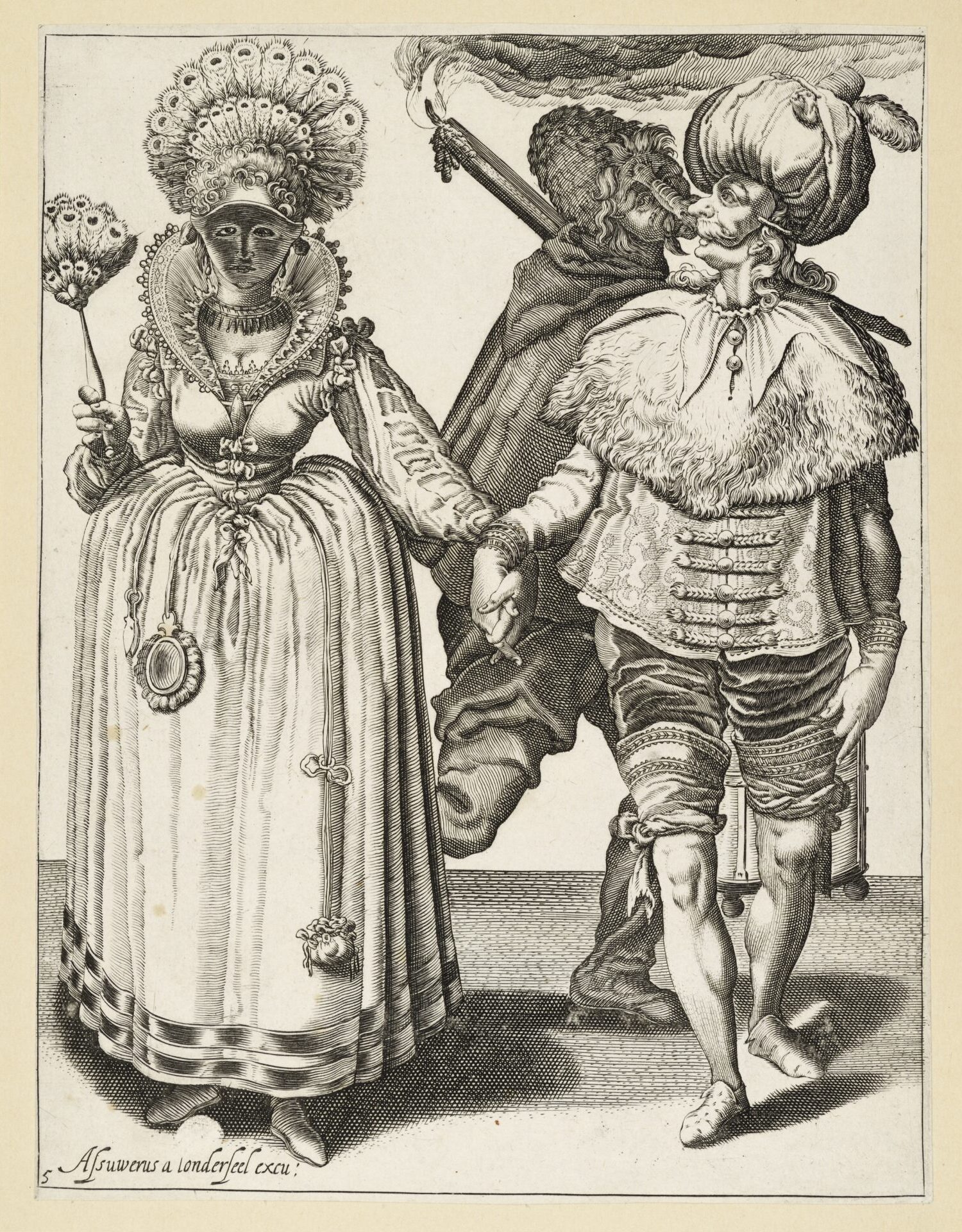
A copperplate engraving from the workshop of Dutch artist Jacques de Gheyn (1565–1629) depicts masked figures who sexually excite one another under the protection of their disguises [3]. The mask conceals and reveals at the same time. It envelops its wearers in anonymity and, precisely for that reason, permits glances, gestures and advances that would otherwise be impossible. Desire is ignited not despite concealment, but through it. To this day, bizarre remains associated with sexual role play, in which masks and costumes play a central part.
From this pleasure in transformation emerged a distinct form of communication. During the Baroque period, men and women competed to attract attention through extravagant dress, deliberately transgressing prevailing dress codes in the process. Such practices extended far beyond the boundaries of masquerade. Bizarre became a fashionable term for originality and singularity. Among the most effective instruments in this sartorial arms race were wigs [1], which the Berlin Enlightenment thinker Friedrich Nicolai (1733–1811) described as “highly bizarre things”. In the struggle for attention, they assumed ever more extravagant proportions, until this escalation of fashion culminated in complete impracticality.
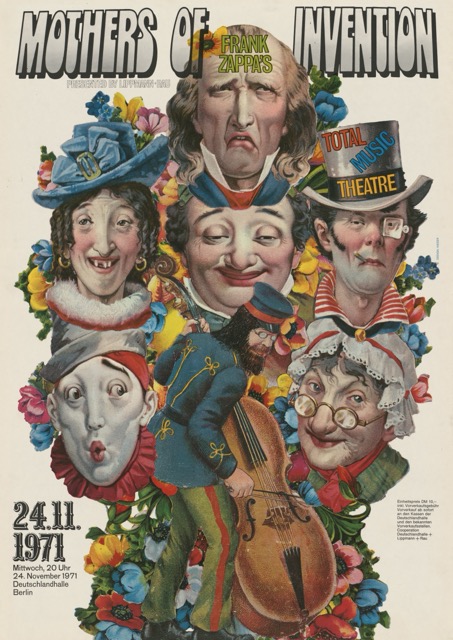
Frank Zappa (1940–1993) carried this strategy of “attention marketing” into popular culture. In 1968, he founded the record label BIZARRE. Its name was both a statement of intent and a marketing promise. It appealed to the Californian freak scene and signalled opposition to the established rock industry. For Zappa, bizarre meant continually venturing into uncharted territory. His music combined virtuosity with mischief, complexity with calculated bad taste. In 1971, the German graphic designer Günther Kieser (1930–2023) developed a distinctive visual language for a concert poster advertising a German performance by Frank Zappa and his band, the Mothers of Invention, deliberately evoking associations with freak shows [5].
.
Grotesques, masks, Zappa: the bizarre does not simply signify the garish or the outlandish. It touches upon a desire that can arise only within the comfort of a collectively accepted normality: the desire to escape its rules and constraints and surrender to the seduction of the unknown. Looking back, I realise that it was not I who pursued the word for three years. Rather, it was the word that lured me ever further. The journey led me from the infernal river Styx through subterranean grottoes and Baroque masquerades to the freaks of popular culture. In the exhibition “Bizarre”: The Art History of the World’s Craziest Word, visitors can now embark on this journey themselves. A return to normality is not guaranteed.
MORITZ WULLEN is Director of the Kunstbibliothek (Art Library) of the Staatliche Museen zu Berlin (Berlin State Museums) and curator of the exhibition “Bizarr”: Die Kunstgeschichte des verrücktesten Wortes der Welt at the Kulturforum, Berlin, from 27 November 2026 to 29 March 2027.