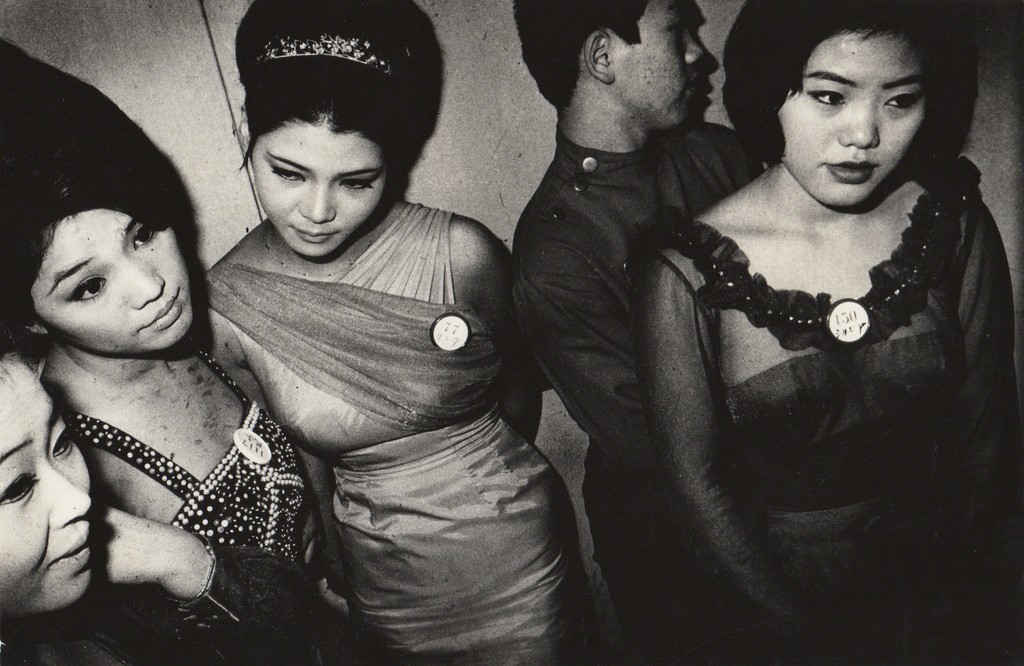
 “Untitled” (1969) by Daido Moriyama. Image courtesy of artsy.net
With revolts against the British in Northern Ireland, student marches in Germany, Black Power movements at the Summer Olympics and anti-Vietnam war protests around the globe, everyone had something to fight for in 1968. Japan was no exception, and its citizens were vocal in demonstrating their outrage over the nation’s political and social restrictions, with the anarcho-communist Zenkyoto Movement taking shape during this time. In the wake of such uprising came Tokyo’s “Provoke Magazine”, an experimental, small-press magazine that focused on anti-establishment photography as a platform for “new photographic expression”. Featured in the second issue was Daido Moriyama, a creative whose gritty, out-of-focus black and white imagery starkly contrasted the well-composed photographs produced in the U.S as well as Europe.
Since then, Moriyama has spent his entire career pioneering his signature aesthetic – a style that provides a stark contrast against traditional methods of photography. Citing influence from the esteemed American photographer William Klein, the Japanese artist explores the darker side of urban life in his imagery. Rather than focusing on the hustle and bustle of Paris or New York, as Klein tended towards, Moriyama has always preferred to concentrate on the banality of Tokyo’s lesser known streets.
Irritated by the way photography was used as a tautology, Moriyama aimed for this book to bid farewell to the formal constraints of image-capturing
 Memory of a Dog 2, 1982-2003. Image from loeildelaphotographie.com1
 Eros, 1969. Image from pinterest.com
Moriyama’s innovative way of constructing the mundane makes Japan look like the most appealing place in the world.
The aptly titled photobook, “Bye Bye Photography, Dear”, is considered the perfect example of Moriyama’s ability to blend his nonconformist technique with a raw approach towards the day-to-day. Irritated by the way photography was used as a tautology, Moriyama aimed for this book to bid farewell to the formal constraints of image-capturing. Destroyed negatives were printed full-bleed, accompanied by scratches. The lack of composition and odd cropping complimented grain and over-saturation, constructing a perfect mess of organised chaos.
Although once making the claim, “There is nothing particularly fascinating about this place”, Moriyama’s depiction of his homeland begs to differ. Whether the focus of his lens is on Tokyo’s prostitutes or gangsters, passengers on the subway, the back of someone’s head or a stray dog, his innovative way of constructing the mundane into an exciting story from a mismatched collection of non-narrative imagery makes Japan look like the most appealing place in the world.
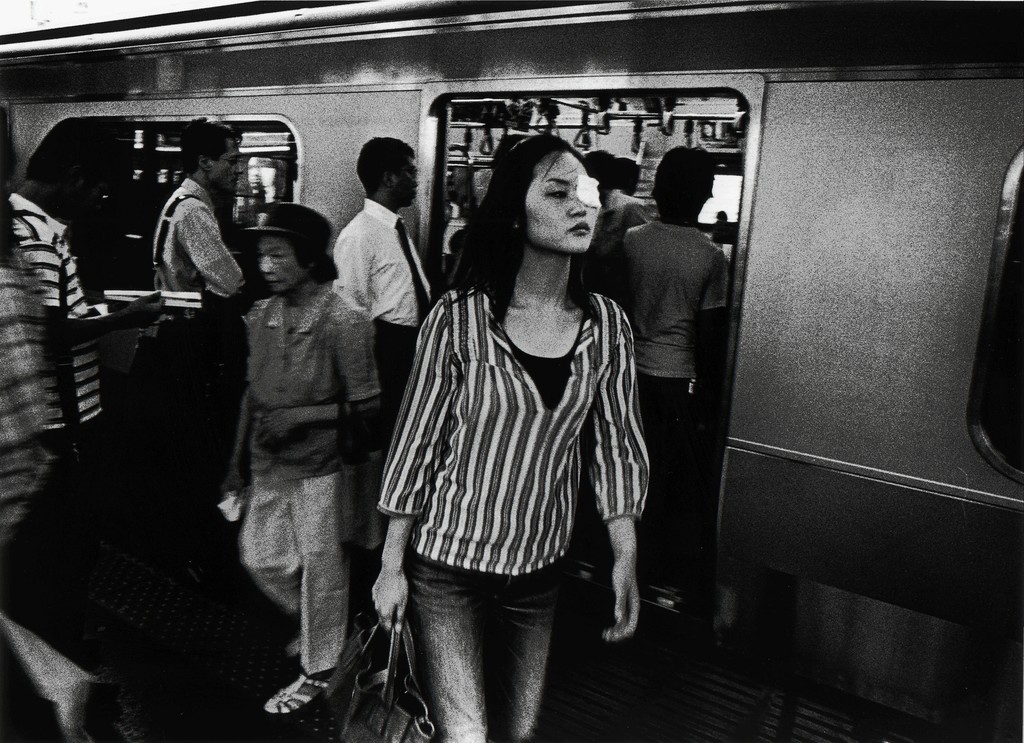 “Tokyo” (2005) by Daido Moriyama. Image courtesy of artsy.net
 Kyoku/Erotica, 2007. Image from pinterest.com
 Boy, Miyagi,1973. Image from loeildelaphotographie.com
 Tights, 1987-2011. Image from photographynow.com
 Entertainer on Stage, 1967. Image from pinterest.com
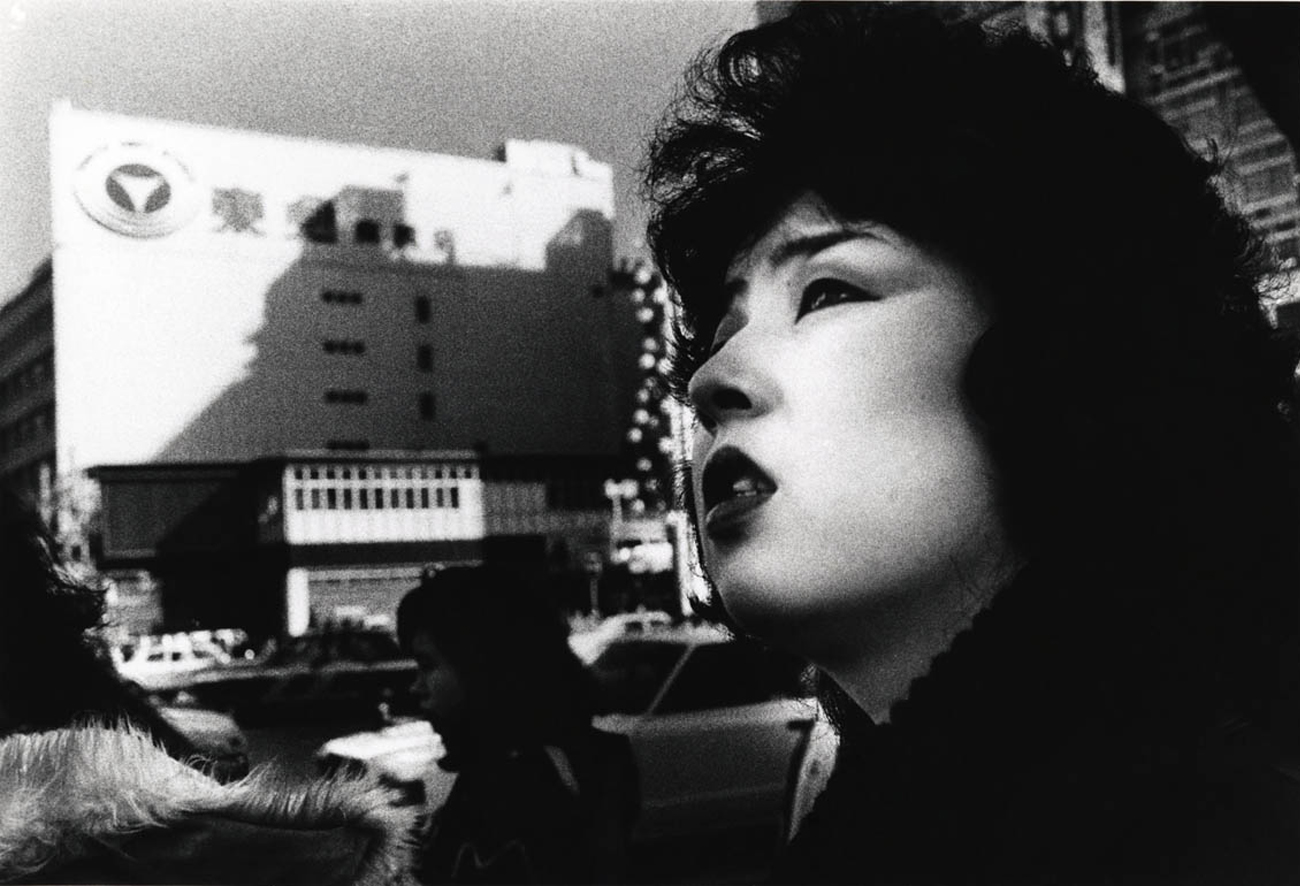 Tokyo, 1978. Image from loeildelaphotographie.com
 Misawa (Stray Dog). Image from alexcoghe.com
 “Eros Or Something Other Than Eros” (1969). Image courtesy of artsy.net
More information on Daido Moriyama artist is available at moriyamadaido.com