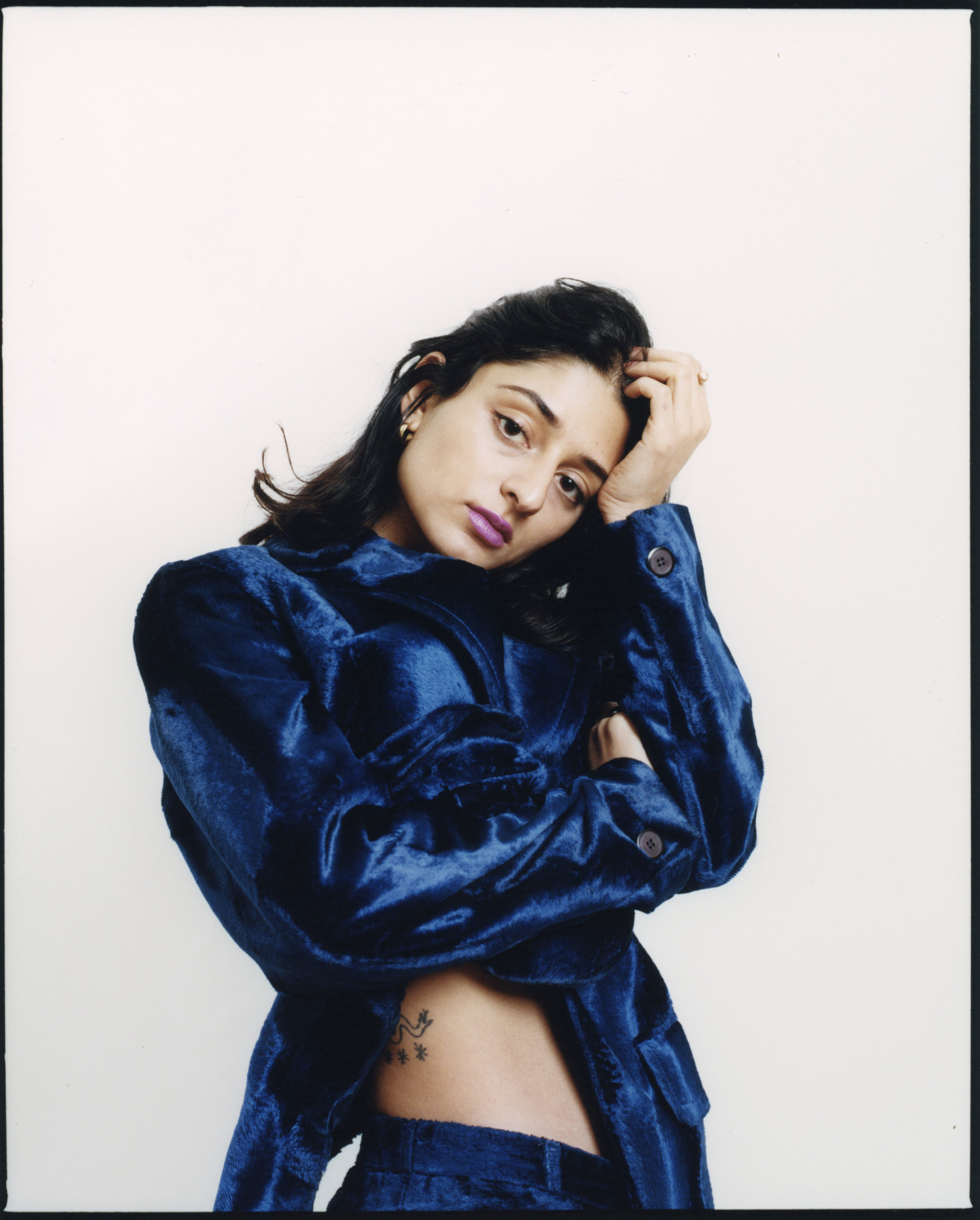
All photos by Manuel Haring
Like many of her musical heroes, millennial-troubadour and artistic multihyphenate Sofie Fatouretchi is a pop star of a different time and place. Her recent, debut album Cult Survivor is an exquisite slice of dream-pop that arouses nostalgia for baroque vocalists like Jane Birkin and Gary Wilson while evoking a fanciful geography of Mitteleuropa and West Coast Americana. The twentysomething singer should know something of both worlds: she has spent most of her youth travelling between Austria and California. “Europe is a very beautiful child, but you know exactly what she is going to look like when she’s older; America is this baby, crying, gross, but there is that promise of the unknown”, she muses, paraphrasing Douglas Coupland’s postmodern novel Shampoo Planet.
It’s early morning in Vienna when Sofie answers her video chat with a green smoothie in one hand and a cigarette in the other. She apologises demurely for smoking—it’s an old habit that she says she’s recently rediscovered. As she roams her apartment in search of an ashtray, shelves overstuffed with books, records appear in the corners of the phone screen and several of her own AbEx-inspired oil paintings hang on the walls behind her.
Europe is a very beautiful child, but you know exactly what she is going to look like when she’s older; America is this baby, crying, gross, but there is that promise of the unknown.
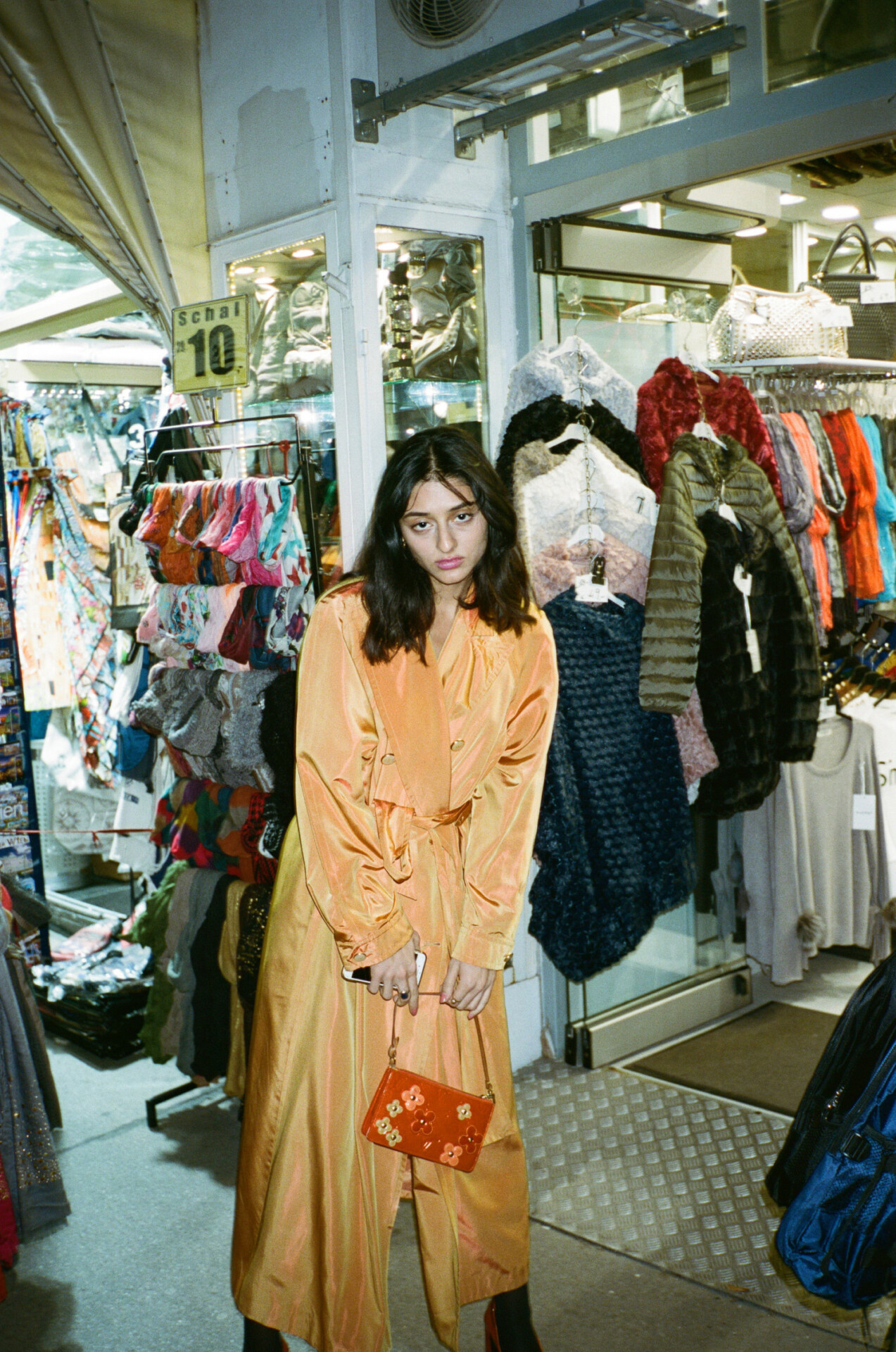
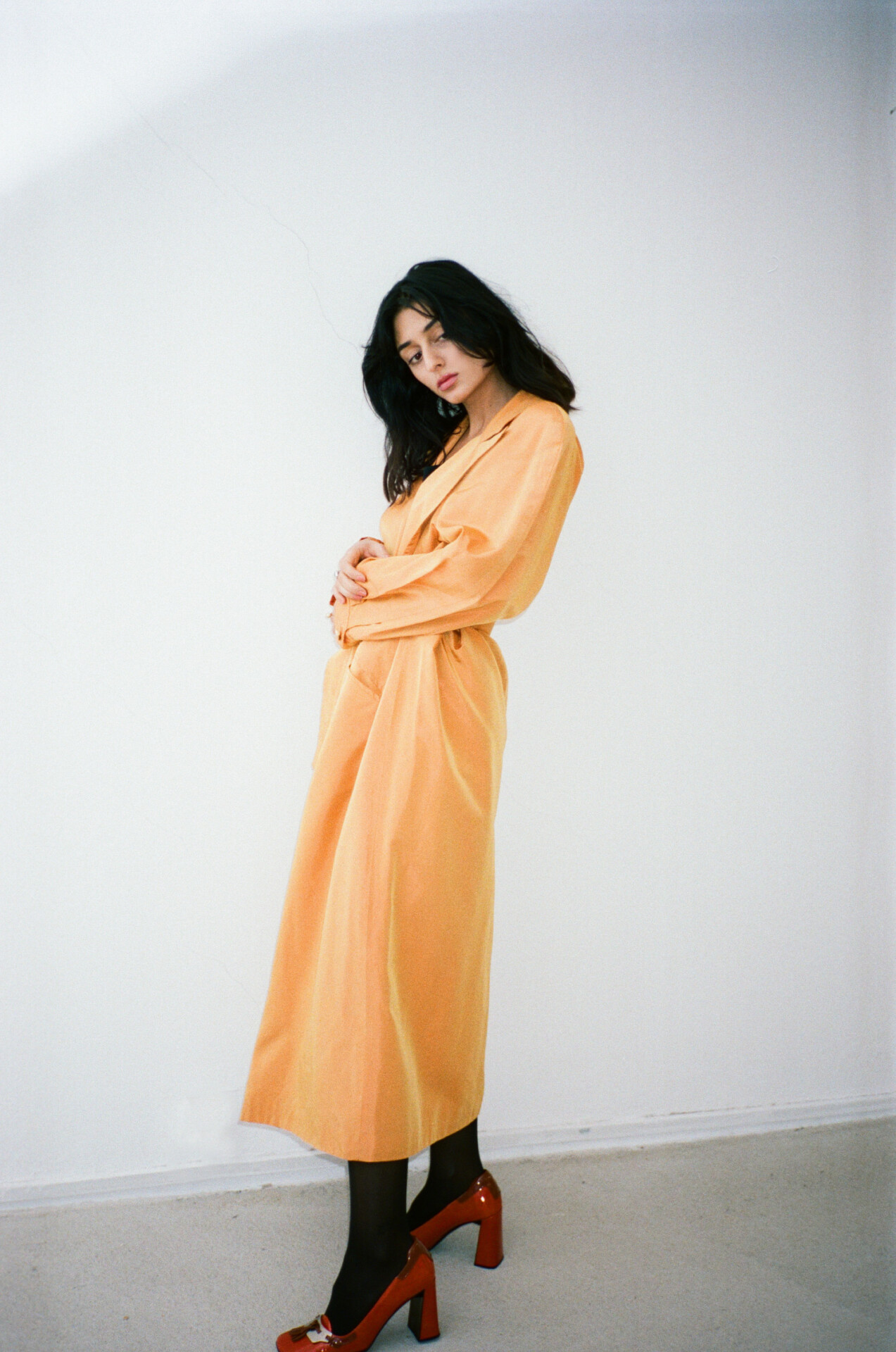
Despite the pandemic lockdown over the past nine months, it has been a prolific time in Sofie’s career. She relocated to Vienna a few years ago when her mother became ill with cancer, but she has since busied herself with numerous projects—releasing several mixtapes and an album; programming monthly radio shows on Austria’s FM4 and London’s NTS Radio (she was also one of the first members working to develop the online DJ platform Boiler Room); studying visual arts at the University of Applied Arts and exhibiting a growing catalogue of paintings and sculptures in galleries throughout Vienna, Berlin and London; modelling and DJing in campaigns and advertorials for Gucci x Harmony Korine, Elfie Semotan, Y/Project, Alyx and Ottolinger. She is already at work on a follow-up album…and an opera based on the work of Theodor Adorno, another California émigré.
Once she settles in on the phone, she begins by describing her background, a winding travelogue that runs from the suburbs of Northern California to Seattle, Vienna and London, then back to Los Angeles before returning to Europe once more. As a child, her Austrian mother and Iranian father, having fled the Revolution, worked as IT specialists for Apple during the mid-90s, when the company was notoriously close to bankruptcy. Due to the precarity of their work, the family was constantly on the move. “I always had this sense of needing to get away,” she continues, “every single move I had as a kid was imbued with a new start or a new chapter in my life”. When the family returned to Austria during her adolescence, she felt no kinship to either her European or Persian heritage. This sense of alienation was heightened by the occasional accusations of “Scheiß Ausländer!” she experienced from strangers.
Instead, she immersed herself in two vastly different traditions: classical music—as an accomplished musician from the age of four, she was granted a place to study concert violin at the Konservatorium, joined the city’s prestigious Junge Philharmonie and performed the works of Bach and Vivaldi at prestigious venues like the Volksoper and Wiener Konzerthaus; and the less rarefied world of American pop culture and music. By the time she was nineteen, she was determined to return to California. “I had always been drawn to Los Angeles because I watched so many movies as a kid”, she says, “so, when I moved there it already felt like home”. She applied for an internship at the Highland Park-based Stones Throw Records, the eclectic label of artists from Madvillain and J Dilla to Gary Wilson. Through a stroke of luck and some resume padding, she received the job.
Maybe I’m trying desperately to leave some lasting imprint on the world... we all want to know if we’ll make a dent in the surface. Maybe there’ll be this little object of mine around in a thousand years.
The next five years in LA would provide the grist for Cult Survivor, a script of her experiences from a new city, music scene and first heartbreak. Los Angeles, she says, allowed her to “create more of [her] own reality,” with its vast plexus of strip malls, freeways and karaoke bars. The album’s elegiac songs are replete with sketches of anonymous figures wandering the city in various moments of melancholy and mania. Lyrics veer from Californian coordinates like Hollywood Boulevard and Superior Grocers to European images of a broken-hearted Prince Margaret and empires at sunset; as does the musical accompaniment, which blends Gainsbourgian and Euro-flavored chanson with Laurel Canyon folk-rock and Southern soul-by-way-of-Lou Reed.
Much like her vivid, abstract paintings, Cult Survivor is composed in luminous splashes of colour beneath which linger deep shades of blue—while it sounds altogether of a different era. Even the album’s cover, a winsome, portrait photo of Sofie accented with Baroque script, summons the classic record sleeves of Birkin or Buffy Sainte-Marie.
“I feel like I’m so out of touch or disconnected from the time that we live in”, she laughs. “I wasn’t deliberately trying to make a nostalgia record. That’s just the language I think in”. Asked how much her classical music training had informed the album, she concedes, “I had really tried to distance myself from it. But most of the catchy elements in Bach I would rediscover in pop music. So, I never really left it”.
Cult Survivor’s music videos, meanwhile, offer further dimensions to Sofie’s bricoleur aesthetic. Their playful collage of found footage and home movies alternates feverishly between landscapes, decades and formats like the visual equivalent of channel surfing on late-night cable TV. The video for album track ‘Asleep’ mines the VHS netherworlds of Harmony Korine and Ryan Trecartin, mixing obsolete images of carousing, backwoods punks with QVC infomercials, while ‘Guest’ follows a pair of raffish schoolgirls on the boulevards of Vienna in a homage to Berliner enfant terrible Christiane F. Her videos are frequented by images of dime stores, bowling allies, carnivals, barns and farmhouses.
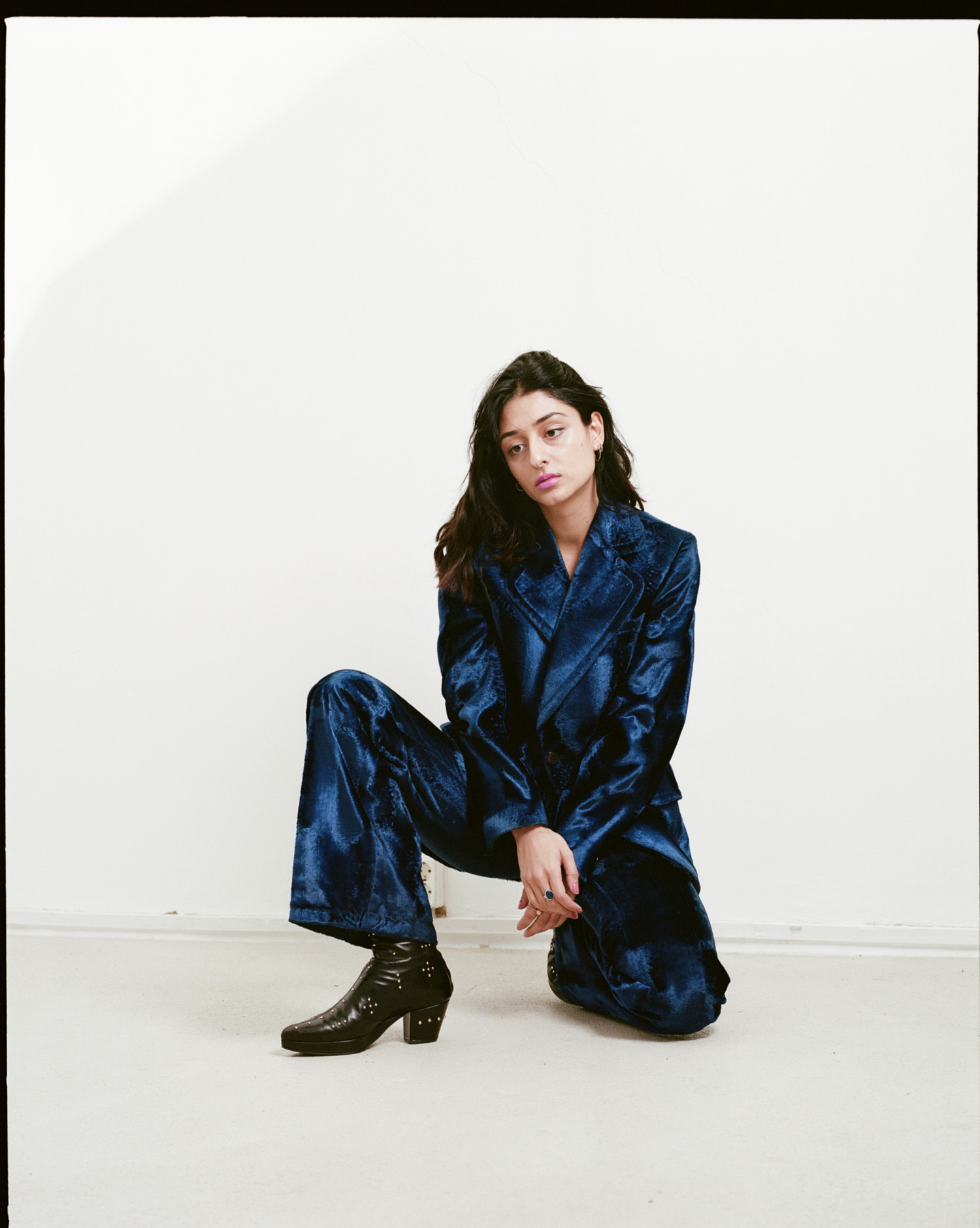
What unites all of these disparate pop artefacts in Sofie’s world? “It’s just an amalgamation of things I’ve seen,” she explains. “There’s something about kitschy Americana that I can relate to because it doesn’t have a tradition steeped in some regional history or culture”.
Despite the frenetic pace of projects that Sofie has already undertaken to date, she is wistful about the future: “maybe I’m trying desperately to leave some lasting imprint on the world,” she offers toward the end of the conversation. “We all want to know if we’ll make a dent in the surface. Maybe there’ll be this little object of mine around in a thousand years”. Or perhaps, as with the most intriguing artists, Sofie’s work will have succeeded in forging its own time and place out of the present if only we are fortunate enough to discover it.
Sofie’s ‘Cult Survivor’ is available to stream and purchase here courtesy of Stones Throw Records.