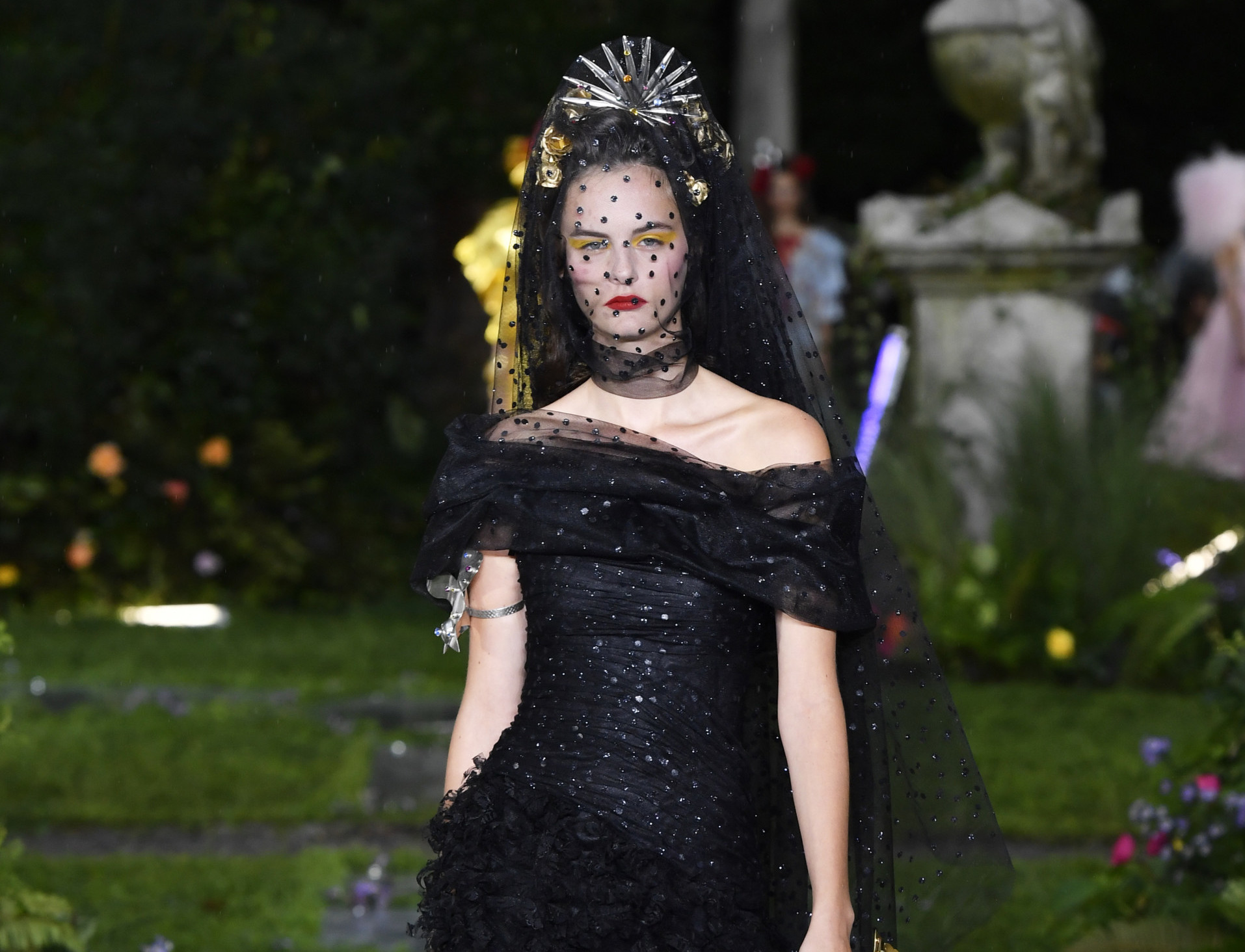
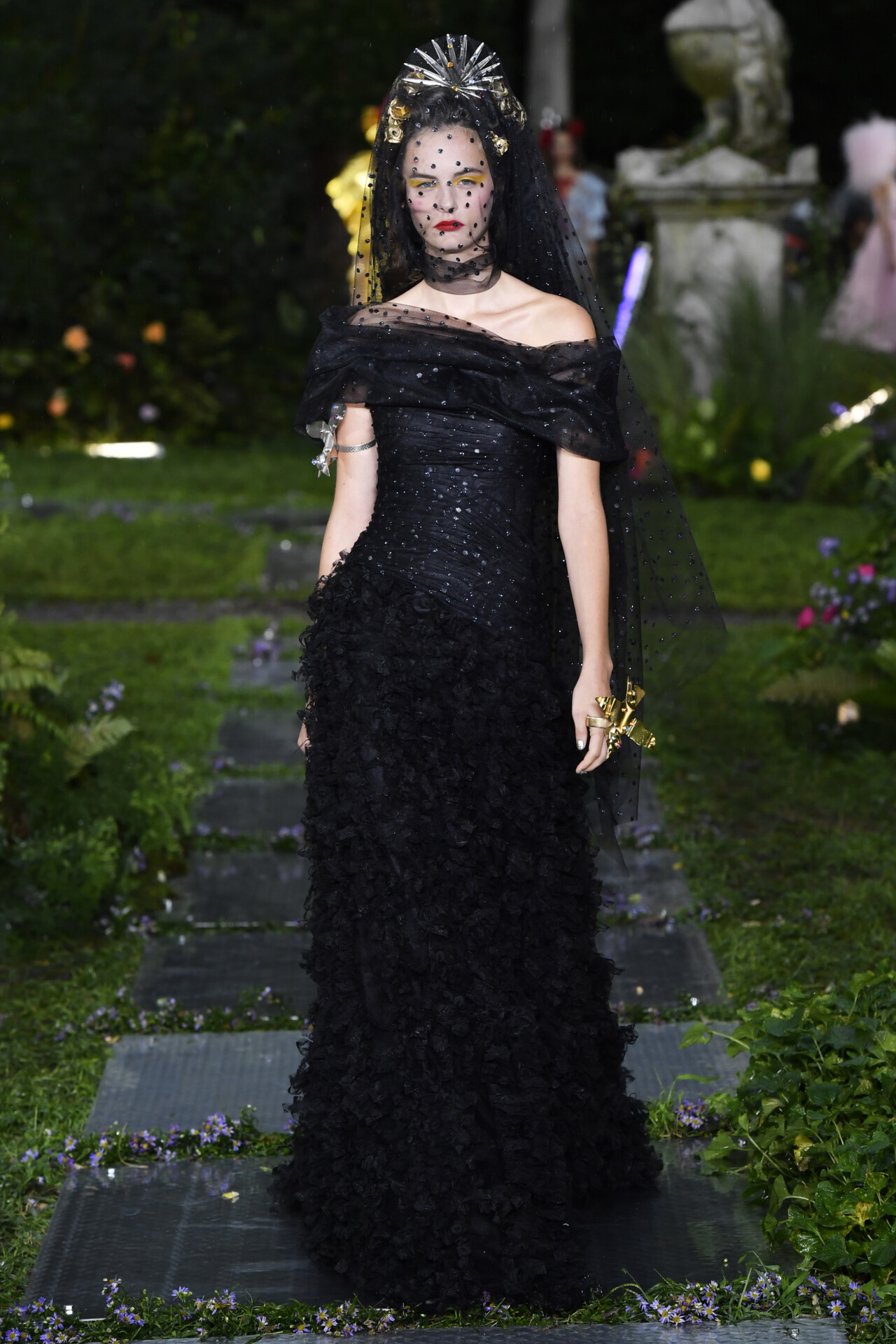
Rodarte SS19
In September, Rodarte returned to New York Fashion Week after a two-year hiatus to present a dramatic, ultra-feminine SS19 collection consisting of candy-coloured, frothy confections, tiered lace gowns and theatrical puff shouldered silhouettes. Accessorised with vintage veils, rosebuds and elaborate, spike-edged jewellery, the Mulleavy sisters’ collection was otherworldly, like something from a dream, or even a rose-blushed nightmare, depending on how you looked at it. The surreal sensation was augmented by the eerie backdrop: the New York City Marble Cemetery, where the models walked solemnly among old grey monuments, the wet grass glistening in the heavy rain.
After the show the Mulleavys talked about their inspirations: “We started thinking about rose gardens and the 1950s… But we didn’t have an outline for the whole story”. The old graveyard provided one, turning the Rodarte SS19 showcase into a dark but majestic fairy-tale; the mood altogether fitting, considering the sisters’ love for mystery and suspense.
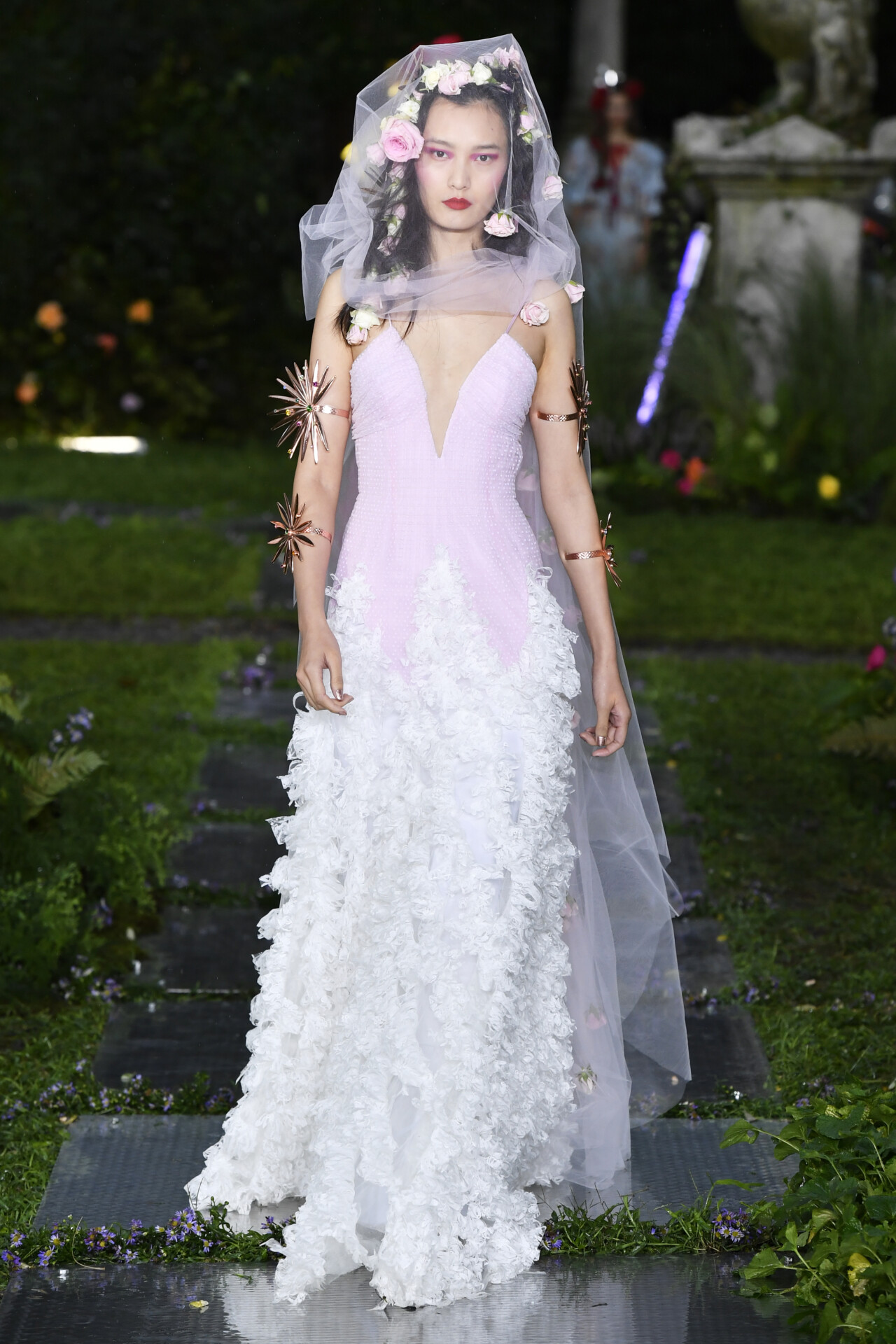
Rodarte SS19
Located between Second Avenue and the Bowery in the East Village, the old cemetery is picturesque (or as much as a cemetery can be) with peach and hibiscus trees, and an impeccable green lawn punctuated with grey tombstones. Founded in 1831, it is the burial site of a number of notable New Yorkers (the founder of the New York Public Library among them) and is famous for its vaults — catacomb-like, underground structures, carved out of chalky Tuckahoe marble. The historical graveyard is closed to the public for the entire year, except for a few days in spring and autumn, though it’s quite often used for private events. In fact, Rodarte SS19 wasn’t the first fashion show to be held here. Previously, it hosted Stella McCartney’s Resort 2012 show and Simon Miller’s SS17 presentation.
As McCartney explained back in 2012, to her, the space didn’t seem morbid at all. “This collection is about a celebration of life. In a way there is no better place to celebrate the vibrancy of life than in a cemetery,” enthused McCartney, as her cheerful models clad in colourful clothes segued among the ancient gravestones. And indeed, the vibrant striped and printed garments against the old monuments was a surprisingly pleasing combination.
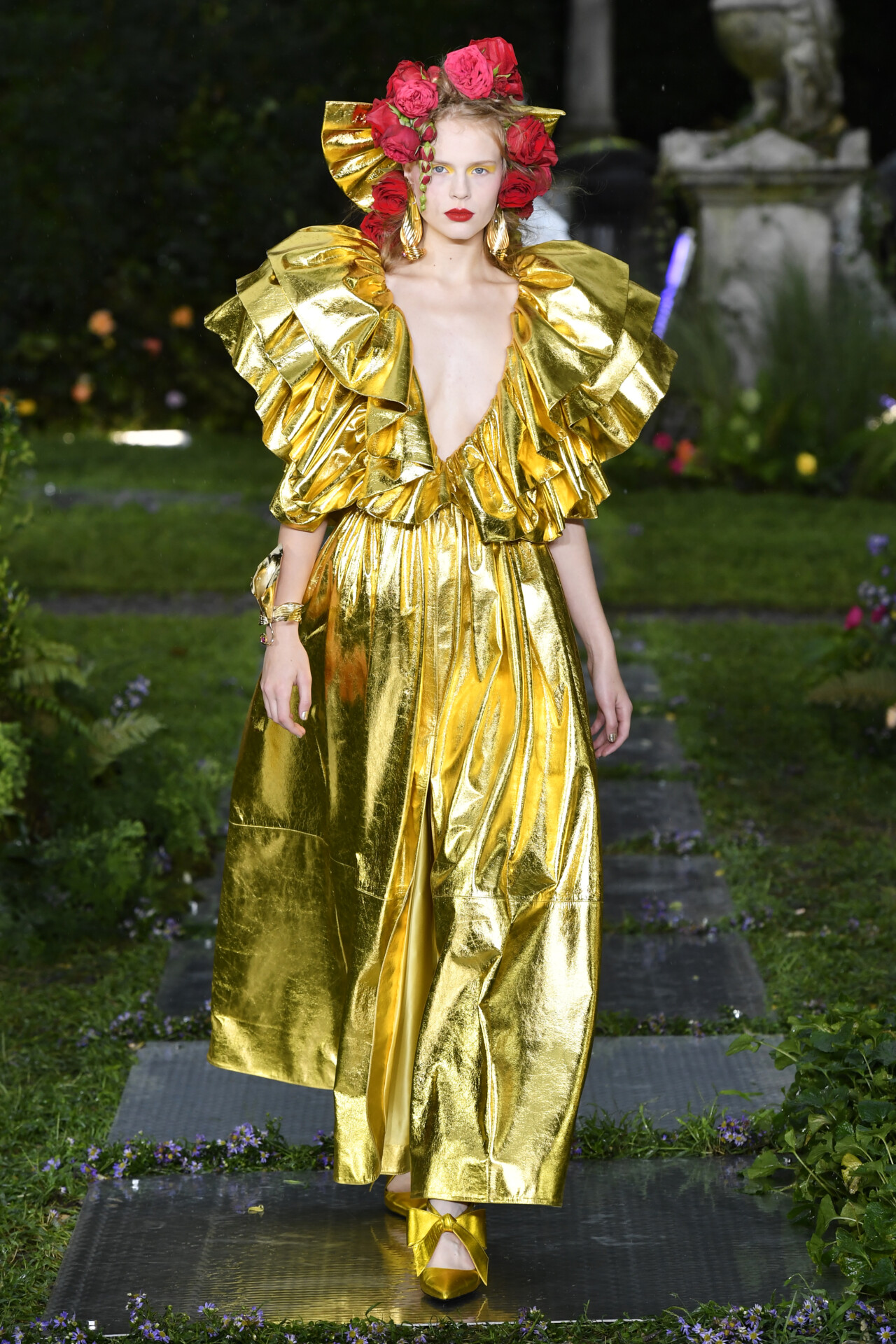
Rodarte SS19
The New York City Marble Cemetery isn’t the only cemetery, however, that’s having a fashion moment. Last year, Gucci’s Alessandro Michele cited LA’s famed Hollywood Forever Cemetery as an inspiration for his FW18 collection. “It’s such a nice place — I’ve been to a party there and it’s the most glamorous place I’ve been in my whole life,” said the designer. Seemingly, Michele’s magpie collection of flapper twinkle-studded dresses, brocade coats, heavy velvets, platformed shoes, and not to mention ghoulish floating heads, attempted to resurrect the divas of years gone by.
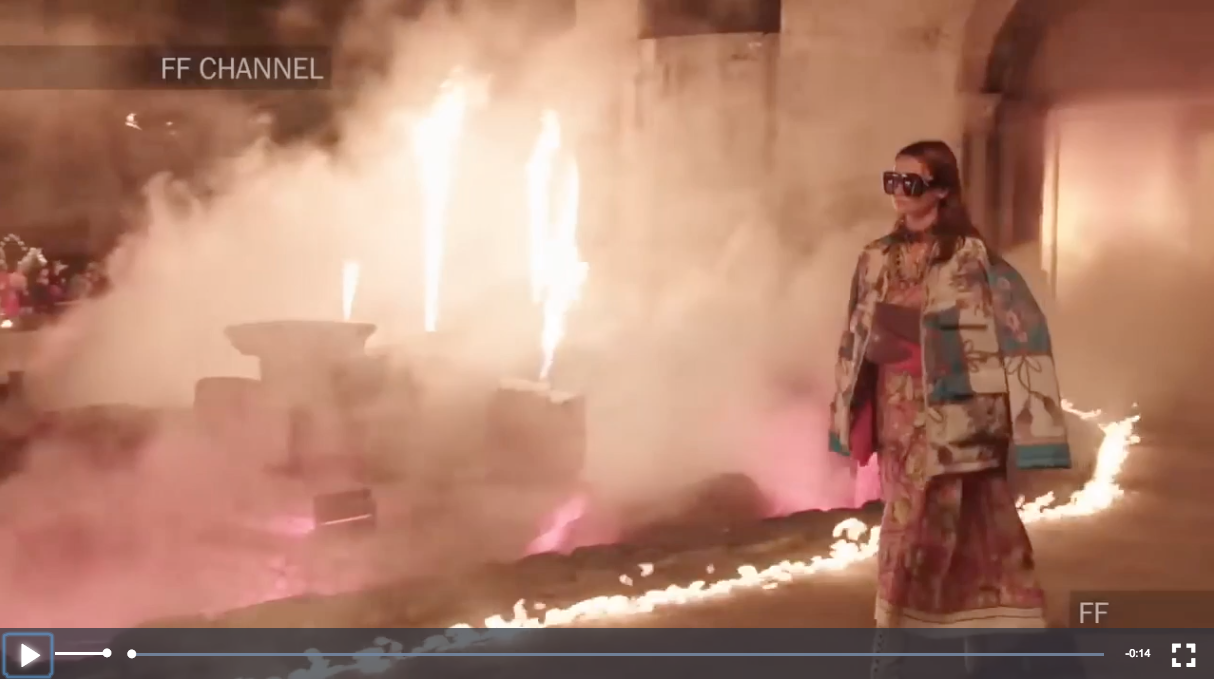
Michele has a soft spot for cemeteries: earlier this year the Italian brand chose Alyscamps, a Roman necropolis near Arles, as a venue for their Resort 2019 show. This was runway like now other: a fire pit ran through the catwalk, glimmering candelabras framed the space and sinister bells chimed. Inspired by Dante’s Inferno among other things, the show had a spooky, ritualistic air. Teeming with ossuary-inspired details from rib cage-embroidered gowns to rosary chokers, the collection shivered with ghostly details like shimmering momento mori. Among the characters that Michele was trying to create as per the show notes were “widows attending grave sites”. Say no more.
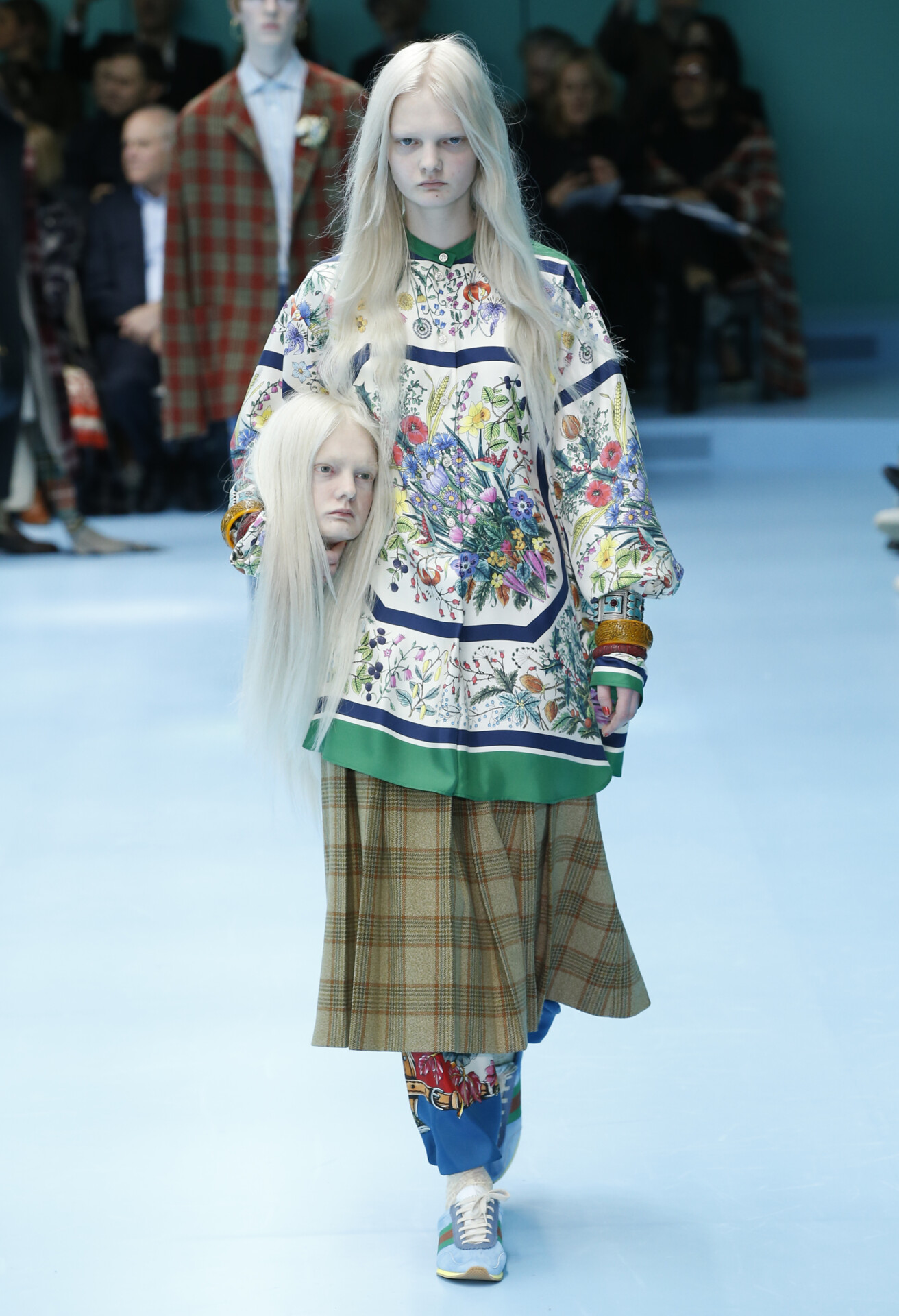
Gucci FW18
“This idea that everything that is linked to the afterlife is accompanied by something of maximum beauty,” commented Michele on bringing Gucci Resort to Alyscamps. As physical reminders of death, graveyards appear to make fleeting aesthetic experiences even more intense. Or so thought Martin Margiela at least, when he staged his two-part SS93 show at two venues on the opposite sides of the Cimetière Montmartre: at one, the clothes and invitation were white, at the other, black. Abundant with sartorial references to Victoriana, the collection is remembered as one of the most darkly romantic offerings by the cult Belgian designer.
This fascination of fashion creatives with cemeteries might seem unsettling, but then, has fashion ever shied away from the morbid? High drama, elevated emotions, controversy, and provocation are what fuel fashion, after all. Just think of those bizarre and spine-tinglingly macabre Alexander Lee McQueen’s shows, where theatrics often took precedence. “It was his terrifying meditation on the subjects of vanity, insanity, and death—a smack in the face, and a visceral taste of McQueen’s genius I’ll never shake off,” wrote Sarah Mower about McQueen’s show for Spring 2001. What Mower says of McQueen is indicative of what is expected from fashion’s masterminds: the creation of something shocking, sensational, everlasting that could even surpass death. Therefore, it’s seems not so strange that a cemetery might be a suitable place to present a fashion show.
Over the years, fashion designers have chosen to showcase their collections in graveyards largely for aesthetic reasons — they offer an eclectic mix of romanticism, beauty and kitsch, the most dramatic show decor that a fashion designer could wish for. The connection between graveyards and fashion, however, might even run deeper than that. Considering that newness, constant reinvention and regeneration embody the essence of fashion, one might even go so far as to say that fashion seeks to defy death — or at least trivialise it. To bring fashion to the graveyard then, is a bold, flamboyant act against the inevitability of this mortal coil. As McCartney said, what could be a better place to celebrate life than a cemetery?