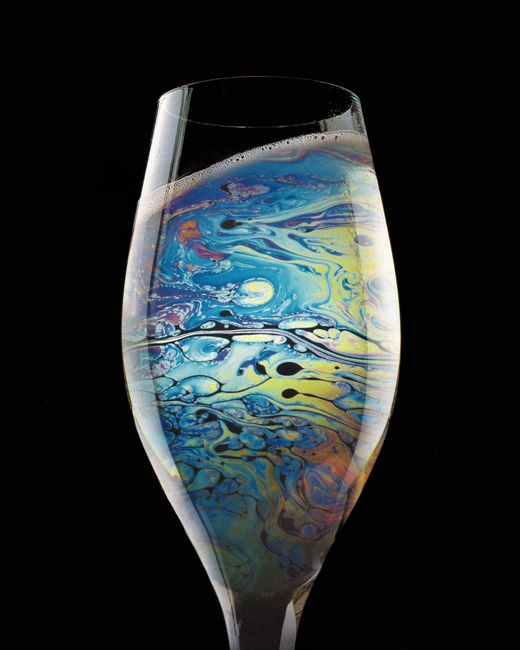
 Agnieszka Polska, Glass of Petrol, 2015
In the wake of rampant, market-led nonsense, art is rekindling its fascination with poetry. Recently, galleries such as BHQFU in New York, David Roberts Foundation in London and SALTS in Basel have been throwing poetry events, and art platforms such as Rhizome and 11:11 have been hosting online projects dedicated to verse. Part of the reason for this increase of interest in poesie is due to the revival of performance art as well as the influence of the internet. The web is not only making it easier for poets to distribute their work, but also changing they way we use words and altering poetry’s material – our language. Agnieszka Polska is one of the five poets the art world is listening to.
Taken from Sleek 47
Agnieszka Polska uses language as part of her films. Based in Warsaw, she makes works encompassing CGI, collage, script and animation. What unites these different forms is an interest in the structure of language and poetry. “In my most recent works I was addressing the issues of materialisation of language,” she explains. “Contemporary technology, and particularly the field of digital animation, serves as a great tool for making the word material.”
Initially, Polska uses her scripts and poems as the basis for films and animations. “The ideas for many works of mine came from the sudden discoveries of secret connections between the words, and the creative misreadings of things I hear people say,” she says. “The text, script and visual approach come after. For me, creating a film is so close to writing a text, that I don’t really treat these two as different media.”
The influence of the technology is not always easily discernable in her works, which often explore misinformation and forgotten histories. However she does credit the “the weird, the dream-like nature” of the internet as an inspiration. Other examples of her vision such as ‘I am the Mouth II’, a film featuring a large mouth seductively whispering to the viewer, exude digital persuasiveness and it is no surprise she was taught by Hito Steyerl while studying in Berlin.
Art is often the subject as well as the context for Polska’s films. One example of this is her 2013 short “Future Days”. A film about a group of dead artists including Lee Lozano, Charlotte Posenenske and Paul Thek wandering through the meadows of the afterlife, it was also screened at the ICA in London, and arguably presents allegory of Polska’s thoughts on art: “The plot of the film centres around the protagonists who are trying to escape from a thoroughly depressing vision of heaven back to the everyday problems of an earthly society,” she says. Polska is currently working on the script for the second part of this film, entitled “Rolling in Graves”, where they escape heaven and perhaps the context of art. In all of her work, language exists on an aesthetic and/or narratological basis, turning her works into living poems.
Text: Francesca Gavin
More: Print Features