Anyone who thinks Berlin brings contradictions together needs to visit Eastern European capitals. And the first stop should be: PRAGUE. Somewhere between Habsburg and Bohemia, the Czech capital positively drips with historicity; every house front is steeped in more history than any modern monument in North America. Since 2022, the “Mistress of all Bohemia” has hosted an Art Week, bringing together whatever is currently on culture’s mind. Although PAW ended last Sunday, the exhibitions that opened are still on view, and the artists featured here will open their studio doors on request. The top 10 selection presented here follows no order or ranking; it is subjective and associative.
Solo artists in their studios
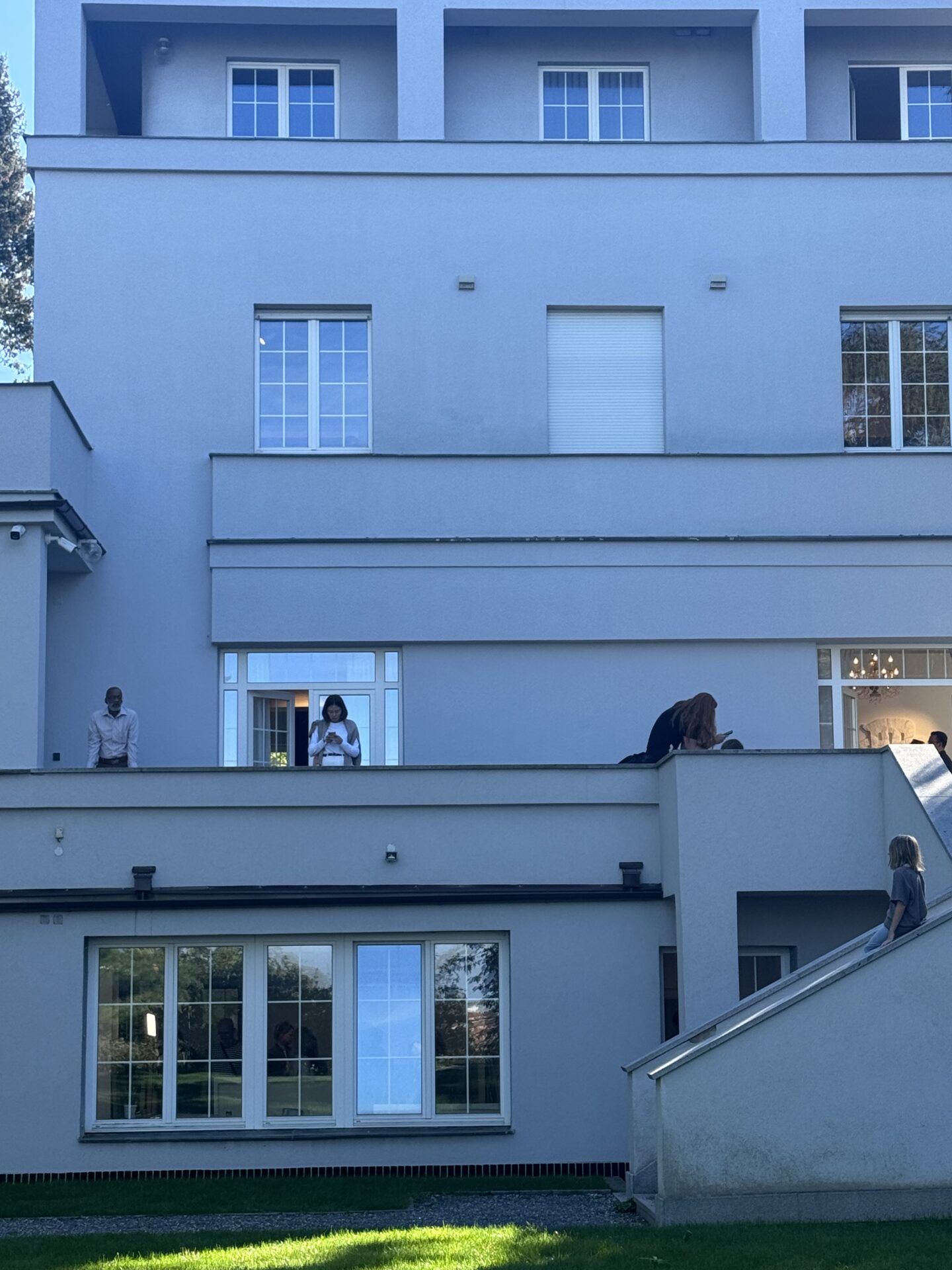
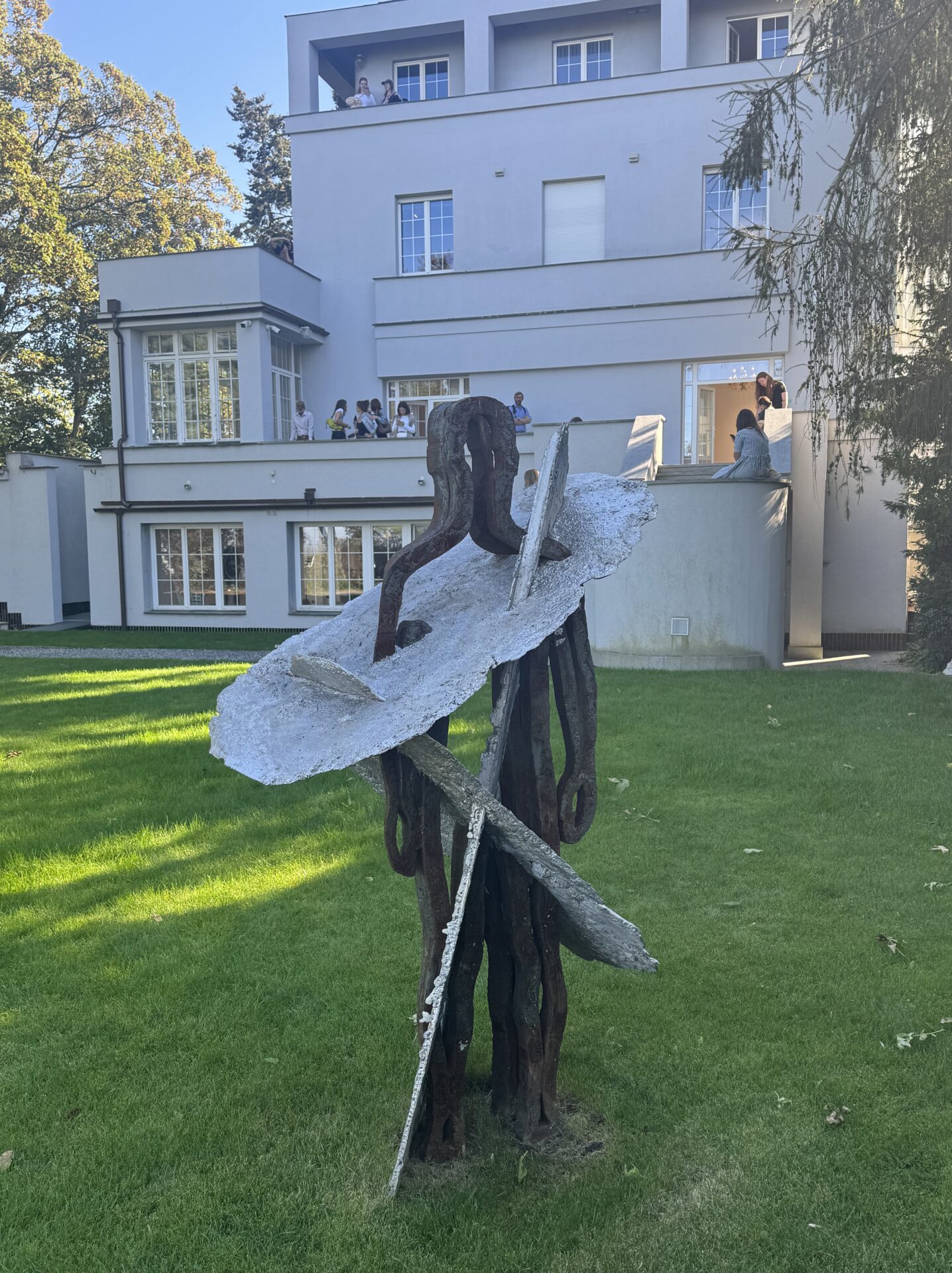
One of the absolute highlights in Prague is TheHouse, a modernist mansion built in the 1930s to a design by architect Tomáš Šašek. Spread across four floors are exhibition spaces and studios that local artists can occupy for a year as part of a residency program. And the program around TheHouse deserves special emphasis here, because it is one of the last landmarks in the fight against the same cuts and studio closures that Berlin’s artists are currently grappling with. Raw talent moves in here for 12 months; before and after, however, artists struggle to find available and, above all, affordable studios. In general, the Czech art bubble weeds people out even more ruthlessly, because many of the funding structures familiar from Germany simply don’t exist. So here, in the spotlight, are four of the artists currently living at TheHouse:
1. Marianna Stranska
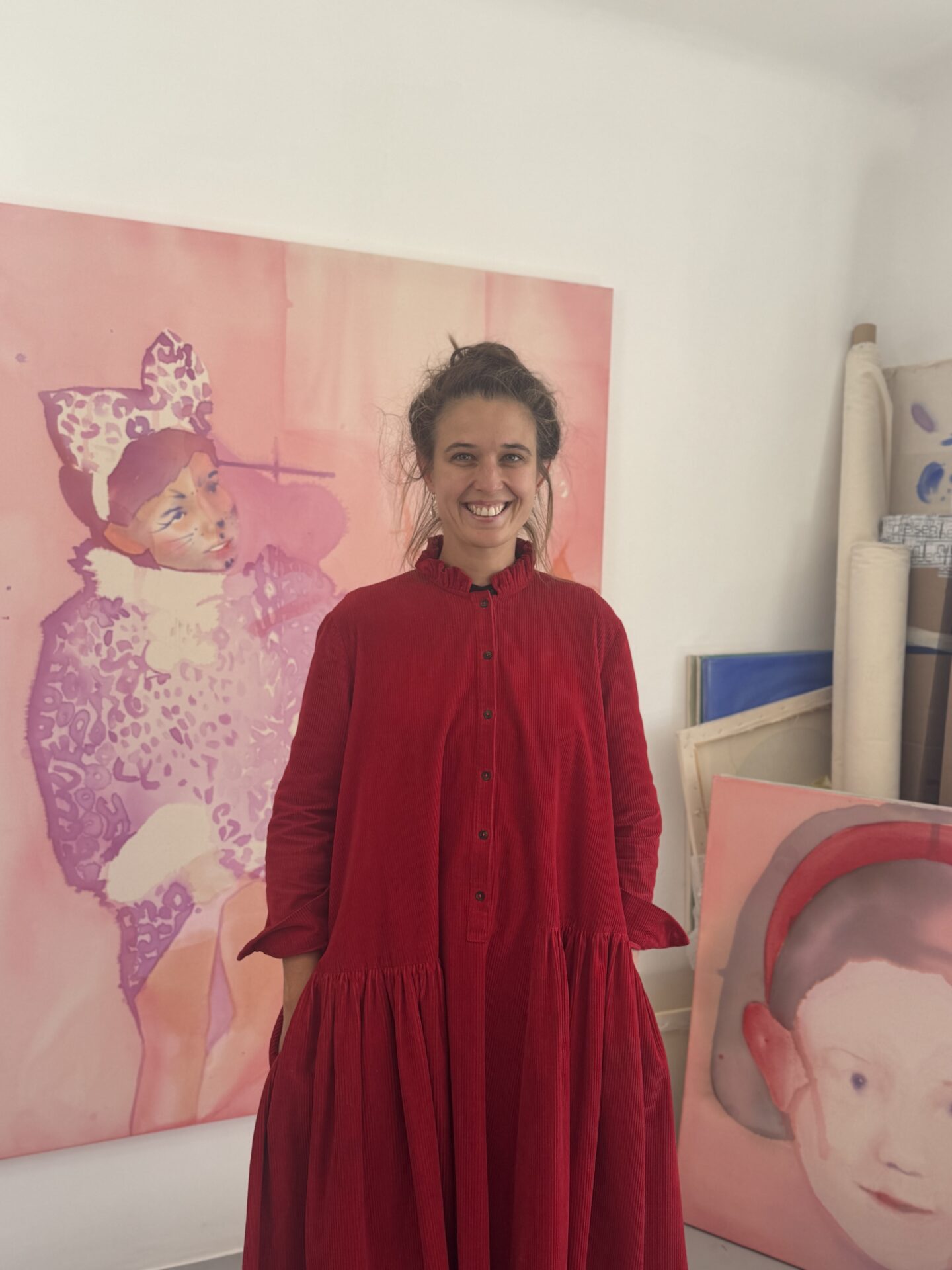
After almost two decades between opera, theater and stage, Marianna Stranska decided to redraw the contours of her artistic practice and focus on her existence as a visual artist. The experience she brings from puppetry and scenography, however, carries over only very subtly onto the canvas, her new medium of choice. She works directly with pigment and watercolor, creating – one is tempted to say – see-through portraits. The figures in her paintings are so fragile and fleeting that you feel as if you’re leafing through faded family photos, catching intimate glimpses into strangers’ pasts. They are mostly – almost always, in fact – pictures of children. The artist herself appears in most of them; the other children are her friends and relatives – 30 to 40 years ago. The quality of these pictures becomes especially clear in their physical presence; reproductions don’t come close to conveying how tactful and tender they feel. And now for the absolute bombshell: at the age of 40, this artist has had exactly one exhibition so far – a duo show last year with the well-known Czech artist Petr Nikl. Curators and gallerists: throw yourselves at this undiscovered gem while you still can.
2. Max van Olffen
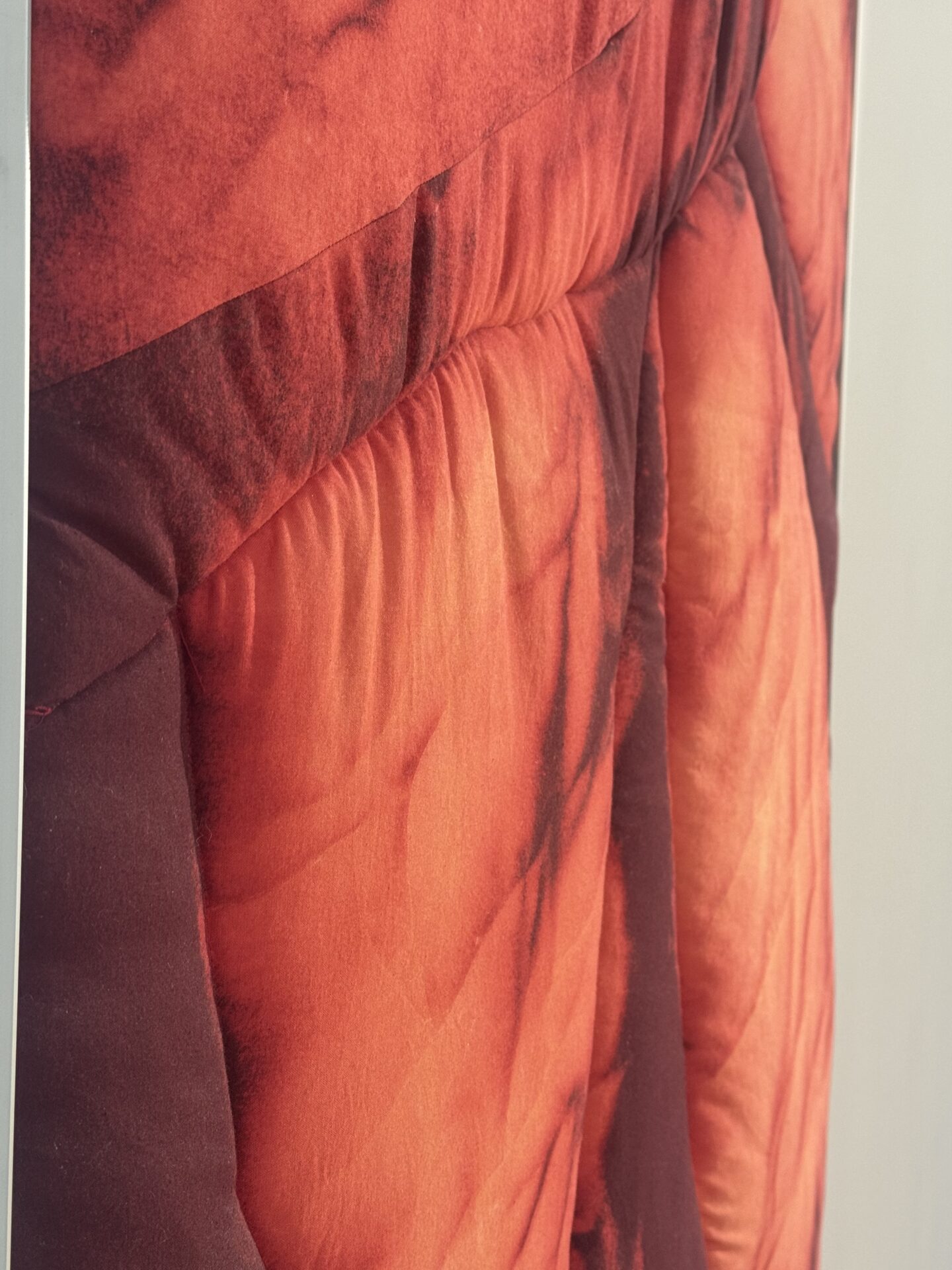
With Max van Olffen, TheHouse is home to another young and so far largely undiscovered artist who knows his craft inside out. Or rather, his crafts. Armed with a degree from the Royal Academy in The Hague, his portfolio ranges from textiles, wall pieces and furniture all the way to jewelry. His textile wall works stand out in particular: relief-like collages. Or collage-like reliefs? The Dutch-born artist combines formal surprises with unexpected pairings of materials. Fast-forward through his development over the past four years and you’ll see a rocket-like trajectory. From the still very experimental-looking, rainbow-colored panels to the organic creatures that populate his walls today – a development well worth keeping a close eye on!
3. Taja Spasskova
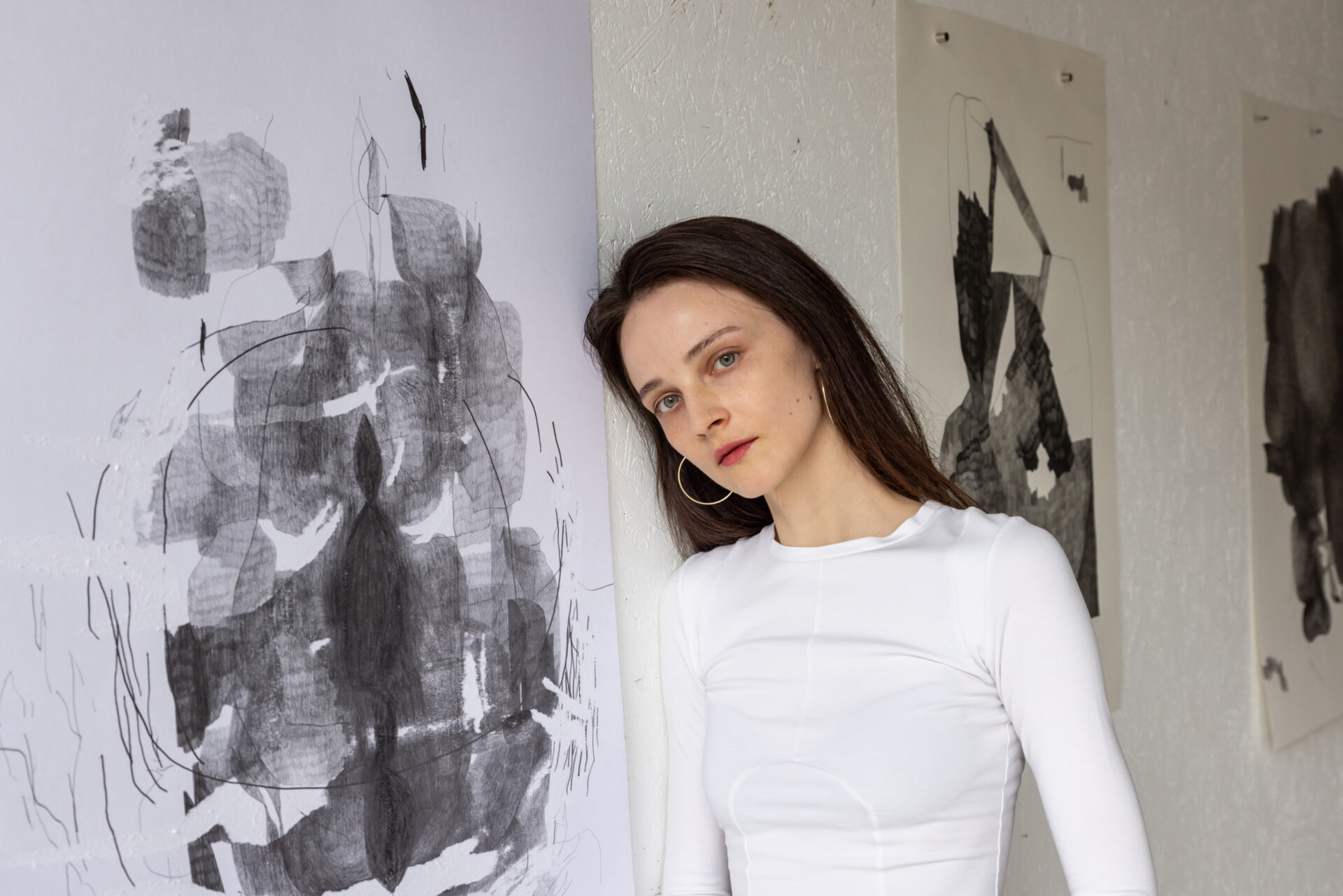
Originally from Belarus, Taja Spasskova also lives in Prague – one of the prerequisites for the TheHouse residency. Spasskova describes herself as an interdisciplinary artist but has a visible focus on drawing and photography. The studio works on show at TheHouse are exclusively abstract drawings. You can sense that Taja Spasskova went through a very disciplined training in naturalistic imitation: in her drawings, tiny figurative references hint at themselves in an almost vanishing way, effortlessly incorporated between curved lines and semi-permeable forms. Her process follows intuitive decisions; the drawings document and translate emotional states that she can assign to specific individual works.
4. Népheli Barbas
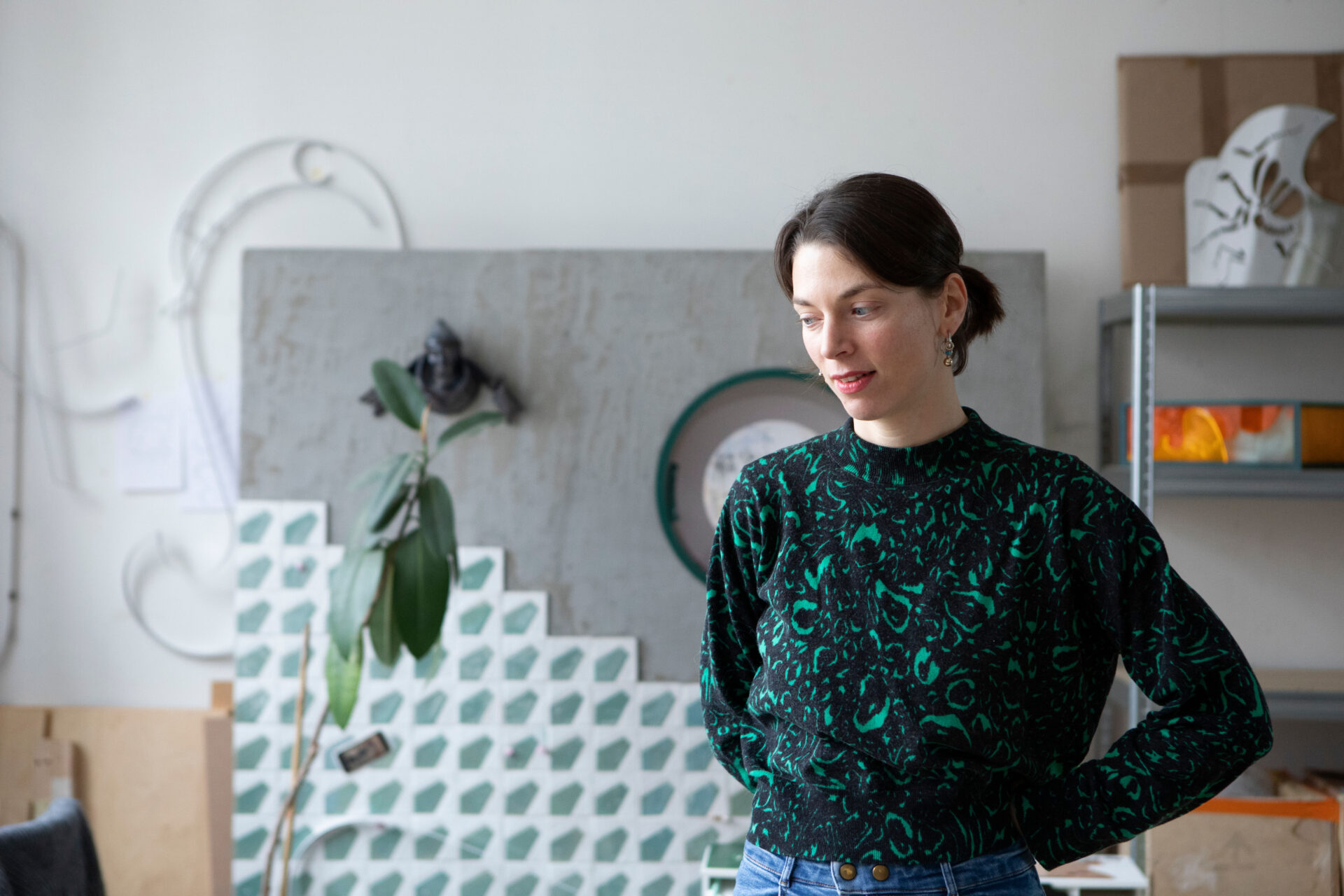
The last rising youngster on this list is Népheli Barbas. And let me tell you: this is where it all comes together! Starting from drawings, the Paris-born Barbas develops models, three-dimensional objects, reliefs, plinths, installations and even architectural elements and spatial structures. Her delicate ornaments in particular recall artists like Kasia Fudakowski. A series like Moonlight Trilobite reveals her originality: gas pumps, furniture and room fans repurposed as plinths serve to present classical sculptures. I can only hope a museum soon invites Barbas to design and build its entire education department and workshops. This playfulness and ease could stir up the dust that has so urgently settled on certain institutions.
Artists from group exhibitions
It wasn’t only individual artists in their studios that stood out – that would be unfair; after all, a studio visit always has something magical about it, something that binds you – but also artists in institutional and commercial exhibitions. Deserving special mention here are the Galerie Rudolfinum, the largest museum of contemporary art in Prague, and Galerie Hunt Kastner in the working-class district of Žižkov.
5. Tanya Lukin Linklater and Duane Linklater at the Galerie Rudolfinum
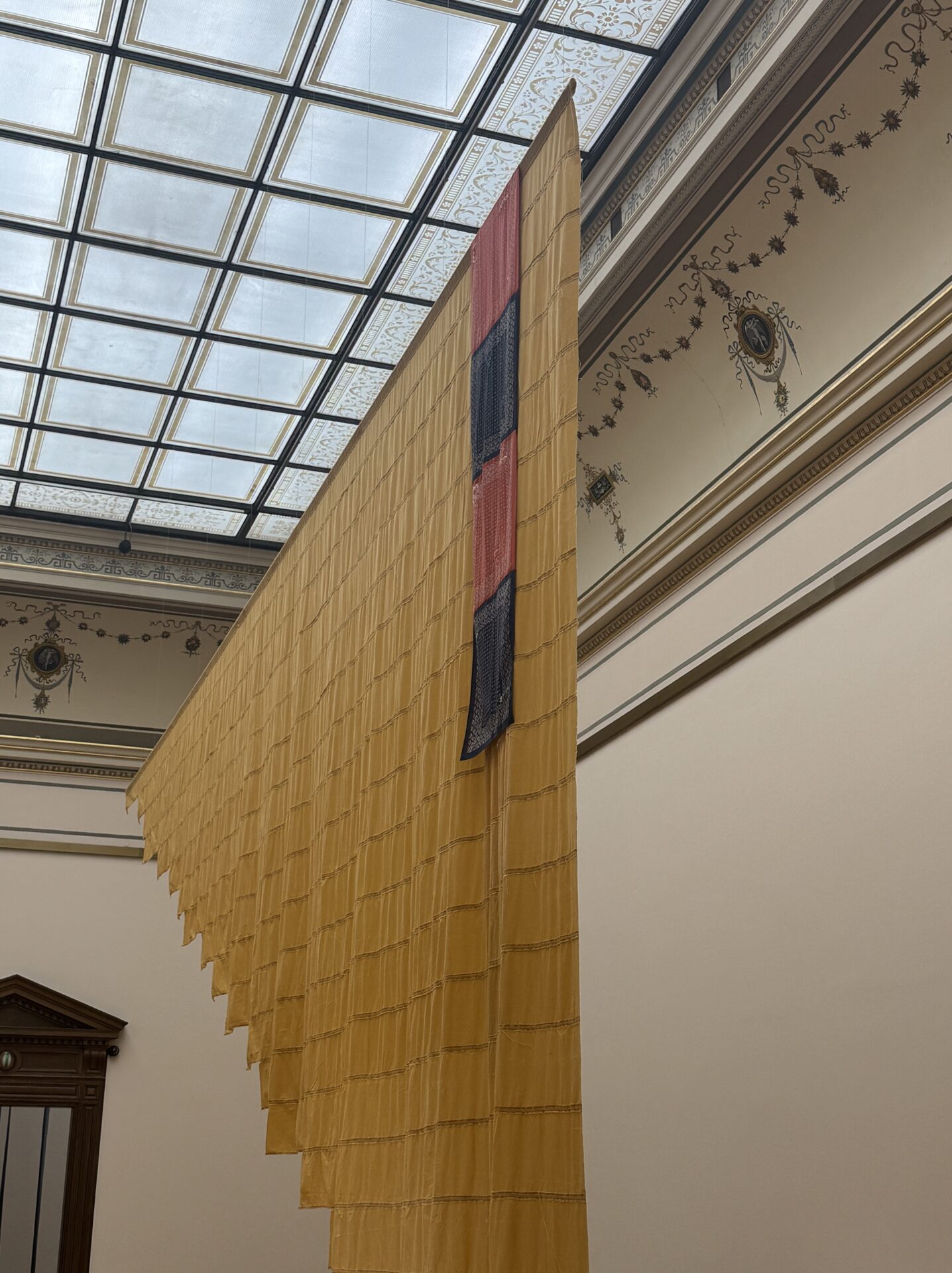
The artist couple Tanya Lukin Linklater and Duane Linklater is probably the biggest exception on this list, for two reasons. First, they are not Czech or Czech-based artists: the Linklaters descend from an Indigenous people over 10,000 years old, native to North America, parts of present-day Alaska and Canada. But as Tanya and Duane put it: “Why should we care about these 175-year-old labels from some nation states that happened to prevail? We can trace our roots in these lands back almost 100 times further.” Oof, damn. The Galerie Rudolfinum is a decadent neo-Renaissance villa, inaugurated in 1885, with a concert hall and exhibition spaces. Art Nouveau and Art Deco sing the building’s almost 150-year history from the walls, the whole ensemble: a concert for the eyes. Egon Schiele, Oskar Kokoschka, Pablo Picasso, André Derain, Gustave Courbet, Édouard Manet, Marc Chagall, Henri Matisse, Georges Braque, Paul Klee have all exhibited here – yes, exactly, the whole damn modernist canon. The Linklaters, too – and this brings us to the second decisive difference from the other artists on this list – are widely known, renowned names in the international art business. Director Julia Bailey discovered them a few years ago at the Whitney Biennial; beyond that, they have exhibited at the Gwangju Biennale, the National Gallery of Canada, the San Francisco Museum of Modern Art, the Heard Museum, Kunsthalle Bielefeld, dOCUMENTA (13) and many more. With their postcolonial approach, they have raised an unwelcome question at the Rudolfinum, one Czechia likes to sidestep, given that the country itself was stripped of its resources under communist dictatorship. But: what about Czechia’s own colonial legacy? Czechia, too, has burdened itself with guilt through unfair trade, for instance by exchanging traditional glass beads for disproportionately vast quantities of goods. And what else it has on its conscience follows at the end of this text.
6. Dominika Dobiášová at Galerie Hunt Kastner
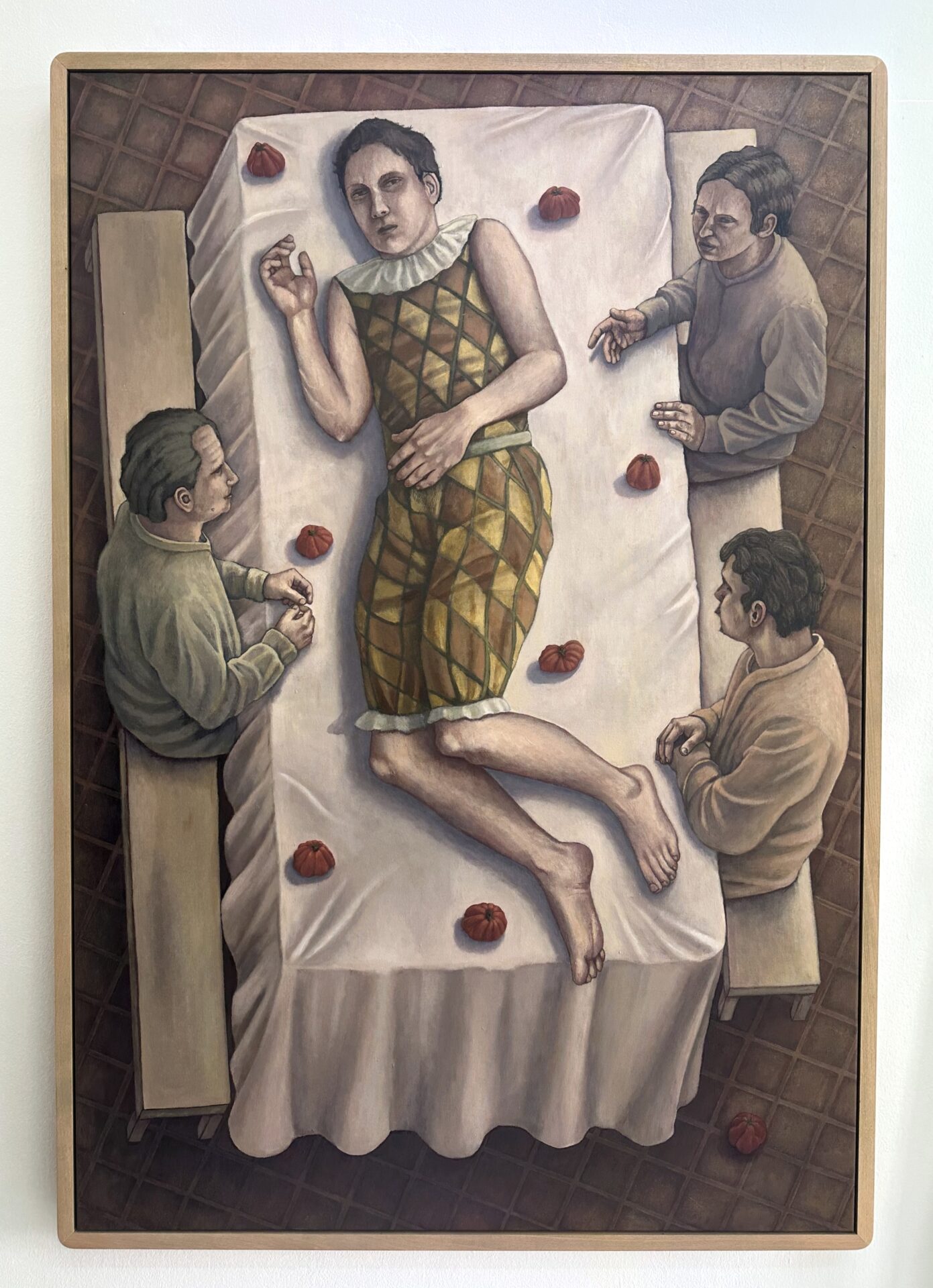
Galerie Hunt Kastner is celebrating its 20th anniversary with a jubilee exhibition curated by Laura Amann Marín and jen kratochvil [sic!] along the artistic positions the gallery has worked with from the very beginning. Although internationally known names such as Klára Hosnedlová and Eva Koťátková are among them, it was two other positions that earned their own spot in this ranking, so strong that they have to be mentioned separately. As for Dominika Dobiášová, she’s preaching to the choir, and I’m singing lead: her figurative painting is dark, symbolically charged and steeped in art history. And yet the pictorial narratives – if you take the titles at face value, at least – are wonderfully familiar and homely: “Neighbours”, “Playground” or “The World belongs to us” suggest smooth postcard motifs, only to surprise you with so much depth that you could lose yourself in every single picture.
7. Michaela Thelenová at Galerie Hunt Kastner
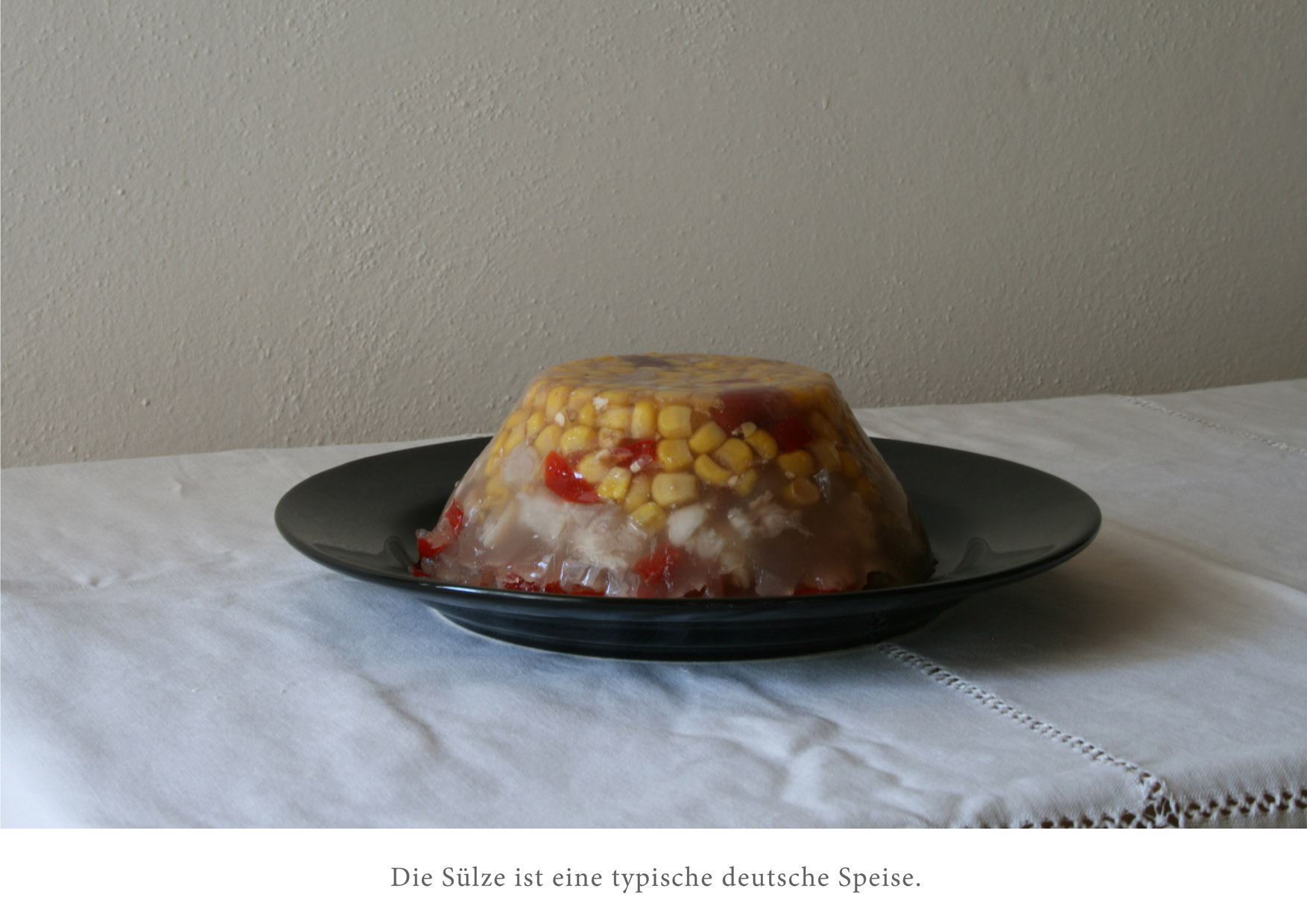
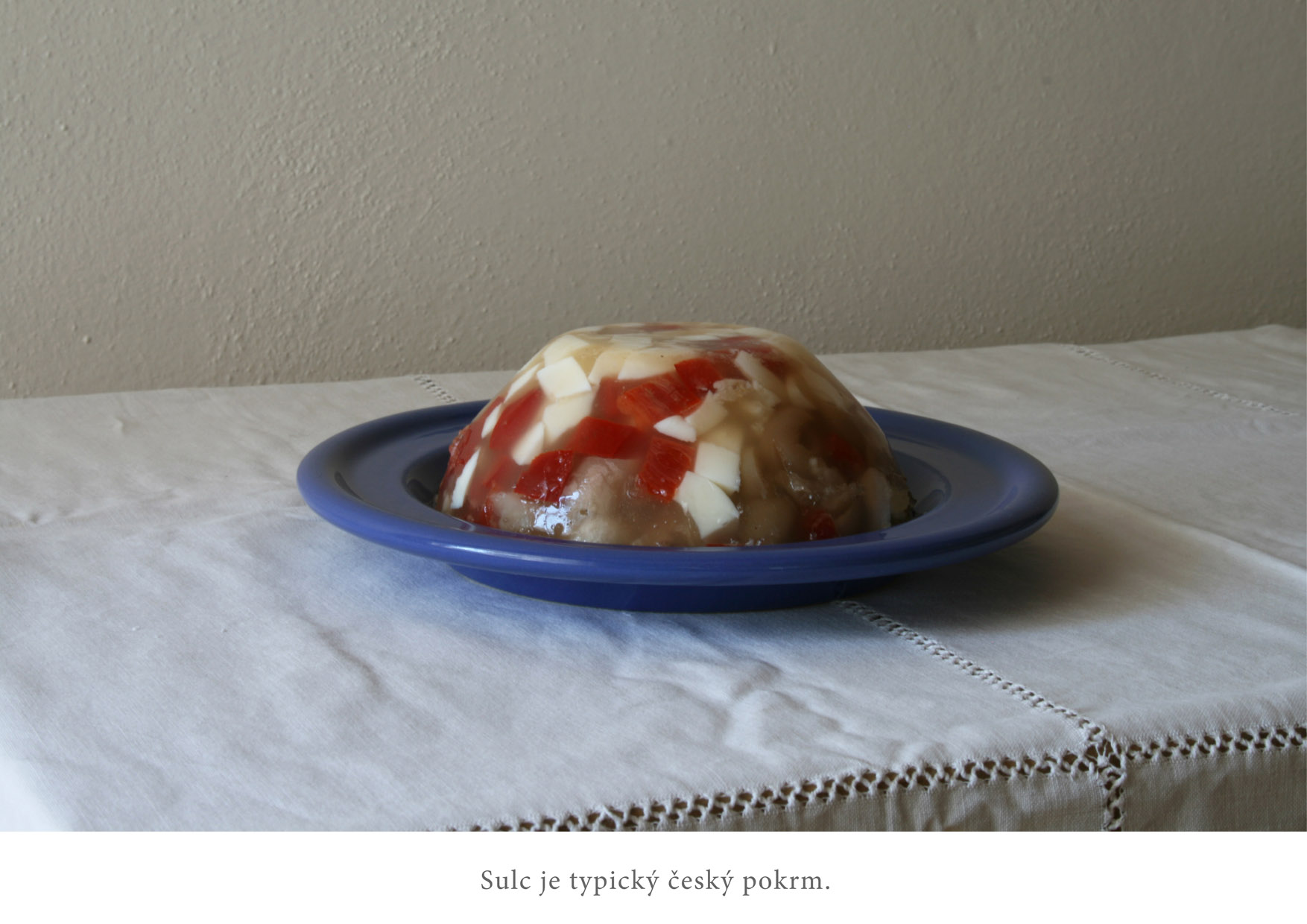
But my heart also beat especially fast for the work of Michaela Thelenová – not only because Thelenová, too, lives in the countryside near a European city (Sovolusky, near Ústí nad Labem), but because her work rests on the perfect mix of poetic critique and humorous observation. In a large number of her works, she grapples with the legacy of the Sudetenland, the legacy of the expelled Sudeten Germans and their traces in present-day Czechia. She often uses image and text as a pair; some of her works have a documentary character or recall explanatory panels from educational settings, not least museums. To make it concrete with a concrete example: the current exhibition features a two-part work, each part showing a picture of aspic, with a caption underneath in German and Czech respectively: “Die Sülze ist eine typisch deutsche Speise.” / “Sulc je typický český pokrm.” (Aspic is a typical German dish. / Aspic is a typical Czech dish.)
8. Marie Lukáčová in the collection of the Emblem Prague Hotel
I didn’t see this one coming either: hotel art, lobby art, is often – well, let’s say: tricky. It’s tricky, after all, to stay open to the tastes of all kinds of guests while presenting good art that doesn’t pander. That doesn’t ruffle any feathers. But that is exactly the risk Helena Hons Valtrová, director of the Emblem hotel in Prague, is willing to take, giving her curatorial team a free hand – and ruffling plenty of feathers! Guests have even checked out of the hotel because of the art. How great is that!? The list of artists speaks for itself: Tauba Auerbach, Josephine Pryde, Lucy Raven, Lucy McKenzie, Thomas Zipp, André Butzer, Eva Koťátková and Jiří Kovanda, to name just a few. The hotel is home to more than 60 works, some in the publicly accessible underground lounge, some spread across the rooms where guests sleep. How do the works end up in the collection? Through a residency program, so to speak. The curators approach specific artists, Czech and international, and offer them a stay at the hotel. One of the artists listed even lived at the Emblem for six months. In exchange for the hospitality, works stay in the collection. Marie Lukáčová stood out in particular with her magnificent film “Orla”, which will also be available in the Arte Mediathek from October 8. A wonderfully poetic mix of experimental and narrative film, spiced with Dadaist moments, wonderful Eastern European neo-avant-garde.
Institutions
9. Kunsthalle Praha
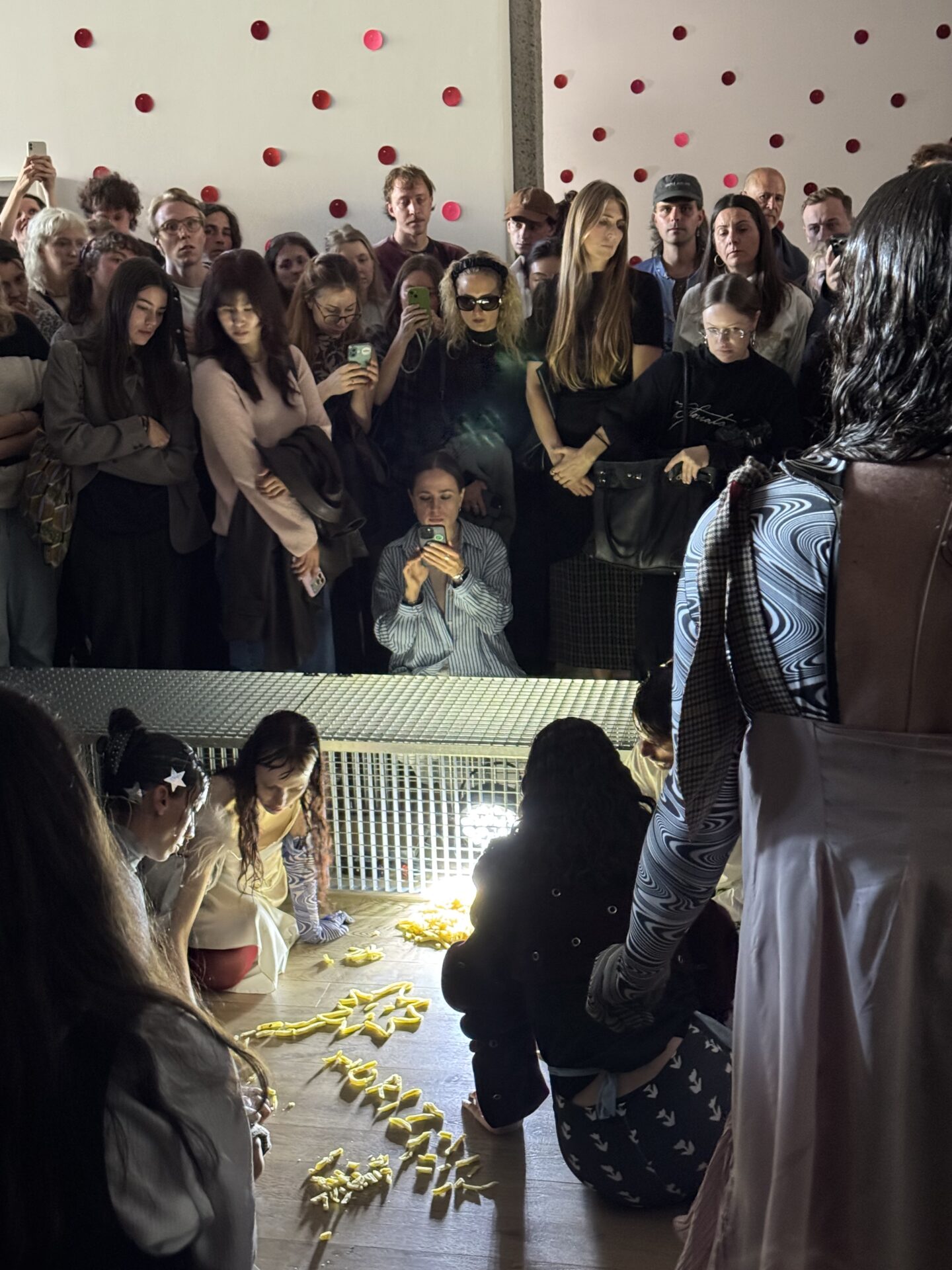
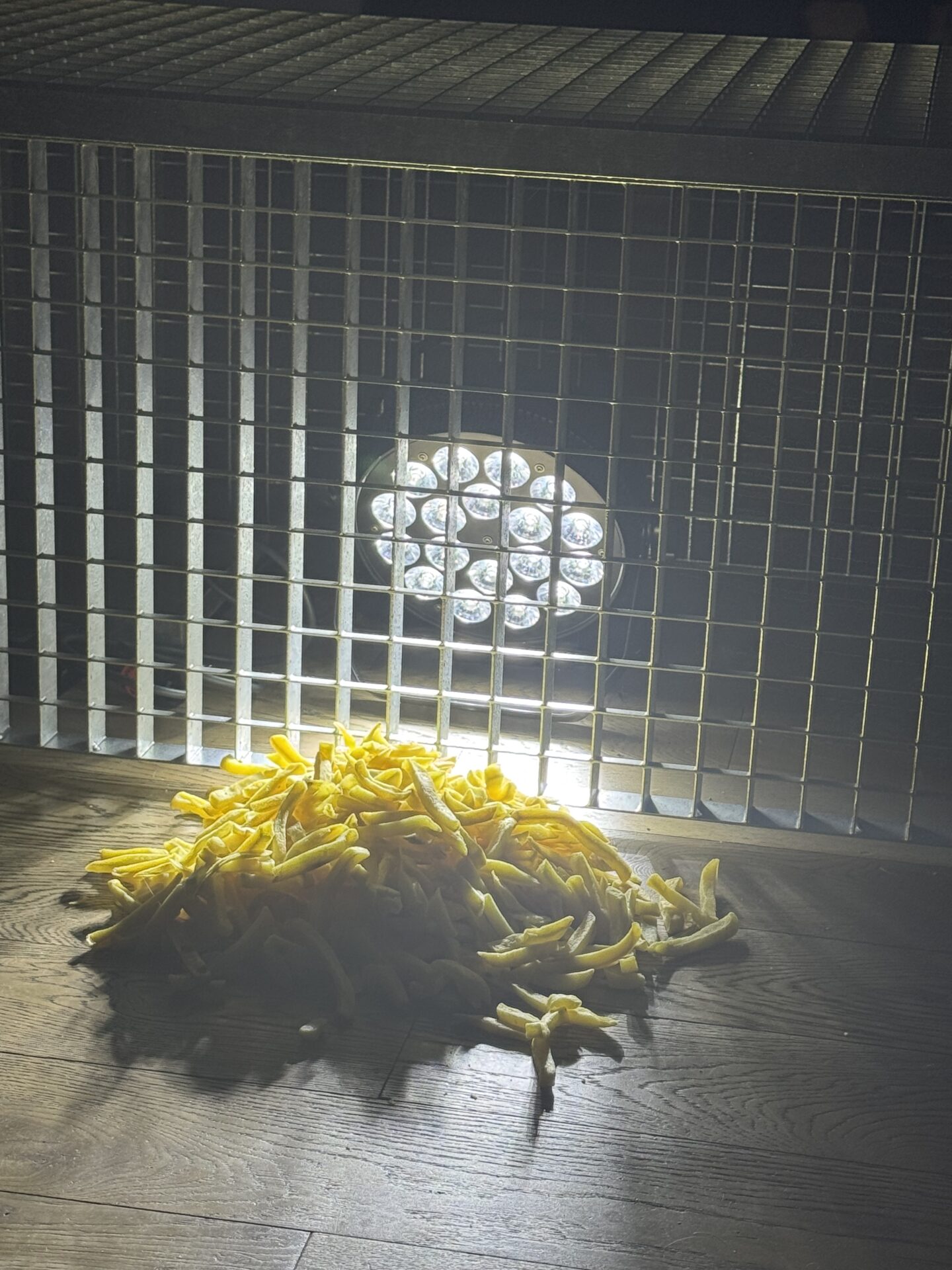
At the invitation of the Kunsthalle, Croatia-based, Slovenia-born Tevž Logar has subjected the museum’s collection to an interrogative curation, inviting artists who are not (yet) represented in it. Among them is, for example, shooting star Lukáš Hofmann, who likely played a noticeable part in the Kunsthalle Praha being packed on Sunday during Prague Art Week. Practically the entire Prague cultural scene was milling around this sensitively curated interrogation of the collection. The collection in question includes works by renowned international artists such as Heinz Mack and Kurt Schwitters, but also relevant Czech positions like Jiří Černický and Eva Koťátková. In four sections, under the title “Memory of Touch”, the exhibition explores what a dialogue between established, sometimes art-historical heavyweights and young, emerging artistic perspectives can look like.
And this example reveals a particular tension that a Prague gallerist, in a one-on-one conversation, attributes to the city in the broadest sense: the same tension the National Gallery Prague keeps getting dragged into, right up until its leadership is fired overnight with a big bang, most recently in March 2026. Prague is home to a wide spectrum of cultural preferences: from orthodox to bourgeois-conservative to radically progressive. Getting all of these under one roof is doomed to fail. So why does it work so well at the Kunsthalle? The gallerist had a clear answer to that, too: because it is 100% privately funded, by the Pudil Family Foundation.
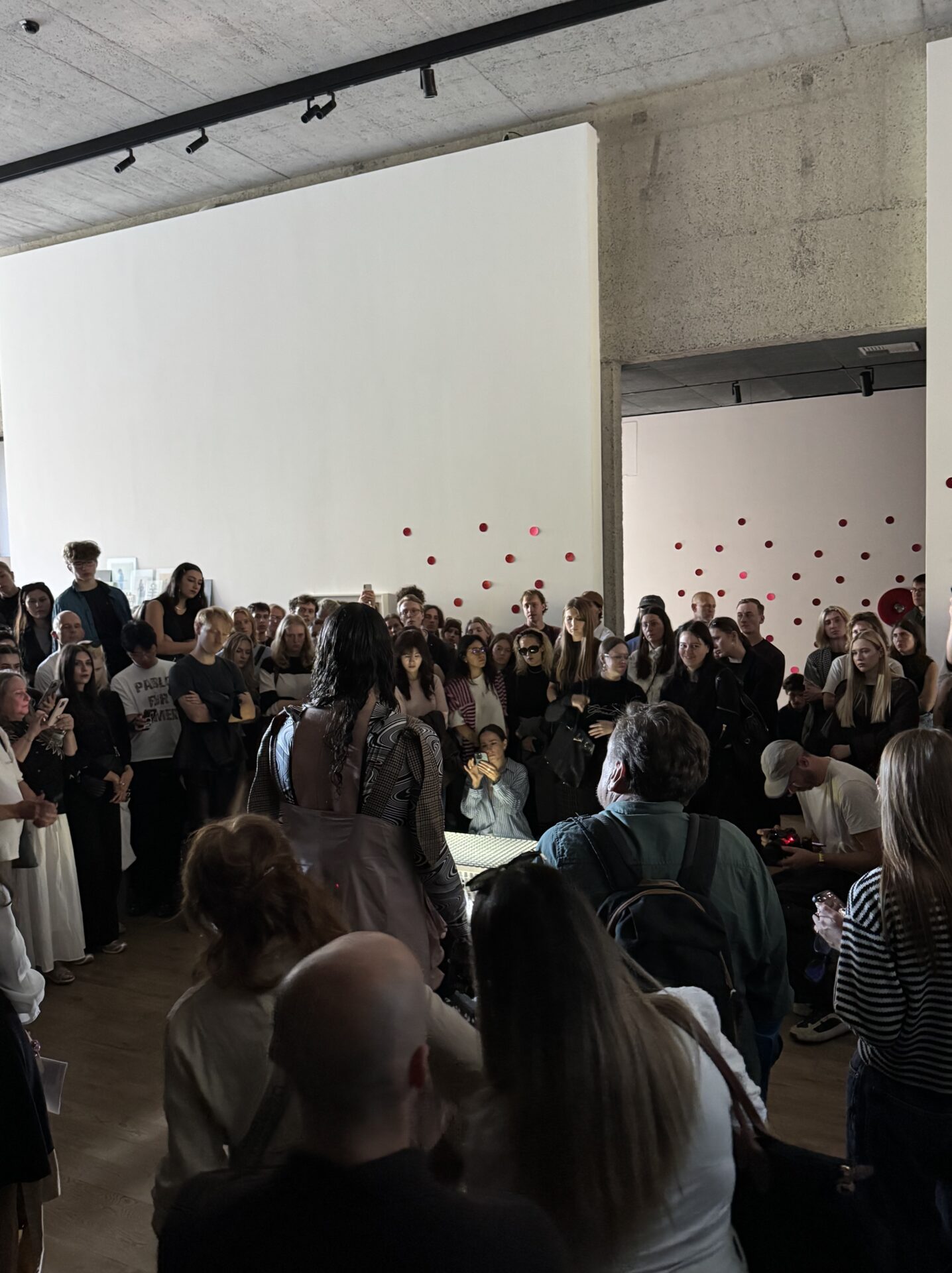
10. The Oldřich Uttendorfský Collection at the Magnus Art Gallery J&T Bank
Because this spectrum became truly apparent at the opening at the Magnus Art Gallery. First of all, curator Valérie Horváth cannot be paid enough well-deserved respect for her brilliant curation of this exhibition of the collection of Oldřich Uttendorfský, a former doctor and obstetrician with a soft spot for unusual objects. Horváth has countered this accumulation of objects, modeled on a cabinet of curiosities, with a two-part curation: on the one hand, objects mapped out against monochrome backgrounds, much like the catalog of an archaeological museum; on the other, theatrically staged installations, such as the laid table with 18th-century Chinese porcelain, flanked by a stuffed jaguar and a stuffed black lamb.
At the opening during Prague Art Week, Uttendorfský explains in likable fashion that his collection – a hodgepodge of curiosities, objects, masks, a mummified cat, taxidermy and artworks – was never driven by value creation. Some of the objects were acquired at great expense from antique and art dealers, others picked up for next to nothing at flea markets. But all of them, according to Uttendorfský, possess an aura that makes them valuable, all equally so. Although he had just been talking about a dinosaur egg with an embryo inside – which curator Valérie Horváth, in a radio interview the day before, had also identified as the piece that probably best represents Uttendorfský as a collector – the good man suddenly drifts off. And then, unfortunately, he took a wrong turn. In his meandering monologue, the collector loses himself in a memory surrounding his “most valuable” object – the object he “would take to his grave if he had to choose.” Nobody had asked. He should have left it at the dinosaur egg. Oldřich – no joke, by the way: to German and English-speaking readers, this traditional Bohemian name might sound like political satire – Uttendorfský recalls a drive through Nairobi. During the drive, he noticed five boys playing “in the dirt”, poor and unclothed. So poor they didn’t even have anything to play with. Only one of the boys was pulling a small red toy car behind him on a string. In this scene, Uttendorfský recognized the priceless value of the object; to him, the toy was worth as much as the Lamborghini or Ferrari in the garage is to others. Quick glance around the room: no one present seems to own a comparable vehicle, at least no one nods in agreement. So Uttendorfský told his chauffeur (not driver!) to buy the toy from the boy. The chauffeur got out and walked toward him. At the sight of the collector and his chauffeur, the boy got scared and ran off. Maybe it’s better this way, Oldřich Uttendorfský thought to himself. Maybe the boy from Nairobi shouldn’t have his most treasured possession taken from him by a rich old man from Europe. The next morning, however, the chauffeur knocked on the collector’s door, held out the red toy and reported that he had paid less than 1 dollar for it. That, unfortunately, was the end of the story; nobody went back to find the boy and pay him his weight in gold.
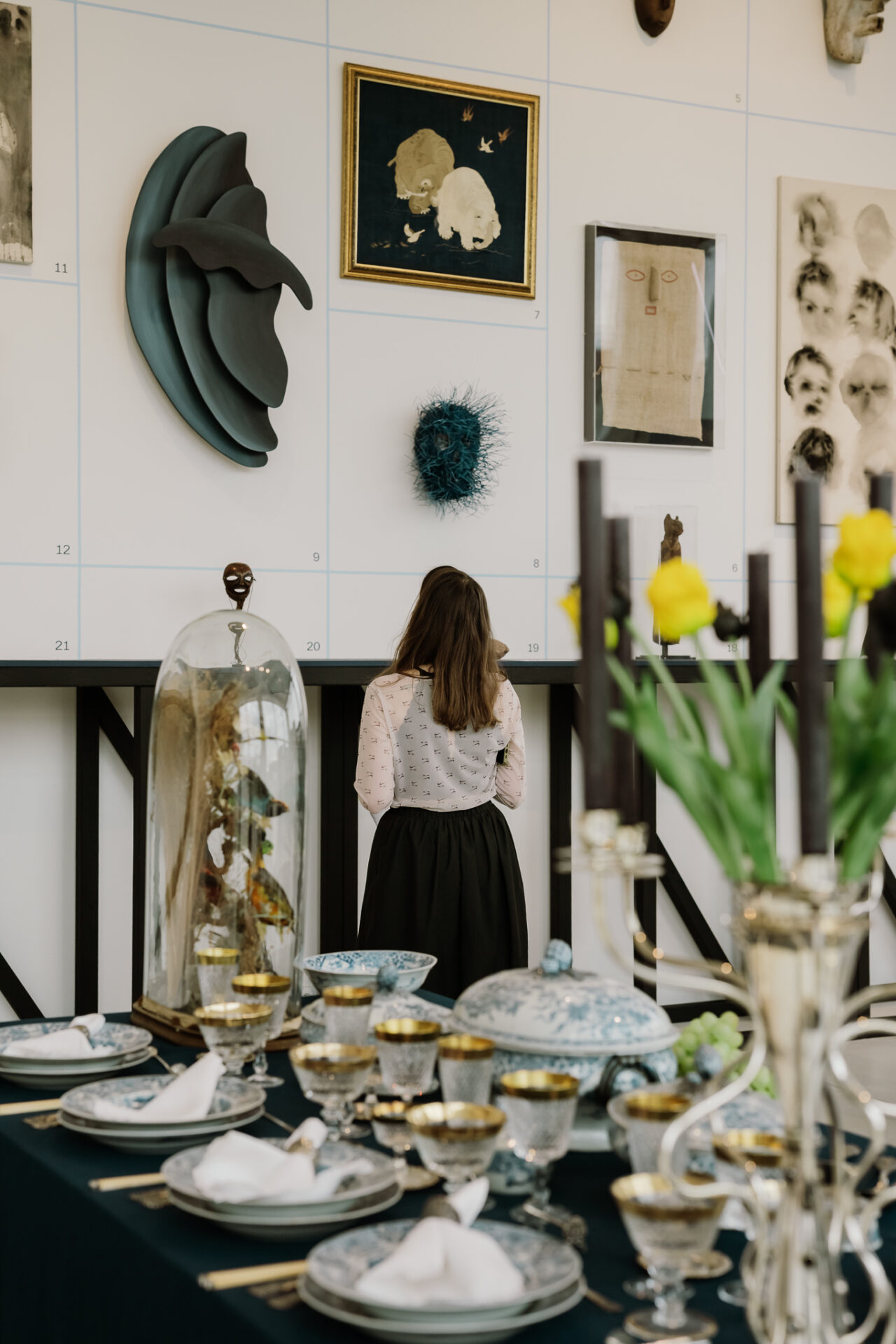
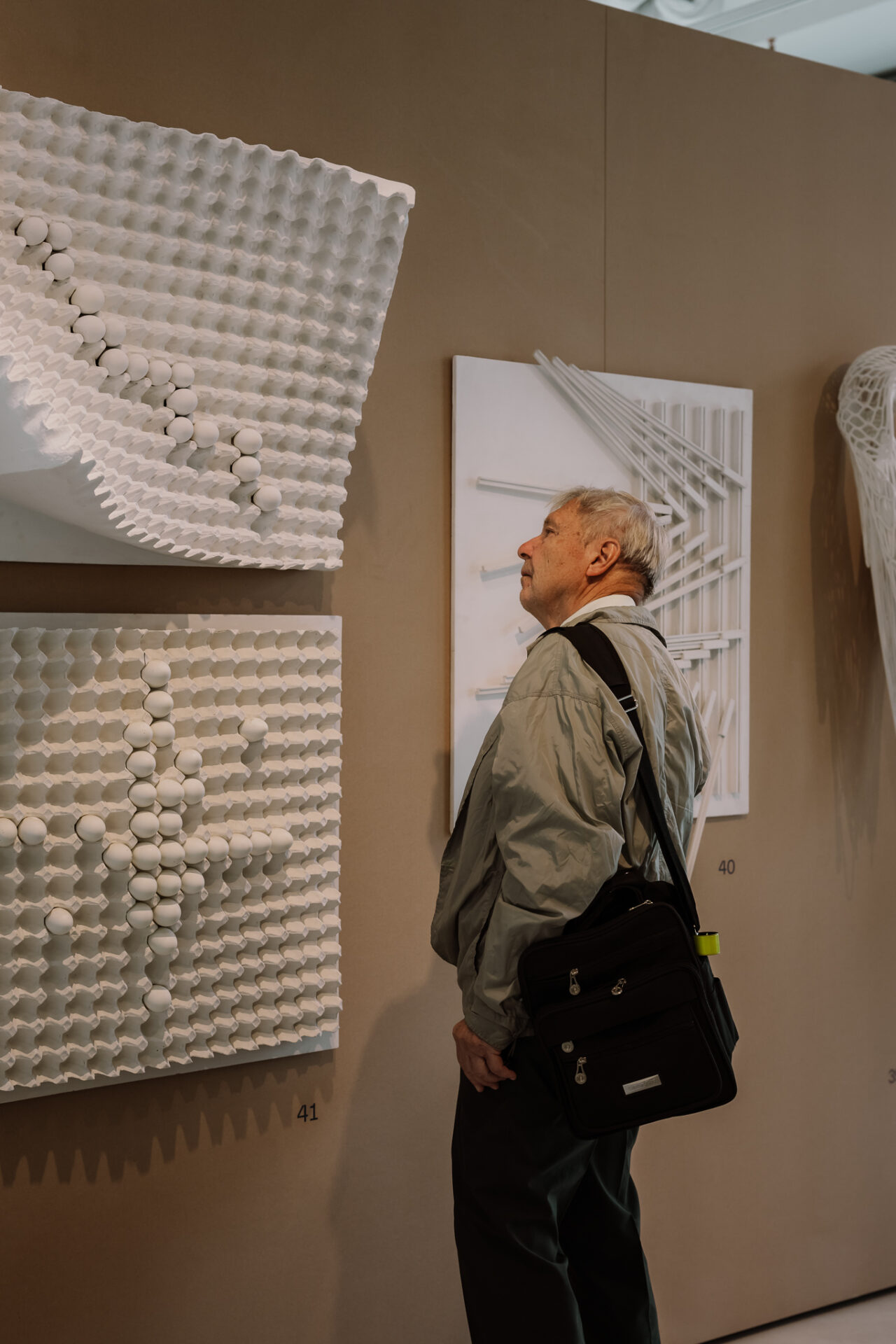
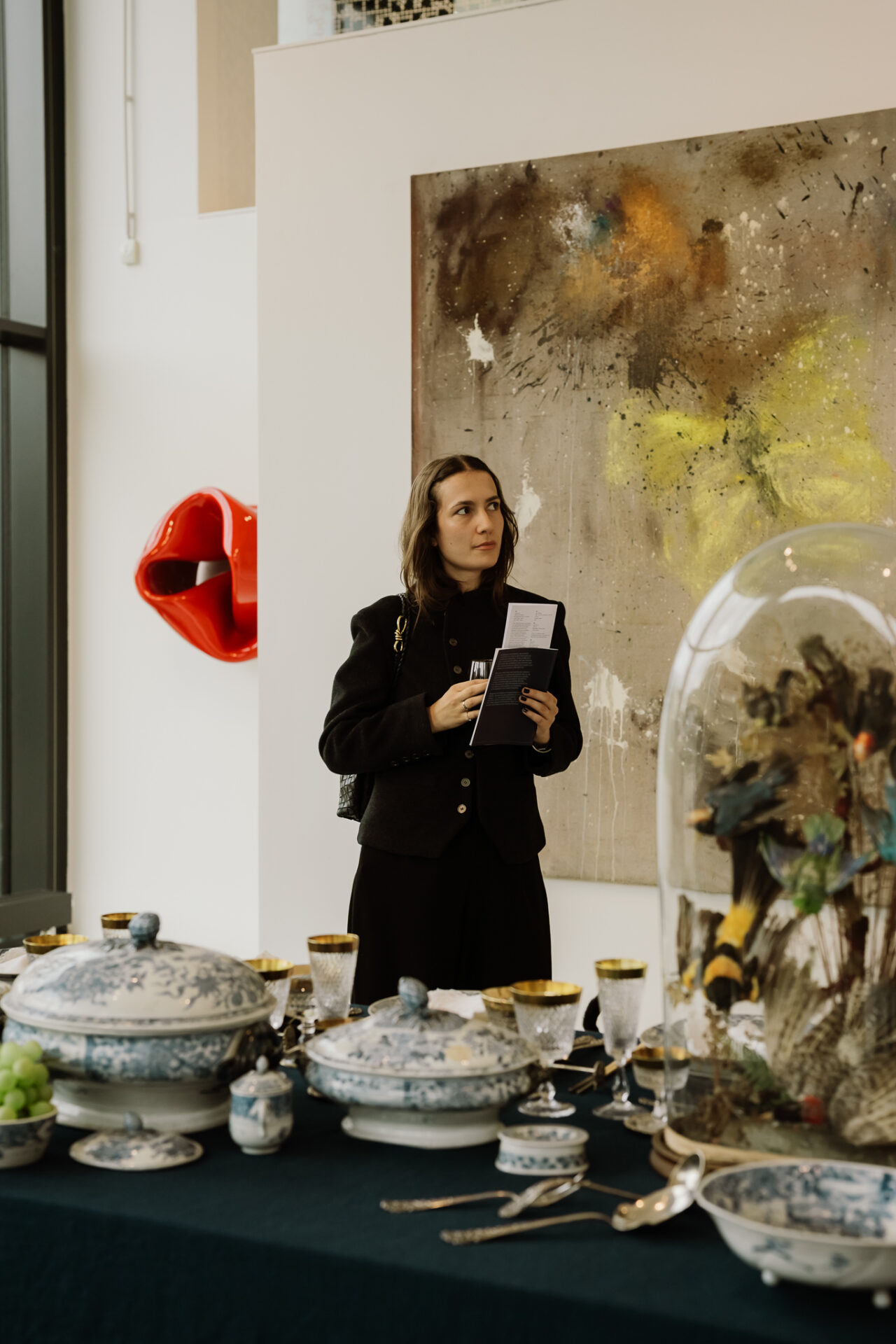
Although the collector admitted to a certain regret while telling the story, the narrative was sadly left hanging in the air, uncommented. The object itself couldn’t be seen that day; the atrium, where it is apparently on display, remained closed. The tour of this exhibition, incidentally, came directly after the tour of the exhibition by Tanya Lukin Linklater and Duane Linklater. And the Magnus Art Gallery’s concept is genuinely interesting: its beautifully light-flooded exhibition spaces have so far presented eight collections of Czech and international collectors. The selection from the Uttendorfský collection shown here amounts to perhaps a third of the whole. In Horváth’s curatorial presentation, the sensitivity toward an internationally highly flammable discourse around restitution and postcolonialism worked out very well; it could even serve as a textbook example. It was only the neo-colonial aftertaste of the collector Oldřich Uttendorfský’s anecdote that left a sense of unease hanging in the room. Perhaps a performative taste test of the cultural balancing act the aforementioned Prague gallerist had spoken of.