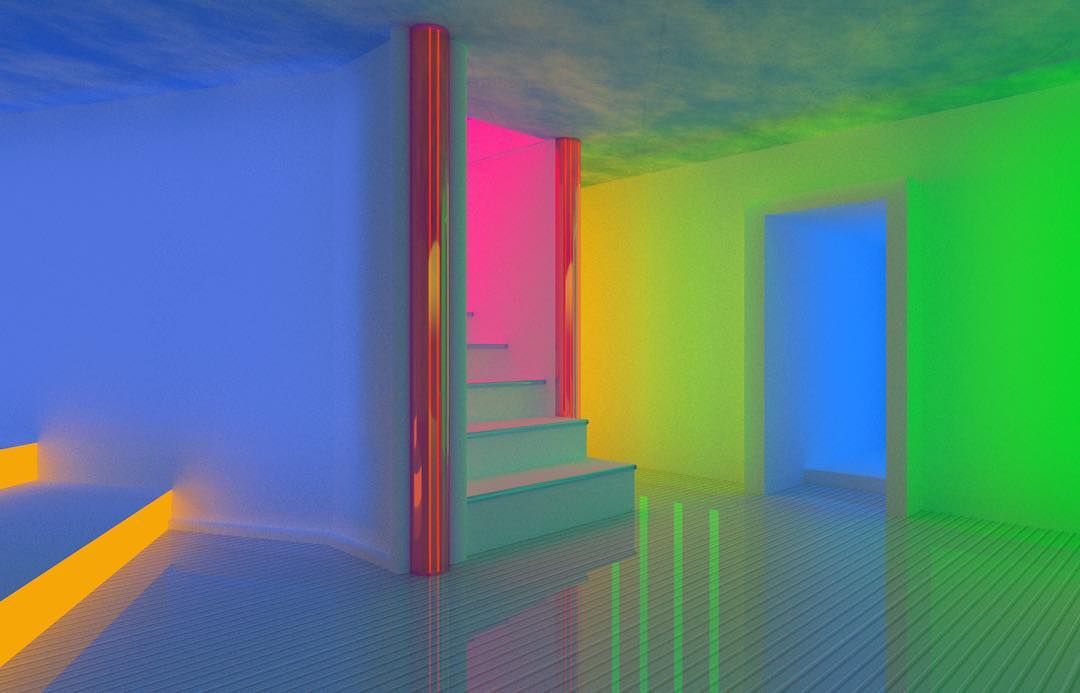
Courtesy of @neonsaltwater.
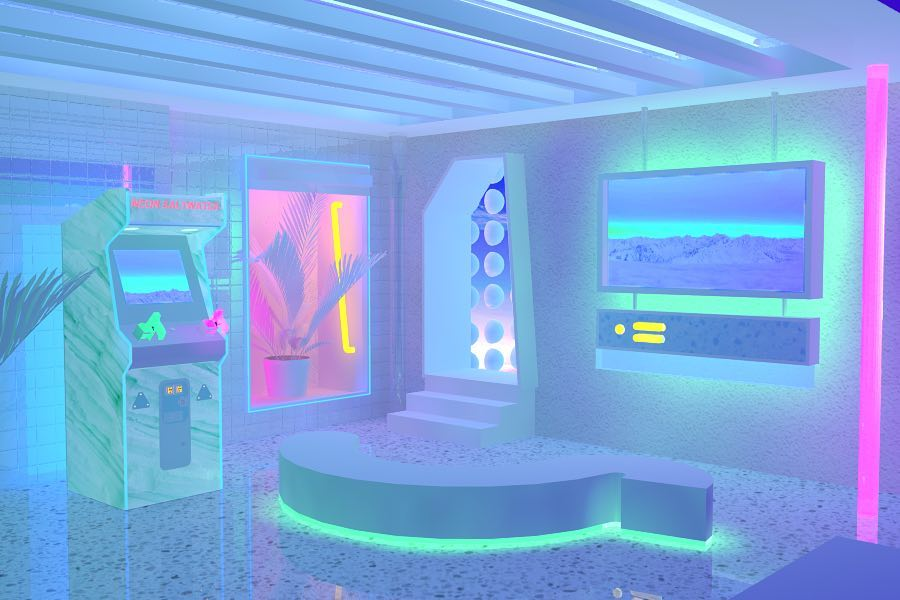
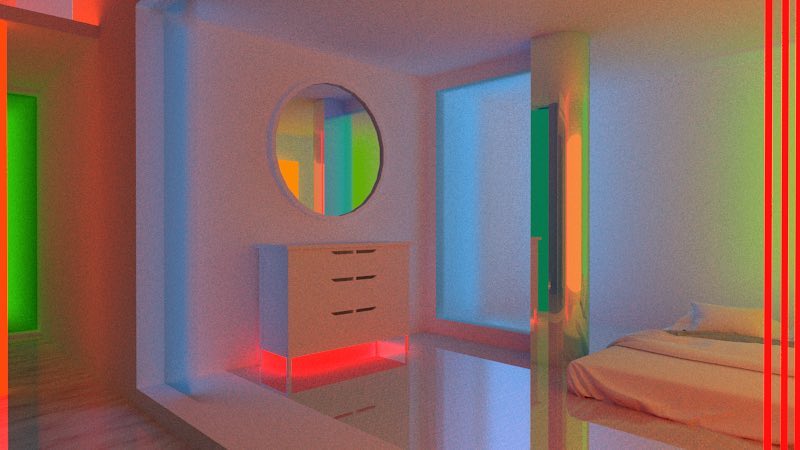
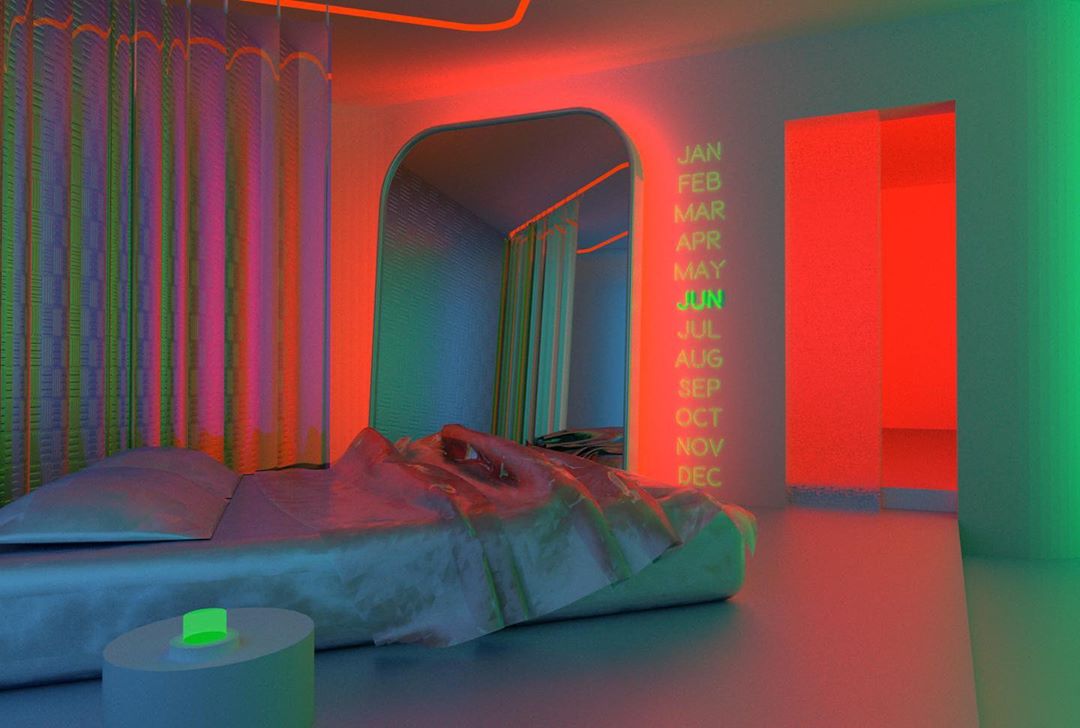
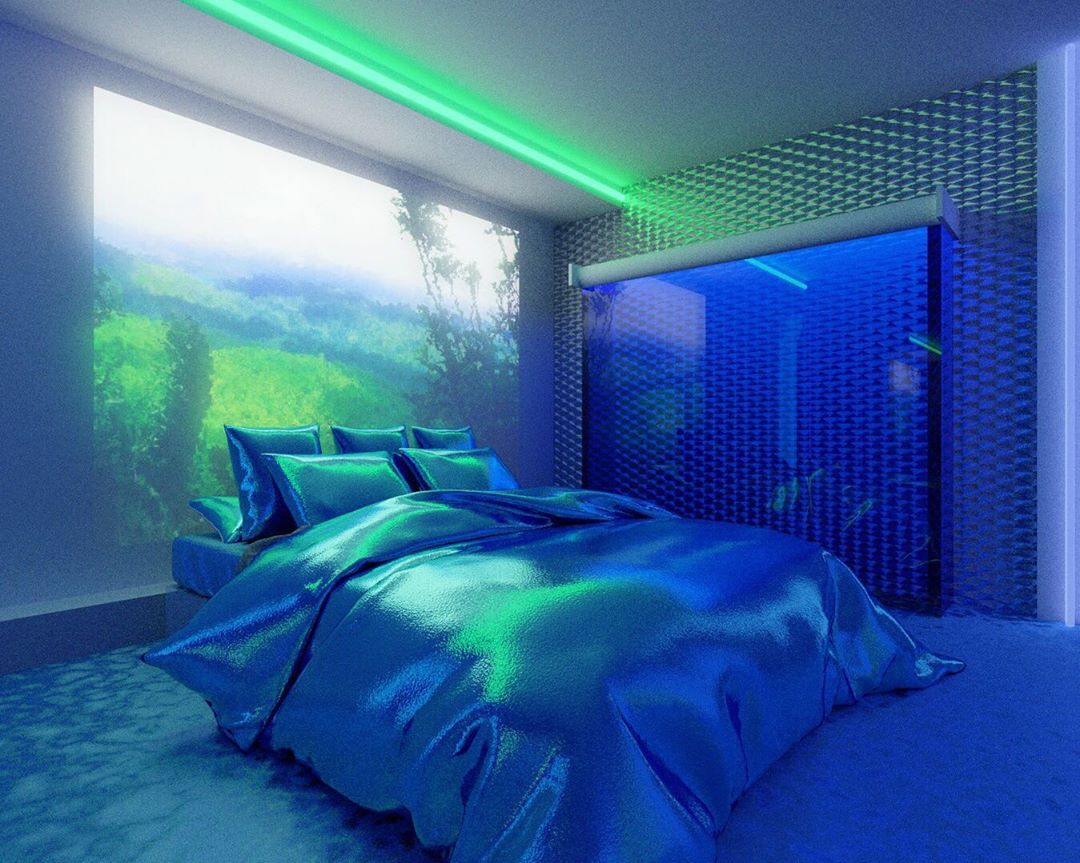
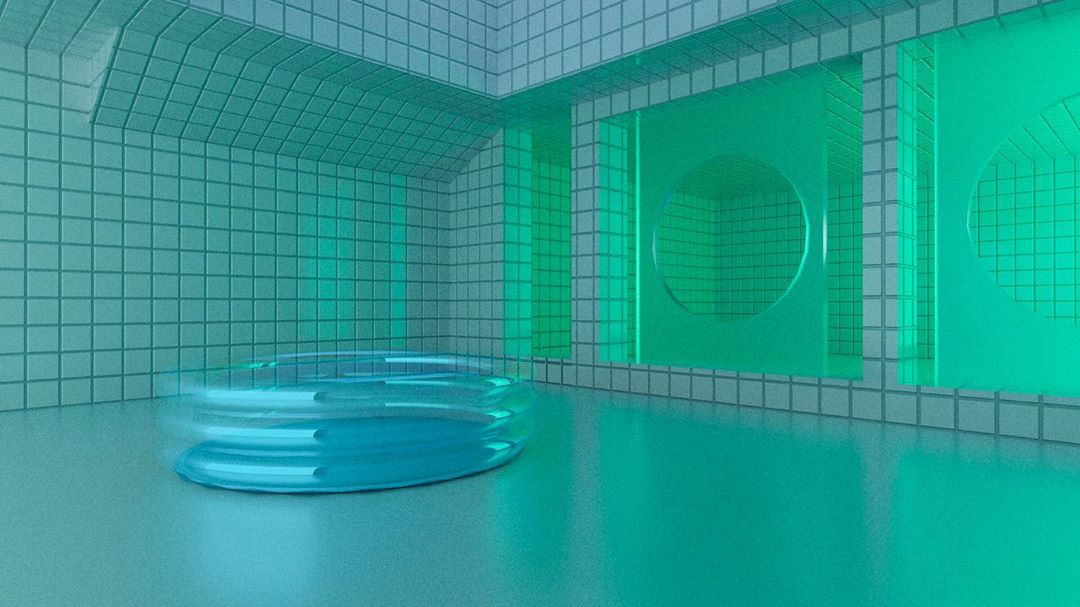
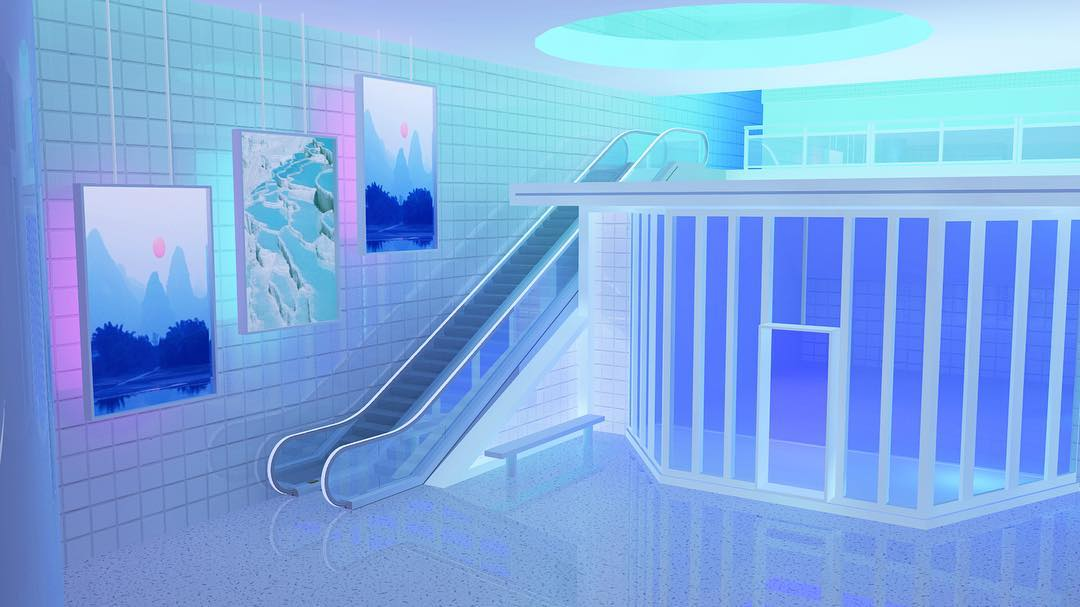
Abby Doughtery is the digital (and IRL) interior designer behind @neonsaltwater—the account blessing our Instagram feeds with colourful and futuristic dreamscapes that evoke a combination of 1980s Palm Springs, mid century-modern and Dan-Flavin luminescence. Bathed in tropical hues and awash in neon glows, her digitally-rendered interiors are characterised by swimming pools, palm trees and alien landscapes that are just-about glimpsed through windows. Simultaneously evoking a sense of wanderlust and a profound loneliness on account of their eerie emptiness, her digi-scapes are noticeably unpopulated, allowing the viewer to fully immerse themselves in the microcosm and live out their fantasies without the intrusion of other characters.
Although digital design allows Doughtery to defy the limitations of gravity, space and the obvious obstacle of financial resources, she’s been scooped up by some pretty major galleries and clients to bring her visions into the physical world. She’s been featured at the prestigious Winston Wächter gallery, held a solo exhibition at Glass Box gallery in Seattle, and designed a retail installation for Barney’s Beverly Hills. With the imminent end of summer approaching, take a virtual holiday with Neon Saltwater.
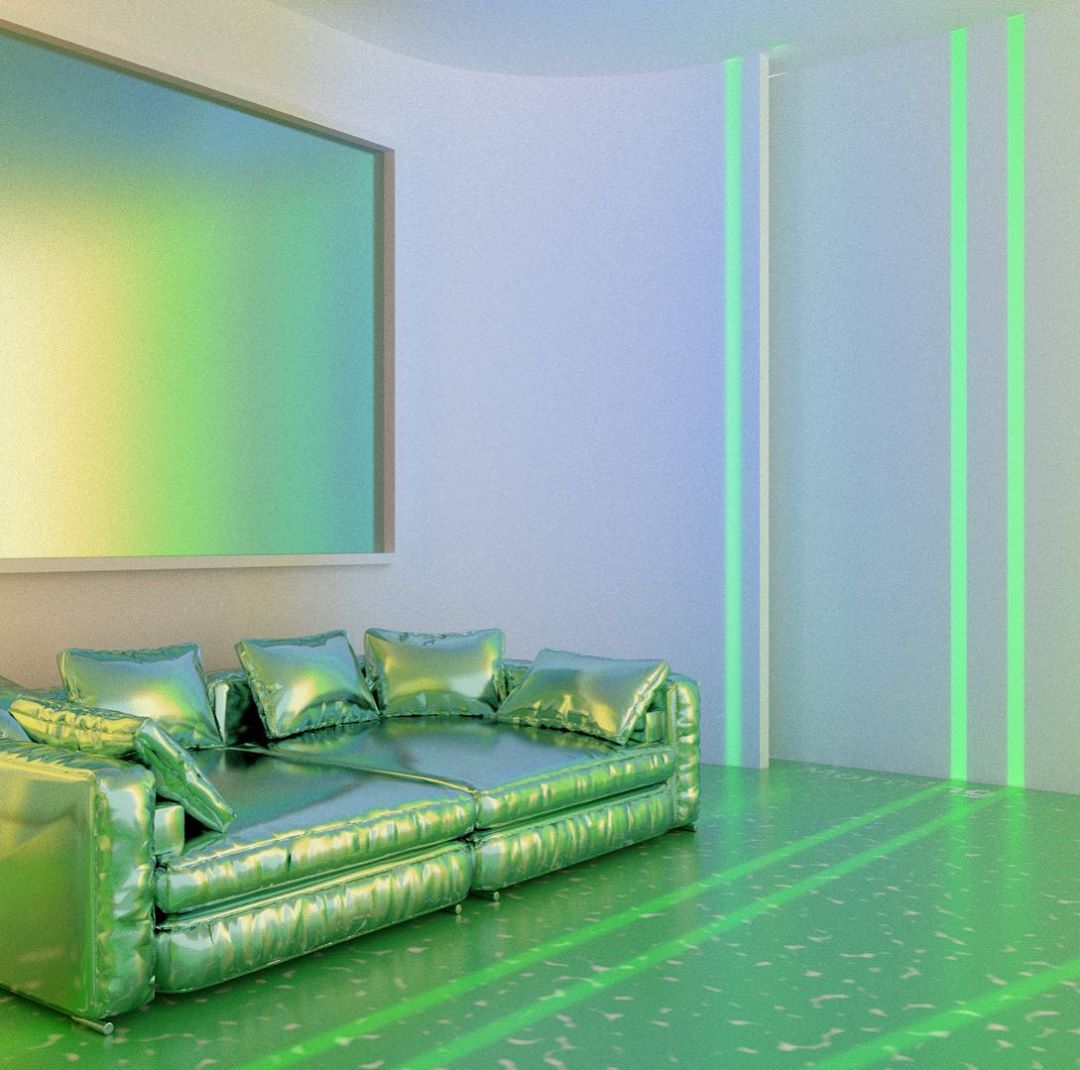
Courtesy of @neonsaltwater.
There’s something very cinematic and nostalgic about the spaces that you create. Are there any films or directors in particular that inspire your work? Would you ever consider designing film sets?
I would very much like to design sets for films or music videos but don’t have a favourite director in the industry. I am inspired by some of the most unexpected films as well and don’t feel attached to one style over another, or one particular director.
Can you tell us a bit about the ‘roomwave’ term that you came up with in 2015? What makes it different from other kinds of digital interior design?
‘Roomwave’ is a term that I came up with to mostly define all rooms that felt significant in their design and left the viewer with a strange sense of emotion.
A lot of my work obviously fits in this genre, but ‘roomwave’ existed as a collective inspiration page on Facebook that allowed people to post photos of rooms that made them feel strong emotions. These could be photos they found online of real spaces or digital renderings.
Other digital designers that make rooms are totally capable of making ‘roomwave’ as is anyone, really. I would say my own work very much resembles the term the most out of what I’ve seen out there because all the rooms share the intense juxtaposition of resembling some sort of paradise as well as being very sad and lonely at the same time.
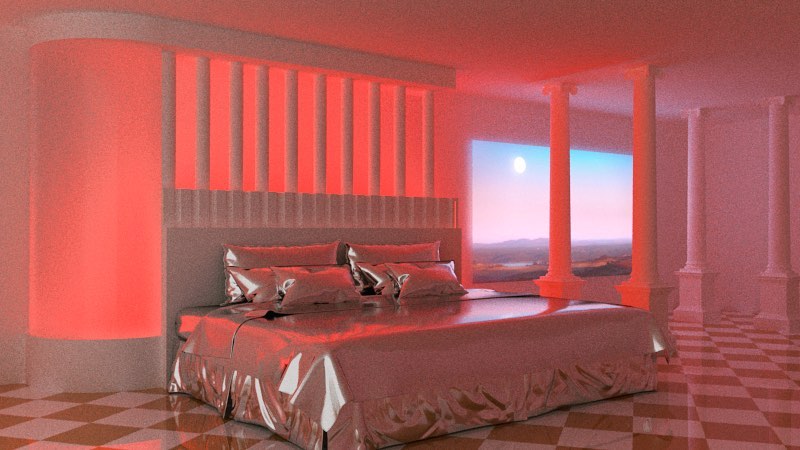
Courtesy of @neonsaltwater.
Does your own home resemble your instagram feed?
At the moment I like to keep my own home very white and minimal because it’s small and it’s easier to be creative with a blank slate. Some people are often surprised by my apartment, but I do have a very ‘80s dining table and a crazy rug. A lot of my personal items very much resemble my art.
What’s the first thing you notice when you walk into a room?
I probably always notice colours first and small architectural details that stand out or are interesting.
For your UNVIRTUAL exhibition at Glass Box gallery in 2017 you brought some of your virtual spaces to life for 6 weeks. How did you find that process and what was it like seeing real people physically interact with the space outside of a social media platform?
That was a very cool experience and I’m thankful to Glass Box gallery for giving me the opportunity to truly come in and interrupt a space like that for the sake of art. It was fun to watch strangers be very confused by what it was and why it was there. It was also the first time I truly built out a design in real life so I learned a ton about the limitations that don’t exist digitally but then also it was exciting to create a room that still left people with “roomwave feelings” and discovering that it was possible to transfer that feeling was exciting.
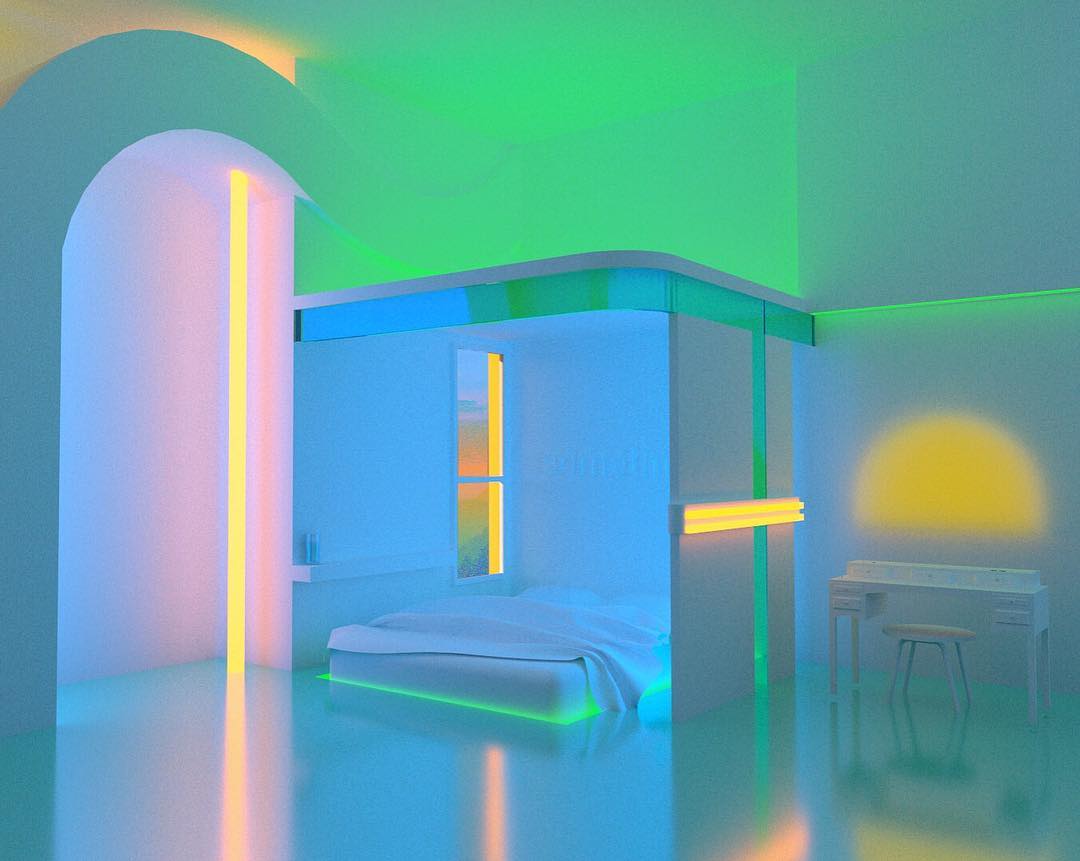
Courtesy of @neonsaltwater.
With the success of installations such as “The Rain Room” and Yayoi Kusama’s “Infinity Mirrored Room,” it seems like audiences are craving more of an immersive experience from a museum or a gallery. How do you think Instagram has changed the way we perceive art?
I think Instagram has created a platform that welcomes a lot of new experimental formulas and because of the documentation aspect of it, it gives people the opportunity to spread awareness of cool things being created in the world. The outcome of the sharing aspect of social media has led to a demand for experiences to be really unique and extraordinary. Installation is now very popular as it becomes a temporary destination that is rare or special that can be documented and shared. I also think that due to our relationships with our phones, a multisensory experience that isn’t viewed on a screen is really refreshing and therefore may be relevant and needed in our culture now more than ever.
Can you tell us about any upcoming projects that you’re excited about?
I’m working on a collaborative project with my friend Brian Sanchez who is a local painter here in Seattle. As a new museum is opening in Seattle ( Museum of Museums) in the spring, we will be the first major installation. Together we created a 6 room installation that was influenced by both of our work and includes solo components of his. That’s all I can say for now!
See more below:
Courtesy of @neonsaltwater.