A New Year is synonymous with fresh starts and hopeful beginnings. But in real terms, or, as is often the case with reality, unspoken terms; the New Year is often saturated with unrealistic expectations and the impending return to work fatigue. Not to mention the seemingly never-ending thread of emails commencing with the mandatory “Happy New Year! I hope this email finds you well” at such a frequency it nears disingenuity.
Yet, no matter how tedious the first few weeks of the year become, a promise of aspiration and resolution lingers in almost every conversation: as though anything is possible within the next twelve months. At least that’s how it feels with Olivia Ballard, the up-and-coming designer whose energy is contagiously warm and buoyant.
For Olivia, the New Year began before the clocks chimed. Five days and fifteen hours before to be exact. “I spent Christmas in the studio, with the exception of a nice dinner I had with friends,” says Olivia. “But then it was straight back to the studio at 9am the next morning. I’m just really ready to be fully focused on projects.”
Images Courtesy of Olivia Ballard.
Olivia is calling from her studio Kreuzberg; a recent relocation after being based in her bedroom for the past two years. In the background, I see a pile of paper offcuts mixed within one another, along with a bright white wall painted by sunlight from the window adjacent to it. Having a bedroom for a studio and studio for a bedroom “got a little hectic” – as one would imagine.
Still, the New Yorker-turned-Berliner finds it challenging to separate her personal identity from that of her work. But, this isn’t a negative for Olivia. In fact, she sees the intertwining of the two as a crucial element of her practice that gives her the ability to navigate through the world.
Born and raised on New York’s Canal Street, Olivia made the move to Berlin upon graduating from college with an Arts Degree. “I had visited Berlin once before on a school trip, and the city just really resonated with me. The freedom and chaotic-ness of it just seemed like the perfect place to explore who I am; as a person and an artist.”
As she speaks, she plays with her hands and I catch a glimpse of a few tattoos. Unintentionally, in my curiosity, I begin to focus more on them than I do her words. On each of her inner palms are two cupid-style hearts; one with the initials MM, the other with letters I can’t quite make out. On her right wrist, reads the number 38. I forget to ask why.
After a few years of living in the city and making full use of its notorious party scene, Olivia found herself, along with the rest of the world, forced to stay indoors. Rather than seeing it as a complete catastrophe (which it definitely was at times), Olivia saw it as a blessing that offered her the chance to indulge in solitude. “There’s always so much social interaction happening in Berlin. To be forced into isolation was a way to revert the lens from outward to inward. It gave me time and space to process the years preceding the pandemic and the years beyond it.” Lockdown provided a wealth of time where a backlog of projects, that were either forgotten or dismissed for one reason or another, could finally be given full attention.
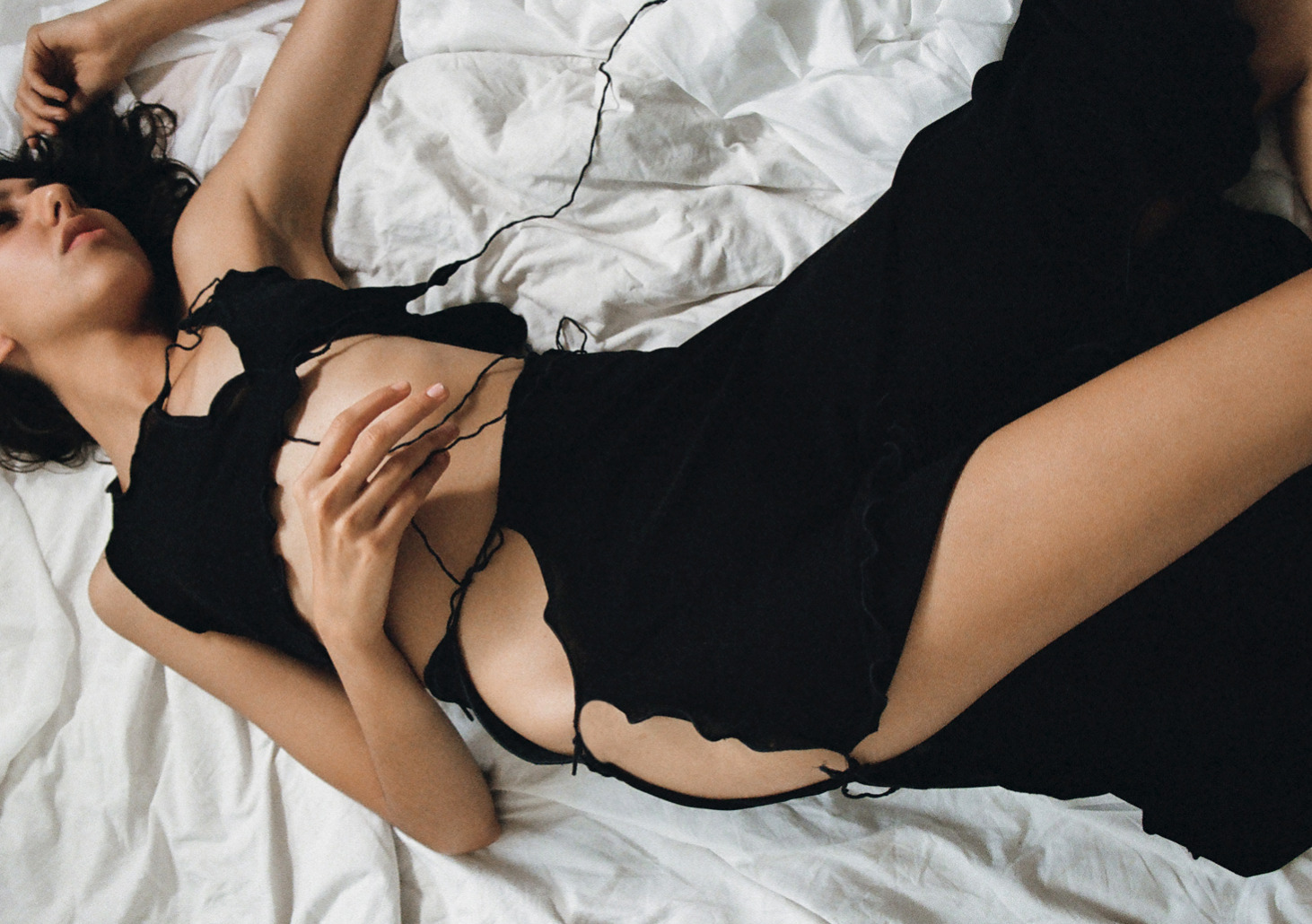
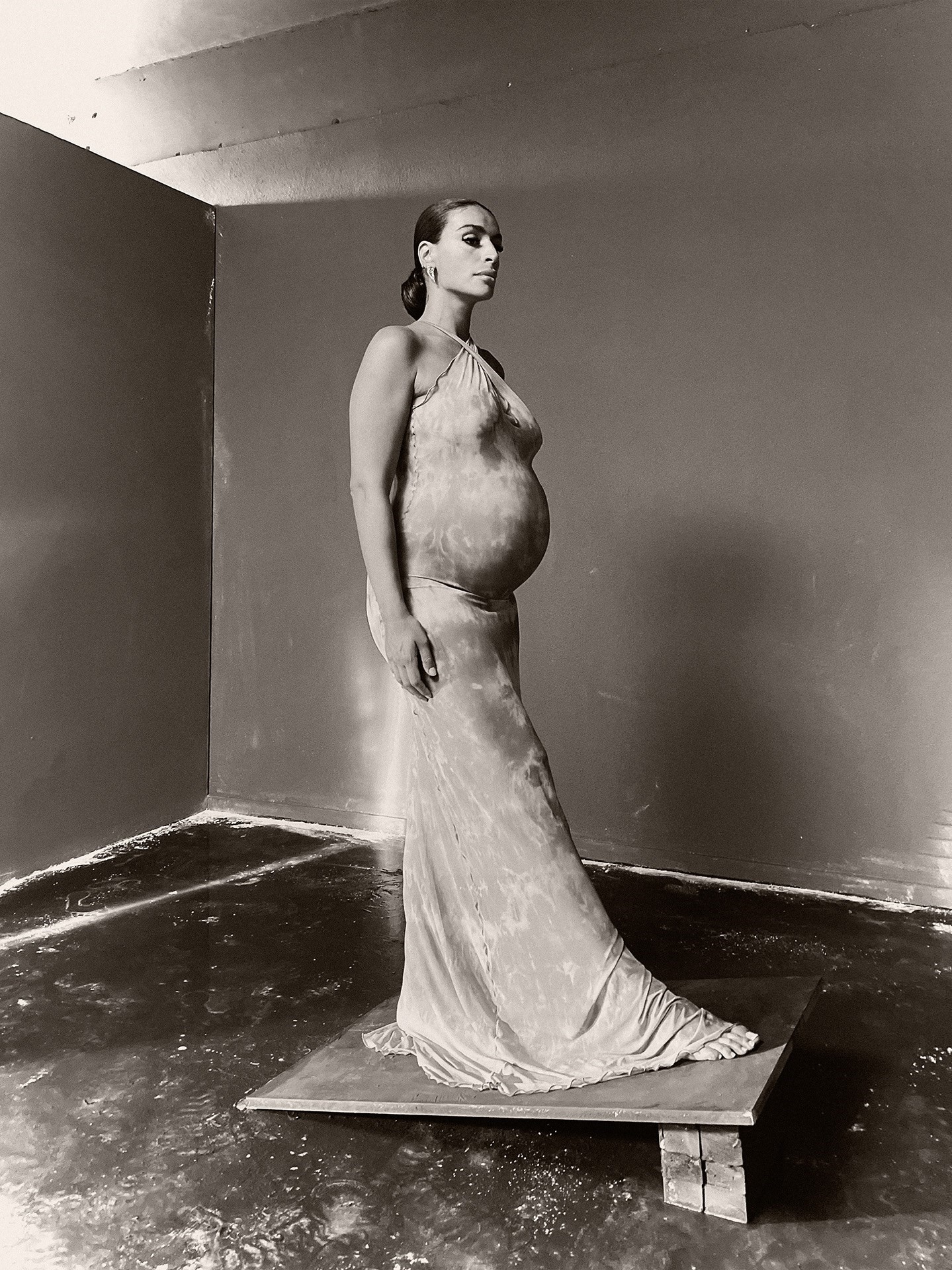
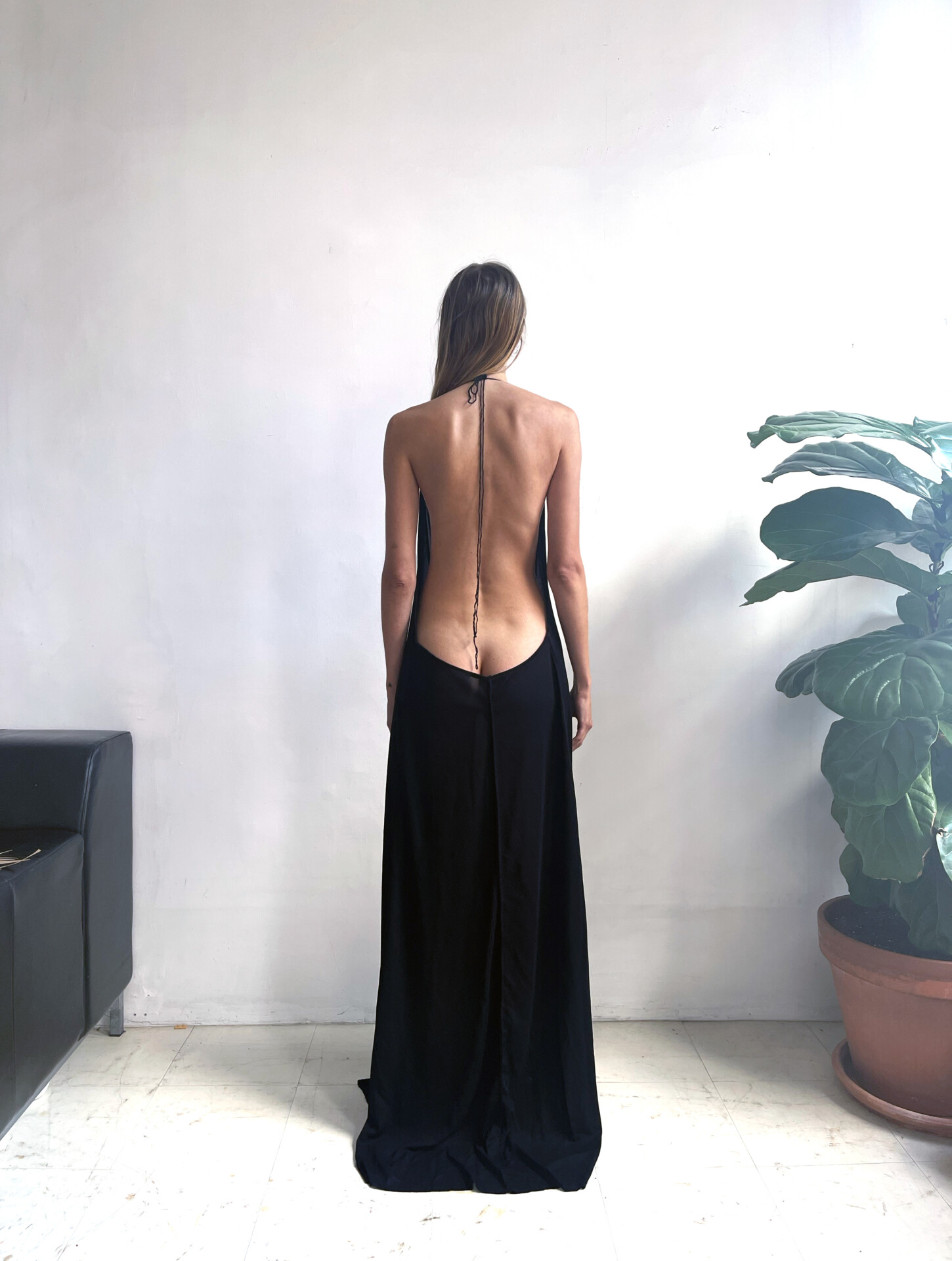
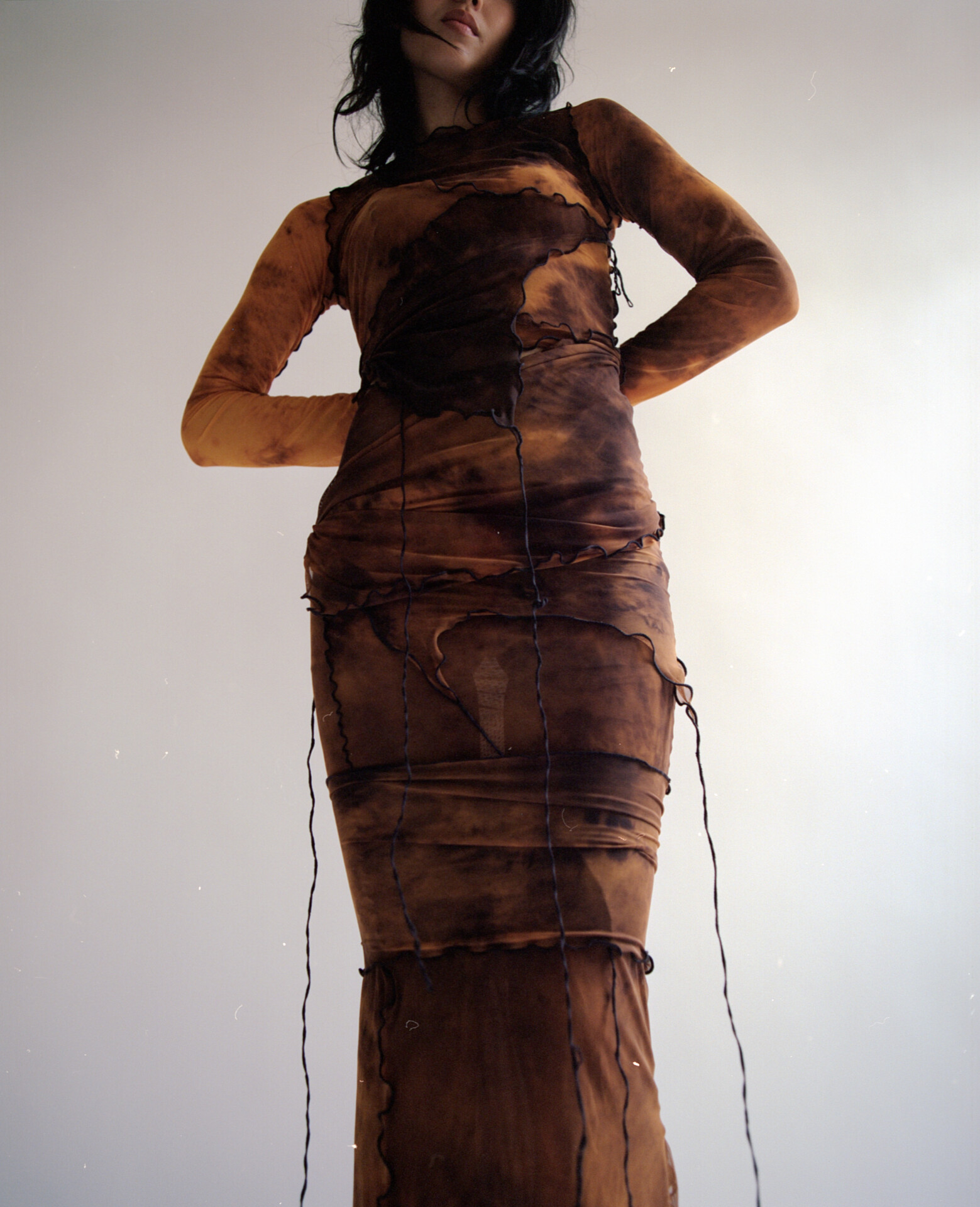
From her bedroom in Berlin, Oliva welcomed the birth of her eponymous label in 2020. Her unisex designs are described as a “second skin for all genders, all bodies, all ages”. Rather than hiding or suppressing the body, Olivia’s pieces purposefully accentuate and liberate the intricacies of the human form. It began with a desire for a garment that was simple, comfortable and sexy; one that could be worn all day and deep into the night. Working with the complexities of the body, comes a great pleasure and discovery.
“It’s so amazing to see how a piece can look so different depending on what kind of body wears it,” explains Olivia. Once the piece is given to its wearer, it takes on a whole new life; moulding to the subtleties of their physicality. Through such a piece, one so intimately close and revealing, the wearer’s relationship with their body deepens. “Fashion is a tool that allows you to integrate your values and ideas about how people should be able to exist and move through space in who they want to be.”
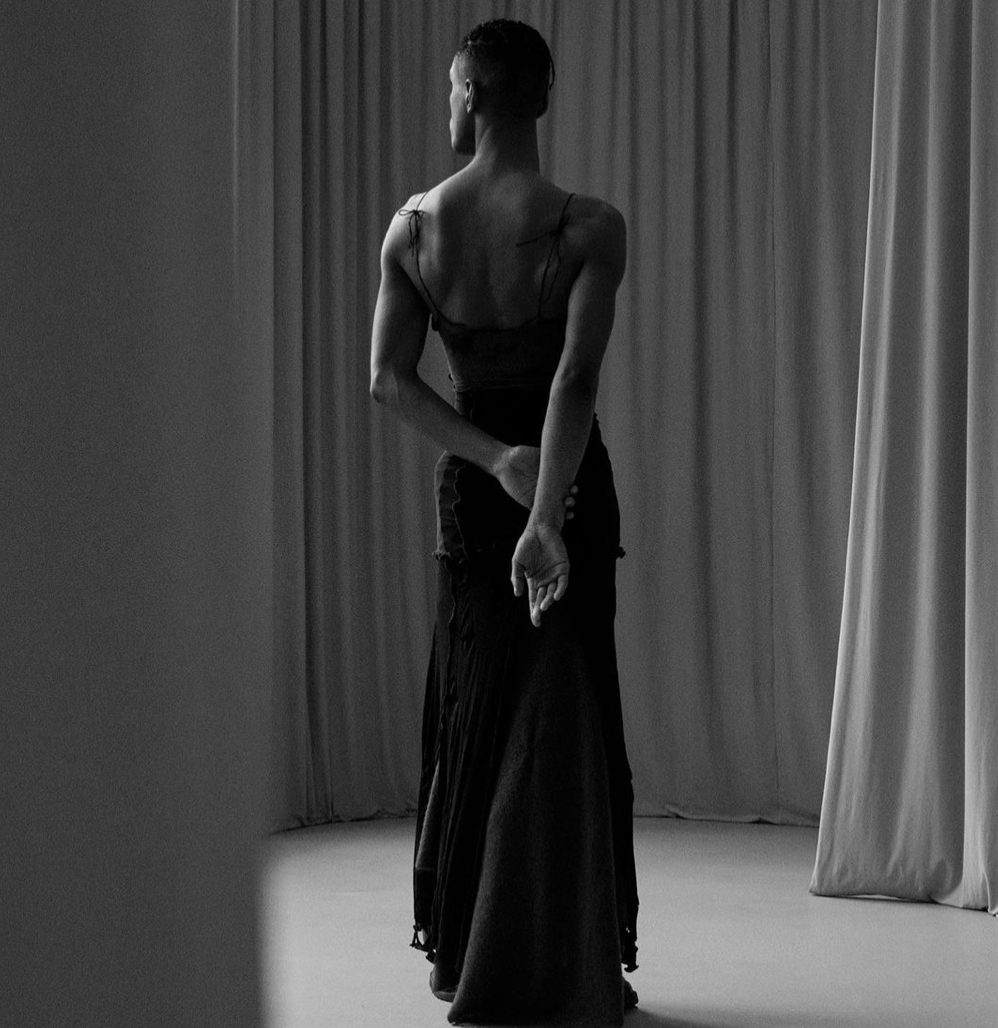
Image Courtesy of Olivia Ballard.
“Do moments of solitude still exist?”, I ask.
Olivia pauses, eyes wandering her studio in deliberation.
“My work is very physical. During the day, I’m in my studio throwing materials around and draping them upon my body and those of friends. It can get very busy and chaotic,” she laughs. “But the time when I really do most of the work is at nighttime, when I’m able to return to this solitude and go back to that original way of working. As much as I love working with a team in construction and production, times of secluded introspection are really important to me.”
A member of the Olivia Ballard team enters the studio and quietly finds her place at the desk with the offcuts. Olivia looks up, smiles and says hello, before returning to the question. “I think both personally and with the brand, I want to learn to make more slowly, without stress – like it was at the beginning”, she explains. “It’s about learning to navigate through pressure with intention, and allowing for moments of reflection. They came so easy at the start, so now it’s about prioritising and maintaining those moments.”
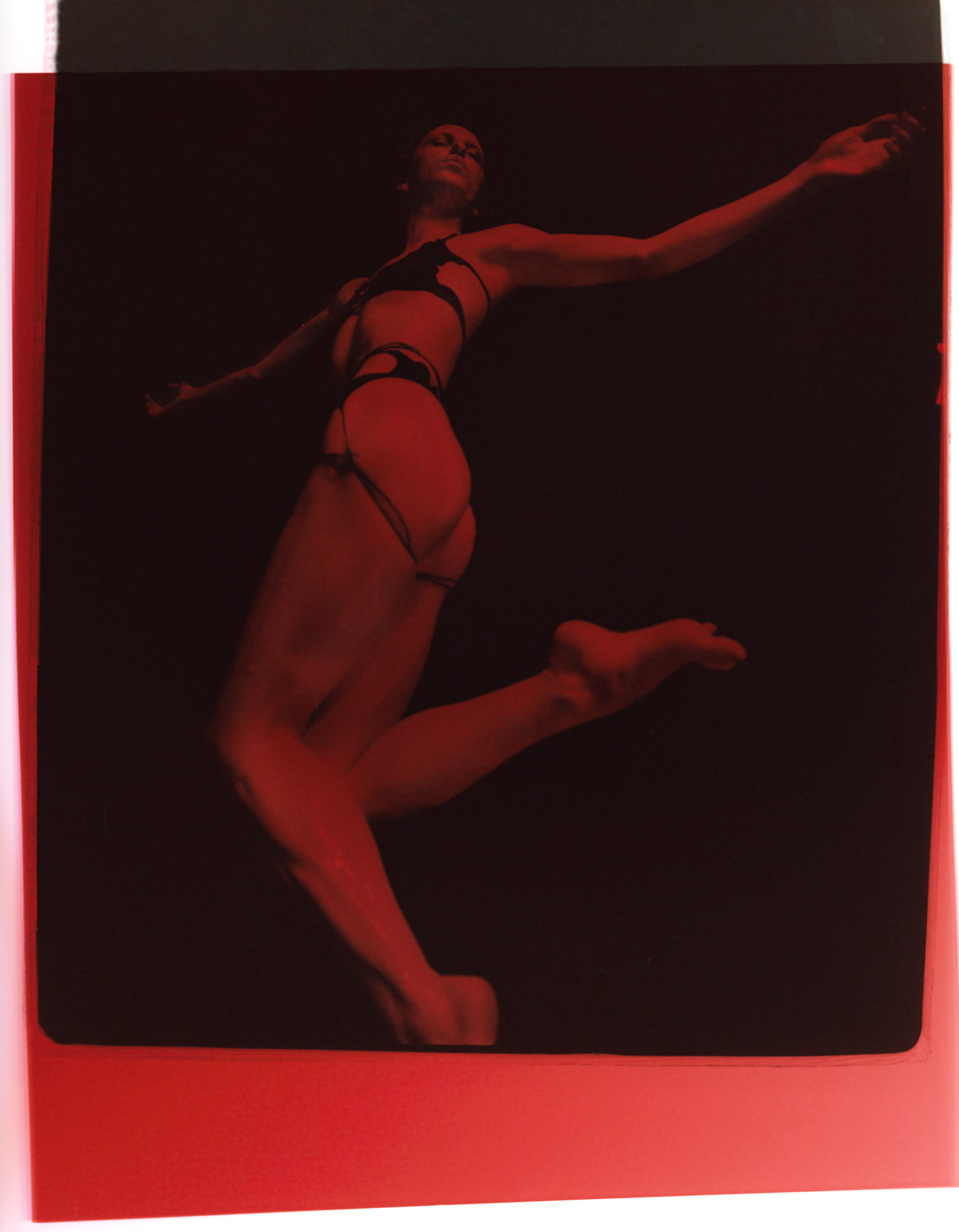
Image Courtesy of Olivia Ballard.
Naturally, the idea of solitude is carried through into her debut show this January. Titled At Dusk, the show is set to take place within the seemingly abandoned industrialist Black Hall of MaHalla in Berlin. Playing with the idea of in between moments, on the cusp of day and night, the show is an exploration of “the tensions of being both exposed and concealed”. Lounge wear elegantly transitions into evening wear; soft silhouettes suddenly become striking within the night’s ambience.
And, there’s nowhere else she’d rather present her debut show. “I have a lot of pride in the place where I began this journey,” Olivia says. “My clothes are connected to the community here, and I want my shows to be a place for friends and collaborators to meet and celebrate.”
Despite Berlin’s smaller influence in comparison to that of centralised fashion capitals, Olivia sees great potential for growth and experimentation within the city. “Working in a city like Berlin, which doesn’t have much of a fashion legacy like New York or Paris has, there’s a kind of freedom.” A freedom, I imagine, to play an active role in the conception of a new fashion history for generations to come.