Photography Jack Orton
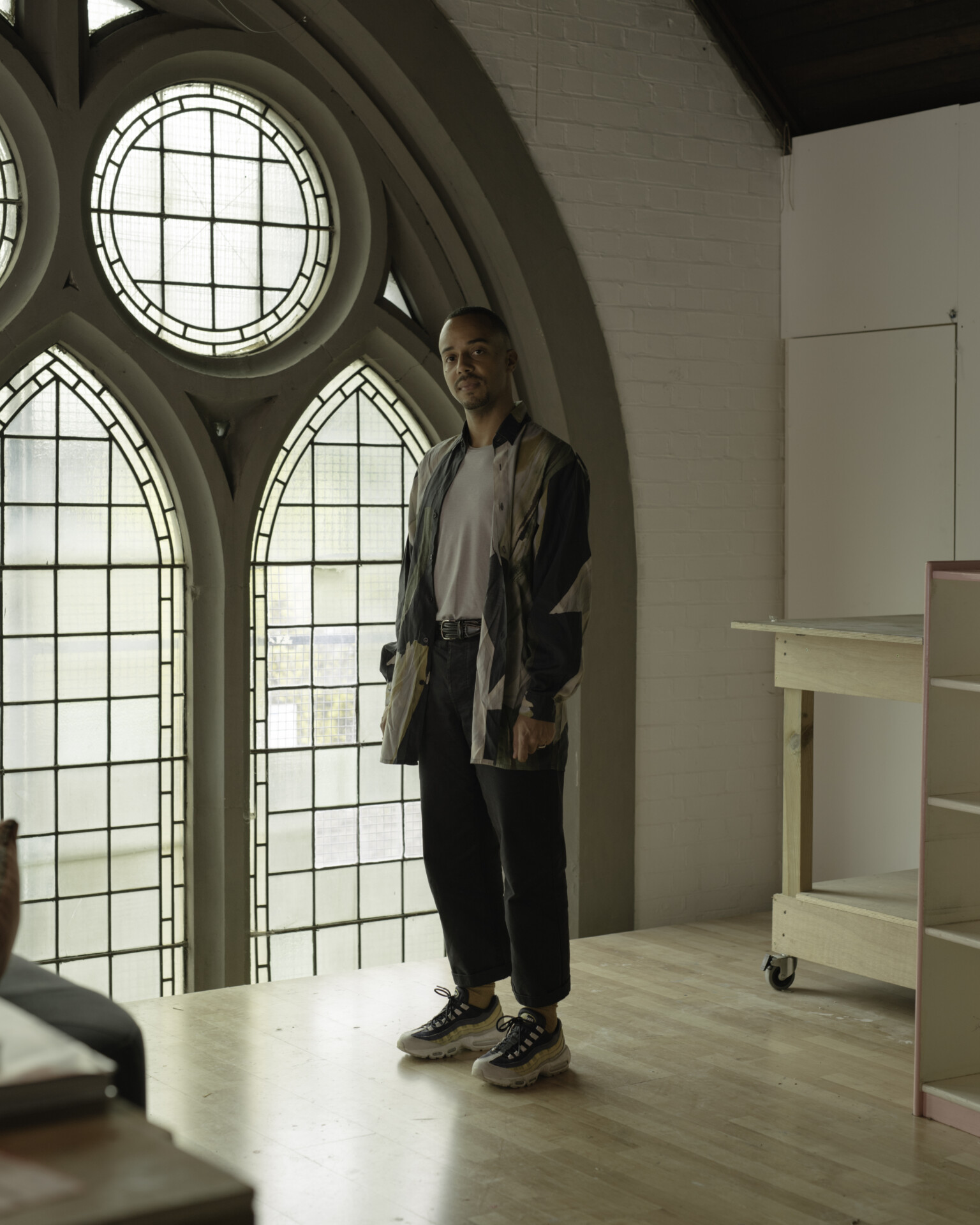
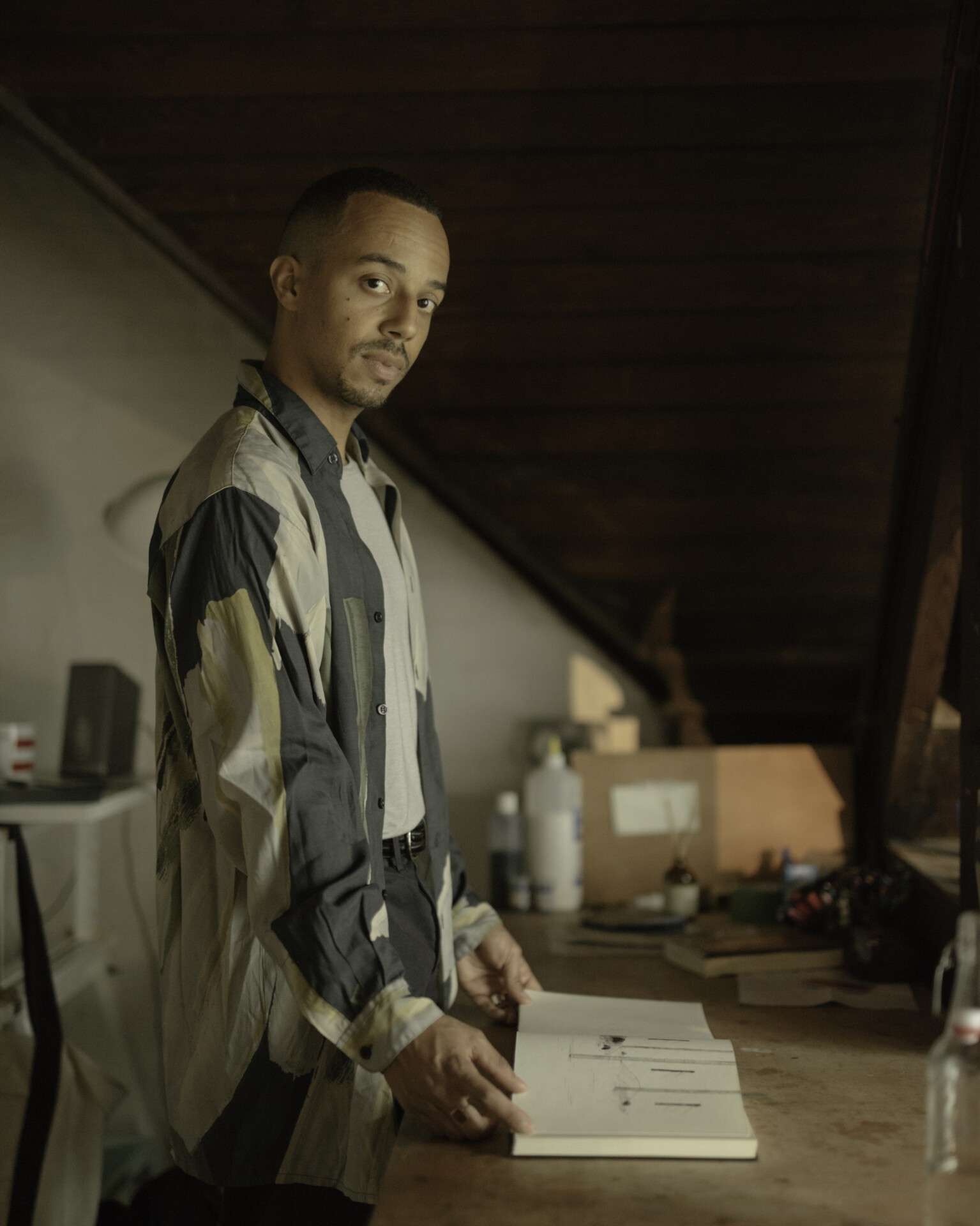
“In a way, I’m interested in the ceremonial,” muses Paul Maheke in a soft French accent, sitting in his North London studio: an 18th century anglican church, now converted into an artists-run space. “I’m interested in thinking that art is the facilitator of an experience, that maybe is close to the sense of togetherness that you can have in a club,” continues the artist. Against the dramatic arched stained-glass windows, a disco ball discreetly hangs from the high wooden ceiling, as if patiently awaiting the return of its audience.
Born in Brive-la-Gaillarde, southwestern France, Maheke isn’t short of attention right now. Since relocating to London in 2015, the artist, 33, has received a solo show at the Chisenhale Gallery, participated in Manifesta 12 and is set to perform at the upcoming Venice Biennale. Known for the collaborative and performative nature of his work — in which dance is central — Maheke addresses notions of identity politics, structural power and alternative beliefs across a range of mediums, navigating the ephemeral and material worlds with profound lyricism.
Photography Jack Orton
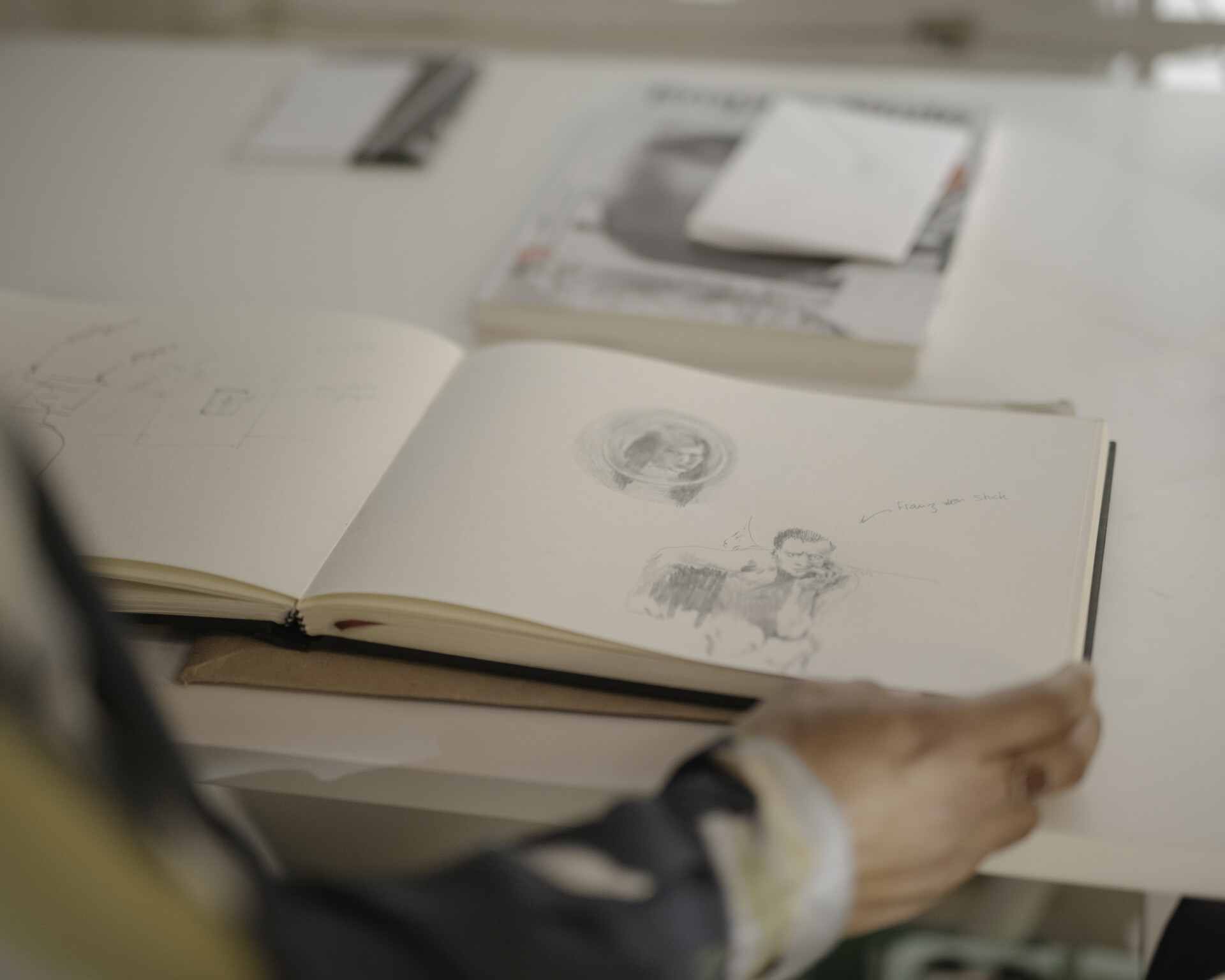
“I grew up with Michael Jackson, watching literally everything about him,” remembers the artist, while I flick through the catalogue of the National Portrait Gallery’s touring exhibition On The Wall, subjected to criticism following the recent release of the controversial HBO documentary Leaving Neverland. “He was like, my total idol. That’s the reason why I started to dance and that’s why I wanted his ghost to be present in the work somehow,” says Maheke, whose recent Chisenhale exhibition featured performers emulating the King of Pop’s gestures. “Now I’m wondering how to navigate that without creating any more harm and setting yet another prejudice over the victims, you know?”
These considerations continue to inform Maheke’s work, in which the body becomes an archive, where multi-layered identities — from racial to sexual —are contained like data to be interpreted, manipulated or transcended. “I’m still investigating this really broad notion of embodiment and what our bodies and identities are made of,” the artist says, explaining that dance is for him a way of “unpacking his archive.” In addition to the collapsing legacy of Michael Jackson, recent personal experiences of abuses of power in the art world have led Maheke to reconsider toxic masculinity and agency. “When you present as masculine or use the masculine as your primary gender expression, it’s a bit more complicated to untangle the relationship between consent and abuse,” he says, pointing to the often intangible nature of power relations.
The realm of the invisible has taken centre stage at the artist’s new exhibition Diable Blanc (French for ‘White Devil’ — a loaded title which points to structural whiteness), freshly opened at Galerie Sultana in Paris. “I wanted to further explore research I’ve been undertaking over the last couple of years about the occult,” he says of the show, which features a series of seven copper and brass planet-shaped sculptures, nine drawings engraved in glass and a video of Mago Sessar, a Chilean magician who the artist met during a residency in the Dominican Republic. “I wanted to produce a show that was less about human bodies or the representation of them.”

"Diable Blanc", Exhibition View, Galerie Sultana 2019, © Aurélien Mole
And while the body may be physically absent from this new show, there’s more to come. The artist was just announced as one of 14 participants at the upcoming Venice Biennale’s performance programme, alongside Boychild, Florence Peake and Victoria Sin. But it won’t be Maheke’s first time at the international exhibition. Two years ago, the French artist — who is of Congolese descent — took part to the Diaspora Pavilion, a project conceived to challenge the prevalence of national pavilions at international biennials by articulating diasporic narratives. There, his work focused on the theory of water memory, speculating on the information stored by the Venice lagoons — a response to the controversially-mediatised suicide of a young Gambian refugee in the Grand Canal.
Before turning his attention to performance, Maheke, who graduated in 2011 from the Ecole Nationale Supérieure d’Arts de Cergy, focused on subtle, anonymous gestures in the public space. “I would give away objects to strangers, or leave them on the spot,” he remembers. In 2013, in the small French town of Aumont-Aubrac, the artist noticed that a mirror in the men’s toilet was missing from a public bathroom. Replicating the dimensions from that of the female section, Maheke reproduced the mirror, frosting a opaque, ghostly silhouette onto it, before placing it in the gents. “For me, it had to to with queerness,” he says of this early intervention, in which the notion of absence was already central. Is the mirror still there? “I don’t know,” he says, frowning. “I never went back.”
Photography Jack Orton