
Photography by Molly Maltman.
If there’s one thing I’ve learnt about Oaxaca City, it’s that it’s never silent. Between the vibrant fruit stalls and the abundance of yellow Guayacan trees on every corner, sounds of all kinds hover and drift through the city like the smoky aroma of freshly grilled Tlayudas. There’s the singing of the birds from the early hours of the morning late into the night; the humming of taxis speeding their way over the street’s winding inclines; trumpets and clarinets echoing through the air as strangers gather in markets to enjoy the city’s culinary pleasures. In the night, I wake up to the incessant sound of dogs barking and trucks honking and the occasional group of excited locals. At home in London, this would almost certainly frustrate me. But here, it’s a sort of joy. A joy of the world just being.
Silence can, however, be found in the walls of Pocoapoco, the female-led not-for-profit arts and cultural organisation. Literally translating to “little by little”, Pocoapoco is a space for the reconnection with the pleasure of simply existing. A space for listening as it is making, Pocoapoco sees cross-disciplinary and cross-cultural collaboration as a means for encouraging education, empathy and positive social change. In essence, it’s a space to form new interpersonal connections through art – in any form it may take.
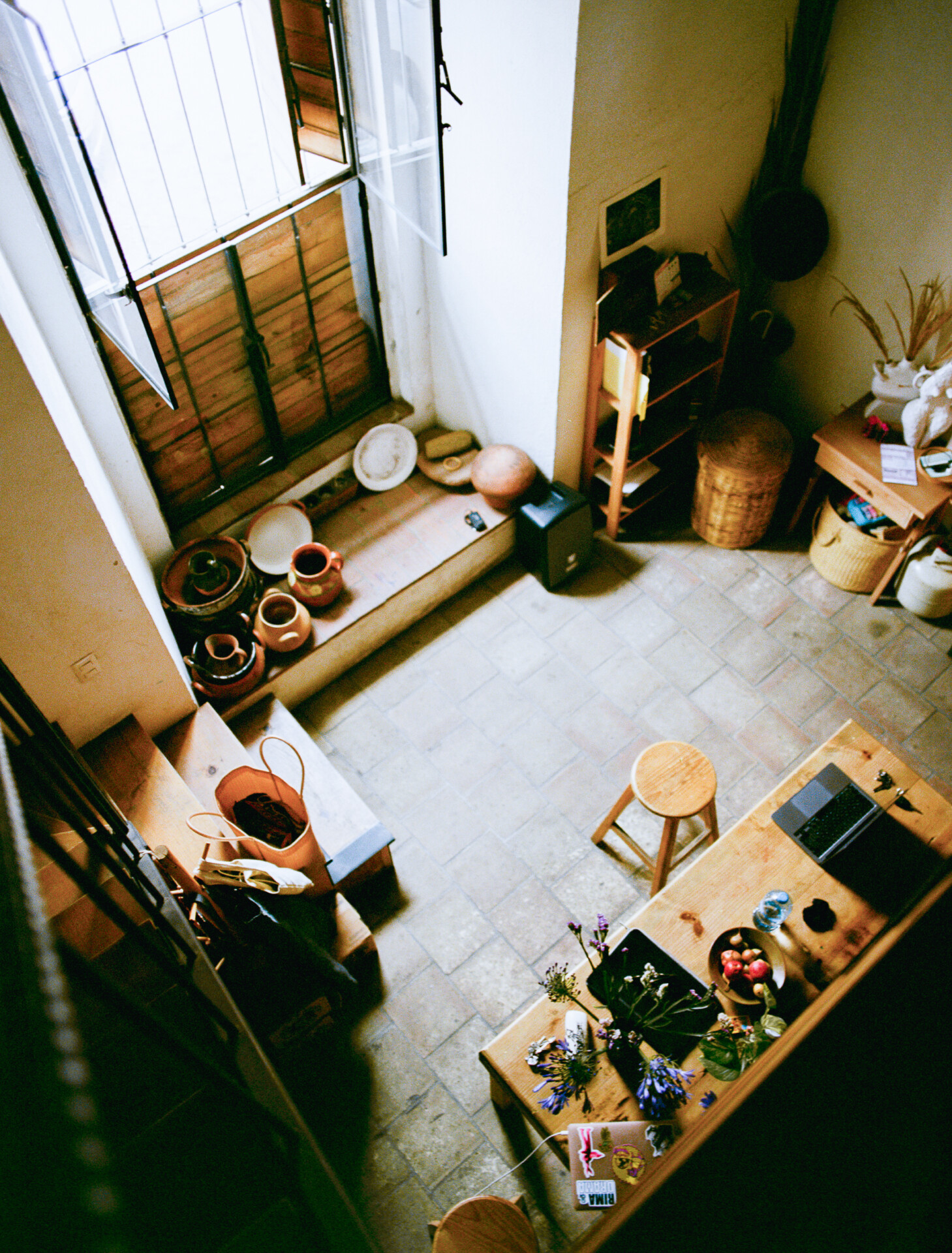
Tucked away on a street in Ruta Independencia, Centro Oaxaca, Pocoapoco’s physical space – referred to as the “house” – is as bright as it is open. Different kinds of cacti, big and small, adorn the space along with innumerable handmade ceramic vases. While the rest of the team are on vacation, Evelyn Méndez Maldonado – co-director of Pocoapoco – and Fernanda de la Torre Ricaud – Program Manager – welcome me into the space.
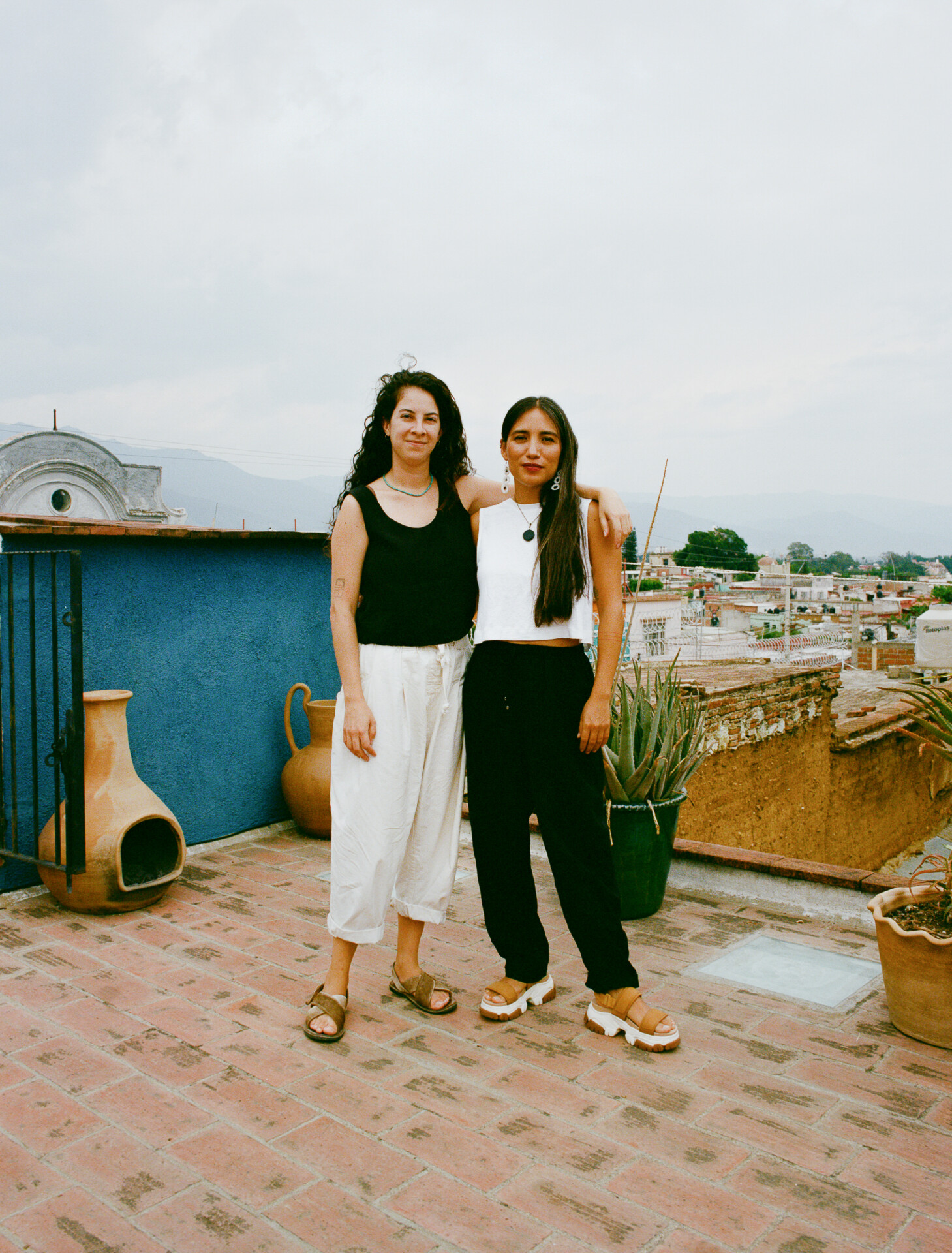
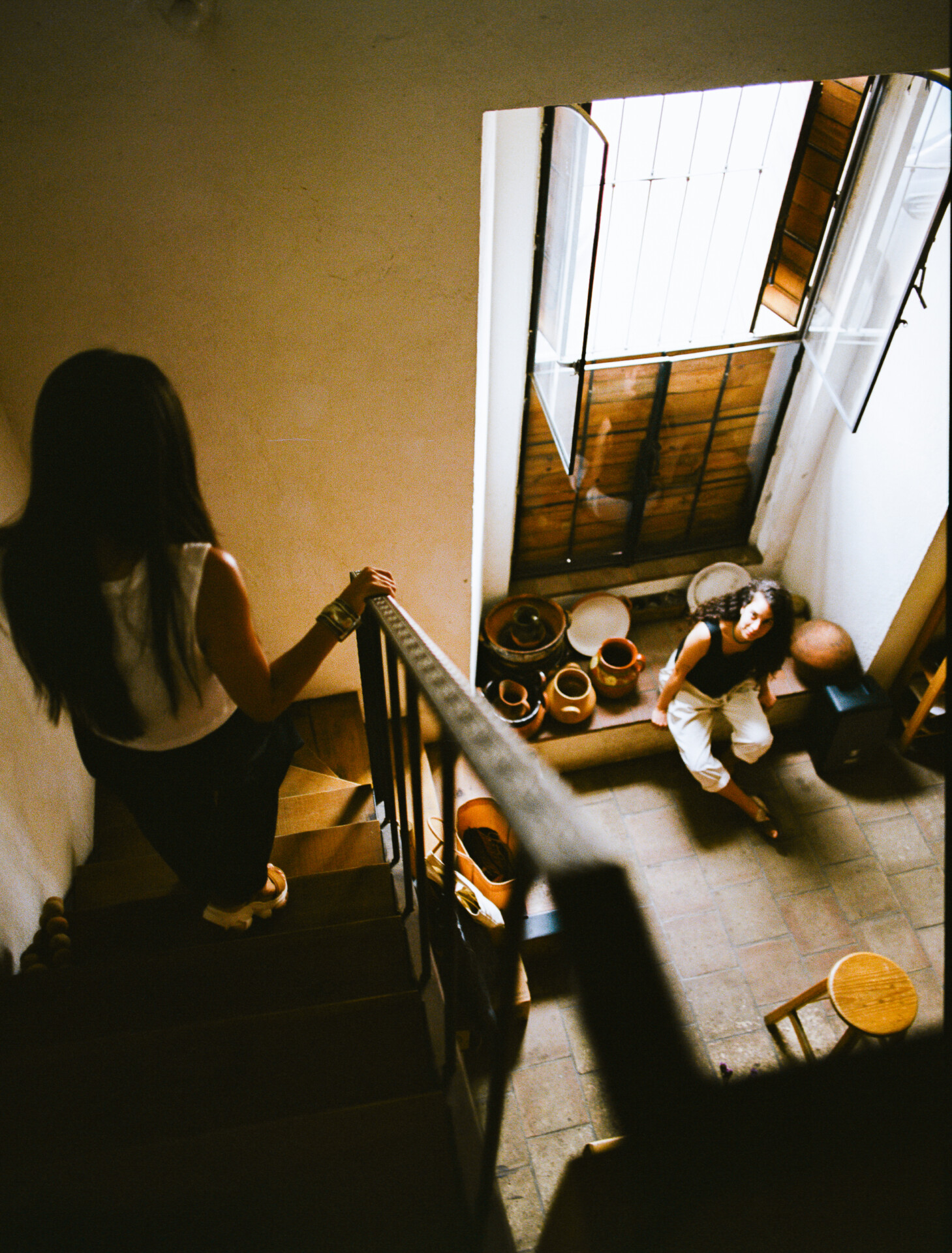
Photography by Molly Maltman.
Founded in 2016 by Jessica Chrastil – the Minneapolis-born, Oaxaca-based writer and cultural manager – Pocoapoco began as a residency program but has since blossomed into a rich community of local and international artists through public programmes and workshops. “At the beginning, Pocoapoco was purely a residency space. When the pandemic came, it allowed us to reflect and question our approach,” Fernanda shares. “We realised we wanted to extend the conversations happening in this house to a broader and more local audience.”
A frustration with the grandiose and exclusive inner circle of the artworld turned into a motivation to create an alternative space of exchange. From writers and curators, to scientists and architects, chefs and botanists, Pocoapoco is made up of a diverse community of artists practising in all kinds of mediums. With such an extensive and ever-growing network, the organisation is able to facilitate meaningful conversations that may have otherwise not taken place.
“Across the five week residencies, it’s very special to see how strong and meaningful relationships can be built,” Fernanda begins. “From the relationships between the residents and the wider local community, who share their way of working with one another, to the relationship we share as a team. It’s a very tender and intimate experience. We don’t care about what people make as much as we care about who they are and how they want to exist in the world.”
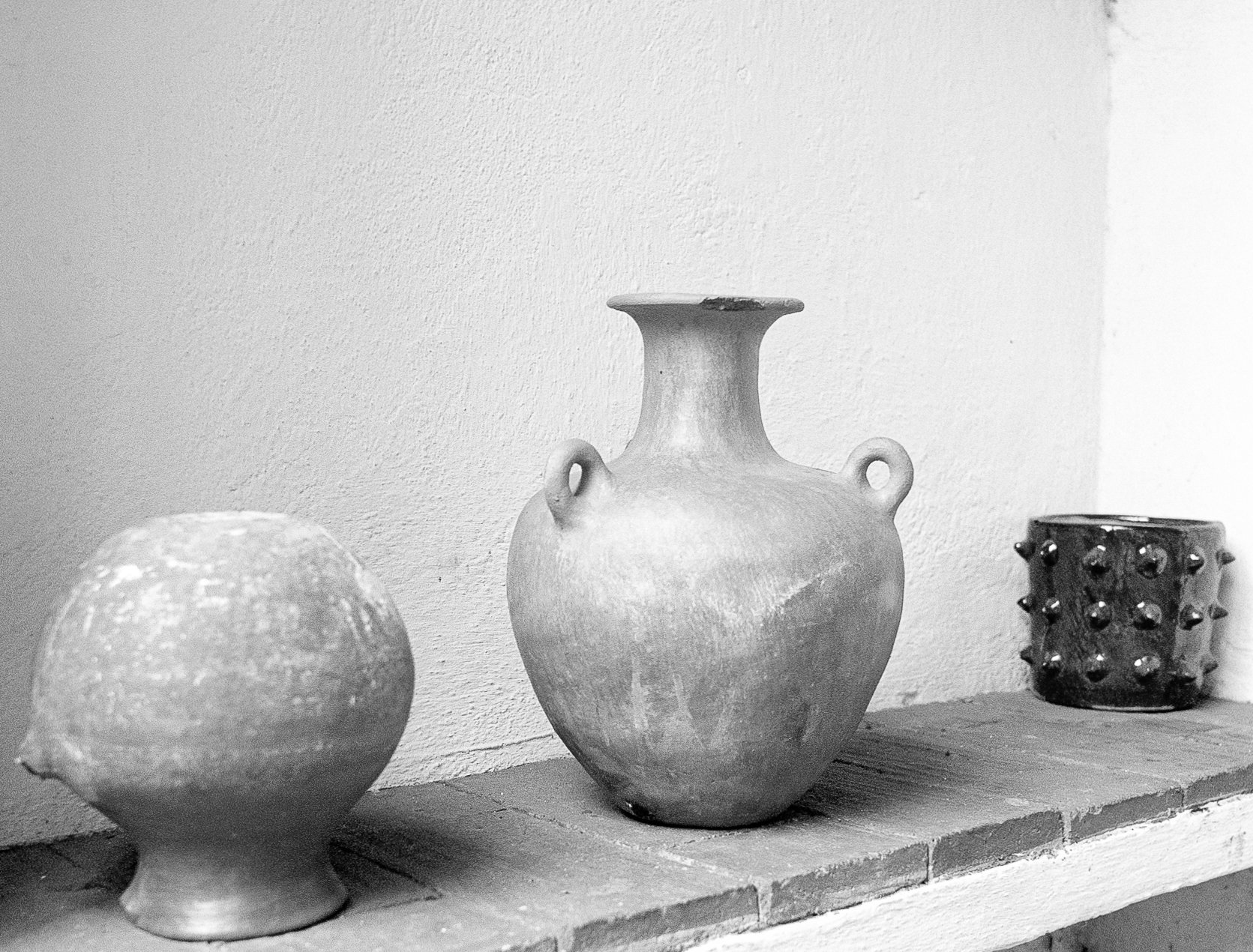
Photography by Molly Maltman.
Since establishing the residency, Pocoapoco has expanded through an extensive range of public workshops and programmes. From artist talks and performances, to printmaking and textile workshops, the house has become an open space of curiosity; of listening and sharing; learning and unlearning. “We understand that we all come from different contexts, experiences and traumas. By participating in this space, we ask that people be open to listening. Through being open, we are able to shed ideas that we were told to believe. We believe that this unlearning is just as important as learning a new creative technique,” says Fernanda.
From the physical space itself to the conversations that take place within it, to the food shared around the table cooked by the House Manager and chef Aurelia Arroyo Nieto who is, in Fernanda’s words, “the heart of the house”, people feel taken care of. “It’s always beautiful to see the commitment of people once they feel at home,” Eveyln says, smiling. “This is something that you don’t always find in very formal institutional spaces. Pocoapoco’s mission is to create strong bonds between artists as well as a deeper connection to their work. Each resident leaves feeling inspired and we’re left feeling very grateful to have witnessed such an exchange.”
“I grew up in Oaxaca,” Evelyn shares when I ask about her connection to the city. “This place has been my school, it’s taught me the way of living. I don’t understand any other ways of living. Everything is very communal here and there’s a sort of invisible support system that exists between strangers. But the city is becoming more gentrified and there are less conversations happening in Spanish. There is a real trauma for the local community as a result. It was our commitment through Pocoapoco to open a creative space for Mexicans as well as the international community. We try to erase barriers, to connect people from different experiences in order to have beautiful and inspiring conversations.”
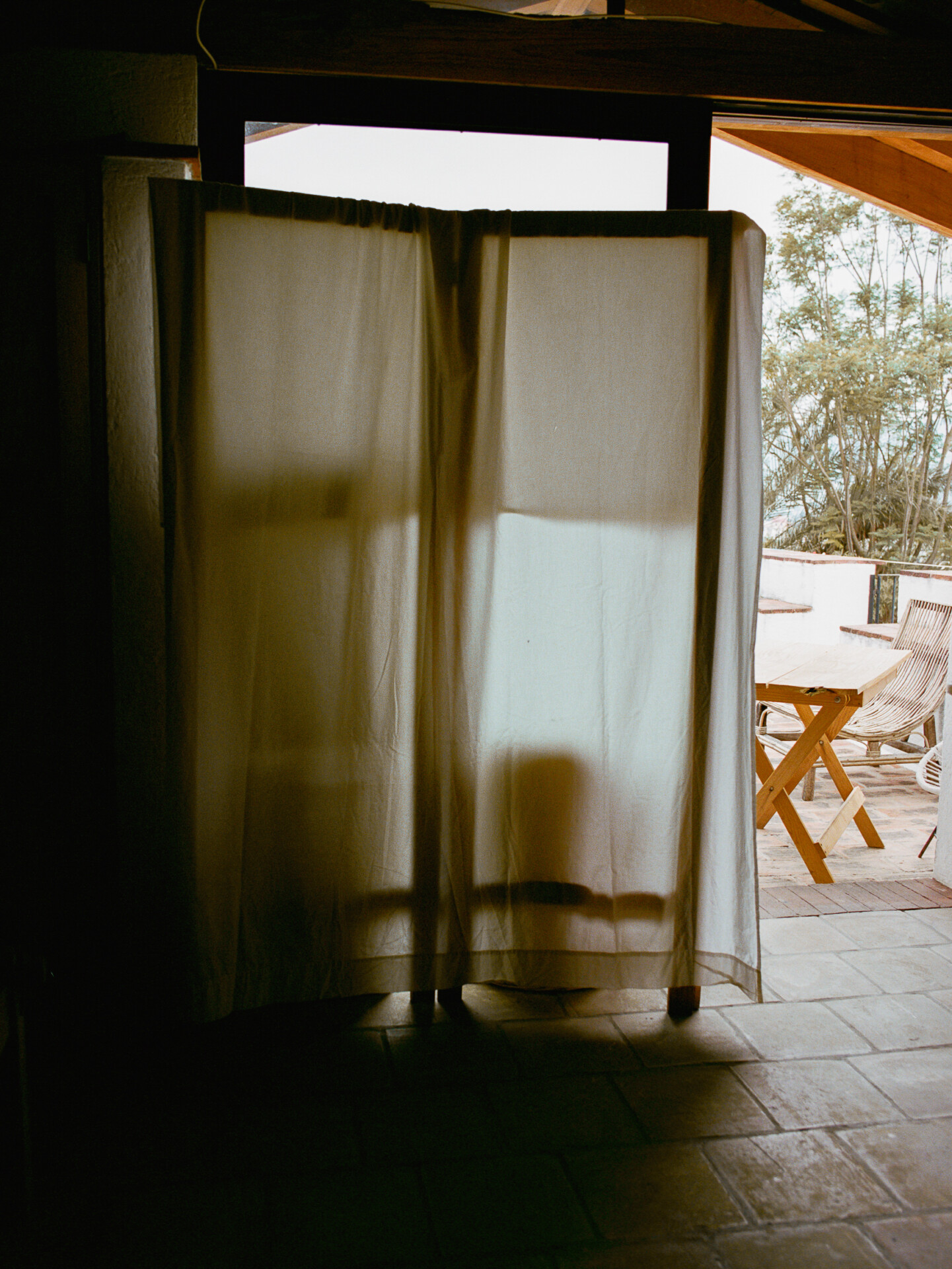
Photography by Molly Maltman.
“These conversations that Evelyn speaks of happen at an organisational level too,” Fernanda adds. “And we don’t have these conversations sitting in a circle. We have these conversations through creative work, through sharing processes, through sharing experiences, through opening the doors of the house and inviting people into a workshop where they can learn different ways of making and thinking.”
While Evelyn grew up here in Oaxaca, Fernanda grew up in Mexico City. Mirroring my own current state of mind, she was frustrated by the city’s perpetual hustle and self-serving individualism. “Like any big city, people are so focused on themselves instead of thinking how they can be a better member of the community,” she explains. “Growing up there, I knew I didn’t agree with that way of living but I didn’t know any other way. It wasn’t until I started coming to Oaxaca that I experienced a sense of commitment to a place, a land and to family. To me, community is a commitment to being in a place and of being of service and value. I’ve learned there’s no use thinking as an individual. Life shouldn’t be like that. The more I understand myself as part of something bigger, the more excited I am about life.”
“Home for me is a place where you not only feel comfortable to navigate yourself inside that space – and all your thoughts, feelings and emotions – but also the relationships around you,” Evelyn continues. “We ourselves are like our own first home that we try to take care of. We see people that come here also as homes. We don’t precisely have to understand everything inside our home to be able to offer kindness.”