 Raf Simons Redux First Edition 2005 Book. Courtesy Townes
Who says print is dead? According to iPhone-wielding millennials, the demise of inked matter is nigh, and never-ending scrolls of listicles will soon become the default media for modern thought. For those of us with our senses still intact, however, nothing as fleeting as clickbait will ever compare to the smell of freshly printed paper or the touch of leather binding.
Literature as a luxury
In an increasingly speedy, hyper-connected global society, what could be more luxurious than something so inherently slow? Viewed from this perspective, a book is the height of personal indulgence, and the act of reading one is an inherently meditative practice that exists in contradistinction to the barrage of branded content. Today, books and magazines are continuing to thrive, despite the online shift, precisely because they represent a material choice, objects consumers can hold and treasure rather than freely discard like JPEGs and bookmarks. And as fashion brands take to social media and galleries go digital, it’s the sturdy coffee-table tome that’s emerging as the most sought after expression of visual splendour.
Across the world, from London’s Cecil Court, the UK’s home of antiquarian book dealers, to Berlin’s own cabinet of curiosities, Do You Read Me?!, hefty titles dedicated to art and fashion are more in-demand than ever. Zines are also making a comeback, and even the agents of digital-savvy photographers and art directors are choosing to circulate their portfolios in handcrafted hard copies.
As Hemingway once proffered, “There is no friend as loyal as a book” – a pertinent sentiment considering the increase in screen-induced headaches caused by squinting at an ebook on a laptop.
Old and new, these eight publications prove that print – in all of its beautiful, collectible and in-transient glory – is here to stay.
 Raf Simons Redux First Edition 2005 Book. Courtesy Townes
Raf Simons Redux
Peter de Potter and Raf Simons,
edited by Maria Luisa Frisa
Charta, 2005
Published to coincide with Raf Simons’ tenth anniversary as a designer, this seminal publication chronicles his legacy. Simons made a name for himself with his take on Nineties youth culture, using a creative process that melded art, music, street culture and notions of modern masculinity. These pages offer a rare insight into Raf ’s unique vision. Essential for all aspiring menswear aficionados.
Suture
Morten Søndergaard and Åse Eg
Broken Dimanche Press, 2015
Suture was inspired by the question preoccupying Rilke’s 1919 essay “Primal Sound”: What noise would be created if the seam of a skull was played like a record? Morten Søndergaard and Åse Eg’s creation pays tribute to this by depicting the seams of 100 skulls found in the Parisian catacombs transcribed into ornamental lines. It’s also bound in surgical thread – another nod to the title.
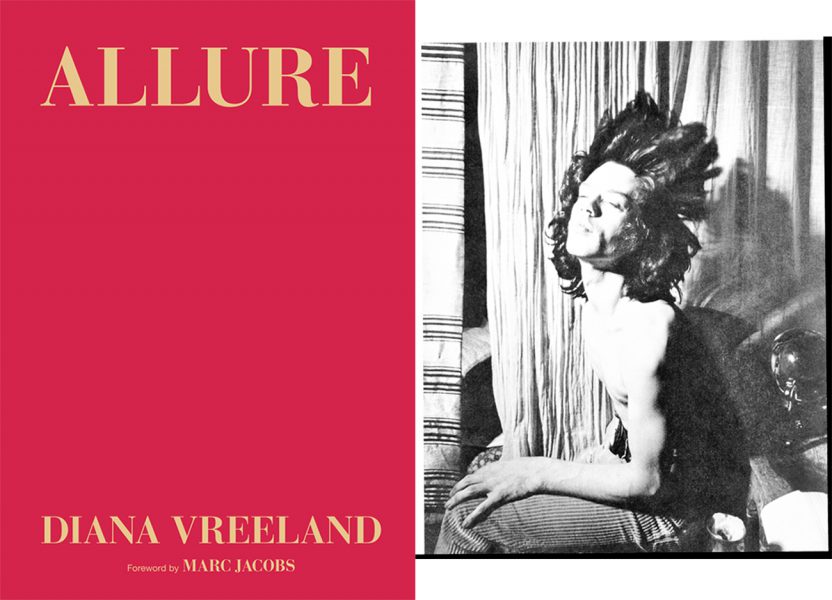
Allure
Diana Vreeland (with Cristopher Hemphill)
Chronicle Books, 2010
Allure is the scrapbook of Diana Vreeland, the fiery Vogue editor from 1963 to 1971. At heart, it’s a photography collection filled with Vreeland’s obsessions – noses, diamonds, geishas, crocodile boots, Russia – documented by legendary collaborators such as Irving Penn, Richard Avedon, Adolph de Meyer and Cecil Beaton. What makes it so compelling is Vreeland’s exaggerated style. Think of it as a proto-Instagram feed.
Grapefruit
Yoko Ono
Wunternaum Press, 1964
In Yoko Ono’s Grapefruit, the conceptualist replaced traditional artistic ‘content’ with instructions of how individuals might enact their own aesthetic gestures. These so-called ‘event scores’ have a muddled history: John Cage and Bertolt Brecht are also credited with their invention. But this volume is widely credited as their first outing in this format.
Buffalo: The Style and Fashion of Ray Petri
Jamie Morgan and Mitzi Lorenz
powerHouse Books, 2000
Buffalo was an Eighties style movement that defined British postmodern sensibility. It took its name from the Caribbean expression to describe rude boys and rebels, and borrowed its aesthetic from American workwear, punk, reggae and Motown. The man behind the it was Ray Petri, the subject of this book, whose style unexpectedly infiltrated mainstream culture – an important chapter in fashion history.
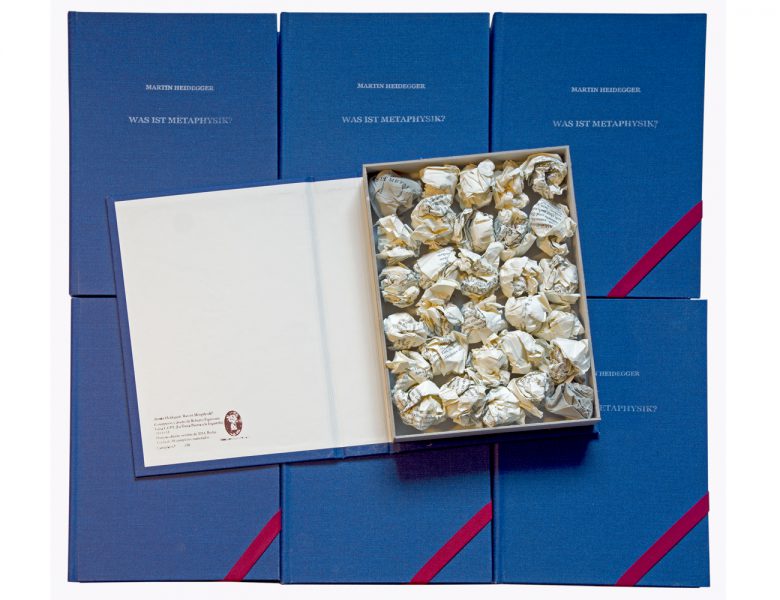 Roberto Equisoain, Martin Heidegger: Was ist Metaphysik? Berlin, 2014
Was ist Metaphysik?
Martin Heidegger (concept Roberto Equisoain)
Edita L.U.P.I. (La Única Puerta a la Izquierda), 2014
Two years ago, Italy’s Roberto Equisoain contributed to the enduring controversy surrounding Heidegger’s reputation by presenting an edition of the German philosopher’s famous essay in which the pages were damaged, folded and placed in the wrong order. In doing so it suggests that the onus is on the reader to make sense of Heidegger, who despite his Nazi membership and anti-Semitism, influenced many left-wing 20th century thinkers.
Aromapoetry
Eduardo Kac
Self-published, 2011
Eduardo Kac’s Aromapoetry takes literature into the age of techno-science by filling the pages with twelve custom-made aromas enmeshed in a thin layer of porous glass. In doing so, Kac explores scent as language, insisting on fragrance as a meaning-making thing in its own right, probing the limits of poetic expression.
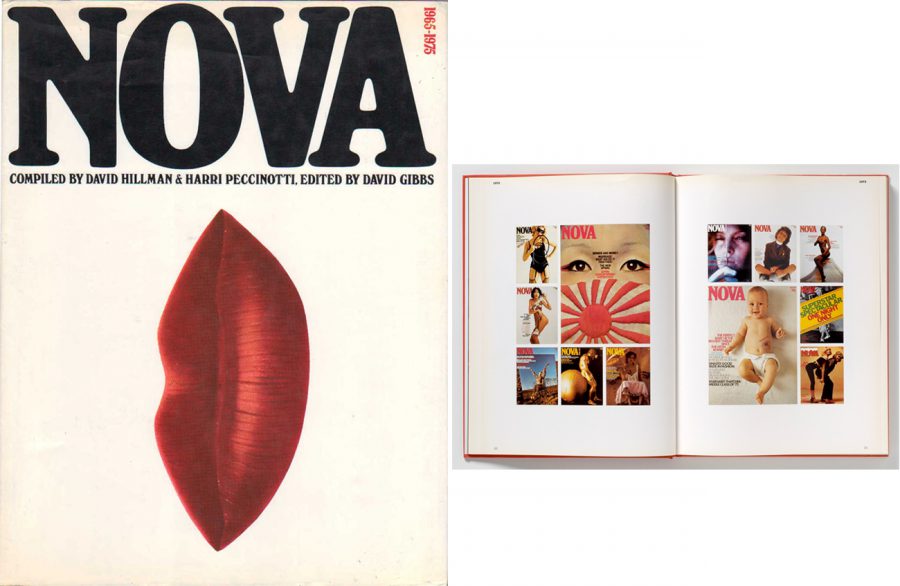 Nova, David Hillman and Harri Peccinotti. Images courtesy of casualoptimist.com
NOVA, 1965–1975
David Hillman and Harri Peccinotti, edited by David Gibbs
Trafalgar Square Publishing, 1993
In the Sixties and Seventies most womens’ periodicals were still running articles on how to please husbands and what to them make for dinner. Nova bucked this trend by publishing features on then controversial topics like feminism, the pill, and female sexuality. Moreover, is set groundbreaking precedents in terms of design, art direction and photography, too. Ahead of its time, this tome collects its finest moments.
Text by Osman Ahmed and Ida Bencke