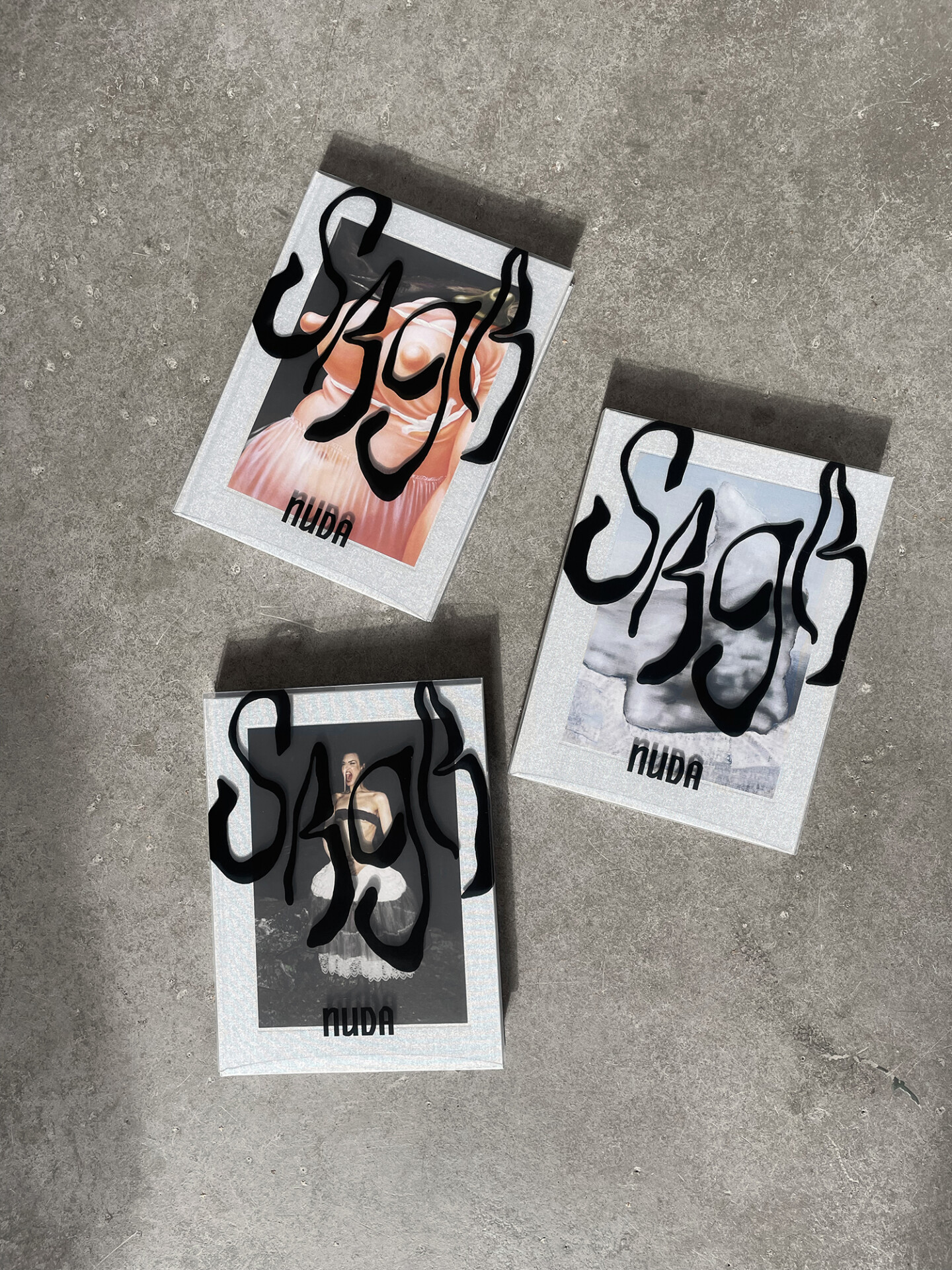
Image Courtesy of NUDA.
I don’t receive much post, really. I wish I did. Well, besides the odd takeaway menu that I’ll briefly glaze over before popping into a drawer never to be seen again; and the bills, oh the bills, which I wish I could stuff into the same drawer and forget about but instead end up pinned to the fridge, reminding me of my debts every time I fetch the hummus.
And books. The only post worth mentioning is the books. Mostly, if not always, they’re second hand. Given my tendency to order a few in one go, I almost always forget what it is I’ve ordered which makes for a sort of literary roulette when the postman rings. What will it be? Plath? Rilke? Ernaux? Or is it that Martine Syms book that I scoured the internet for? Either way, I’m always pleasantly surprised, though admittedly it’ll end up on my ever-growing – some may say saturated – pile of books, designated ‘to be read’. It’s getting quite big now, daunting even, but I can’t seem to stop accumulating my future reads – my curiosity growing with it.
Earlier this month, a very exciting parcel arrived at my door – all the way from Stockholm. This particular parcel, book, bypassed The Pile. In fact, I consumed it in its entirety in just one evening. Despite anticipating its arrival, I had refrained from tracking its journey via Royal Mail as I wanted to be surprised when it came. And I was. When I opened the door to the delivery man, who bore a bookish box in his hands, I practically snatched it from him, squealing with unadulterated elation. I left the door open and the postman empty handed, and he stood not sure whether to join in the joyful celebration or leave. My flatmate joined me at the open door, sharing my excitement but unknown as to what it was about. Before she could finish asking what it was I held in my hands, I shouted “It’s Nuda! It’s here!” I guess at some point the postman left and continued about his round.
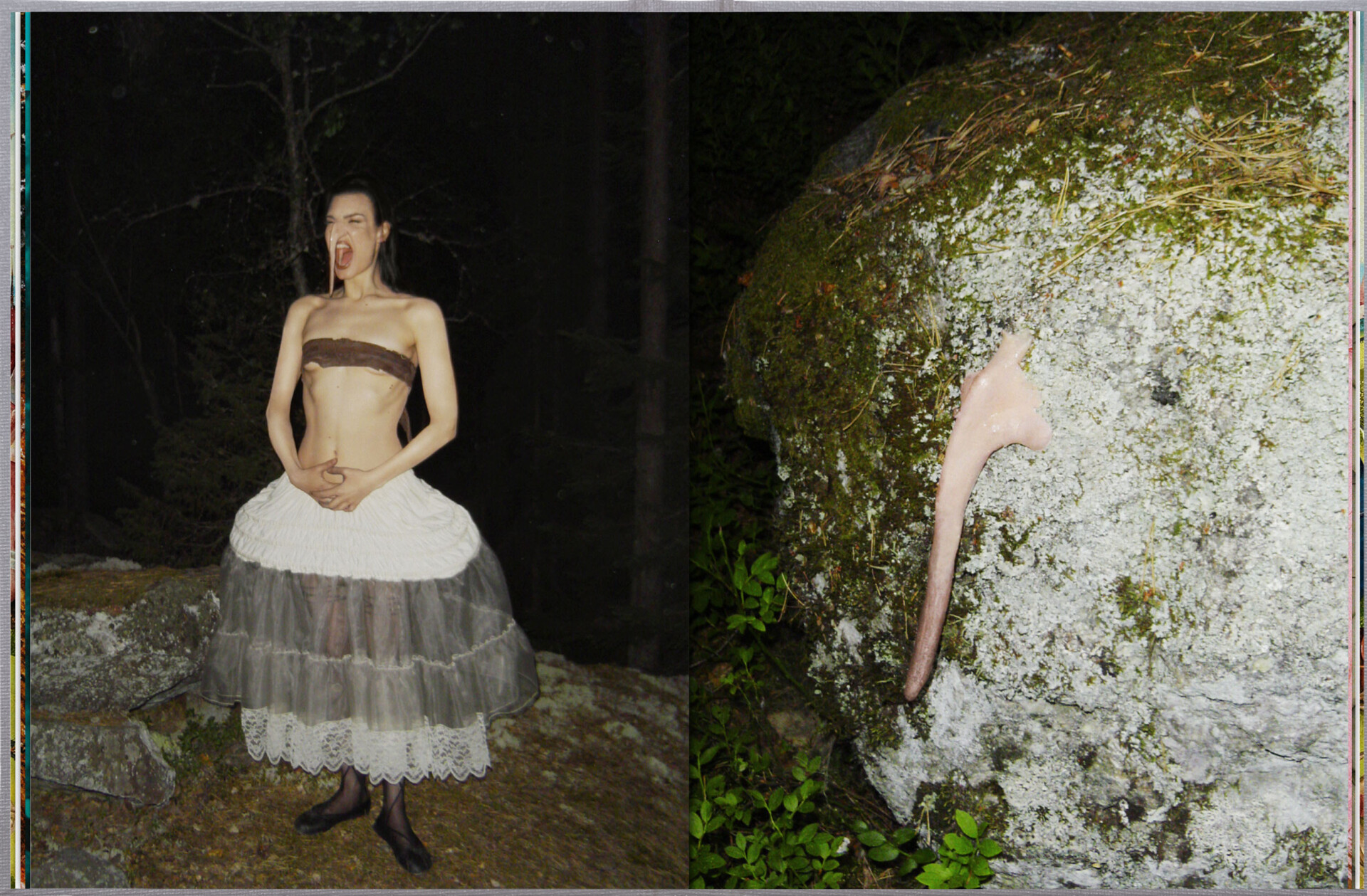
Image Courtesy of NUDA.
Though I’d been following Nuda online for a while, this was the first time I was holding a copy in my hands. For those who don’t know, Nuda is a biannual theme-based publication whose contents seem to seamlessly converge visual culture, science, art, fashion, design and philosophy – along with its co-founders minds. Across 300-something pages, the latest issue examines the theme of Saga from the perspectives of the industry’s most exciting artists, photographers, researchers and cultural journalists – David Lynch, Chris Kraus, Hans-Ulrich Obrist, Ottolinger and Esben Weile, to name a few. Fantastical yet perfectly in tune with reality, Nuda: Saga explores our desire to escape from the real world – and all of its conflict, destruction and anxiety – through storytelling.
Its mind-expanding and brilliant contents are equally as brilliant as its founders: art critic and curator Nora Arrhenius Hagdahl and photographer Frida Vega Salomonsson – who currently sit in front of me on my screen. They’re telling me about their recently reorganised bookshelves which reminds me of the cluttered chaos of my own.
As I hold this beautifully crafted book in my hands, I speak to Frida and Nora all about how it all came to be.
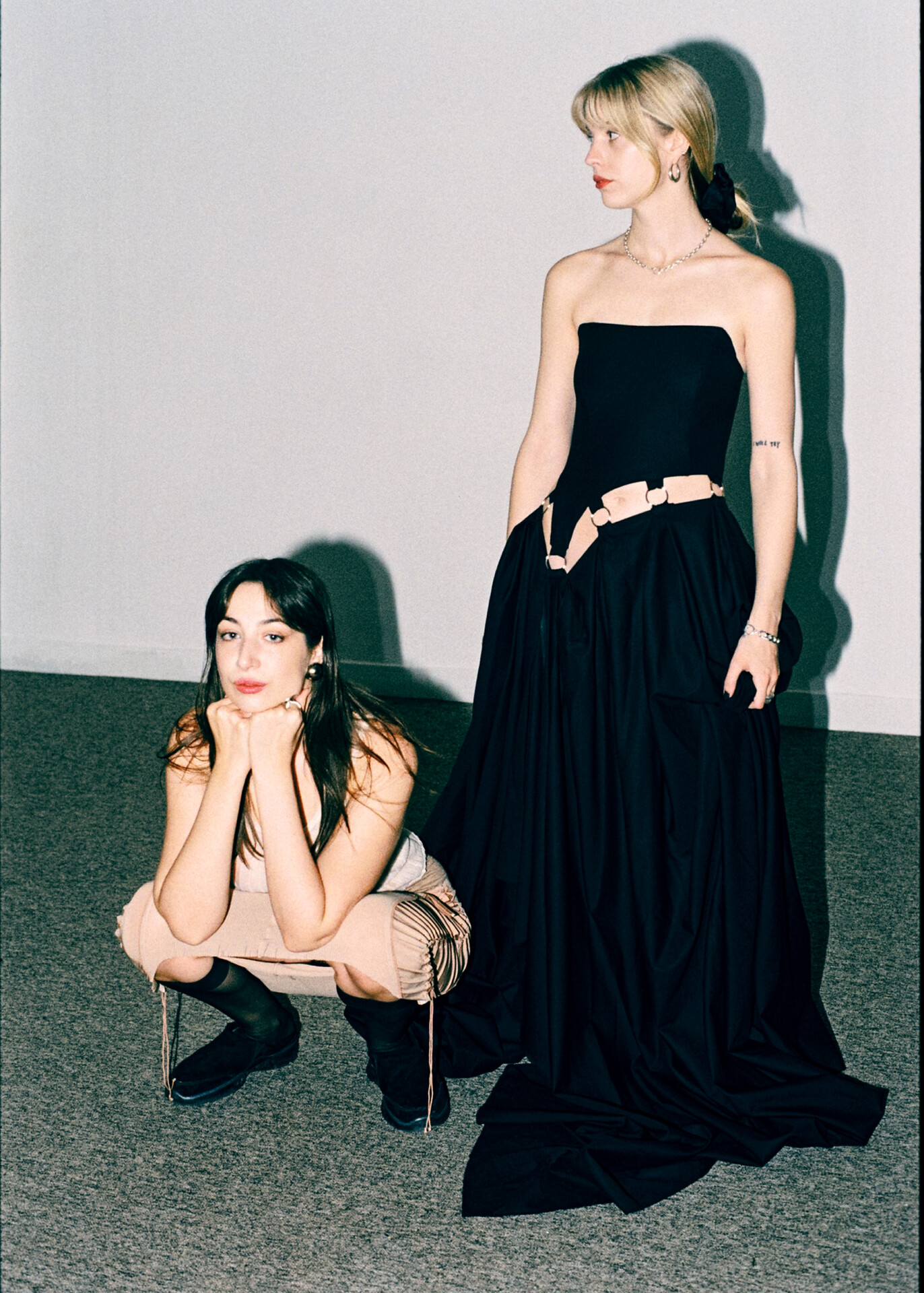
Photography by Jenny Källman.
Molly: Thank you for sending me this issue. It was such a joy to read.
Nora: It feels like such a long time since I read this issue… I don’t even know if I can remember what’s in there [laughs].
M: Haha, I can imagine it’s all become a blur. How long has this issue been in the making?
Frida: We started on this over a year ago. We often forget how painful it can be to get an issue completed from start to finish. We decided that with this issue we really didn’t want to rush it.
N: Yeah. It was supposed to be published in February, but when February came it didn’t feel ready so we waited until it felt right. Now it’s here.
F: We had a release for Saga last week in Oslo, and already on the way back we were thinking about the next one. It’s sort of like giving birth. I mean, I’m not a mother, but I imagine that that’s what making a book feels like. In the end, we’re like “Let’s do it all over again” [both laugh].
N: I think you have to go into it with a bit of naivety.
M: I recently self-published a book and if it weren’t for my naivety, I don’t think I’d have done it. I’m really excited by your rejection of a strict timeline, instead working in line with readiness.
N: In this industry, there’s this idea that you have to follow this specific fashion calendar when it comes to making. But our minds and our creative process don’t really work like that. Sometimes it takes a long time for ideas to appear.
F: And when the idea does come to you, it might only be good after having evaluated it like 20 times.
M: Exactly. It’s good to ruminate and process, allowing yourself to respond rather than react. So what is your creative process?
F: After having released an issue, and when we feel ready to start the whole process again, we come together and drink a lot of wine or smoke a lot of weed and just bounce ideas off each other. We make a huge mind map. We ask ourselves: what would the dream issue be? Who would be in it? What topics do we want to explore? What will the photos look like?
N: Yeah, it’s really a space for our brains to come together. There’s never any clear boundaries and nothing is off limits.
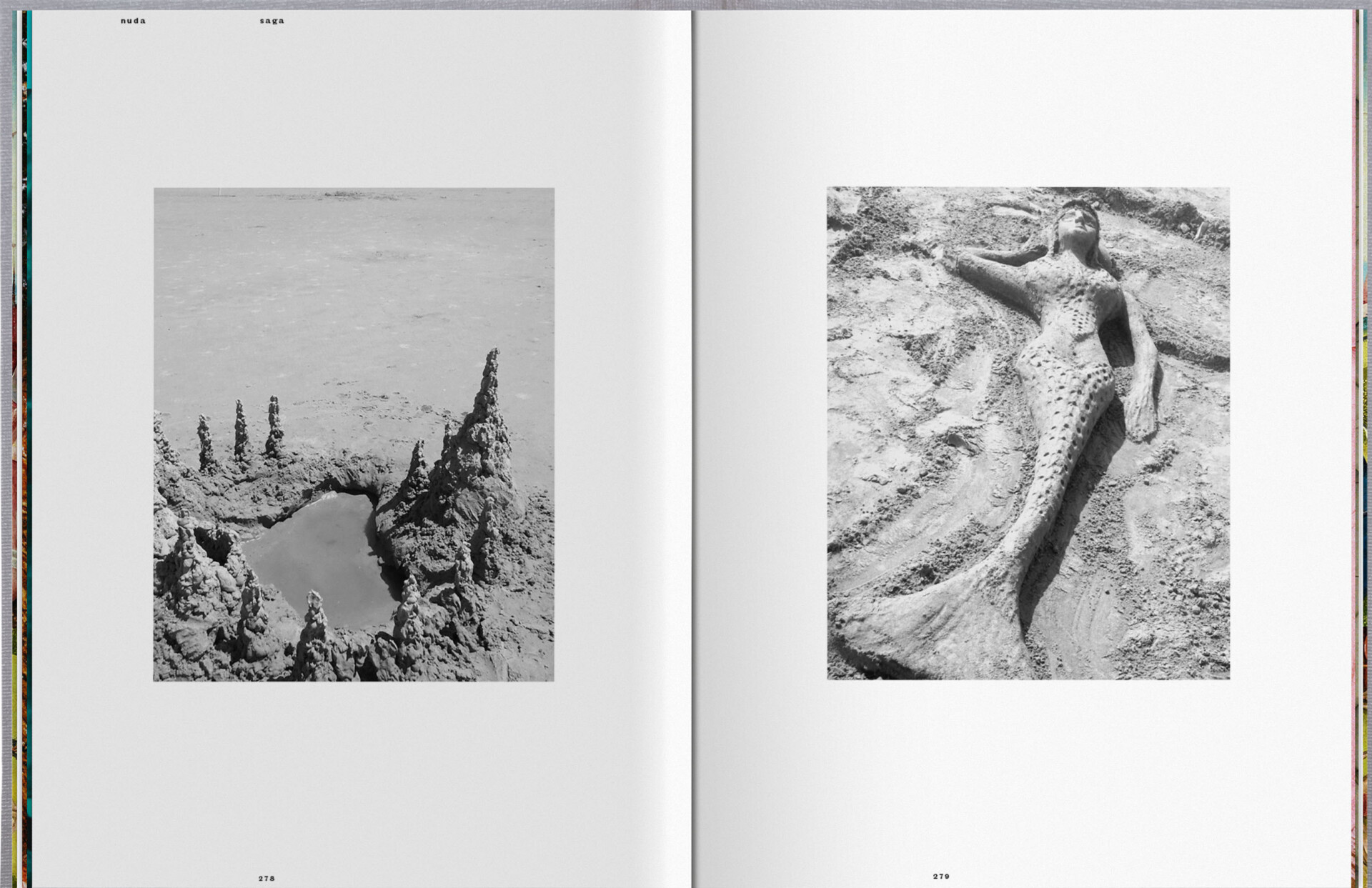
Image Courtesy of NUDA.
M: In this issue, there’s a great interview with Chris Kraus where you ask her if she feels as though she creates worlds in her books. I wanted to flip this question onto you both, do you feel like you are creating a world, or worlds, in Nuda?
N: Definitely. And the world differs from issue to issue. When it comes to making a new issue, we ask ourselves, “Okay, what’s this world going to be?”
F: Nuda is all about world-building. Sometimes I don’t want to go into the next project, world, because I’m so enchanted by the one I’m currently in. The worlds that we make are so clear in my mind that I often feel like I know how the air would smell.
N: We’re making a space where we would like to sit. There’s conversations with musicians, authors, archaeologists, writers, painters. Our interests don’t sit inside just one genre which makes our worlds ever changing. Being able to make a closed project contained within the space of two covers is so important to us. It gives us the space to curate a world of our own. It’s nice to have something you can spend time with, and go back to.
M: Enchanted is definitely how I felt when I read this issue. Its theme, Saga, has many meanings but despite differing definitions, the premise of the word is all about the ritualistic act of storytelling – an act that has changed significantly in the digital age. What does Saga mean to you?
F: Growing up our parents wouldn’t sing us a song, they’d read us a saga. It’s the story you’d listen to before bed as a kid.
N: The way we arrived at Saga as the theme was not necessarily a resistance against digital storytelling, more so it was a way of resisting reality. We wanted to step into a place that wasn’t so real and serious and anchored in, I don’t know, a political issue or a societal issue. I think for a long time fashion has been concerned with this trope of “let’s change the world!” and we’re not really interested in that. With this issue, we wanted to remain in fantasy where anything is allowed and truth doesn’t exist.
F: Yeah, it’s fun to just go into tales about trolls and dragons, to not take things too seriously.
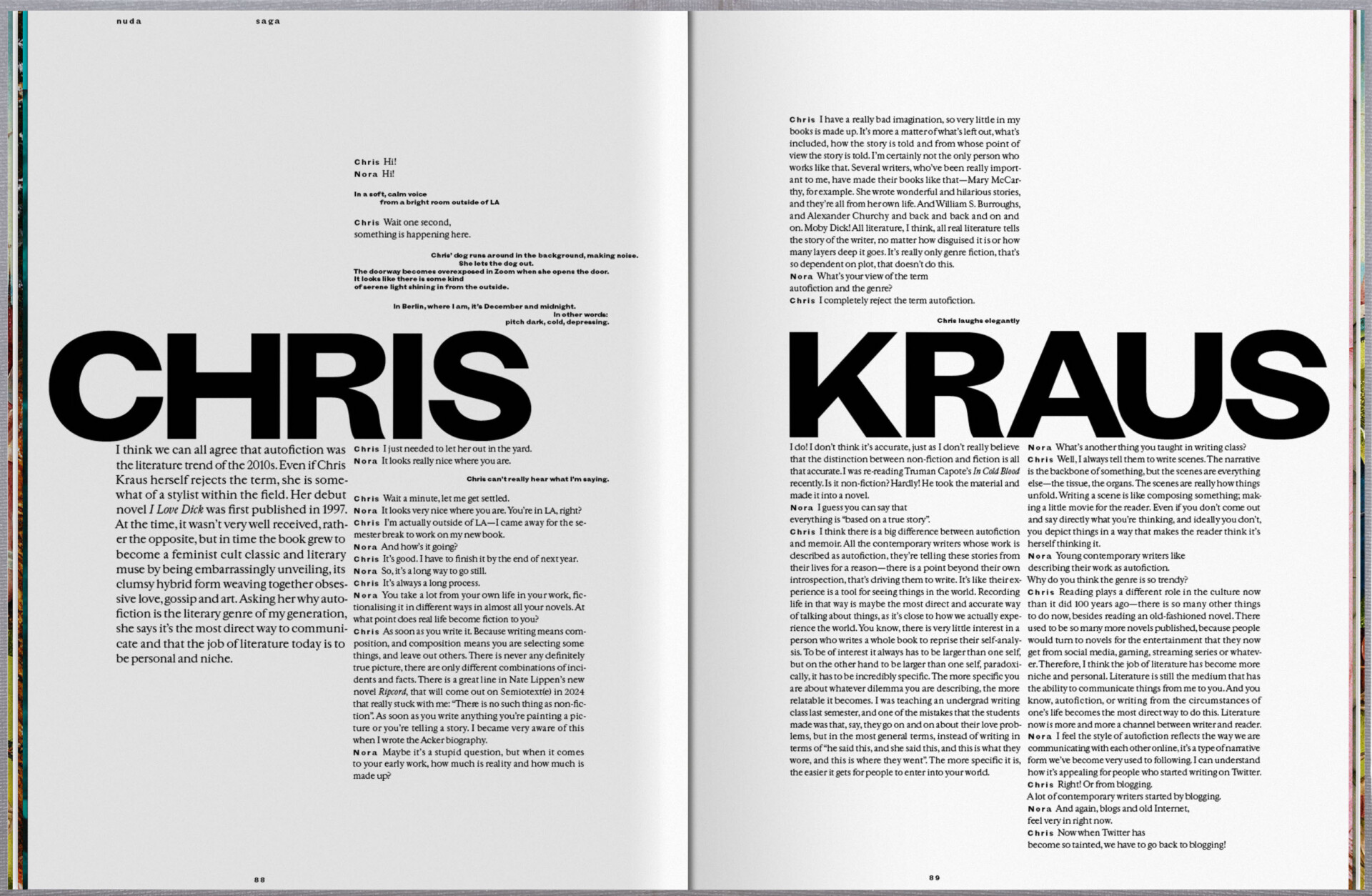
Image Courtesy of NUDA.
M: Saga can also mean a long, involved story, account, or series of incidents – which is reflected in the chapter by chapter structure. Do you see Nuda (as a whole) as a saga, a series of incidents and encounters?
F: Yeah, to some extent. Sometimes when we’re working on an issue, we’ll meet someone and realise they’re interested in the theme. It can be quite organic in that sense.
N: But it’s also a lot of curation and hardwork, as opposed to the sort of incidental nature of a saga. It’s quite the opposite of accidental. Our process really comes from a place of wanting to express what we want and have to say. That being said, sometimes when you go looking and looking for something, you can’t always find it. It’s important to take time and allow things the chance to fall into your lap.
M: So important.
N: Also, Nora and I have been working together for so many years, 10 years now. Maybe our story is more like a saga.
M: Yes, I wanted to ask you actually. How did you both meet? What’s your saga?
F: We met in high school. We realised we both really love to do projects and that we’re very goal oriented. I think we just were lucky enough to have found eachother quite naturally.
N: It made sense. With Frida’s background as a photographer and mine as a writer, a book felt like the perfect space that could combine both our practices. We really compliment each other in terms of knowledge and interests. It’s special to find someone who just really understands you and what you want to create.
F: And now I find it hard to work with other people. It’s just so easy with Nora. I’d say, “Oh you know that guy in Berlin?” and I mean there’s so many people in Berlin but Nora will know exactly who I’m talking about. It’s kind of a shared brain situation.
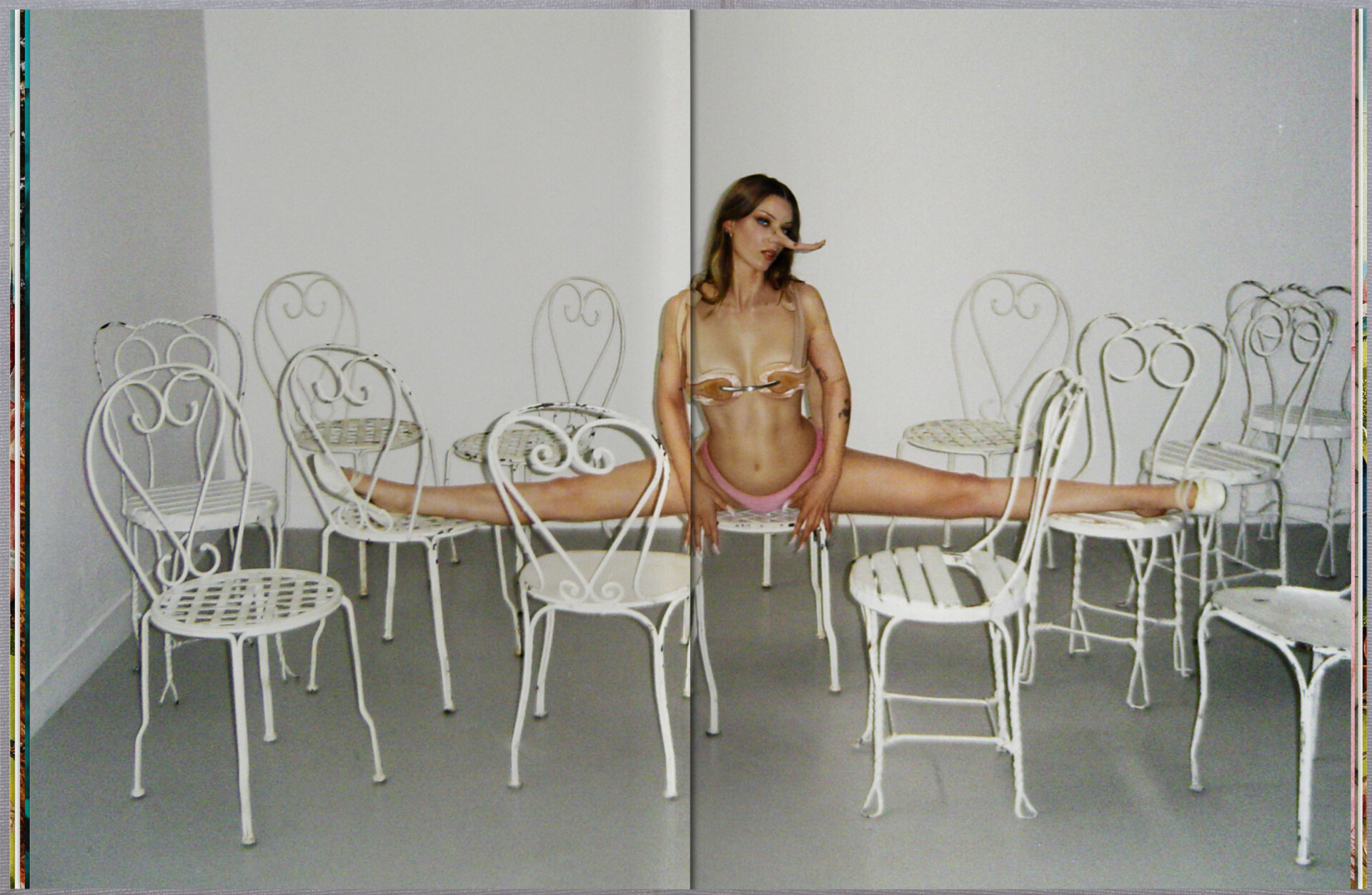
Image Courtesy of NUDA.
M: I’ve heard a lot about the independent publishing scene in Stockholm. It seems to be really taking off.
N: It’s really happening. I think mostly people really like print, having something as a physical object that they can hold and read. In Stockholm, we have a huge poetry and alt-lit scene. If you compare the scene of print around culture, art or fashion, it’s of course not as saturated as New York or London. But there’s definitely a scene here – it’s just either super alternative or super commercial. I think Nuda occupies a space between the two, or even a space entirely on its own.
M: I think there’s a freedom in operating outside of these heavily saturated cities though. More often than not, people publishing in these spaces – especially in fashion – don’t really know what it is they’re trying to say. I think there’s a real lack of meaningful publications right now.
N: I mean, you have to make something meaningful. Otherwise, what’s the fucking point? So much within the world of fashion/art magazines is so superficial. The medium of print itself is so important. Print is a subculture. I think that’s why we reject the conventional fashion publishing calendar. We want to make something that people actually want to read. But we don’t try to push any one way of thinking onto readers, nor a commercialised agenda. This gives us the freedom to make spreads that maybe wouldn’t be allowed in conventional publishing. If you ask me, anyone can say anything here. It’s important for us to bring together all kinds of perspectives and interpretations of the theme – even maybe ones we don’t always totally agree with.
As our conversation reaches its natural end, I’m left feeling excited by what’s next for the two artists – and for Nuda. Frida hints at the prospect of a new book launching in the springtime, while Nora mentions the possibility of hosting exhibitions in the space next to their studio. She tilts the screen slightly, to reveal a room void of objects though full of possibility. Until then, I’ll be returning to Saga again and again, unveiling something new each time.