For a band to release an album or a single, it is not only about the music but also about its presentation. Album covers can burn deep into people’s minds and become a characteristic visual association with an artist’s or a band’s sounds. Taschen has made a selection of the most iconic album covers of all times that illustrate the rhythm of art. Here are Sleek’s favourite 20.
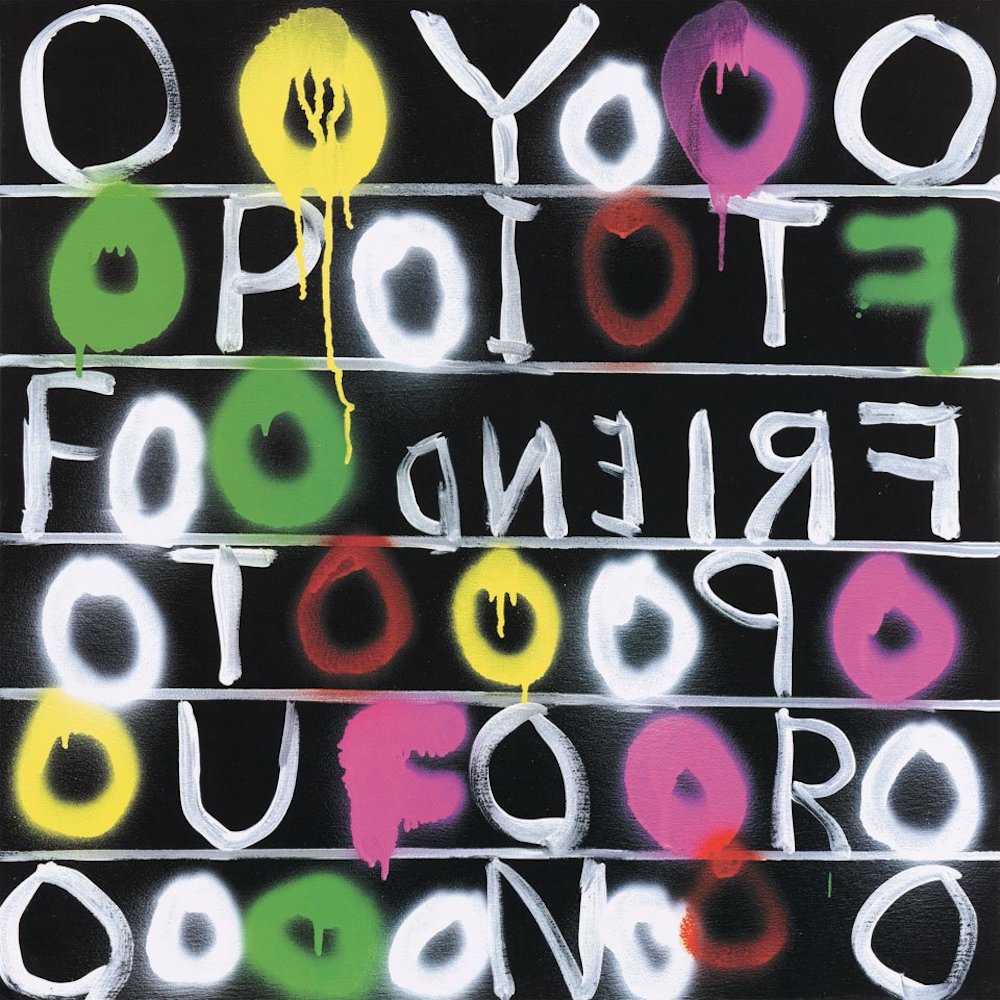 “Friend Opportunity” by Deerhof
David Shrigley for Deerhoof: Friend Opportunity
Deerhoof’s 2006 album cover, designed by David Shirley, plays with the letters of its title “Friend Opportunity”. A big fan of the band’s previous work, the British artist did not know any of the new album’s tracks before he started working on the design, yet he created an artwork which reflects the album’s cinematic sound.
 “Graduation” by Kanye West
Takashi Murakami for Kanye West: Graduation
Kanye West’s album “Graduation” focuses on the themes around school and college. The album cover shows “Dropout Bear”, West’s long-time alter ego, being catapulted away from his college campus, a safe zone filled with dreams, and into the real world. It was designed by Takashi Murakami, often called “the Warhol of Japan”, who also illustrated several songs on the album.
 “It’s Blitz!” by Yeah Yeah Yeahs, courtesy of Taschen
Urs Fischer for Yeah Yeah Yeahs: It’s Blitz!
Who hasn’t ever felt the urge to squeeze an egg? Karen O, vocalist and pianist of the band Yeah Yeah Yeahs, certainly has and Swiss artist Urs Fischer captured the act in a photo. It is used as the cover image for the band’s 2009 album “It’s Blitz!”.
 “Touched” by Blondes
Guyton\Walker for Blondes: Touched
For Blondes’s EP “Touched” (2010), the collaborative Guyton\Walker, which is made up of Wade Guyton and Kelley Walker, illustrated the band’s spaced-out dance music through their trademark spray painted garish sliced fruits and banana peels.
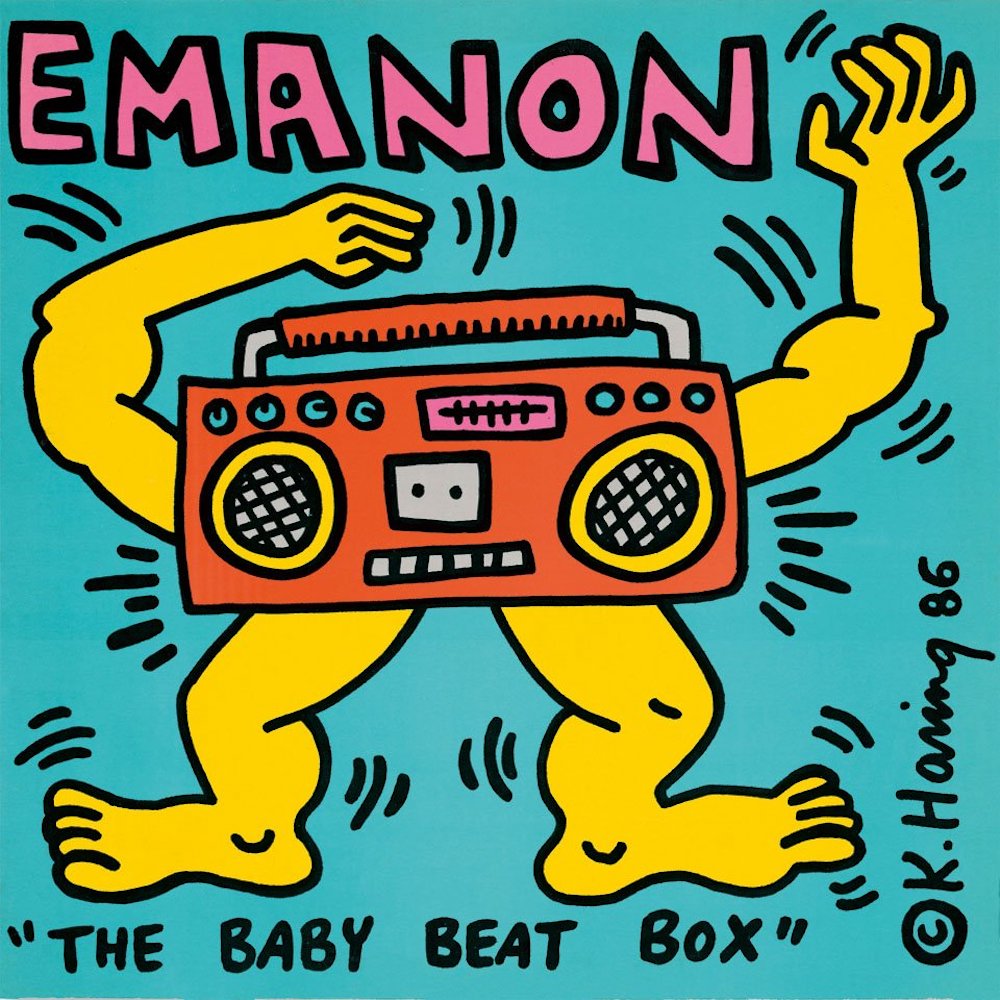 “The Baby Beat Box” by Emanon
Keith Haring for Emanon: The Baby Beat Box
Known for his cartoonish and colourful figures, Keith Haring’s images are often about unconditional love. For Emanon’s 1986 album “The Baby Beat Box”, he created a rhythmical illustration of the love to music as well as the album’s hip-hop sounds.
 “Mirror Repair” by Gastr Del Sol
Albert Oehlen for Gastr Del Sol: Mirror Repair
Inspired by American Action Painting of the 1950s, German artist Albert Oehlen created abstract compositions of colours and patterns for the cover of the experimental rock band Gastr Del Sol’s 1994 album “Mirror Repair”. He has also featured one of the band’s songs on his own label “Leiterwagen”.
 “Live in Shenzhen, Shanghai and Taipei” by Day & Taxi
Ai Weiwei for Day & Taxi: Live in Shenzhen, Shanghai and Taipei
Ai Weiwei is probably China’s most famous and controversial artist. This photo, which documents Beijing’s unruly urban development, can also be found on the cover of Day & Taxi’s 2005 live recorded performance “Live in Shenzhen, Shanghai and Taipei”. The Jazz band has also collaborated with artists such as Alex Katz, Yoshito Nara and Christopher Wool.
 “3 Weeks” by Toga
Wolfgang Tillmans for Tiga: 3 Weeks
Wolfgang Tillmans’ 2003 series “Anemone II”, featuring still photos of flowers, captures the poetic beauty of everyday life. Electronic artist Tiga James Sontag (aka Tiga), who developed a cult dance music scene in his hometown Montreal, chose one of these images for his single “3 Weeks”. The fading beauty the image creates can be seen as a reflection of the song’s theme: memories of a lost love.
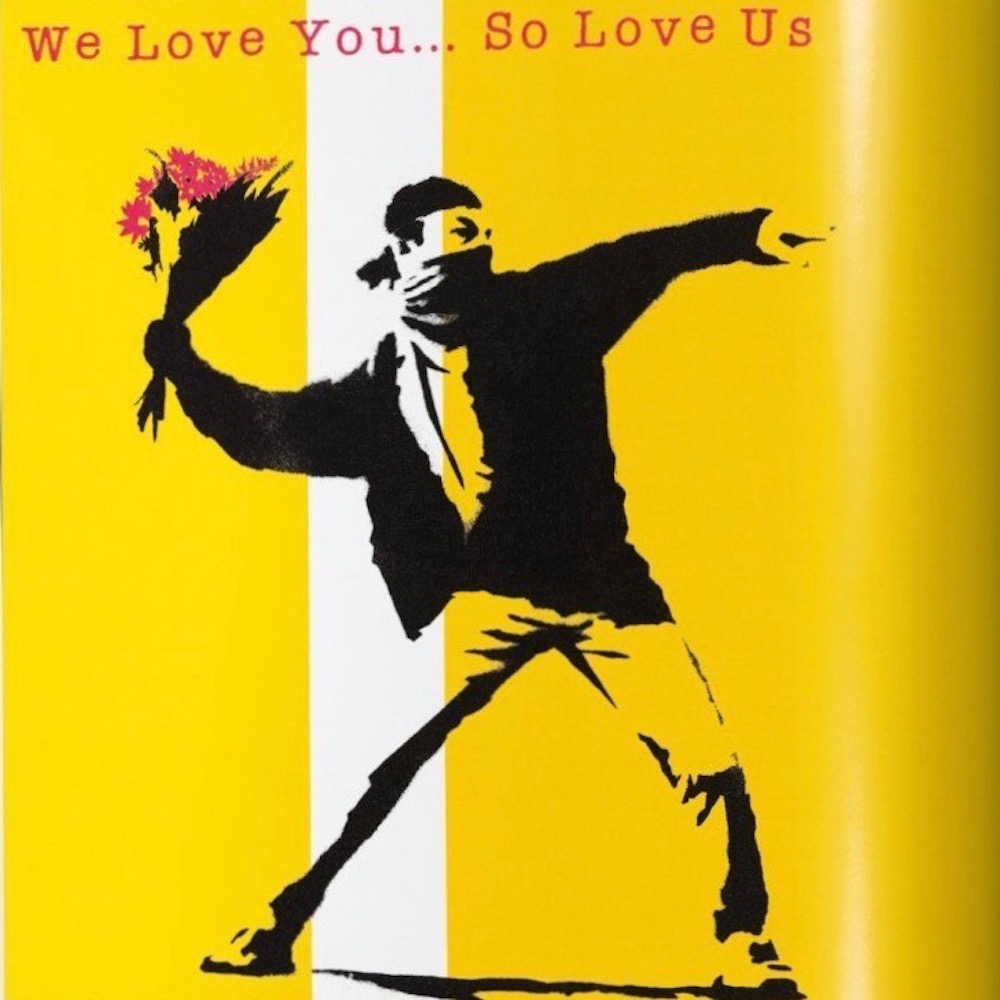 “We Love You… So Love Us Vol. 1” – Various artists
Banksy for We Love You… So Love Us Vol.1 (Various Artists)
The “Rage, Flower, Thrower” is one of British street artist Bansky’s most iconic stencils. Originally found on a wall in Jerusalem, it is perhaps a response to the instabilities in the Middle East. Its message, however, is clear: “wage peace”. The image is also the album cover of this compilation of 18 rock tracks.
 “Business of Punishment” by Consolidated
Barbara Kruger for Consolidated: Business of Punishment
As a radical left-wing activist music group, Consolidated searched for a political album cover. Barbara Kruger was the right person for the job. She highlighted the album’s name in red-boxed letters put on top of a black-and-white image of a white-collar man being punched from every side. This illustrates the hidden power of corporate control, a topic dear to both artist and band.
 “Salt” by Arto Lindsay
Kara Walker for Arto Lindsay: Salt
Kara Walker has acquired her reputation through painted or cut out black silhouettes in which she addresses colonialism. For Arto Lindsay’s album “Salt”, Walker depicts a tall black woman being pressed against a tree by a short white man who wants to carve her with a chisel like a sculpture.
 “Wolf” by Tyler, The Creator
Mark Ryden for Tyler, The Creator: Wolf
Wile Mark Ryden is best known for the album cover of Michael Jackson’s “Dangerous”, he made one of his latest illustrations for Tyler, The Creator’s vinyl “Wolf”. The American rapper released this image first on his Instagram account.
 “Með suð í eyrum við spilum endalaust” by Sigur Rós
Ryan McGingley for Sigur Rós: Með suð í eyrum við spilum endalaust
For Sigur Rós’ 2008 album, which translates as “With a Buzz in Our Ears We Play Endlessly”, Ryan McGingley took a photo of naked men running over a highway towards the vast Icelandic mountainous landscape. This creates a utopian notion of youth and lightness and compliments the band’s ethereal sound.
 “Artpop” by Lady Gaga
Jeff Koons for Lady Gaga: Artpop
Jeff Koons is known all around the world for turning kitsch items or toys into sculptures. In 2013, he illustrated Lady Gaga’s album cover “Artpop” in which she appears like a modern pop-art version of Botticelli’s “The Birth of Venus”. Trying to blur the lines between art and her pop music, she addresses the artist in her song “Applause” by singing, “One second I’m a Koons, then suddenly the Koons is me”.
 “O Superman” by Laurie Anderson
Laurie Anderson for Laurie Anderson: O Superman
Some artists create the artworks for their music themselves: For the cover of her 1981 single “O Superman”, Laurie Anderson incorporated a graphic still of one of interactive machine artist Perry Hoberman’ videos. He also contributes to the experimental tune by performing saxophone and walkie-talkie effects . The song leans heavily on the aria “O Sovereign, O Judge, O Father” by Jules Massenet’s 1885 opera Le Cid.
 “I Cry For You” by Bobby “O”
Roy Lichtenstein for Bobby “O”: I Cry for You
While Roy Lichtenstein was very passionate about music, he never worked on any musical projects except for designing the DreamWork’s record logo in 1996. However, some musicians used his images for their music covers regardless. This is how Lichtenstein’s famous “Crying Girl” ended up on the cover of Hi-NRG dance music father Bobby Orlando’s (Bobby “O”) 1983 single “I Cry For You”.
 “Daydream Nation” by Sonic Youth
Gerhard Richter for Sonic Youth: Daydream Nation
German artist Gerhard Richter’s photo-painting “Candle”, which is on the cover of Sonic Youth’s album “Daydream Nation” (1988), refers to the band’s illuminated transformation to a clearer sound and a more articulated style compared to their earlier works.
 “Nervous Breakdown” by Black Flag
Raymond Pettibon for Black Flag: Nervous Breakdown
Raymond Pettibon did not only design Black Flag’s 1980 EP “Nervous Breakdown”, but he also coined the band’s name and its emblem of four bars. The cover depicts a teacher cornering a belligerent pupil – a metaphor of the social rebellion of punk.
 “Platform” by Holly Herndon
Metahaven for Holly Herndon: Platform
Hyper-connectivity and the loss of identity in the fast-advancing digital era are the themes of Holly Herndon’s latest album “Platform” (2015). The designers of the Dutch agency Metahaven translated this approach by portraying Herndon behind several layers of different colours and patterns, making her seem to be lost behind the constantly moving influences of life.
 “Sludge Glamorous” by Melvins
Steven Parrino for Melvins: Sludge Glamorous
Artist, musician and biker Steven Parrino’s created a form of necrophiliac art. Dark colours and gloomy subjects make up his images and he often breaks them into several parts or layers, such as seen on the cover for Melvin’s EP “Sludge Glamorous”. Released in 2010, the band paid homage to the artist who died in a motorcycle accident five years earlier.