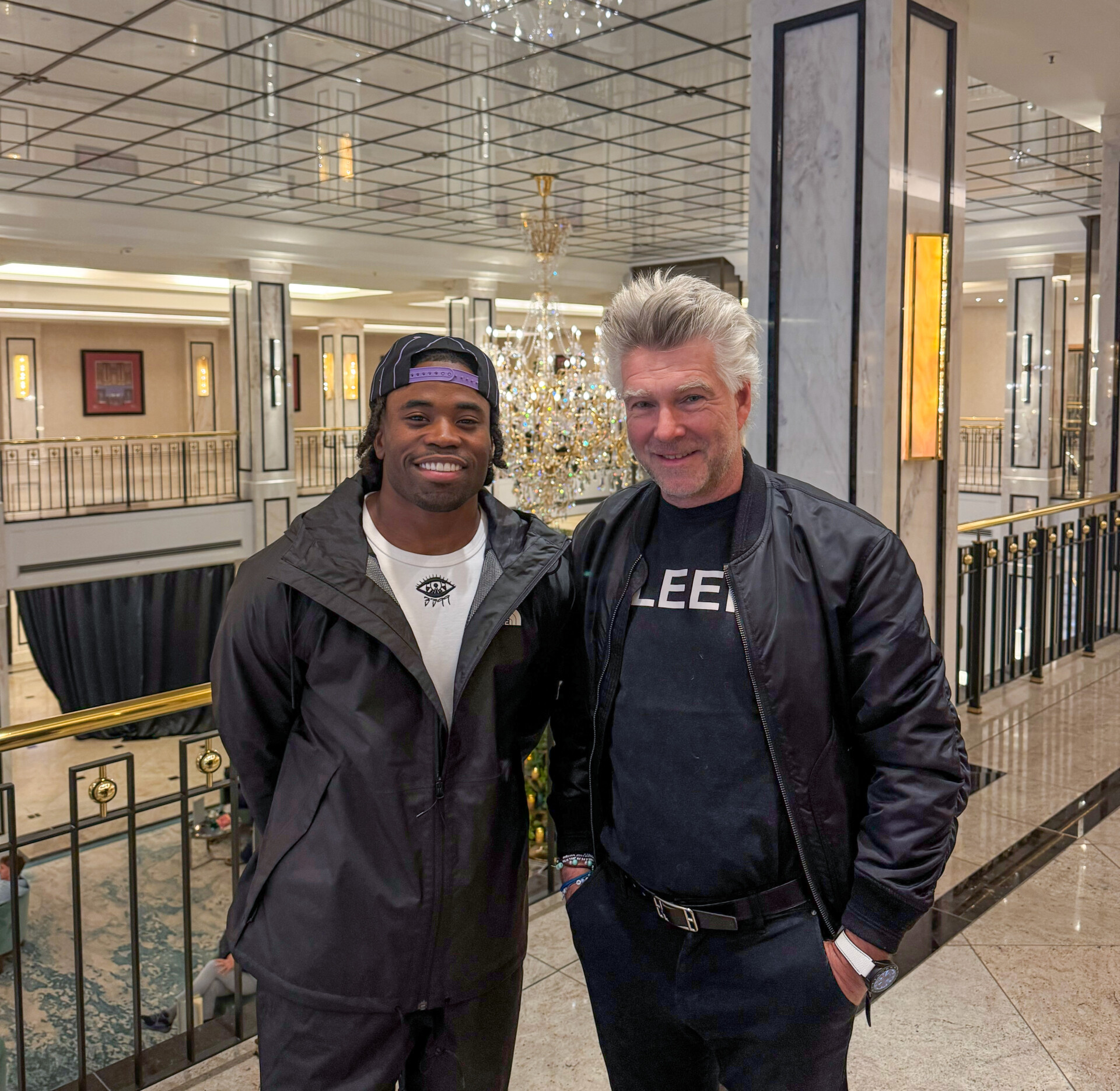
We meet in the early afternoon at the team’s hotel in Berlin, one day before the Colts face off at the Olympiastadion. The lobby hums with the quiet anticipation that precedes major sporting events, but Kenny Moore II walks in with the unhurried composure of someone who has already done the work. He’s relaxed, calm—there’s no trace of pre-game tension in his demeanor. We settle into a quiet corner, and as he begins to speak about focus, preparation, and the mental architecture of elite performance, it becomes clear that his calmness isn’t the absence of intensity, but rather its most refined form.
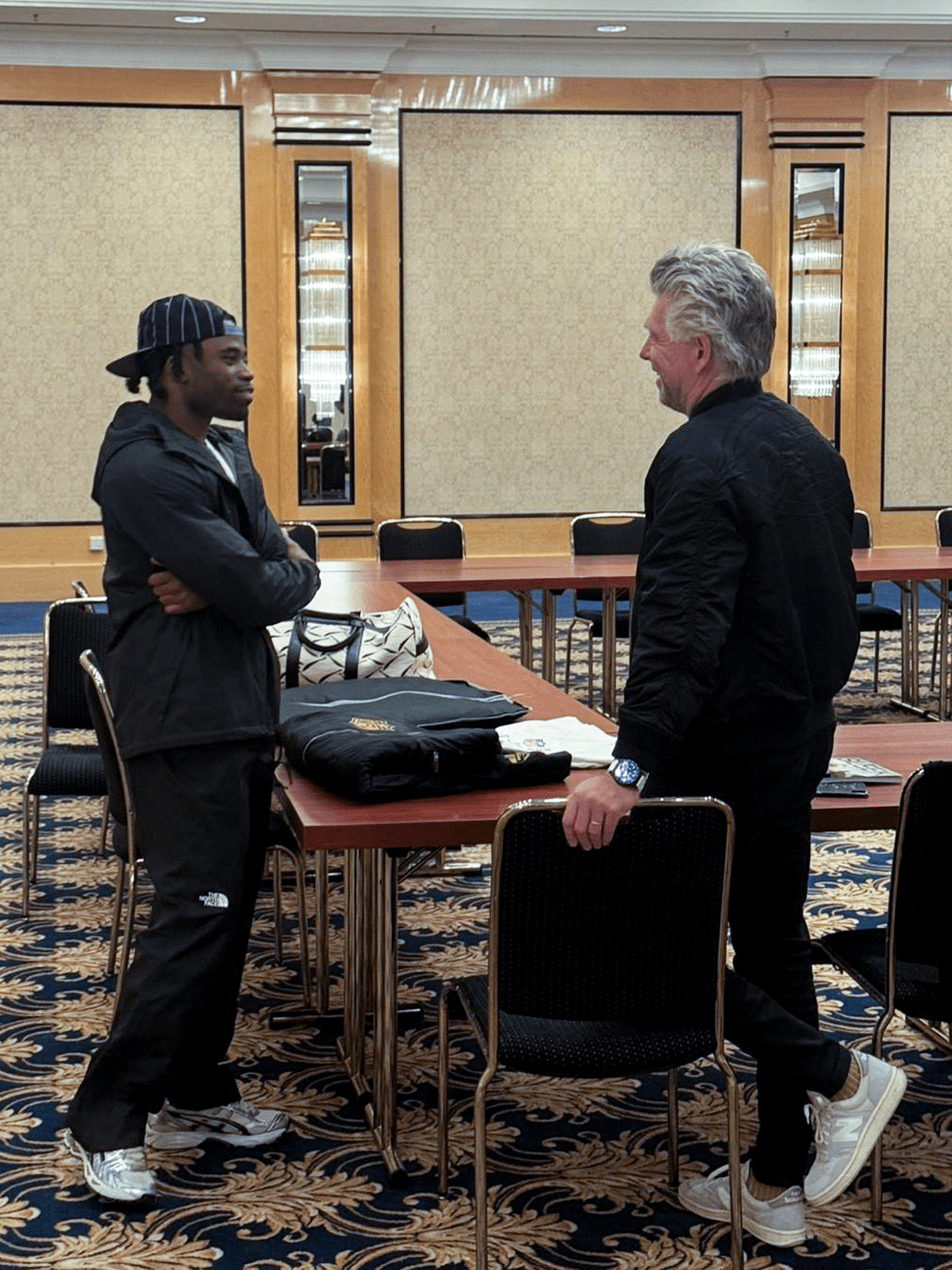
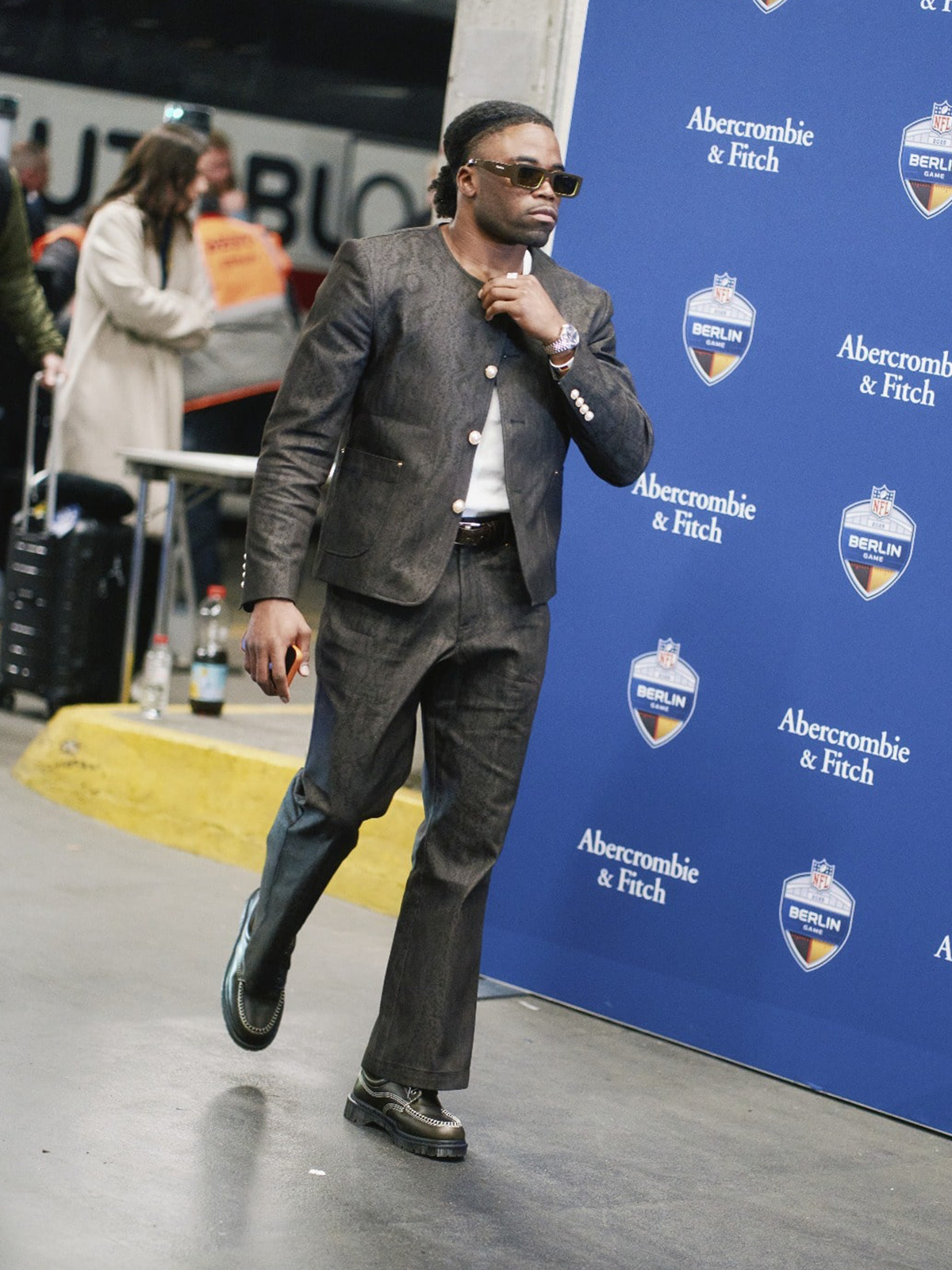
Photography by Marius Faulhaber.
Christian Bracht Tomorrow, 72,000 people will fill Berlin’s Olympiastadion, screaming as every moment matters. When the ball is snapped, where are you mentally?
Kenny Moore There’s a rundown of things I have to process before the snap. When the play comes into the huddle from our defensive coordinator to Zaire Franklin—he’s the guy with the green dot—he gives us the call. That play is telling each player what their job is, pre and post snap. For me, it’s figuring out where I need to be, who I need to be against. I’m looking at the huddle, at the personnel. I’m looking at the team across from us, trying to match up versus a particular person, synchronizing that with the play call. The call tells me which coverage I’m in, what my job is in that specific play. Then I communicate to teammates around me—telling them to be more aggressive or passive depending on the call. And from there, we try to execute and work together as best as possible.
CB Many people confuse energy with clarity. What’s the difference between adrenaline and focus?
KMEnergy is more the emotions you have—the ups and downs, the adrenaline, all those things. Obviously, the emotion for playing in Germany is pretty high. You’re playing in front of very intentional people, who want to support no matter what. The passion that goes through European soccer in general—it’s cool to feel that type of energy on the football field. But focus deals with something more internal. Whatever is going on—the noise, the distractions—you need focus to separate yourself from the external factors.
CBDo you have a personal ritual, phrase, or image in your mind that grounds you when everything gets loud?
KM I’m pretty calm, laid back, poised—even on the field. I think the energy of the game gets me hyped, you know, good plays and stuff like that. I’m out there to have fun. That’s truly what I bring to the game—the excitement and the entertainment. But I talk to my mother and my family before every game, and that grounds me. I tell them I love them, I’m going out here. It’s obviously a big risk, what we do every day. So yeah, that grounds me.
CB Cornerbacks make decisions in milliseconds. In the most critical moments, what takes over—instinct, preparation, or experience?
KMPreparation takes over at any given time. Experience doesn’t really matter—the game doesn’t care how long or how short you’ve played. It just depends on if you can execute in that millisecond, in that moment to make a play. It’s like playing a game of think fast. It doesn’t matter how old you are or how many times you’ve played. It’s whether you can execute, whether you know if it’s coming or not. Preparation fuels my confidence for every match. I never rely on experience or things I’ve seen. The more I watch things, the more I go over plays with my coaches and teammates, the repetition—that’s what helps me execute.
CBPeople often think focus means tension. For you, is focus something calm or something aggressive?
KMFocus is calm. Maybe it’s a fine line between the two, but the way you’re able to dial in—you gotta separate all the distractions. You could attack that in an aggressive way, but I’m pretty calm when it comes to being focused and dialed in. I’m definitely calm when I think about the comparisons around the locker room.
CBThere’s noise inside the stadium, and then there’s noise outside of it—social media, expectations, the business side. Which is harder to block out?
KMNone of those are actually hard. Social media doesn’t bother me. I think more so, we can be our biggest critic sometimes. Giving myself grace, patting myself on the back when maybe you don’t get the support you want from others—you gotta support yourself sometimes. I think we all deal with being in our own way.
CBWhat’s tougher—the seconds before a critical play or the seconds after it?
KMProbably after, because it’s always the response of others. Obviously you’re hard on yourself, but the coaches are going to be hard on you, the fans, the team. Everybody wants your best. During the play, you can do so many different things to make the outcome better. But yeah, probably afterwards.
CBIf you could give one mental technique to a young athlete—something to help them stay calm, clear, and sharp—what would it be?
KMWork for perfection, but don’t depend on it. You can’t expect to be perfect. You can’t expect to do everything right. You can only expect your best. And if your best isn’t good enough, then you get back to work. That’s probably the best way to be an athlete. You put your best foot forward, but you don’t expect perfection. You just gotta expect your best and keep attacking it with your best.
Kenny Moore II plays cornerback for the Indianapolis Colts. This interview took place in Berlin ahead of the NFL’s 2024 international series game at the Olympiastadion.
CBIn the NFL, we talk about athleticism, strength, speed. How much of your performance is purely mental?
KMI’d say 80, maybe 90 percent. I’m pretty instinctual, but mentally, you have to know where to be. A lot of that goes back to preparation and your IQ. I don’t have to be the fastest guy out there. I don’t have to be the strongest. I’m obviously not the tallest. So, a lot of it is about playing with angles and understanding body language—or the body language that I convey. There are a lot of non-verbals, even the chemistry between teammates. You’re just in sync without having to say a word, in specific movements where we just know we’re on the same page. Sometimes it doesn’t come down to my speed or athleticism. It depends on how smart I can be.
CBMistakes in your position can’t always be erased—a missed tackle, a big play allowed. How do you mentally reset for the very next snap?
KMThis is what I signed up for from the very beginning. Honestly, just embracing the game and embracing that those are NFL players, an NFL offense. I’m one of many who are called to do this. So honestly, it’s an embrace mentality—knowing that I can’t be perfect. I gotta turn the page and have a short-term memory to go back out and give my best again.