Publisher Christian Bracht in conversation with Erik Podzuweit
What happens when we choose open questions over certain answers? On knowledge, risk and perhaps our most valuable resource: curiosity.
Erik Podzuweit founded Scalable Capital to make investing more democratic. A conversation about an entrepreneur’s curiosity, the discipline of not knowing and why, if it weren’t for his company, he might have become a teacher.
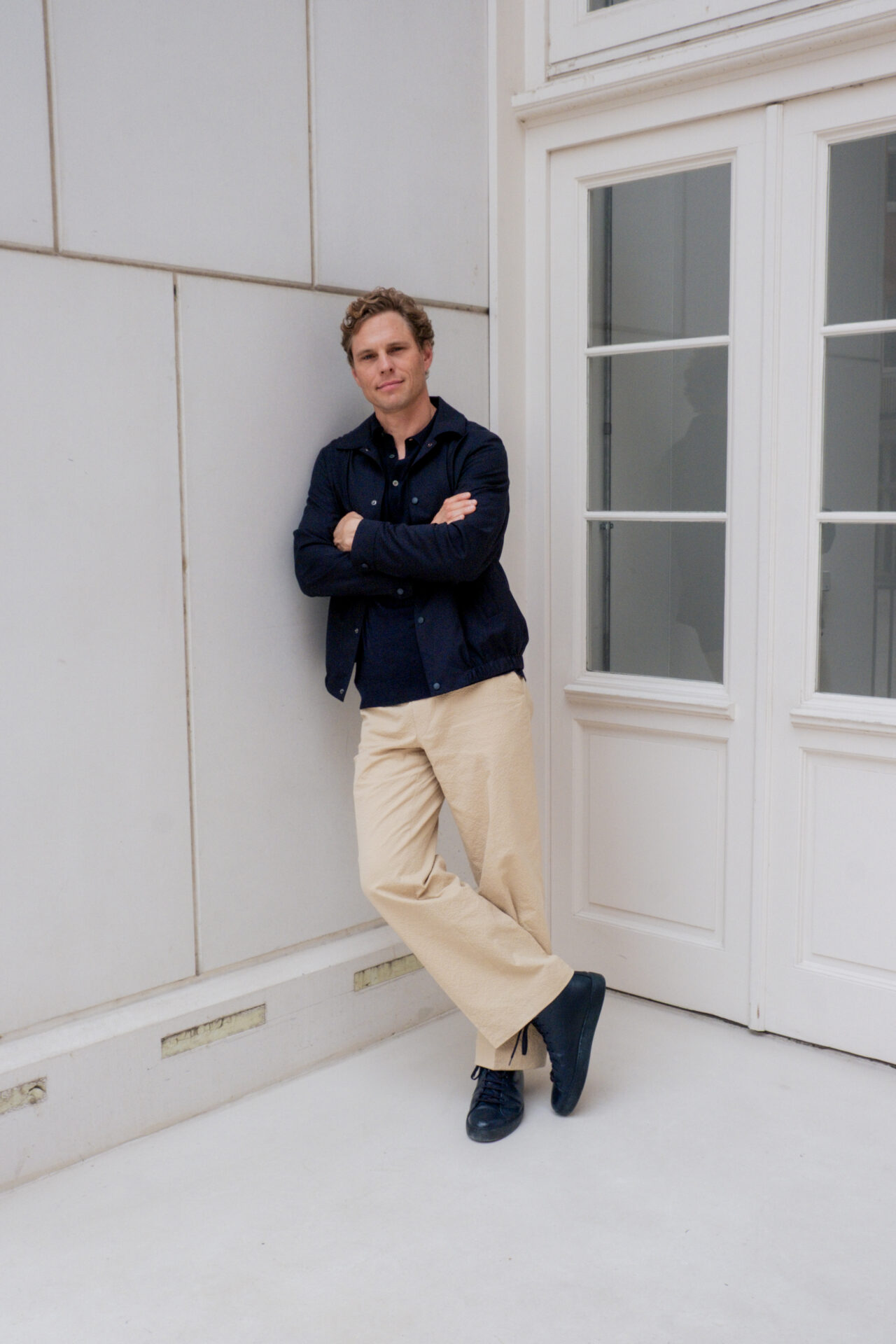
Photography by Lilly Wetzel
He sits relaxed, speaks precisely and occasionally pauses to find exactly the right words. Erik Podzuweit is not a man of grand gestures. What he does have, however, is clarity: about markets, about risk and about the limits of his own knowledge. Together with two co-founders, he built Scalable Capital in 2014, a digital investment platform that aims to change the way Germans think about capital markets. The company now manages client assets worth tens of billions of euros, has become a fully regulated bank and employs around eight hundred people. Podzuweit is 46 and comes across as someone who believes the most interesting questions are still ahead of him.
CHRISTIAN BRACHT Scalable Capital began with an observation: investing is unnecessarily complicated and expensive for most people. Was that an intellectual problem for you or a personal one?
ERIK PODZUWEIT Definitely a personal one. It started quite simply: I was working at Goldman Sachs at the time, and friends would constantly ask me what they should do with their money. It’s actually a very obvious question. But I realised I didn’t have a satisfying answer. I couldn’t just send them to a bank adviser because I knew what they’d be sold there. So I thought: there has to be an easier way to solve this. The question itself was actually very simple: why isn’t there a good, straightforward answer to something so fundamental?
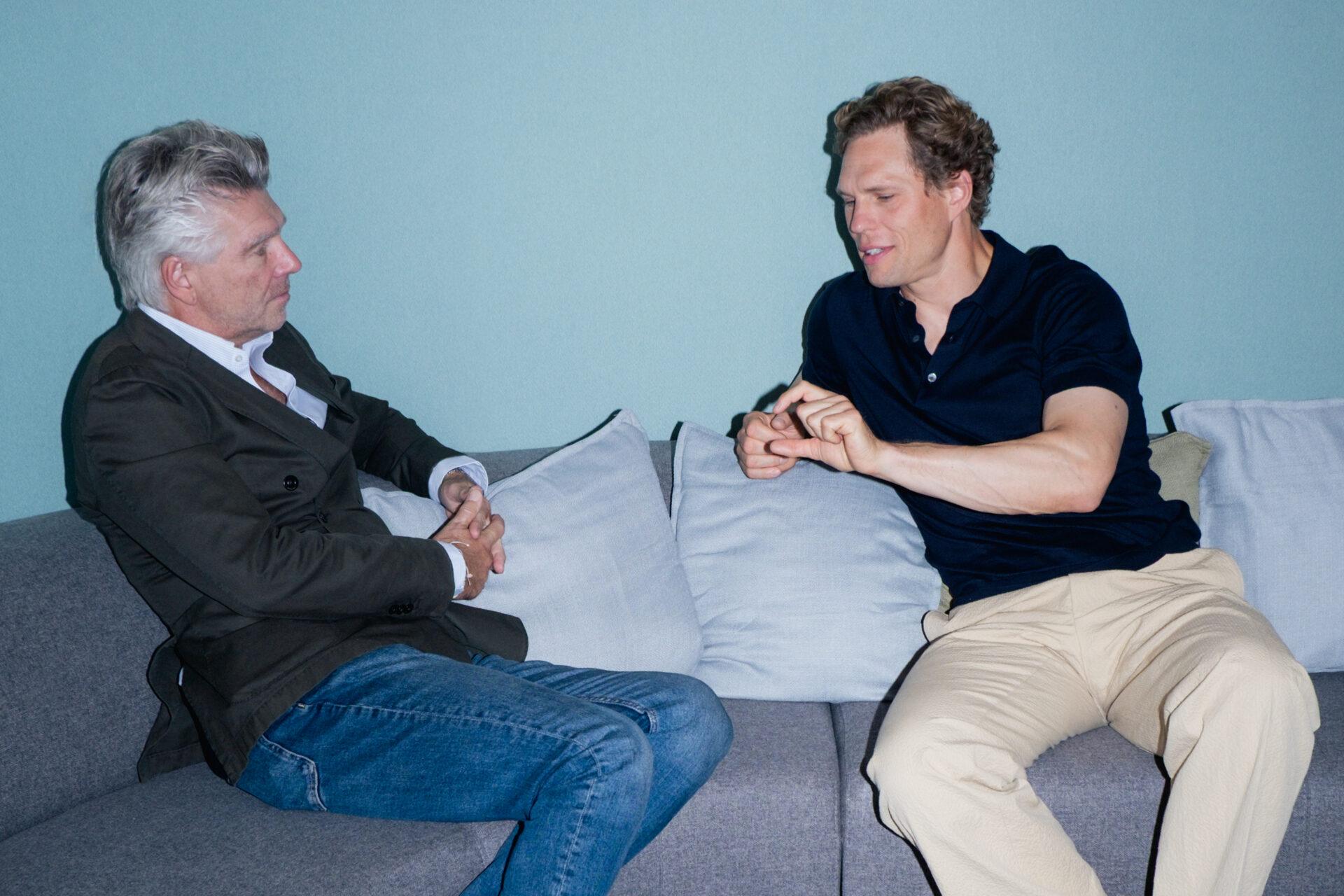
Photography by Lilly Wetzel
CB You previously worked at Goldman Sachs for seven years, on the other side of the very system you later challenged. What sparked your curiosity there? And what eventually stopped interesting you?
EP This might sound banal, but at first it was pure fascination with that world. The trading floor, the atmosphere, the focus on what really matters. That’s what drew me in. Back then, there were books and films that were actually meant to put people off. I read them and thought: that sounds exciting. What eventually made me leave after seven years was that I stopped learning at the same pace. You learn an incredible amount in the first two or three years. After that, the curve starts to flatten and you realise: I could keep earning good money here for another twenty years, but I’m no longer asking myself the questions that really matter to me. At some point, I realised I just wasn’t interested anymore. My curiosity had faded.
CB Founders often describe the moment they started their company as a kind of epiphany. Was it like that for you?
EP No, more the opposite. You get carried away with an idea, talk to friends about it and they nod, but you never know whether they’re nodding because they genuinely like it or because they’re being nice. Most of the time, they’re too nice. The real moment came much later, more than a year after we launched. We went live two days before Christmas 2015, with an interview in the FAZ on 24 December. For the next few days, not much happened. Then one evening, I opened my inbox and saw account-opening requests from complete strangers. People I’d never met were ready to entrust us with their money. That was the moment I thought: this is real. The feeling when complete strangers are placing their trust in you isn’t something you can simply manufacture.
Photography by Lilly Wetzel
CB Venture capital is essentially the institutionalised form of curiosity: money that doesn’t bet on certainty, but on open questions. How does an idea change when millions are suddenly riding on it?
EP That’s an apt description. Venture capital is quantified curiosity: curiosity about new markets, new technologies and the people capable of building something around them. And here’s the interesting thing: many of the people who later founded the most significant companies were complete outsiders in their early years. Steve Jobs and Steve Wozniak, for example, hardly looked like conventional founders to their early investors. No one could imagine them building a major company. But the idea was powerful enough that everything else became secondary. What changes with capital is the commitment behind the question. At some point, you have to start building. That’s when you find out whether your curiosity has led you to something real or whether it was just a passing idea.
CB There’s a moment in every start-up when that initial curiosity gives way to the logic of scaling. Did you see that transition as a loss or as a sign of maturity?
EP We knew from the start that we’d have to grow big. We didn’t build a small boutique that becomes profitable with 5,000 customers. What we offer only works at scale: simpler investing, lower prices, a better user experience. That requires millions of customers and hundreds of billions of euros in assets under management. Scaling wasn’t the end of curiosity, but a prerequisite for it. The real challenge lies elsewhere: how do you maintain a founder’s mindset when you’re leading an organisation of nearly a thousand people? Jeff Bezos put it well with his ‘Day One’ mentality. If all you do is keep riding the horse you already have, things might go well for a while. But sooner or later, someone will turn up with a better horse.

Photography by Lilly Wetzel
CB Investors expect returns, not experiments. How honest are you with your investors when you say, ‘I don’t know if this will work, but I want to try it’?
EP Very honest. And venture capital investors often expect that. In fact, they sometimes actively demand a greater willingness to take risks than some founders are prepared to show. Venture capital operates according to a clear logic: out of ten investments, half fail, two or three just break even and one or two generate the fund’s entire return. Investors never bet on the average, but on the exception. What feels different to me as a founder is this: the investor has a portfolio. I have only one life. If I spend ten years heading in the wrong direction, it’s difficult to make up for that. That makes me more pragmatic. Not more fearful, but more calculated.
CB Scalable uses algorithms where gut instinct and advisers’ judgement once dominated. Is that the end of curiosity or its most consistent expression?
EP Both at the same time, I think. On the one hand, replacing something as deeply rooted as personal financial advice with algorithms requires a great deal of curiosity and conviction. On the other hand, and this is the more philosophically interesting question, one I haven’t fully answered yet: what happens to us as more and more areas of life become automated? Will we be able to devote more time to what really matters because we have fewer repetitive tasks to deal with? Or will we become numb because everything is worked out for us? I think the jury is still out. The technology itself is neutral. The real question is what we do with the time it gives back to us.
Photography by Lilly Wetzel
CB How is AI currently changing the very foundations of the financial market, and do you see that as a threat or an opportunity?
EP It’s the most interesting question we’ve faced in years. No stone will be left unturned. That’s no exaggeration. As with any technological platform shift, those who embrace it, approach it with curiosity, learn and remain agile will benefit. Those who try to resist it might manage for another five or six years, but eventually they’ll be left behind. For us, this means we have to be faster than the larger institutions. We have to stay more curious than institutions that can afford to rely on what already works.
CB What is the question that Scalable Capital hasn’t answered yet, and that really keeps you up at night?
EP Participation. We’ve made investing more accessible, but by no means accessible to everyone. Twenty years ago, the wealthiest ten per cent engaged with the topic. Today, perhaps the wealthiest twenty or twenty-five per cent do. That’s progress, but it’s not enough. The English term ‘equity’ is interesting because it means both capital and fairness. Those who invest in the markets have a stake in economic growth. Those who don’t can easily feel as though that growth is happening without them, or even at their expense. This isn’t just a financial issue. It’s a social one. I’m concerned that we’re moving too slowly in Germany. Berlin, unfortunately, is more of a cautionary example in this regard.
CB How can you tell in a conversation whether someone is truly curious or simply ambitious?
EP By the questions they ask, never by what they say. Being well prepared and saying clever things isn’t unimportant, but it tells me little about genuine curiosity. Good questions show that someone genuinely wants to understand the company, the subject or the person sitting opposite them. Ambition can be trained and put on display. Curiosity cannot.
CB Final question: if you hadn’t founded Scalable Capital, what question would be on your mind today?
EP What I enjoy most is explaining complex things in a way that people can understand. I used to tutor at university and really enjoyed it. I think I would eventually have found my way into teaching, perhaps not at university, but at a school. Not because research isn’t important, but because the crucial question comes much earlier: how do you make a young person curious about something before they’ve learnt to think of it as boring? That’s a question I could see myself spending a lot of time on. And maybe I still will one day.