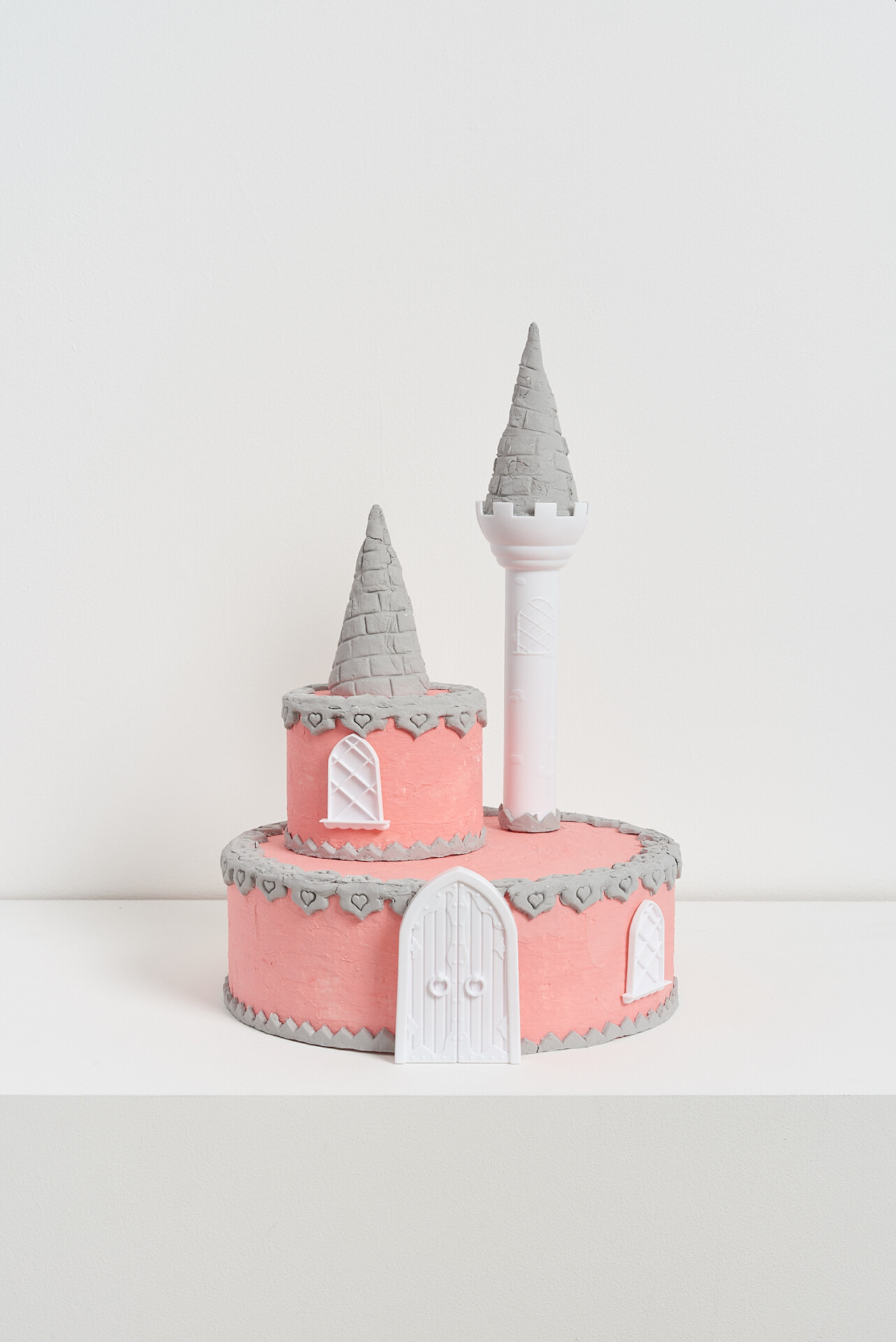
Gina Fischli, Schloss Herzberg, 2019. Photography Theo Christelis, courtesy the artist and Soft Opening, London.
In 17th century Dutch vanitas still lifes, the inclusion of wine was intended to remind viewers of the futile nature of material life. Wine represented vanity and the pointlessness of earthly pleasures, when, after all, human life is ephemeral. In an ongoing series—currently presented online at David Zwirner through to 15 May—London-based Swiss artist Gina Fischli renders a tall champagne flute out of glitter painted onto plywood (a twinkling wine glass with a pool of plumy liquid in the bowl and a stamp of red staining the rim can be seen on the artist’s Instagram). While empty and half empty wine glasses may be staples of the still life genre since its beginnings, Fishli’s renditions glint more so with tongue-in-cheek desire than they do with dread for our inevitable demise.
On first glance, this series of household miscellanea—a clunky tumbler rippling blue, a cigarette, or two, smouldering in an ashtray, a sad squashed armchair—seem to be opposed, on account of their ordinariness, to Fischli’s most recent body of work: an assortment of dreamy cake sculptures, teetering with turrets and marshmallows, which are concurrently on view at New York’s 303 Gallery’s online viewing room. Interestingly, Fischli’s clay confections take their names from German and English castles—Schloss Babelsberg and Comlongon Castle are just two examples. A castle is an exquisite thing—a structure synonymous with childhood fairytales and innocence, co-opted by a linchpin of American consumerism—Disney—as much as it is an icon of monarchial rule, power and grandeur. But if we think of Fischli’s sculptures as cakes, as opposed to castles, then, the two might have something in common: they both demonstrate a transformation of mundane items—a cake, a glass—into mini monuments and talismans, emanating a kind of magic significance. But it’s not just that it is an attempt to make them special—it’s a childlike attempt: the cakes are cutely coloured and crudely rendered, jovially crowned with ice-cream cones; the wine glasses and ashtrays recall pre-school arts and crafts, simple make and do, sprinkling glitter on everything to make the world more beautiful and glamorous and spectacular than it really is.
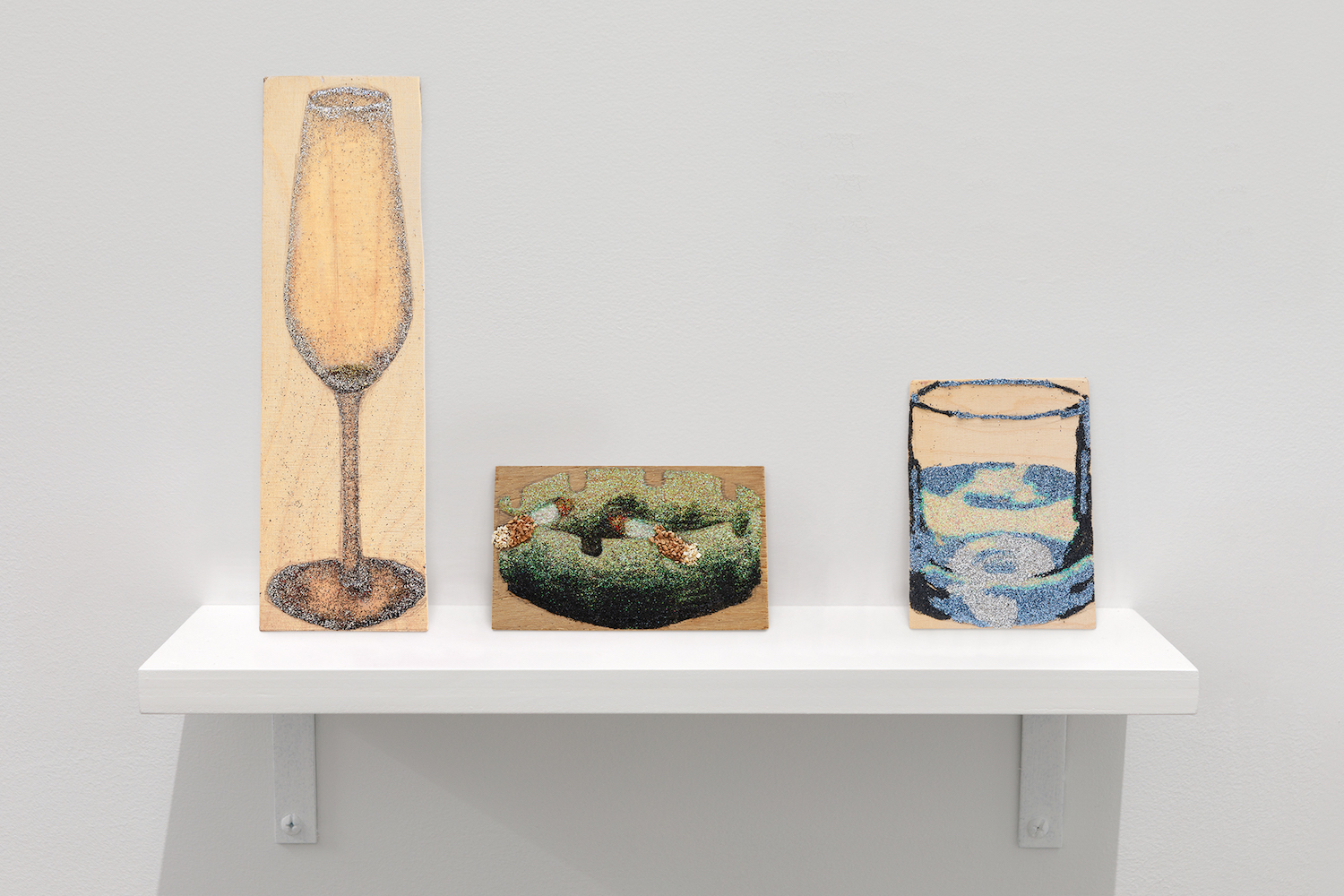
Gina Fischli, Together, 2020. Photography Theo Christelis, courtesy the artist and Soft Opening, London.
While Fischli has been working on these glitter-encrusted still lifes since 2018, they are befitting of our current mood. They are homey and familiar in a way that might be regarded as touching, recalling the little acts we do to make things better, or at least, appear better. An ashtray with two nearly smoked cigarettes resembles a fairytale battlement in its own right; a glass of water holds a whirlpool, a motion, a possibility.
Among the most stirring in the series is a candy-pink birdcage, bars wrought out of olive green glitter. Much like the wine glasses or the armchair, it’s empty, grains of food still in the feeder, no bird to be found. As an object, a birdcage suggests the loss of freedom, of being penned in, confined to narrow surroundings. Is it weird then that Fischli has chosen to call the work, House? While it would be wrong to ascribe too much of our current situation onto an artwork (particularly one that has not been made during the current pandemic), it is difficult not to be reminded of quarantines and lockdowns, where our houses have become cosy cocoons at best and grim cages at worst.
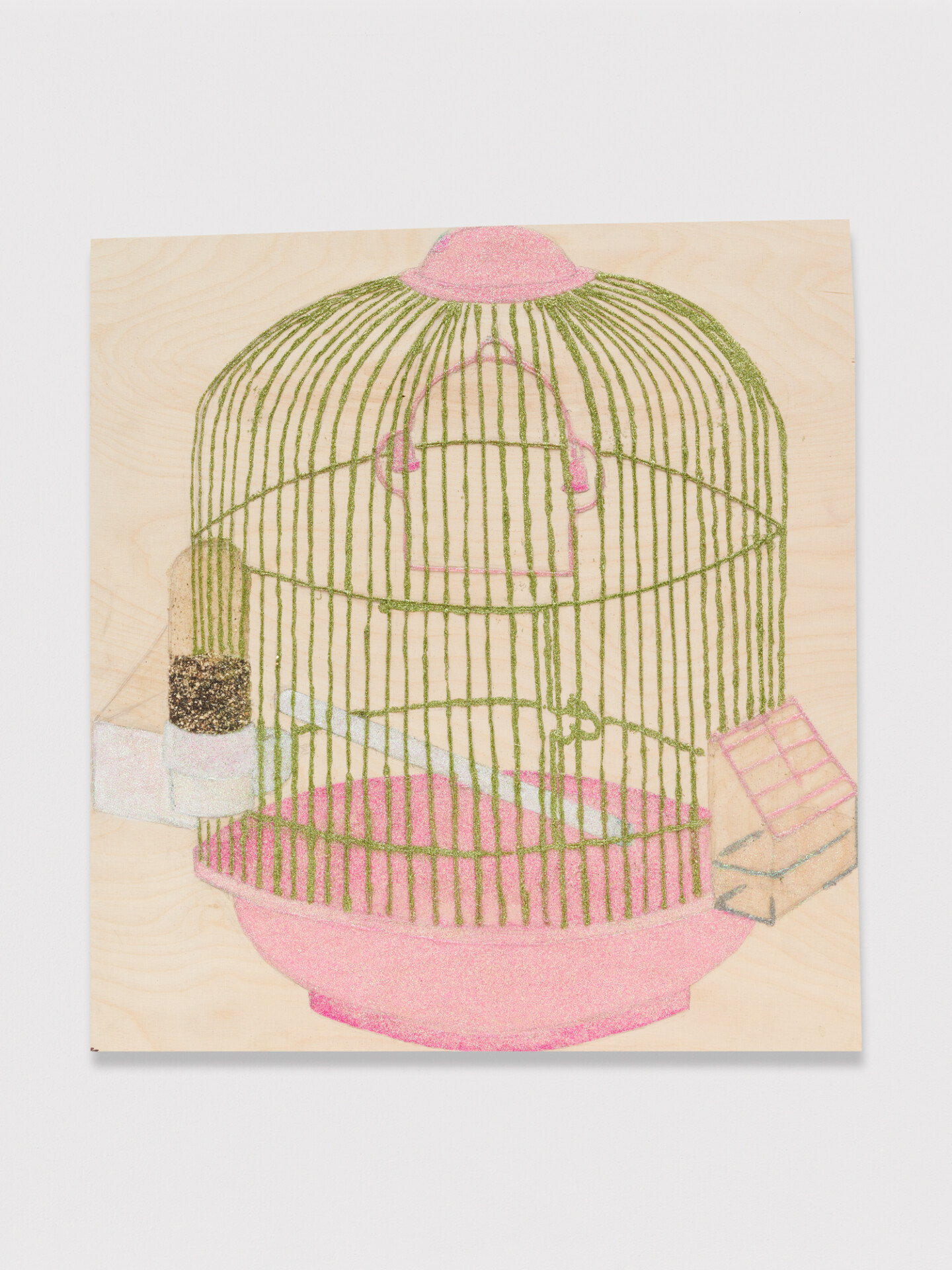
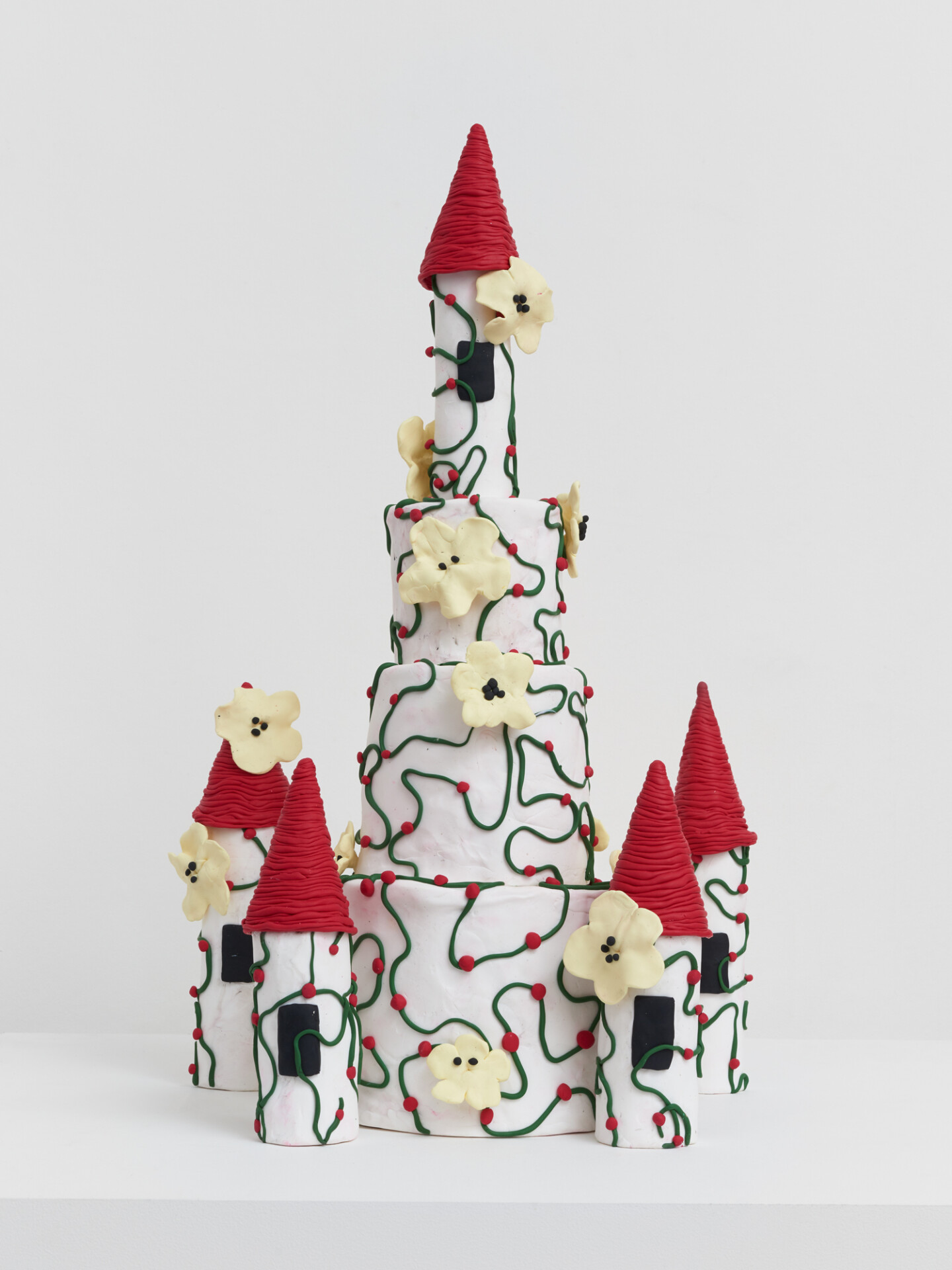
Left: House, 2018. Right: Comlongon Castle, 2019. Photography Theo Christelis, courtesy the artist and Soft Opening, London.
Circling back to 17th century Dutch painting, the presence of a birdcage in a scene represented love or sexuality—a bird in a cage, for example, often symbolised virginity, and consequently, the vacant cage as an indication of its loss. Taking this further, in Victorian art, the birdcage was a heavy-handed metaphor for women’s constricted place in society. Perhaps the same could be said of a frosted cake—baking, much like sewing or other household tasks, has long been considered a traditionally feminine act, and therefore, a symbol of domestic confinement. “Most often, you bake a cake for someone you love,” says Fishli in the press release for her exhibition at 303 gallery. Like a cascade of glitter on a wine glass, layering a burnt or misshapen cake in marzipan and icing sugar is an attempt to conceal its flaws (or, for that matter, unsettling histories laden in a castle’s walls) and whip it into something fantastic; something that is worthy of display, praise, veneration; something that is worthy of love.
Gina Fischli hosted by David Zwirner runs through to 15 May online.
See Gina Fischli’s online viewing room at 303 Gallery here.