
There’s a reason Sex and the City (2008) or How to Lose a Guy in 10 Days (2003) still get rewatched every year. They promise a version of romance that feels almost foreign now: two people meet in a room, something sparks, it gets messy, complicated, occasionally humiliating and then it resolves. In real life.
Nowadays, there’s a particular modern tension that lives entirely inside a phone screen: you see their name appear in your story viewers, a small heart lights up next to it, and then nothing happens. No message. Just a like, every so often.
Ask anyone in their twenties today how they met their last situationship, and the honest answer is rarely “at a party.” It’s an app instead. Today, you can notice that dating also takes place beyond dating apps. Social media has become part of that space, which raises a question: was this a shift in how we use these platforms, or was dating always part of what we meant by “social”?


On Instagram, you couldn’t like a story privately for years. The only way to react was to send a direct message or an emoji, a move that landed in someone’s inbox and was impossible to pretend didn’t happen. That changed when Adam Mosseri, Instagram’s head of product, introduced a dedicated like button for stories in February 2022, letting people respond with a tap of a heart instead of a message. The feature arrived after months of testing, rolling out as a heart icon next to the reply box, which became a quieter and less personal way to say “I saw this” without the exposure of an actual DM.
What’s interesting is that the like is private. Only the person who posted the story can see it, the rest of the world cannot. The private like brings Instagram a little closer to the logic of dating apps. Much like a swipe to the right, it takes almost no effort: one tap, and the signal is sent. But what does a gesture this small genuinely say? As the documentary The Social Dilemma (2020) laid out, platforms are built to keep pulling us back toward exactly this kind of low-effort versus high-frequency interaction, because the feedback loop, not the follow-through, is the product. We’ve been handed an infinite number of ways to gesture at wanting someone, and increasingly few ways we actually use to get there.
Here’s the part nobody says out loud: everybody has already decoded the system. There’s the like on the gym mirror selfie – easy, low-stakes, borderline reflexive. There’s the like on the caption you clearly thought too hard about – I like how you think, unspoken but understood. And there’s the like on the bikini picture, the one that says I was thinking about you, and this was the only acceptable way to show it.
Most of it is well-intentioned, but a lot of it is also a little cousin of looking around to see what’s out there and keeping your options open. All flirtation, with no accountability, no name attached to the feeling because nothing was technically said. Means, you can hand out hearts all day and never once make yourself available to being turned down. That’s interest-shaped insurance.
Somewhere underneath all of this is a much older and less app-shaped instinct: the adrenaline of actually approaching someone. Saying the risky things you really feel, in a room, with your face doing the talking instead of a double-tap. It’s also, by every account from the people who’ve still done it, the only version that actually goes anywhere.
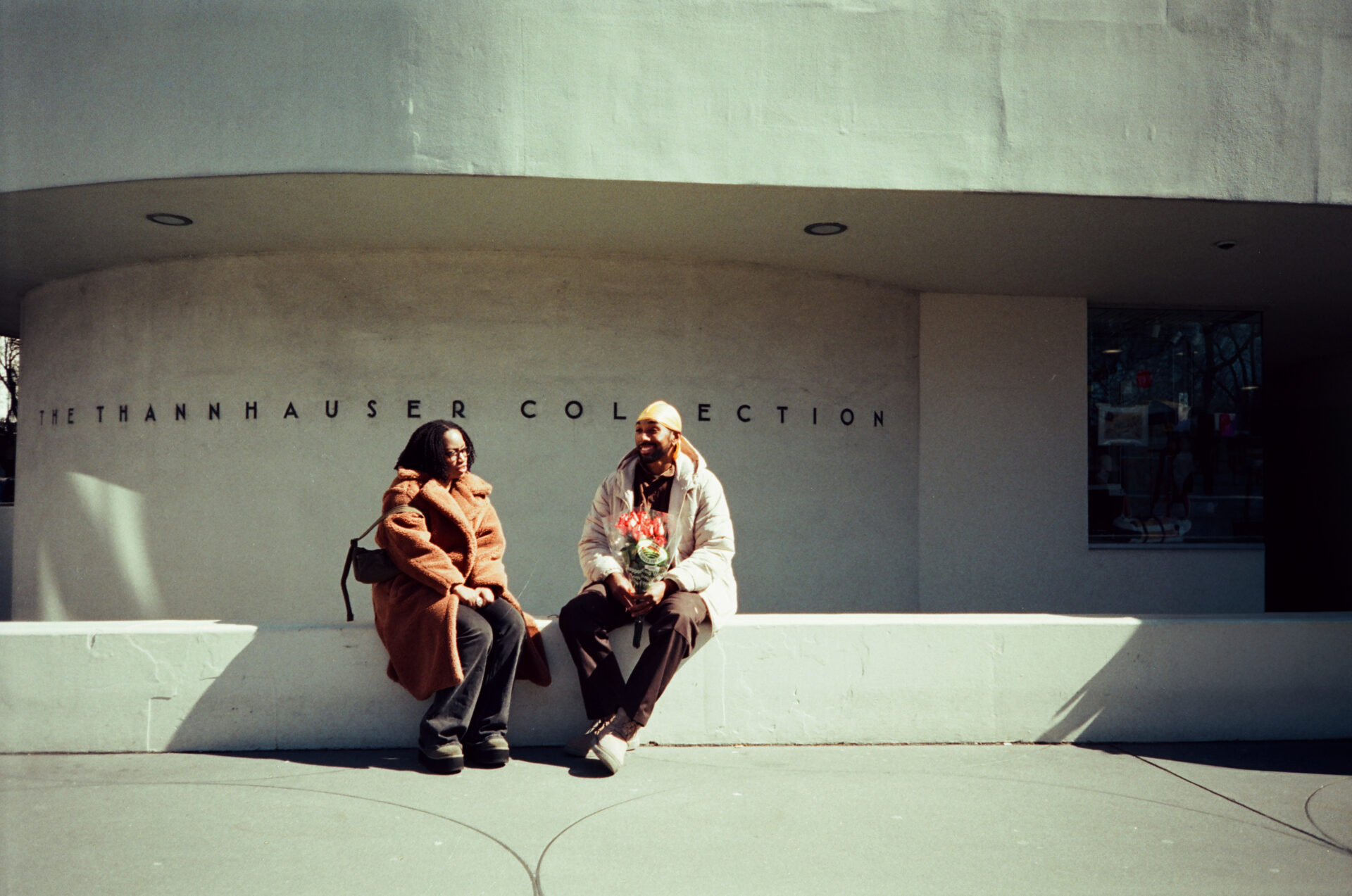

Of course, a story like is, in its best form, a genuinely nice thing: a quick way of saying I see this, I like it, consider yourself hugged. There’s nothing wrong with that, on its own. But if it starts becoming a routine, it stops meaning anything anymore. Because repetition without intention is just noise. In other words, It’s a reflex wearing affection’s outfit.
And yet, maybe we’re already on our way out. According to the Postbank Digitalstudie 2026, almost one in three Germans between 18 and 39 wants to spend less time online in the coming year, many of them to meet people in person. So we all notice it: the hours disappearing into the screen, and the need they were supposed to fill, to be seen, to be answered, to be close to someone, still unmet. Maybe the answer is also the oldest one. Say the nice thing out loud. Waiters in New York still do it, and so do strangers on the subway: “Love your jacket.” Is it superficial? Maybe.
In the end, a compliment is still a compliment, and unlike a double-tap, it comes with a face. Of course, it’s hard to get back to that kind of genuine, personal reaction. But perhaps it’s worth remembering what gets lost when every reaction is reduced to the same small gesture.
Because the story you genuinely want to react to, the one you’d tell someone in real life that you liked, that’s worth more than a hundred thoughtless hearts ever will be.