Maya Man on K-pop, Automated Labor, and Internet Culture.
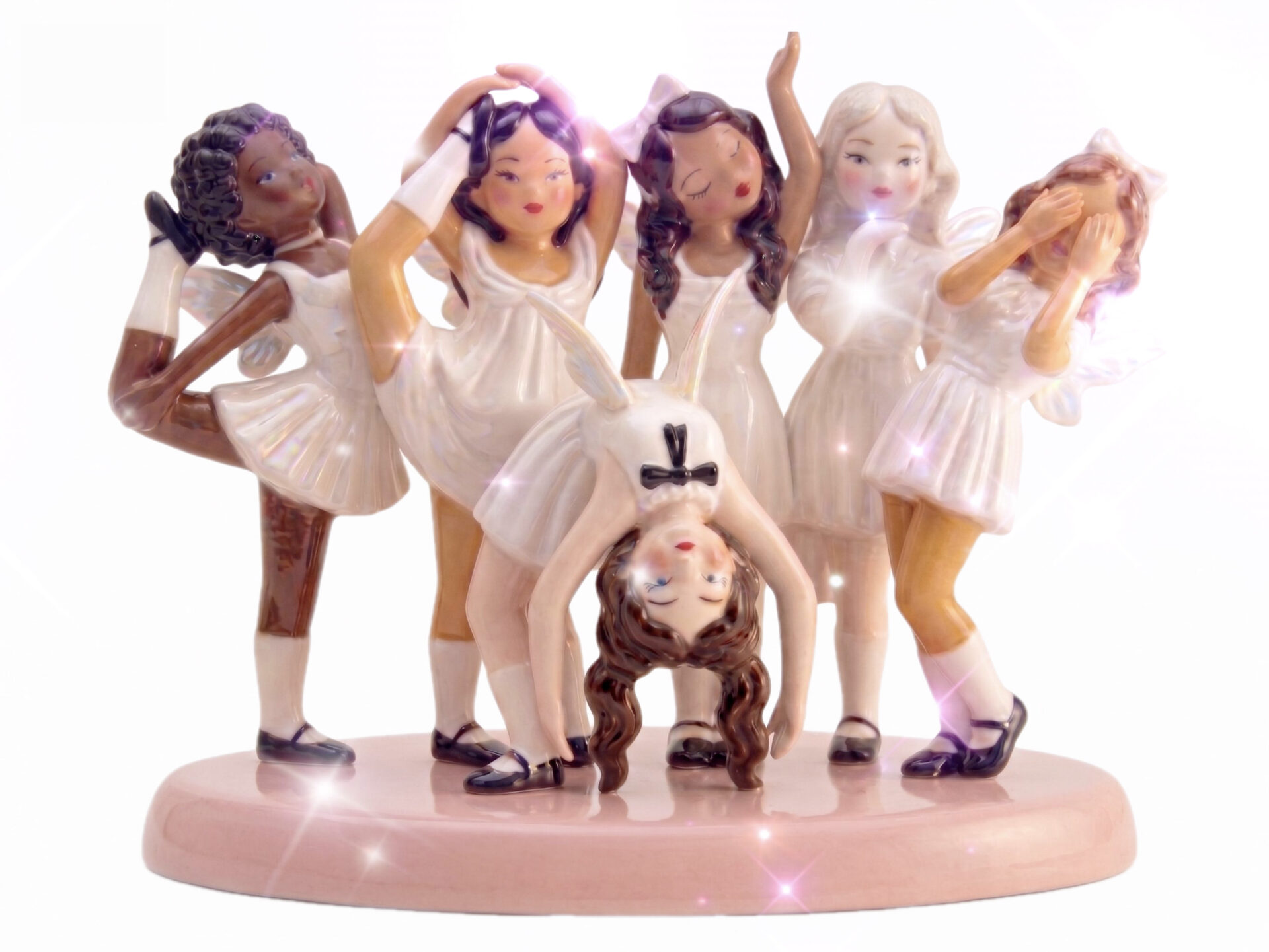
Maya Man grew up online, and she has never really stopped thinking about what that does to a person. Posting, scrolling, watching other people perform their lives, and figuring out how to perform your own were simply part of growing up. Her work comes out of that experience. Over the years, she has used code, social media, video, and performance to look at the things people actually spend their time with online, from “day in my life” videos and competitive dance to influencers, pop stars, and the endless work of being visible.
The internet she grew up with, however, is not the internet we have now. There are more images, more videos, more platforms, and more content than anyone could ever keep up with. Man calls the current moment “post-post-internet,” but she has another term for it too: “mediamaxxed.” TikTok, Instagram Reels, memes, music videos, fandoms, and celebrity culture all collapse into the same feed, while everyone, from a teenager with an Instagram account to a global pop star, is expected to keep posting. For Man, that excess is not something to observe from a safe distance. She likes being online. She likes posting. And it is precisely that closeness to internet culture that makes her interested in what it asks of us.
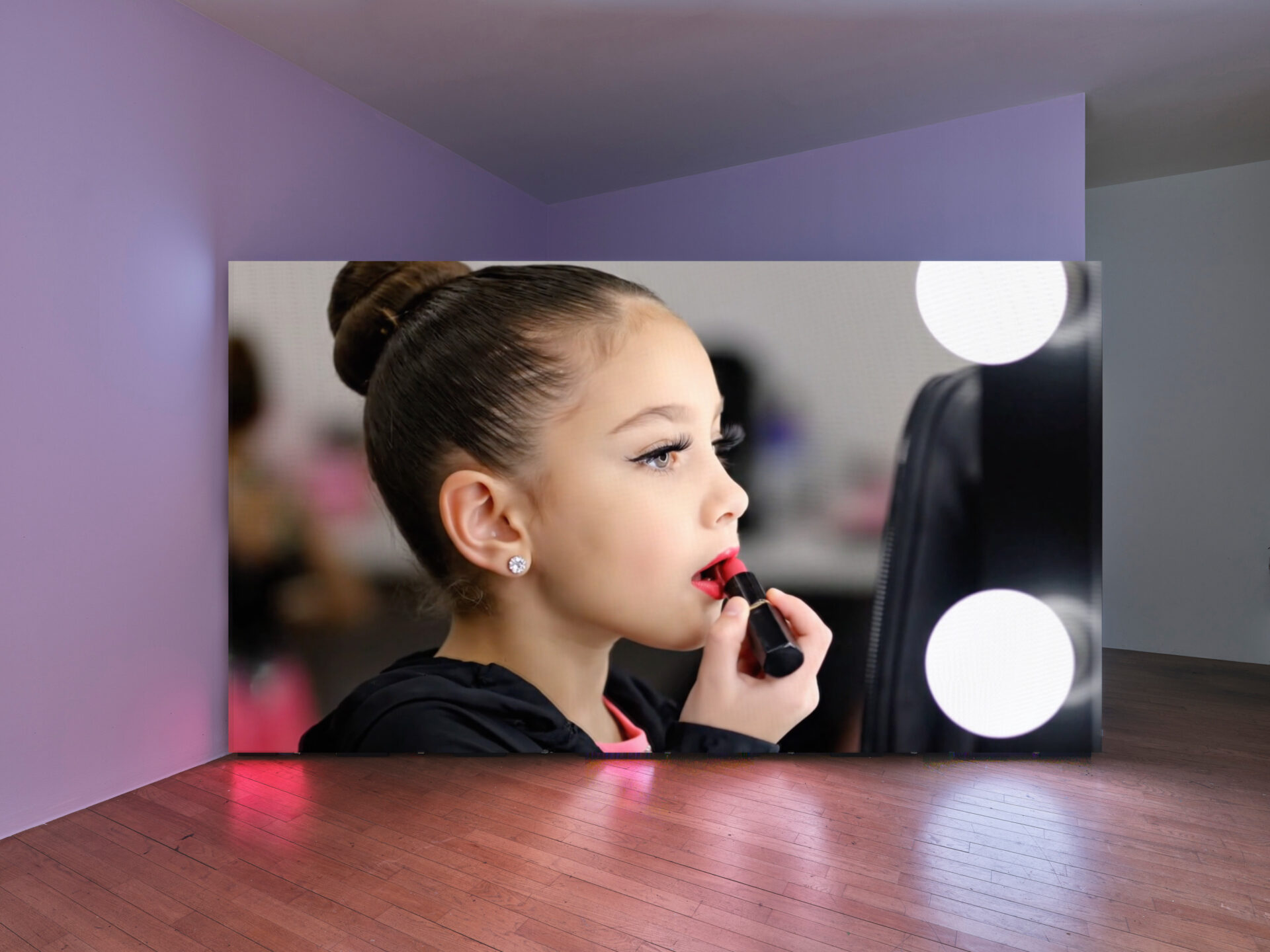
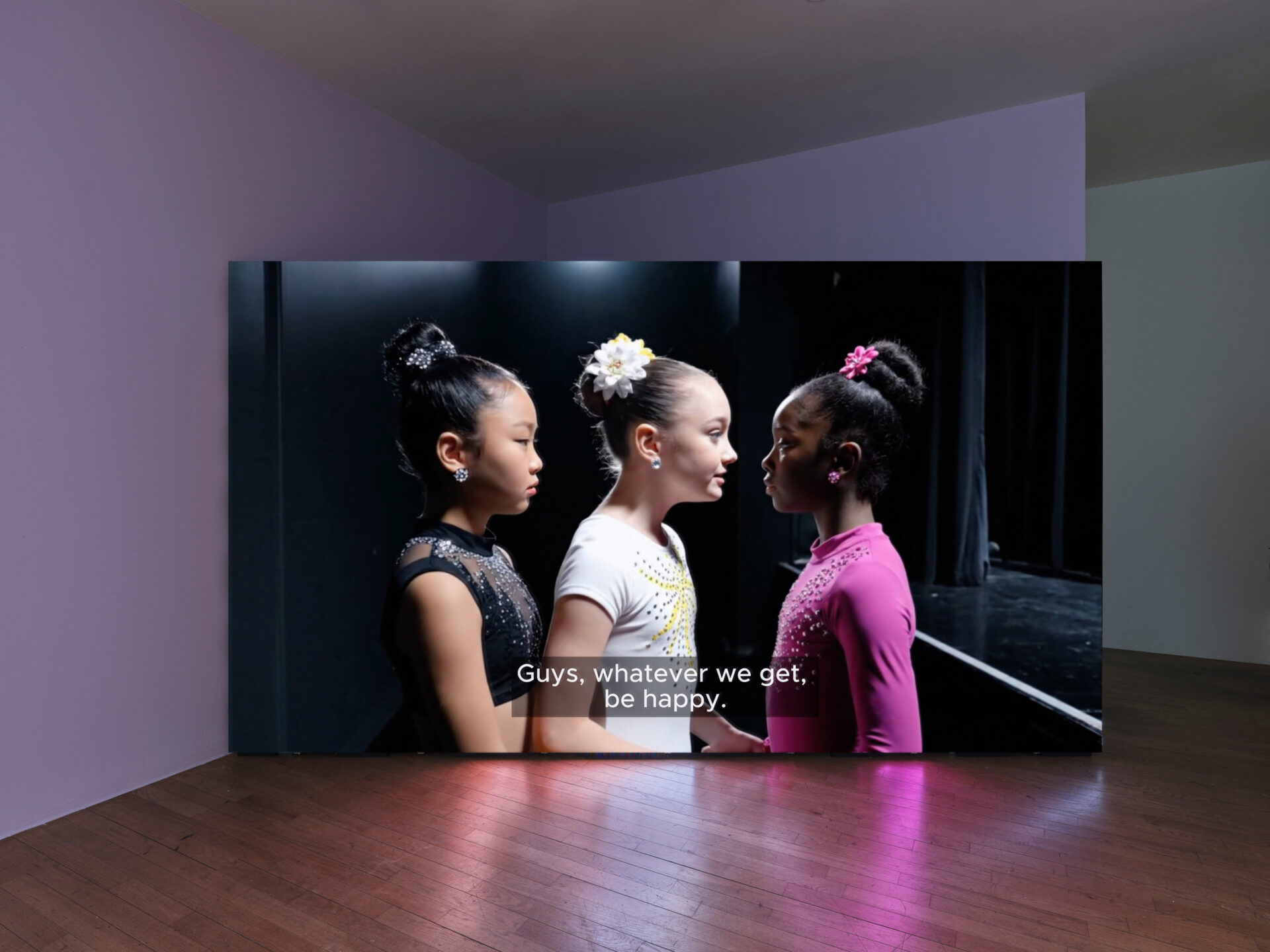
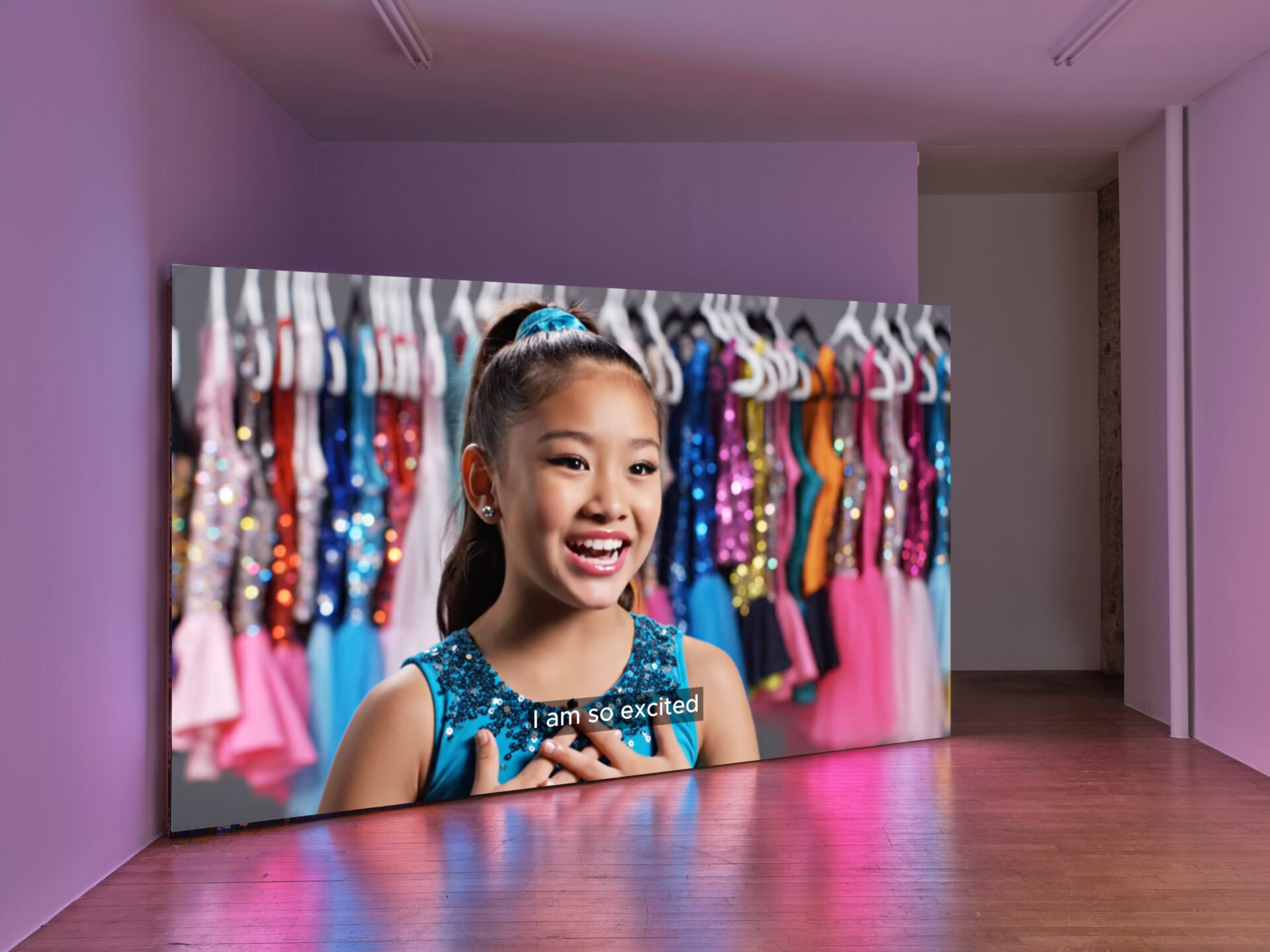
Her new multi-channel video installation, Dreams Come True, takes that interest in online performance into the world of K-pop. If influencers are expected to turn themselves into content, K-pop idols take that logic even further: music, image, personality, social media, fandom, and an almost constant stream of content all become part of the performance. The highly managed system of training, producing, and constantly generating content around K-pop idols also creates a striking analogy to AI, raising questions about automation, labor, and what happens when the performer herself can be generated. Man pushes the logic of the K-pop system one step further by creating a fictional five-member girl group with generative AI. In conversation with Anika Meier for SLEEK, she talks about KATSEYE, AI-generated celebrities, the labor of being constantly visible, and what happens to authenticity and identity when the performer no longer needs to be human.
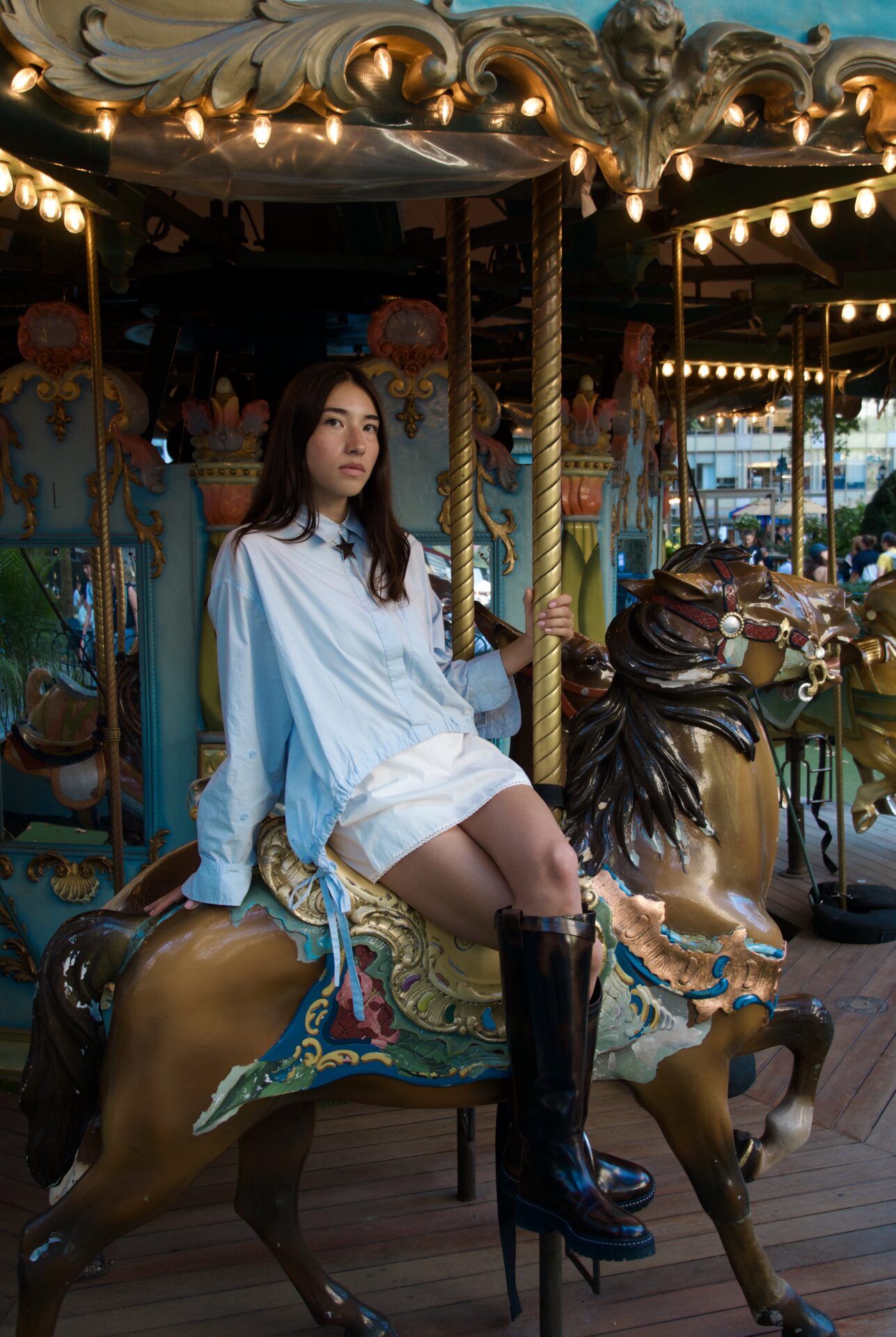
Maya Man. Photo by Charlotte Ercoli. Courtesy of the artist.
ANIKA MEIER Your work is often read as a critique of internet culture. But you’re also very much part of the culture you’re depicting. How do you position yourself within it?
MAYA MAN I think of myself as someone who’s very comfortable posting online and who’s deeply embedded in social media culture. That’s always been important to me because I genuinely grew up enjoying posting. It gives me a perspective from the inside. I understand the aspiration, the desire, and the joy that comes from engaging with platforms in this very exposed way.
At the same time, I’m also very critical of the dynamics, the power structures, and the forces at play within those ecosystems. It’s important to me that the work holds both of those positions. Sometimes people want a neat answer. They want me to say that I think the people making “day in my life” videos are silly or that social media is bad. That’s not how I feel. I do bring a critical perspective, but it comes from being part of that culture, not from standing outside of it.
AM You’re not exposing anyone with your work.
MM I often feel that people come to this work with preconceived ideas about these cultures, especially youth and hyper-feminine online culture. They assume it’s superficial or frivolous. I make work about it because I think it’s incredibly powerful.
AM The first time we spoke was probably around 2022, when we talked about artists like Arvida Byström and Molly Soda. They were among the first artists to embrace social media as both a medium and a subject, and they were heavily criticized for how they presented themselves online as women.
MM I grew up on what we now call net art, which, at its core, had a very anti-commercial attitude. That was refreshing to me because I also grew up on a hyper-commercialized internet. Artists were working with code and making websites that deliberately operated outside commercial systems. At the same time, I was equally influenced by post-internet artists who were reckoning with exactly that commercialization and incorporating it into their work. Artists like Arvida Byström and especially Molly Soda showed me how you could metabolize your own experience of living online. Molly was constantly posting herself, and she transformed those experiences into works that are emotional, nuanced, and deeply aware of how the internet shapes us.
For as long as I can remember, I’ve been fixated on what social media does to my sense of self. I’ve always felt this mixture of desire, guilt, and shame. I wanted to post. I wanted to become someone other than who I already was. At the same time, I kept questioning that desire. The artists I connect with most understand the internet from the inside. They aren’t observing it from a distance. Seeing work like that is what made me want to become an artist.
AM And now you think we’re beyond post-internet?
MM I think we’re in a post-post-internet moment.
AM I say post-post-internet too.
MM I’m still workshopping the terminology. The phrase I’ve been using for myself is “mediamaxxed.” There’s simply an overwhelming abundance of images and videos now. Through TikTok, Instagram Reels, and similar platforms, we’re consuming media constantly. That’s also how pop culture, and especially pop music, circulates today.
I think many younger artists, even younger than me, are responding to that condition. They’re trying to sift through an almost unimaginable volume of images and videos to figure out what they actually want to say. I find those practices really exciting because they produce very precise work while being completely immersed in media.
It’s impossible to consume everything, even relating to a subject you’re genuinely invested in. That’s one of the reasons I’m so interested in video essays. Video has become the primary way people consume ideas, so it makes sense that the essay has moved into that format.
AM You talk about video as the primary way we consume ideas today, and your new artwork, Dreams Come True, expands that format into a multi-channel installation. It’s commissioned as part of ONX Relay, a new initiative by Onassis ONX that supports technologically complex artworks from production through institutional presentation. Why is that model important to you?
MM Dreams Come True, which takes its title from one of the most popular songs by S.E.S., commonly regarded as the first K-pop girl group, is being supported through ONX Relay. The work will premiere in spring 2027 in a presentation where invited curators and representatives from cultural institutions will be able to experience it alongside projects by Trevor Paglen and Ben Frost. This is a completely new way of making work for me, and in many ways it feels like an ideal model. You have funding from the very beginning, but you also know there will be a dedicated moment to present the work to curators and institutions before it starts circulating more widely.
That has allowed me to be much more ambitious technically. The installation is multi-channel, so there’s a lot to coordinate with the video and sound running simultaneously. Because the work is generative, there’s also an inherent degree of chance. I hope more institutions become excited about presenting technically complex work. I think many museums still harbor a certain fear of the technical requirements: how to install it, maintain it, and preserve it. What excites me about ONX Relay is that it approaches a project holistically. You receive funding to produce the work but also support in bringing it to institutions and helping them understand how to install a technically complex piece.
AM How will the project be introduced? Will audiences first encounter it in the exhibition?
MM I’m excited to be talking about the project publicly for the first time through this interview, but otherwise I think I’m going to keep it pretty close to my chest until it’s presented. In the art world, you’re only given so many opportunities to introduce a new body of work. Dreams Come True feels especially important to me, and it’s the most ambitious project I’ve made so far. I want to make sure that when people encounter it publicly for the first time, it still feels fresh. I might share little things along the way, but I’m not sure yet. Ideally, the first public presentation will still feel like a genuine debut.
AM Dreams Come True revolves around a fictional K-pop girl group. What interested you about K-pop as an artistic model?
MM K-pop has fascinated me for quite a while, both as a listener and as someone invested in the circulation of media and pop culture online. I’m American and, to borrow from CFGNY’s terminology, “vaguely Asian,” so I’m particularly interested in the American perspective on a group that combines K-pop’s methodology and aesthetics with the American entertainment industry. What draws me to it is its holistic approach to building artists. The idols, as K-pop performers are called, exist across a highly networked media ecosystem that engages with the internet in a very intentional way.
Dreams Come True centers on a fictional five-member girl group inspired by KATSEYE, the group formed through the Netflix reality series Pop Star Academy as a collaboration between HYBE, the major Korean entertainment company behind many of the biggest K-pop acts, and the American record label Geffen. KATSEYE adopts K-pop’s methodology while trying to create what it calls a “global girl group,” bringing together performers from different backgrounds and different parts of the world.
My fictional group exists entirely through generative AI. Both the videos and the music are AI-generated, but the generative models can now render the characters so that they look surprisingly realistic. I will puppeteer this fictional group in a way that mimics the role of a management company, which determines not only how they perform but also what the idols can and cannot do.
AM What’s the K-pop methodology?
MM In the US, there’s a very romantic notion of how pop stars emerge. They’re discovered because someone recognizes their talent, plucks them from obscurity, and places them on a stage. In K-pop, it’s very different. Idols usually debut as part of a group after spending years training, often from a very young age. They attend training schools where they live, practice singing and dancing, and learn self-presentation while competing with many other trainees. The management companies decide who debuts, how the groups are formed, and who belongs where. In that sense, the K-pop system is highly structured. Pop stars are deliberately trained and produced.
Another important difference is that K-pop fans are very aware of the role that those management companies play. In the West, you might know which label a pop star is signed to, but it’s rarely a central part of their public narrative. In K-pop, the company is much more visible and understood as an integral part of an idol’s success.
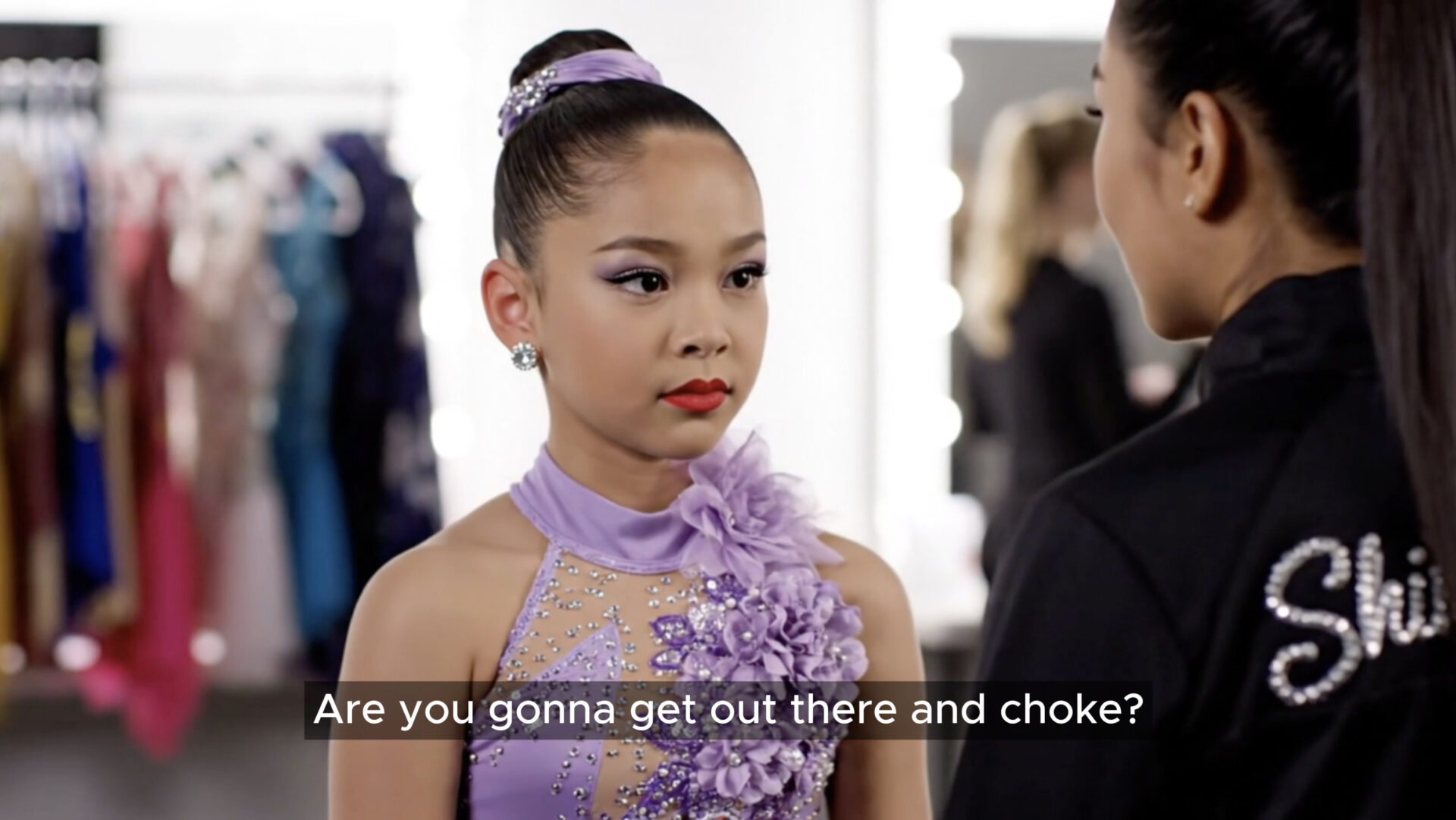
AM Dreams Come True is also about labor.
MM Yeah, take Aespa, for example. The group debuted with the concept of four human members and four virtual counterparts. Those virtual performers can be controlled entirely by the management company. They don’t come with the friction of working with an actual person or body. What happens when a performer’s labor can be detached from their physical form? K-pop has already been engaging with these questions. That became an important reference for Dreams Come True. Generative AI makes it possible to create not just music but also celebrities and cultural narratives that can circulate at an enormous scale. K-pop fandoms are incredibly organized and powerful. They don’t just consume culture. They actively shape it. They can mobilize collectively and amplify particular ideas and values.
AM Why KATSEYE specifically?
MM KATSEYE has been heavily branded around a multicultural identity. To me, they look like the United Nations. Lara is Indian American, Megan is Chinese American, Sofia is from the Philippines, Yoonchae is Korean, Daniela is Cuban Venezuelan American, and Manon, who is now on leave, is Ghanaian and Swiss-Italian. They’ve even produced merchandise featuring the members’ national flags. Megan’s sweatshirt for their GAP collaboration featured both the Chinese and US flags. How crazy is it to see the US and Chinese flags side by side on a piece of merchandise for a K-pop idol right now? Megan really does embody those two identities. But at the same time, using those national flags glosses over everything else that’s happening politically between those countries. Instead, it indexes identity itself. The performers’ identities become instrumentalized to promote whatever the label wants to promote at that particular moment.
AM How does automation play into all of this? As you said, a huge amount of labor usually goes into creating a K-pop group, from the performances to the concept and everything around it. But now it’s you in your studio, or in your bedroom in New York, creating this fictional girl group with AI and automating much of that process.
MM Generative systems are increasingly being used to produce every surface a K-pop group touches. That means the visuals, the music, and everything else surrounding the group. One of the strengths of the way K-pop idols operate is that they think about a group’s presence very holistically. K-pop isn’t just about the music. No pop star is just about the music, but that’s especially true in K-pop. They’re thinking about how to cover all of these different surfaces with content. They’re releasing music, but almost every day they’re also putting out rehearsal videos, TikToks, interviews, and all these other forms of content.
It’s a very multifaceted system, and every one of those surfaces requires labor. The group has to perform all of those different roles. Once you introduce the possibility of automating that labor, especially when you start automating the identity of the performer itself, which is really taking it to the extreme, a management company suddenly gains the ability to cover all of those surfaces without the drag of the human body, essentially without the friction of the performer. That’s very analogous to the way generative AI is already beginning to disrupt labor in so many other industries.


AM In your earlier work, you were interested in how people perform online, whether in FAKE IT TILL YOU MAKE IT or StarQuest. Dreams Come True feels like a shift. Now it’s AI that’s performing culture.
MM In my earlier work, I often wrote code that embedded a degree of randomness. I would build a system without knowing exactly what would happen. I designed the boundaries of what was possible, but once the code ran, it generated something on its own. The algorithm’s decisions became part of the work, just as my decisions in designing the system became part of it. That’s very analogous to the way I think about performing online. Whenever you upload something to social media, you relinquish a degree of agency. You leave the completion of the work to algorithms and to an audience. There’s always an element of chance. Working with generative AI comes from the same conceptual interest. I’m designing the prompts and the system within which the work exists, but many of the decisions are made by the generative model. Those decisions inherently become part of the work as well. What has changed is that we’re now at a moment when generated content can be genuinely deceptive.
Earlier, I wasn’t particularly interested in working with generative AI because it still looked obviously artificial. It had this very ooey-gooey aesthetic that immediately signaled it wasn’t real. I’m interested in the moment when that distinction starts to collapse, when it becomes much harder to tell what’s real and what’s not.
AM So Dreams Come True almost picks up where StarQuest leaves off?
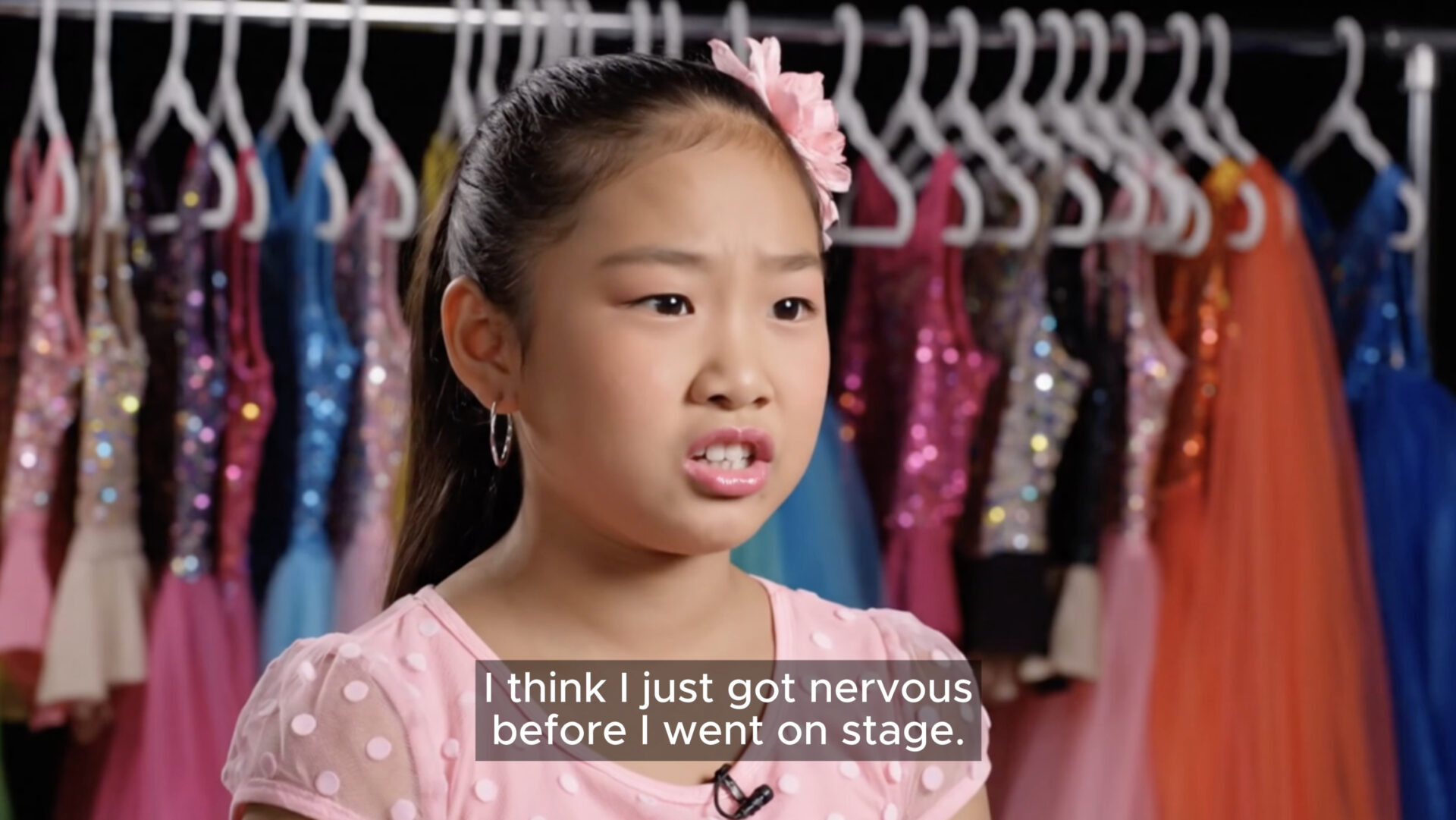
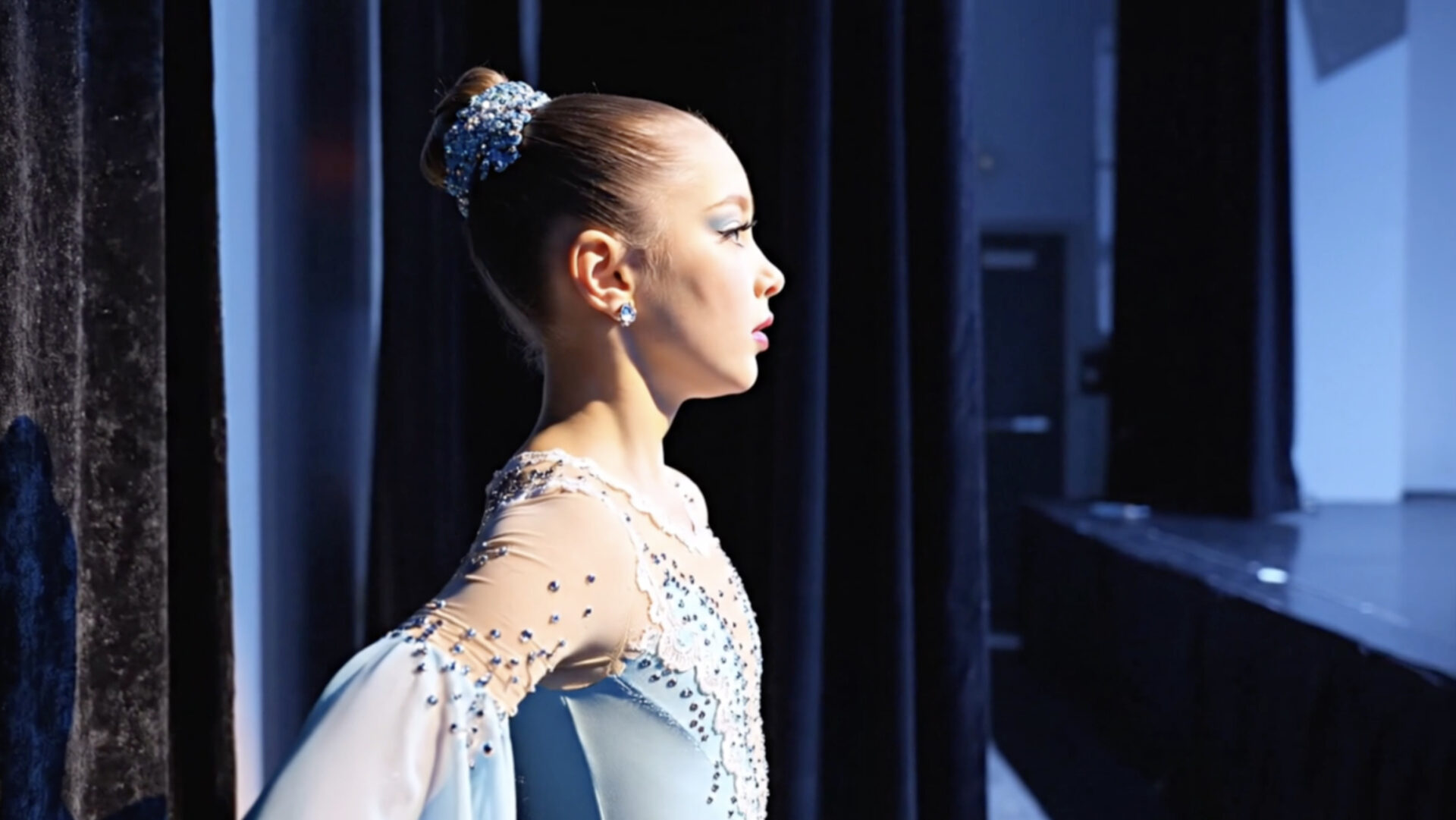
MM StarQuest focused on young dancers, mostly between the ages of six and thirteen. That’s both the original cast of Dance Moms and the cast of StarQuest. But what happens to those girls as they get older? Where do they want to end up? The members of KATSEYE, and the fictional group in Dreams Come True, are a little older. They’re young adults rather than children. Narratively, it feels like a continuation of the same world. There’s also a direct connection because several members of KATSEYE grew up in the competitive dance world, just as many celebrities have. When you think about celebrity today, our relationship to celebrities is almost entirely virtual. Unless you happen to see them in person at a concert or somewhere else, everything happens online. Entire fan bases are built through these virtual modes of existence.
At the same time, fans increasingly expect a relationship with celebrities that goes beyond their work. It’s no longer enough to release music. They also want interviews, behind-the-scenes footage, social media posts, and all these other snippets of everyday life. Operating as a celebrity, especially as a pop star, has become incredibly demanding. I’m interested in how we’ve already seen music labels trying to escape some of that friction by introducing generative systems. They no longer have to deal with the needs of the person performing or with the limits of the human body. That’s where AI becomes particularly interesting to me.
AM Has what it means to perform yourself online changed over the years?
MM It’s changed immensely. The pace of both production and consumption has accelerated, not only on the consumer side but also in terms of what’s expected from larger cultural producers. A group like KATSEYE is really struggling with many of the defining questions of the present moment around authenticity. People want to believe these idols are authentic, but that expectation is at odds with the exhausting pace of content production they’re subjected to and with their role as idols in the first place. They’re expected to perform a particular version of themselves at all times, one that often conforms to highly idealized ideas of femininity and, in KATSEYE’s case, to idealized representations of their racial and ethnic identities. The group has been built around what you could almost call diversity metrics.
AM That’s not only true for K-pop idols.
MM It’s taken to an extreme in K-pop, but I think it’s something anyone who posts online experiences. We all have to find ways of presenting ourselves. I’ve always been haunted by this desire to perform online in a way that feels real, while at the same time experiencing the internet as a stage. That tension runs through all of my work. The projects I’ve made recently with generative AI, and with performers on literal stages, whether in competitive dance or pop music, simply push that analogy further.
I also think there’s an interesting parallel between training AI models and training performers. When you watch the girls in Pop Star Academy, you see them competing, pushing themselves relentlessly, trying to shape their bodies into the ideal version the company wants. To me, that exhaustive cycle of optimization feels very similar to the way we train AI models.
AM Your work has often been deeply personal. StarQuest, for example, grew directly out of your own experience as a competitive dancer. Dreams Come True feels different.
MM Dreams Come True marks something new and quite delicate for me. I’ve always made work about the online cultures I feel part of, often hyper-feminine spaces that I wouldn’t even call subcultures. I’m interested in mass culture, in what’s really popular at a given moment. People often describe my work as being about identity, which it is, and about the formation of the self. They also tend to read it through femininity. But they talk about it much less in relation to race. I’m half Chinese and grew up in the US, and I think this project is, for me, a reckoning with identity in a much more multi-pronged way than my previous work.
At the same time, much of my work has been deeply personal. StarQuest, for example, came directly out of my own experience as a competitive dancer. I didn’t go through the K-pop training system. I haven’t experienced that firsthand. So there’s something exciting to me about the distance this project creates. It’s still something I relate to deeply, and it feels very connected to themes I’ve explored before. But there’s also a new distance between me and the subject matter. That distance allows me to fictionalize more. It gives me more of a director’s role than I’ve had in previous projects.
AM One thing that runs through much of your work is influencer culture, from A Realistic Day in My Life Living in New York City to FAKE IT TILL YOU MAKE IT. K-pop idols are influencers too, but Dreams Come True also feels like a shift because, for the first time, you’re looking at a cultural phenomenon that didn’t originate in the US.
MM They definitely are influencers, but I’d also argue that one thing running through all of my work is a distinctly American perspective. I grew up in the suburbs of central Pennsylvania, and my work has always been deeply rooted in American culture. That’s also what this project represents for me. Much of my previous work focused on media produced in the West that then circulated globally. K-pop is different. It originates in South Korea but has become a truly global cultural phenomenon, with a level of fandom and influence that rivals, and in some cases exceeds, Western pop culture. That’s still relatively unprecedented.
Growing up in central Pennsylvania, K-pop simply wasn’t part of my world. Culture didn’t flow from East to West in the way it does today. That shift feels representative of a much broader global transformation that’s happening across many industries, especially technology. At the same time, approaching K-pop from a Western perspective also means confronting Orientalism, and more specifically techno-Orientalism. Those frameworks still shape how many people in the West understand K-pop, its aesthetics, and the industry behind it.