In 2016, a photograph of a potato by Kevin Abosch sold for more than $1 million. A decade later, anyone with access to generative AI can produce thousands of images in an afternoon. Does that make images less valuable? And what makes an image matter when creating one has become so easy?
When the Pope recently spoke about AI and the distinction between human art and machine-generated images, Abosch felt compelled to respond publicly. He took issue with the suggestion that machines create independently of humans. For an artist who has spent around 40 years working with cameras, computers, and now AI, the debate is familiar. Photography itself was once treated as inferior to painting, and the arrival of digital cameras prompted predictions that professional photographers would become obsolete. Abosch has heard versions of the same argument throughout his career.
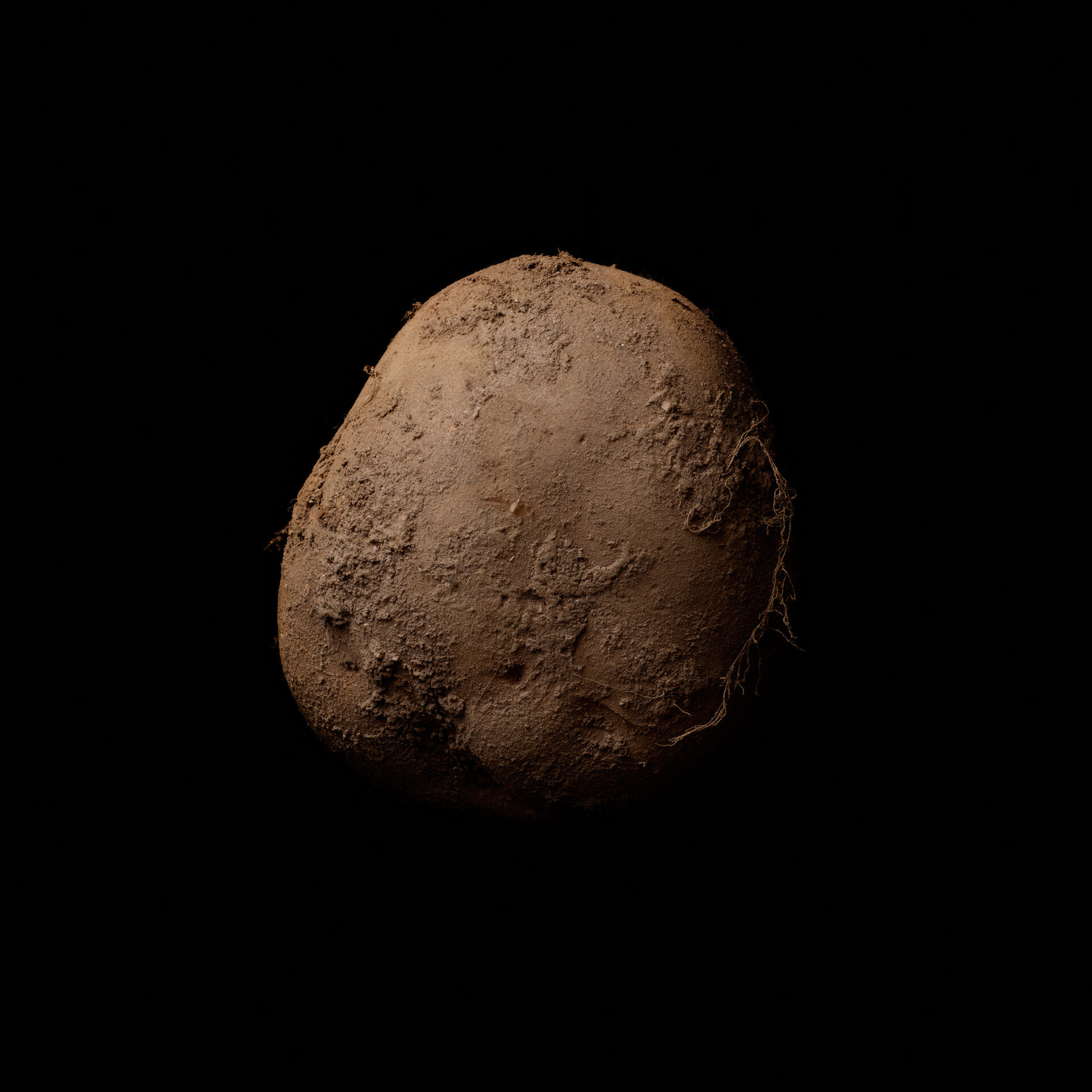
'Potato' (2010), Courtesy of Studio Kevin Abosch
His latest exhibition, Testing Ground, at TAEX’s new gallery space in Monaco, brings his famous potato together with synthetic photographs of ornamental fish, flowers, and landscapes. The works draw on the long history of humans reshaping nature, from breeding animals and hybridizing plants to transforming entire landscapes. Abosch describes his process as a virtual laboratory that exists partly in his mind and partly in the computer. The results, however, cannot be reproduced in the way a scientific experiment can.
For Abosch, the question of what makes an image matter has little to do with its price or the attention it attracts. An image might go viral today and be forgotten tomorrow. Others stay with us for years, becoming part of our memories and even changing how we remember things. He describes some of his photographs as a form of medicine, including the potato, which he made partly to challenge his own sense of superiority over an ordinary object.
In conversation with Anika Meier for SLEEK, Kevin Abosch discusses the difference between making an impact and creating something that matters, why he refuses to justify his choice of artistic tools, and what it means to work so closely with AI that he sometimes feels his own humanity being eroded. He also addresses the dangers of AI-driven manipulation, the role of fear in shaping human behavior, and why he believes ignorance poses a greater threat than the technology itself.
ANIKA MEIER The Pope recently made a statement about AI, and you responded on social media. You don’t often weigh in publicly on debates around AI. What made you respond this time?
KEVIN ABOSCH When someone as influential as the Pope says something I find misleading, I feel an ethical responsibility to correct the record. He was talking about the distinction between art and what a machine can generate, as though the machine were making art on its own, with humans somehow removed from the process. But that’s not what’s happening.
It’s important to remind people that there’s a human driving the process of using an AI tool in the first place. And the underlying data these systems are trained on is largely created by humans, too. So you’re training on humanity, and then a human is using the tool. In that sense, it’s actually a hyper-human process. The idea that humanity is somehow missing from AI-generated art comes up all the time. When someone as influential as the Pope reinforces the narrative that these tools are autonomous, or far more autonomous than they actually are in practice, it doesn’t just create confusion. I think it’s dangerous.
AM You’ve been working with machines for around 40 years, starting with cameras, then machine learning, and now large language models (LLM). Do you feel a difference between these technologies? Is there more or less humanity involved when you use a camera rather than an LLM?
KA I find myself in this somewhat frustrating but also humorous position of repeatedly working with tools that, for one reason or another, challenge people’s sense of what’s real. You mentioned that I’ve been working with photography for 40 years. That’s roughly the last quarter of photography’s 200-year history. And yet, especially during the first 20 years of my career, I still felt somewhat marginalized because much of the art world continued to treat photography as something separate from art. To some extent, I think that attitude still exists today.
Even within photography, there were these strange hierarchies. I remember constantly hearing that serious photographic artists worked in black and white. I think it had something to do with adding another layer of abstraction to make photography more acceptable as art.
AM Why?
KA There was this idea that fine art photography had to be black and white. I think it was because black and white was seen as an abstraction from reality, which somehow made it more artistic. I was a young artist trying to find my way, hearing these things and questioning almost everything. I thought it was ridiculous. Why would I take color out of my toolbox? Color is such a powerful way of engaging people emotionally. Why would I give that up? So I went all in on color at a time when black and white was still the dominant convention in fine art photography. That changed quite a bit in the early and mid-1990s.
But the larger point is that photography was still marginalized in the hierarchy of artistic mediums. Painting was at the top, of course, and photography was somewhere near the bottom. After spending decades resisting being put into a box, I find it funny that I now face similar questions with AI. Hans Ulrich Obrist once told me that one of the smartest things I’d done as an artist was refusing to be called a photographer. He said photography was a ghetto. It’s an evocative word, but I understood what he meant.
AM In the art world, there’s always this tendency to group artists into movements or give them labels: net art, post-internet art, even zombie formalism. Now we’re seeing the same thing with AI art. How important is it for an artist to be associated with a label?
KA There are two issues here. One is this question of how artists become part of the canon. I’ve always thought of that famous Groucho Marx quote about not wanting to belong to any club that would accept him as a member. I spent so many years working outside the system because I didn’t want to be part of a clique, a club, or a movement. I don’t even know what constitutes a movement. Often these things seem to emerge from some landmark exhibition that was curated around a particular idea and then gets referenced for decades. But I’ve also seen how suffocating it can be for artists who align themselves with a movement. There’s this unwritten rule that you have to stay in your lane, work within a certain code, or risk no longer belonging. That doesn’t appeal to me. I evolve as a human being, as an artist, and as a citizen. Why should my work have to remain within those boundaries?
I tend to admire artists whose work evolves over the course of their careers. Sometimes the changes are conceptual, but often they’re aesthetic. At their best, those shifts reflect a kind of maturation. For a young artist, being part of a movement can be exciting, even exhilarating. But if you come back 30 or 40 years later and they’re still making the same work, it starts to feel stale. You wonder why they’re doing the same thing over and over again. Is it because there’s a market that wants them to keep producing what’s already recognizable?
I’ve spoken to older artists about this, some of whom are no longer with us, and I think it has shaped quite a few careers. You see it in architecture, too. Sometimes you look at an architect’s buildings and wonder why they all look the same. Often it’s because clients don’t want something new. They want that recognizable thing the architect does, just rearranged a little. Something that’s instantly identifiable as theirs.
AM And what would you say makes your own work recognizable?
KA I have all these different bodies of work, and from my perspective, I can see how they fit together. I’m a conceptual artist, and understanding that when I was younger helped me make sense of my relationship to aesthetics. If you look at my photographic portraits of objects, there’s a recognizable aesthetic that evolved over many years. Eventually, I settled into something that felt comfortable and honest to me. But I also make graphic works, including my more recent cryptographic works, and those have their own look.
I’ve noticed that people who have only discovered my work in the last few years often associate me with black and yellow. Those colors appear in a number of my works because they reference nature’s warning colors. But I guess I also just like black and yellow. So now, to some people, I’m the black-and-yellow guy. I used to be the guy who photographed things against a black background.
I actually like that kind of recognition. I love being able to spot an artist’s work from across a room or even across the street. You might not be able to make out exactly what it is, but you immediately know whose work you’re looking at. There’s something exciting about that familiarity. At the same time, I don’t want to feel obliged to maintain a recognizable style. As a conceptual artist, I think you have more freedom in that respect. People don’t necessarily expect every work to share the same aesthetic.
'we wish and pull' (2025/26), Courtesy of Studio Kevin Abosch
AM But you would expect a common thread in terms of subject matter?
KA For me, that thread is identity and value, and it is challenging our assumptions about things we consider fixed but that are actually constantly changing. And right now is a particularly interesting time for an artist like me because so many of our values are being challenged.
AM It’s interesting that you say this is a great time for artists, because a lot of people would argue the opposite. Perhaps that’s also why the Pope felt the need to speak out about AI, not just in relation to art, but because of broader concerns about humanity and peace. And you’re saying this is the best time for you as an artist?
KA The best. Because there’s a task, a challenge. I wake up every day with raw material to work with. I look at the world around me, from my immediate surroundings to what’s happening in society at large, and I see fear everywhere. I opened a couple of news websites this morning and saw protests and riots in Paris, people smashing storefronts, absolute chaos. At the heart of so much of this, I think, are fear and anger. We’re going through a period of extreme destabilization, both in society and within individuals. And what keeps me engaged in my artistic practice is the possibility of creating something that reaches people and, without being overly didactic, helps them recognize the underlying fears that shape their decisions.
That’s the power of art for me. I love encountering a work that makes me start asking questions within seconds. Not necessarily questions about the artwork itself, but about things I thought I’d already figured out, only to realize they’re far from resolved. Questions about myself, where I fit into the world, who I am, and what matters.
AM Speaking of things we thought we’d figured out, you started out working with a camera. Some people might have called you a photographer, but you’ve always worked with images. Now we live in a time when almost anyone can generate an image that looks like a photograph. So what makes an image matter? I’m borrowing that question from the press release for your exhibition at TAEX’s new gallery space in Monaco.
KA It’s important to understand that for me, the photographic image exists beyond the method and the medium. That’s difficult for some people to grasp because their relationship to an image is so closely tied to how it was made: the equipment, the code, or the conditions of its production. If you can free the photographic image from those conditions, you allow it to operate differently. If I can take off my analytical hat, I can let the image have its way with me. And then I can have my way with it.
So what makes an image matter? I think it matters when it keeps working on you even after you’ve stopped looking at it. When it enters your mind and becomes part of your memory, potentially even changing what you remember and how you remember it. That’s really the core of it.
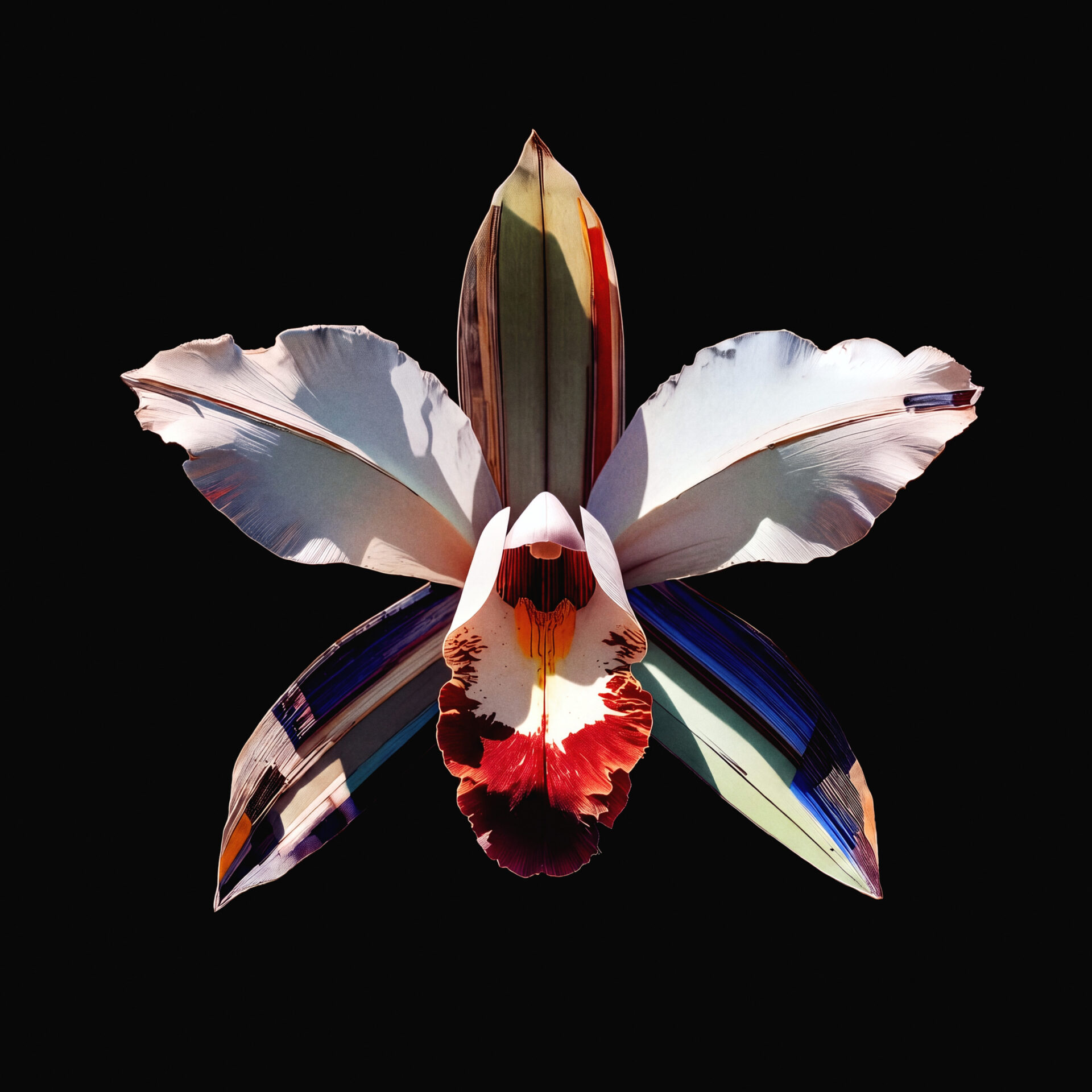
'o_xxx' (2026), Courtesy of Studio Kevin Abosch
AM When you started working with a camera, you had to be able to afford the equipment, learn how to use it, buy film, and pay for processing. Then digital cameras came along, and now generative AI makes image-making accessible to even more people. The barriers to entry have become lower and lower. Has that changed how you approach making images? After all, you’re now competing with potentially everyone.
KA I had a friend who was a very successful music producer in Los Angeles. There used to be a significant barrier to entry if you wanted to work at that level. You needed a studio with perhaps half a million dollars’ worth of equipment. Then, seemingly overnight, computers and plug-ins made it possible to do much of the same work with equipment costing $10,000 or $20,000. I remember how afraid he was of being replaced by this enormous wave of people who could suddenly afford to produce music. And I said, are you kidding me? Do you really think they’re going to be able to do what you do just because they have access to the tools? Give me a set of expensive oil paints and I’m not going to paint like Caravaggio.
I experienced something similar with photography. I grew up in a comfortable, upper-middle-class family, but I couldn’t afford the cameras and lighting equipment that some other photographers had. My method and style were partly born out of those financial limitations. And working with film was expensive. You had to pay for the film, processing, and retouching, which could be almost prohibitively expensive. Even before digital cameras became widely available, being able to scan film and work on an image in Photoshop was a game changer. Suddenly, you didn’t have to spend $300 to retouch a photograph. It cost you your time, of course, but not that kind of money.
Then digital cameras arrived, and the conversation started all over again. Suddenly everyone was a photographer. People would ask me, “What are you going to do now that everyone can take a professional photograph?” And I’d say, what does that even mean? What is a professional photograph?
I remember thinking about restaurants. You can walk down a street in any major city and find 20 restaurants next to each other. Another 20 might open. But if you’re making food people really like and offering good value, why should you be worried? I also grew up with the idea that you shouldn’t compare yourself to others. If you get caught up in that, you’ll be miserable, and you’ll spend far too much time worrying about what everyone else is doing instead of focusing on your own work. And now, with generative AI, we’re having exactly the same conversation again. It’s another tool, one that’s even cheaper and becoming increasingly ubiquitous.
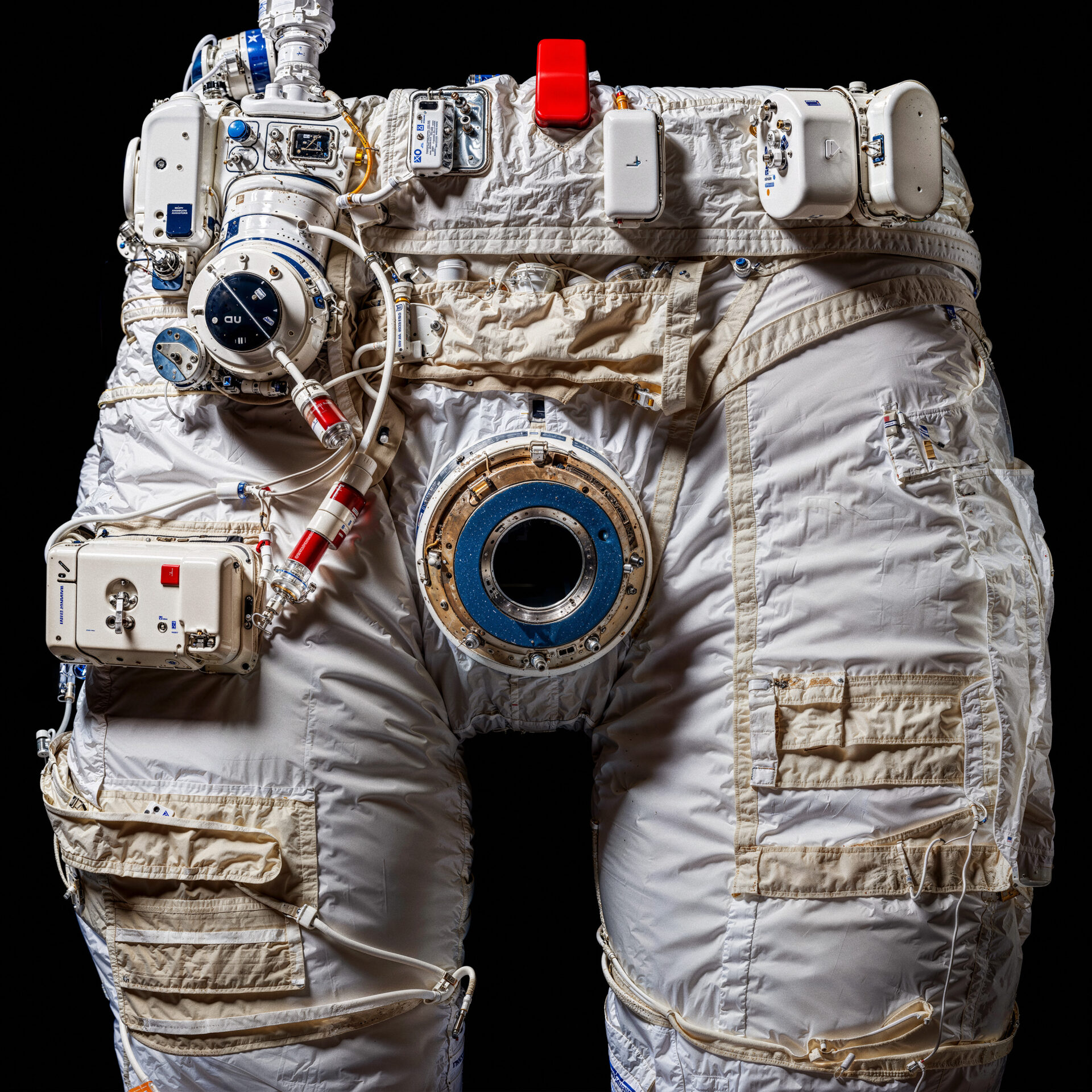
'Promiscuity' (2025), Courtesy of Studio Kevin Abosch
AM You’ve mentioned masterpieces, and the time and money that used to go into making images. Of course, not every image was a masterpiece, but the effort involved meant there were fewer of them. Today we’re flooded with images, and it’s easy to argue that individual images matter less as a result. As someone who spends so much time making and looking at images, how do you think about that? And what makes an image matter today, including the works in your current exhibition?
KA Well, first I’d make a distinction between an image mattering and an image making an impact. Those are two different things. Making an impact is partly about understanding how images circulate and reach people. If you know what people are seeing and how frequently they’re seeing it, you can get a sense of what might still catch their attention. We become numb to things that are too familiar or overused.
When Instagram first appeared, journalists would ask me what I thought about all those filters. At the time, it was exciting that you could take a mediocre photograph, or even a bad one, apply a filter that made it look like cross-processed film, and suddenly it looked cool. And there was some truth to that. Who was going to tell you it didn’t look cool? But after 100,000 of your closest friends started making images that looked exactly the same, it wasn’t so cool anymore. You didn’t want to make them, and nobody wanted to look at them.
That’s what I mean by making an impression or having an impact. And I think that’s what a lot of people are concerned with today because of the attention economy and its connection to monetization. In a sense, there’s a science to it. You can study what attracts attention, monitor it, and optimize your images accordingly. If you know people will see your work on a small phone screen, you might make bigger, bolder images that don’t require anyone to zoom in.
But then you’re constantly trying to figure out what will catch someone’s attention at a particular moment. And if you’re an artist playing that game, good luck. You have to keep changing what you do at an unprecedented pace. Something that seems incredibly cool this week might already be tiresome by next week. That used to take months, sometimes even a year.
AM An image can get a lot of attention on social media, people talk about it, and it might even go viral. But does that mean it matters?
KA That’s the distinction. There are images that matter to us as individuals because we encounter them at the right time, in the right context, and they connect with our personal experiences. And then there are images that matter to large groups of people collectively. I think one mistake artists make is trying to engineer images that matter to large audiences, much like trying to create viral content. That’s dangerous territory because I don’t think you can manufacture that kind of significance so easily.
If you’re working from an honest place, and we could have a whole other conversation about what honesty means, and you’re working rigorously and consistently over time, I think you’re more likely to create something that matters to a larger group of people. Time may be one of the most important ingredients. We develop relationships with images, just as we do with people or objects in our homes. Some relationships run their course quickly, and we move on. Others deepen over time. For me, the most exciting images are the ones that become more meaningful in your life, sometimes for reasons you don’t fully understand. Those are the images you put on your wall and never take down.
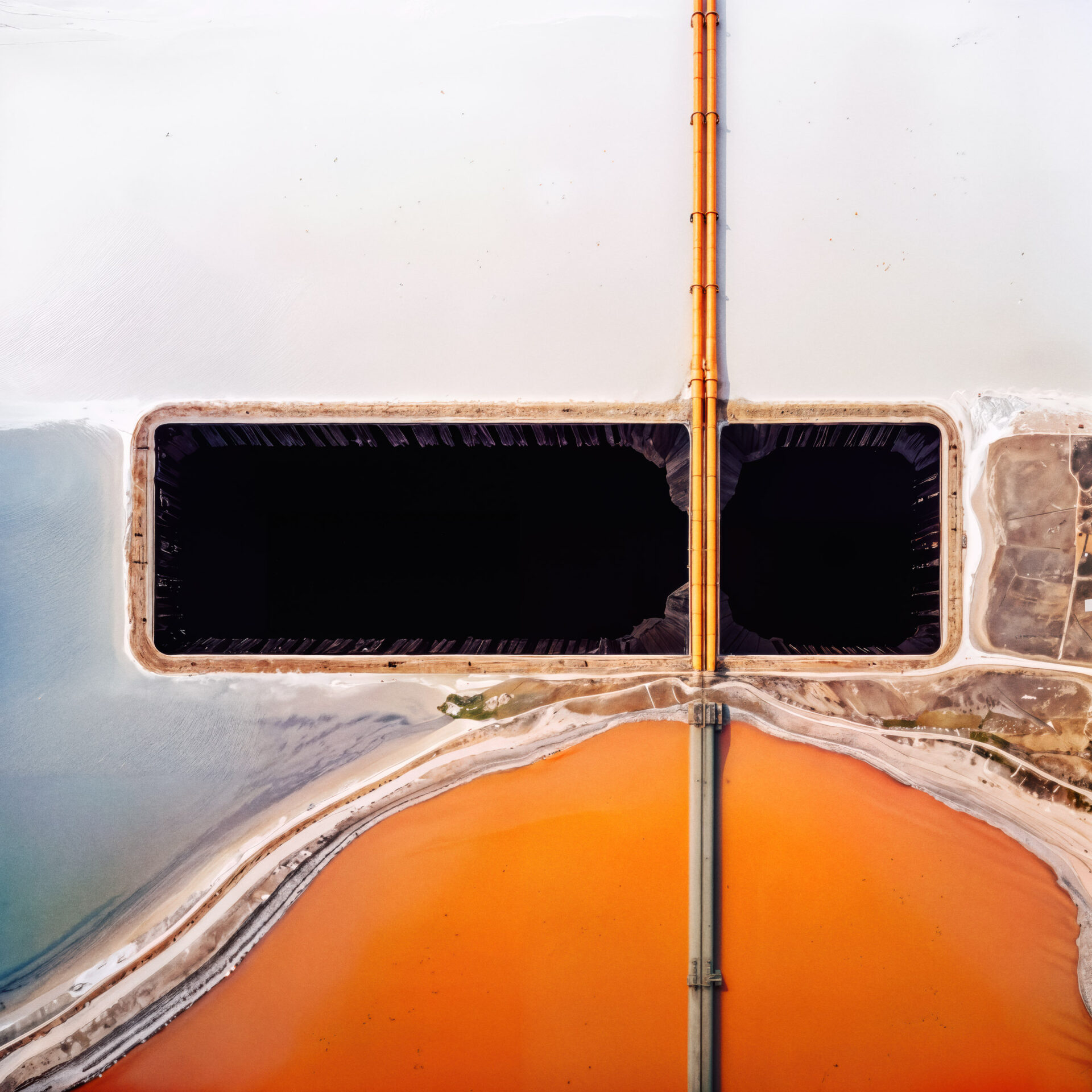
'We place ourselves in the line of good fortune' (2026), Courtesy of Studio Kevin Abosch
AM Is there an image from your own work that has that kind of significance for you? The potato comes to mind.
KA The potato is certainly one example, although some of my synthetic photographs probably matter even more to me personally. The potato is significant because of what it represents. I’ve often described it as taking something seemingly worthless, something we take for granted. You pull it out of the earth, covered in dirt, chop it up, fry it, boil it, eat it, and throw away the leftovers. But suddenly that seemingly worthless object is hanging on a wall, larger than your head, and you have to confront it. People say it looks like a planet or a meteorite. But what matters to me is that you’re looking at something that is, in a way, no longer inferior to you.
There was a time in my life when I didn’t fully understand my own ego or how to deal with it. Making the potato portrait was a way of confronting that. I wanted to look at something that I might ordinarily consider inferior to myself with the same attention I would give to a portrait of another person. I used it as a mirror, trying to reach a point where I no longer saw myself as superior to this object. In that sense, I was using the image as medicine. Essential medicine. And that works for me. Of course, someone who doesn’t know that story might never relate to the potato in the same way. That’s one of the challenges of conceptual art. As a conceptual artist, I think you have a responsibility to help people understand why you made something, so they have the opportunity to develop their own relationship with it.
With my synthetic photography, I’m working with very personal photographic and historical data to create images concerned with memory. Not necessarily how we remember something visually, down to the position of every brick in a wall, but the feelings attached to those memories, which often have very little to do with precise visual details. Those works have become increasingly meaningful to me. And I’m finding that collectors and other people who encounter them are responding to them in a similar way. They operate almost like medicine.
AM Speaking of the potato, you mentioned earlier how you used to photograph objects against a black background. In your exhibition in Monaco, you’re showing both your earlier photography and your more recent synthetic photographs. And now, instead of a potato against a black background, there’s a goldfish. So you’ve moved from potatoes to fish.
KA First of all, this is the first time the potato has ever been shown in a gallery. And I think it’s the perfect moment to show it, especially to people who aren’t familiar with my work. They can see what I was doing with photography 16 years ago alongside what I’m doing today with synthetic photography.
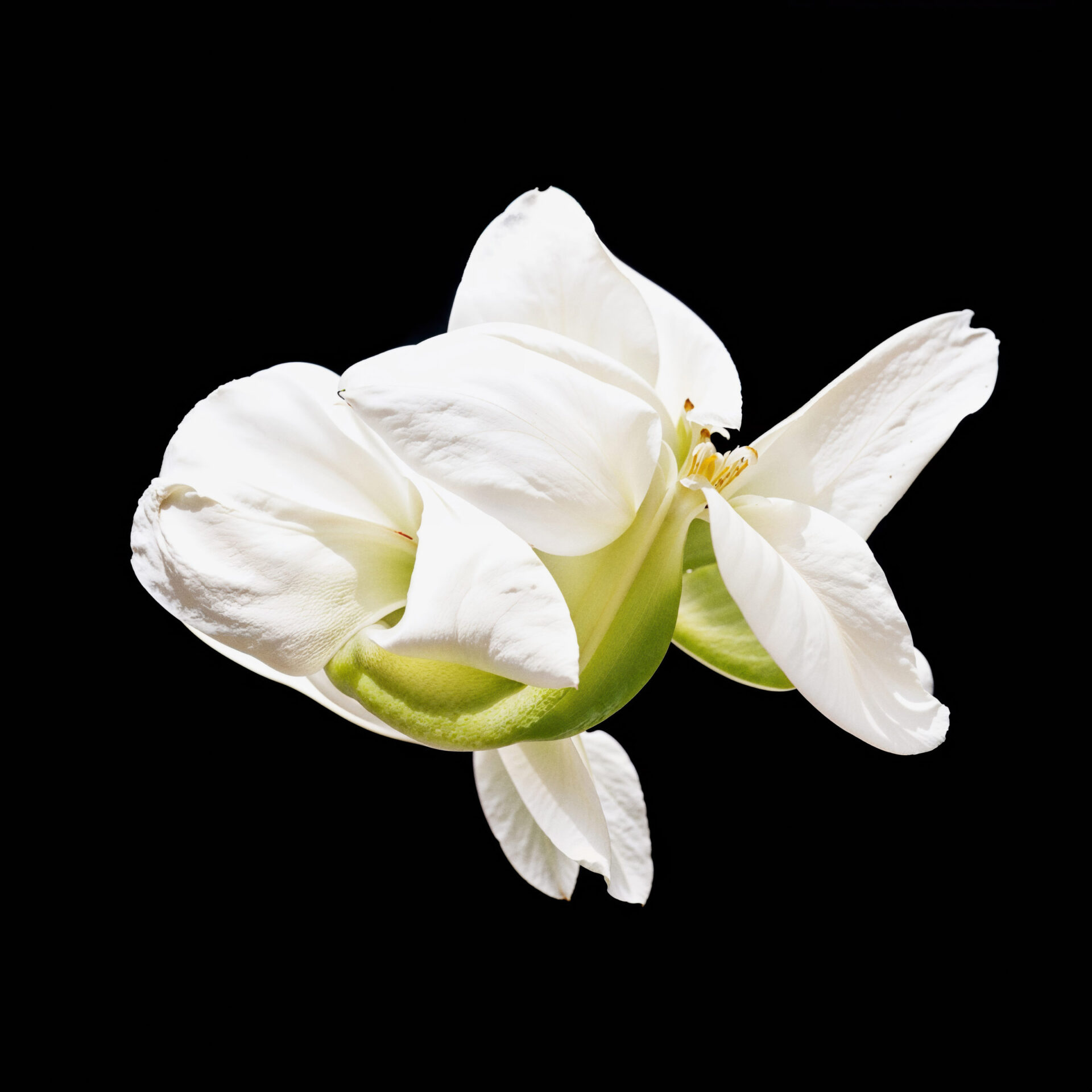
In some of the synthetic photographs, I treat the subjects in exactly the same way. It’s how I would have photographed those objects if I were using a camera, a light, and a backdrop. There’s a prominent image of a fish in the exhibition that appears to be made up of flower petals. The show is called Testing Ground, and the works emerge from what I think of as a virtual laboratory that exists partly in my mind and partly in the computer.
As with much of my AI work, I’m operating in a feedback loop with the machine. On the surface, the process might seem rigorous and scientific, but it’s actually very much about ritual and irreproducibility. If I were following a scientific method, you’d expect me to be able to reproduce the results. But with this process, which looks scientific, I can never reproduce them. And I’m perfectly comfortable with that.
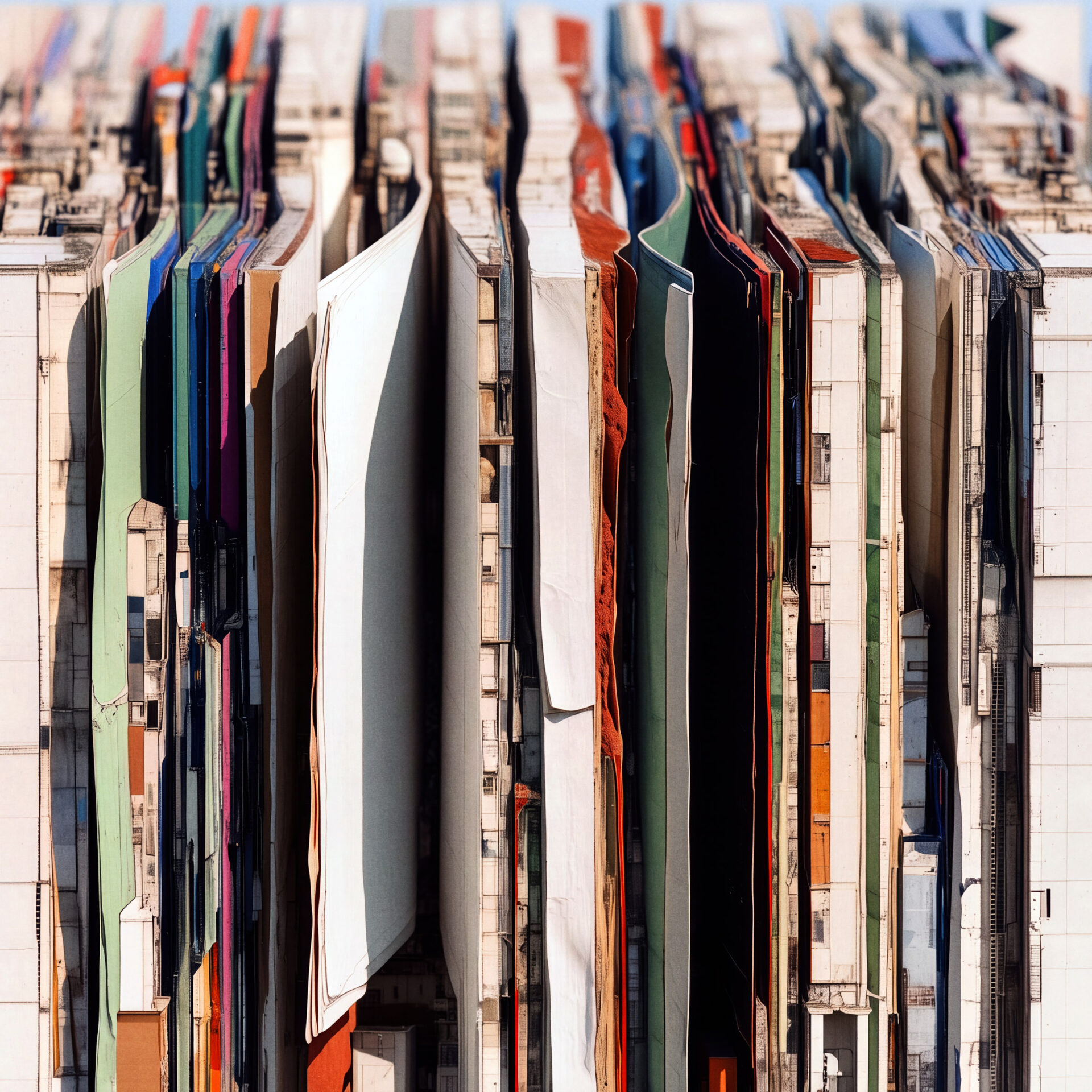
'Habitat' (2026), Courtesy of Studio Kevin Abosch
AM So what’s the idea behind Testing Ground? Why are you bringing together nature and AI?
KA The starting point is the long history of humans working within nature. We’ve hybridized flowers, bred animals, cultivated landscapes, and engineered cities. I’m drawing on that history, and on our ongoing relationship with nature, as the raw material from which I grow these synthetic images. Hopefully, they contribute something to the conversation we’re having today about developing a healthy relationship with technology, particularly AI.
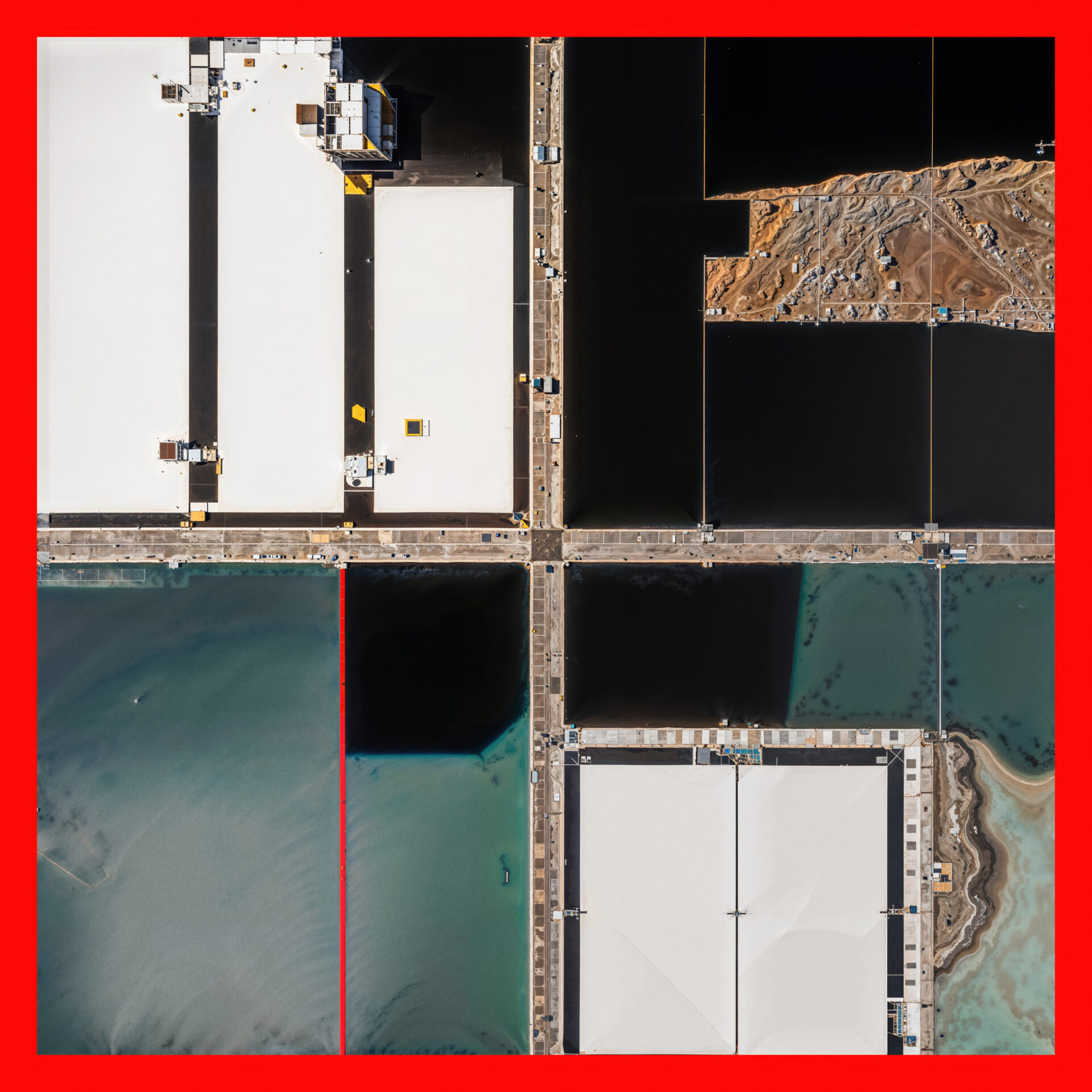
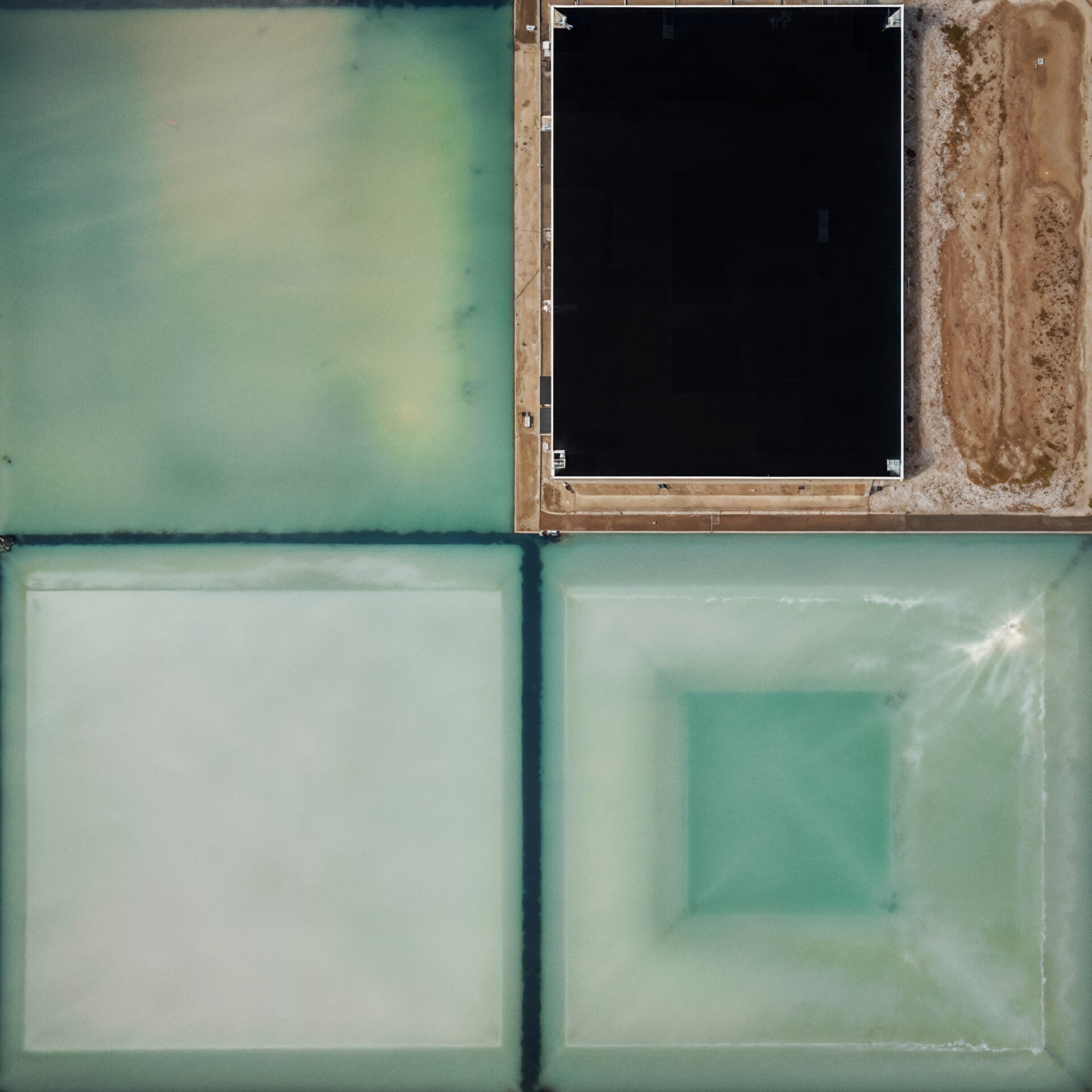
Take the Oranda goldfish. It’s an ornamental variety that humans have selectively bred for centuries in pursuit of a particular aesthetic ideal. In the work, the fish appears to incorporate the petals of an orchid, another plant that has been cultivated and hybridized over centuries of human intervention, again in pursuit of an aesthetic ideal. There are also works in the exhibition that, at first glance, you might call landscapes, although not in the traditional sense.
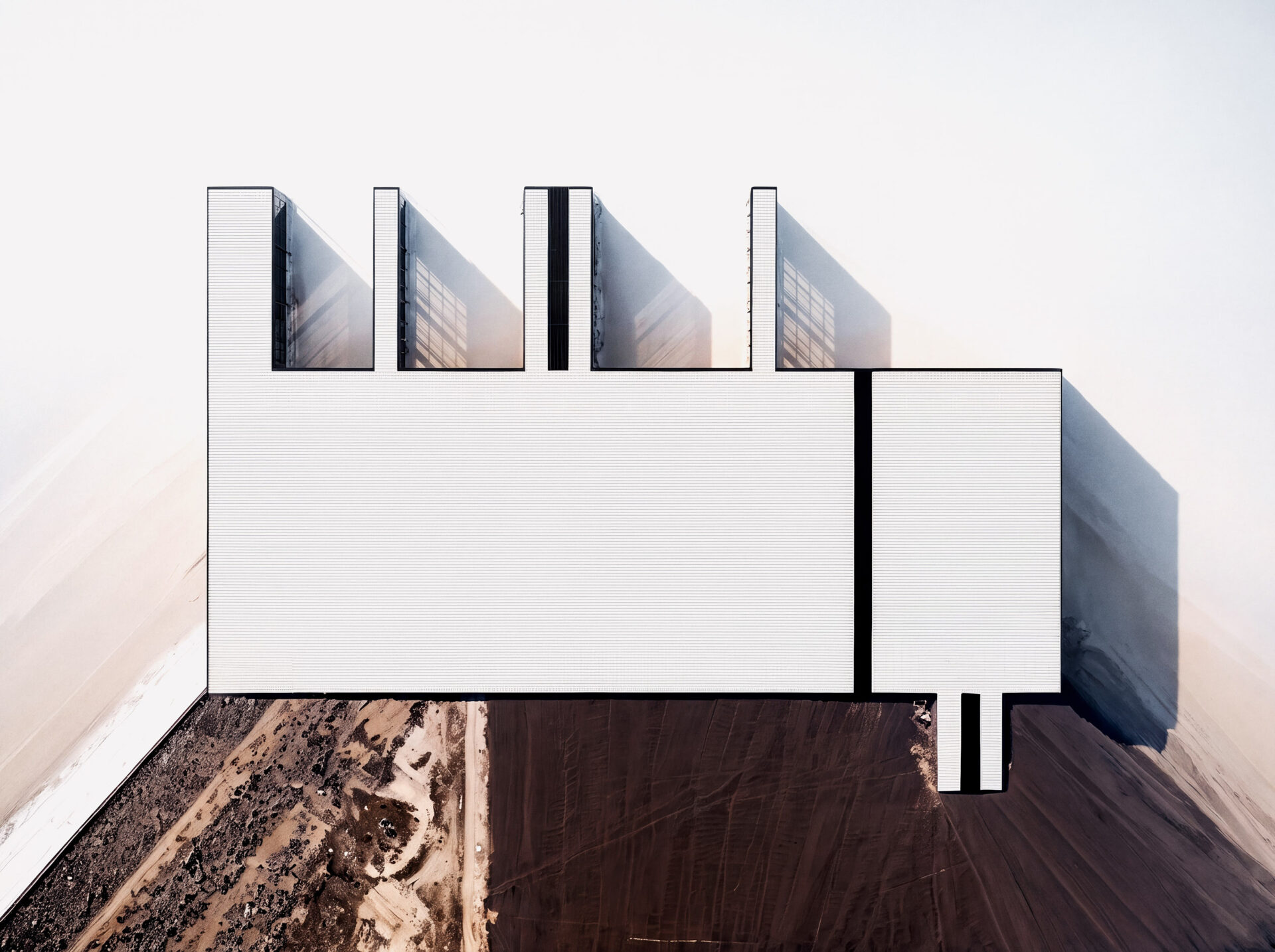
I’ve always loved landscape painting, from the apocalyptic landscapes of Ludwig Meidner to the work of Corot. But I never look at a landscape simply as a landscape, or as a record of a place. What interests me is how it reveals our negotiations with nature. What do we preserve? What do we destroy? What do we decide to build? If you see a pristine landscape that appears untouched by humans, the question is why. Is it because we haven’t had the opportunity to intervene? Or have we deliberately left it alone to protect a wetland and the birds that live there? Elsewhere, we might transform a landscape to extract resources, but still want it to look beautiful. We might even build homes around the very place where we’re extracting those resources. All these decisions reveal how we live within nature and continue to shape it as we evolve.
'Untitled (we_01)' (2025), Courtesy of Studio Kevin Abosch
AM Why did you choose to explore these ideas through synthetic photography rather than with a camera?
KA Synthetic photography allows me to explore these ideas in ways I’m not exploring with a camera. I don’t want to say I couldn’t do it with a camera. I’m simply choosing not to. I’ve been thinking about why we choose one tool over another. Sometimes it’s practical. You have an idea, and you look for the most effective way to realize it. But other times it’s just a mood. And I suspect that’s more often the case for me. I don’t feel any need to justify my choice of tools.
'Untitled (we_01)' (2025), Courtesy of Studio Kevin Abosch
AM This brings us back to the Pope’s statement, and to the question of AI as a tool. AI is also associated with drones, warfare, and people dying. Hito Steyerl addresses this in her book Medium Hot. Artists who use AI are often criticized for working with technology that could replace humans or be used to harm them. So when you say that choosing a tool can simply come down to your mood, how does this wider debate influence your decisions?
KA At the risk of sounding unnecessarily provocative, I’d say that at least 95 percent of the so-called experts we encounter online, on television, or in newspapers and magazines who weigh in on AI have a very limited understanding of how the technology actually works. And because of that, I think many of their claims about what should or shouldn’t be done, or what may or may not happen, can be dismissed.
One of our greatest challenges is figuring out who is actually qualified to make decisions on our behalf about how AI should be implemented and regulated. Because regulation is necessary. I often say that we’ve grown up in a world where, through literature and cinema, we’ve been conditioned to believe that one day the robots will rise up against us. We’ve seen that story so many times that the fear is almost embedded in our cells. And now, with recent advances in technology, that fear has come to the surface.
Is it possible that machines could, for one reason or another, begin working against us? Certainly, it seems possible. But we also can’t deny the benefits of AI. Just look at the development of therapeutics, from protein research to potential treatments for diseases. AI has already demonstrated its value there and continues to do so. The question is how we balance these things.
AM So where do you see the greatest danger in AI right now?
KA Right now, I think one of the greatest threats is how autocrats, aspiring autocrats, and oppressive regimes can weaponize AI to manipulate people. I’ve argued before that we need to teach media literacy so people understand how these tools are being used to influence them. But I’m no longer sure it’s that simple. Even with some awareness of how the technology works, it’s incredibly difficult not to be influenced by an algorithm.
In my own practice, I call this coming under machine consciousness. Generally, it’s a positive experience, until it isn’t. Sometimes I’m working so intimately with the technology that I begin to feel my humanity being eroded. But I know when to hit the kill switch, stop working, and walk away. Now think about someone scrolling through Instagram Reels or TikTok. I don’t know how well their kill switch is calibrated. My guess is that it kicks in when they finally pass out and have to go to sleep.
That’s one of the big unknowns. And when I see the very public statements coming from the leaders of companies like OpenAI and Anthropic about slowing development at the frontier of AI, I find some of that performative. I suspect it has as much to do with the politics of AI and financial considerations, including the timing of an IPO, as it does with safety.
AM One thing you keep coming back to, in very different contexts, is fear. Sometimes I wonder whether that’s the roter Faden, the common thread running through your work.
KA It is. Absolutely. I think fear is the greatest plague of humankind. People often say that fear is a powerful motivator. And nobody understands that better than autocrats. They know that if you keep people afraid, you can persuade them to do or accept almost anything. Actually, I’m glad you asked, because my 13-year-old son asked me a strange question yesterday, just before going to bed. He wanted to know which of the things I’ve said publicly, or expressed through my artworks, I considered the most important. It didn’t take me long to answer. And you know this one because you’ve heard me say it many times: Fear subverts logic. That says it all.
Once you understand that, you begin to understand people whose behavior previously made no sense to you. You wonder why someone treated you badly, or how someone with an education and a loving family can make certain choices. Why can’t they see that somebody is lying to them? Why can’t they recognize that they’re being manipulated? It doesn’t make logical sense. But that doesn’t mean they’re inherently illogical people. It’s that fear fries the motherboard. Fear subverts logic. If there’s one thing we should all be working toward, it’s giving people the tools to mitigate fear, so they can live with less fear and more love. As saccharine as that might sound, I think love is the antithesis of fear.
AM Is that also why you felt it was important to respond to the Pope? His message was about peace, after all.
KA It came from my own fear, actually. And that fear persists. I think it’s a reasonable one. I don’t believe the Pope meant anything wrong. I’m sure he was speaking from a sincere place. But I don’t think he’s the best person to educate the public about the benefits and dangers of AI. What I’m afraid of is that ignorance will persist. That’s really what it comes down to.
AM And perhaps those are good closing words.
KA I don’t mean ignorance as an insult. When you call someone ignorant, it can sound as though you’re calling them stupid, but I think those are completely different things. Ignorance is simply a state of not knowing. I’m ignorant about plenty of things myself. And that’s what worries me: that people will continue not to understand.