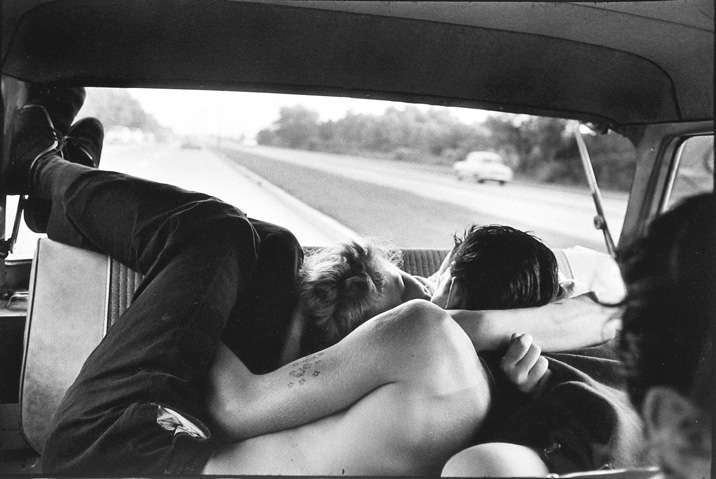
 Bruce Davidson, Brooklyn Gang, 1959, copyright Bruce Davidson, courtesy Howard Greenberg Gallery
It seems appropriate that Photo London, surely to date the capital’s grandest festival of photography, made its debut crammed into the very building where, at a meeting of the Royal Society in 1839, Sir John Herschel coined the term ‘photography’. Seventy galleries from twenty countries came together over this special weekend at Somerset House to exhibit photography from all around the world.
The vast set-up felt like an enlarged section from the Frieze Art Fair, with content sprawling over every inch of space. There were photos in every corner; it’s the first time some areas of Somerset House have been opened to the public. German photographer Rut Blees Luxemburg’s commissioned installation The Teaser, in the open courtyard, drew viewers in from the very beginning, urging the audience to walk on her photographs, to engage with photography on a physical level before they’d even entered the building. Hidden in the Stamp Staircase of the South Wing was Sohei Nishino’s specially commissioned diorama of London – scraps of paper coming together to form a dream-like city like one of Italo Calvino’s Invisible Cities or something out of ‘Kubla Khan’.
Several gems dominated the specially curated exhibitions. Beneath the Surface, selected from the V&A archive, featured stunning work from Stephen Gill’s award-winning ‘Talking to Ants’ as well as the epic landscapes and close-up studies of the surface of water by David Kronig and Susan Derges. Across the hall in the adjacent gallery the stunning work of Sebastião Salgado’s epic eight-year international project Genesis was combined with the debut UK showing of Kaveh Golestan’s provocative photojournalism. The entire experience was a visual feast, made for wandering, discovery, and quiet contemplation.
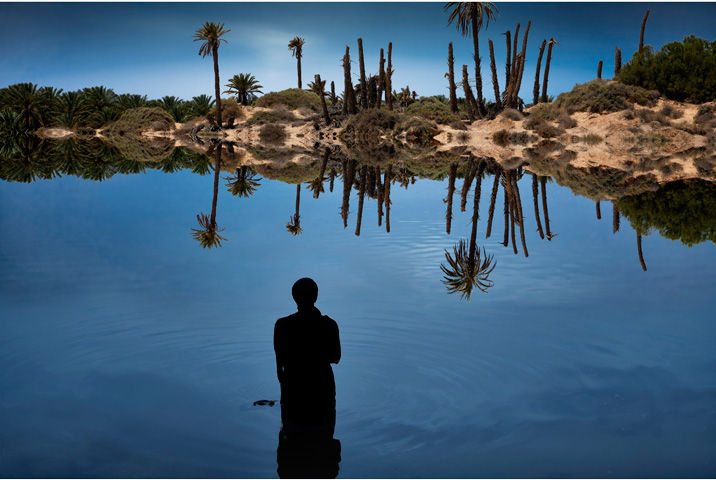 Sama Alshaibi, Fatnis Al-Jazirah (Fantasy Island) 2014, Copyright the artist, courtesy of Ayyam Gallery
The fair drew in exhibitors from all over the world, and as a result produced a wonderful array of content from all walks of life. Founded in Damascus in 2006, with the aim of showcasing under-represented Middle Eastern artists, the Ayyam gallery presented a stunning selection from Sama Alshaibi, images that seemed at once landscapes and portraits through inventive reflections.
As well as the many classical portraits and landscapes on display, it was often such striking manipulations of traditional photography that caught the eye. Ben Brown Fine Arts, for example, presented Vik Muniz’s 1961 exotic collages made using what the artist dubs ‘cards from Nowhere’, old and unused postcards. Through modern digital C print he then transforms these typical English scenes – the thrum of Piccadilly Circus or the rural idyll of Stonehenge – renewing the cliché through his cunning photomontage.
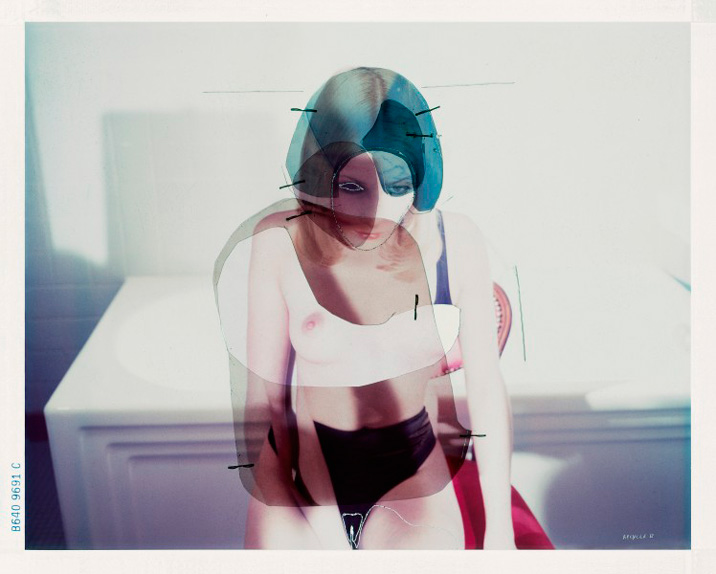 Jean Francois Lepage, Recycle 04, copyright the artist
Another incredible showcase came from the Ravestijn Gallery (Amsterdam) with their presentation of Jean Francois Lepage’s 1980 Recycle series. Here Lepage adapts a cut-and-stick method similar to Muniz’s to stretch the medium to its limit, reworking and revisiting his own photographs from his time working in the fashion industry, and bringing a surgical scalpel to resurrect these images in new forms and with new faces.
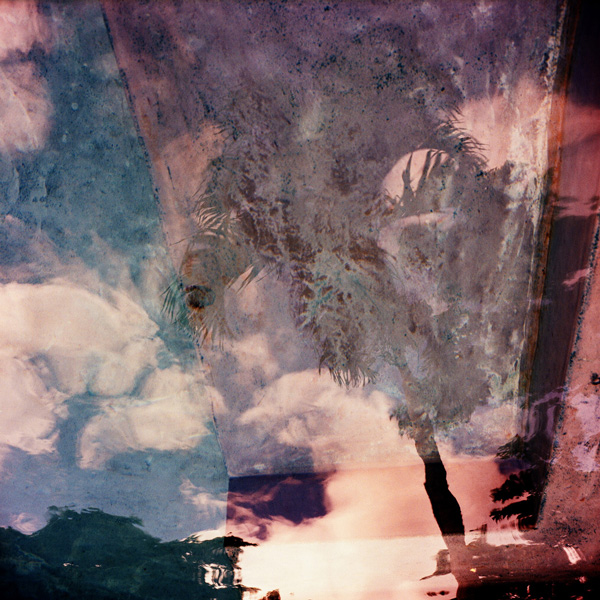 Karine Laval, Poolscape #82, copyright the artist
Some of the photographs seemed more akin to paintings. Awoiska van der Molen’s hand-printed landscapes of reeds in water, from the Robert Morat Gallery, resembled oil on canvas. There was nothing of the slick lines and accurate edges we’re so used to in so much contemporary photography. Similarly the Crane Kal gallery (Brighton) conjured the allure of dreamy summer days with their display of Karine Laval’s vibrant square prints for her series Poolscape. Laval’s signature development process actually sees her using water as a distorting lens to manipulate the film – water is both her subject and one of the means by which she creates the finished photograph.
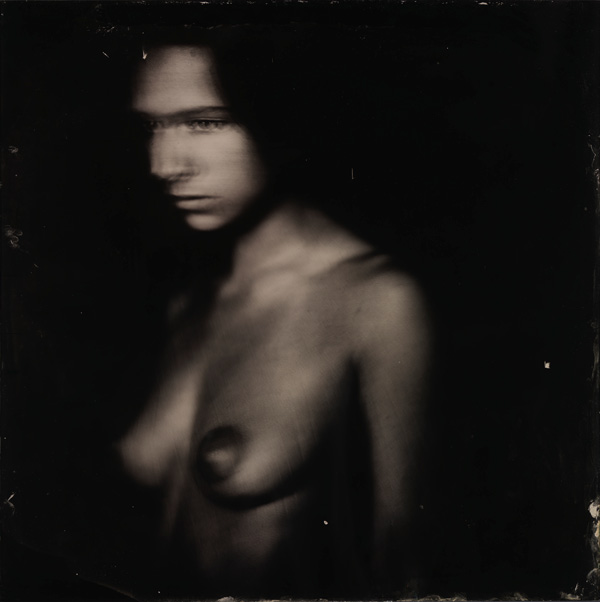 Matthias Olmeta, Khansine, 2014, copyright the artist
In fact there was a pleasing inclination across the fair for galleries to showcase a diverse selection of photographic techniques. An artist such as Matthias Olmeta, featured by the PUG gallery, went a step further in shunning the latest cutting-edge technology in favor of an ancient technique, the ambrotype. For this a glass plate is coated with collodion and then immersed in a bath of silver nitrate. As the plate is only exposed to light when shooting the resulting image produced is a negative. A positive image only appears when the plate is placed on a black background. Summoned into existence, it’s a technique that lends the subject a mystical aura. The intensive process really does seem justified by the exquisite end products.
Another eye-catching exhibit came from Paris, with the incredible contributions from the Lumiere des Roses gallery which presented many original xographs from the 60s, including David Bailey’s cheeky ‘Look for Deneuve’ in which Catherine Deneuve’s face transforms before us. Other portraits winked as the viewer walked around them, and an old clicking slide-show saw an array of sixties pin-up girls combined with the special 3D Lenticular Show. The whole section provided a cheerful tongue-in-cheek delight in the aftermath of the more sombrely curated exhibitions of the lower galleries.
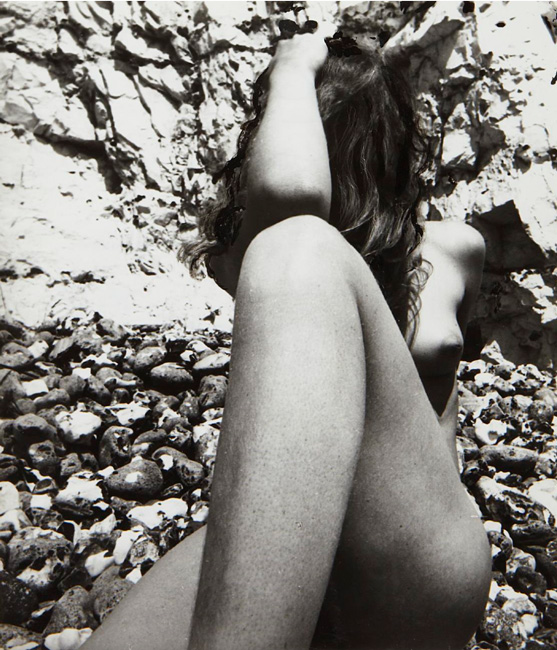 Bill Brandt, East Sussex Coast, 1978
The Kahmann Gallery from Amsterdam followed in a similarly raunchy route leaving nothing to the imagination. Founded in 2005, with a focus on Dutch vintage photography, steamy black and white images and close ups saw bodies practically dissected by the camera. However what proved most effective were the subtler uses of this intense observation present in the works of Bruce Davidson and Bill Brant and their documentary style images of youth and life in all its vitality – captured in perfect motion.
Naturally, the show was full of firm favourites: Cecil Beaton, Francesca Woodman, Guy Bourdin, Rankin. Name a famous photographer and he or she was probably represented in some capacity. The Rose Gallery from California in particular showcased a stunning array of images from William Eggleston, while the James Hyman Gallery also ensured space for showcasing older but underappreciated artists such as the ‘unknown soldier of photography’ Andre Kertesz whose photography of Henry Moore’s Shadow, among other objects, is currently showing at the gallery.
However what made the event most exciting was the voracious mix of old and established artists with up-and-coming ones. Many of the photographers exhibited for the festival were showing work for the first time at a major venue. The whole affair felt like Frieze for a single medium, the kind of specialisation that allowed for much greater appreciation of a single form. Many of the galleries exhibiting were invited to nominate an emerging artist for the John Kobal Residency Award, sponsored by the John Kobal Foundation. This year it was won by Daisuke Yokota, of G/P Gallery, who the judges praised for his ‘meticulous approach to photographic experimentation … which hark back to an identifiably Japanese tradition, whilst pushing the medium irrevocably forward’. This duality itself seemed to be at the forefront of the entire fair.
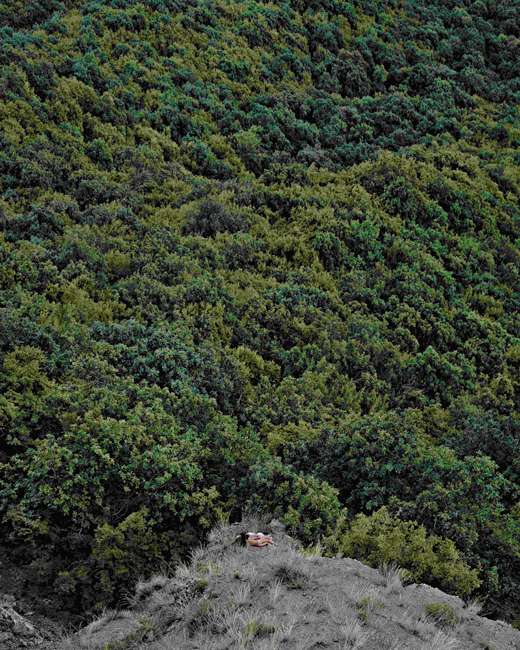 Ruben Brulat, Douces brise (Kiketi, Georgia) 2013, Copyright of the artist, courtesy of LAMB Arts
Another young talent that shone out came from LAMB Arts, the main show-stopper being several large scale prints from the 23-year-old French photographer Ruben Brulat, whose expansive portraits set naked human bodies out in great expanses of wilderness. His most recent series uses his own body, reduced to the size of an ant in the depths of a ravine – presenting a profoundly moving portrait of mortality and the place of man in the world.
Susan Sontag dubbed the photographer as a figure “adept at the joys of watching” and this sensation of delight in observation permeated Somerset House. The entire weekend read as a giant celebration of photography in all its forms from modern digital prints to ancient traditional techniques. It was a joy to see such an assembly under one roof – the old and new harmoniously brought together, and through contradiction and contrast set in new and unexpected lights. After the success of Photo London the committee have happily announced it will return next year.
Text by Thea Hawlin
More: Phoebe English at NOW Gallery