When Beauty Becomes an Algorithm
What happens when the image we compare ourselves to is no longer even a real person?
In Germany, 31 per cent of women and 37 per cent of girls feel pressured by online content to change their appearance, even when they are aware that the images they see have been altered or generated by AI. The figures come from Dove’s 2024 The Real State of Beauty report, and they reveal a troubling contradiction: knowing that an image is artificial does not necessarily protect us from its influence. Last Friday, Dove brought this conversation to Fotografiska Berlin, where an exclusive tour of Lauren Greenfield’s Social Studies was followed by a discussion between model and influencer Sarina Nowak and psychologist Pauline Stockmann, moderated by Tsellot Melesse. Moving between personal experience and psychological insight, the evening examined how social media shapes our perception of beauty and what happens when the expectations established by our feeds begin to determine how we see ourselves offline.
For Dove, the conversation forms part of a commitment to challenging narrow beauty ideals through its Real Beauty initiative. “You cannot simply tell a young girl, ‘Don’t compare yourself.’ When the same perfect faces keep appearing in her feed, that is easier said than done,” says Alissa Martens, Masterbrand Lead EU at Dove. Through its collaboration with Fotografiska Berlin, the brand hopes to encourage a closer examination of how the images surrounding us shape our understanding of beauty.
For Sarina, this question is deeply personal. Having started her modelling career in 2009, she spoke about her years in Los Angeles and the pressure she once felt to alter her body, including losing weight despite not feeling well. Today, as a successful curvy model, she approaches her body differently, explaining that she has reached a point where she feels comfortable with herself and is less willing to let external expectations determine how she sees her own appearance. Yet the standards against which bodies are measured are becoming increasingly difficult to recognise. During the discussion, Sarina described encountering companies working with AI-generated models whose faces and bodies appear seemingly flawless. When an industry is surrounded by faces without pores, bodies without imperfections and proportions that do not exist outside a computer-generated image, the boundary between aspiration and reality begins to disappear.
The problem is not simply that these images are artificial, but that their perfection can become normalised. Eventually, even the people working within the industry can lose sight of the fact that what they are looking at is not a realistic standard at all. And if those working in fashion struggle to distinguish between achievable beauty and digital fabrication, what does that mean for young people encountering these images every day?
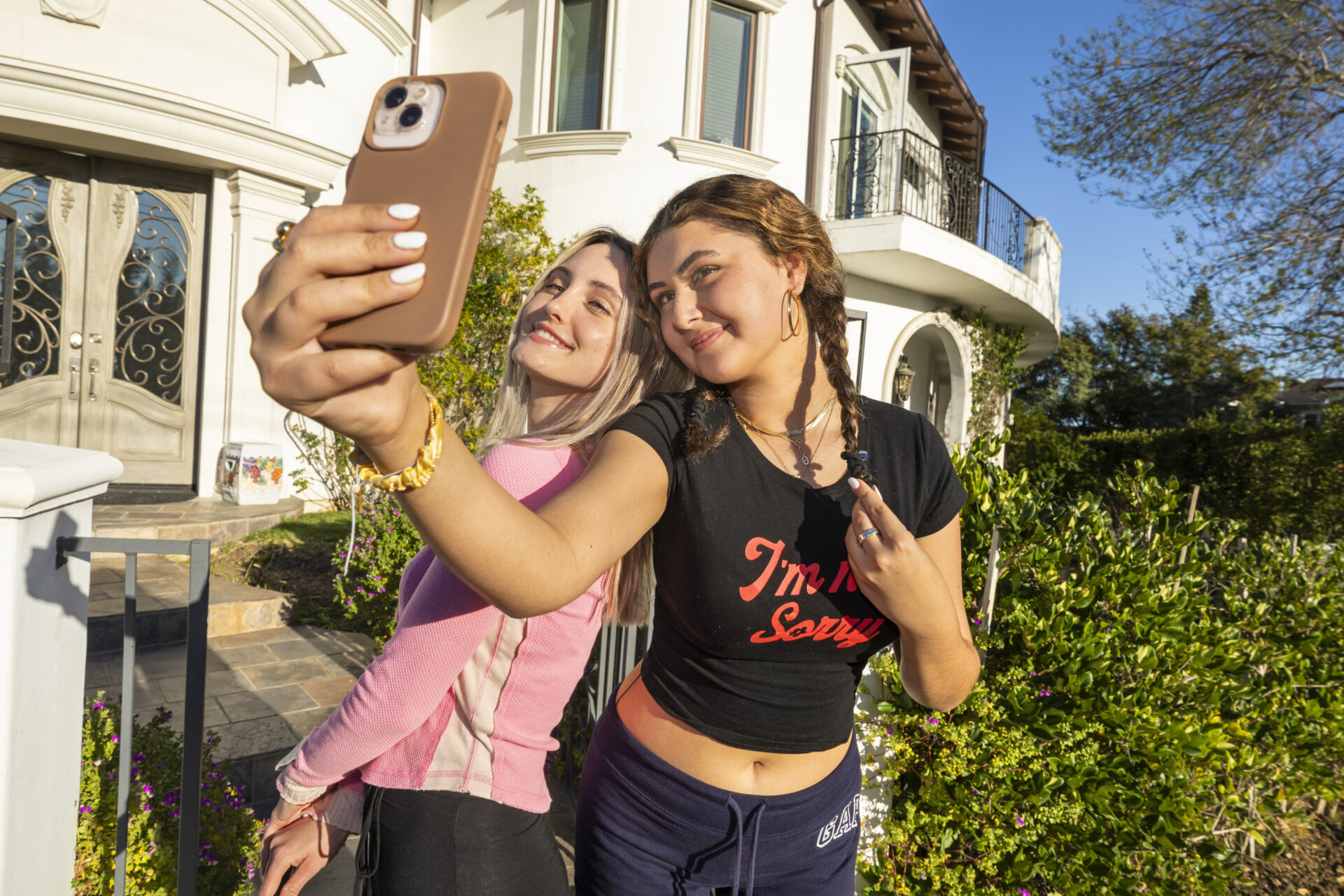
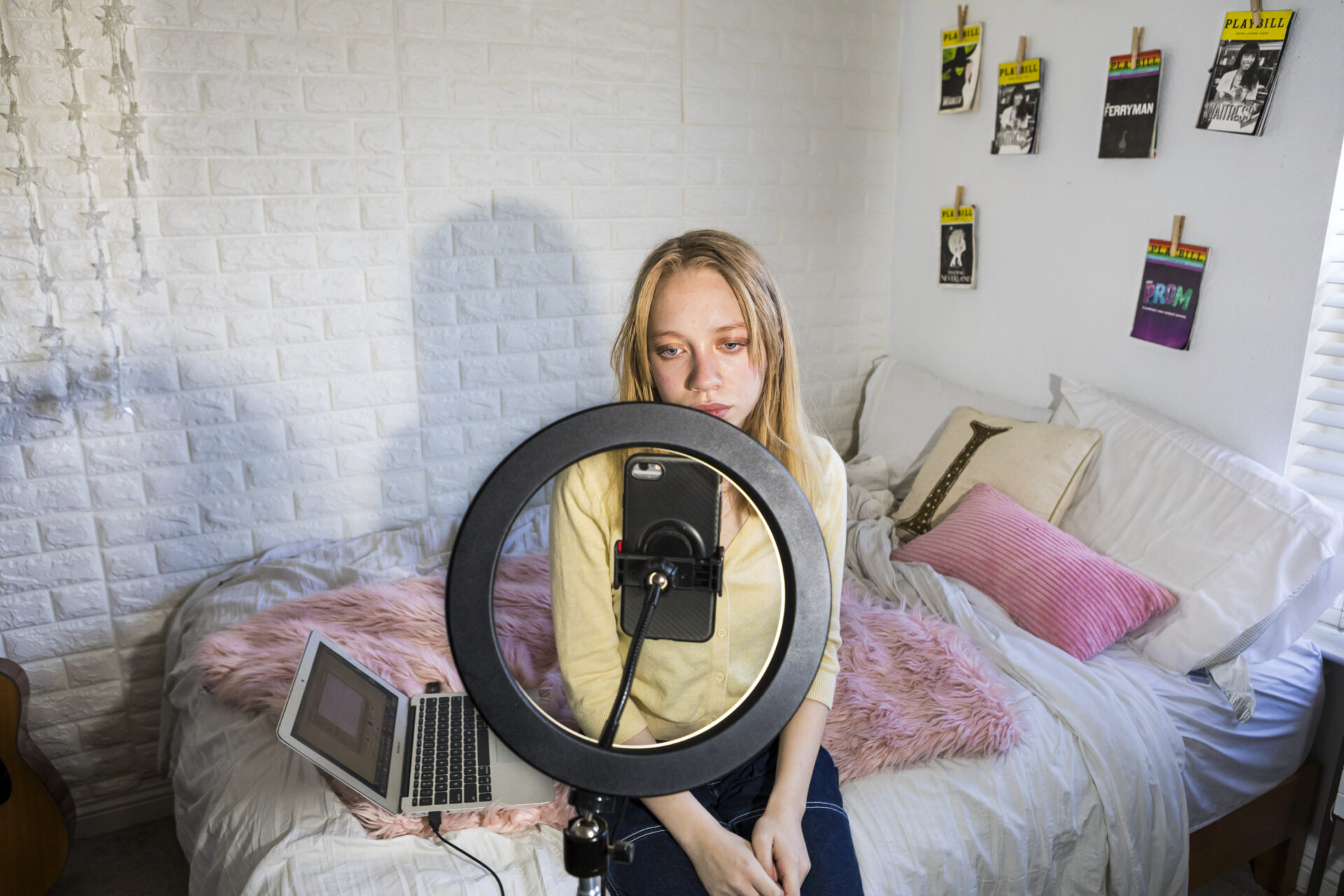
Image Courtesy of Lauren Greenfield / Fahey Klein Gallery
Pauline placed Sarina’s experiences within a broader psychological context, pointing to the danger of allowing appearance to become the foundation of self-worth. If the way we look in the mirror determines whether we consider ourselves to have had a good or bad day, our sense of identity becomes dependent on something that is constantly subject to judgement. Developing a more stable sense of self through aspects of our identity beyond physical appearance, she argued, can reduce the power that a single reflection or image online holds over us. Her perspective also offered a useful counter to the familiar language of ‘self-love’. It is not necessarily enough to tell women simply to love their bodies, particularly when the culture surrounding them continues to teach that their bodies are projects to be perfected. A more meaningful form of resistance may lie in recognising that we are more than our appearance in the first place: more than our body, our outfit, our face or the version of ourselves that happens to perform well online.
That becomes particularly complicated for those who themselves participate in shaping the digital landscape. When asked about the responsibility that comes with having a public platform, Sarina spoke about the difficulty of being vulnerable online. She acknowledged that there are many days when she does not feel good emotionally, and that showing those moments can be uncomfortable, precisely because authenticity itself has become a form of public performance. Yet making space for imperfection carries its own responsibility. For someone whose image is consumed by thousands of people, presenting only the polished version can unintentionally reinforce the idea that everyone else is failing to measure up. Showing that insecurity, emotional vulnerability or simply a bad day exists behind the image can challenge the expectation that women should always appear effortlessly well.
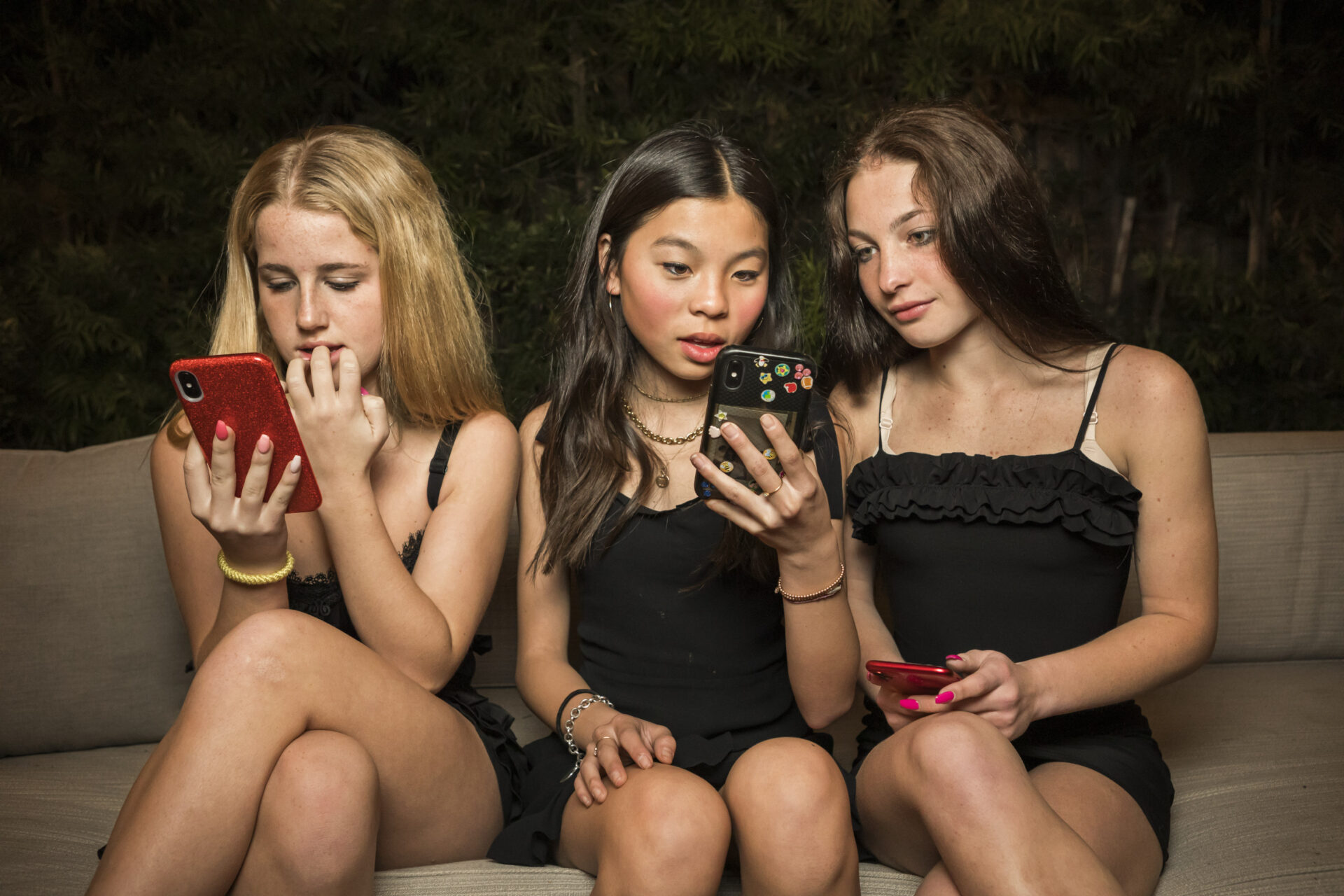
The exhibition surrounding the discussion gives these pressures a physical form. For Social Studies, Greenfield asked thirty teenagers in Los Angeles to give her access to their phones, including their feeds, messages, photographs and posts. Over 150 days and more than 2,000 hours of screen recordings later, the result became an investigation into a generation coming of age inside an environment shaped by comparison, beauty ideals and the relentless visibility of the self. Images that would ordinarily disappear within seconds on a phone screen are enlarged to human scale, while social-media posts and trends become photographic typologies that can no longer simply be scrolled past. In the algorithm room, visitors enter somebody else’s feed, experiencing how quickly one interest can lead to another until an entire reality begins to form around it. What Greenfield exposes is not only what young people are looking at, but the architecture that determines what they are shown.
The same mechanism is explored in The Beauty Machine, Lauren’s installation commissioned by Dove and displayed on the ground floor of Fotografiska Berlin. At first glance, the work appears to present a diversity of faces. Yet on closer inspection, these faces become increasingly similar, converging towards the same algorithmically constructed ideal. What initially looks like individuality gradually reveals itself as repetition.
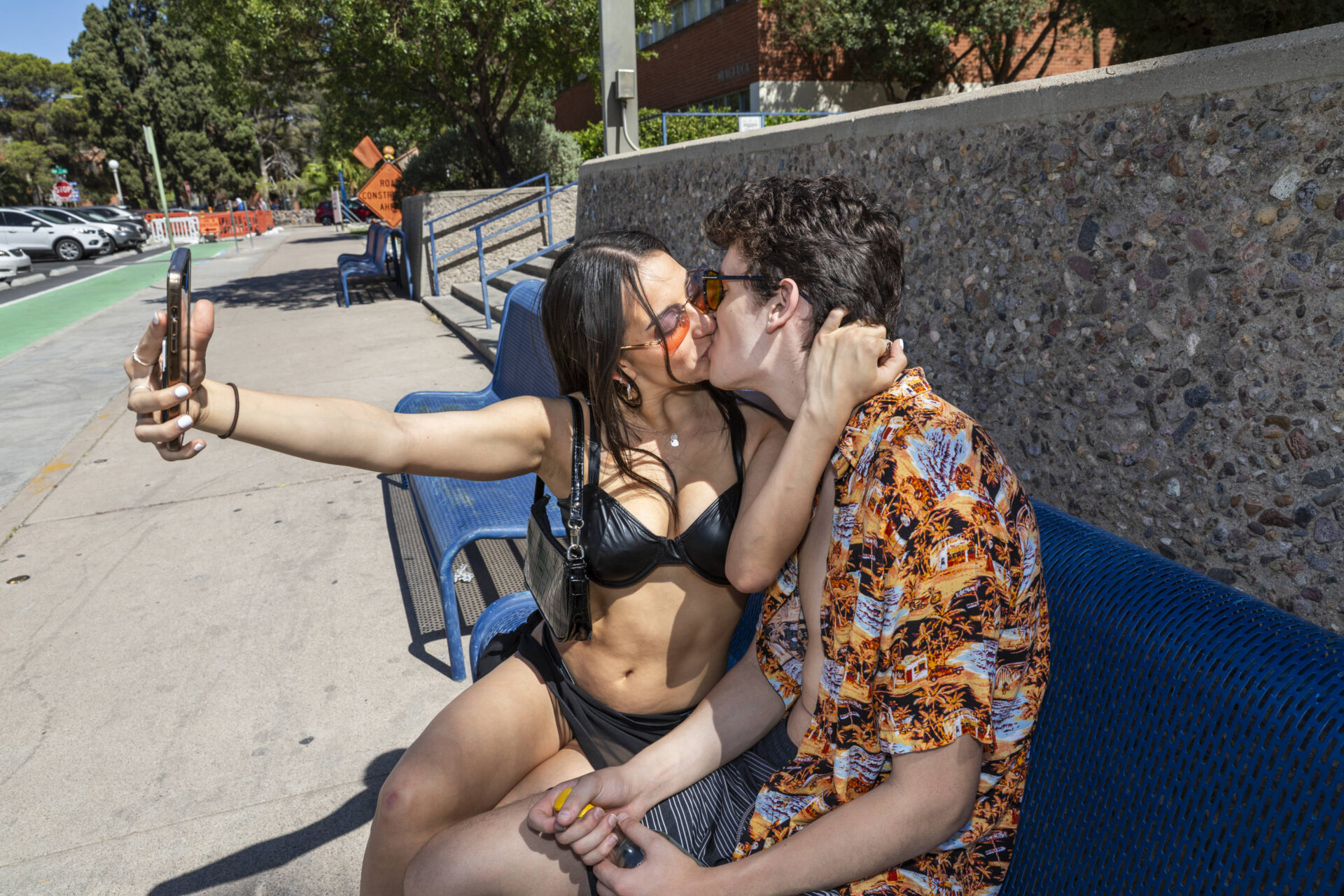
Image Courtesy of Lauren Greenfield / Fahey Klein Gallery
The installation makes visible what the evening’s conversation repeatedly returned to: when we encounter the same faces, proportions and aesthetic ideals often enough, they begin to establish our understanding of what is normal. The more frequently a particular version of beauty appears, the easier it becomes to mistake it for the only version worth aspiring to. For more than twenty years, Dove’s Real Beauty initiative has sought to challenge restrictive beauty standards, advocating for the representation of real women in their diversity and without digital distortion in its advertising. In an environment increasingly populated by artificially generated images, this commitment raises an increasingly relevant question about what authenticity means when even the faces themselves can be manufactured.
The Beauty Machine offers a fitting companion to Social Studies, particularly because the question is no longer only who gets represented, but who gets to define what is worth representing in the first place. In a digital culture shaped by algorithms, commercial interests and deeply ingrained gender norms, diversity cannot simply mean adding more faces to the same template. It means questioning the template itself.
The evening at Fotografiska demonstrated that awareness alone is not enough to escape the influence of digital beauty standards. We may recognise that an image is edited, filtered or entirely artificial and still find ourselves measuring our own reflection against it. Changing that relationship requires more than individual confidence. It also requires questioning the systems that continue to define which faces and bodies are considered desirable. Perhaps the most radical answer is not to find a better version of ourselves, but to stop believing that there has ever been only one version worth becoming.
The photographs featured are part of the “Social Studies“ exhibition by Lauren Greenfield, on view at Fotografiska Berlin through January 12, 2027.