 Yayoi Kusama inside her Infinity Mirrored Room installation. Image guardian.com
Known for her joyous polka dots, striking patterns and installations, Yayoi Kusama has become an incomparable name in the art world. Born in Japan, she hit her stride as an artist after moving to New York in 1957. There, she was an iconic radical figure of the underground art scene where she organized political protests, and her infamous public happenings and body-painting “orgies”.
As one of the most famous contemporary artists in the 21st century, Kusama has developed a consistent practice that transcends art, design and fashion. Her trademark pumpkins are internationally instantly recognizable and her immersive cubic installations put any gaming app to shame. Beyond fashion collaborations with Marc Jacobs at Louis Vuitton, and the designer Issey Miyake, the artist has even had her own fashion label—the Kusama Fashion Institute—whose marketing campaigns had a fiercely political stance. To celebrate Yayoi Kusama’s major show in London at Victoria Miro, we highlight five reasons why she’s one of today’s best artists.
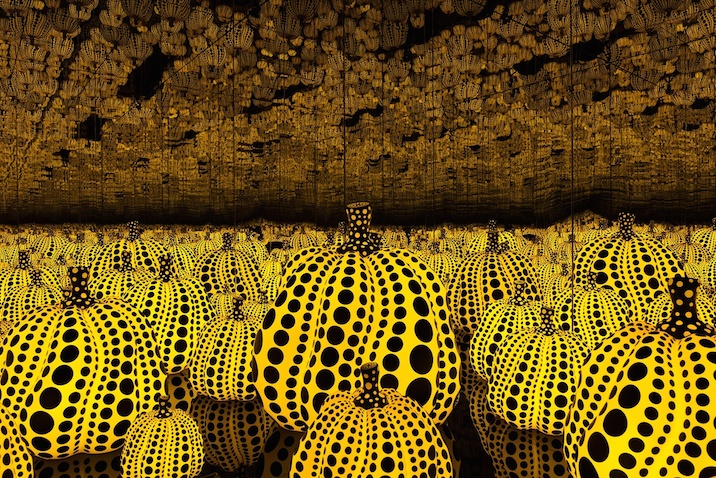 Yayoi Kusama, “All the eternal love I have for the pumpkins”
She’s proud of her outsider status
Kusama labels herself as an “outsider,” being an Asian artist challenging the western art scene, and a female within a male dominated art world.
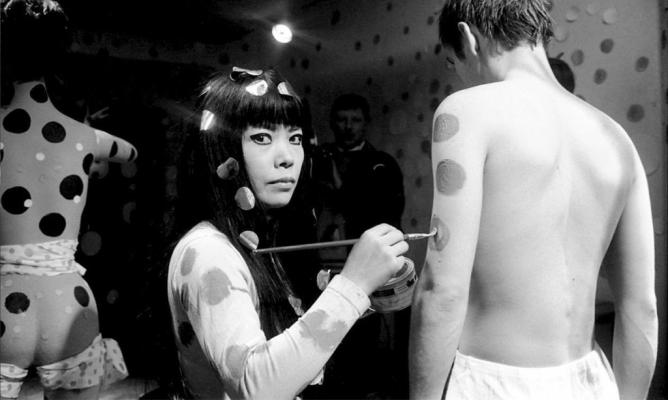 Yayoi Kusama. Image: Freedom Men Art/Flickr
She’s an (underground) icon
In her outdoor performances in New York she would paint dots all over various naked bodies in public places (in front of the New York Stock Exchange) garnering her icon status in the art world.
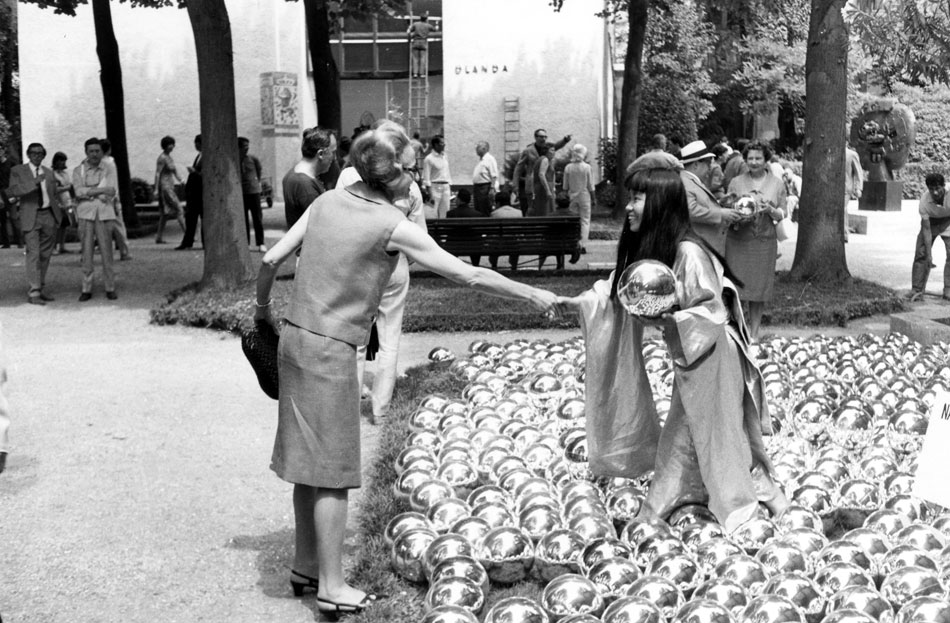 1966 Narcissus Garden
She’s not afraid of controversy
The artist got kicked out of the Venice Biennale, her first, for trying to sell off the mirrored spheres that were a part of her display—for $2 each.
 Adele at Yayoi Kusama’s mirrored room
Her art has cross-generational appeal
Adele has performed in one of her most famous pieces, the “Infinity Mirrored Room” at the Broad Museum in Los Angeles. This installation is always the subject of massive attention, and visitors have waited up to eight hours for a mere 45 seconds in the room.
 Yayoi Kusama, The Obliteration Room. Image: guardian.com
Her selfless honesty
Since 1977, Kusama has lived voluntarily in a psychiatric institution just opposite her studio in Japan. Influenced by her desire to erase the trauma and nervous disorders—her art has remained aimed at the rest of the world and its failed politics.
Yayoi Kusama: sculptures, paintings & mirror rooms is at Victoria Miro until 30 July 2016