
Photo: Alessandro Merlo.
London-based non-binary designer William Dill-Russell may have cut their creative teeth in performance but they soon realised that clothing, which allows you to express so much without saying anything at all, was their true calling. “I did a lot of performance when I was a kid and thought that was something I was going to do,” the University of Westminster graduate tells SLEEK. “However, I came to the realisation that I was more interested in characters and then I realised how, without any movement or dialogue, you can portray so much about them with subtle aspects of costume.”
You can certainly detect hints of these beginnings in Dill-Russell’s work: with the use of corsetry, voluminous swathes of fabric and a stark black and red colour palette, their garments have a distinctive dramatic flair. Dill-Russell’s first collection, Fanny and Stella, also develops their interest in character by paying homage to two forgotten figures of British LGBTQ+ history. The individuals in question are Stella Boulton and Fanny Park (born Thomas and Frederick): two queer individuals who were the centre of a much-publicised 1871 trial. Dill-Russell was inspired by the duo as symbols of remarkable resistance in the face of widespread legal and social discrimination.
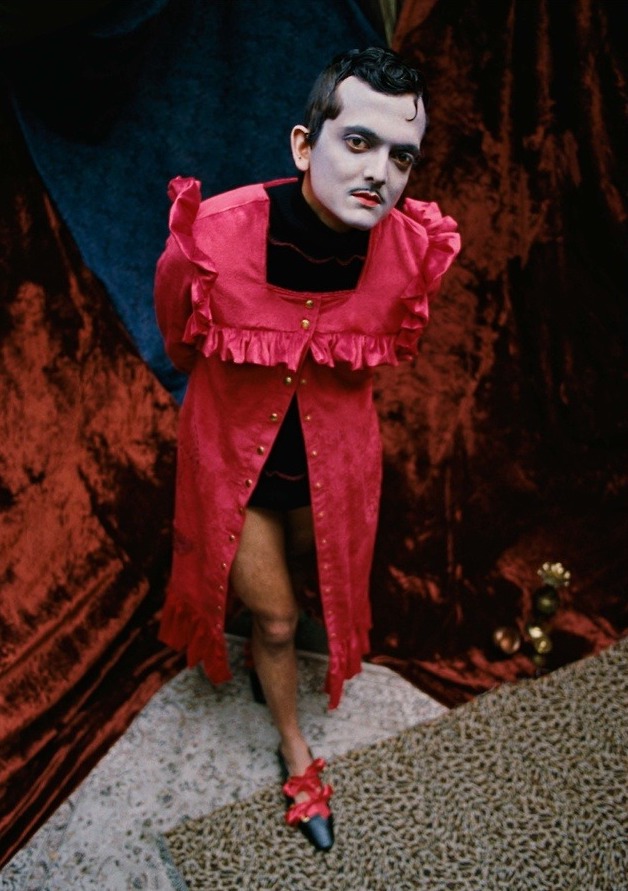
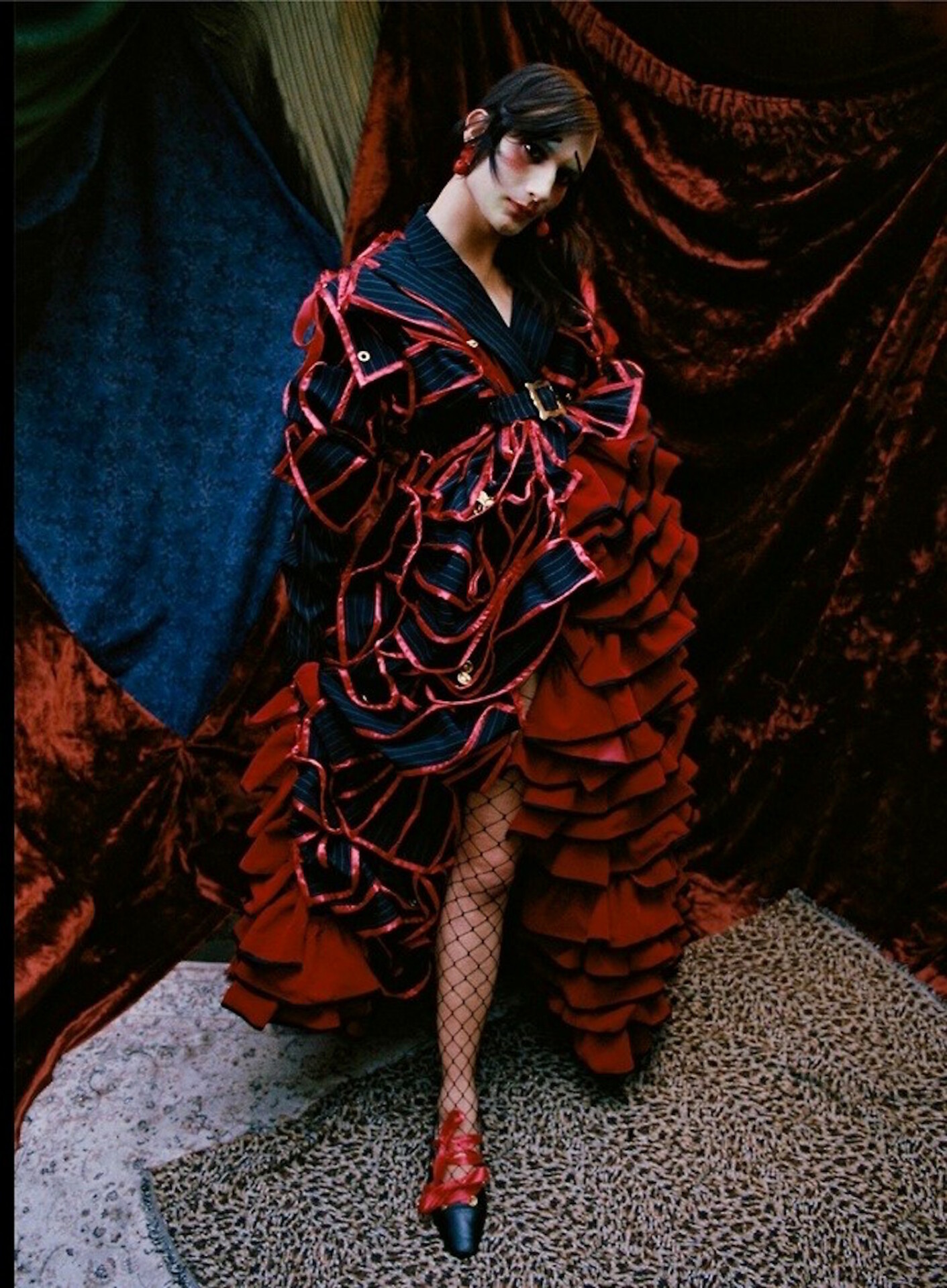
“The ways that Fanny and Stella presented themselves, and the interesting relationships they had were very inspiring to me,” Dill-Russell says. “I thought ‘if they’ve managed to do this and persevere in Victorian England why am I so obsessed with how difficult my life is?’” The collection combines ruffles and fluid shapes, bringing a contemporary sensibility to a historic theme—visualising the dialogue between past and present that informed its creation. “I read a book about Fanny and Stella, and then I visited where they used to go round London. I thought I could draw from their clothing as a way to explore myself through their lives,” says Dill-Russell.
It’s this interest in queer fashion and its history that led to Dill-Russell’s work being exhibited in the Metropolitan Museum’s Costume Institute as part of the much publicised exhibition, Camp: Notes on Fashion. Whilst the exhibition made headlines for sparking some of the best Met Gala looks we’ve seen in years, it shone an important light on queer aesthetics and the role fashion plays in navigating an LGBTQ+ identity. There’s definitely a stereotype that queer people are more fashionable than their cisgender, heterosexual counterparts—but why is this? In Dill-Russell’s opinion, it has something to do with emotional protection that certain clothes can provide. “When people go for more of an avant-garde look, some people might think it’s over-the-top but it’s something to distract away from yourself…I hate this phrase, but it’s like an ‘armour’.”
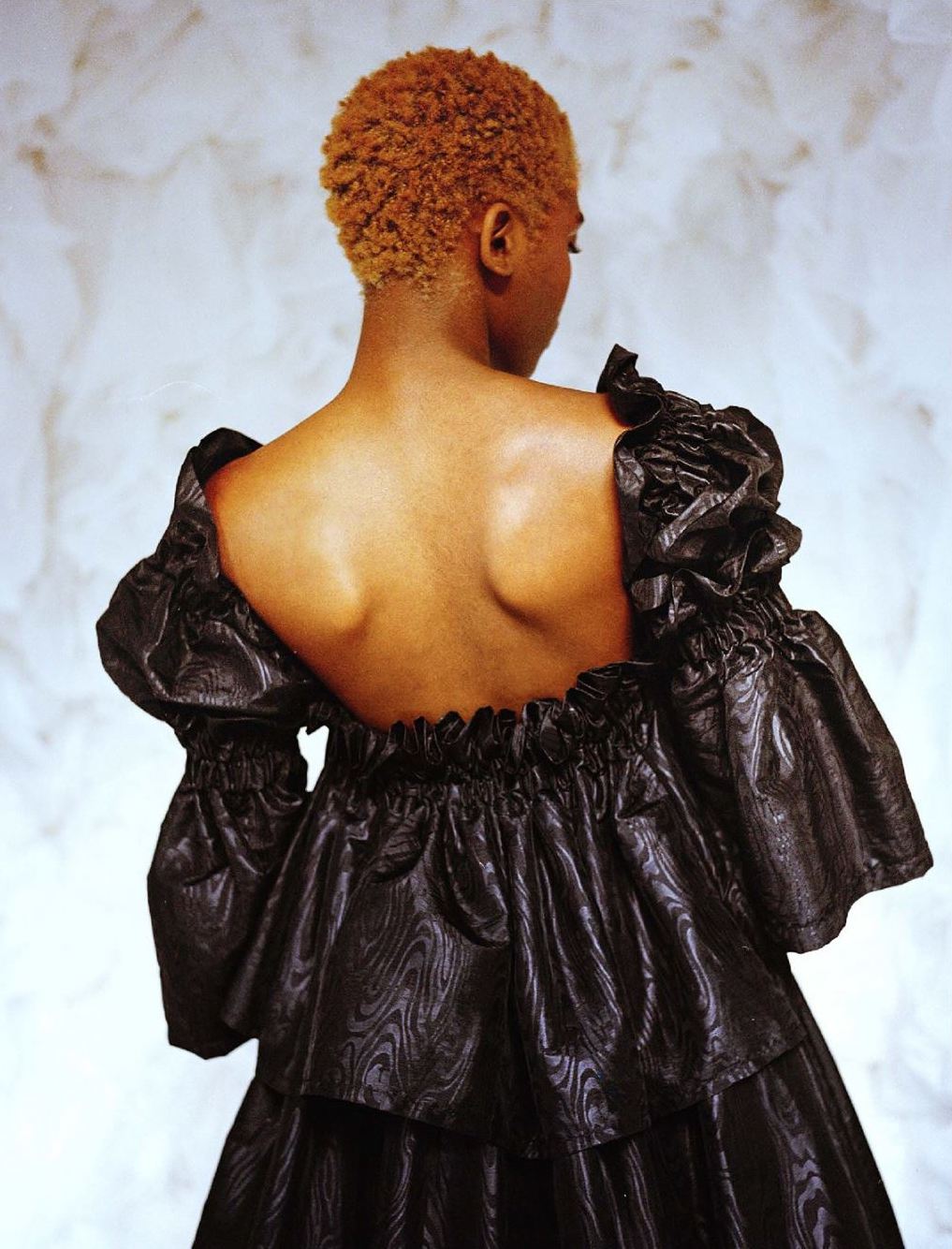
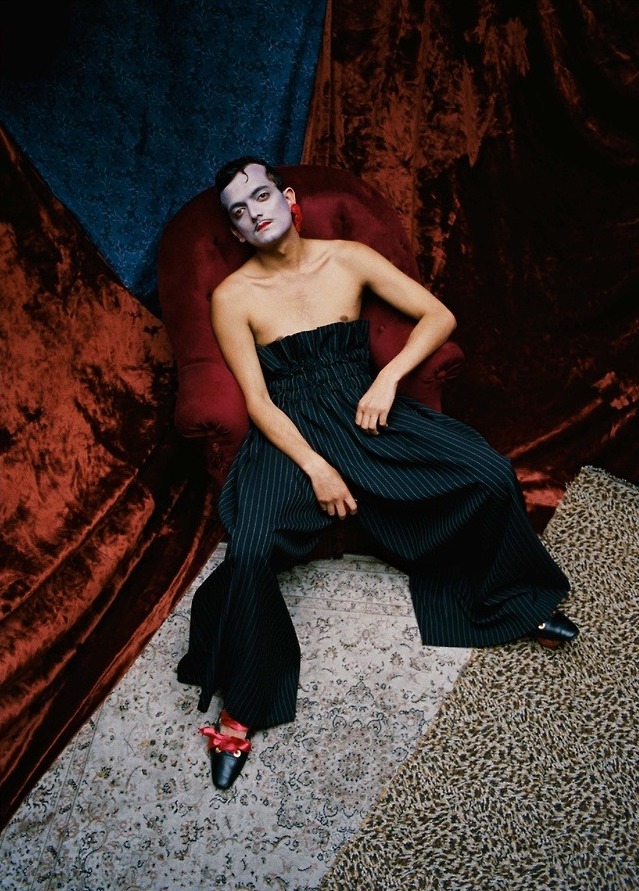
Whilst some of Dill-Russell’s designs might fit into this narrative, they also believe in the importance of wardrobe basics for queer people—so that they can navigate their day-to-day lives. “What I feel a lot of designers forget is that not everyone is that interested in wearing a massive gown,” the designer explains. “Queer people do need to have day-to-day comfortable clothing that still makes them feel amazing.” There are certain design elements that need to be kept in mind when creating for a queer, especially non-binary or trans, audience, which is why having more queer designers is of vital importance. “In the summer, I find it very hard to wear what I want to wear because I don’t shave my legs or my armpits or my Adam’s apple, similar to transmasculine people who can’t wear certain revealing things because they’re binding,” Dill-Russell explains. “It’s part of what makes designing for queer people so complex—there’s so much to take into consideration that people don’t realise.”
Dill-Russell approaches their craft with a steadfast seriousness, knowing that their work is doing a much-needed service for other queer people. This community-focused approach is reflected in their design process—Dill-Russell does their utmost to “listen to other people and what they want to wear and what they need from clothes.” Whilst the designer’s passion for creating clothing for the queer community is motivated by their personal experience, Dill-Russell always makes sure their designs stretch far beyond that in order to deliver what people really need. “My experience is only one out of thousands and I wouldn’t want to be like ‘I’m a queer designer making clothing for queer people’ without actually knowing what it’s like to be a trans man or how trans men navigate the world,” they say. “There’s so much more than my experience and I’m always wanting to learn from others.”
All photos: Alessandro Merlo.