
When platforms like AMC crash during a film’s ticket sale and people are already marking the release date in their calendars with three big crosses months in advance, we instantly know one thing: It’s a whole event coming up. And if I’m talking about one, I’m obviously talking about Christopher Nolan’s The Odyssey.
Which, honestly, isn’t surprising. I mean, how do you miss a film by one of the greatest directors working today? If you can call Interstellar (2014), Oppenheimer (2023) and Inception (2010) your Top 3 films, then you deserve that kind of hype.
Back when The Odyssey was first announced, the excitement was massive. Hardly anyone could wait to see the famous Greek myth following Odysseus’ journey home after the Trojan War finally brought to the big screen. Everyone was impatiently waiting for the first trailer to drop.
And now, just a few weeks after the official countdown trailer landed on YouTube, that excitement has suddenly burst like a bubble. Imagine, the trailer you’ve been waiting for since last year gets more dislikes than likes. We’re talking about an 80K to 760K ratio. Let that sink in.
What’s even more absurd, though, is the comment section. It feels like a piranha tank, where everyone’s just waiting to tear apart the next comment. You almost start wondering what the actual problem is. Huh? Nolan’s the one making this film, isn’t he? Oh right. Because people don’t like the cast.
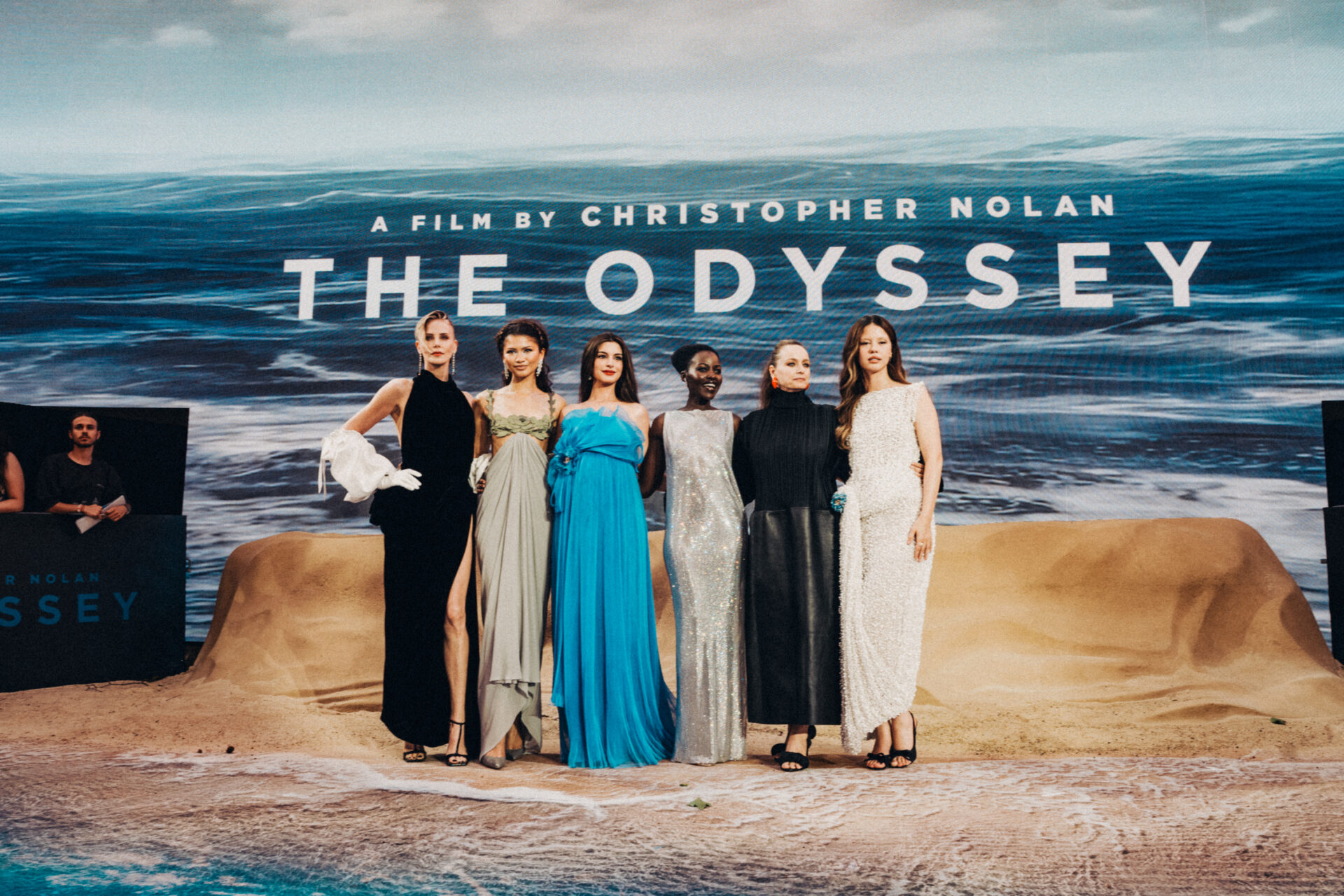
Right at the top you’ll find comments like “There is more Greek in the yogurt in my fridge than in this movie” or: “The loser keeps Helen”. Comments clearly meant to mock the casting of Helen of Troy by Lupita Nyong’o. Anne Hathaway gets criticised for her so called “iPhone Face”, while Elliot Page apparently can’t play a Greek hero because he’s a trans man.
One thing became obvious to me pretty quickly: no matter who you cast, someone will always find a reason why they’re supposedly the wrong choice. Since when did we start talking more about faces than cinematography, music or storytelling when it comes to films?
The debate around Helen of Troy in particular really stands out. Most of the comments revolve almost entirely around her skin colour. Helen, the most beautiful woman in the world, was supposedly white. Blonde. Blue eyed.
The funny thing is, that image probably comes more from Renaissance paintings and Hollywood than from Homer himself. Because he barely describes Helen at all. One of the best known descriptions refers to her “pale arms”. And yet we suddenly treat those few words like a police sketch. Maybe it’s time we started reading poetry as poetry again.
I don’t believe Homer was trying to describe one exact woman. I think Helen represents the very idea of beauty itself. And yes, pale skin in Ancient Greece often symbolised social status. If you weren’t working in the fields, your skin was naturally lighter. It was a sign of aristocracy, not ethnicity.
Stop. I can already feel myself slipping into unpaid educational labour again. And honestly, I’m tired. Not because this conversation doesn’t matter, but because it always ends the same way. At some point we start treating a myth like a history textbook and completely lose sight of what actually matters.
The far more interesting question isn’t what Homer meant. It’s why so many of us are convinced we already know what beauty is supposed to look like. Because when I read those comments, I don’t actually see people describing Homer. I rather see people describing the image of beauty they’ve been carrying around in their own heads all along.

That image didn’t just appear out of nowhere. For centuries, colonialism, Western beauty standards and the media have shaped who we perceive as beautiful. Researchers describe part of this through the concept of colourism, where lighter skin is often viewed more favourably, even within the same ethnic group. Today, we call part of it Pretty Privilege. Attractive people are often seen as more likeable, have better career opportunities and are simply treated differently.
And maybe that’s exactly why it’s worth pausing for a second. Because those beauty standards were never big enough to include many of us. Not many of my friends. Not parts of my family. And honestly, not always me either.
That’s why I understand people who, separate from colonial ideas of beauty, would like to see more Greek or Mediterranean representation in The Odyssey. I genuinely do. But I’d also like to remind people that the Greek world stretched across multiple continents and that the Greek diaspora has never consisted solely of blonde haired, blue eyed people.

Even our ideas of gender are handed to us from the very beginning. It literally starts at baby showers, where blue or pink smoke bombs are supposed to decide who that child is going to be.
These ideals simply sell better. One more smoke bomb. And somewhere down the line, one more cosmetic surgery.
And when someone finally reaches that so called ideal, Anne Hathaway gets criticised anyway. First, women are expected to look perfect. Then people complain that her face doesn’t move enough anymore. Suddenly it’s “iPhone Face”. No matter what you look like, someone will always find a reason why it’s wrong.
That’s honestly kind of spooky. Because we’ve trapped ourselves in a hamster wheel where every possible way out just creates the next debate.
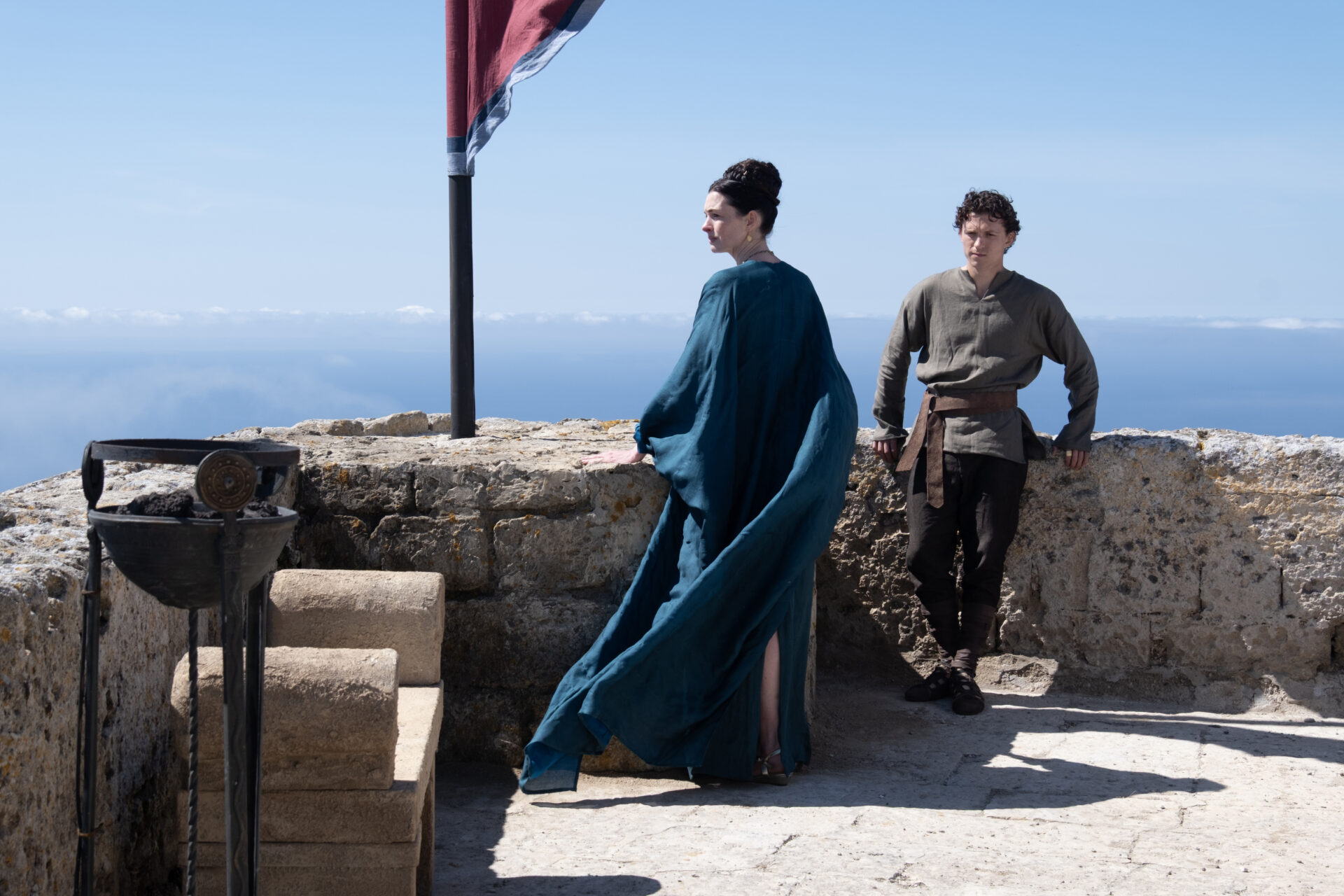
This should be our wake-up call. Just for a moment, we should put aside our own expectations of what these characters are supposed to look like and let artists tell their stories. Let’s talk about whether Lupita Nyong’o actually delivers a great performance instead. After all, she won an Oscar and is one of the strongest actresses of her generation. And don’t even get me started on Anne Hathaway.
So if you’re not excited about the film, at least don’t take that excitement away from the people who’ve been looking forward to it for months. Then let’s happily meet back here once we’ve actually seen the film. Let’s talk about the storytelling. The acting skills. The cinematography. The sets. Everything that actually makes a film what it is. See you soon. Or not.