
It’s Stockholm Fashion Week and Sleek is surrounded by a cluster of fellow journalists, bloggers, editors and fashion personalities at the junction of the city’s Master Samuelsgatan and Queen Street (Drottningen, one of the capital’s main shopping arteries). From this vantage point, it’s possible to turn 360 degrees and see the familiar scarlet glow of H&M signs in all four directions. There are 36 stores in the retail giant’s home city (not counting sister brands like COS) and a fellow journalist jokes that the Swedish capital should soon be renamed H&M-on-sea. It’s true that the chain has cultivated an unprecedented visibility in high street style globally, but today we’re here to meet H&M’s Head of Design, Ann-Sofie Johansson, to talk about what the future of fashion might look like.
Johansson is here to guide us through the finalists of this year’s H&M Design Award. An impressive selection of talent is draped over eight elegant mannequins. The first wears a circle-pocked leather tabard by Geneva University graduate Magdalena Brozda while the second is dressed in a jumble of print, parcel tape and a clean white tee that might be described as “action menswear” from Andreas Eklöf (Swedish School of Textiles). The third offers beautiful woven metallics inspired by the façade of a London hospital from Central St Martins graduate Graham Fan, and stands beside a bold, boxy outfit emblazoned with an embroidered slogan from Parsons graduate Andrea Jiapei Li, whose unusual process involves a rubix cube to decide between design elements. Two more London graduates, James Kelley (RCA) and Fiona O’Neill (Central St Martins) took inspiration from the romance and nostalgia in collections that employed billowing textures and stiff, acrylic-painted bonded crepes while Leonard Kocics’ mannequin wears layered, sombre tailoring based on memories of his mother.
The winner receives €50,000 to kickstart their career in fashion, a show on the official schedule at Stockholm fashion week, mentorship from H&M and the chance to develop a collection to be sold in H&M stores and online. Johansson called it an “impossible” year to choose only one winner; “We have seen such a high level of talent this time” she explained, “There are so many clever, talented designers out there, the future of fashion is very safe”.
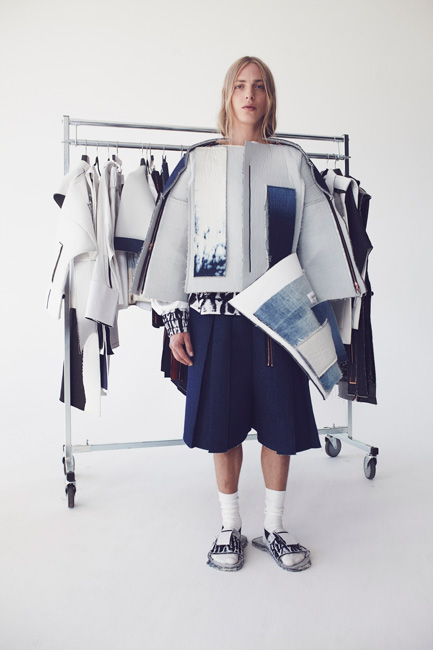
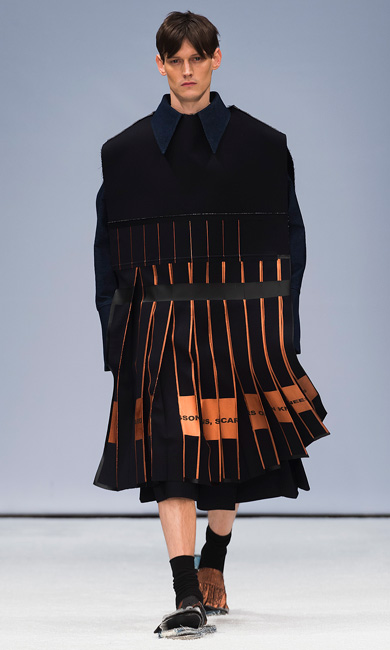
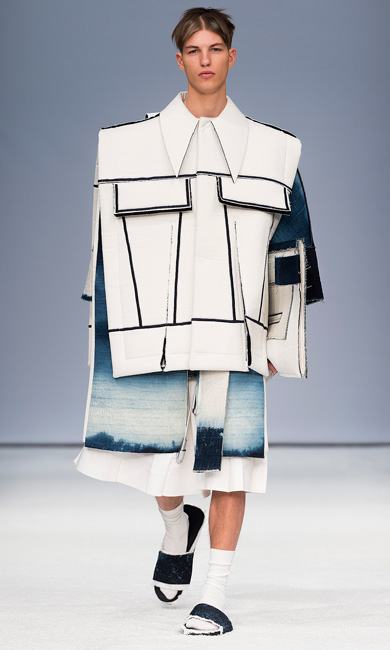
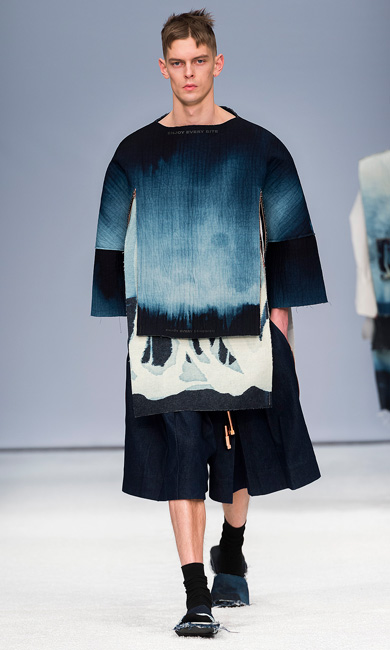
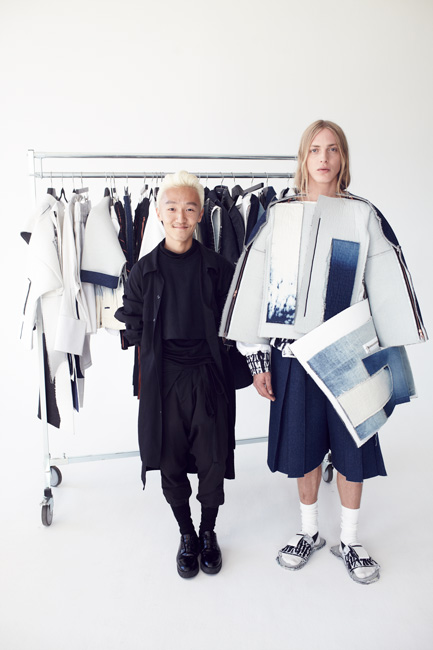
But there can only be one winner, chosen by Johansson along with a panel of 8 other fashion experts including Marc Jacobs design director Luella Bartley, singer-songwriter Lily Allen and British Vogue’s fashion director Lucinda Chambers. “The most important thing with the prize is to celebrate creativity” Johannson told Sleek; “We don’t think about commercialization, we don’t take that into account when we pick a winner. For us it’s a matter of choosing the most creative, inspiring and innovative designer”. And this year that was Parsons graduate Ximon Lee, whose geometric silhouettes in washed, embroidered and copper-embellished denim struck a cord with the judges for it’s bold, post-gender creativity. “We picked him as a winner because it was quite an innovative collection” Ann-Sofie told us. “It felt really new and there are so many layers and secretive messages, there’s so much to explore in each garment so it’s very intriguing. He’s going to do very well.”
The following day Sleek was lucky enough to catch five minutes with Lee after his catwalk debut to talk about gender, creativity and what winning the H&M Design Award means to him.
British luxury retail store Selfridges just announced they’re going to introduce a gender-neutral department to their stores in London, Manchester and Birmingham. Let’s talk about the gender fluidity that is happening in fashion right now…
I think menswear in particular is really changing, five years ago there just wasn’t so much going on. It’s growing because a lot of women started to buy menswear so the market is expanding past gender categories.
I’m also not willing to lock myself down into one category, I want to create both for both. I don’t really like the word unisex but if you create strong menswear and put it on the men’s rack, ladies will go there anyway. If you design it in a way that is wearable for both, then both customer groups will come to it
Can you describe the process for this winning collection?
I found out about a month and a half ago. I only had 5 looks from my diploma collection so everything else [within the 23 look collection] is all new. It came a long way, from bonding the denim to bleaching it to wash it, creating texture to embellishing with copper. Also all the embroidery was hand sewn with a sewing machine at home. I added and deducted things as I went along so it took a lot of work, this collection was tough.
What about the fragments of text within the garments?
The collection was inspired by the documentary “The Children of Leningrad”, but the quotes are my own monologue; things I hear in my head, like whispering. It’s very personal.
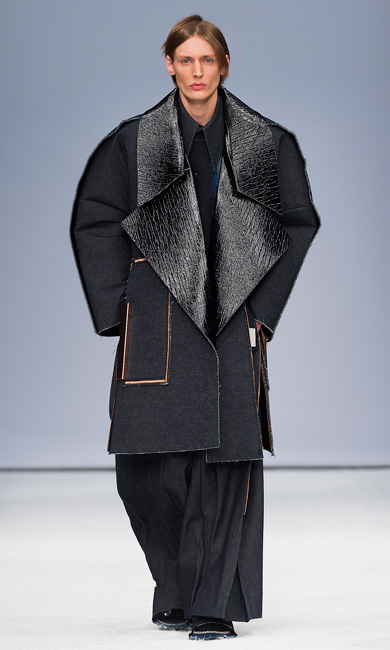
What areas interest you in terms of fashion innovation?
Technology is a huge thing. New silhouettes move fashion forward but nothing is original, everything is an interpretation. New fabrics and innovative technology that changes the way the fabric works, that’s really what moves fashion forward. We credit designers but we should credit chemists too.
What’s next for you?
For my next collection I want to work with chemists to try new washing techniques. Also knitwear, knit is the only area I haven’t touched yet. I don’t have so much knowledge about it but the boundaries of knitwear are limitless so I’m excited. H&M collaborations are such a great education program for the public, to have access to great design like Margiela oder Lanvin. And for me it’s a great way to express and reach out to market, to learn. It doesn’t really limit my creativity.

Text von Ella Plevin
Read more A/W15 fashion week coverage from around the world