SLEEK: As we are meeting for the first time, what feels like the right way for you to introduce yourself to me?
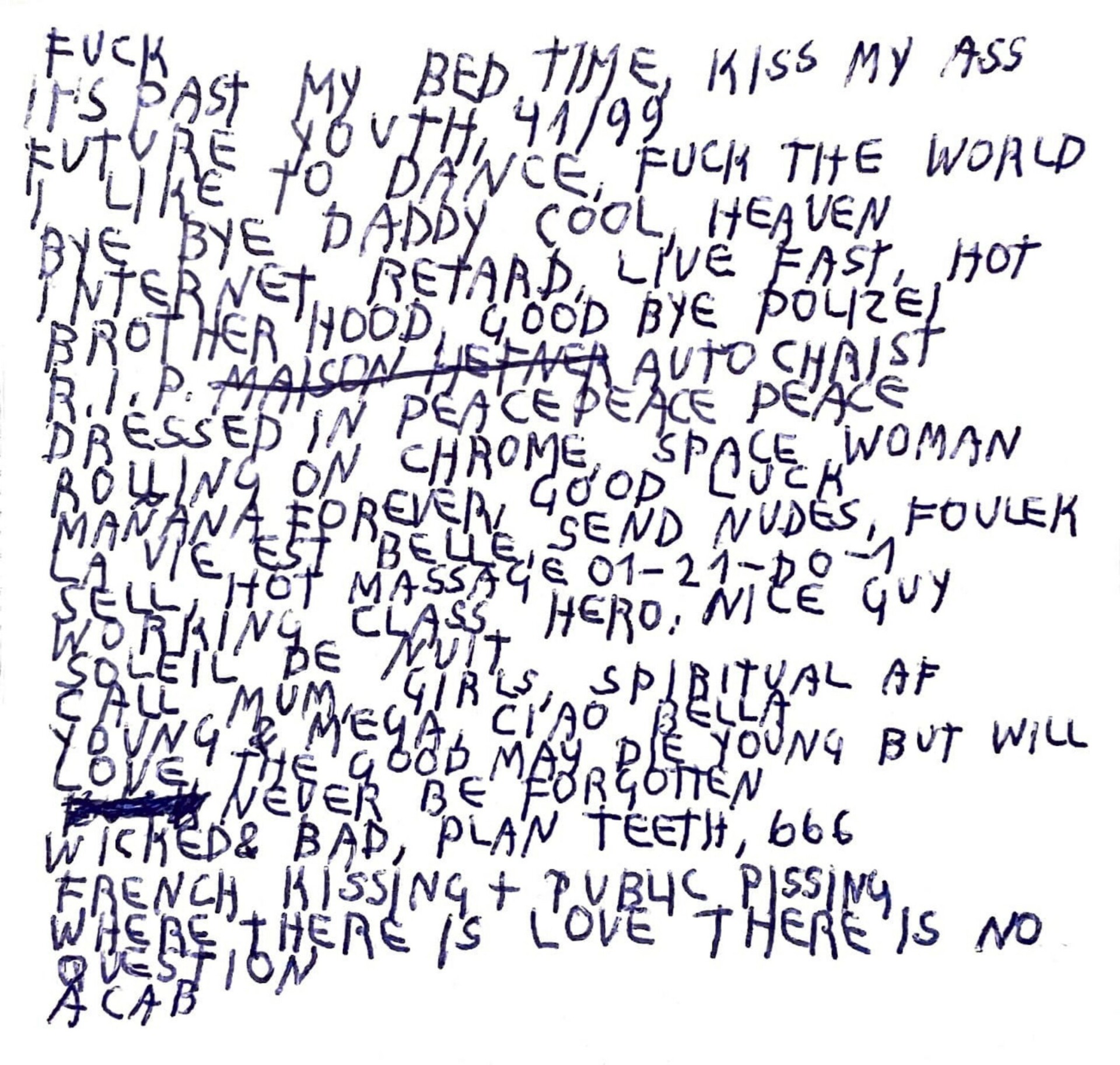
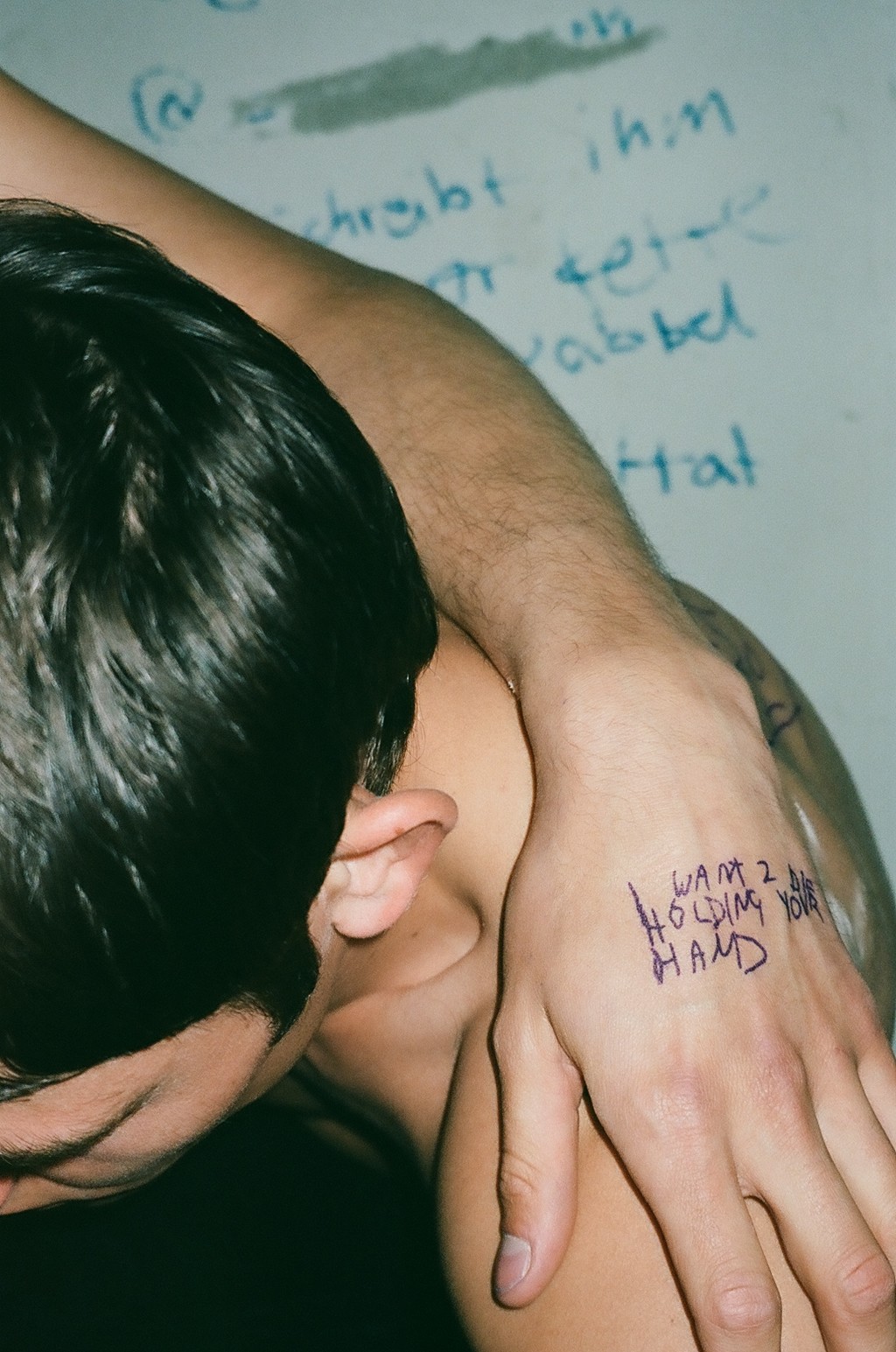
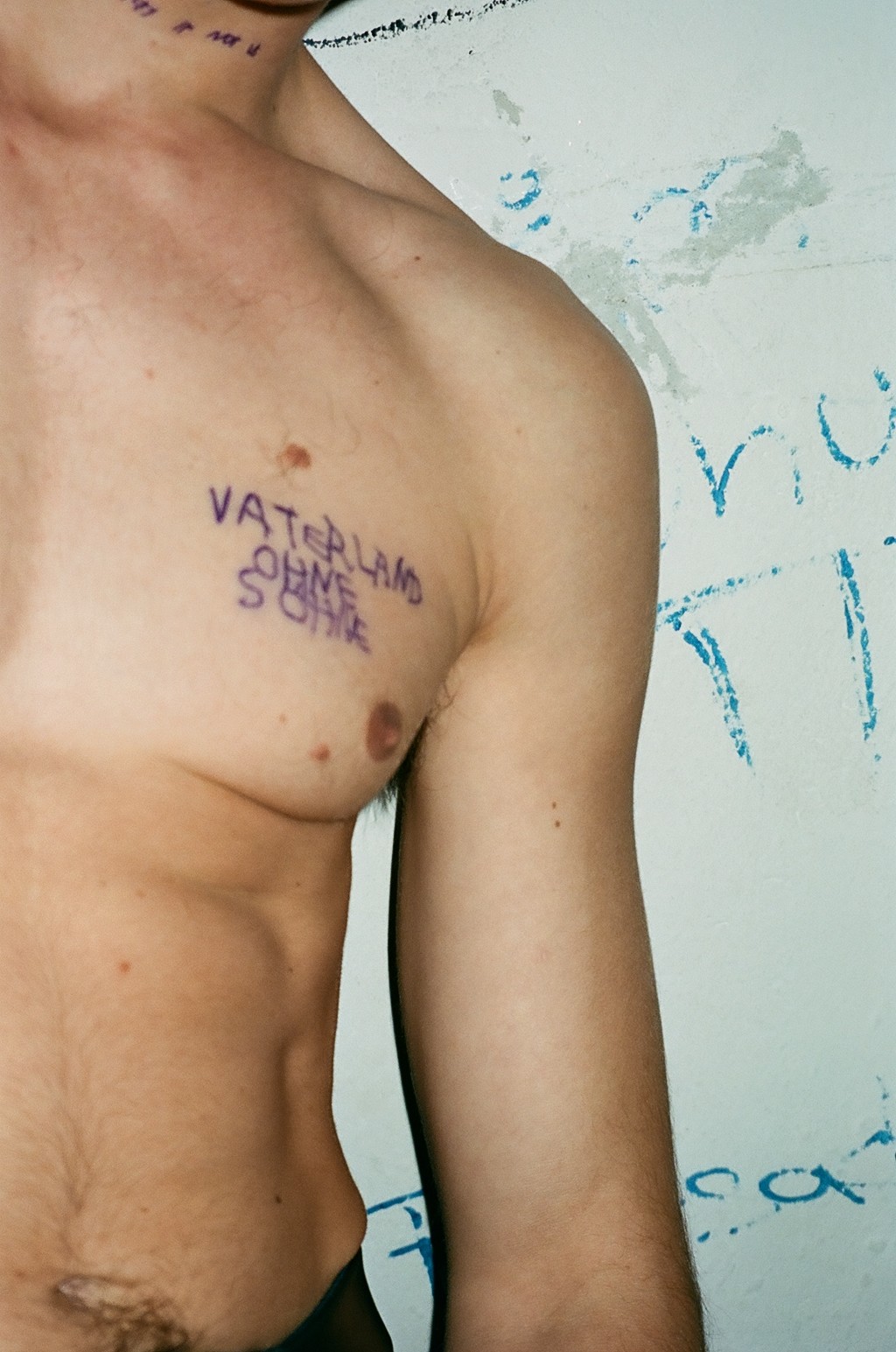
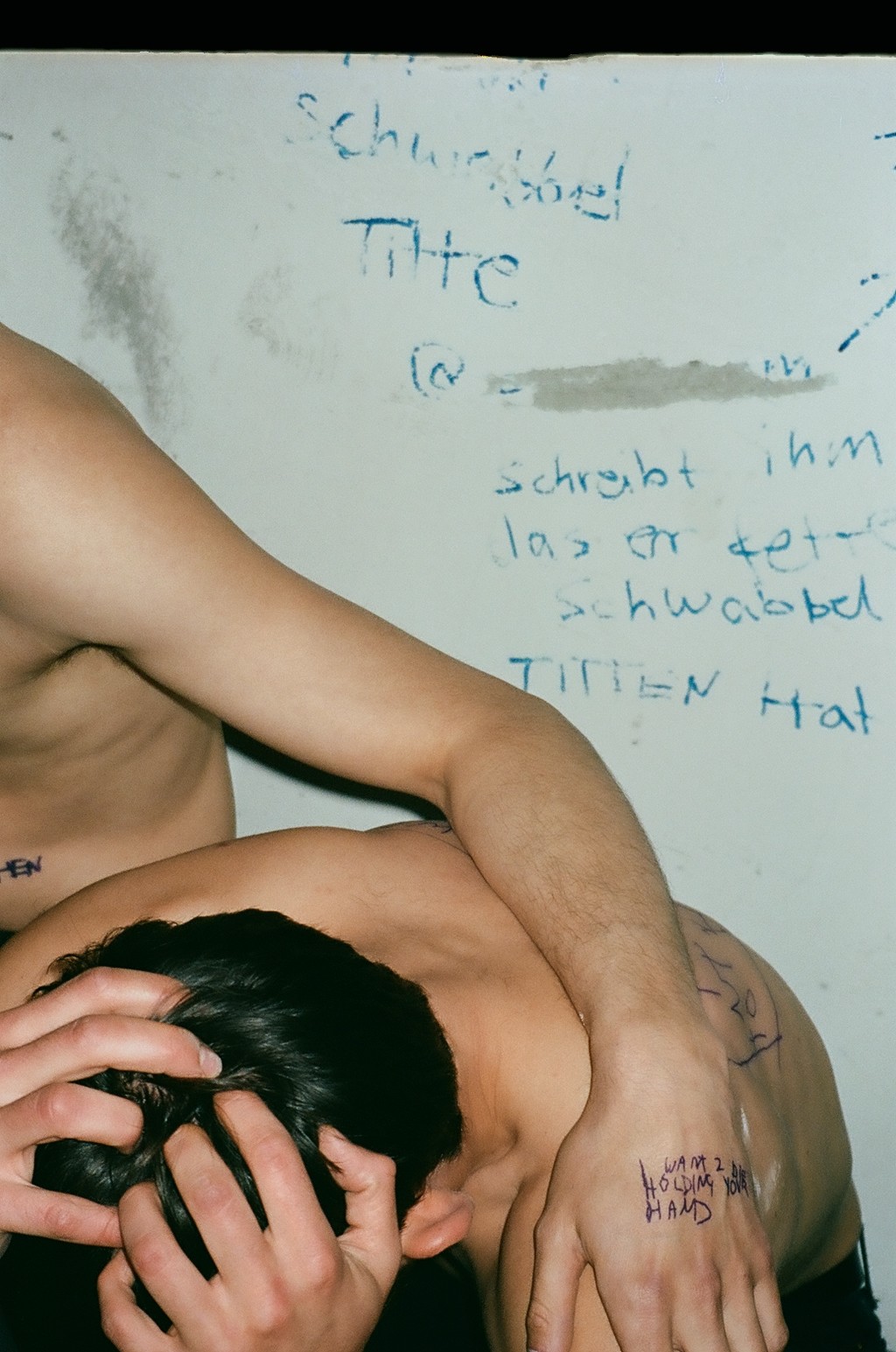
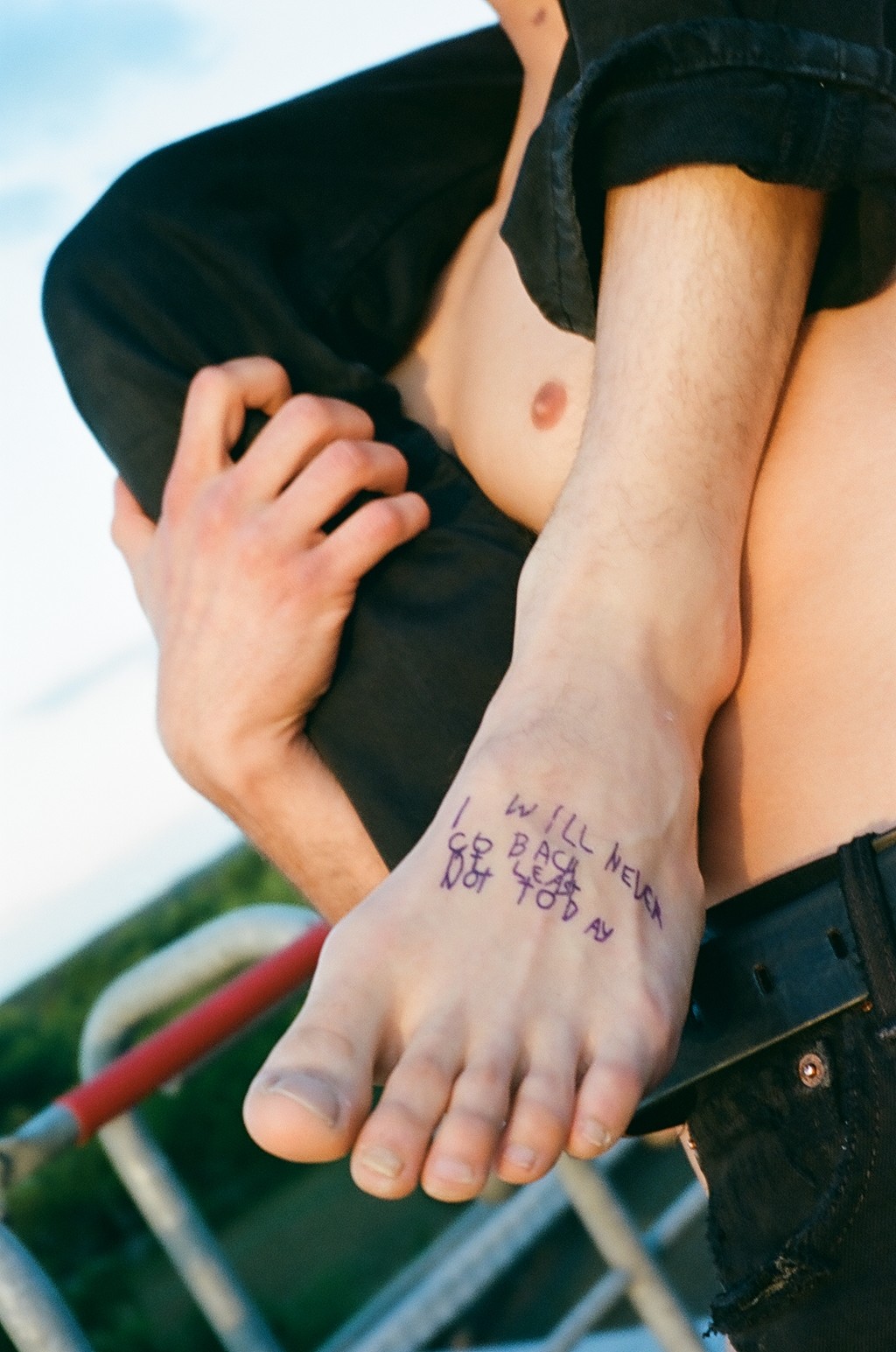
Monty Richthofen: [Referring to the first image] I found a quiet moment to look at my body in the bathroom mirror, so I could write down all the tattoos in text that are on my skin. For me, I think this is a very honest and true way to introduce who I am to you.
S: Your answer caught me quite unexpectedly and it really moved me. I know some people who have fragments of their lives tattooed on their skin. Especially those who have to deal with farewells, losses and love. It has something to do with wanting to hold on, very tightly, to our past and memories. A few days ago, I saw a photograph of a young man who had been killed, and he had a large tattoo on his shoulder blade. In the night, I dreamt about it.
MR: “The good may die young but will never be forgotten” was my very first tattoo. I got it tattooed shortly after my father passed away. He left too soon, and something made me want to immortalise him on my body. I had to deal with the pain. It started a new chapter for me, from being a teenager to being independent. It was then that I started to decide freely about my appearance, the appearance of “my parent’s creation”. Labelling and commenting on myself with tattoos was my way of doing this.
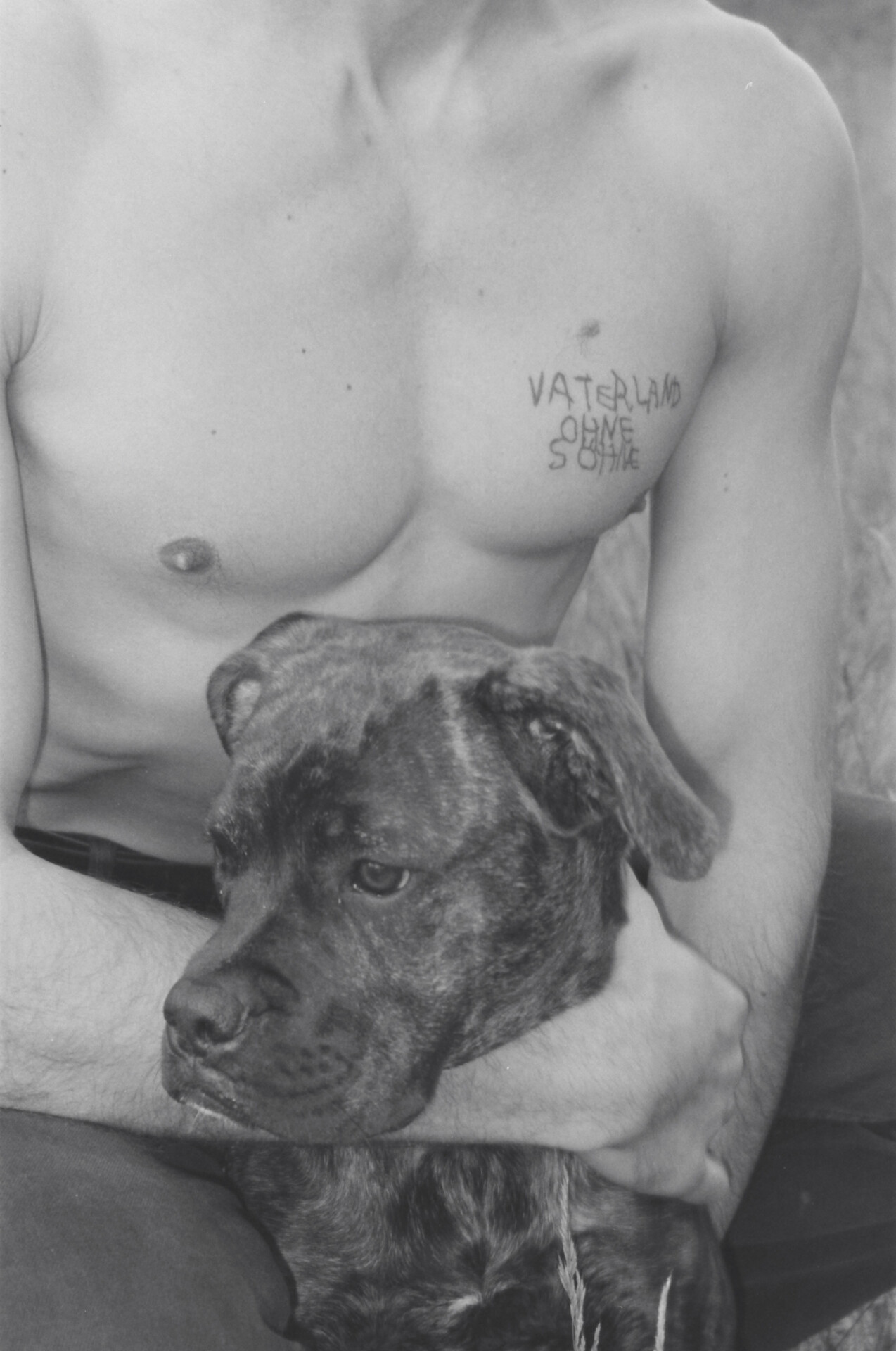
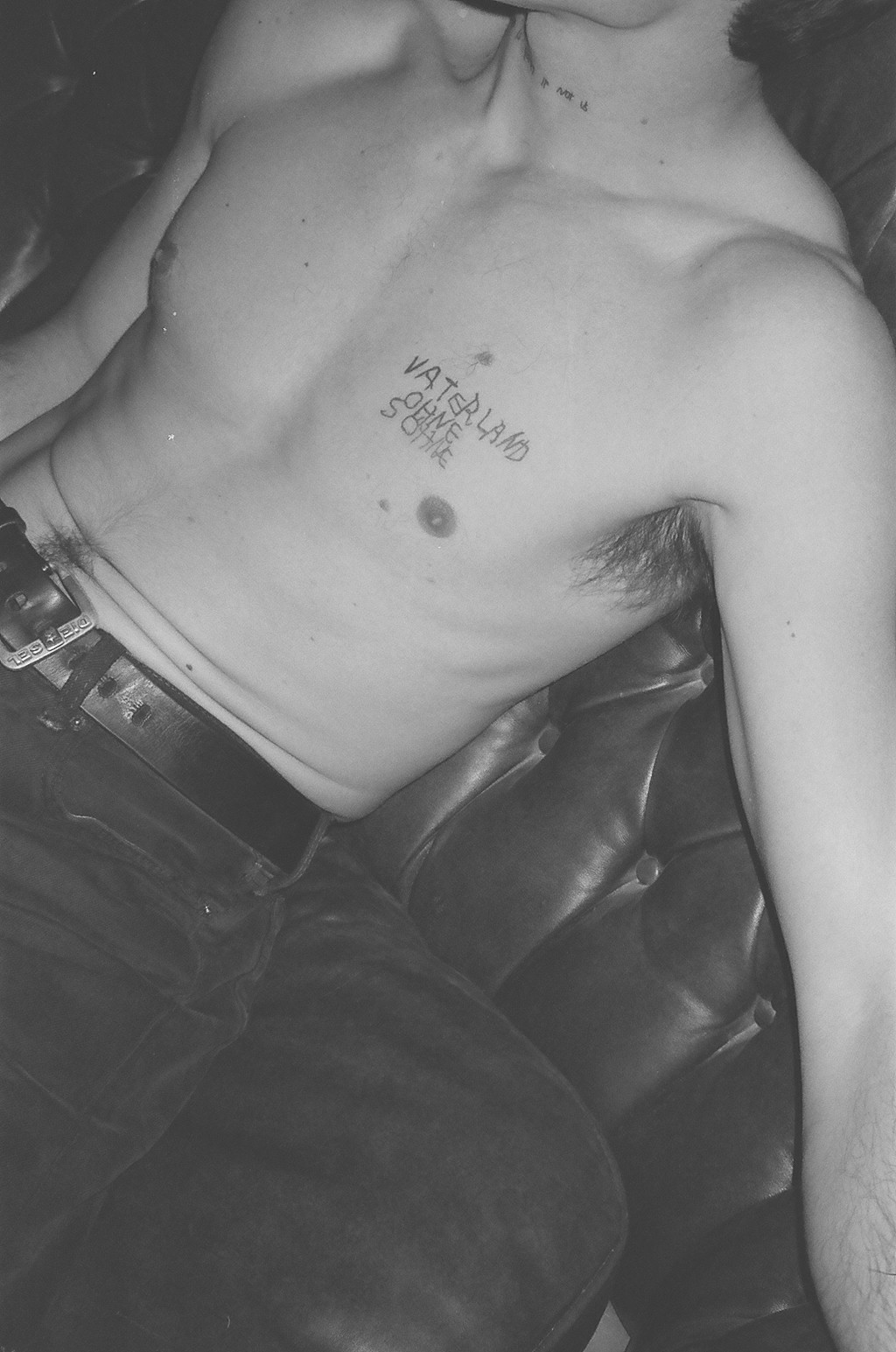
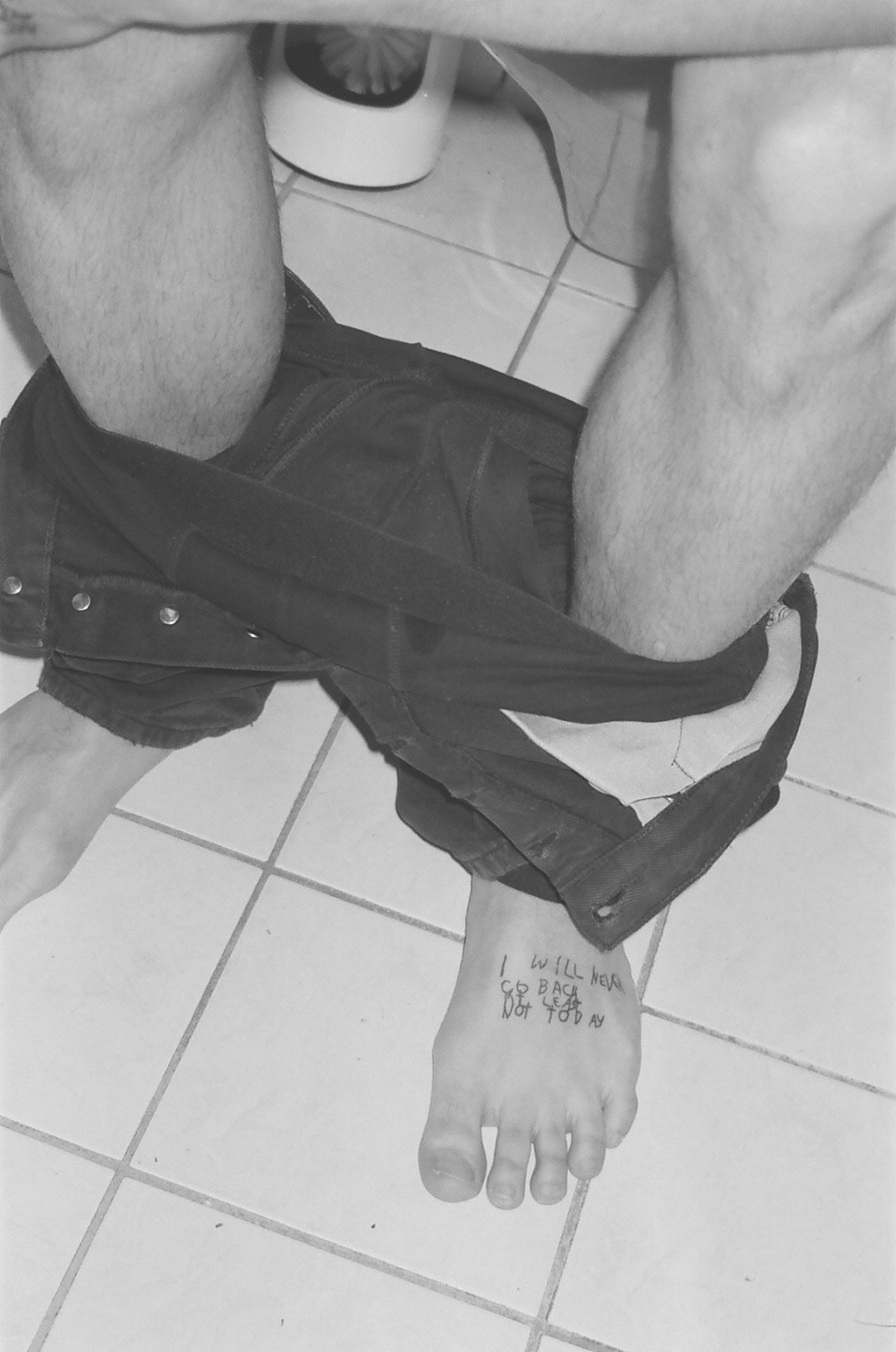
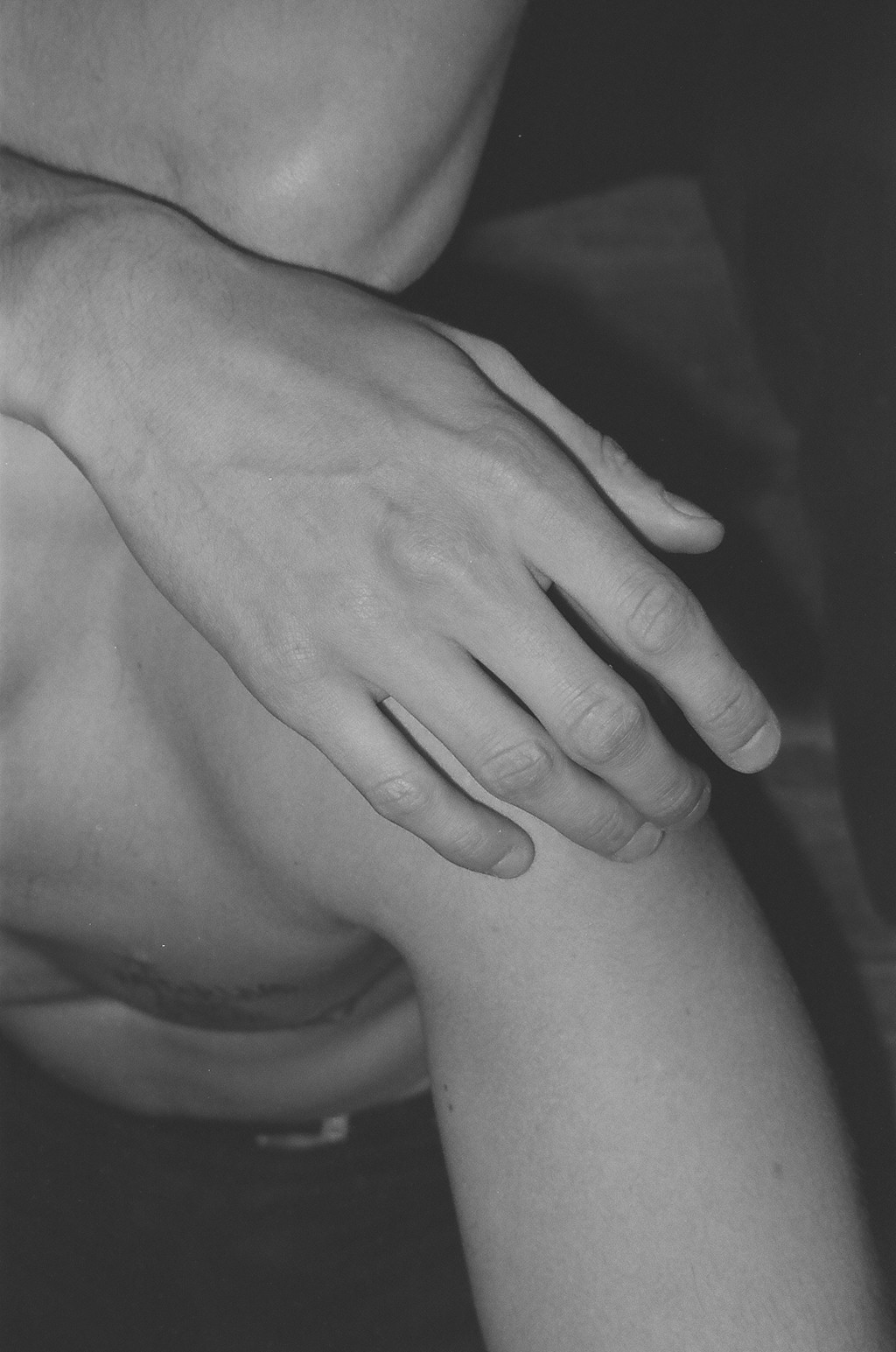
Photography by Monty Richthofen.
S: This morning, during my first coffee stop, I came face to face with a young woman whose entire right arm was tattooed with characters. It occurred to me that, apart from the personal story, it is also very much about courage; a courage to face the pain, a farewell or a loss.
MR: Loss (especially through death) marks and defines us. It seems inevitable to me. Some deal with it better than others, because they can accept the way things
are. The death of a loved one or the separation from a partner are events that also bring confrontation in the form of a permanent tattoo. It takes courage to deal with events that can be highly-emotionally charged. I have found a certain form of freedom through such confrontations on my body. It is a freedom from self-pity and pain. It allows me to grieve and remember.
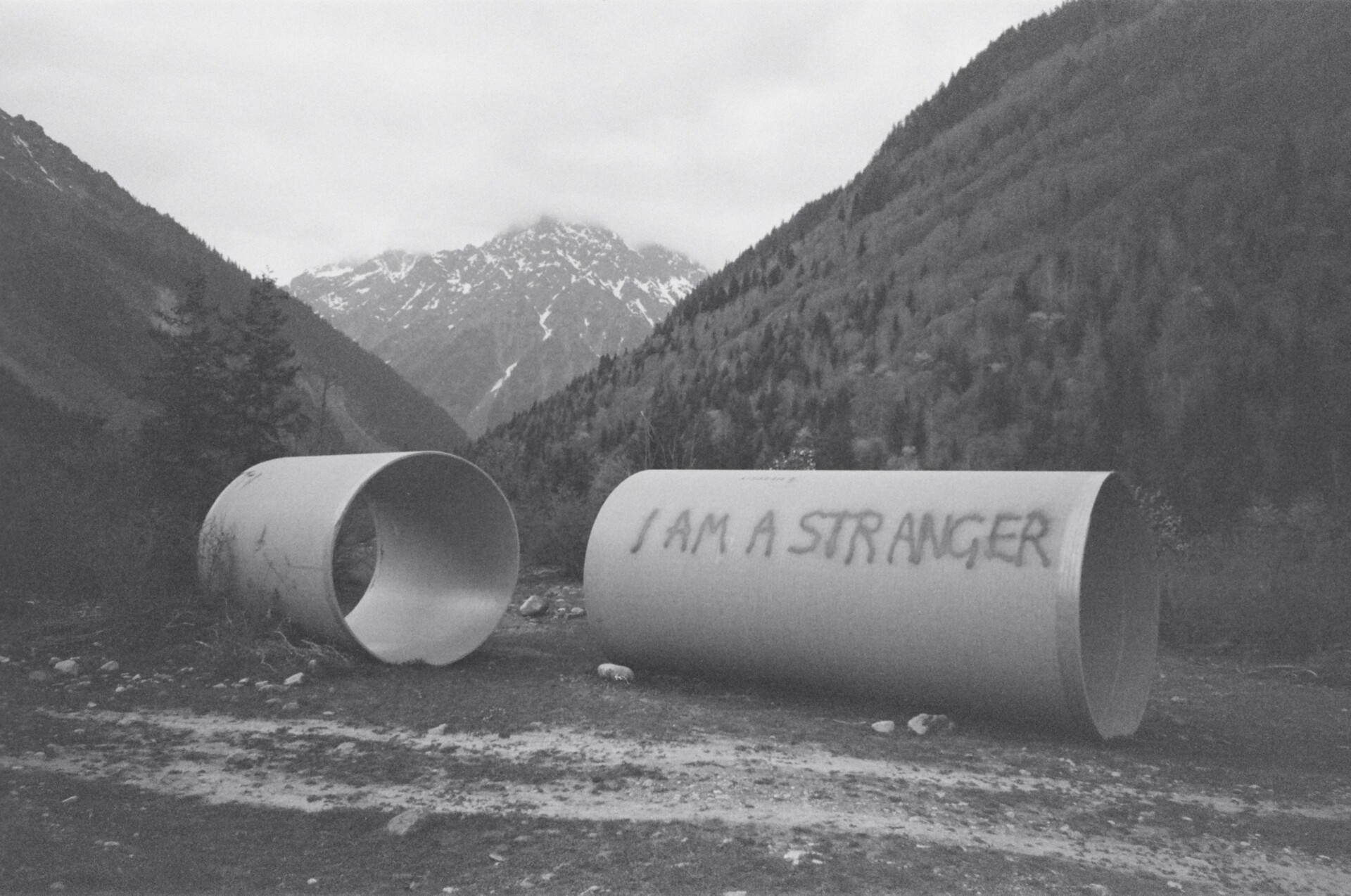
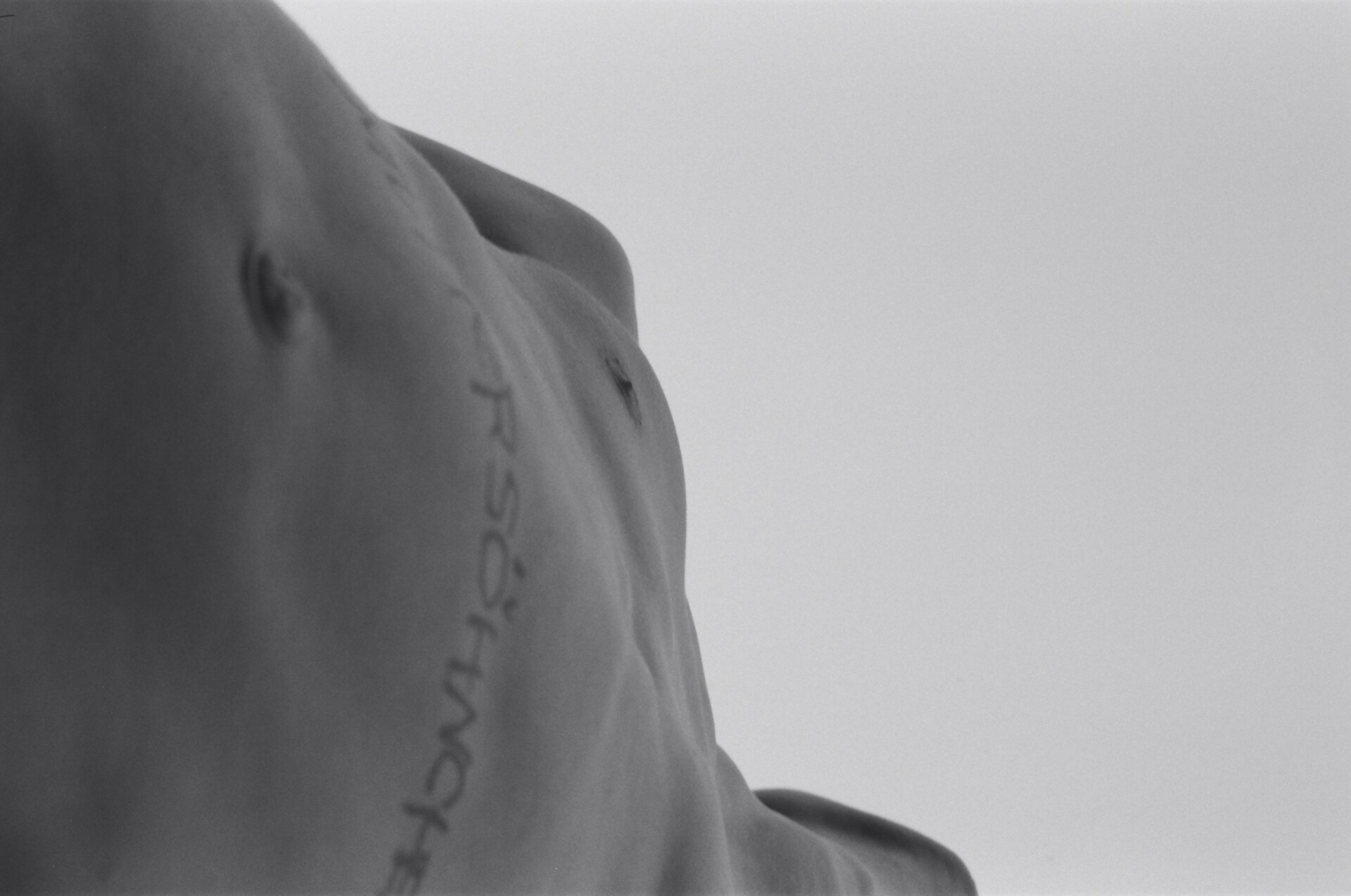
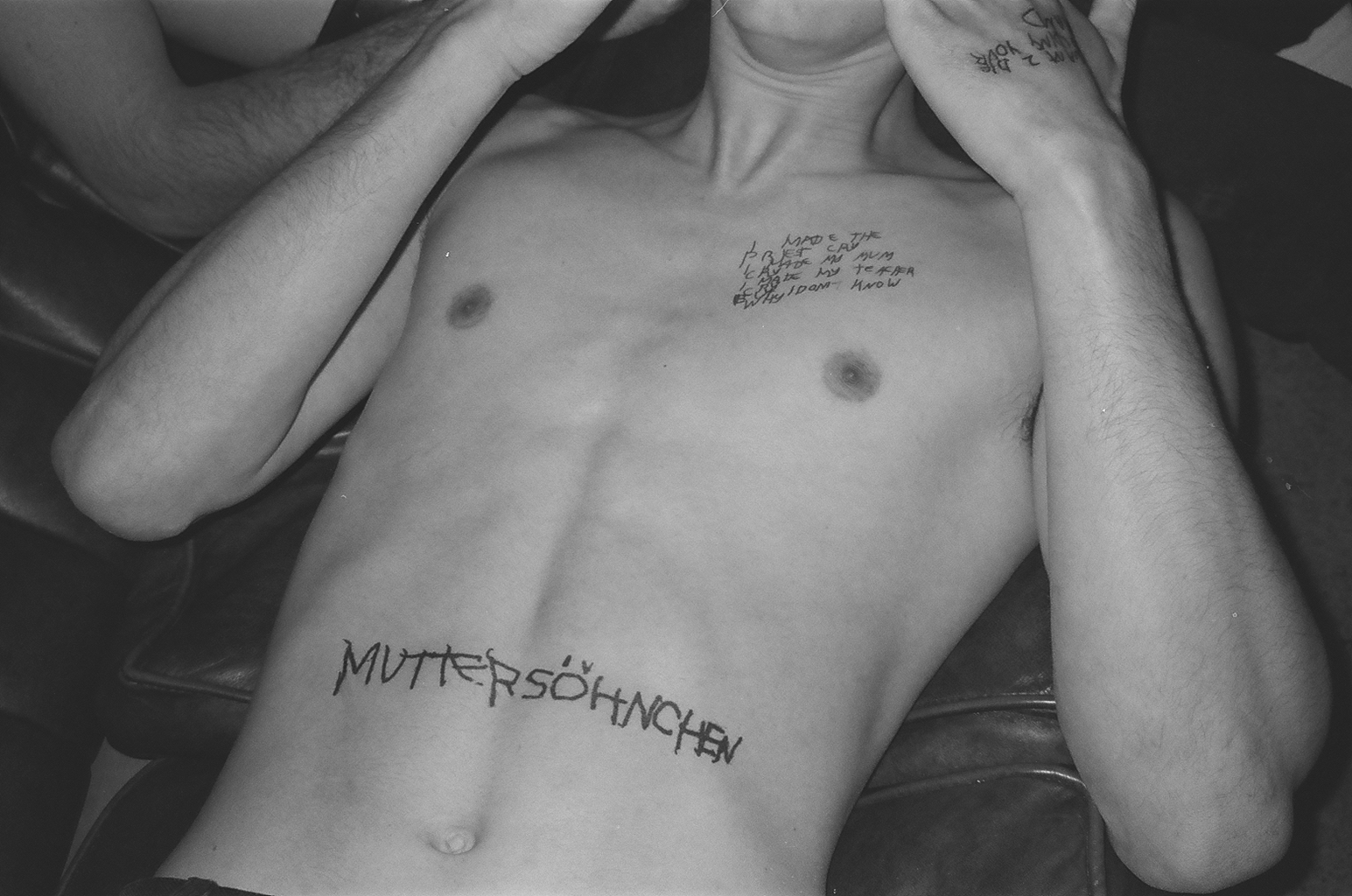
Photography by Monty Richthofen.
S: What do you think when you look at our humanitarian dilemma?
MR: The problem with our humanitarian dilemma, and our lack of a real solution, is too often communication. I am referring to ‘auto communication’, the intrapersonal communication that serves to feed the ego of an individual rather than the collective conscience. If we would start to reflect on our behaviour and have the courage to communicate grievances, we would show more consideration. Not only towards ourselves, but towards others. There are mistakes we have to make because we are human. It’s exactly what we look for in our counterparts too, isn’t it?
S: What can we gain by approaching each other in an unusual, short and intense way, as we have done here?
MR: There is a total honesty, curiosity and openness in the exchange with a stranger, which has the potential to open an incredible number of doors and build
bridges. I believe that the faster and more radical you play with open cards, – approaching each other “naked”, revealing vulnerability – the easier it is to
understand each other and your counterparts. You become more confident in dealing with each other.
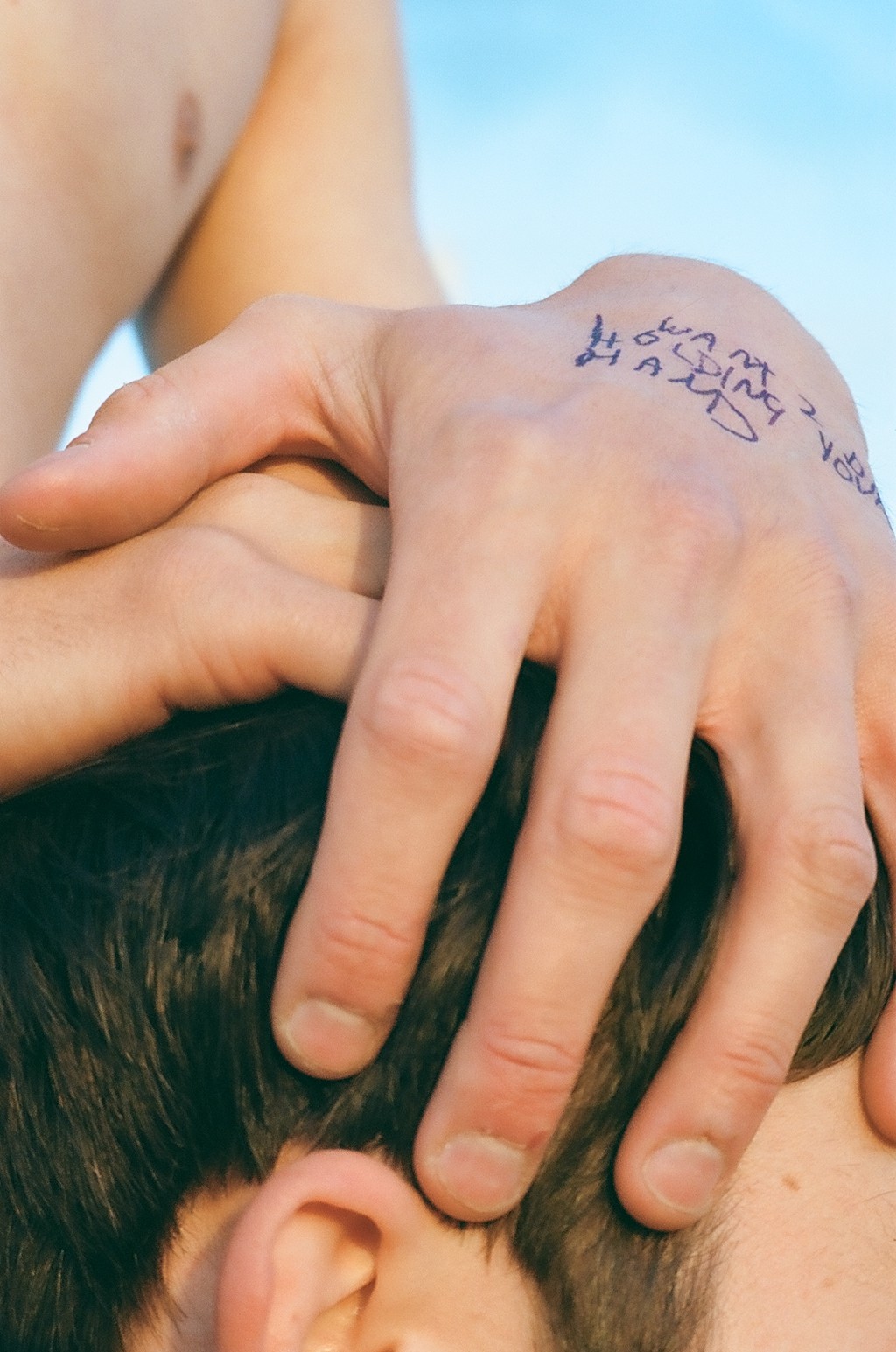
Photography by Monty Richthofen.
As featured in SLEEK 73 – PASSION. Available in print and digital hier.