Jetzt möchte er das Instrument allen zugänglich machen.
Es gibt eine Version von So will ich es haben von dem fast niemand etwas gehört hat. Es hat dieselbe Melodie, dieselbe Produktion, dieselbe Band, aber mit einem Text, der vollkommen Sinn ergab. Ein Label-Manager gab es in Auftrag, nachdem er beim Original kalte Füße bekommen hatte – zu vage, zu seltsam, keine klare Bedeutung. Ein zweites Video wurde am selben Flughafen gedreht. Millionen von Dollar wurden ausgegeben. “Einer der Backstreet Boys sagte: Entweder die Unsinnsversion oder gar keine Band.” Sie haben sich durchgesetzt. Andreas Carlsson, der schwedische Songwriter, der das Original Ende der 1990er Jahre gemeinsam mit Max Martin geschrieben hat, erzählt diese Geschichte, als würde er von einer Nahtoderfahrung berichten, über die er sich noch immer ein wenig amüsiert.
Er hat diese Geschichte schon öfter in verschiedenen Varianten erzählt, aber die Moral bleibt immer dieselbe: Was funktioniert, ist selten das, was Sinn ergibt. Es ist das, was sich wahr anfühlt – vor allem, wenn niemand erklären kann, warum. Carlsson hat dreißig Jahre lang beruflich damit Recht behalten. Über drei Milliarden Streams, Songs für Britney Spears, *NSYNC, Katy Perry, Celine Dion und Paul Stanley. Jetzt, mit 52 Jahren, ist er CEO von Hyph, eine Plattform zur Musikproduktion, die er als “virtuelle Lego-Bausteinkiste” beschreibt – eine App, die jedem Zugang zu professionell aufgenommenen Stems und den Werkzeugen bietet, um in Echtzeit originelle, urheberrechtlich geschützte Songs zu erstellen, ganz ohne Studio, Produzenten oder dreißig Jahre Erfahrung.
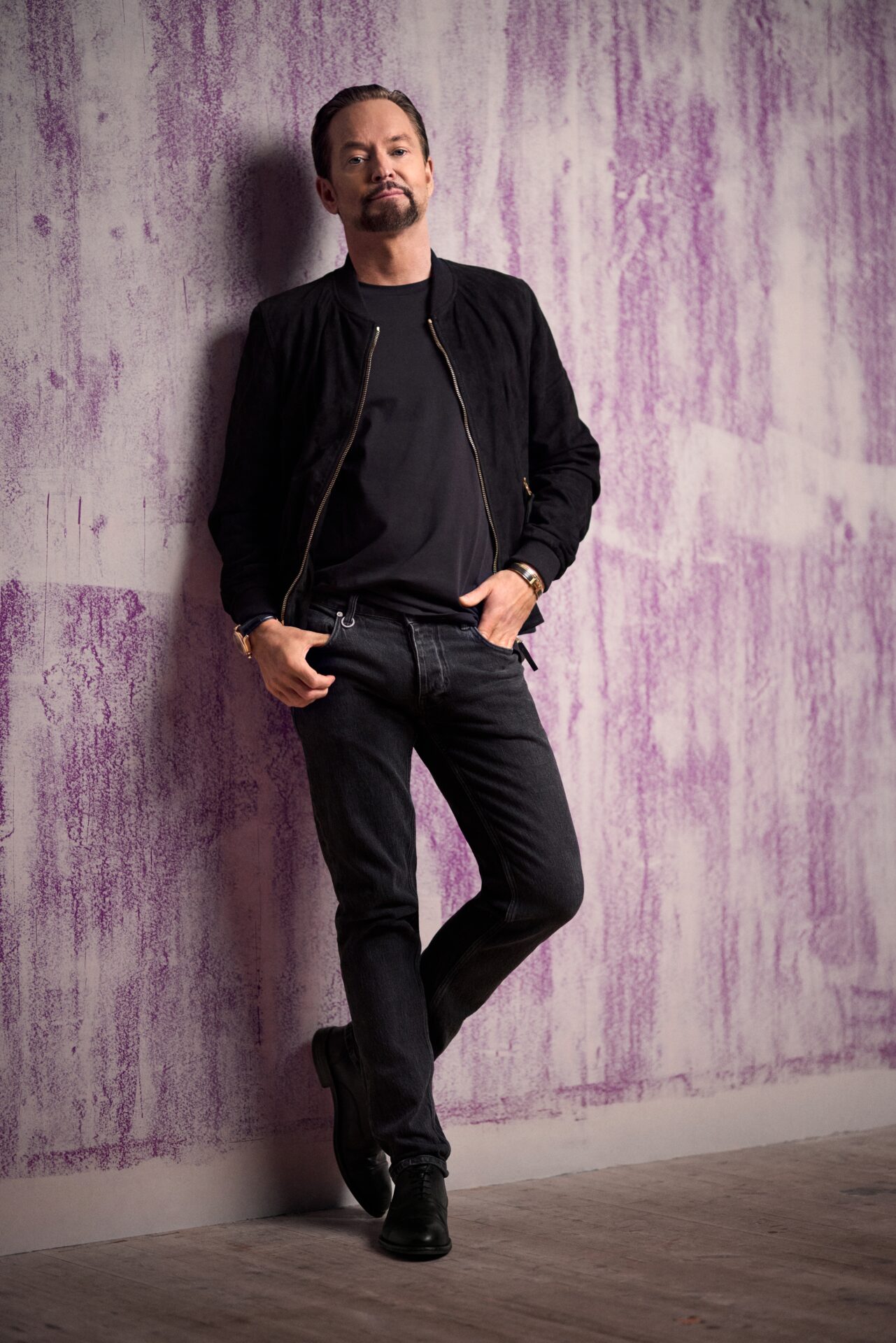
Fotos: Karl-Fredrik von Hausswolff.
CHRISTIAN BRACHT Du bist buchstäblich in einem Tourbus aufgewachsen – dein Vater war Musiker und hatte in dem Sommer, in dem du geboren wurdest, siebzig Auftritte. Wann hat die Musik aufgehört, ein Spiel zu sein, und wann wurde sie zur Arbeit?
ANDREAS CARLSSON Es gab eine bestimmte Phase in meiner Karriere, in der von mir erwartet wurde, Kampagnen im Wert von mehreren Millionen Pfund zu leiten. Bands in den USA mussten Tickets und Fanartikel verkaufen – alles basierend auf den Songs, die wir damals schrieben. Das war ganz schön anstrengend. Aber ansonsten hat mir die Musik immer Spaß gemacht. Sie war immer ein Spiel und eine tolle Möglichkeit, den Kopf frei zu bekommen. Jetzt arbeite ich an einem Musical, und ich glaube, ich habe so viel Spaß wie noch nie in meinem ganzen Leben. Es macht mir wirklich Spaß, weil ich es liebe, Musik aus vollem Herzen zu schreiben. Und genau das ist das Besondere am Musizieren: Man schreibt keine Musik, um etwas zu beweisen, sondern weil es das Einzige ist, was sich vollkommen ehrlich anfühlt.
CB Du hast einige der meistgespielten Songs der Geschichte geschrieben. Und doch wird dir jeder sagen, dass die Musikindustrie kaputt ist. Was ist eigentlich kaputt – die Musik oder das System, das sie umgibt?
AC Ich erinnere mich, dass ich vor etwa zwanzig Jahren in meinem Büro saß, sehr dick und glücklich – Goldplatten und Auszeichnungen kamen reihenweise herein. Man glaubt, man sei unbesiegbar. Und dann tauchte dieser junge Mann vom Label auf und legte ein kleines Stück Plastik auf meinen Schreibtisch. Ich fragte: “Was ist das?” Er sagte, das nenne sich MP3-Stick. Ich fragte: “Wie sieht das Bezahlmodell aus?” Er antwortete, es sei kostenlos und heiße Streaming. Das war ein Wendepunkt, denn die Musikbranche trieb damit zwei Dinge voran, die noch relevanter wurden als die Musik selbst: Mobiltelefone und das Internet. Jetzt, im Jahr 2026, ist eine weitere Generation in einer „Ich“-zentrierten Welt aufgewachsen. Unsere Aufmerksamkeitsspanne beträgt etwa acht Sekunden. Deshalb haben Songs auf Spotify keine Intros mehr – wenn der Refrain nicht sofort einsetzt, ist man raus aus dem Spiel. Die nächste Phase ist der Übergang vom passiven Konsum zur Teilnahme – zum Mitmachen.
CB So will ich es haben ist einer der meistgespielten Songs aller Zeiten, und niemand kann erklären, worum es darin eigentlich geht. Nicht einmal du. Was sagt das darüber aus, wie Musik eigentlich funktioniert?
AC Max Martin und ich wohnten im selben Haus in Stockholm. Eines Morgens klopfte er mit einem Diktiergerät an meine Tür und spielte mir vor: “You are my fire, the one desire” und einen Refrain. Ich sagte: “Zeig mir mehr.” Er antwortete: “Das ist alles, was ich habe – bitte arbeite daran.” Das tat ich, und es wurde ziemlich gut, aber dann kamen wir zur zweiten Strophe, und er sagte: “Warum machen wir daraus nicht einfach eine Frage? ”Am I your fire?“” Und plötzlich, in Kombination mit dem Refrain, ergab das völligen Unsinn. Aber es fühlte sich außergewöhnlich an. Die Plattenfirma geriet in eine Krise – Clive Calder bekam kalte Füße, flog Mutt Lange nach Schweden ein, sie schrieben das Ganze neu und drehten am selben Flughafen ein zweites Video für eine weitere Million Dollar. Und dann sagte bei dem Treffen einer der Backstreet Boys: „Entweder die Unsinnsversion oder es gibt keine Band.“ Sie haben sich durchgesetzt.
CB Wir sind zu einer Konsumgesellschaft geworden – in fast allen Bereichen. Sie glauben, dass diese Ära zu Ende geht. Warum gerade jetzt?
AC Die Machtpyramide hat sich durch die sozialen Medien verschoben. Es sind Inhalte vom Volk, für das Volk. Einstein hat etwas Interessantes gesagt: Wenn der technische Aspekt die menschliche Interaktion übertrifft, wird der Idiot gewinnen. Ich bezeichne niemanden als Idioten, aber sein Punkt war, dass die Massen zu Genies werden. Jemand kann ein Handy hochhalten und mehr Aufmerksamkeit erregen als Steven Spielberg. Genialität ist vielleicht nicht mehr der entscheidende Faktor. Und damit geht auch eine Kehrseite einher – vielleicht wird es keinen weiteren John Lennon, keinen weiteren Prince mehr geben, weil die finanzielle Infrastruktur dies nicht mehr unterstützt. Aber vielleicht braucht die neue Gemeinschaft das gar nicht. Vielleicht bevorzugt sie eine Teilhabewirtschaft, anstatt passive Konsumenten zu sein. Alles wird multidimensional, und ich glaube, dass die Musik dadurch um das Zehnfache wächst.
CB Du möchtest Musik so zugänglich machen wie ein Selfie. Aber ein Selfie bedeutet in gewisser Weise auch das Ende der Fotografie als ernstzunehmende Kunstform. Besteht dieses Risiko nicht auch für die Musik?
Die Musik, mit der wir aufgewachsen sind, stammt eigentlich aus einem sehr kleinen Teil der Welt: hauptsächlich aus Großbritannien und den USA, vielleicht noch etwas schwedischer Pop. Aber die globale Musikszene ist so viel größer. Wir haben bereits gesehen, wie K-Pop zu einer dominierenden Kraft geworden ist. Afrobeats ist auf dem Weg an die Spitze. Die Zukunft der Musik wird aus kleinen Inseln von Mashups bestehen – interessante, unerwartete Kreationen, die von Menschen, die zuvor niemals Zugang zu den entsprechenden Werkzeugen gehabt hätten, direkt in deiner Handfläche zusammengestellt werden. — Andreas Carlsson
AC Ich mache mir jeden Tag Sorgen. Aber wenn ich einen Tsunami kommen sehe, werde ich der Erste sein, der sich ein Surfbrett schnappt, dafür sorgt, dass genug Wachs drauf ist, und es so reite, wie es noch nie zuvor gemacht wurde. Die Technologie gewinnt immer. Und es liegt im Wesen des Menschen, nach mehr zu streben. Die Welt bewegt sich in einem Tempo, das wir nicht mehr aufhalten können. Aber vor zwanzig Jahren hatte die Fotografie noch einen Markt von vielleicht hundert Millionen Menschen – diejenigen, die in Dunkelkammern gingen und Filme entwickelten. Heute sind es vier Milliarden Menschen, die ein Handy in der Tasche haben und es mehrmals am Tag benutzen. Das hat den Journalismus verändert, das Marketing verändert und ist zu einer riesigen Industrie geworden. Der Preis für einen Abzug von Richard Avedon ist durch die Decke gegangen. Etwas zu demokratisieren, zerstört nicht seine höchste Form. Es hebt sie auf eine neue Ebene.
CB KI kann Songs schreiben, die sich kaum von denen unterscheiden, die von Menschen komponiert wurden. Bei Hyph habt ihr euch bewusst dafür entschieden, ausschließlich mit von Menschen erstellten Stems zu arbeiten. Warum ist das eine Frage der Einstellung und nicht der Technologie?
AC Weil KI ein mathematisches Modell mit einem erwarteten Ergebnis ist. Man bekommt dieselbe eintönige Landschaft wie alle anderen auch, denn der Algorithmus hat kein Herz, keine Seele und keine Ausbildung, die ihn von anderen unterscheidet. Warum sollte man also überhaupt auf ihn hören? Was man demokratisieren sollte, ist die Freude am Spiel mit der Musik. Die Freude, sich darauf einzulassen, etwas zu erschaffen und sich selbst darin einzubringen. Die KI-Version als schnelle Lösung ist wie „Des Kaisers neue Kleider“. Musik braucht Stars, zu denen man aufschauen kann. Sie braucht Billie Eilish, die zu Kindern spricht, die sich wie Außenseiter fühlen. Sie braucht echte Geschichten.
CB Sie haben dreißig Jahre lang für andere geschrieben. Wessen Stimme hat Sie besonders geprägt?
AC Die Erste war Celine Dion. Ich war vierundzwanzig und sie hatte gerade My Heart Will Go On. Wir bekamen einen Anruf – sie wollte einen schnellen Song. Max Martin, Kristian Lundin und ich schrieben So ist es nun mal. Als wir die Demo nach Florida brachten und sie ins Studio kam und die erste Zeile sang, standen mir die Haare im Nacken zu Berge. Es klang wie ein Engel. Das zweite Mal war es Paul Stanley von KISS. Diese Stimme, die aus den Lautsprechern drang. Ich sagte: “Kannst du das noch einmal machen?” In meiner gesamten Karriere gab es diese beiden Momente, in denen ich spürte, dass aus einem großartigen Song etwas völlig anderes wurde.
CB Wenn das funktioniert – wenn Milliarden von Menschen Musik machen –, wie klingt dann die Welt?
AC Die Musik, mit der wir aufgewachsen sind, stammt eigentlich aus einem sehr kleinen Teil der Welt: hauptsächlich aus Großbritannien und den USA, vielleicht noch etwas schwedischer Pop. Aber die globale Musikszene ist so viel größer. Wir haben bereits gesehen, wie K-Pop zu einer dominierenden Kraft geworden ist. Afrobeats ist auf dem Weg an die Spitze. Die Zukunft der Musik wird aus kleinen Inseln von Mashups bestehen – interessante, unerwartete Dinge, die von Menschen, die zuvor niemals Zugang zu den entsprechenden Werkzeugen gehabt hätten, in deiner Handfläche zusammengestellt werden. Ein Trendsetter mit einem einflussreichen Blog, der Dance-Platten am Fließband produziert. Ein Junge in Lagos, der etwas kreiert, das noch niemand gehört hat. Wird das alles großartig sein? Nein. Aber man wechselt einfach den Kanal. Die 1950er bis 2000er Jahre waren die Renaissance, die Zeit der großen Maler, die große Ära. Was als Nächstes kommt, ist vielleicht etwas, für das wir noch kein Wort haben. Und genau deshalb lohnt es sich, damit zu experimentieren.
Wie vorgestellt in SLEEK #89 – PLAY.