What makes a person an artist? Is it their innate skill, their work-ethic, or the way they were brought up? Or is it some elusive combination of all three? Was there a particular moment that made them realise they had it in them? Or was it simply something they had always known? What makes someone great and somebody else mediocre? These are the types of questions that artist biopics wrestle with, taking the “known” details of an artist’s life and combining them with a little bit of imagination in order to paint a picture of how they became a household name.
Some are extravagant and detail various love affairs, others are quieter and more focused on the process of art-making itself. Yet the best ones have the power to inspire any budding artist looking for a hero to model themselves upon. From 15th century Orthodox Russia to 90s Midwest America, here we provide five artist biopics that make essential viewing.
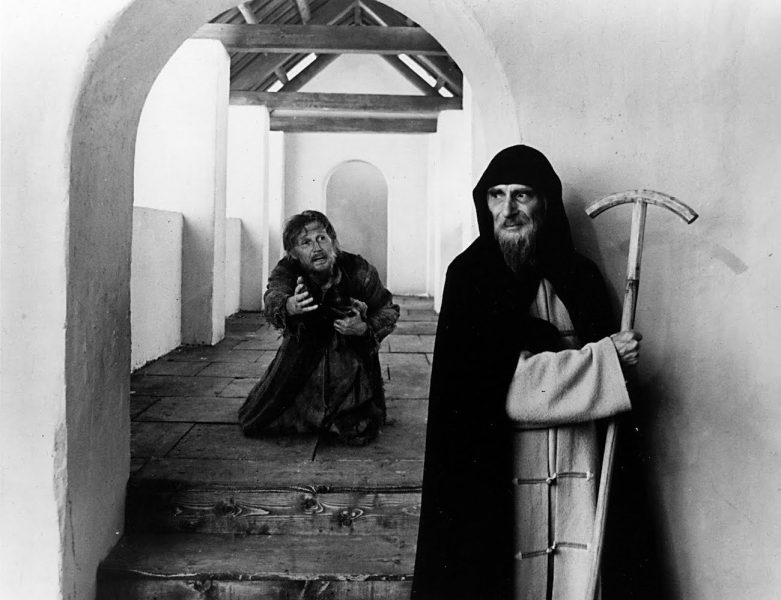 From “Andrei Rublev,” directed by Andrei Tarkovsky. 1966.
Andrei Rublev (1966)
It details the life of icon painter Andrei Rublev throughout a turbulent time in Russia’s medieval history. Yet this black-and-white, 205 minute-long masterpiece from Tarkovsky is famous for never actually showing Rublev at work. Instead, we see him as he moves through a country in transition, witnessing the tumult of war and religious persecution. Nevertheless, it is Rublev’s calm response that shows the importance of humanity and empathy to his work. This is reflected in his icons, his subjects permeated with a sense of grace and calm. The epilogue which showcases his work is in colour, thus making the relation of life to art all that more striking.
As the film highlighted the importance of religious belief to Rublev’s works, which can be observed in the Kremlin’s churches, the militantly atheist Soviet Union banned the initial release of the film. Nonetheless, it is widely considered to be not only one of the greatest artist biopics, but one of the greatest films of all time.
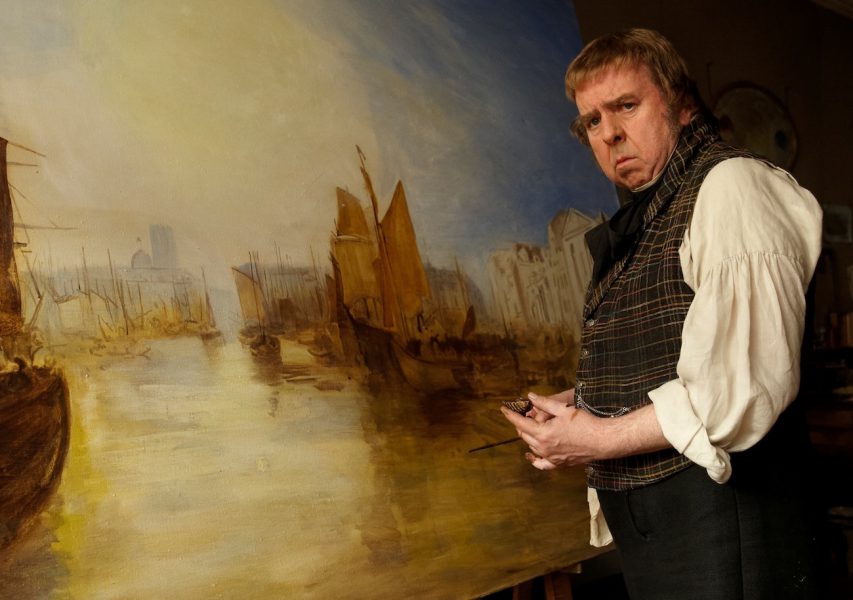 From “Mr Turner,” directed by Mike Leigh. 2014.
Mr Turner (2014)
Reuniting British auteur Mike Leigh with Timothy Spall for the sixth time, Mr Turner allowed the actor to show off what a dynamic performer he is. His depiction of the great painter J.M.W Turner is of a man who treats his work with the utmost reverence; at the cost of almost everything else. His Turner is rude to his wife, not impartial to ale and completely and utterly fixated with how to depict nature. The result is a spellbinding depiction of the artist that refuses to engage in cliché. Rather, it depicts Turner in all his stubborn complexity.
Remarkably, in order to prepare for the role, Spall spent a vast amount of time enrolled in painting classes. Therefore he actually replicated paintings such as “Snow Storm – Steam-Boat off a Harbour’s Mouth” (1842) in the film. At other moments in the movie, Leigh worked wonders with cinematographer Dick Pope to recreate some of Turner’s most famous scenes, including “Rain, Steam and Speed” (1844) and “The Artist and his Admirers” (1827).
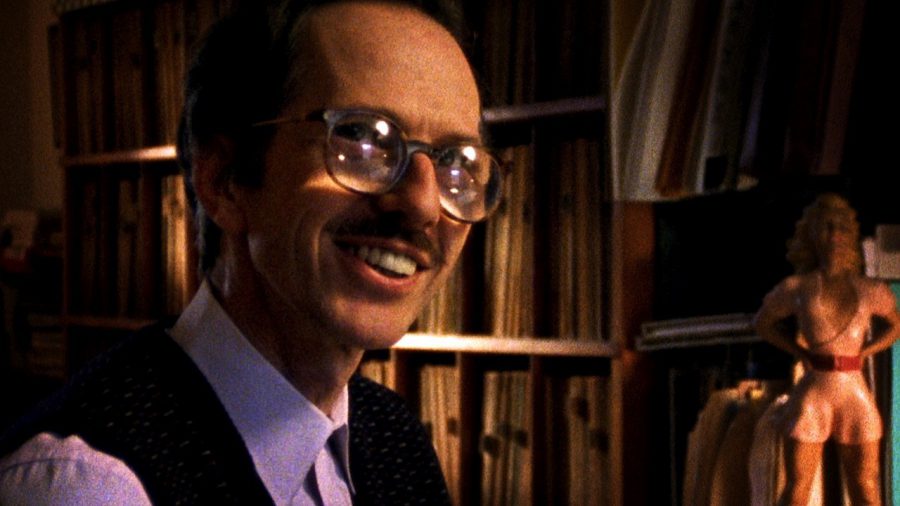 From “Crumb,” directed by Terry Zwigoff. 1994.
Crumb (1994)
Coming at a time when the comic-book was getting more and more credence as an art form in and of itself, Crumb is a fascinating look at one of its strangest pioneers. Robert Crumb was a part of the infamous Underground Comix movement of the 1960s. They mixed a love of American folk culture with dark and satirical elements. What makes the biopic so brilliant is the unfettered access to the artist himself. He is a complicated fellow, a weird and deeply misogynist nerd who nonetheless created images that art critic Robert Hughes say made him “the Brueghel of the last half of the 20th century.”
According to filmmaker Terry Zwigoff, this film proved a life-saver. As he said, he was “averaging an income of about $200 a month and living with back pain so intense that I spent three years with a loaded gun on the pillow next to my bed, trying to get up the nerve to kill myself.” After the film was made, his cinematic chops were proved. He went on to direct cult masterpieces such as Ghost World und Bad Santa.
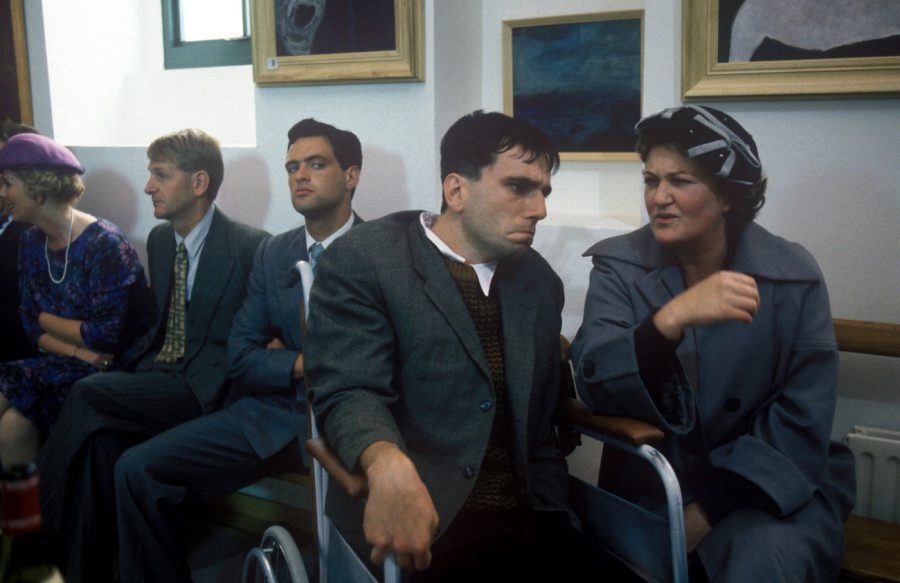 From “My Left Foot,” directed by Jim Sheridan. 1989.
My Left Foot (1989)
My Left Foot marked the first of three Academy Awards for the actor Daniel Day-Lewis. Yet, in this depiction of an artist who due to intense cerebral palsy, can only draw with his left foot, he gives arguably his best ever performance. Christy Brown — detached from engaging in the world in the usual manner — used his handicap to his advantage. He had time to paint and write about the world around him. In the process he became one of Ireland’s most important 20th-century artists.
He is refreshingly not a saint. Rather he is a cheeky Irishman with a penchant for boozing and ribald humour. In this respect, the story of overcoming adversity is remarkably humane. We may not all be severely handicapped, but the struggle to become a great artist despite the odds is easily relatable. The way the film remains inspirational without making Brown a figure of pity is testament to its unique power.
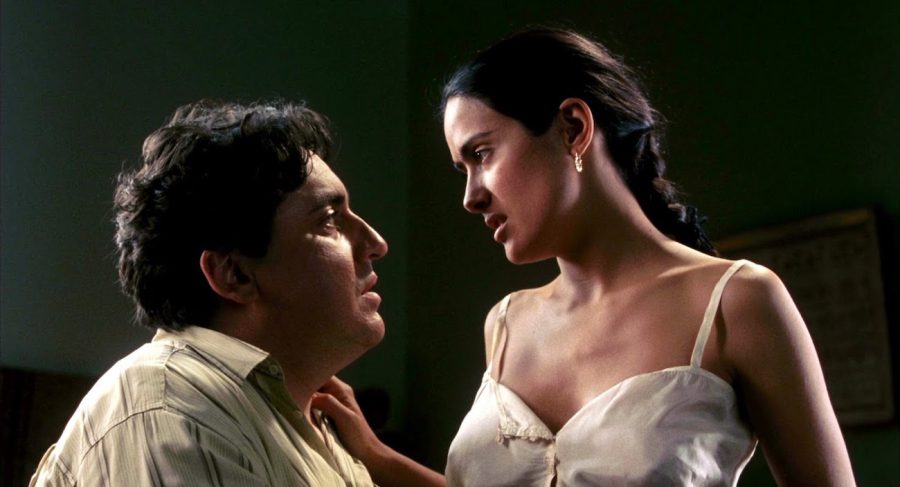 From “Frida,” directed by Julie Taymor. 2002.
Frida (2002)
Frida is anchored by a star-making performance by Mexican-American actress Salma Hayek. She portrays the artist who transfused the pain of her life into the magic of her art with ease. Burdened with a life-threatening injury and a tempestuous marriage to fellow artist Diego Rivera, the film shows that for Frida Kahlo, to paint was not only a calling but sometimes the only way to escape the constant pain that she was in.
For the film, director Julie Taymor created a unique visual language that would ape the surrealist style of her work. For a woman who inspired the Magical Realist movement, the film uses flourishes exclusive to the Latin American style to heighten its depiction of being in the painterly “zone”. The final product is an enthralling biopic that expertly depicts the relationship between an artist’s life and the work they create.