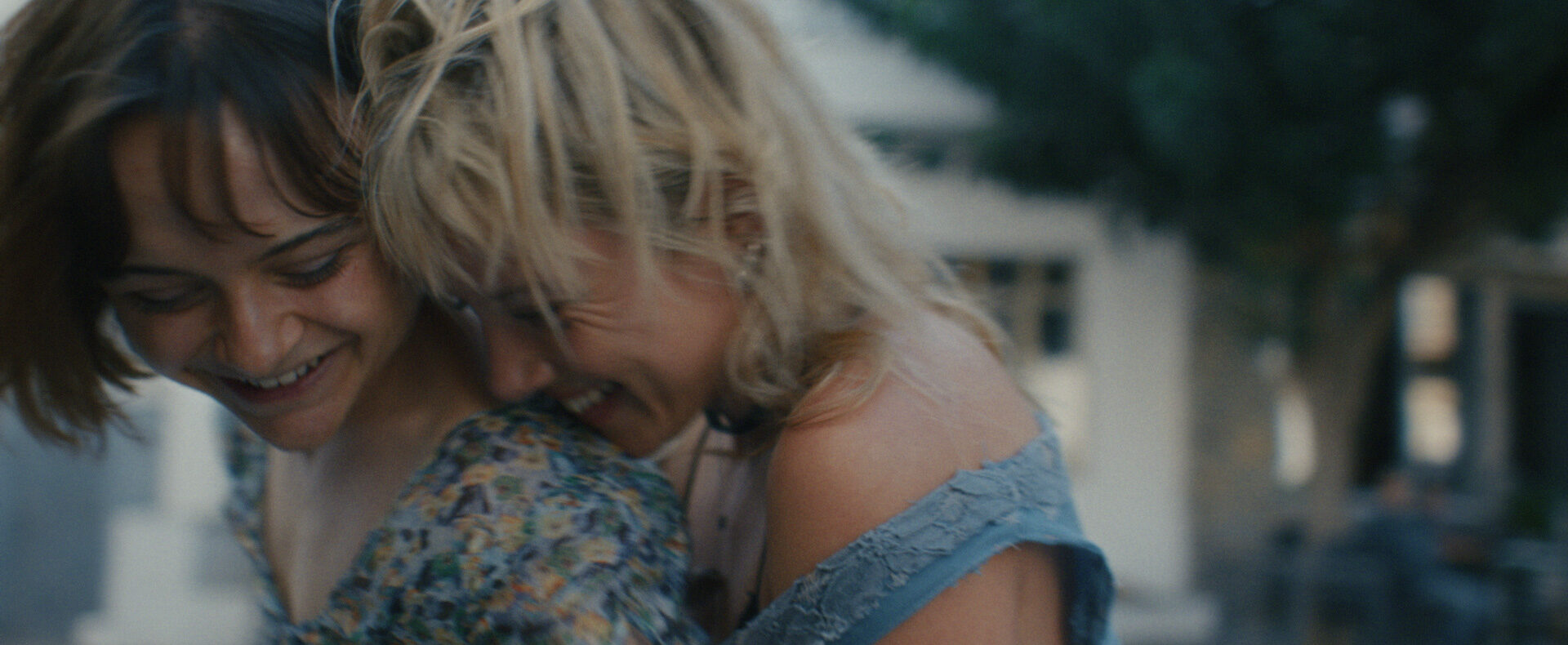
Usually, a film’s release follows the seasons like any other trend, be it fashion, music or literature. Winter campaigns are produced in summer, Christmas films arrive early in November, and brands present their spring collections now in autumn. It is a rhythm that ensures every need and desire of the target audience is commercially met in good time. So what does it mean when Leonie Krippendorff releases a summer film at the very end of the season, practically outside this well-ordered schedule? Without giving too much away, it is safe to say that the German director and screenwriter had a good reason.
The movie in question is Children of the Sun (2026), a visually stunning drama that, after years of preparation, finally premiered at Filmfest Hamburg. For this project, Krippendorff assembled a cast that strikes a surprisingly pleasant balance between familiar faces and newcomers. There’s Jella Haase, known from projects such as Cocoon (2020), a movie also made by Krippendorff, and the Netflix series Kleo (2022–2024). Then, there’s Lena Urzendowsky, who earlier this year won Best Supporting Actress at the German Film Awards, as well as the Jury Prize at the Cannes Film Festival, for Sound of Falling (2025). And alongside them, there are the two young talents, Joshua Hupfauer from Munich and Andronikos Korakas from Athens.
To call Krippendorff’s new movie simply a “summer film”, however, would not do it justice. It is set in summer, that much is true, in the dry and sweeping mountains of Greece. You have a cold river, love and heat. So, it fits the season and its mood. But the longer you watch, the more you realise that it’s actually about far more than that.
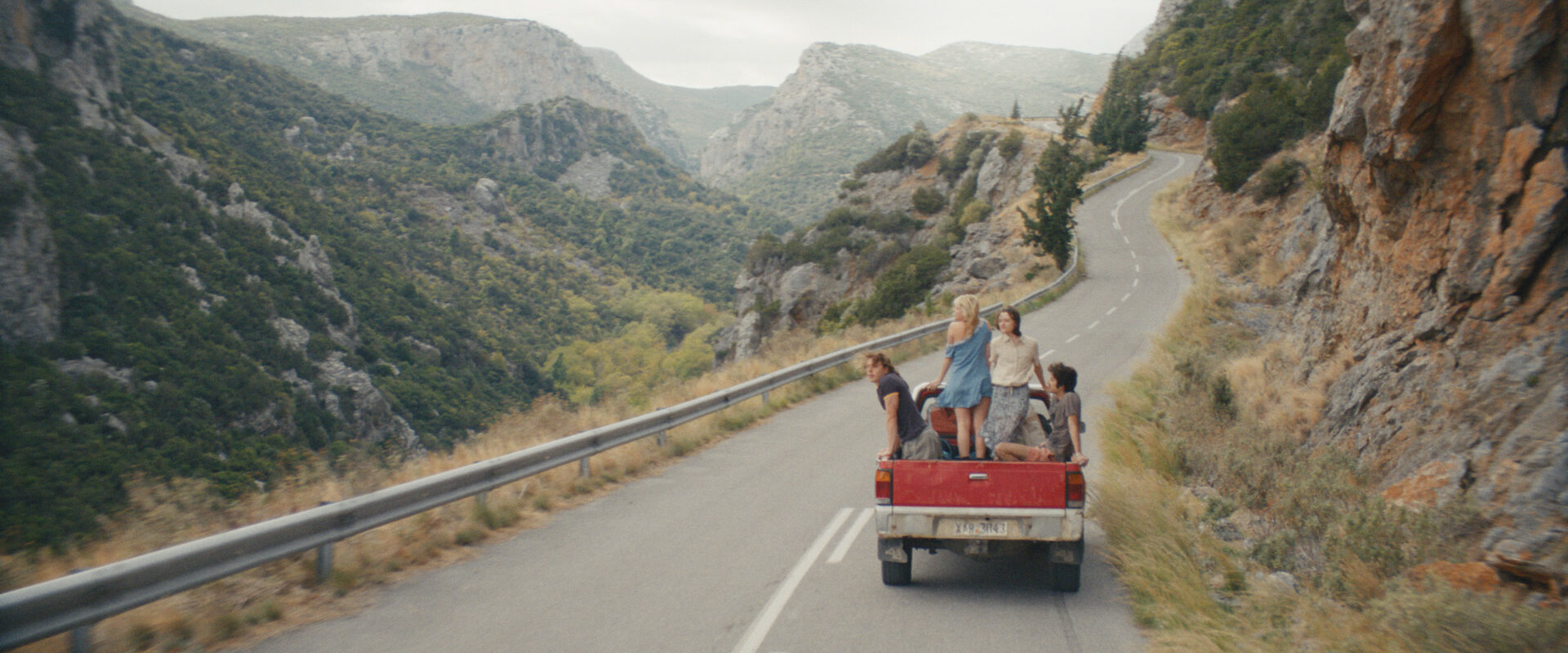
Children of the Sun tells the story of four young people, two couples who are friends, spending their summer in a remote corner of this mountain landscape and eventually forming a small community of their own. It is a community free from material possessions, monogamy, social expectations and any digital link to the outside world. A community full of tenderness and unity. That is the first half of the film. The second half is driven by destruction: what begins as a little paradise tips over when the surrounding wildfires start threatening it. In the end, the movie asks what is left of absolute freedom once reality breaks into the utopia. Whether solidarity is nothing but an illusion. And whether freedom without hierarchy and selfishness can really exist in our modern world.
The inspiration for the story came to Krippendorff years ago. Her original plan was to set the plot in Portugal, in her mother’s house as a place of retreat and safety. Back then, the story of fire and freedom was basically just a story of freedom. But those plans derailed when the very same house in Portugal was destroyed by wildfire. On site, Krippendorff increasingly fell into conversation with the locals and came to know their stories. She learned what the fires meant to the people there, and how many different theories about their origin were circulating. Over it all hung this one big, strange question mark: who is to blame?
Fire, then, naturally became the heart of the plot. And Krippendorff took the idea and developed it further. Through her four protagonists, she created four archetypes, each representing a different part of our society. The characters played by Haase, Urzendowsky, Hupfauer and Korakas become nothing less than fire, earth, water and air themselves. Persephone, Gaia, Poseidon and Zephyros. If you look closely, especially at the beginning of the movie, you can see the colours of their clothing echoing these elements: yellow stripes on Korakas’ tank top. Muddy tones on Urzendowsky’s swimsuit. Look closer still and you notice the clothes being passed around among the characters more and more. What begins as four individuals slowly blurs into a shared identity.
In that symbolic sense, the film is also very abstract. There is little dialogue, especially in the first half, and as a viewer you hardly learn anything about the protagonists beyond their relationship status. Krippendorff explained: “I thought a lot about how psychological these characters should be allowed to be. And in the end, we decided to be radical.” The film is indeed radical, if not in any obvious way. The focus shifts away from the singular emotional journey and towards the collective, societal one. It all unfolds so stealthily that the movie seems, as Haase described it during the premiere, to “hover”.
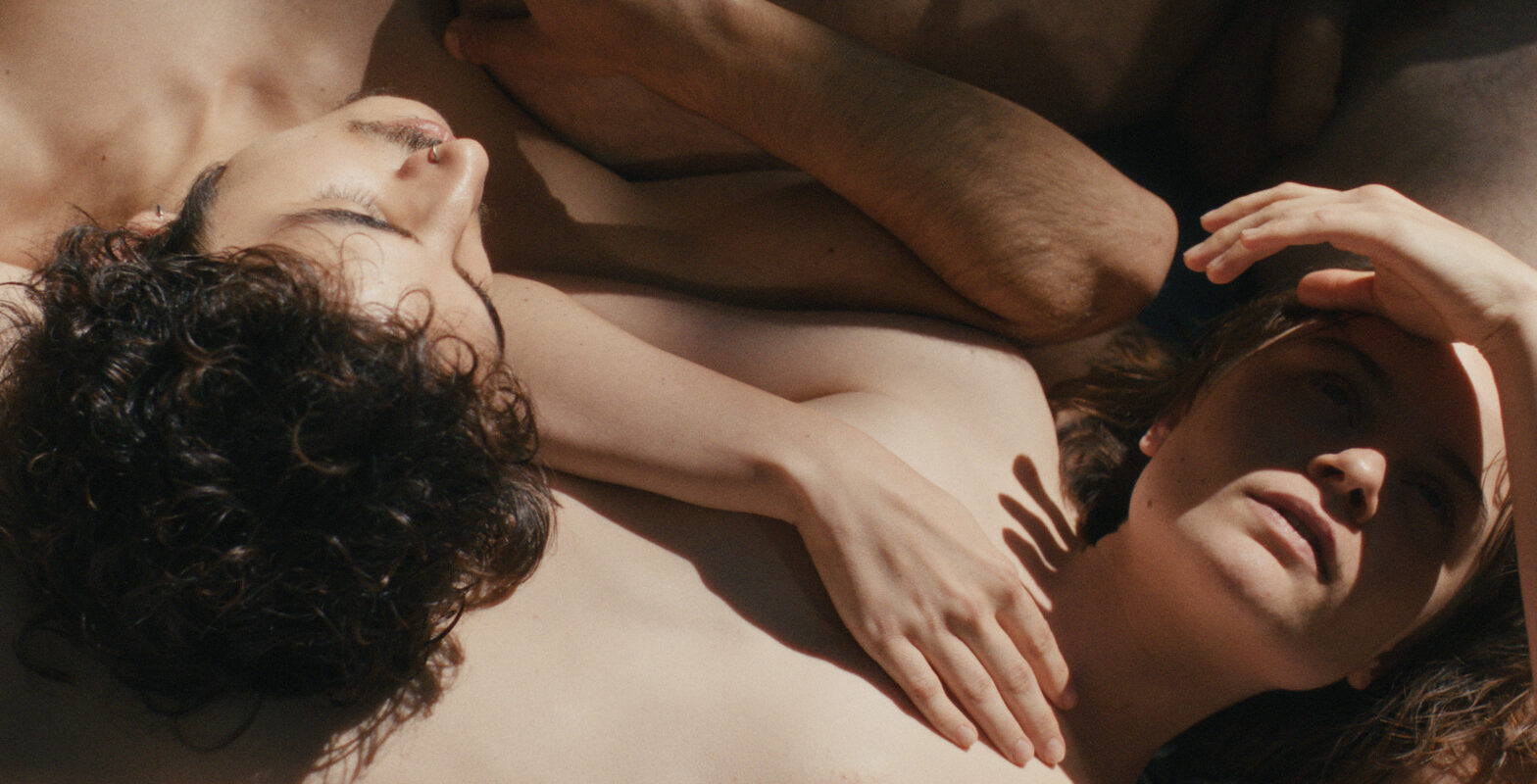
The opening question of why Krippendorff is releasing a supposedly “summer film” in autumn still remains open. But the answer is quite simple: it is about relevance. Relevance in terms of queer affection and alternative forms of love and relationships at a time when more conservative mindsets are gaining ground. And there’s more. Once again, severe wildfires have devastated entire regions in countries such as Spain, Italy and Turkey this year. At the beginning of the month in which the film premiered, on 3 September, 36 new major fires broke out in Greece alone within 24 hours, according to ADAC. In the film, this reality breaks into a paradise, and with it comes the question of who set the fire.
It’s a topic that matters especially to Greek newcomer Korakas. “That is what art should do: talk about what is happening around us. I know this subject. I see it every year. And every year I am sad, but not surprised”, he says about the movie.
Somehow, that is also why Children of the Sun feels so difficult to reduce to one particular moment. Ask the people behind the film and they all say the same thing, something that initially sounds strangely vague but makes sense in hindsight: there is no best scene, no key moment, no clear hero. Instead, the film lives on the feelings it stirs in you, on the trust the entire crew built on set, and on characters moving through the world on instinct and desire.
One description came up again and again at Filmfest Hamburg last weekend: watching the film feels like a rush. But a rush, after all, is exactly what freedom feels like until the fire arrives. What Krippendorff’s film leaves you with is the morning after: how much of that freedom was ever real, and how much of it only worked as long as nothing was at stake and there was no one to blame.