 Untitled Film Still #30, 1979. Image from moma.org
Cindy Sherman’s talent as photographer, model, make-up artist, hairdresser and stylist has enabled her to transform into a multitude of roles. Inspired by film and TV stills, she spent the early part of her career as clichéd characters. From her depiction of a desperate housewife to her portrayal of the femme fatale, each satirical shot is both thought-provoking and dripping with wit.
However, there is one image from her “Untitled Film Stills” series that stands out as conflicting against the rest, and that is #30. A morbid portrait of a battered woman, this particular photo diverges from a general theme surrounding the perfect 1950s spouse. The image marks Sherman’s first step into the creation of disturbing imagery, a path which still continues into her most current works.
With Halloween just around the corner, here are a five instances that display Cindy Sherman’s best utilisation of progressive face-painting and false limbs to create frightening images that are repulsive and often downright terrifying.
 Untitled #150, 1985. Image from moma.org
Untitled #150, 1985
The works in this 1985 series entitled “Disasters and Fairytales” are credited as real signifiers of the massive change in Sherman’s work. The images, which express an extreme black humour, are more evocative of myths and folklore than of your stereotypical fairytale. Further, the severe prosthetics and make-up portray a series of bizarre characters. These elements all blend together to conjure a sense of evil and wickedness. Commissioned by Vanity Fair, the photo was so unsettling to the magazine that in the end, they actually never published it.
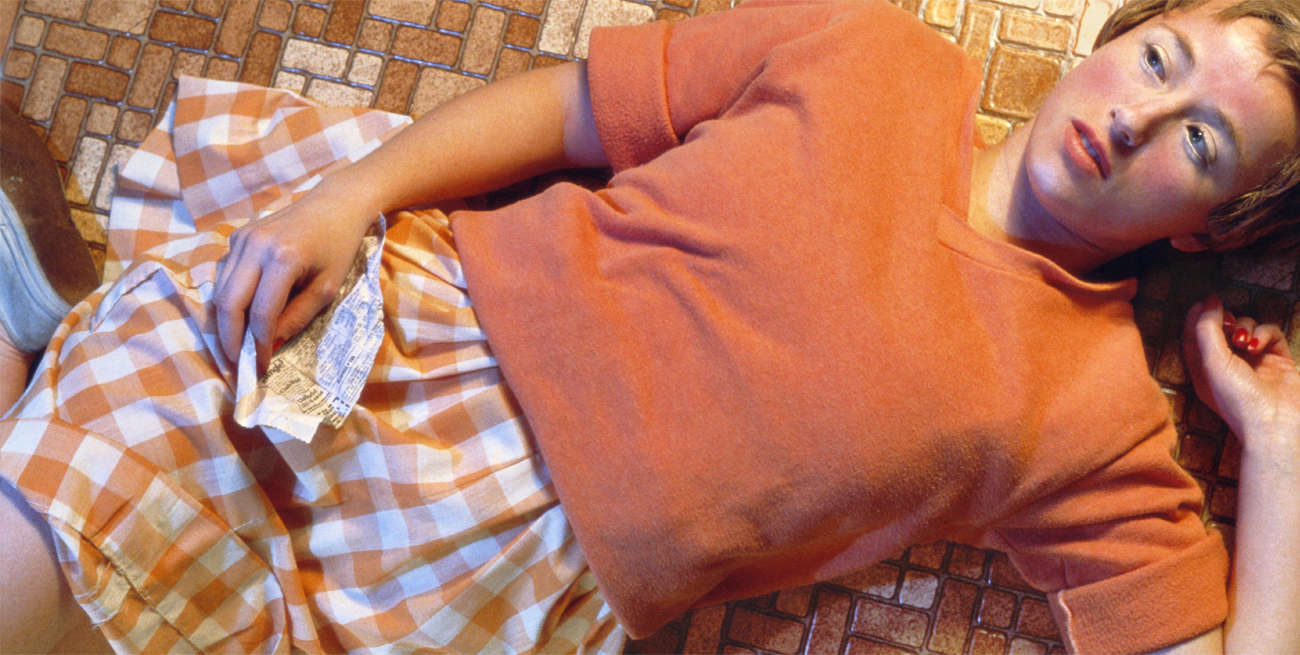 Untitled #96, 1981. Image from moma.org
Untitled #96, 1981
This photo is actually upsetting rather than scary, with the context being a difficult one to even talk about let alone capture through picture. Part of a larger series of images inspired by the centre folds of men’s erotic magazines, Sherman appears as the antithesis of what you would expect to find in such a publication. Acting in various emotional states that range from terrified to miserable, she is anything but sexy and seductive. Implications of rape and abuse are present, with the character’s facial expressions desperate and her body language vulnerable. Sherman’s choice to depict the woman as scared as opposed to strong is a chilling look into the actual dangers of reality.

Untitled #175, 2012
During America’s 1980s AIDS epidemic, Cindy Sherman was inspired by narratives associated with the human body’s disintegration. In the photographer’s customary way, over the top theatrical imagery was made. Substances that resemble blood, vomit and feces were used, boils, spots and scars were replicated and animal-hybrid dolls were shot in uncompromising positions to mimic pornographic sex acts. The first photographs to not feature Sherman herself, the artist used mannequins to create these works.
 Untitled #316, 1995. Image from arthistoryarchive.com and ‘Untitled #304, 1994. Image from artblart.com
Untitled #316, 1995 and Untitled #304, 1994
Sherman’s “Horror” came late in her career, around the same time that she directed her first film “Office Killer”. The film received poor reviews, with critics rating the movie as too crude. Her photography fans were also left confused by her newest direction, underwhelmed by the disturbing contortions involving babies and tremendous violence. Although unpopular with her cult following, the “Untitled Horrors” work is seen by curators as her most valuable work, documenting a moment in which Sherman chose to challenge her over-familiar viewers.
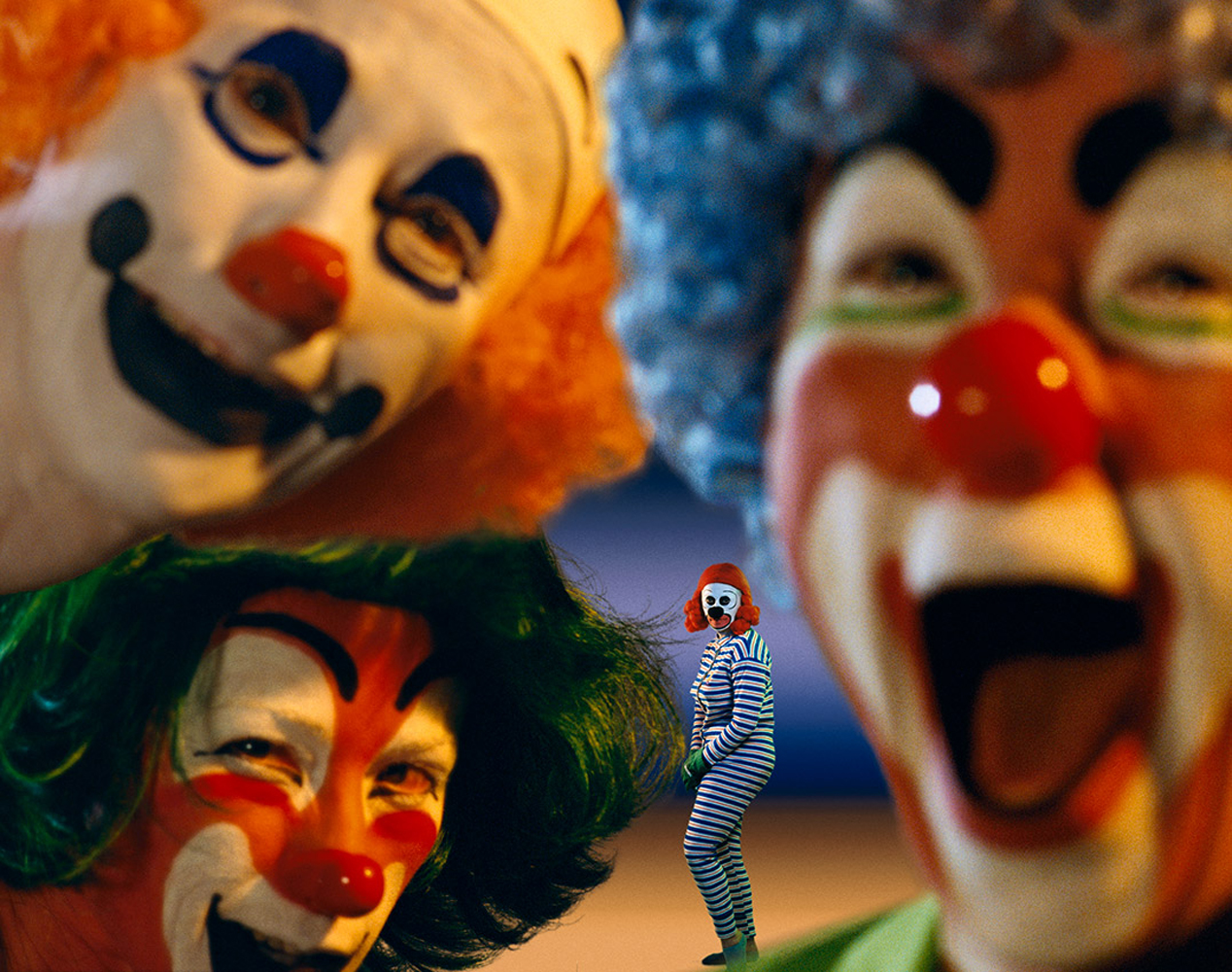 Untitled #425, 2004. Image from moma.org
Untitled #435, 2004
With the introduction of digital photography came Cindy Sherman’s notorious “Clowns”. This new technology enabled her to create overly-bright, garish backdrops to add to the intensity of her superimposed images of multiple clowns one on top of another. Her circus subjects portray various emotional states “from hysterical passion to tragic pathos”. The large-scale pieces have such a level of intensity when displayed that they’re seen as Sherman’s most frightening and disturbing work.
“Cindy Sherman and David Salle: History Portraits and Tapestry Paintings” is on display at London’s Skarstedt gallery until 26 November 2016