 Edvard Munch. Bild von visitoslo.com
Heute ist Edvard Munchs Geburtstag – hier sind 10 Fakten über den Meister, die jeder kennen sollte
1. Seine Familie war von Krankheiten geplagt
Als Munch über die gesundheitlichen Probleme seiner Familie sprach, sagte er einmal: “Ich habe zwei der schrecklichsten Feinde der Menschheit geerbt – das Erbe der Schwindsucht und des Wahnsinns.”
Es entbehrt nicht einer gewissen Ironie, dass der Vater des Malers Arzt war, seine Familie jedoch von tragischen Schicksalsschlägen aufgrund von Krankheit heimgesucht wurde. Munch verlor seine Mutter und seine Schwester schon in jungen Jahren an Tuberkulose, und seine andere Schwester wurde schließlich aufgrund psychischer Probleme in eine Anstalt eingewiesen.
2. Er schrieb sich gegen den Willen seines Vaters an der Kunsthochschule ein.
Munch, der von seinem verwitweten Vater aufgezogen wurde, wurde davon abgehalten, die Malerei zu seinem Beruf zu machen. Unbeeindruckt davon schrieb er sich an der Kunsthochschule ein und führte später das düstere Gemüt seines Vaters als prägenden Einfluss auf seine Psyche und sein Werk an.
3. Er zog aus beruflichen Gründen nach Paris.
Edvard Munch zog 1889 nach Paris, wo sich sein Stil unter dem Einfluss von Vincent van Gogh und Paul Gauguin, die Emotionen durch Farben zum Ausdruck brachten, zu entwickeln begann.
4. Sein eigenes Leben diente als Inspiration für “Der Schrei”
Das berühmteste Gemälde des Künstlers, ’Der Schrei“, ist das Ergebnis der Angst und Furcht, die er empfand, als er spazieren ging und sich der Himmel plötzlich blutrot färbte. Der gequälte Gesichtsausdruck der Figur auf dem Gemälde bringt genau diese beunruhigenden Gefühle zum Ausdruck.
 „Der Schrei“. Bild von commons.wikimedia.org und „Tante Karen im Schaukelstuhl“, 1883. Bild von wikiart.org
5. Die Serie “Frieze of Life”
Das Gemälde war Teil seiner Serie “Frieze of Life”, in der Krankheit, Tod, Angst, Liebe und Melancholie zentrale Themen sind.
6. Es gibt mehr als einen “Scream”
Es gibt vier Versionen von “Der Schrei” – zwei Pastellzeichnungen und zwei Ölgemälde. Eine der Pastellzeichnungen wurde 2012 für über $100 Millionen verkauft und erzielte damit den viert höchsten Nominalpreis, der jemals bei einer Auktion für ein Gemälde gezahlt wurde.
7. Das Leben in einem Sanatorium
Der Höhepunkt der Karriere des Malers mündete in eine Abwärtsspirale und führte dazu, dass er einige Zeit in einem Sanatorium verbrachte. Sein übermäßiger Alkoholkonsum und seine angeschlagene psychische Gesundheit lösten eine Psychose aus, und Munch gab an, Stimmen zu hören, und bezeichnete sich selbst als “am Rande des Wahnsinns”.
8. Seine Genesung hat seine Kunst für immer verändert
Nach der Behandlung verspürte Munch wieder neuen Optimismus, was sich in der Verwendung einer helleren Farbpalette in seinen Werken niederschlug. Zum ersten Mal setzte er reichlich Negativraum ein und schuf “Die Sonne”, “Frühjahrspflügen” und “Badender Mann” – wobei er nun sogar so weit ging, seinen Werken fröhliche Titel zu geben.
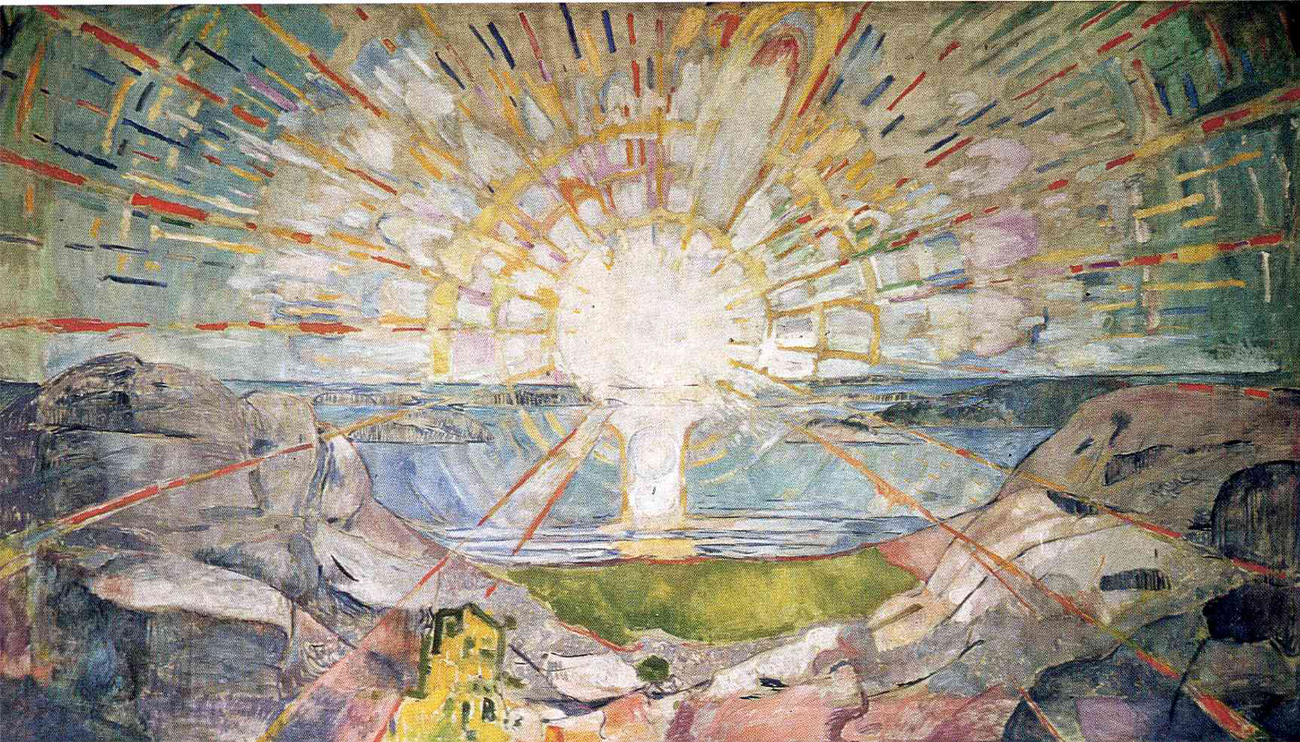 Die Sonne. Bild von wikiart.org
9. Sein Werk wurde von den Nazis als “entartet” eingestuft
In den 1930er und 40er Jahren bezeichneten die Nazis Munchs Werk als “entartet”, wobei Hitler erklärte: “Was uns betrifft, können diese prähistorischen Barbaren der Steinzeitkultur und Kunststotterer gerne in die Höhlen ihrer Vorfahren zurückkehren und dort ihre primitiven internationalen Kritzeleien anbringen.” Zu den Künstlern, die mit diesem Stempel gebrandmarkt wurden, gehörten Picasso, Paul Klee, Matisse und Munchs Held Gauguin.
10. Sein Werk prägte in der Folge die Populärkultur.
Munch starb 1944 in Norwegen, doch das Vermächtnis des Malers lebt in der Populärkultur weiter. Der Meister der Pop-Art, Andy Warhol, schuf in den 80er Jahren Siebdrucke von Munchs Werken, Wes Craven integrierte das ikonische Gesicht aus “Der Schrei” in seinen gleichnamigen Film von 1996, und die Macher von „Dr. Who“ griffen die Figur sogar in einer Folge der Serie aus dem Jahr 2011 auf.
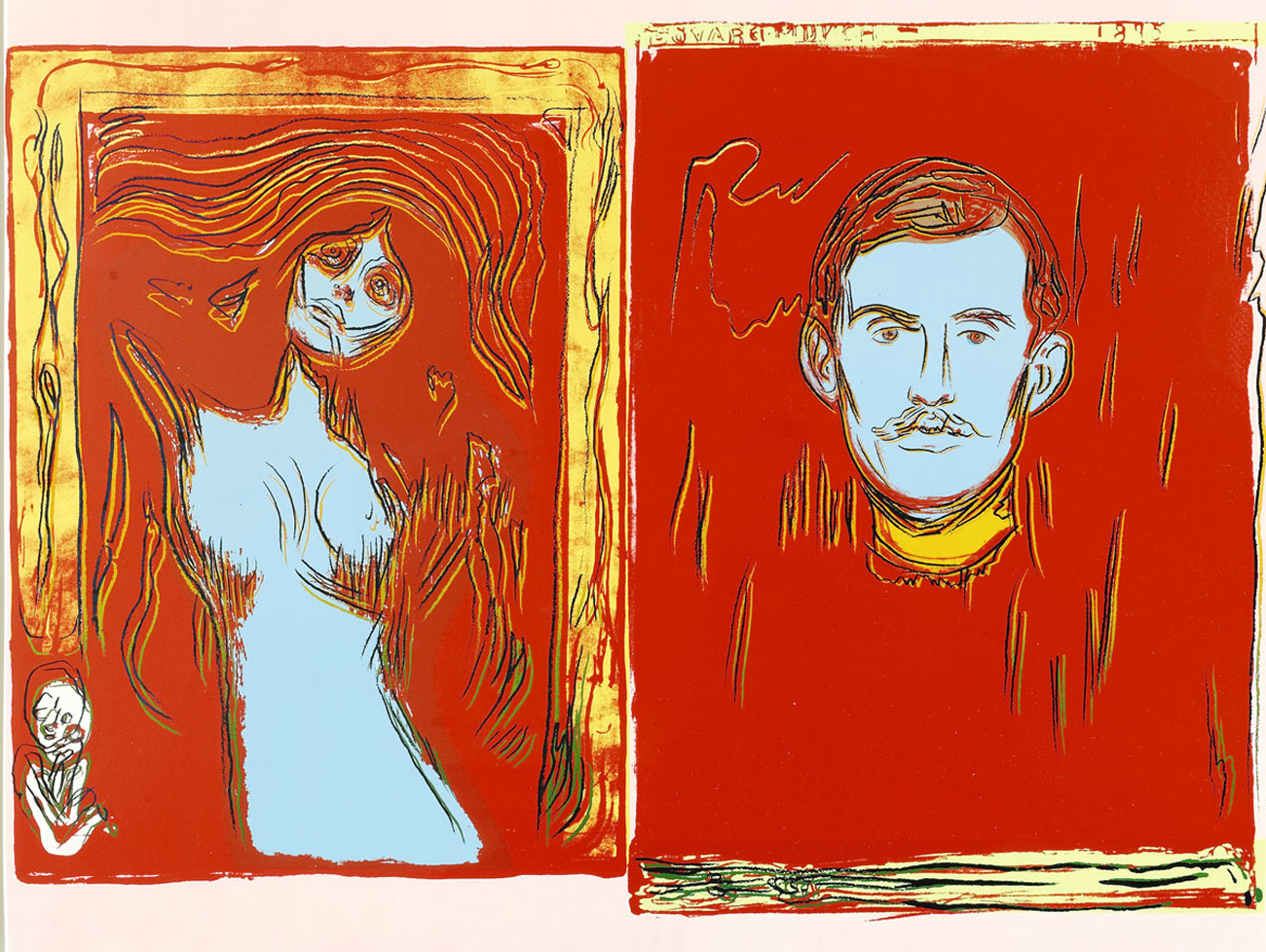 Andy Warhols von Munch inspirierte Drucke, 1984