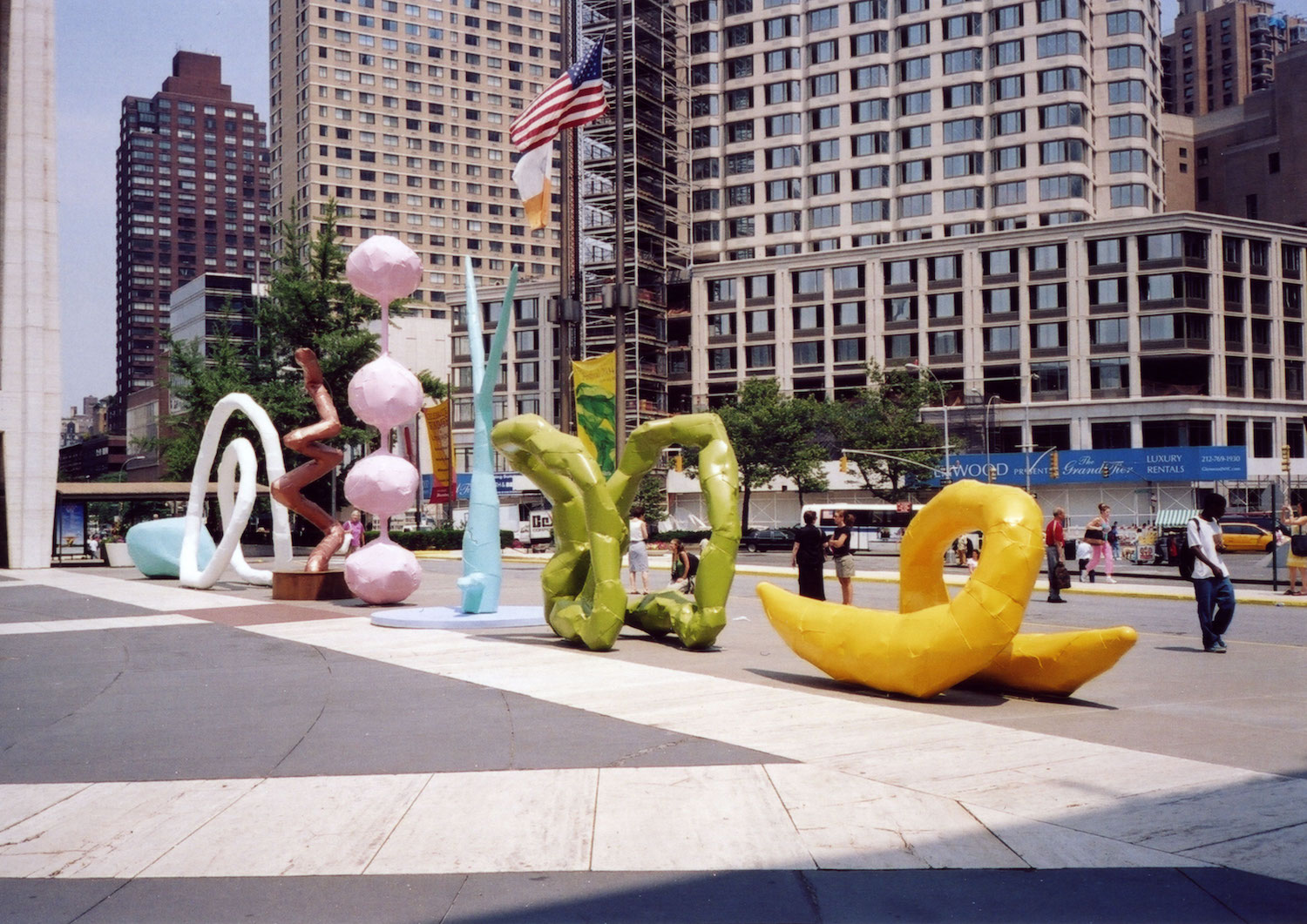
Sculpture outside the Lincoln Center for Performing Arts, New York, 200.4 © Estate Franz West, © Archiv Franz West Photo: Reinhard Bernsteiner.
When we think of the tradition of sculpture it’s generally grandiose old Roman forms expertly carved from marble that come to mind — not massive papier-mâché coils in flamingo pink. But then you wouldn’t be thinking of the ludicrously playful interpretation of sculpture by Franz West, the late Austrian artist, who’s the subject of major new exhibition at Tate Modern, organised in conjunction with the Centre Pompidou in Paris. West is known for his daring disruption of the established relationship between artwork and audience — he invited users to handle his art objects, provoking a direct engagement with his delightfully unexpected pieces. Here, we chart the reasons why you should go and see his absurdly engaging sculptures that give us a pretty good idea of what “anti-art” might be to booth.
1. A playful use of material
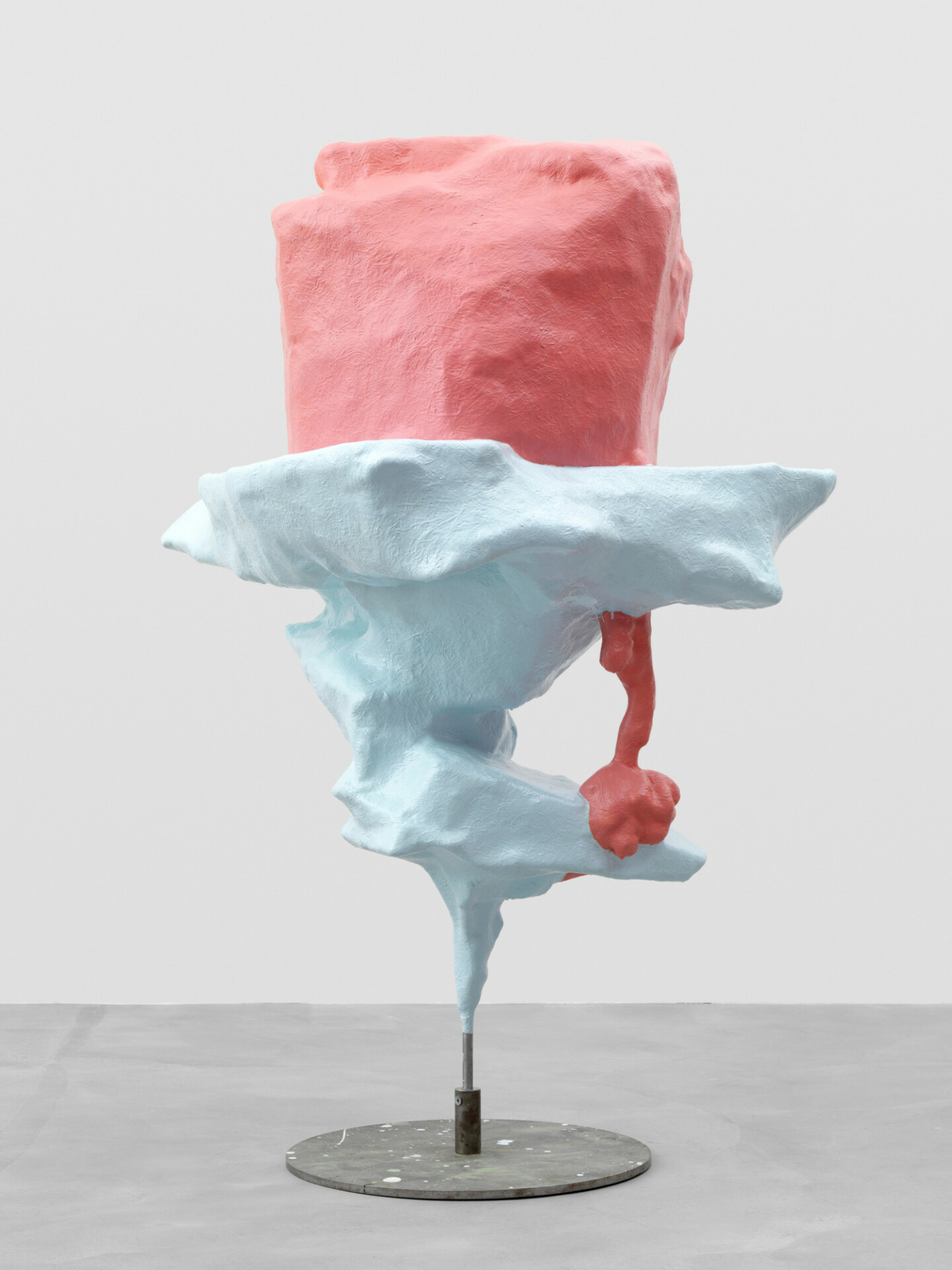
Untitled, 1972. ©Estate Franz West © Archiv Franz West
West is known for his brilliantly inventive use of peculiar materials, particularly ones not commonly used in a grand sculptural practice. Instead, West made magnificent forms from cardboard, polystyrene, old telephone books and of course — papier-mâché — in a bid to make the viewer rethink what sort of materials art should be made out of.
2. Objects of contemplation

Epiphanie an Stühlen, 2011. ©Estate Franz West © Archiv Franz West. Photograph ©Luke Walker
What might look like a giant wodge of bubblegum, or a ball of wool pierced with knitting needles, is in fact one of the exhibition’s standout pieces, Epiphanie an Stühlen (2011). Positioning two chairs alongside this ludicrous pink orb, West ushers the viewer to take a seat and consider the absurdity of it all. A work like this embodies that playful yet philosophical side of his practice.
3. Directly engages the audience

Passstüke installation photograph. ©Estate Franz West © Archiv Franz West. Photograph ©Luke Walker
At the Tate show, visitors are invited to handle replicas (and even taken a selfie with them if they please) of West’s small scale papier-mâché sculptures called the Passstücke (Adaptives). These unassuming forms challenge the fixed hierarchy between the artwork and the viewer, and rebel against stale art world conventions in a punk-like manner characteristic of West.
4. Curatorial input from Sarah Lucas
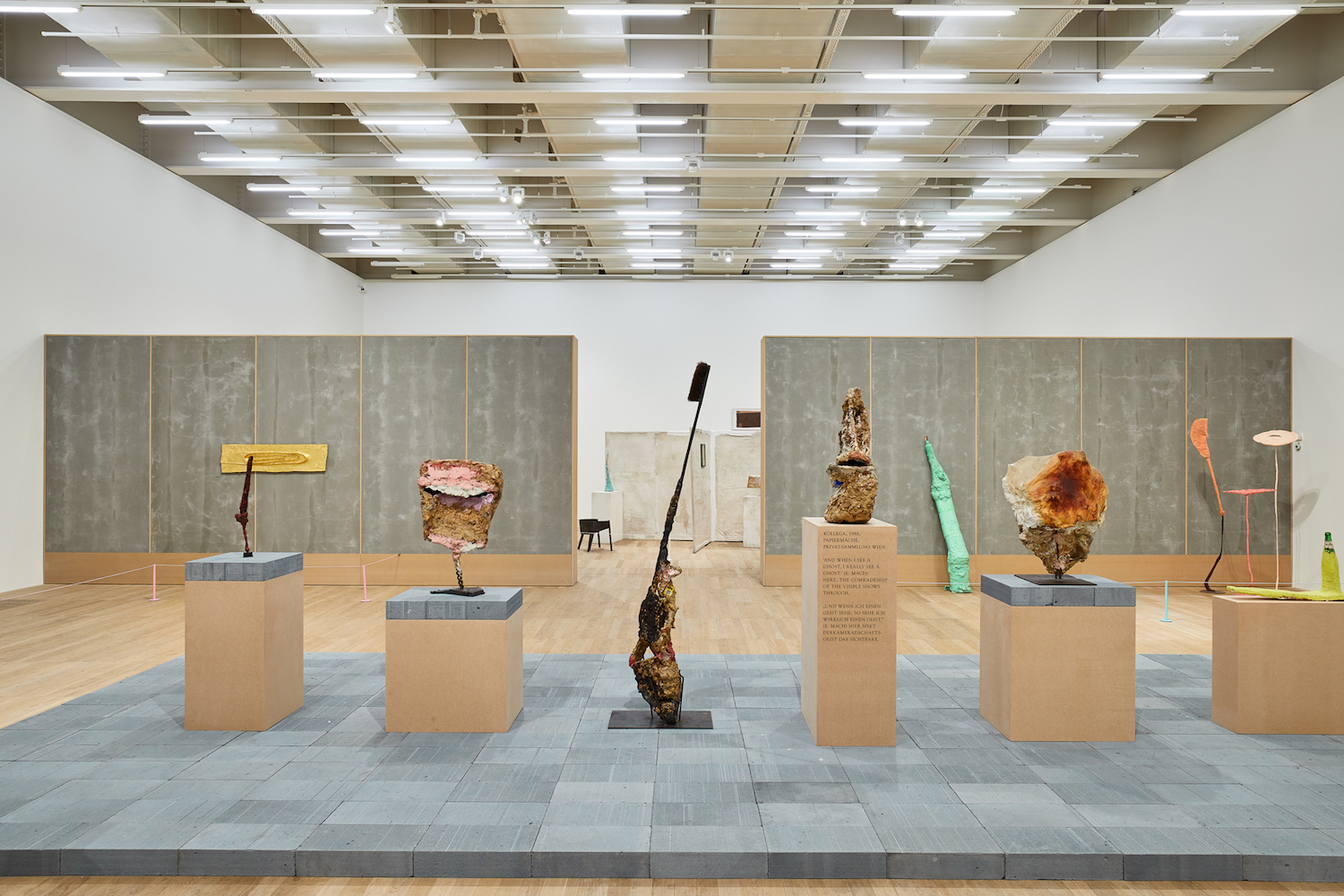
Installation view. ©Estate Franz West © Archiv Franz West. Photograph ©Luke Walker
Throughout the exhibition, West’s longtime friend and collaborator Sarah Lucas has employed specifically designed plinths — crafted from breeze-blocks and MDF — to display his sculptures. The influence of West can be readily seen in Lucas’ own tangled corporeal forms.
5. Large scale outdoor sculptures
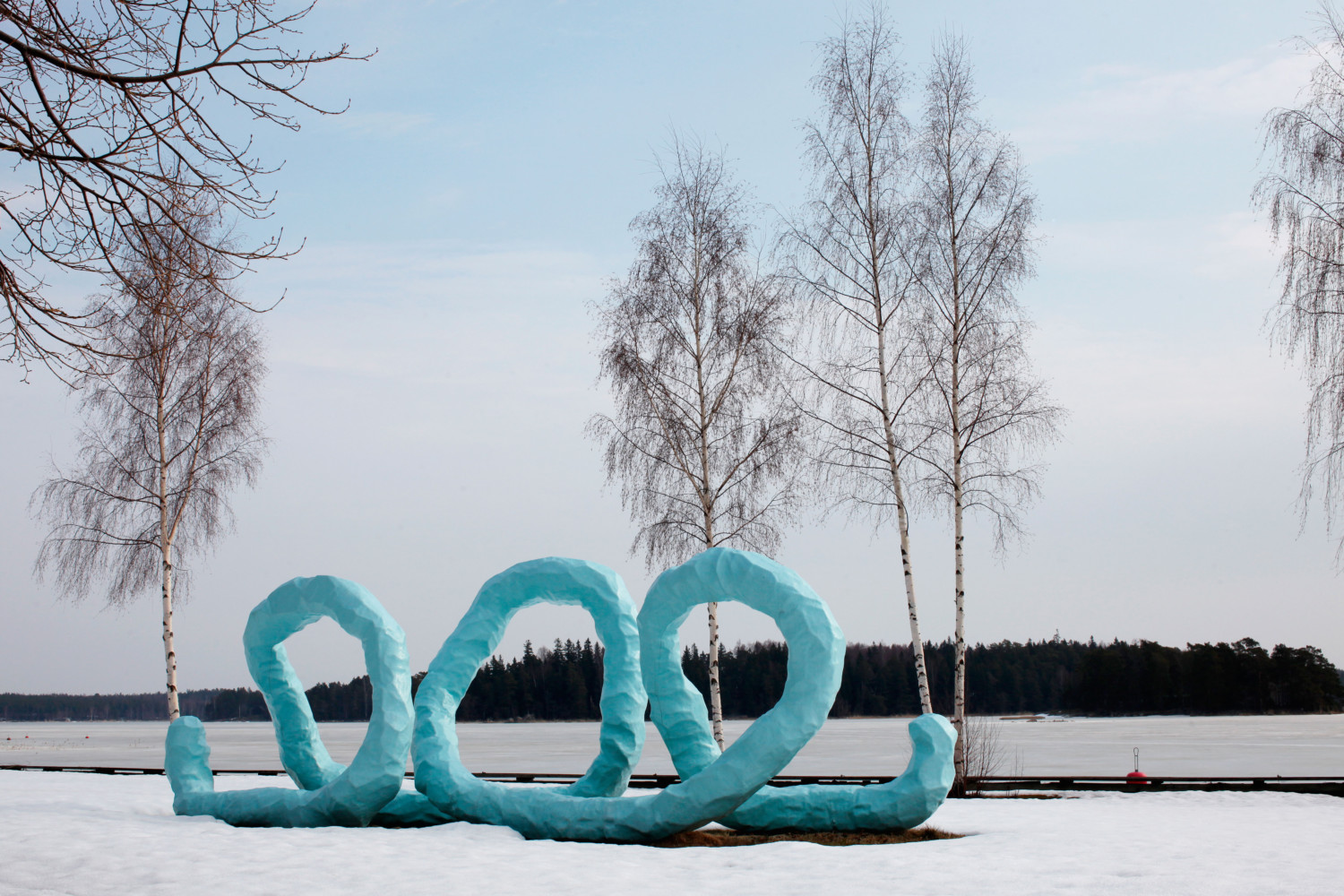
Schlieren 2010. © Estate Franz West, © Archiv Franz WestPhoto: David Bebber
West is probably best known for his monumental outdoor sculptures. In 2014, he presented a series of colourful entanglements in New York’s Lincoln Centre, and now as part of the Tate offering, 8m high sculptures have been planted along London’s Southbank. West’s cartoonish twirls and knots in aqua and bright pink are intended to disrupt the pomposity of public art. As the late artist admitted, “I like art in the streets. It doesn’t demand that you make a special journey to see it, it’s simply there.”
Franz West runs through to 2 June 2019 at Tate Modern.