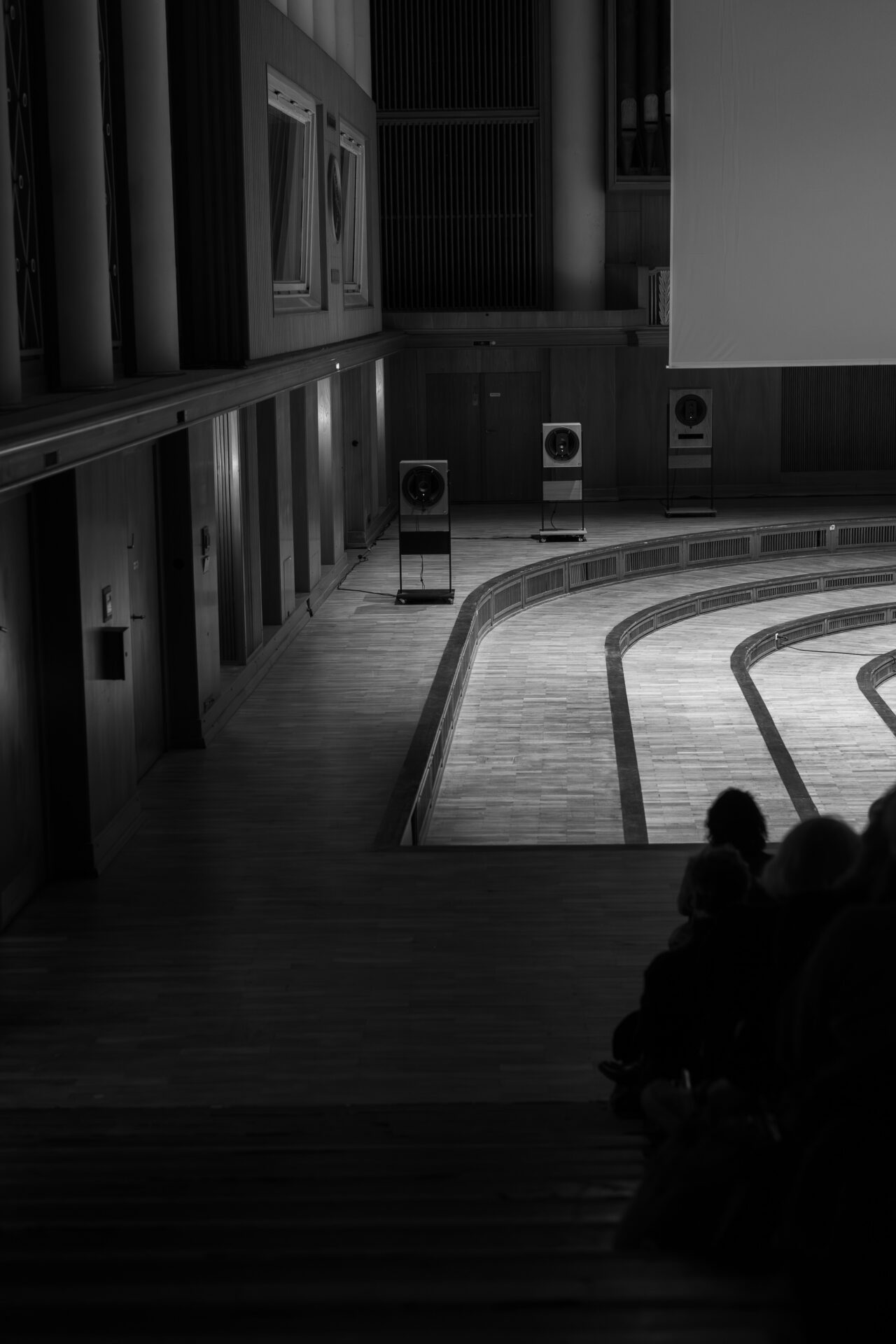
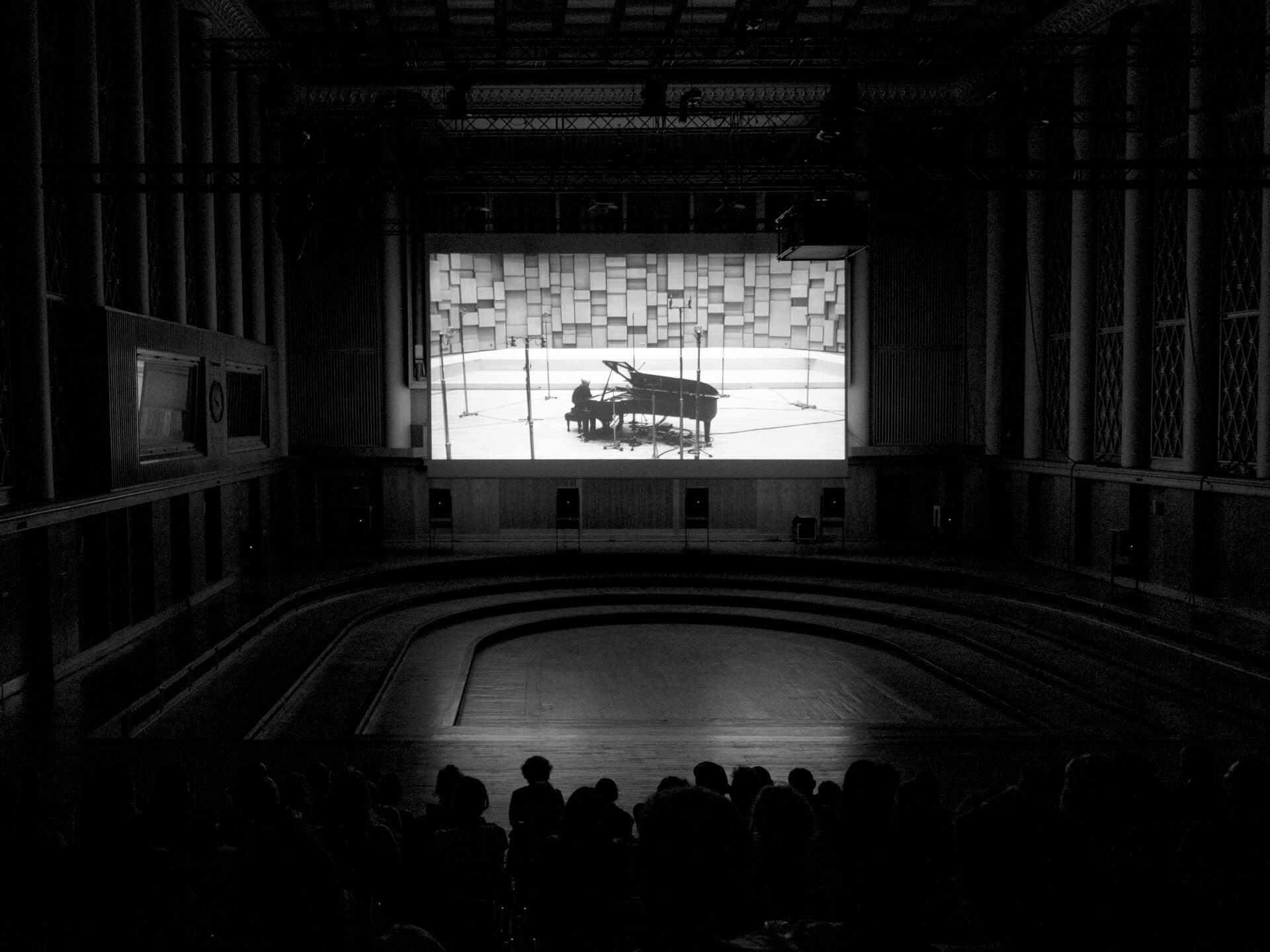
Eight loudspeakers and nothing else to look at. That was Saal 1 at Funkhaus on the last Sunday of September, where I sat down to watch Opus, the concert film documenting Ryuichi Sakamoto’s final performance. The screening had been brought together by three parties: Quality Time, spæs lab and Circadian Gyokuro Tea, who host events at Funkhaus. As many readers will know, Funkhaus is a building where Sakamoto himself performed in 2018, on the Two tour with Alva Noto, the musical alias of Berlin-based artist Carsten Nicolai.
Three years have passed since Sakamoto’s death, and the third anniversary of his passing has come and gone. In Japan, mourning is marked in stages, and perhaps this cycle has now run its course. Around the same time, the world began reaching once again for what he had left behind. On 18 September, 12 Conversations, his collaborative album with Alva Noto, was released: a collection of expansive passages and fragments of memory, of feelings before they become language and of the small turns of ordinary life, held together as exchanges between two people. It was recorded in late autumn 2022, around the same time he was making 12, his final solo album. NOTON writes that it was Sakamoto’s own wish that these pieces should not be left sleeping in an archive but released into the world – as a dialogue, continuing beyond the physical. Nine days after the album came out, I was in Saal 1. Why not an ordinary cinema, and what made this screening different? Gerriet Krishna Sharma of spæs lab Berlin has an answer, and it is aimed at cinemas in general.
“If you go into a cinema, the first thing you notice is that it’s a dead room. We kill the sound of the room, and then we fill it artificially again.”
In Saal 1, they did the opposite: they let the air back in, so the ears could breathe. The speakers were ME Geithain – Sakamoto’s speakers of choice for decades. Four of them belong to spæs lab and come from the first production batch; they were rescued before they could be discarded and sent back to the manufacturer to be restored. The sound system was specifically designed for this hall and this screening by spæs lab. This is not 5.1. There is no subwoofer. When Sharma phoned ME Geithain, their representative Olaf heard the story and answered at once: for Sakamoto, of course we’ll bring you the speakers.
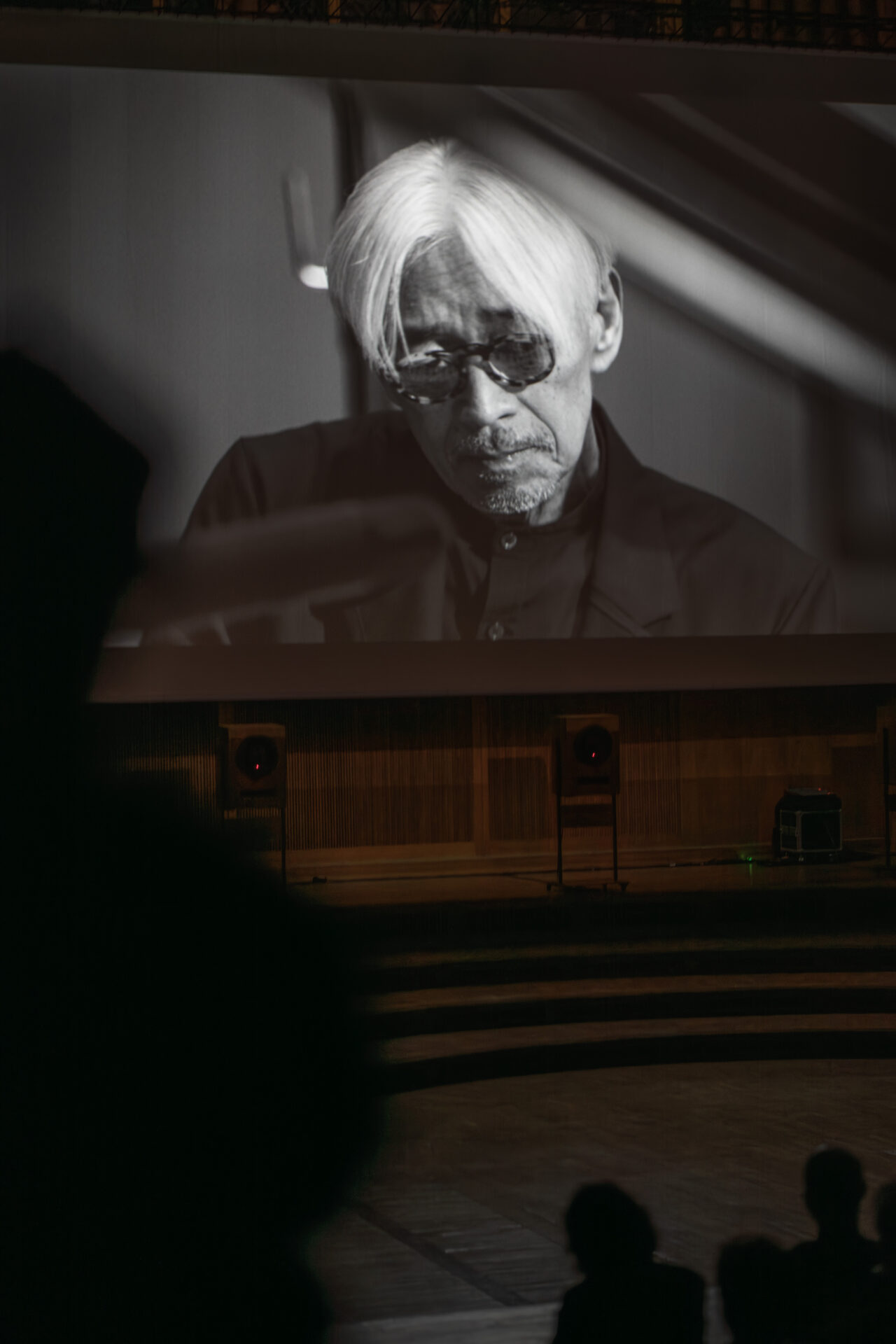
Staying with what Sakamoto left in the room – his afterimage, his presence – I watched what was effectively his final performance. It may have been said many times by now, but what stayed with me was that his breathing is there, captured directly through the microphone. And that midway through a passage on screen, there is a deliberate pause. In the conversation before the Sunday screening, Tyler Golato of Quality Time spoke about those moments. According to Carsten, Sakamoto had a tendency now and then to confuse the audience, to throw himself slightly off balance and keep a small amount of chaos inside something he was still controlling.
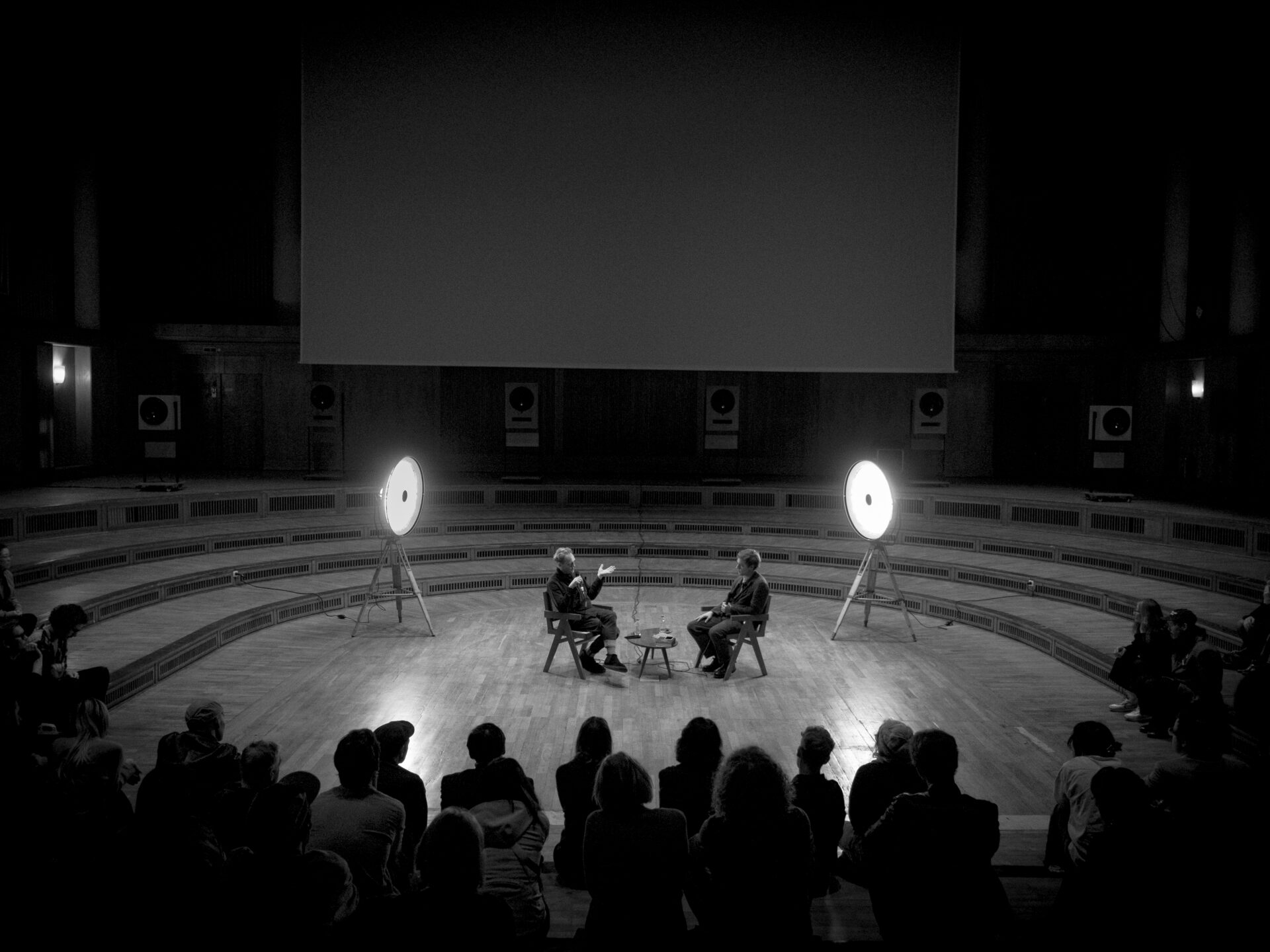
On Saturday, what followed the screening was not a concert but a conversation with Carsten. It was the first time Carsten had seen the film and the first time he had spoken publicly about Sakamoto since his death. After more than two decades of working together, he was watching his friend’s final performance alongside everyone else, before sitting down to speak about a relationship he now had to understand as something with a beginning and an end.
Sharma had argued for that format: screening and conversation, nothing afterwards.
“With this abundance of information that we have nowadays, I think that for something like a requiem, or a looking back, or for some people maybe a goodbye, it was very important that Carsten was there to talk, and then we leave.”
Out of the fragments, shadows of every kind come at you. And still, the glint of a sound as it rises sings of the joy of being alive, and it is impossible not to be moved. A human soul in motion inside the monochrome. The ethos that drifts between his black and white keys, pared down to its very essence, passes through infinities of time and seeps gently into the imperfect human heart, beyond distinctions of race and nationality.
Golato described who he had hoped the evening would reach: “If that really connects with the 20 biggest Sakamoto fans in Berlin, then the event is basically a success.” A niche within a niche, deliberately designed that way. At the end, Verena Lercher of spæs lab said this: “The film is slow, and demanding, in an age when every piece of information has become instant: you sit there for an hour and forty-five minutes. The loudspeakers are demanding instruments, and the space is a demanding instrument. It’s all demanding, but if you listen, and if you approach it in an open, very sensitive way, then you can get a lot out of it.”
Golato put it another way when he spoke about what art is for: “I always judge art through its capacity to affect us,” he said. You open yourself to a thing – music, a painting, whatever it is – hoping to be touched by it, knowing that it does not always happen. That night, he said, it did.
Ars longa, vita brevis. Art is long, life is short. It was a phrase Sakamoto was fond of, and the one his office shared with his listeners when they announced his death. I find myself reading it the other way around now. His ethos still resonates, is still passed on and continues to be reinterpreted by the hands of the living without losing its depth, illuminated from one angle after another. It had been a time like a requiem. Then I walked out of Saal 1 into a Funkhaus full of light and understood it as the hope the sound had been entrusted with.