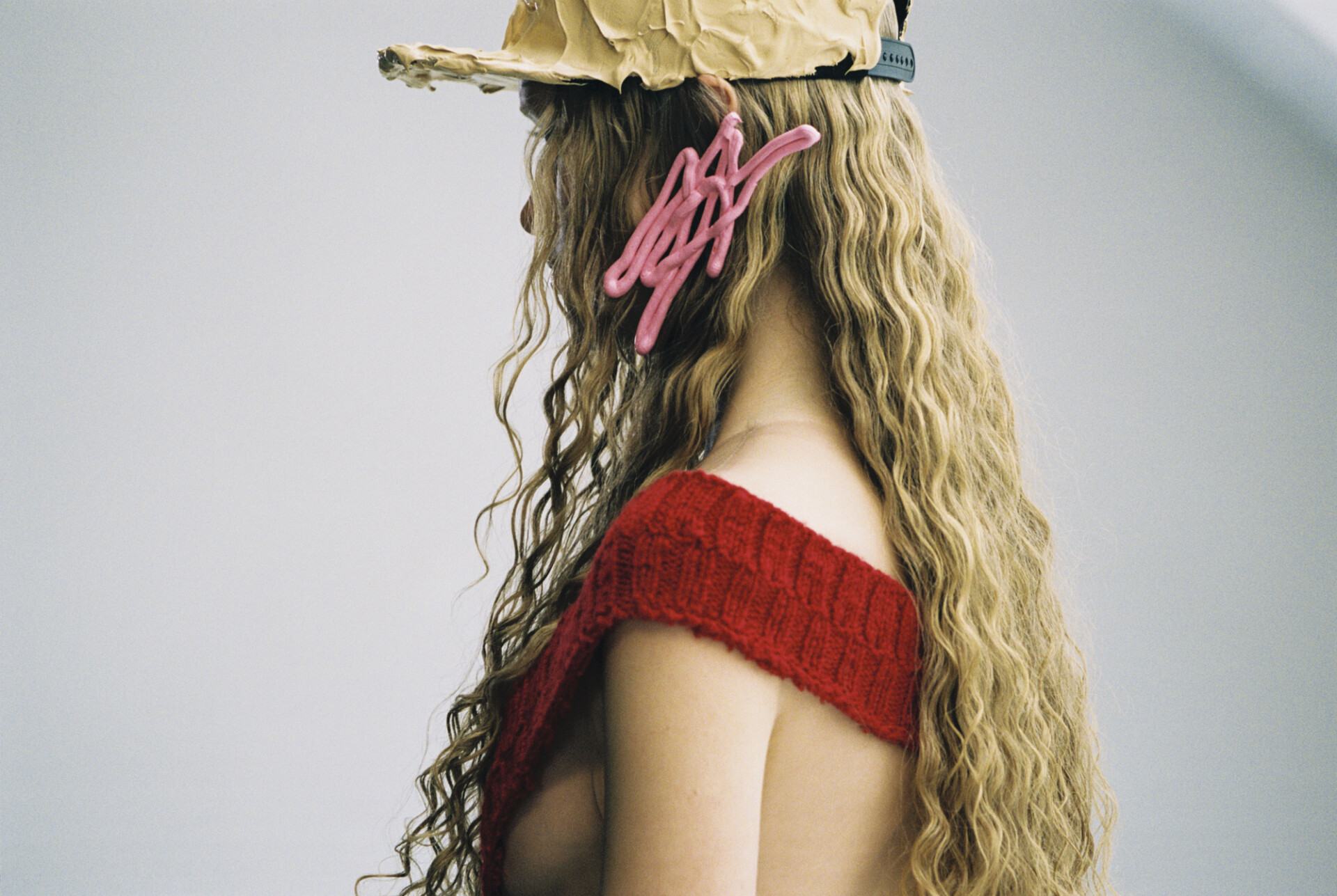
Photography by Vitali Gelwich.
Clothes are inherent to being human—it is our second skin, a layer that some never shed. They have always been with us, and yet, the way we perceive them remains largely unchanged. Berlin-based designer Kasia Kucharska is exploring this relationship with her eponymous label, rethinking not only how clothes are made but where they originate.
Latex is her medium of choice—a material charged with associations yet rarely explored in everyday wear. Kucharska harnesses its potential, using it to question the familiar codes of traditional clothing. Her design process is deeply rooted in craftsmanship; revisiting an age-old technique and translating it through the lens of latex. It all started with her signature scribble pattern, an abstract interpretation of lace, before evolving into new iterations—pushing technology while staying anchored in tradition.
This season marked a turning point. Kucharska staged her first runway show during fashion week, returning to Berlin after seasons of showrooms in Paris. A homecoming of sorts, the collection was a study in origins. SLEEK visited her studio a week after the show, where the momentum was still palpable. “After the show is before the show,” she muses, already deep in the next chapter.
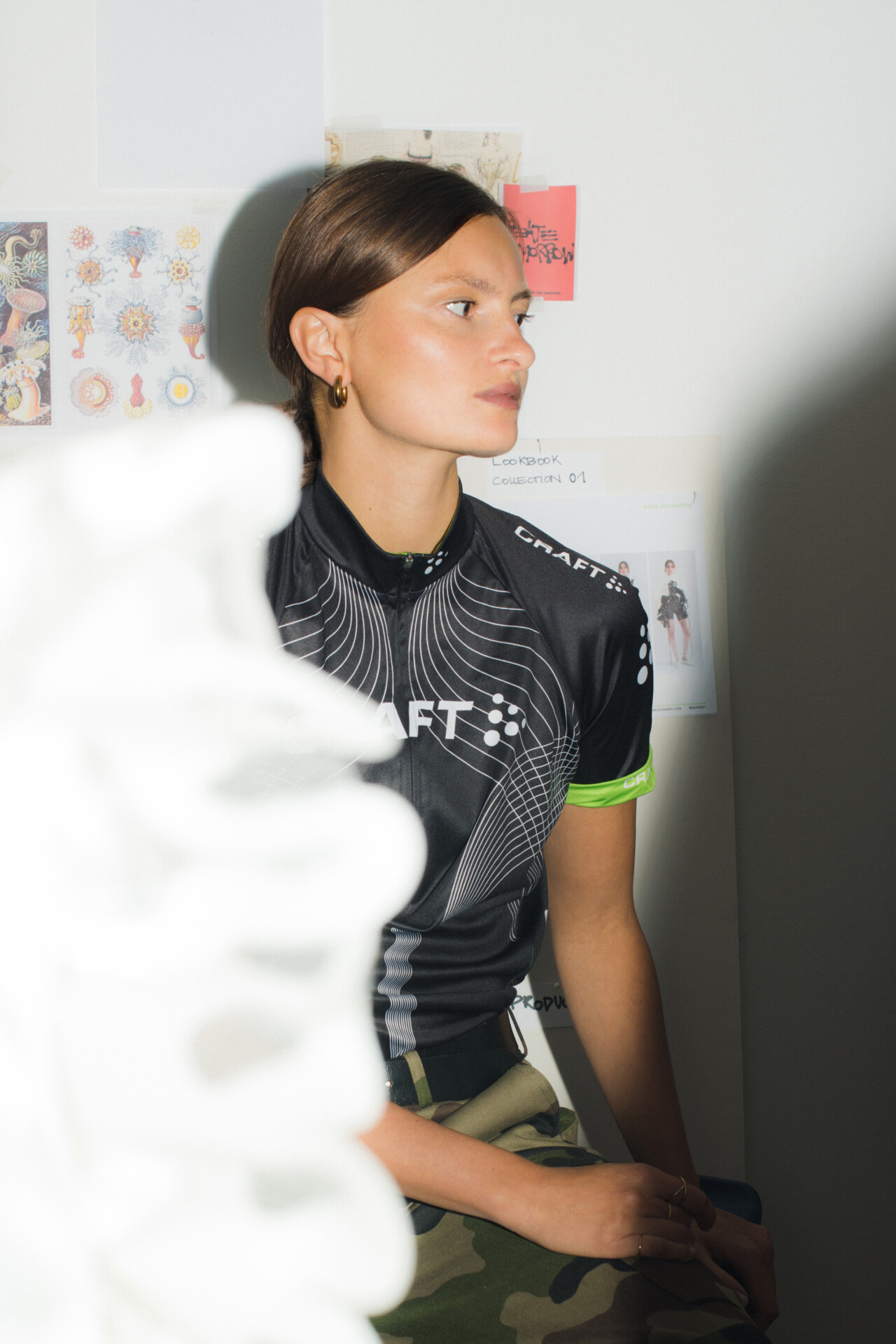
Kasia Kucharska. Photography by Laura Schaeffer.
SLEEK: Your approach to design not only explores innovative materials like latex but also challenges traditional techniques by eliminating sewing. Do you see your process as a step toward making fashion more accessible, particularly in relation to the conventional path of a designer?
Kasia Kucharska: It all started during my studies at UdK, where the emphasis was more on conceptualizing ideas than on traditional craftsmanship. This approach resonated with me. The process of making clothes has remained largely unchanged for centuries, despite the many advanced techniques used in other industries that could be applied to fashion. Yet, even now, designers continue to rely on traditional tailoring. I knew there had to be other ways.
S: Does your process require a deeper understanding of fashion technology compared to traditional sewing?
KK: I think our approach involves questioning clothing at its core—we dissect everything, examining its codes, references, origins, and purpose. We break garments down and reconstruct them in new ways. For our last collection, we deconstructed sweaters and reassembled them using our signature material, latex, replacing traditional stitching with adhesive techniques.

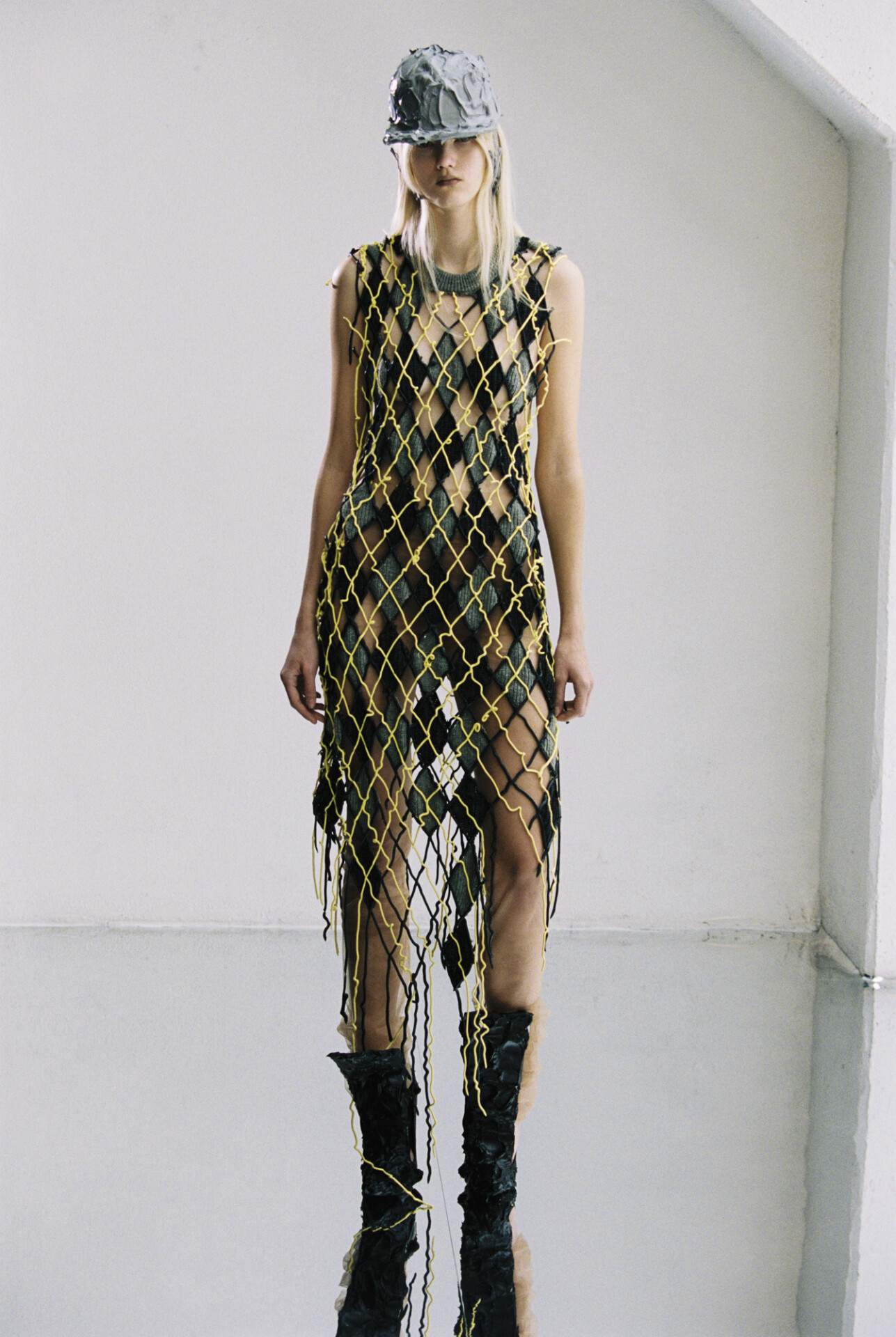
Photography by Vitali Gelwich.
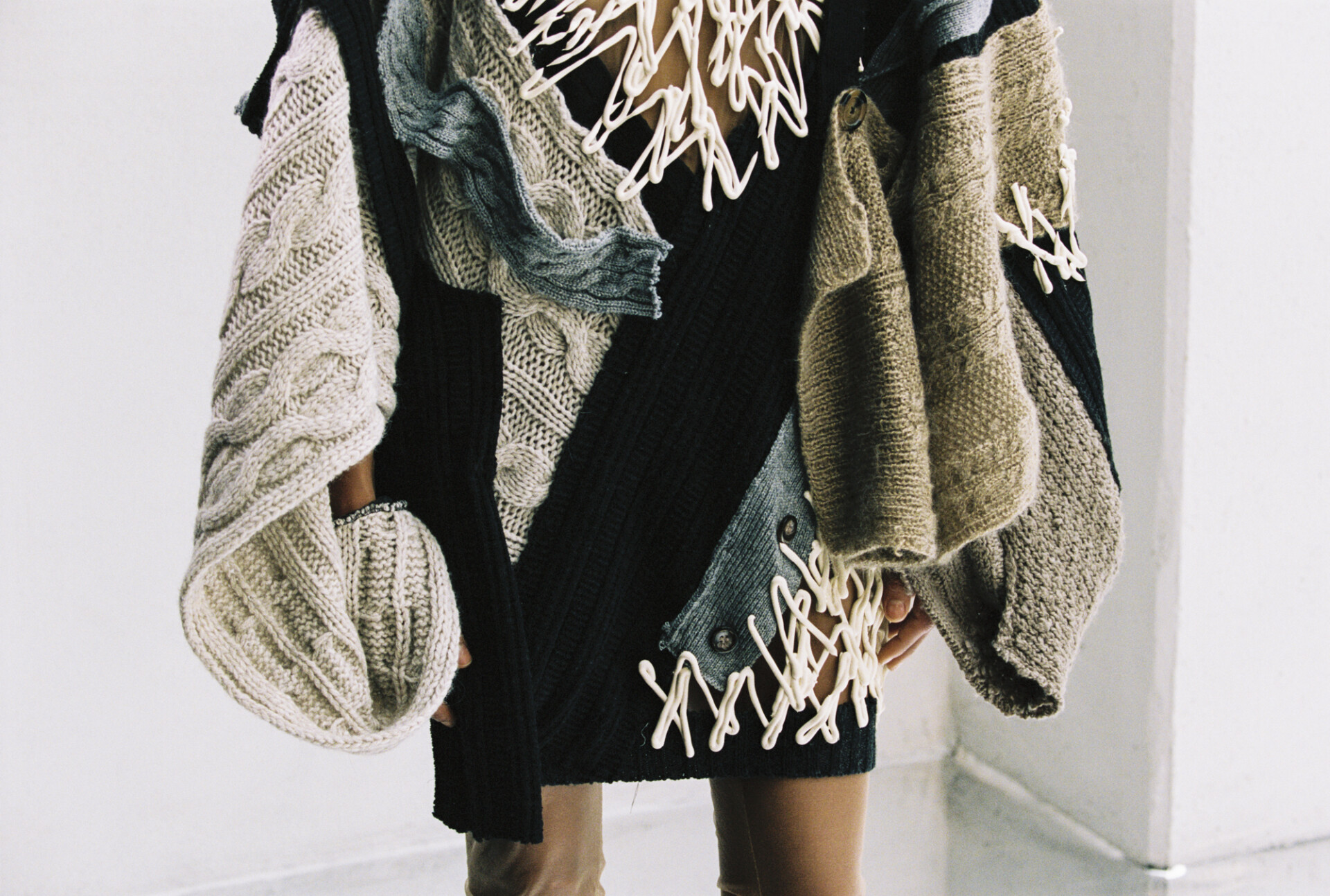
Photography by Vitali Gelwich.
S: Your latex patterns started with lace-inspired designs and have continued to evolve. What drives you to keep creating new patterns?
KK: We’ve been working with latex for four years now, and our scribble pattern was the first one I developed. It came about very intuitively and remains our most popular design. In fashion, there’s always pressure to introduce something new each season, but that pattern has become our signature—it’s what our clients love most. At the same time, we’re always exploring fresh ideas. For this collection, we experimented with new techniques like heat transfer on T-shirts with silicone imprints.
S: How do you continue evolving while staying true to your strong brand DNA in latex?
KK: With this collection, we went back to our roots. We’ve introduced new patterns each season, but this time, we wanted to fully embrace the scribble pattern—what people love most about us. We also reintroduced cotton, which played a big role in my master’s degree project but later took a backseat as I focused more on latex. Cotton and shirts are essential to my concept because lace has traditionally been a key element in shirting. Bringing it back into our DNA felt intentional and grounding—latex always benefits from a material contrast that makes it feel more tangible. We’re also pushing things forward in small steps; this season, we explored knitwear with our argyle dress. It’s always a process of trial and error.
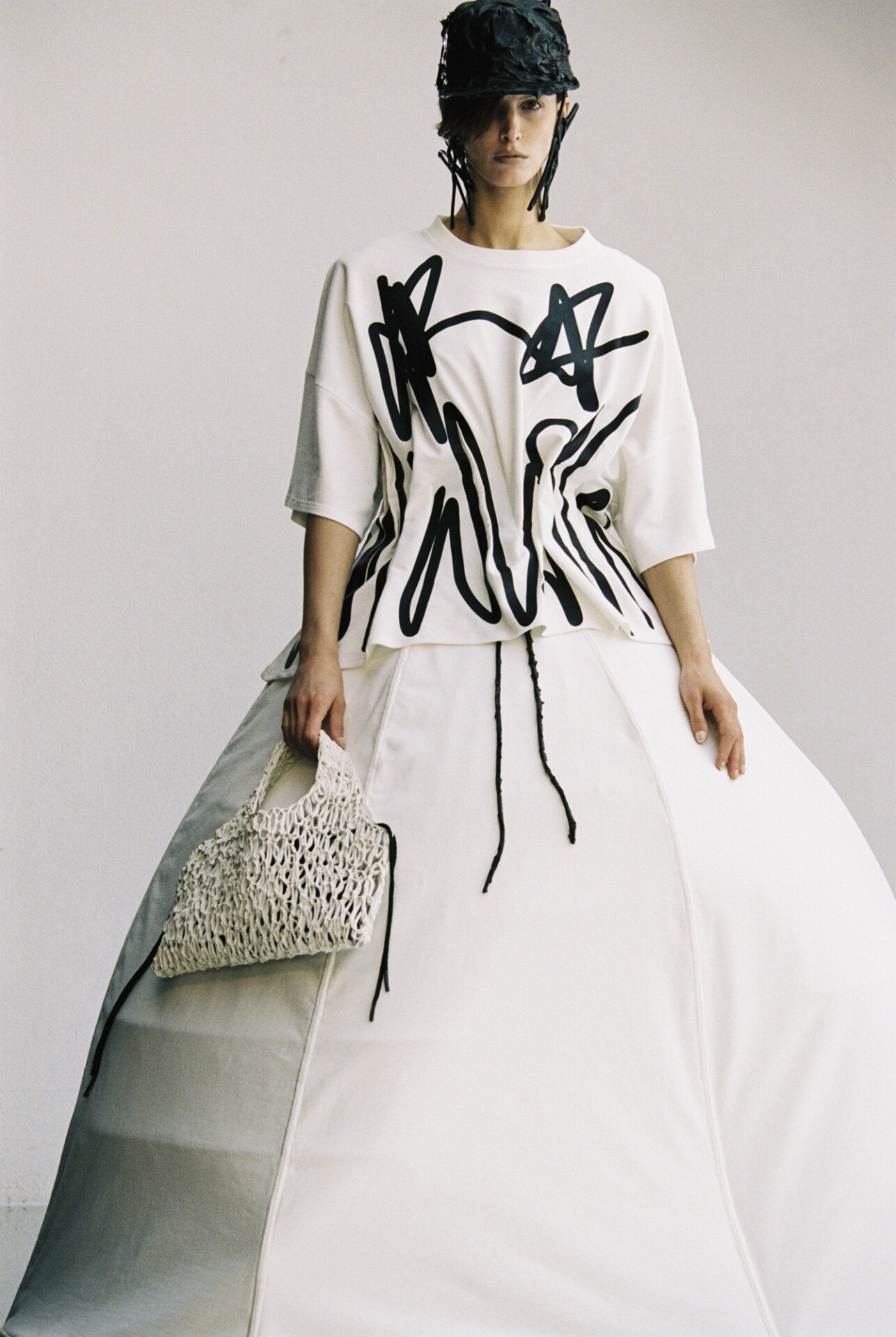

Photography by Vitali Gelwich.

Photography by Vitali Gelwich.
S: Your patterns reference traditional designs, yet your material choice is unconventional. By reinterpreting these techniques through latex, would you say Kasia Kucharska pieces are meant for everyday wear?
KK: That depends on what “everyday” means to the wearer. Our clothes are designed, first and foremost, to be fun and empowering. They don’t have to be comfortable or easy to wear—that’s not the point. It’s about standing out, making a statement, and embracing a bit of showmanship. If you’re bold enough, you can integrate them into your daily wardrobe. From a latex perspective, they may not be considered practical, but they don’t need to be.
S: Do you think it’s possible to design with latex without referencing traditional techniques?
KK: I believe we always need something to ground us—a reference point, whether it’s social codes or historical traditions. It’s important to engage with these ideas. Even though we abstract them significantly, our inspirations are always rooted in something real.
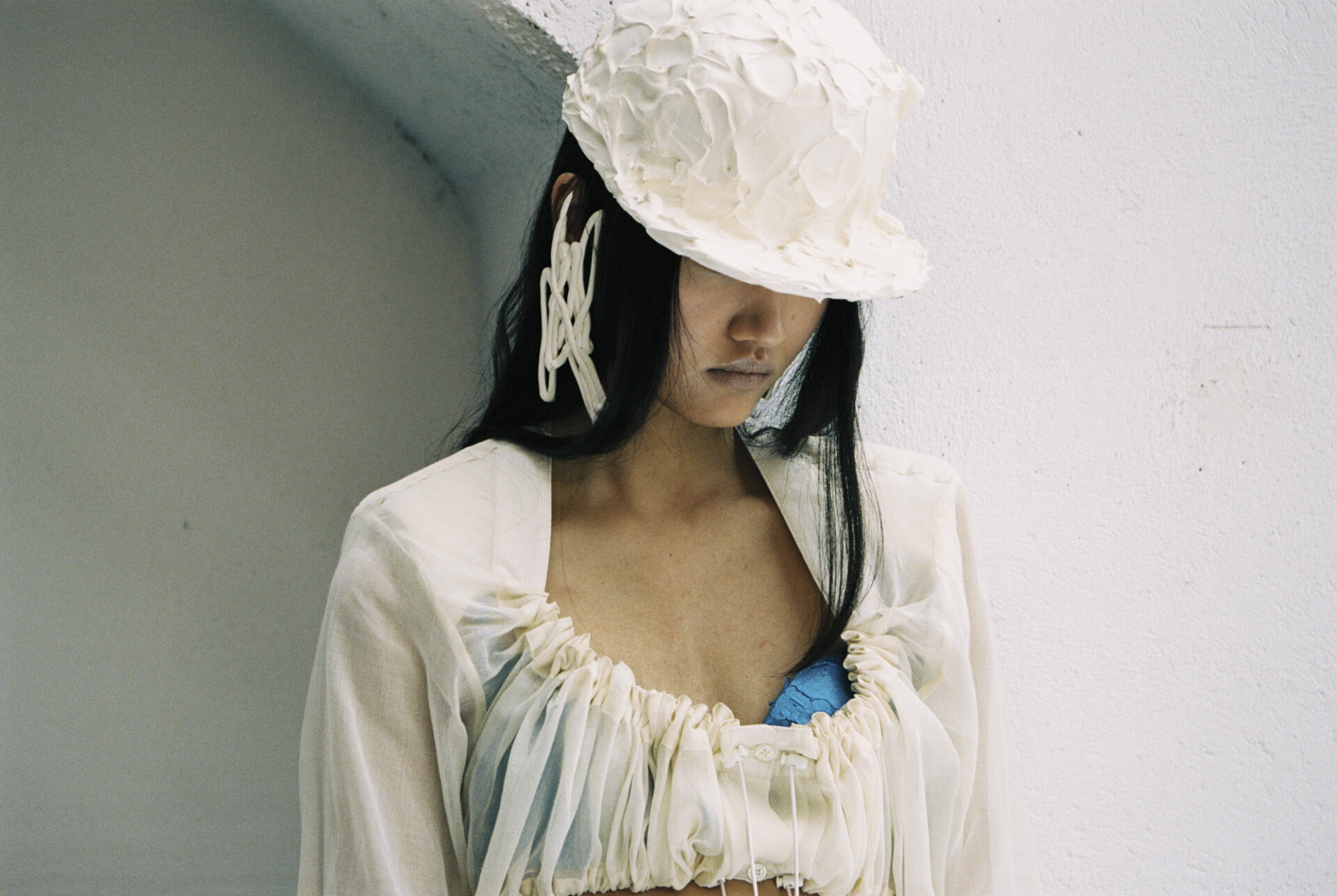
Photography by Vitali Gelwich.
S: Is it a reflection of the zeitgeist that fashion alone is no longer enough, and we need to draw from other industries, like you do with 3D printing?
KK: In a way, fashion has already explored so much—every piece in this room can be identified and traced back to its historical origins. But I see fashion as a medium that isn’t exhausted yet. The industry often works through a process of sampling, taking elements from different eras and recontextualizing them. For me, craftsmanship is key because there’s so much potential to reinvent fashion, rethink how we perceive it, and even improve or simplify production processes. I want to surprise, to introduce new impulses, and to prove that alternative approaches can work. Fashion, like society, faces ongoing challenges—economic, political, and environmental. It needs to evolve in response. We see ourselves as a craft and experiment lab, using fashion to comment on current moments and trends that feel relevant.
S: Have we reached a point where nothing truly new happens in fashion? Were past eras more defined by distinct changes?
KK: I don’t think so. Every era has its own defining tendencies. Ours is digitalization—we’re experiencing it in real time and are the first generation to fully harness its potential. But every period in history had its own necessities and driving forces. Our advantage is that everything is well-documented and accessible. We have an enormous archive of history to draw from, allowing us to learn from past mistakes while continuing to build on what worked.