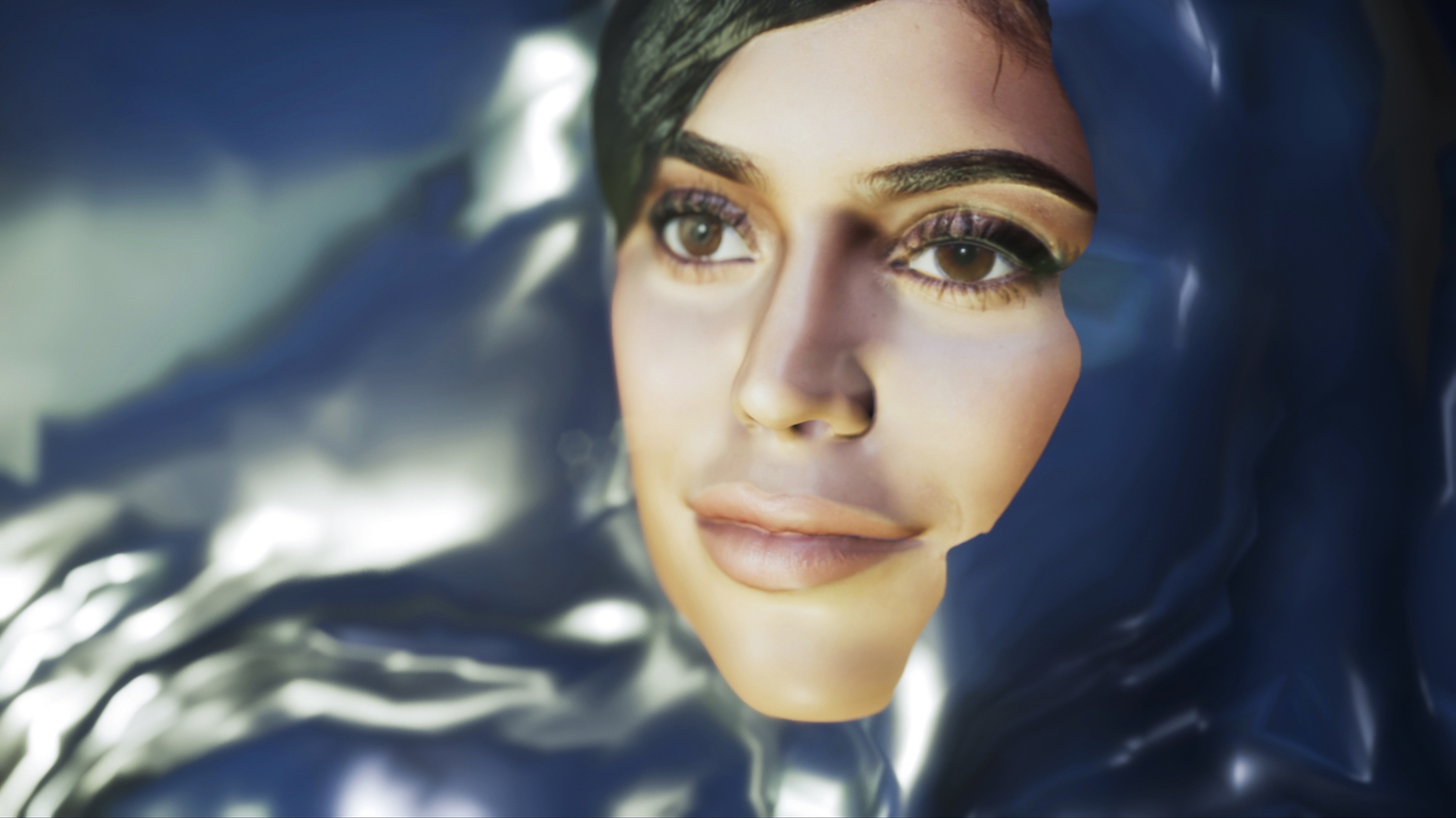
From Feel My Metaverse, 2019. Courtesy of Keiken.
“A lot of the outcomes and approaches we take to making work are informed not so much by seeing a piece of work but by experiencing something,” says Isabel Ramos, one of the founding members of London-Berlin-based art collective Keiken, whose hybrid practice involves moving images, virtual and augmented realities, and spoken word.
The idea for the collective came about in 2014 when Ramos, Tanny Cruz and Hana Omori were studying fine art at Falmouth University in Cornwall, England. “What we really wanted to do was truly collaborate, not just to have individuals working alongside one another. The overarching idea was this concept of different experiences,” explains Ramos over Skype. Since then, the collective has grown to include collaborators in both London and Berlin, including fellow Falmouth alumni George Jasper Stone, multidisciplinary artist Suzannah Pettigrew and digital artist AGF Hydra, among others.
Together, they have brought their performative lecture and evolving project Honey, I’m Data (2016–), critiquing white male Silicon Valley narratives, to IMPAKT Festival in Utrecht as well as SPACE Art & Technology in London. In January last year, they also spoke at DEFRAG in Somerset House and appeared at Technology and its Intersections, hosted by London’s ICA in March. This month, they will appear at Transmediale festival in Berlin for the second year in a row. Their aims are to “question the boundaries of experience” and to foster “a mutual appreciation of each other” while making explorative artistic experiences existing at the intersection of collective research, technology, sound and immersive design.
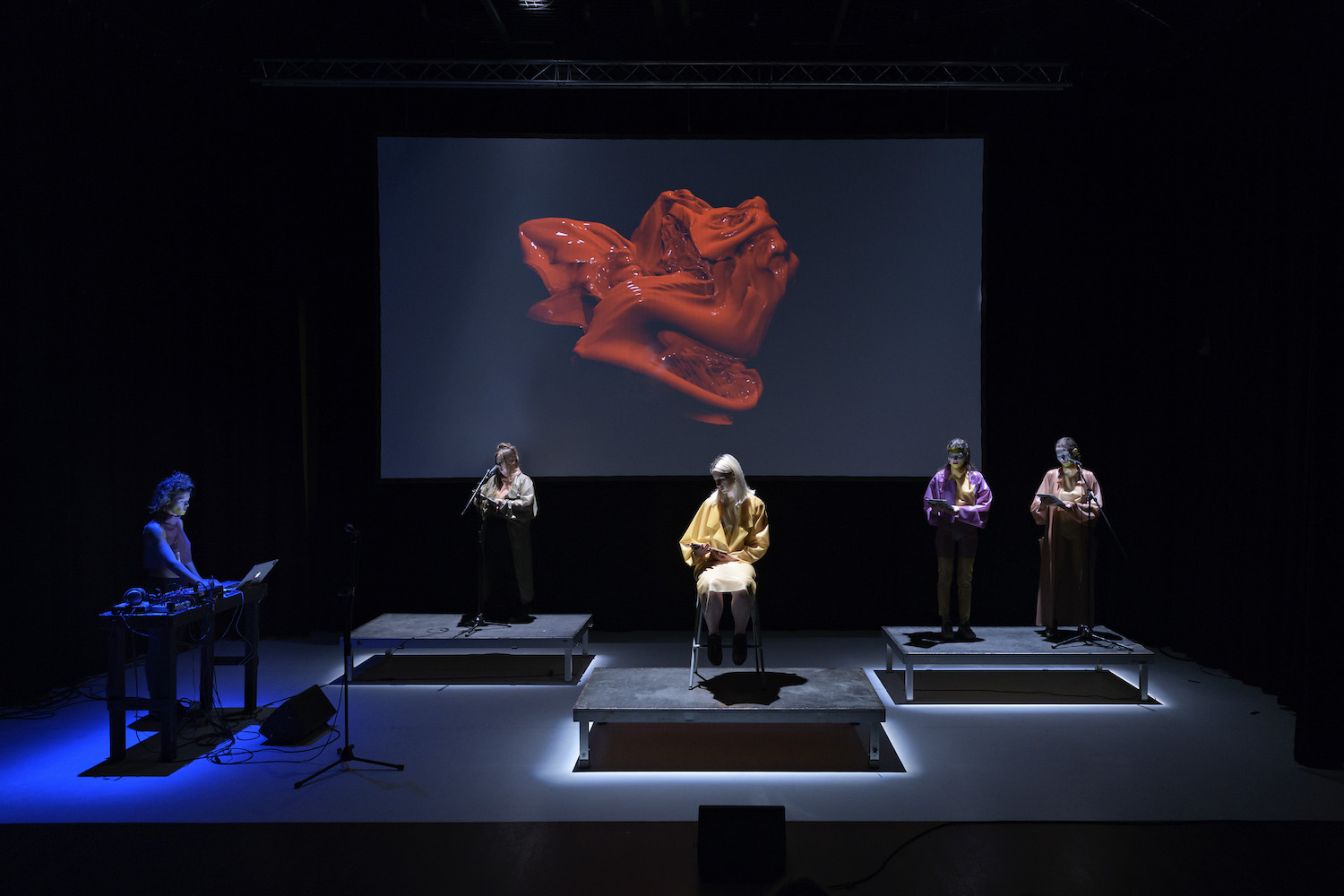
KEIKEN, Honey, I’m Data!, at IMPAKT Festival 2018, Utrecht. Keiken in collaboration with Suzannah Pettigrew, AGF HYDRA, George Jasper Stone and Nati Cerutti. Photo by Pieter Kers.
According to the group’s founders, the concept of “world-building” is integral to their creative methodology. “We wanted to make a space where you can have multiple people working at the same time, but is to some degree like world-building because it allows multiple inter-forking narratives to exist,” explains Ramos. “A world is held up by multiple perspectives, so therefore you need lots of different people for a world to be believable. But, at the same time, a world needs to have individual paths and journeys, so therefore [world-building] is a really good model to allow people to work both collectively and individually,” adds Omori. “Working collaboratively you have to really let go of your ego to work successfully with someone else,” continues Ramos. “For us, because we have all worked together for so long, we left our own personal practices behind and now focus on maintaining this entity, with all its different arms reaching out.”
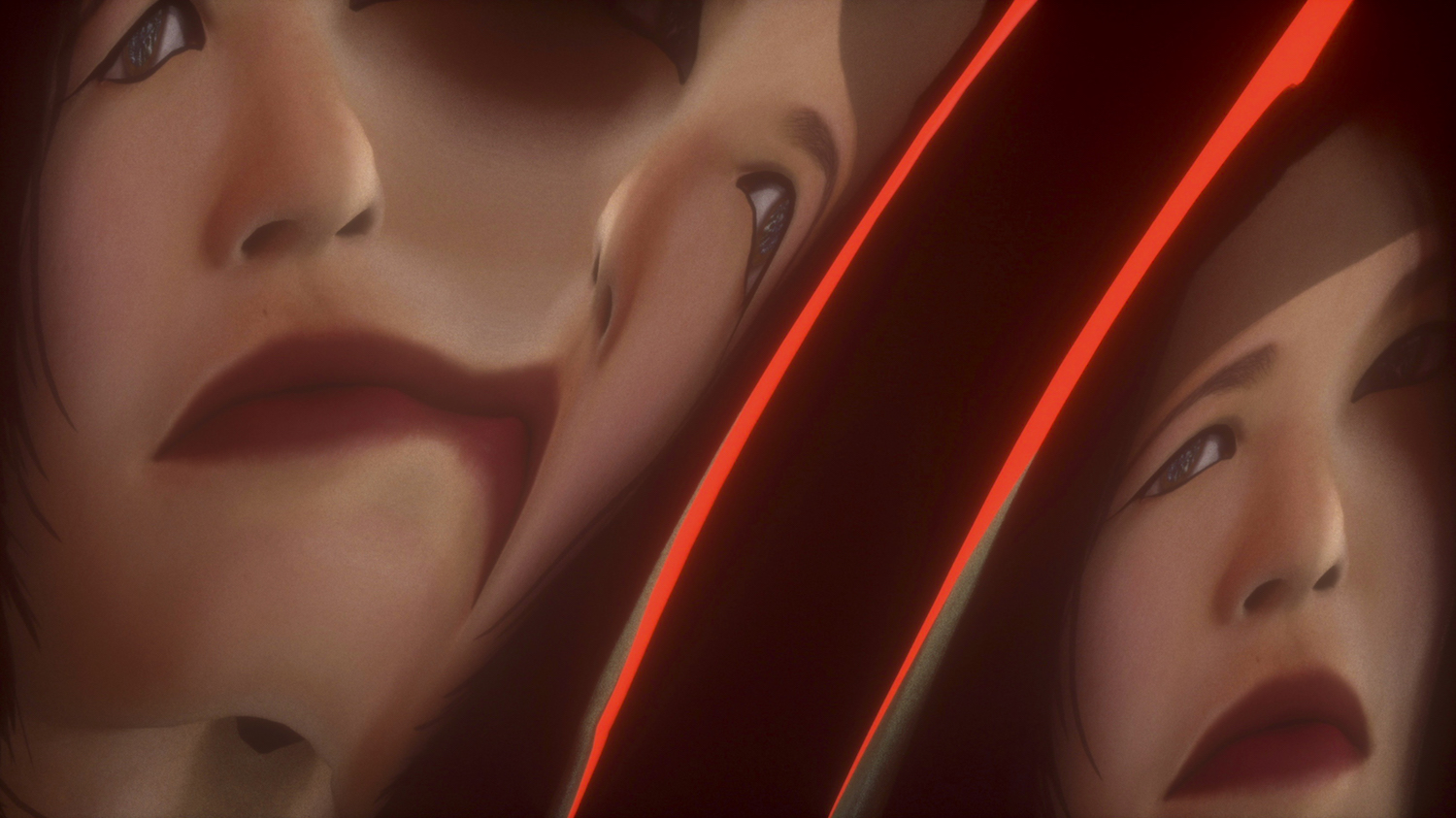
From Feel My Metaverse, 2019. Courtesy of Keiken.
Keiken have applied this expansive, collaborative approach to a spate of new and upcoming projects. Recently, the group were selected for Jerwood Arts’ programme Collaborate!, and exhibited their new CGI film, Feel My Metaverse (in collaboration with Stone) at the London gallery in October. The film is based on the concept of ‘platform diverse body’ by the American designer and transhumanist academic Natasha Vita-More, and probes the idea of human identities surviving simultaneously between real and virtual worlds. Out of these ideas around multiple identities – and a performative lecture with Vita-More, no less – bloomed an interest in augmented reality, and they have subsequently developed face filters, hoping to make the online community more inclusive. “We can show people how they can access software and build something that is an expression of themselves. I think with face filters there is a big online community of people who are making it, but that community is still not very diverse,” says Ramos. “It is still just the people who are interested in tech and it is not extending beyond that … Who’s coding technology and leading the research? It tends to be white men. I think it’s really important to start using these technologies in a progressive way.”
And what’s next for the future of Keiken? “We want to make more intricate experiences, and allow people to immerse themselves in a world that is very accessible,” says Omori. “We want our work to reach the right people that it’s needed to reach.”
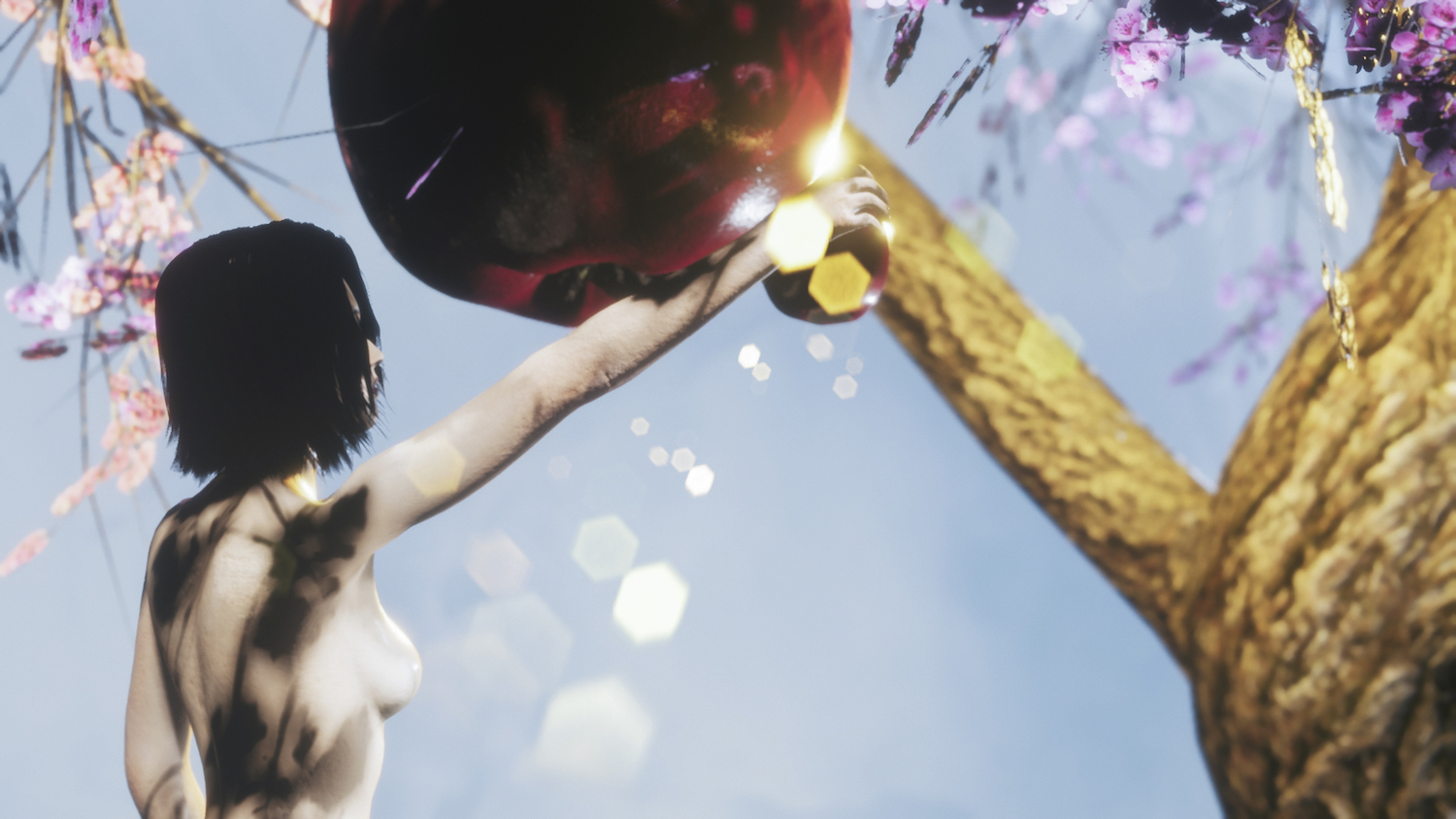
From Feel My Metaverse, 2019. Courtesy of Keiken.
A version of this article originally appeared in SLEEK 63.
SLEEK x THE REED will host an evening of immersive digital art with Keiken and Claudia Rafael of SELAM X Studio at Das Schilfrohr in Berlin on 30 January. More information hier.