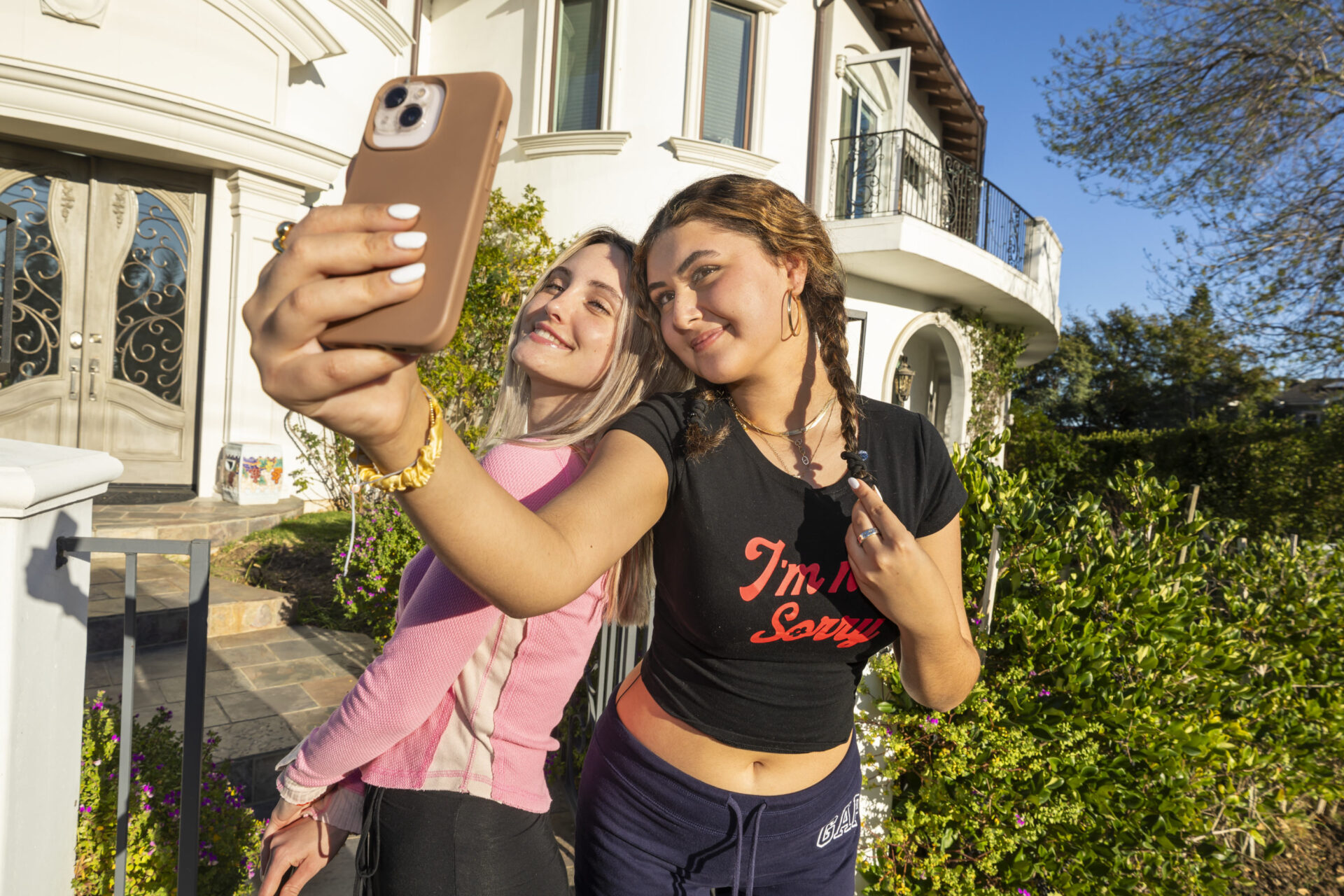
I walk up the stairs to the second floor of Fotografiska Berlin, past the rough brick walls, and before I have properly entered the exhibition, about twenty TikTok sounds hit me at once. Different voices, different songs, all competing for my attention. Anything but a particularly good remix, to be honest. After a long day at work, I catch myself wanting to rush through the exhibition just to get some peace and quiet, so I put on my headphones and carry on.
Sensory overload seems an appropriate introduction to Social Studies, the latest exhibition by American photographer and filmmaker Lauren Greenfield. For 150 days, Greenfield followed thirty teenagers in Los Angeles, collecting more than 2,000 hours of screen recordings. The resulting five-part documentary series has now become an exhibition about growing up online. After three decades documenting American youth and beauty standards, I’m intrigued to see what Greenfield makes of my generation.
Speaking of which, sensory overload is one of those expressions Gen Z has enthusiastically adopted to describe its everyday struggles and insecurities. Our creativity in naming our little ailments probably doesn’t help our reputation among older generations, as to many, we are a lost cause: the TikTok generation, glued to our phones, incapable of concentrating for longer than thirty seconds. You know the story. And frankly, I understand where the frustration comes from.
We are indeed accustomed to constant stimulation and digital validation, and I see it in myself, too. Having grown up partly analogue, I remember when boredom was something you simply had to endure. Now I reach for my phone without knowing why, or think about taking a picture before experiencing what’s in front of me. What bothers me about the usual criticism of Gen Z is how rarely anybody asks why we find it so difficult to put our phones down in the first place. We can take responsibility for what we post, but have considerably less control over the hold these platforms have developed over us. They are designed to keep us scrolling, and most of us started using them before we were even old enough to question any of this.
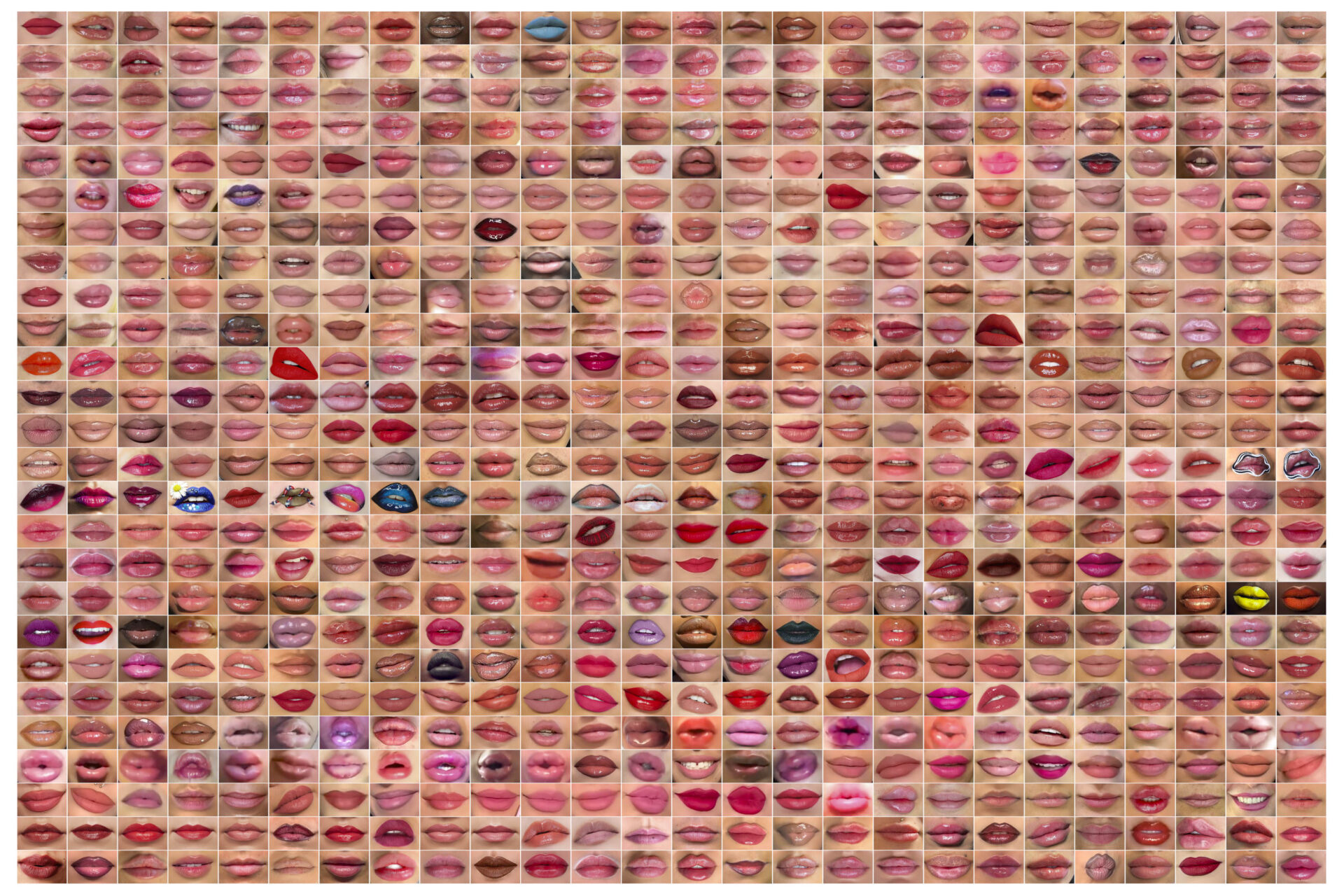
Kylie Jenner Lip Challenge (2025), Courtesy of Lauren Greenfield, Fahey Klein Gallery
Back in the exhibition, harsh flash photography, video installations and enormous social media grids recreate the visual overload of the internet. Against the relatively bare walls, the images seem to compete for attention just as they would on our phones. I find myself wondering whether Greenfield has deliberately made the exhibition as exhausting as the platforms she examines. If so, it’s working, although I’m not entirely convinced that more stimulation is what we need. Teenagers partying, posing, crying, kissing, documenting practically every moment of their lives. Explanatory texts introduce looksmaxxing (the obsessive pursuit of attractiveness), SkinnyTok (content promoting extreme thinness) and whitewashing (skin-lightening trends reinforcing Eurocentric beauty standards). At first, I quietly chuckle at the definitions, as I encounter these expressions almost daily and can only imagine how ridiculous they sound to someone outside internet culture.
As I read on, though, I find myself less and less amused, since almost every term introduces another way of measuring, correcting or finding fault with the human body. Neither these insecurities nor society’s beauty standards are new, but algorithms have changed how fast and how widely they circulate. I think about myself at thirteen or fourteen, when I already had enough insecurities of my own, and genuinely wonder what it would have done to me had I been surrounded by this vocabulary every day.
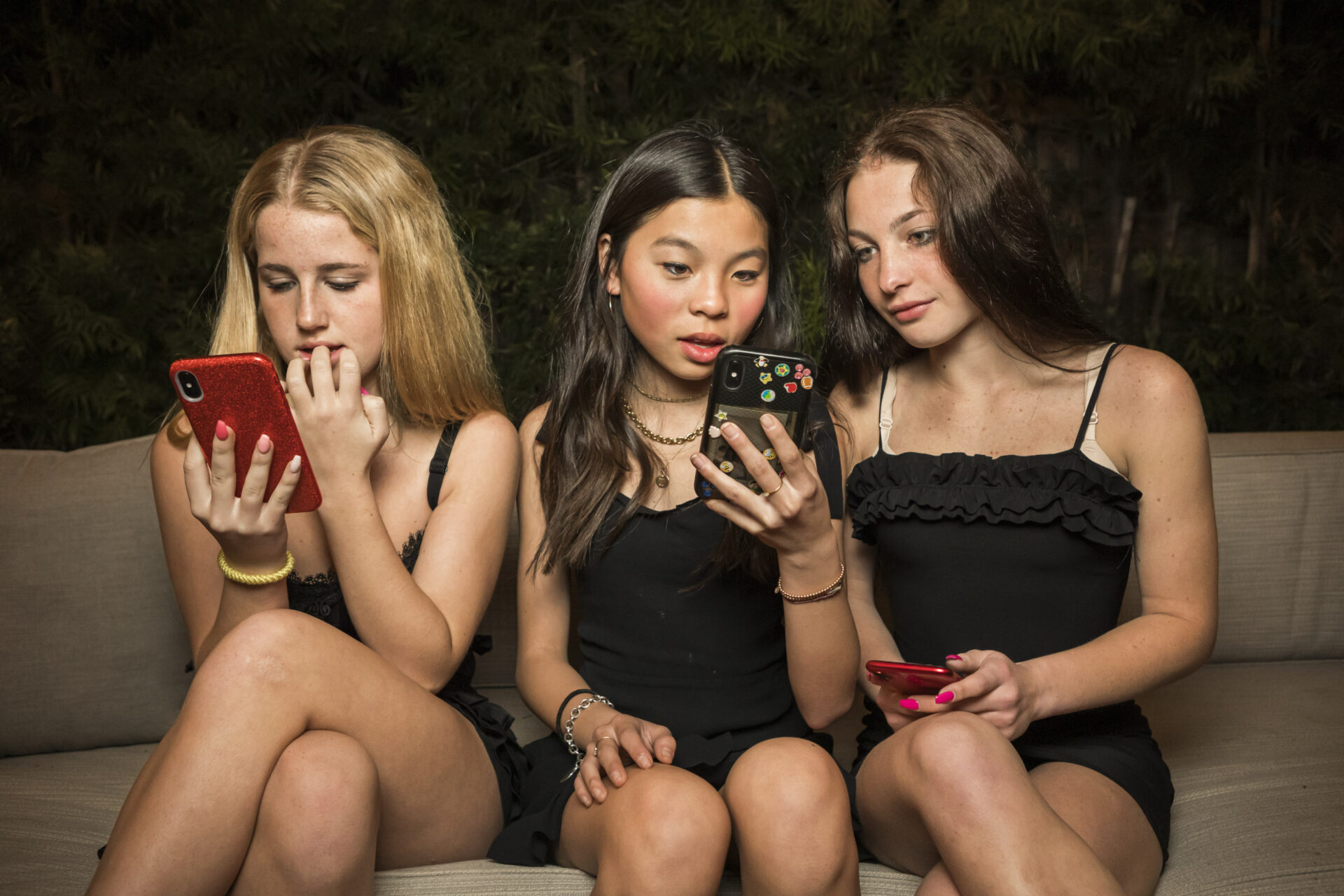
'Devon, 13, Zoe, 14, and Ruby, 14' (2020), Courtesy of Lauren Greenfield, Fahey Klein Gallery
Behind a curtain, a long screen in a dimly lit room shows the feed of Alex, a fourteen-year-old boy. For the first time since entering the exhibition, there’s only one thing demanding my attention. His scrolling session starts with a Golden Retriever in front of the Eiffel Tower. Cute. An hour later, a screen-time warning pops up, which he simply dismisses. Ninety minutes in, videos about male attractiveness have already introduced fantasies of sexual violence. Then comes looksmaxxing and increasingly extreme promises of physical transformation, until, by the five-and-a-half-hour mark, Alex’s feed has reached videos glorifying Elliot Rodger, who murdered six people in California in 2014.
I sit there, my jaw practically on the floor. I knew about algorithmic rabbit holes, but hadn’t grasped how far down they could take somebody. My own feed is full of influencers, advertising and carefully curated lifestyles, although my relatively liberal bubble still broadly reflects the world I encounter offline. Alex’s reality looks entirely different. Five and a half hours. That’s all it takes for his feed to go from a dog in Paris to the glorification of mass murder. Unlike the images in the previous rooms, which I could walk past almost without looking, Alex’s feed makes me stay and watch. We like to say that you are what you consume, and at this point, that expression takes on a rather frightening meaning.
Elsewhere, Greenfield turns to those posting and sharing their lives for everyone to see. Some reach audiences far beyond their friends, unprepared for the attention, and with thousands of strangers watching, hate is never far behind. People comment, insult and scroll on within seconds, while their words can stay with the person on the receiving end for years. Figuring out who you are is complicated enough without thousands of strangers joining in, watching, judging and keeping a record of every mistake you make along the way.
Greenfield argues that adults cannot leave children scrolling for eight or nine hours a day, though what I appreciate most is that she actually listens to the protagonists rather than telling them what to do. For once, I feel seen rather than reduced to my screen time. On The Daily Show, Greenfield says many participants wished for something ordinary: time with friends without their devices. I find that almost heartbreaking, because since when did sitting together and talking become something young people have to actively wish for?
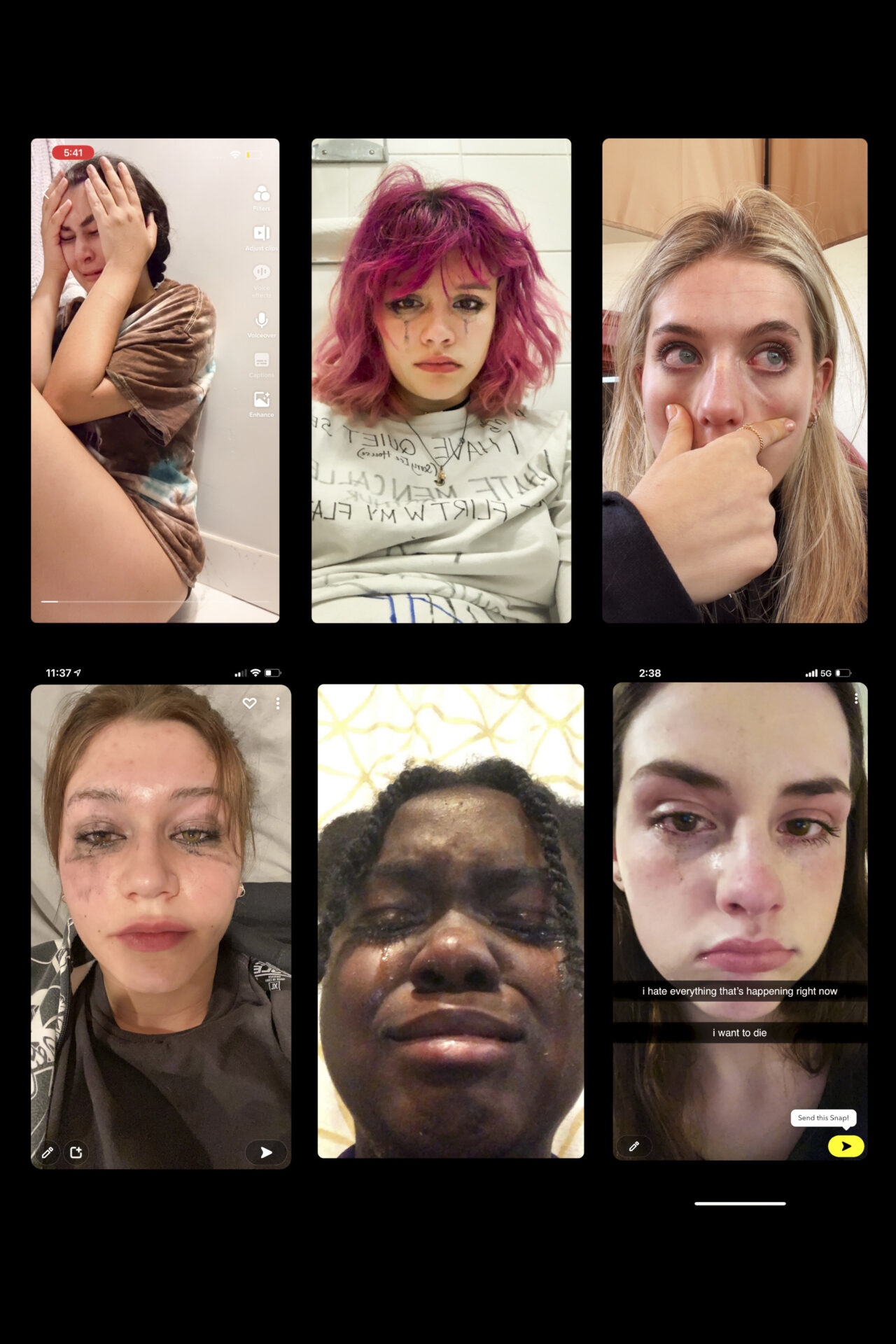
'Crying Selfies' (2025) Courtesy of Lauren Greenfield, Fahey Klein Gallery
Social media quite literally promises us community and connection, yet we become less social by the minute. Everybody has their own insecurities and their own algorithm telling them what to worry about next. Comparing ourselves to others is nothing new, of course, but rarely have we had so many opportunities to do so, or so many numbers telling us how we measure up.
I’m not saying I sprinted out of Fotografiska, but I pretty much did. As the doors close behind me, I feel kind of exposed and vulnerable, having come here thinking I understood how social media shapes our lives, only to leave feeling powerless at how much seems out of our hands. Children are expected to grow up faster than ever, exposed to adult anxieties, expectations and realities through screens they can barely put down, only to be criticised for behaving accordingly.
The more I think about it, the less I know where to begin finding a solution, although at least Greenfield doesn’t pretend to have one herself. Her exhibition makes room for the friendships, support and sense of belonging young people find online, without overlooking the damage these same spaces can cause. More importantly, she gives them the opportunity to speak for themselves. Considering how often young people are told to put their phones down, opening that conversation without immediately passing judgement feels like a good place to start.
‘Lauren Greenfield: Social Studies‘ is on view at Fotografiska Berlin from 26 September 2026 to 12 January 2027.