
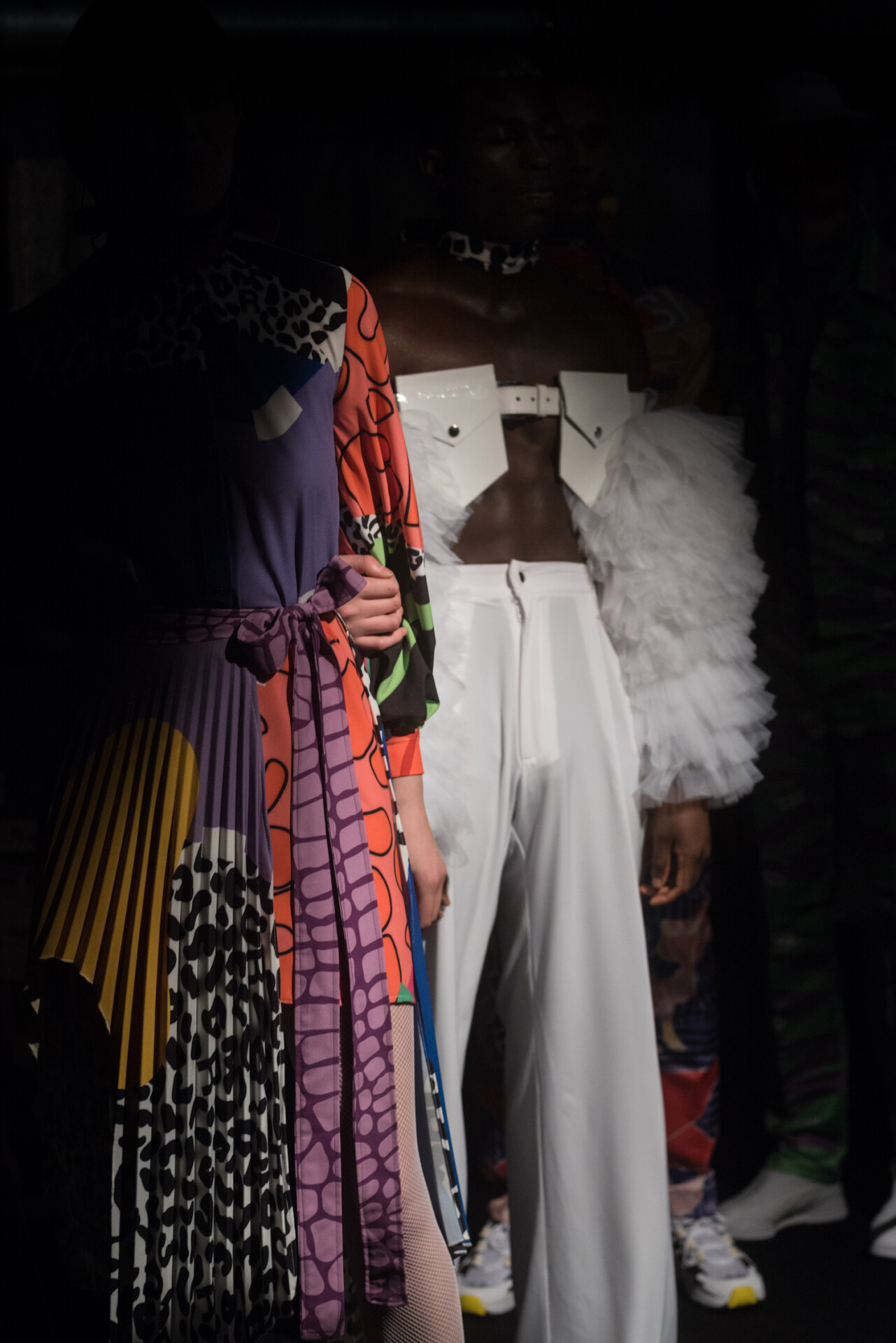
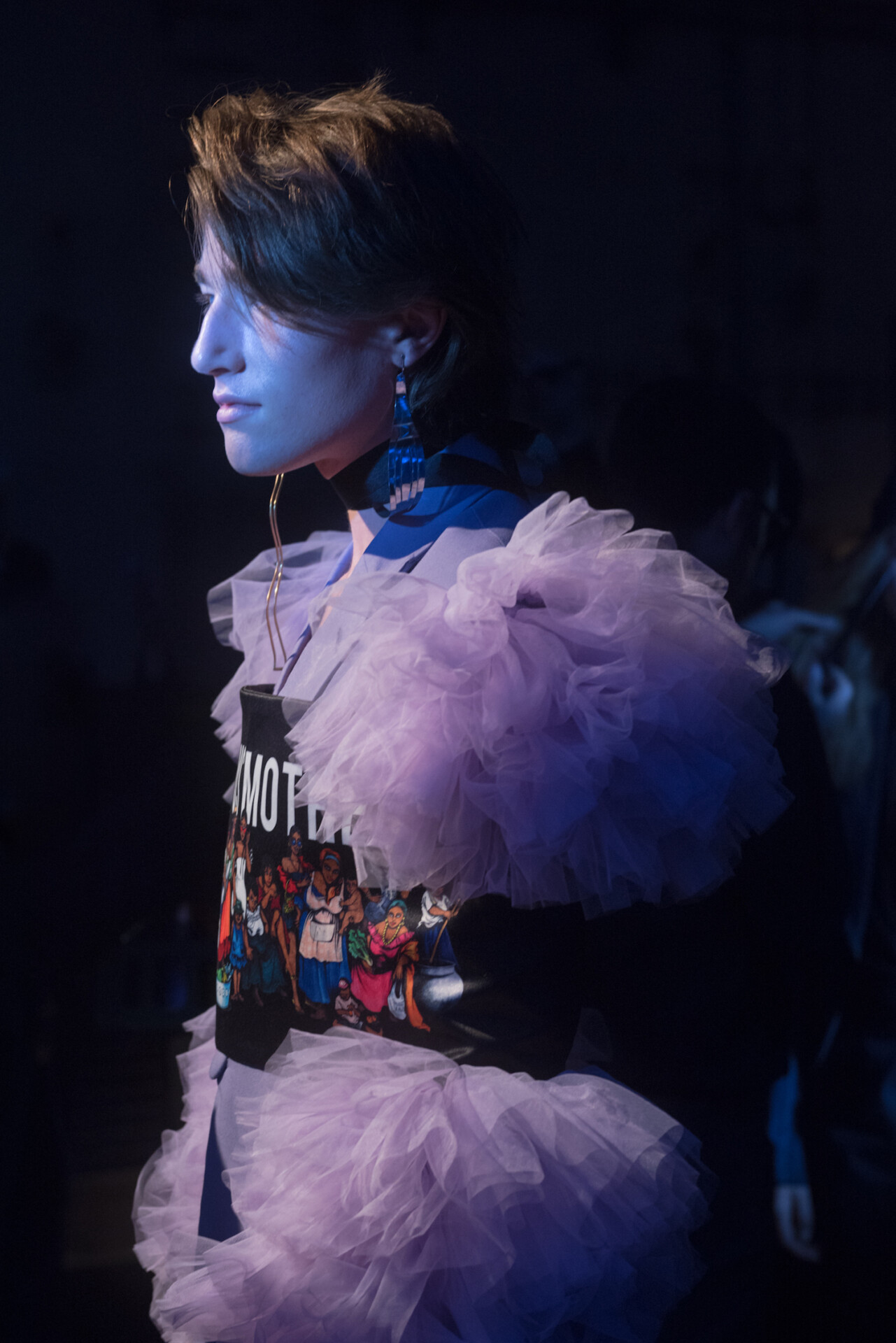
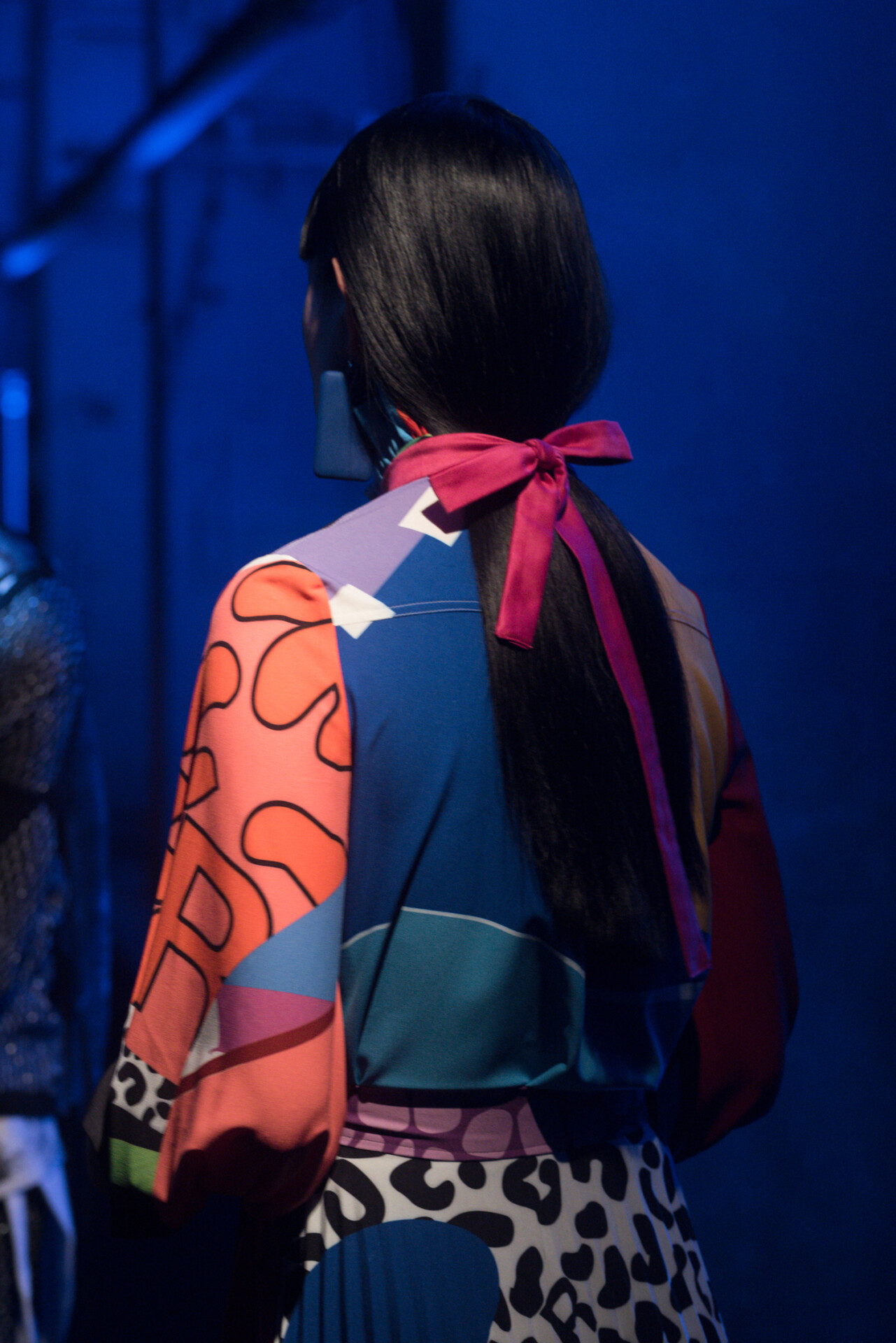
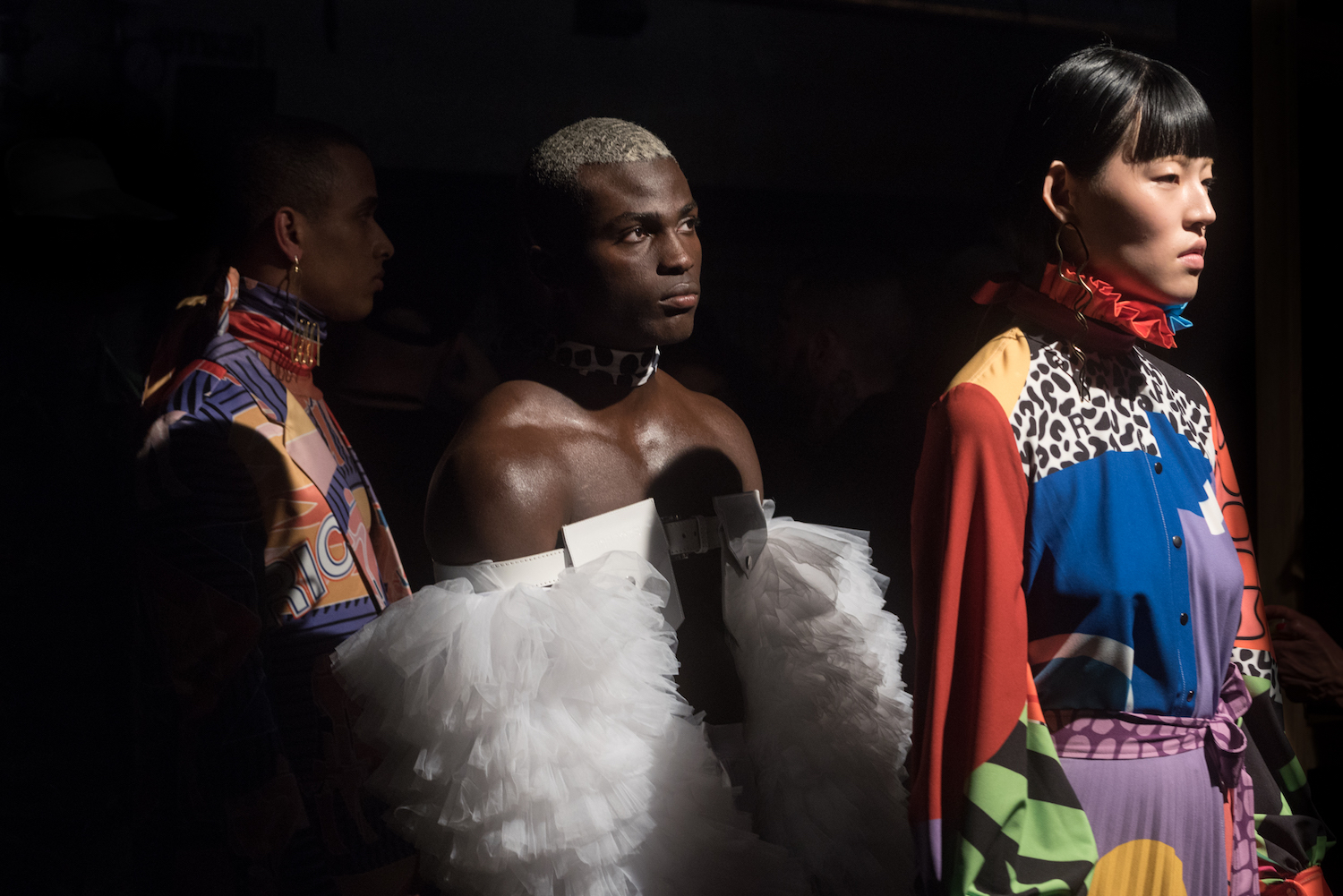
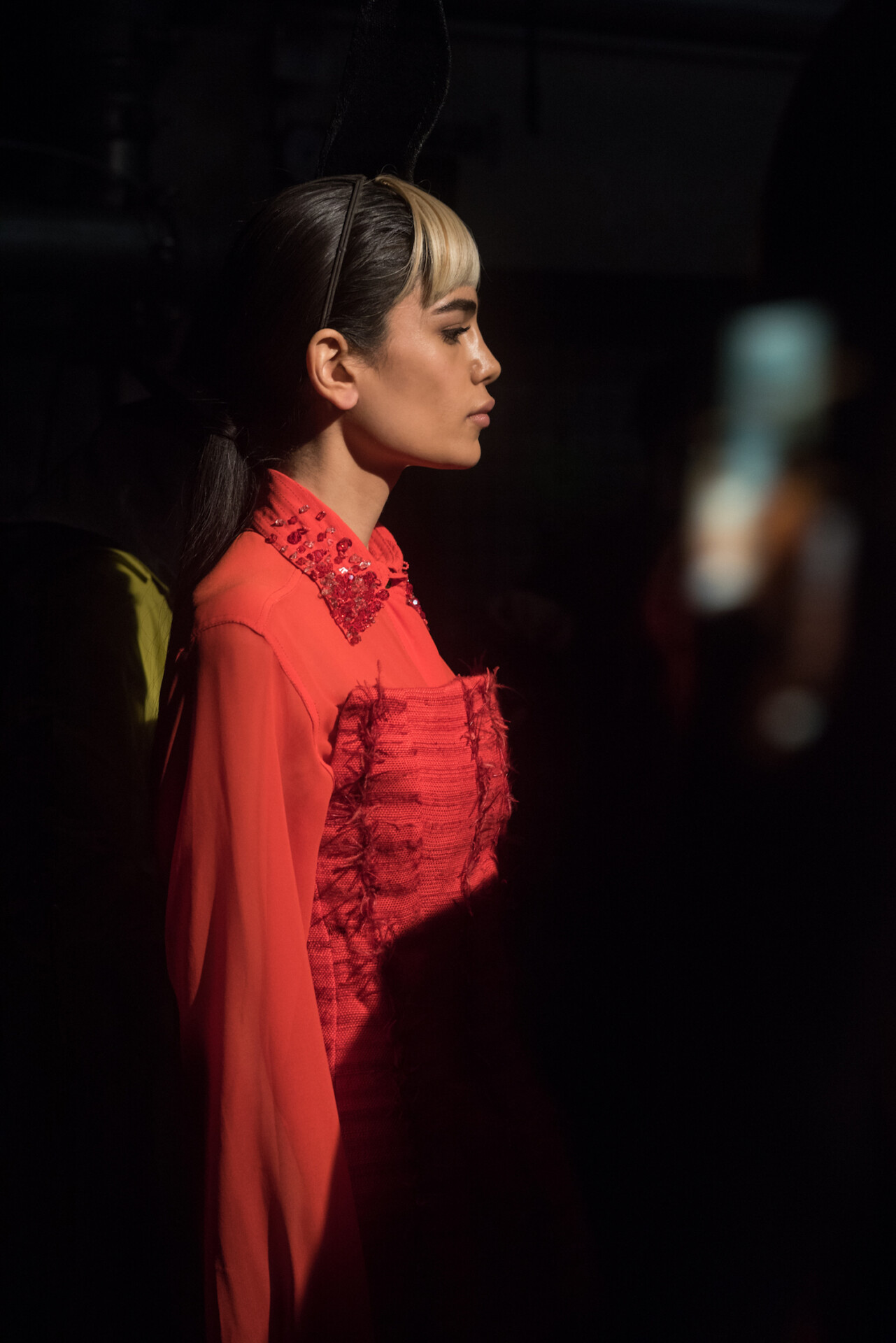
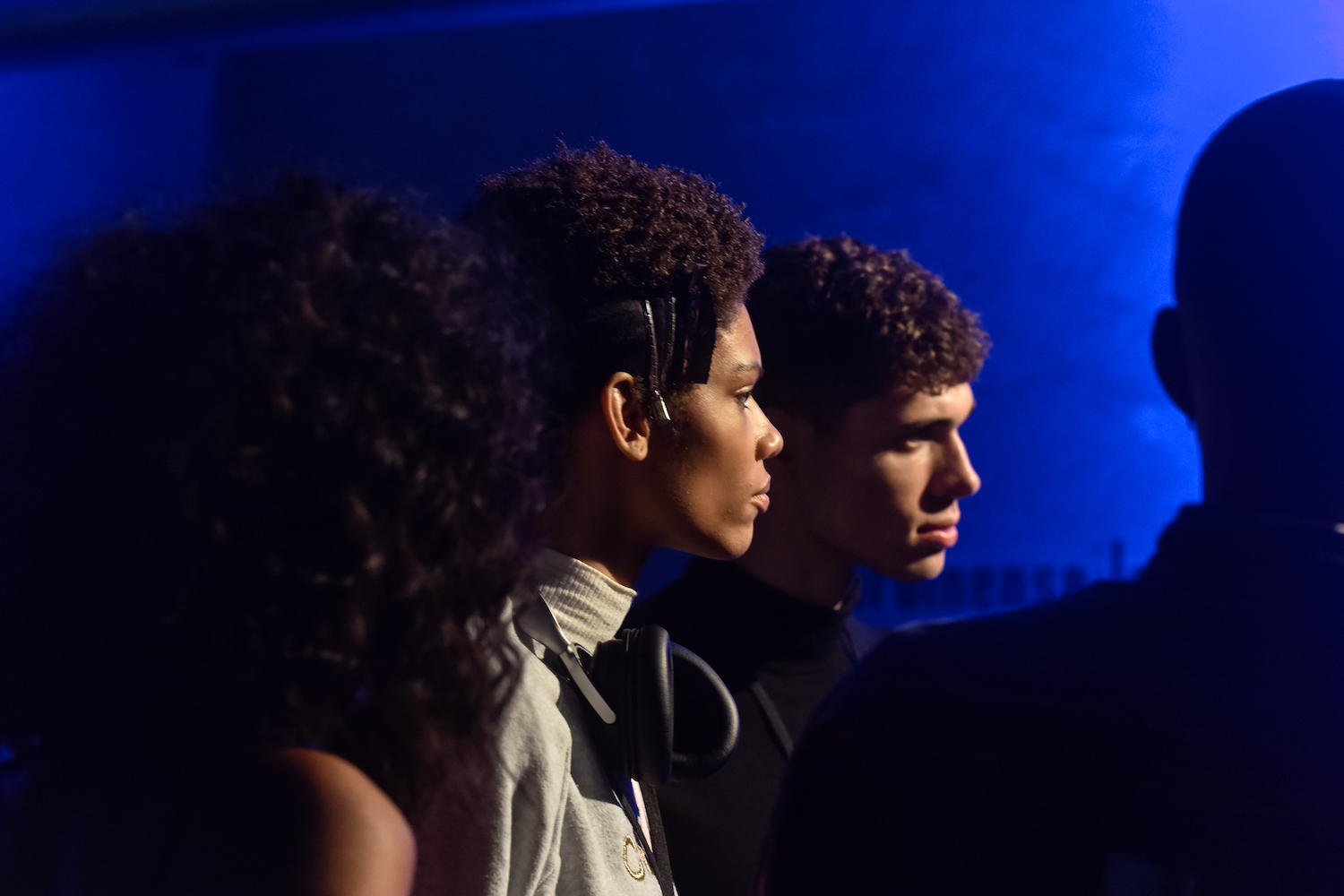
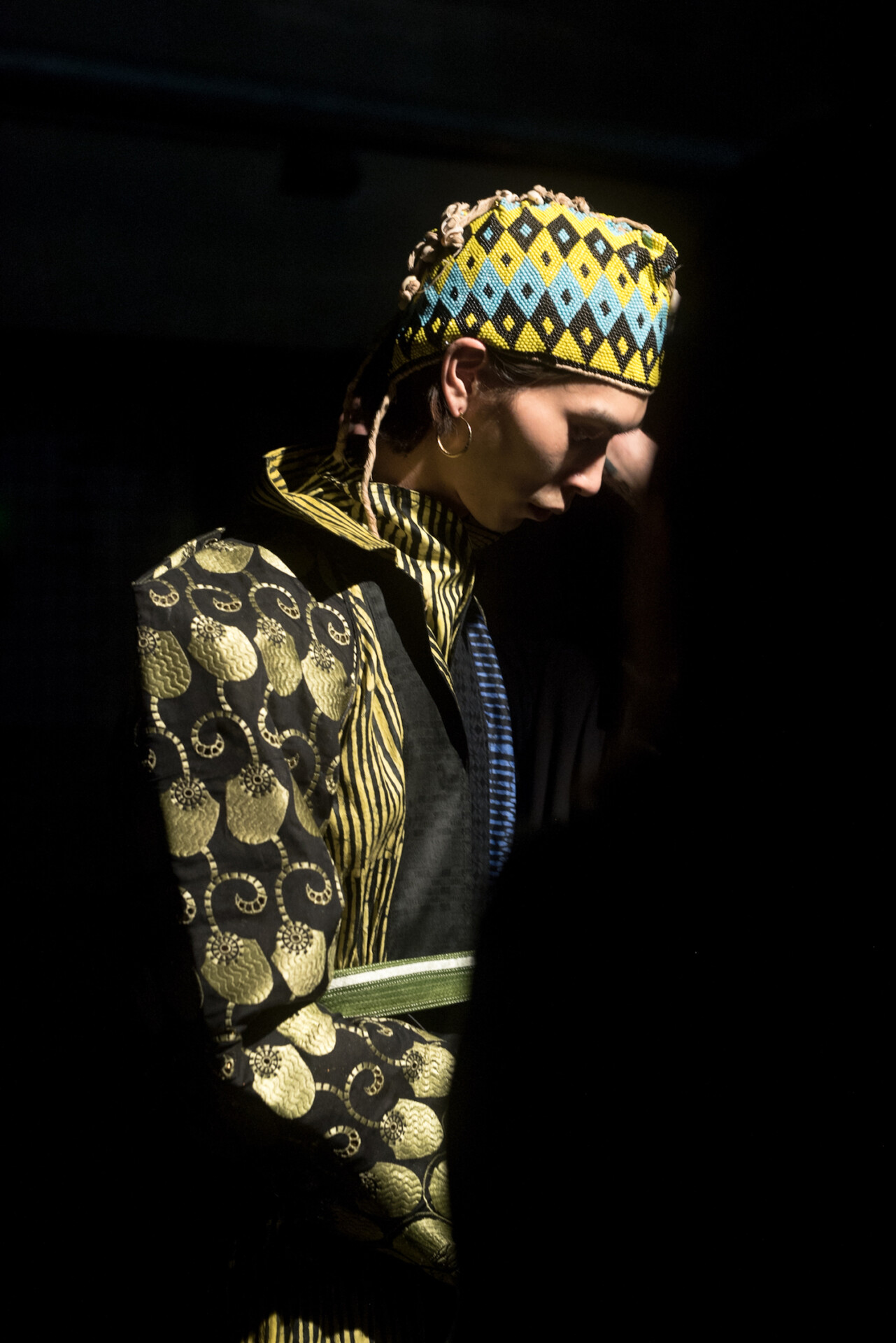
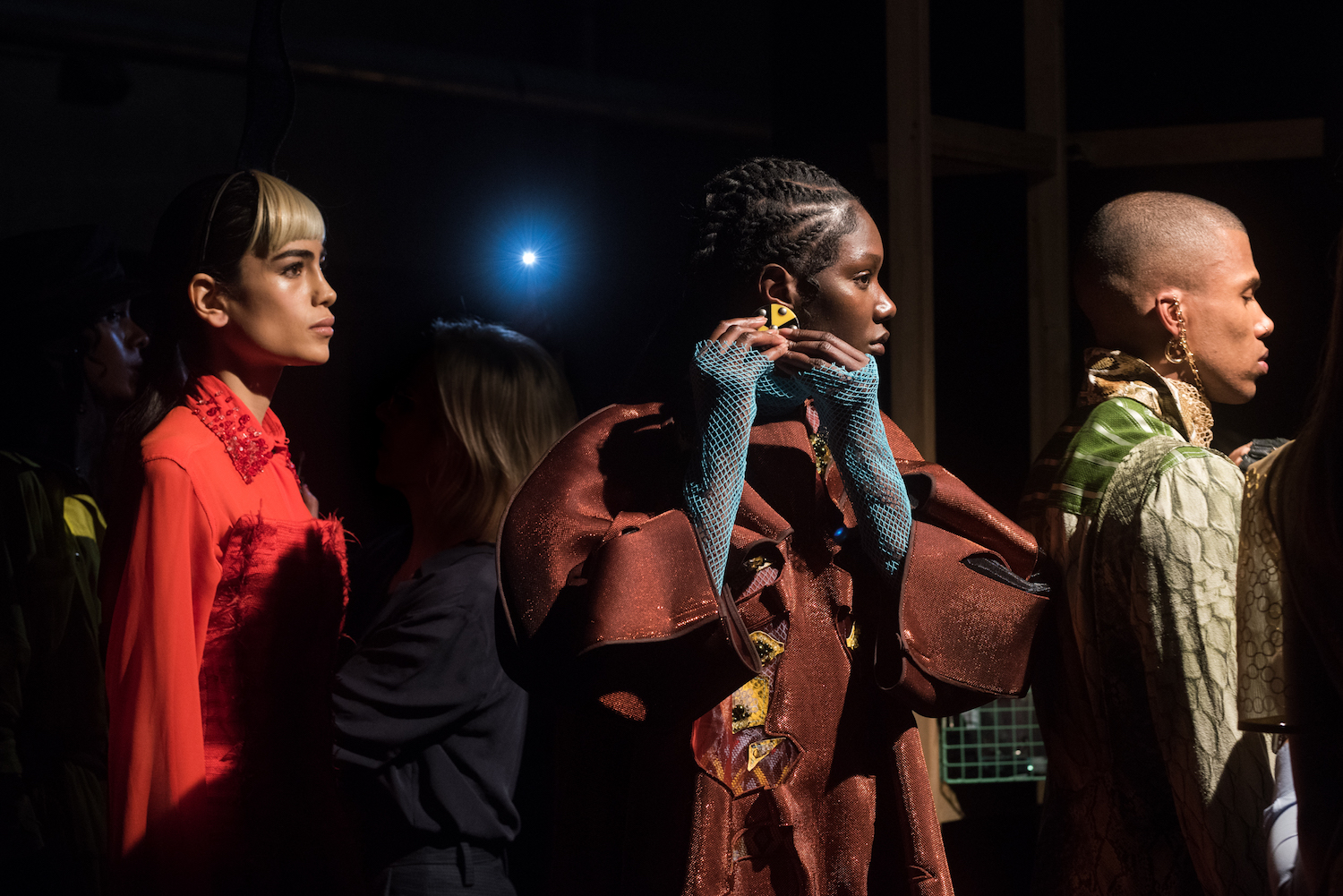
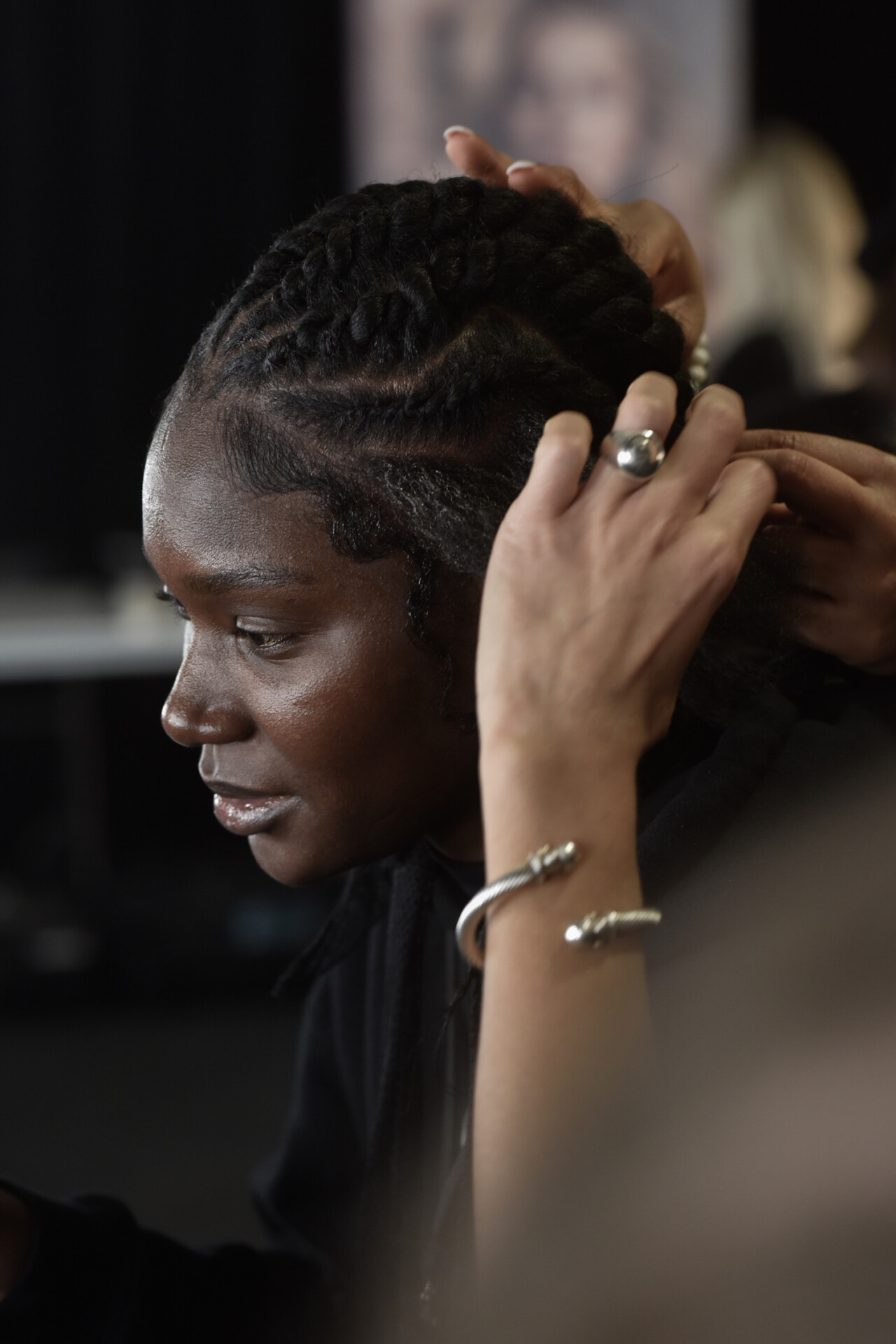
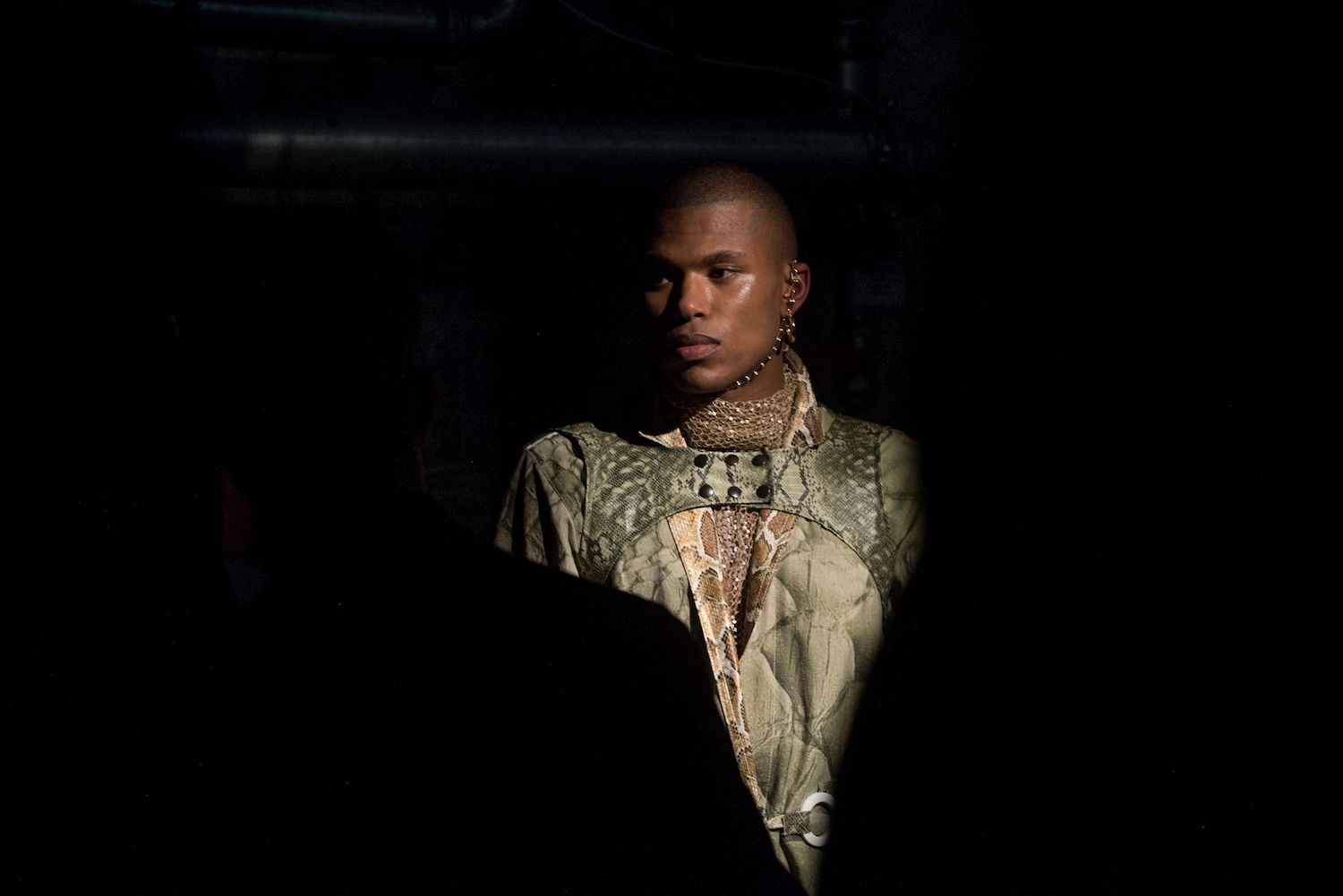
All photography by Lara Ohl backstage at the group AW20 show "Mercedes-Benz presents Fashion talents from South Africa"
There has been a large spotlight on Africa’s fashion scene as of late, with international editors descending upon Lagos Fashion Week and Thebe Magugu, who hails from Johannesburg, becoming the first African designer to take home the most prestigious young designer award, the LVMH prize, in 2019. There have always been diverse design scenes across the continent, but through the strength of online communities, African designers are finding global reach with designs that feel refreshing to audiences fatigued by the traditions of the fashion capitals of New York, London, Paris and Milan. But beyond bringing new style perspectives, the production and industry realities of creating showstopping looks have forced many designers to build businesses that are by default sustainable.
“Fabric is a valuable resource for us, while in Europe it is just a commodity you use to make clothes,” Clive Rundel, who has been running his label out of Johannesburg for more than three decades, tells SLEEK. “Almost every little piece of fabric I buy goes somewhere. We sit with very little waste.” Rundle, Rich Mnisi, Floyd Avenue und Viviers are four South African designers invited by Mercedes Benz Fashion Week Berlin to show their collections in the German capital this week. Their aesthetics and years in the industry vary, but the group is connected by inconsistent resources of their country and the inventiveness they have had to cultivate to manage them.
The South African fabric industry has taken big hits from foreign dumping. China’s textile makers have flooded markets with excess stock, which is sold at low prices and has put pressure on local production, driving many operations out of business. Still, because the imports are excess and not actually fabrics that the designers are ordering, it makes it difficult for designers to maintain consistency. “We don’t get a premier market where you go and order your fabric years ahead of schedule because now in two years orange is going to be big so you make sure you’ve got orange within your collection,” says Avenue tells SLEEK. “If you make an orange jacket, it’s because that is what was there.”
While some, like Rich Mnisi, have scoured the imports to see what he can reliably depend on to create their colourful prints, others, like menswear designer Floyd Avenue, make the precarious nature of the local market part of their brand ethos. “The zippers and buttons are always different in my clothing, because I source them from stores that have gone out of business or vintage,” Avenue says.
Aside from the need to be creative when it comes to materials, the South African designers also have to be careful about their power usage. The country is currently experiencing one of its worst-ever energy crises, which has resulted in regular mandatory scheduled power outages that dictate when work can be done. “You can be without power for up to 24-hours,” Rundle says. “It is something the entire country’s economy has to deal with. The political arena definitely influences my collections.”

Despite the hurdles of making clothes, the Johannesburg-based designers know that their South African and international customers can always afford to shop abroad, which means that they not only have to deliver garments that meet a global luxury standard, they also have to provide levels of service reminiscent of early 20th century fashion brands—like when Chanel and Dior first started out in the early and mid century—which allowed clients to slightly alter cuts of fabrications of pieces in-store. “Nobody else does the things that we do to please a client,” Lezanne Viviers says. “But the people that come into our stores also appreciate and expect a certain level of luxury.”
Despite the international competition, the designers see each other more as colleagues than fierce rivals. “It’s not like the ‘80s where people were competing against each other,” Viviers explains. “We are all different enough that I don’t mind going over to Clive, for example, and asking him how he manages something.”
As the global fashion scrambles to fix its image of being one of the world’s top polluters, it may be helpful to look at the way brands make do in places where they are forced to use less—because in spite of the extra steps, it still seems to be possible to grab the world’s attention.


Alle Fotos von Lara Ohl.