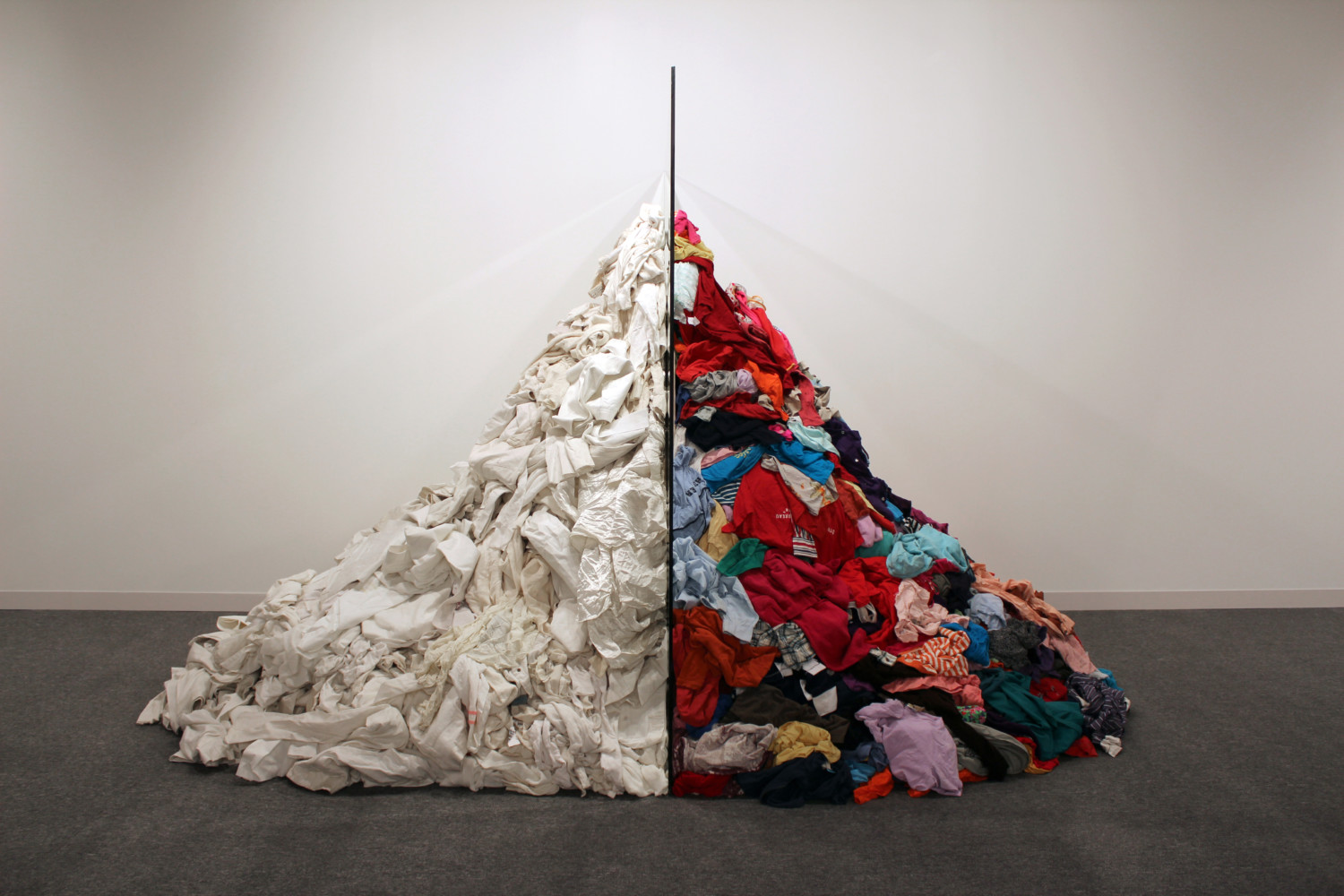
Michelangelo Pistoletto, Metamorfosi 1976 - 2013, courtesy of the artist and Ermenegildo Zegna
With a rich history of trade and textile production, the region of Biella, in the foothills of the Italian Alps, marks a unique centre of arts and culture. Away from the bustle of Milan and Turin, it has proved a timeless point of inspiration for many artists and designers. One such artist is Arte Povera master Michelangelo Pistoletto, a Biellese native who is now an official ambassador for the city’s UNESCO application. To reciprocate this show of appreciation, the Biella region is currently hosting an ambitious exhibition across three iconic locations that brings together the works of 85-year old Pistoletto and his late father Ettore Olivero Pistoletto — a celebrated landscape and still-life painter. The exhibition, entitled Padre e Figlio (Father and Son), focuses on themes of reflection, familial relations and mortality. Featuring a series of paintings, mirror paintings, installations, light-boxes, videos and photographs, it explores the intricacies and nuances of the father-son bond, and also celebrates the family’s long-lasting relationship with Italian clothing brand, Zegna.
Video-dialogues between the curator Alberto Fiz and Pistoletto are scattered throughout the exhibition, providing a narrative overview that dissects the works. In the video, Pistoletto — who is considered one of Italy’s foremost artists — presents his vision of the father-son relationship as one that is not unidirectional, but rather as a mirror-like experience that is bound by the common levellers of knowledge and interest, through which a mutual respect can be nurtured.
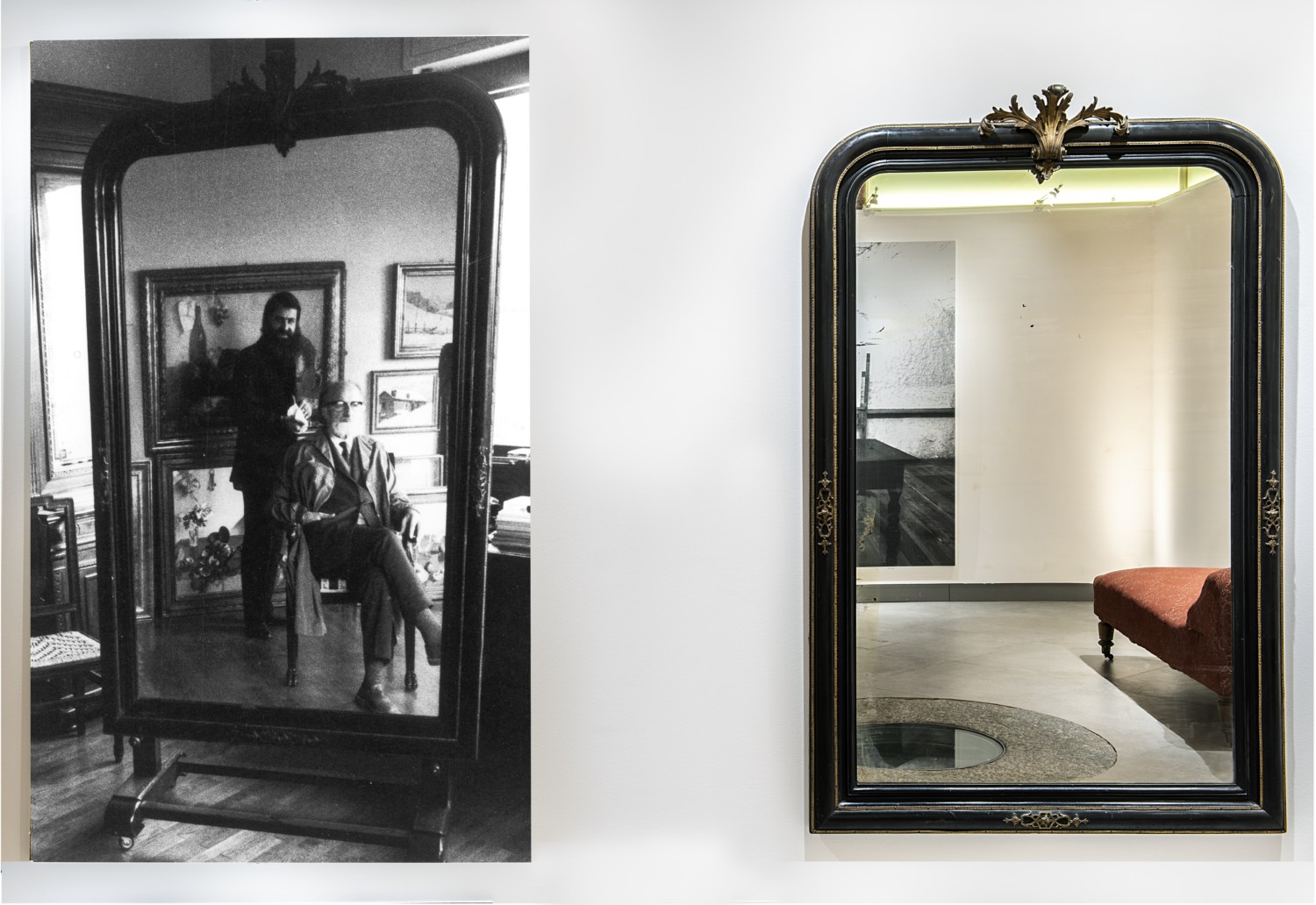
Courtesy of the artist and Ermenegildo Zegna
The works are divided thematically between three buildings that have each played significant roles throughout the region’s history. The first segment of the exhibition, housed in the Palazzo Gromo Losa, centres on creating a visual reflection of the work of the two artists as still lifes by Olivero are juxtaposed with Pistoletto’s Quadri specchianti mirror paintings. The second location, Casa Zegna, is located in nearby Trivero and houses an exhibition space belonging to Fondazione Zegna — the clothing brand’s foundation (the label founder Ermenegildo Zegna, had already invited Etorre to create a fresco in his factories in 1929, starting a relationship that has lasted to this day).
Cittadellarte, the former wool mill that was renovated into an atelier in 1998 by Pistoletto himself, provides the setting for the final section of the exhibition, in which a highly symbolic installation alludes to the artist’s internalised conflict stemming from his dual identities of both a son and creative equal to his father. “On every section of wall over an opening between the rooms, I placed the word “figlio” [son], because it is from the point of view of a son that I view the work,” Pistoletto explains. “The same word is written over each entrance and is repeated until the threshold of the door beyond the last room. But this time the illusion that the mirror reflection simply continues the series of doorways and rooms ends, because the reflection shows the word “padre” [father] repeating room after room.” The exhibition not only re-imagines masterful artworks, but it also speaks of a craft that transcends the confines of time and space. It pays homage to two great artists, who exemplify the power of reflection while celebrating their relationship as father and son.
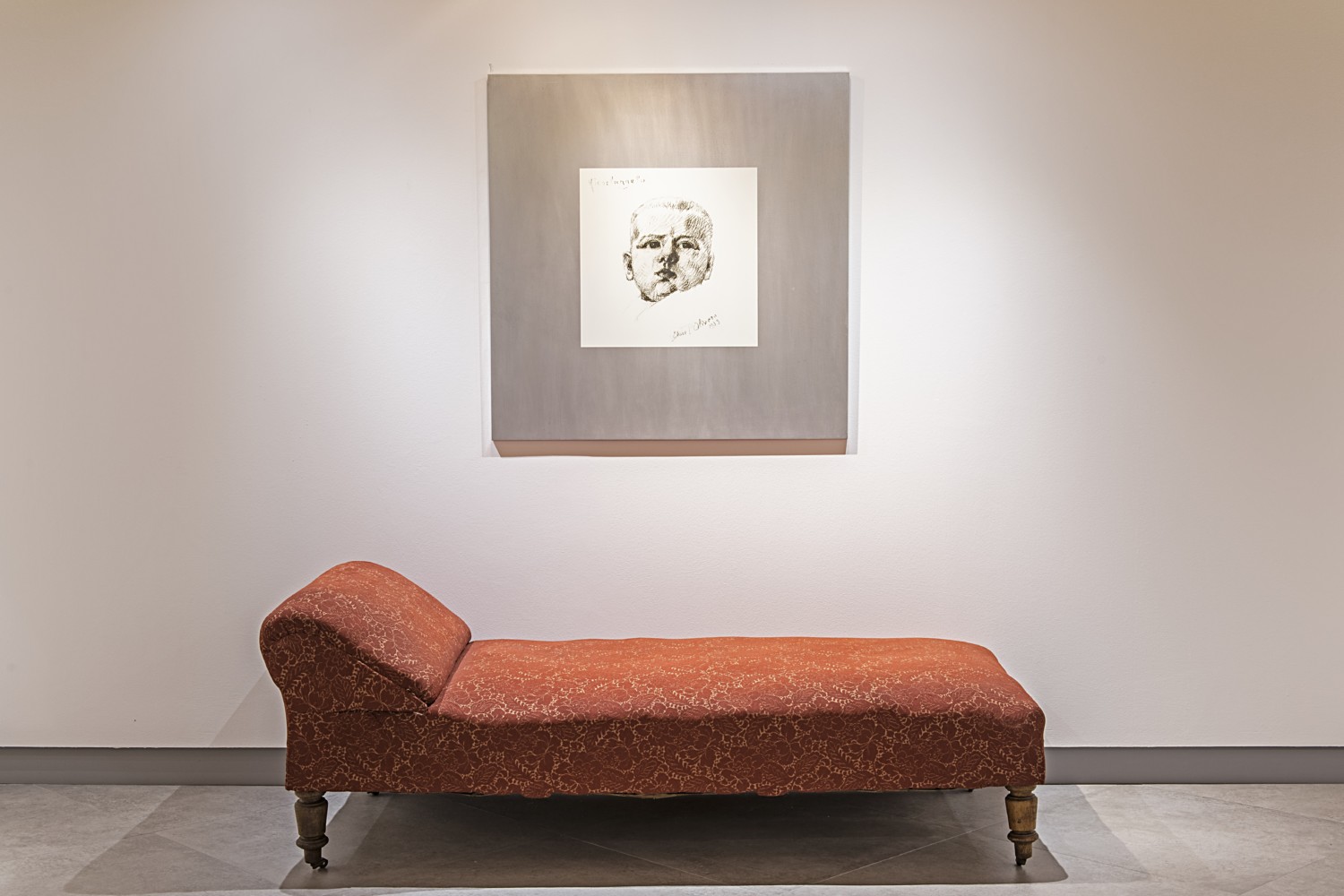
Palazzo Gromo Losa, picture by Damiano Andreotti, Courtesy of the artist and Ermenegildo Zegna
Padre e Figlio runs through to 13 October 2019