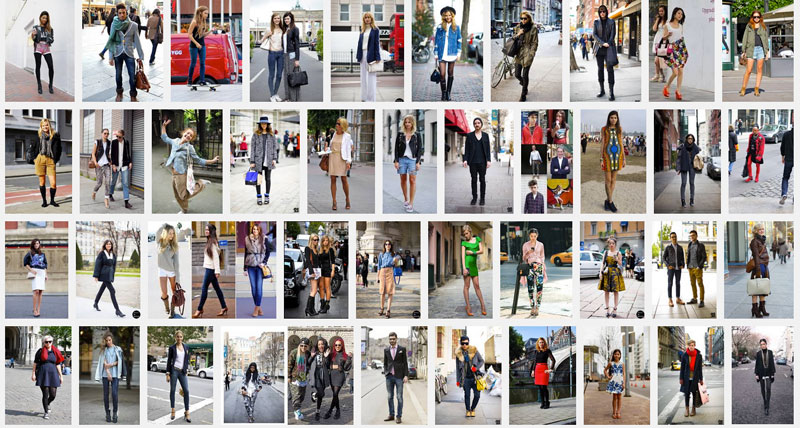
There seems to be an epidemic of “overness” going around these days. First it was Berlin, now New York Magazine is claiming that fashion bloggers are infected with the “over” virus. Uh oh.
Fashion blogging, in fact, is far from over. Let’s be clear – what may be over is everyone writing and creating from the same model that was created in the early 2000s for fashion blogging. In those halcyon days, fashion bloggers (the most well-known of whom are now staples of the fashion industry: Bryanboy, Susie Bubble, Tavi Gevinson) created a format that was their own, something like a LiveJournal diary meeting a fashion moodboard. They were, in their own way, innovating.
People with opinions are always going to be important, and here at Sleek we know that more than ever, both for our print magazine and online. The variety of voices that the vast expansion of fashion blogging has brought should be welcomed, and with democratic platforms for opinion, this can continue. It just won’t look like what you expected it to. Look at people who become fashion bloggers by having a popular Instagram account, or being a musician, or, yes, by becoming a fashion editor – because, now, being an influential fashion editor brings its own requirements for social media. Becoming what we now call a blogger could happen in new ways that have not even been invented yet. I have no doubt that the world’s most influential Snapchat fashion blogger is only a few weeks, months away – look, Juicy Couture already previewed their collection on it! And Snapchat, with its one-view-only format, is possibly the least fashion-friendly of platforms out there. What other innovations will make blogging more natural for ordinary people?
Now, there are few ways to be innovative that involve copying the titans of fashion blogging. Like everything these days, (and possibly since the dawn of time?) it’s all about what can make people interested, and copying is not interesting. No, (most) people reading fashion blogs are no longer interested in grainy mirror shots of outfits in university halls. Now that the tone of diaristic moodboarding has been perfected by the biggest bloggers in the stable, it will be hard for others to follow. In this sense, OK, fashion blogging has lost its sparkle.
Yet, the many and varied influences on what will make people interested in reading about fashion online will not just come from within: developments in tech, journalism and even the fashion industry itself will all have to play out. There is no reason why fashion bloggers should not be a part of this exciting future: they will simply evolve with the environment around them. And anyone who works in fashion and doesn’t know when to evolve, respond and create something new – well how long would they really last anyway? Change is the only thing in the fashion industry that we can definitely count on. Fashion bloggers who stayed the same hardly be doing their job.
At a time when almost every area of the media is facing huge questions, it seems pure folly to assume that we can extrapolate any changes into the tired clichés of “overness” that were created by old media. On the internet, nothing really ever dies. It just might not look like what you expected it to.