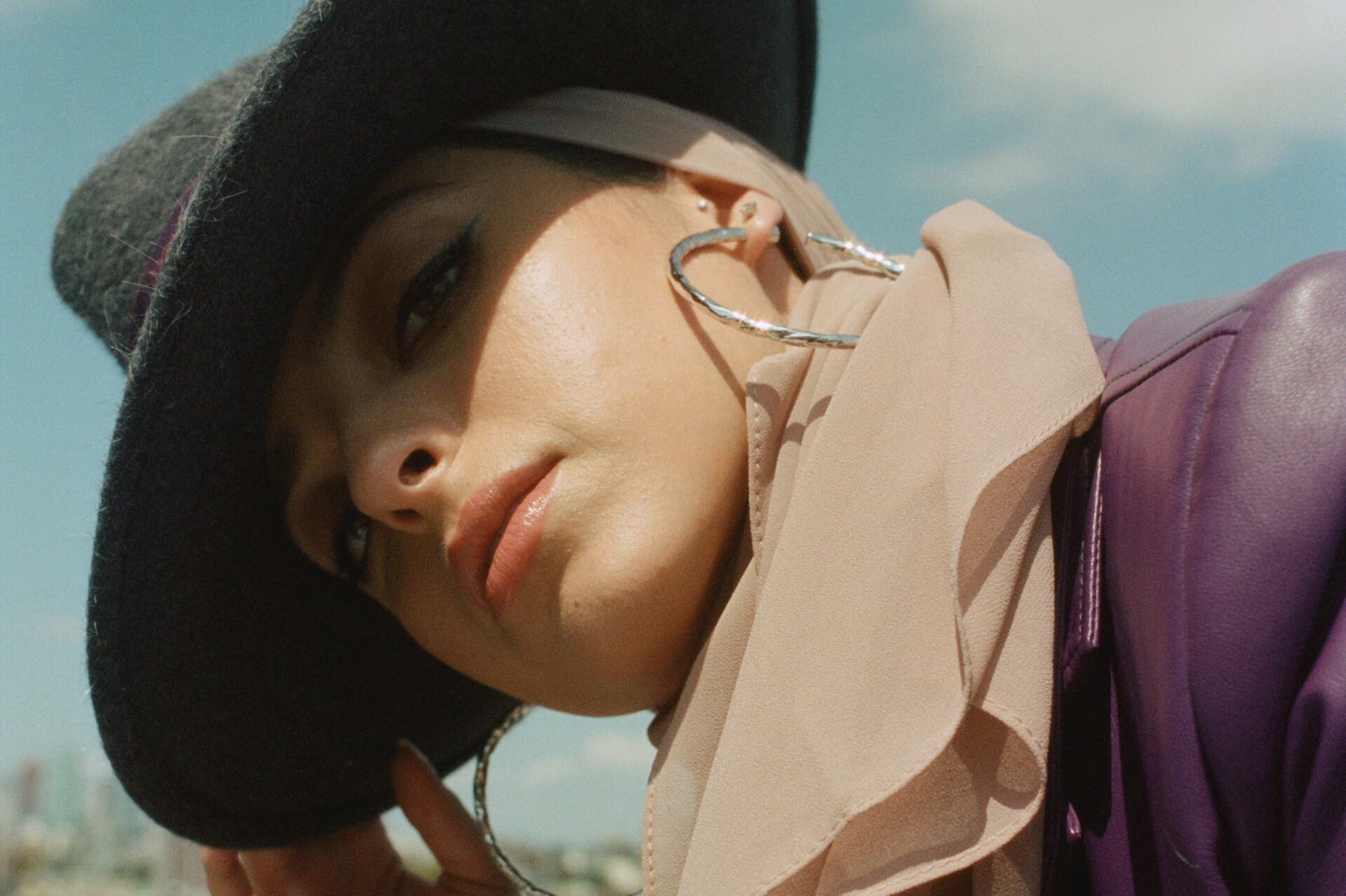
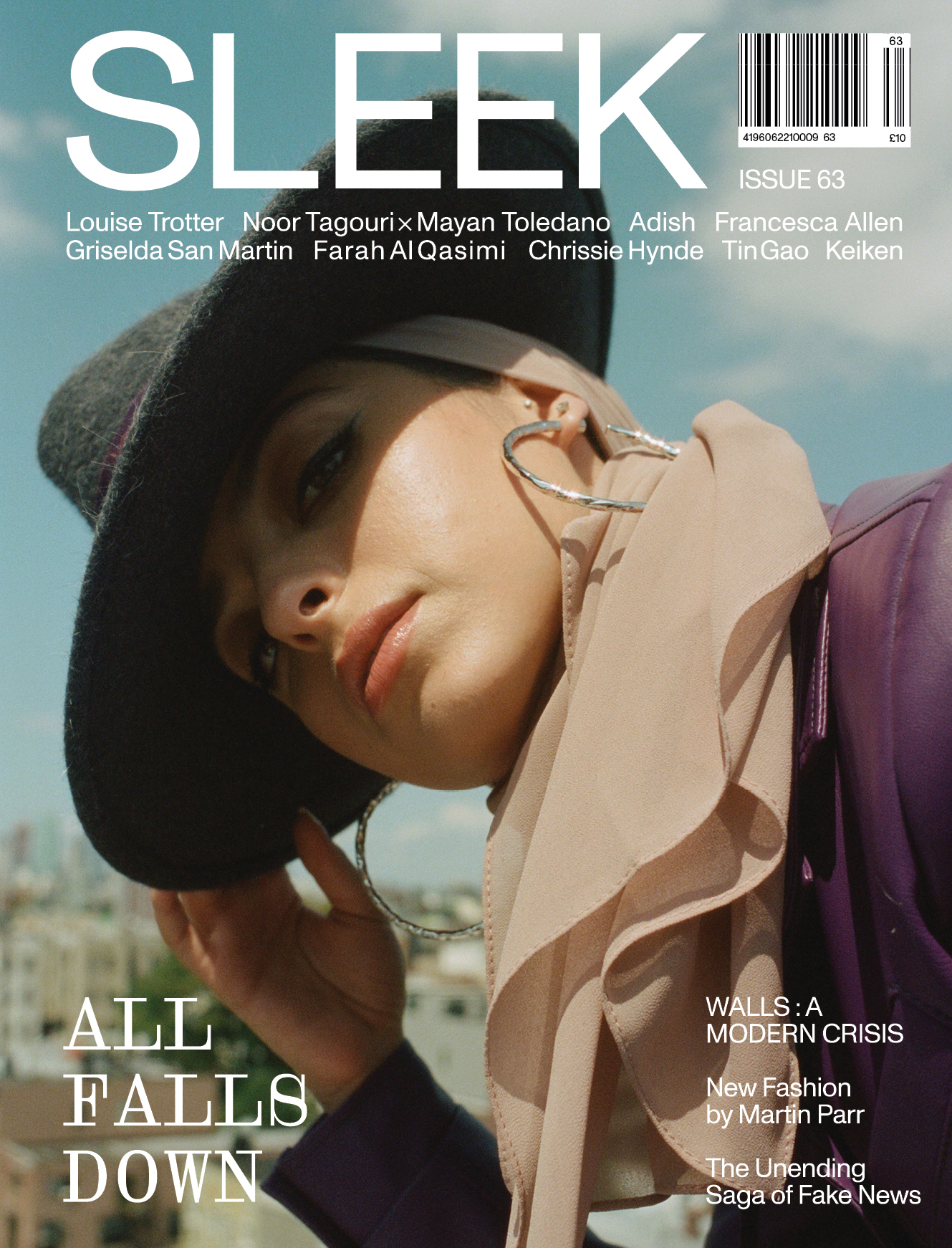
Exclusive online only cover of SLEEK #63. All photography by Mayan Toledano.
Noor Tagouri is one of the most hard-working journalists around. In 2012, she began her career as an intern at CBS Radio, and in 2015 she was sent by a local Maryland TV station to cover the protests in Baltimore following the death in police custody of Freddie Gray – where it quickly became obvious that on-camera journalism came naturally to her, and her documentary work began. One of the key aspects of Tagouri’s success is her unwillingness to compromise on the most basic yet fundamental aspect of journalism: the truth.
In January 2019, she called out US Vogue magazine for crediting her as the Pakistani actor Noor Bukhari, not Noor Tagouri. “Misrepresentation,” she said in an Instagram caption posted moments after she noticed the error, “and misidentification is a constant problem if you are Muslim in America. And as much as I work to fight this, there are moments like this where I feel defeated.” It’s one of the many ways that Tagouri has become someone who, in whatever medium, will get to the bottom of things, always.
Most recently, Tagouri’s podcast, Sold in America, saw her take an extensive, two-year look at the sex trafficking trade in America. Although the illicit industry’s brutal crimes are often reported in the US as happening elsewhere, in Tagouri’s series she makes it clear that these crimes are happening outside America’s front doors. How did she get to this place?
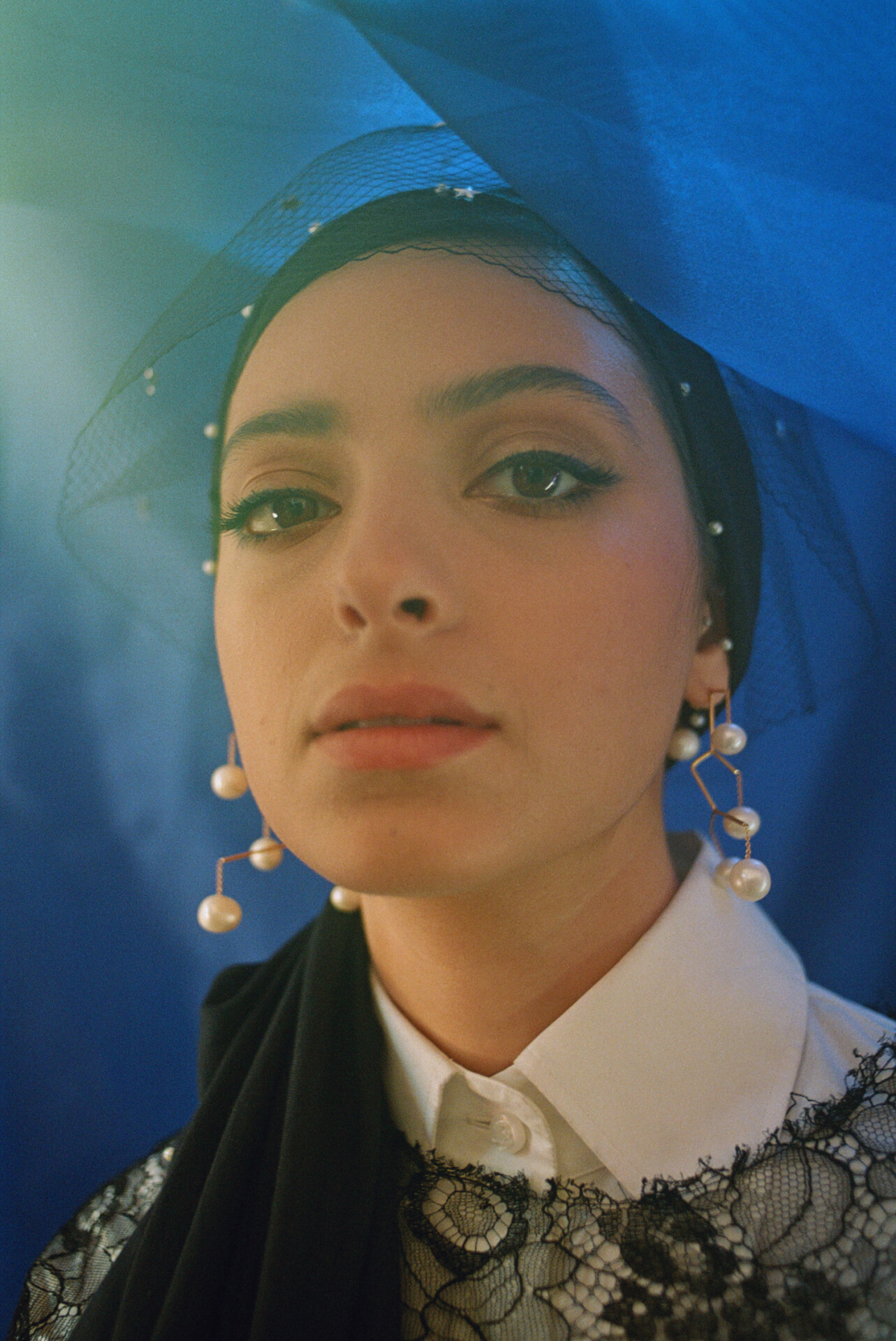
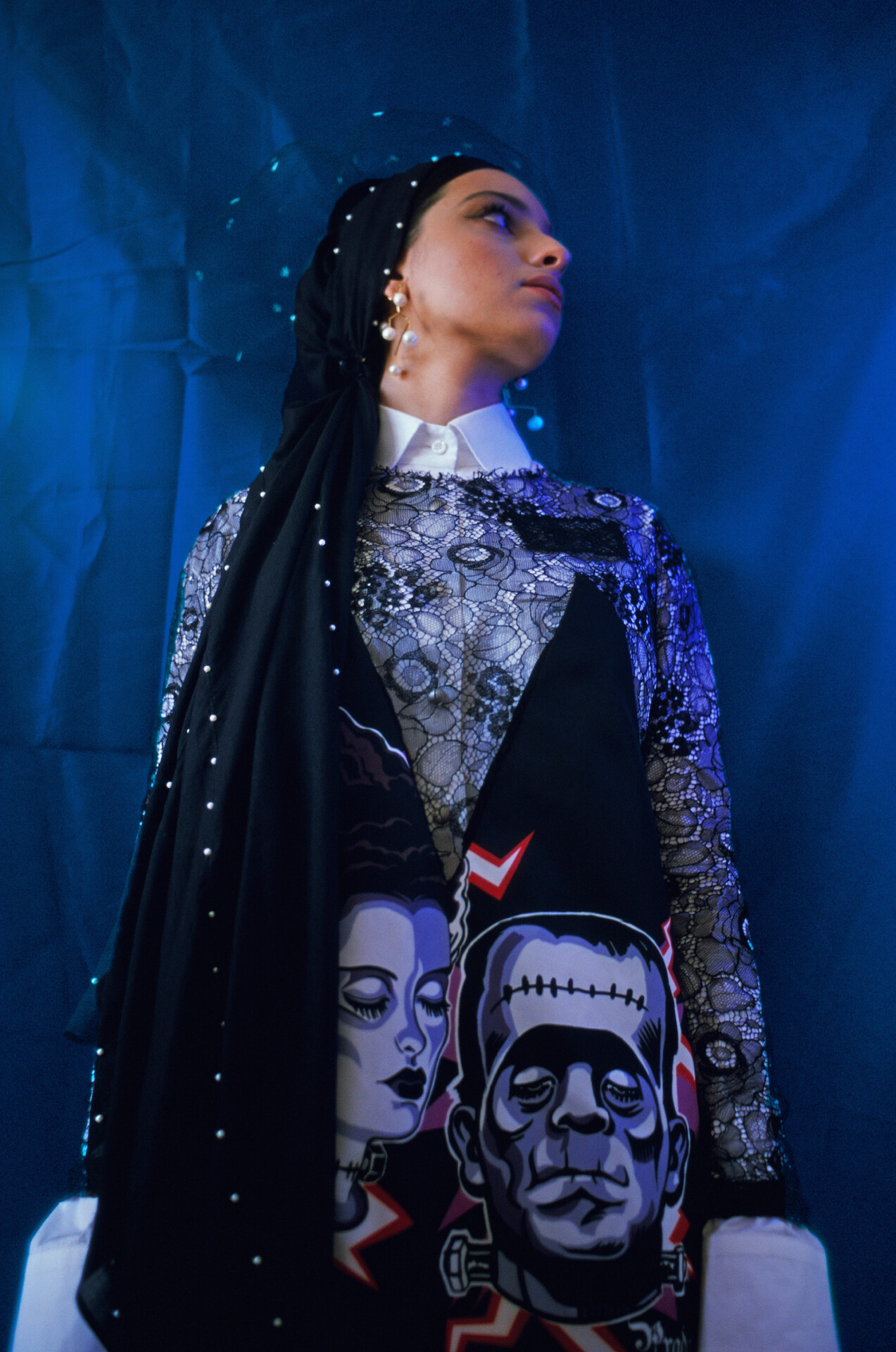
Dress and Shirt: Prada, Pillbox Hat: Gigi Burris Millinery, Scarf: Vela Scarves, Earrings: Anissa Kermiche.
I was listening to your podcast Sold in America and it’s incredible. What’s obvious is what a great journalist you are. It’s clear you’re very skilled at news gathering, which I think is such a – not an outdated part of journalism, but with small budgets and things, you just don’t get that many journalistic projects like Sold in America. So, well done. What made you want to delve into that topic and look at sex worker rights in the US?
I first heard about trafficking from Nicholas Kristof, while he was on Oprah, he had written this book [Half the Sky: Turning Oppression into Opportunity for Women Worldwide (2009)] with his wife, Sheryl WuDunn. When I heard [about it] I was really shocked, I couldn’t believe this existed. And I believe that your purpose is combining your skill sets and your talents with the things that pain you. And this is a cause that really pains me and I wanted to pursue it in a way where I was using my storytelling skills for that It’s important to me to always treat the subject sensitively. The thing I really care about is representation in sub-communities in the media … The question I go to when I’m working on a project is, “How is the way that I covered this story going to impact the people that we’re talking about?” If you’re not sensitive to that, you have an instance of like what happens with Muslim-Americans all the time, in which you’re misrepresented and then acts of violence are carried out – hate crimes, a general sense of fear. I believe this attitude to the Muslim faith comes really heavily from the way that Muslims are represented in the media. And so in response to that, I try to tackle different issues from a different way.
What do you think makes your method of storytelling different?
I think that my form of journalism is very much a two-way street. I personally don’t go into spaces and expect people to give me their story, give me their truth, and not give back anything in return, because I want people to make sure that, like me, it’s a mutual exchange and, like, I see you and I relate to you. So I try to find a commonality with people, and I have to do that in general anyway to disarm people. And I think a lot of times, with news, we feel entitled to people’s stories.
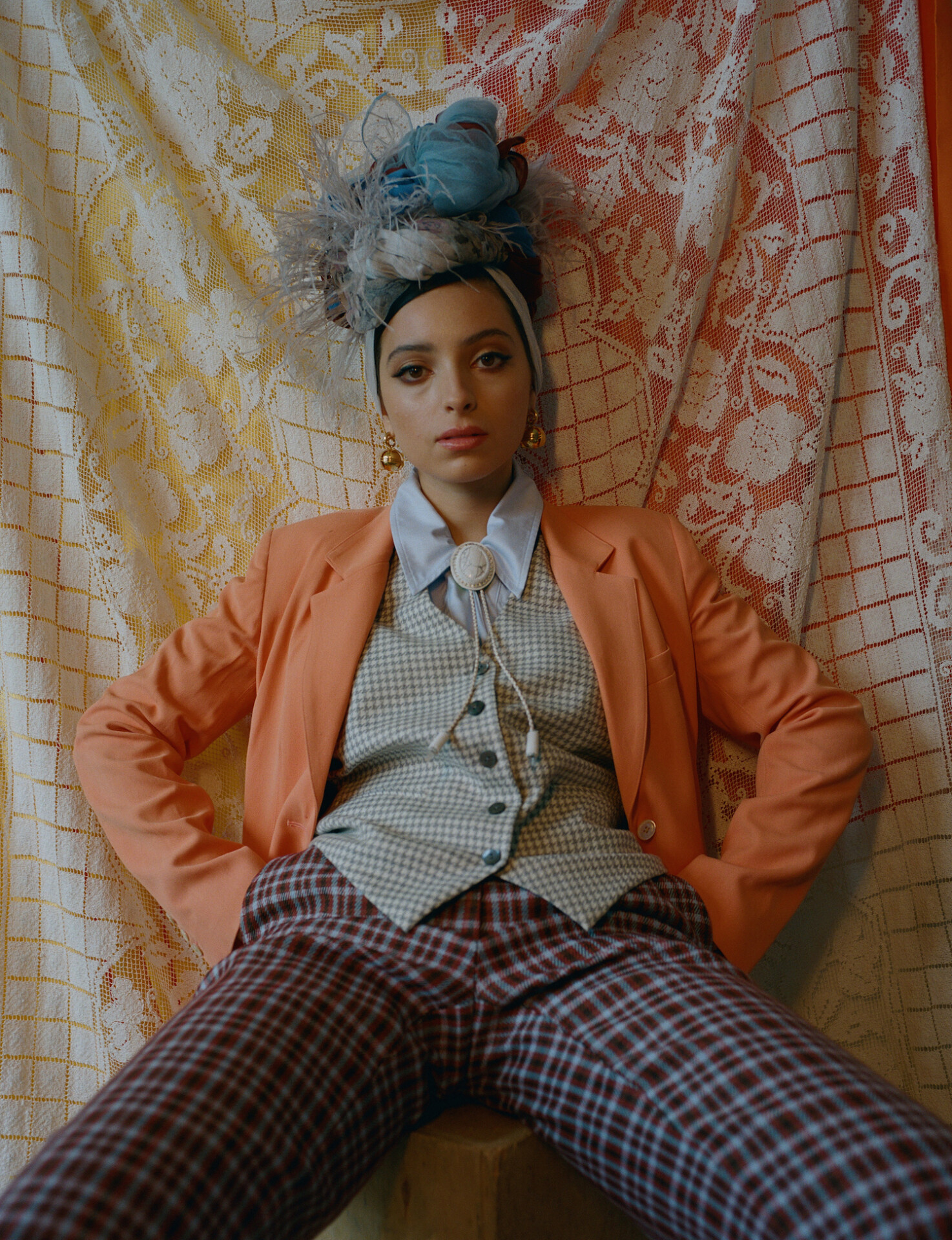
Total look: Maryan Nassir Zadeh, Headscarves: Model's own, Earrings: Marco Panconesi, Bolo Tie: Robin Mollicone.
There’s been a huge attack on journalism from Trump along with the rise of fake news. As a journalist, what do you make of all that?
It’s a double-edged sword in a way. We have a president who’s shouting [about] fake news and [saying] that journalists are the enemy of the people,which is very, very dangerous. It puts journalists in harm’s way every single day. However, we also have depleting resources in newsrooms [where] there’s no money and people are overworked. You’re expected to push out more content and turn out, like, 30 stories a day [rather] than actually focus on developing stories and putting out higher quality journalism. It’s a cluster of mess. I think that’s why, [with] the last project and the projects that I work on, I try to be super transparent in the process of what we’re doing and how we’re reporting. I want to make sure that we are telling you where we’re getting our information from, who we’ve asked. Doing our own research, doing our own data questing and that sort of thing.
"I think that my form of journalism is very much a two-way street."
Sold in America focussed on women and young girls. When were you first drawn to these issues?
When I was 13-years-old, my mom and I were at a convention and we met a woman who ran and lived in a shelter for women and children who are survivors of domestic violence. My mom started talking to her and asking, “What can we do for you?” and the woman was like, “Well, people always drop off canned food and things like that but we really need toiletries. These women need shampoos, conditioners, pads, tampons.” And so from then, my mom and I started doing a toiletry drive at our school. Eventually they started needing like fresh groceries [as well]. So when my mom would get groceries for us, we would start getting groceries for them. And we started making it like a weekend routine every other weekend where we would drive up to Baltimore and we would go and send stuff to the shelter. The woman who ran the shelter would tell us the stories of the women who were coming in, because people were always coming in and out. And I remember just, like, being really quiet and listening to the story. And that was kind of like a light bulb moment for me because this was before I even really knew what trafficking or exploitation or anything like that was … And I think it was from then – and I mean from since then – [that] we’ve worked with the shelter, [that] we’ve worked with people who are experiencing homelessness, and people in need.
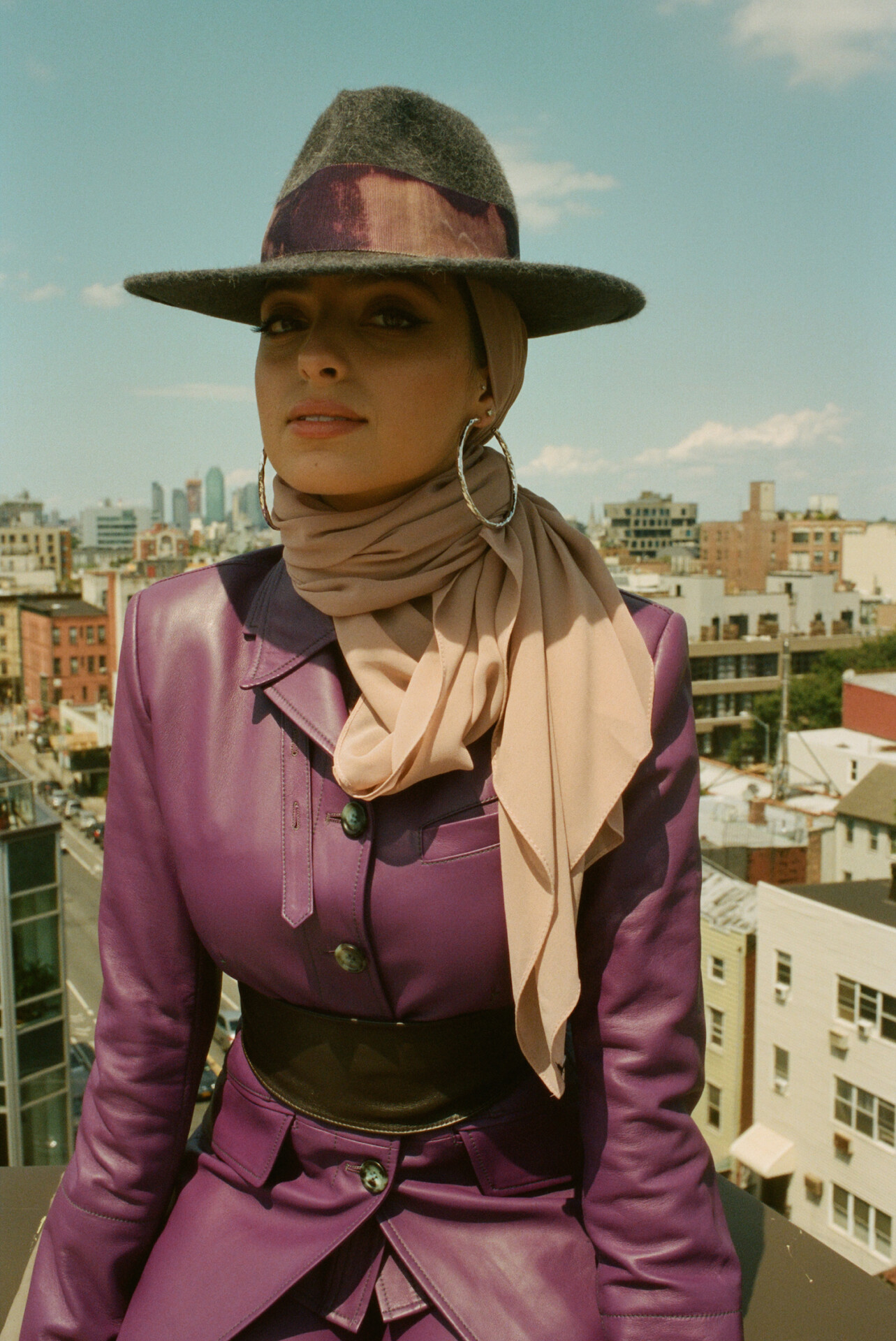
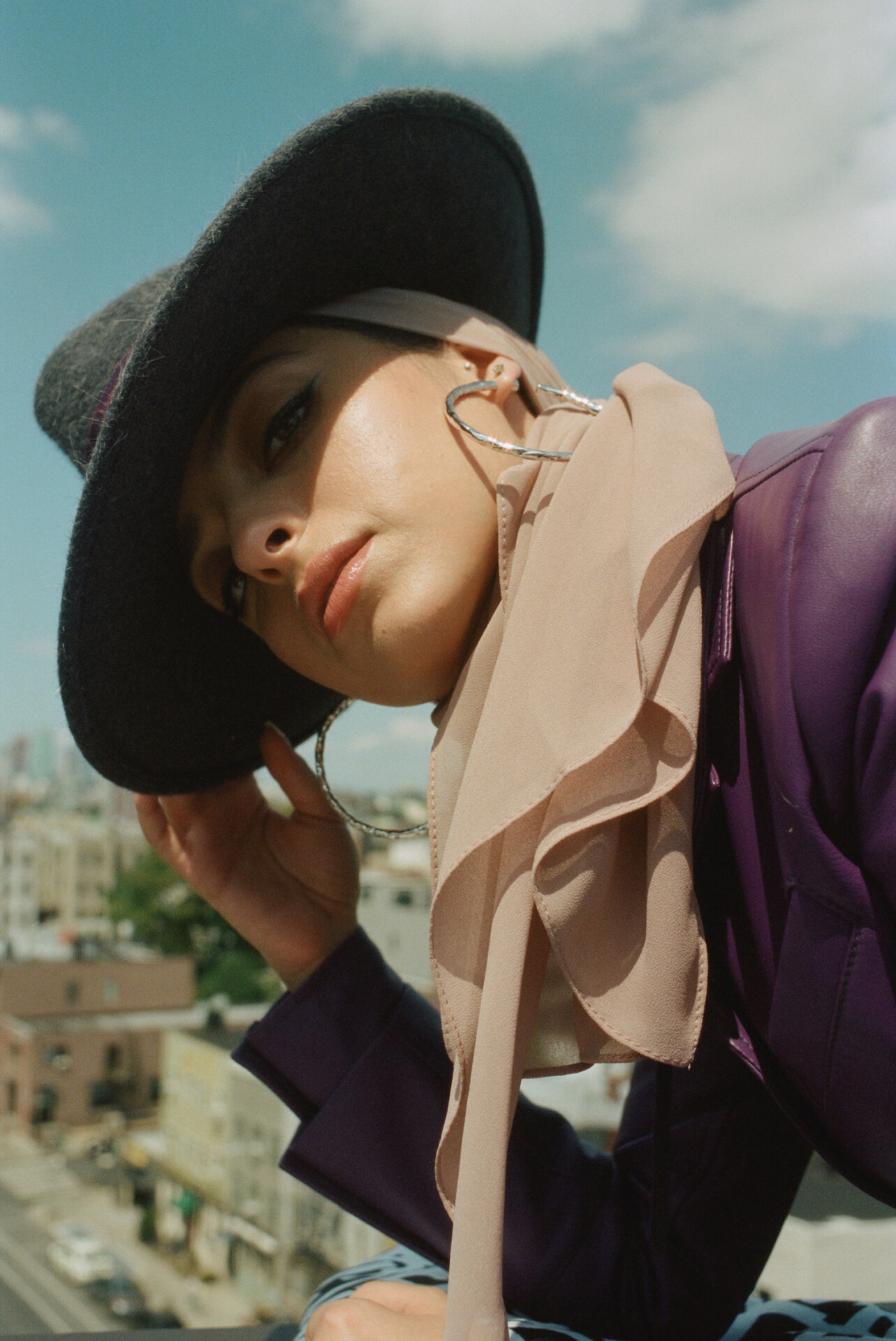
Total look: Sies Marjan, Hat: Albertus Swanepoel, Scarf: Vela Scarves, Hoops: Jennifer Fisher, Belt: Maryam Nassir Zadeh.
Those childhood experiences are so informative.
That entire experience was really kind of what put me onto focussing on women and children and just, like, people who are at the margins of our communities. Actually, just two days ago it was the one year anniversary of our foundation, I See You. We founded it last summer. The name of it comes from this experience my mom and I had at Franklin Square Park in Washington DC. My mom went up to this couple and asked them what they needed and the woman looked at her and just held her shoulders and said, “We just need to be seen.” And so we decided to call the foundation I See You as a response to that woman.
The story you tell of the woman turning up with just a small bag of things … I mean, that story is American politics and it seems to me that there is not enough discourse about the huge poverty and class problems in the US at the moment.
Well, that was literally what we found with Sold in America. The entire point was that we have a lack of a social safety net for people at the margins of our communities.
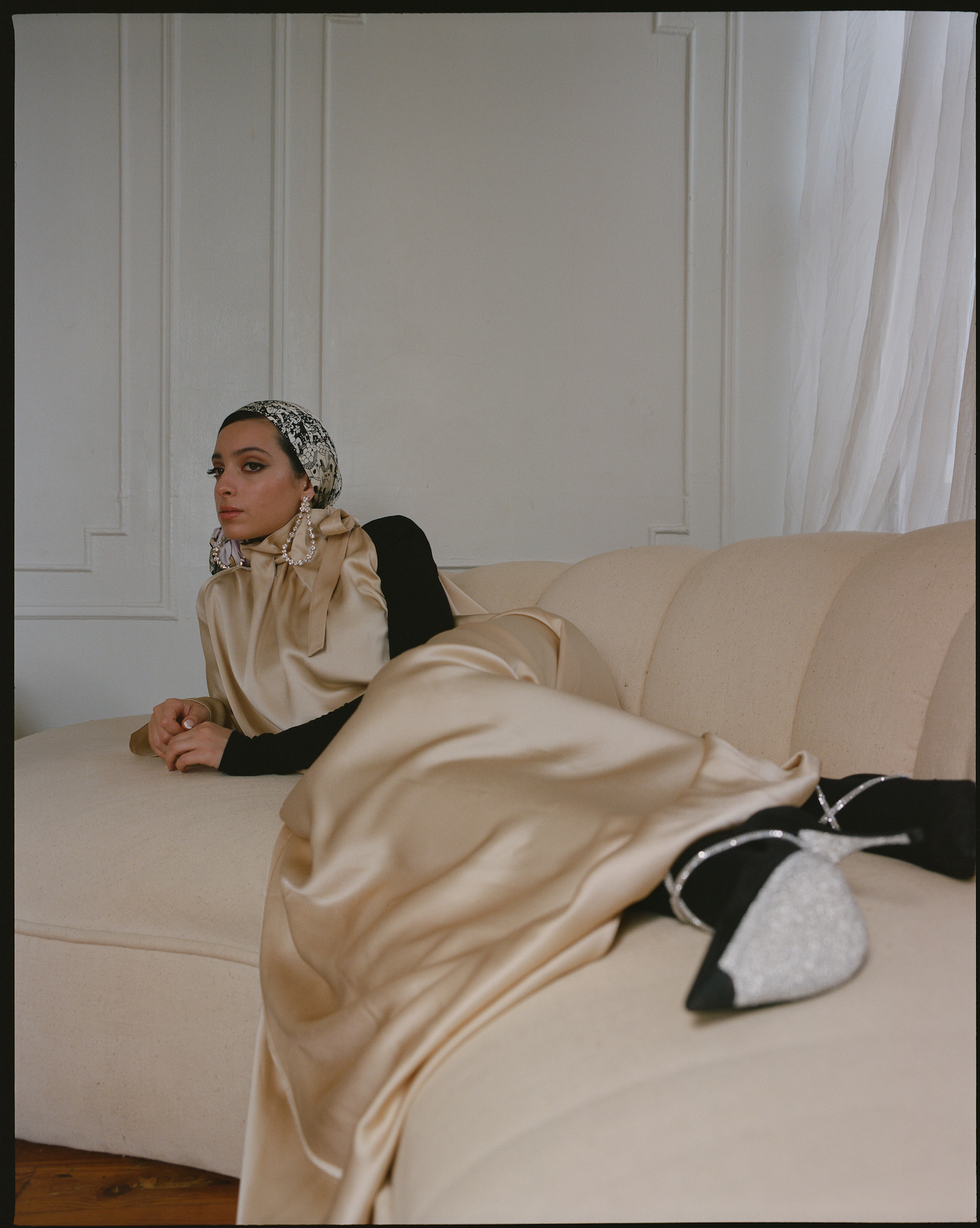
Dress: Rosetta Getty, Turtleneck: Commission, Twill scarf: Hermès, Violet Scarf: Model's own, Earrings: Rainbow Unicorn Birthday Surprise, Tights: Falke, Pumps: Rene Caovilla.
What do you think are the biggest adversities working-class women in America face today?
The biggest challenge is that it’s all rooted in cycles that are hard to break out from if you’re within them. You have laws that work against people, then you have the representation of certain communities in the media that is so poorly executed. In my experience with the communities I’ve spent time with, many laws are proposed and passed without talking to all of the stakeholders. This blanketed approach puts diverse communities – that are in different circumstances – in difficult positions to survive. This perpetuates many of the stigmas and stereotypes we see, and poor media representation doesn’t get to the root of these “issues”.
What do you want to do next?
We’ve just started a production company called At Your Service in Zusammenarbeit mit Pulse Films, a UK production company. I personally really love the UK media and documentary scene, it’s just way better so it was an awesome fit. The reason we’re starting to pursue stuff independently is because I see where the holes are in the way that media is being covered. Instead of fighting for certain stories to be covered and certain stories to be covered in a certain way, we’re doing it ourselves. We’re working on an investigative series [called In America with Noor]. It’s about the way that we see certain topics and issues and the way that we love to debase them, but [also the way] we don’t actually like to see the full picture, see the spectrum. You’re the first person I’ve told about that.
Kredite
Alle Fotos von Mayan Toledano.
Styling: Becky Akinyode
Make-up: Yacine Diallo @ BRIDGE using Chanel
Hair and hijab styling: Nai’vasha @ The Wall Group
Nails: MoMo @ See Management using Chanel Le Vernis
This interview has been edited and condense for clarity. The article was originally published in SLEEK 63, out now!