OSCARS 2026: Wie große Filme und das Spektakel der Preisverleihungen das unglückliche Schicksal des modernen Prominenten beleuchten
On March 15, the 98th Academy Awards ceremony took place. In previous years, Oscar Sunday has often sparked debate about the ethics of staging lavish celebrations while suffering unfolds elsewhere in the world. This year was no exception. Yet, from an observer’s perspective, it is precisely this tension that makes the event so fascinating to watch. The Oscars form Hollywood’s collective effort to keep the American dream alive, upholding it seemingly as it hangs on by a thread. Unfortunately, the ideal of the American dream does not seem quite so vibrant if all the ones representing it seem like the same person.
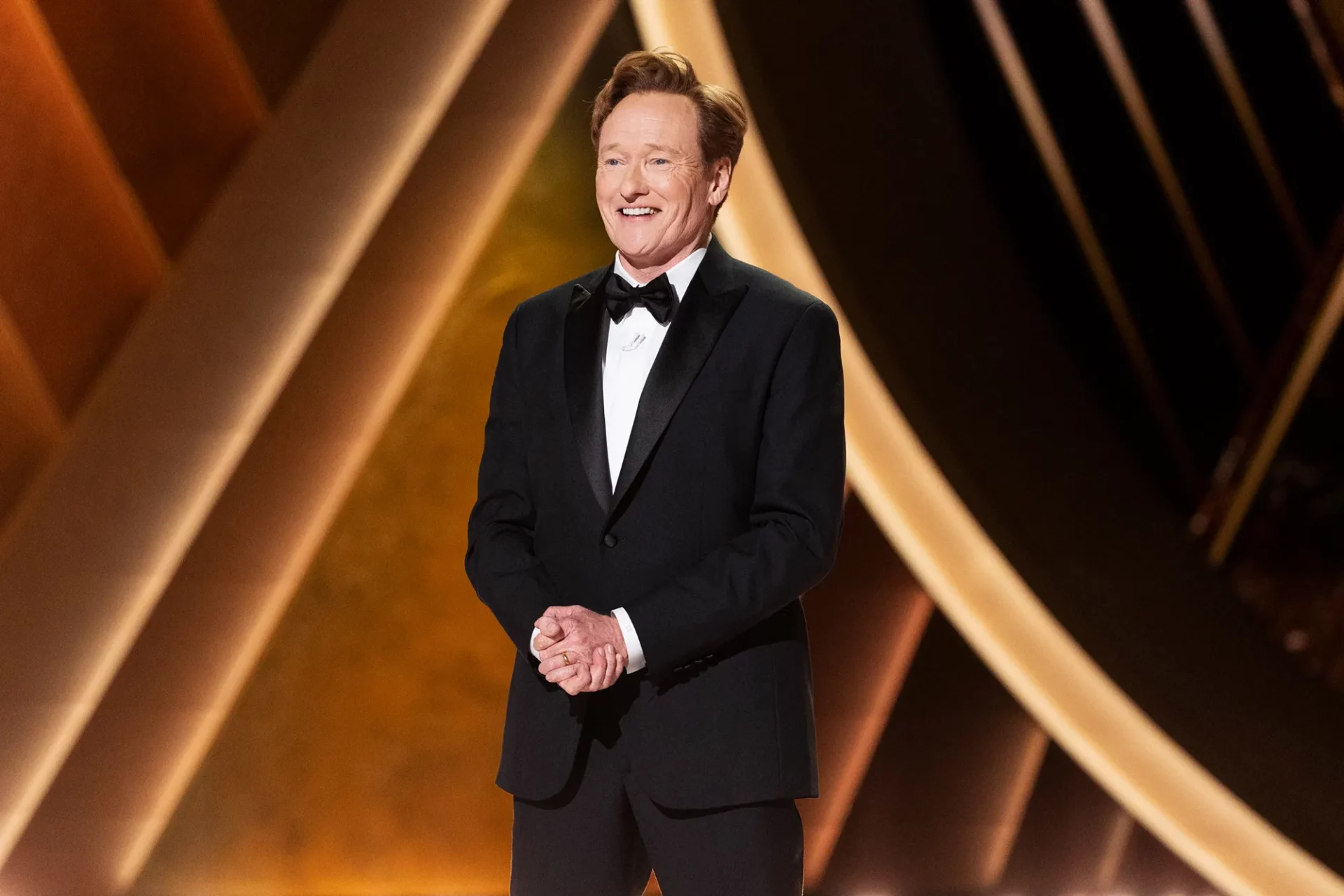
Despite all counterpoints, it is very easy to be enchanted by the Oscars. The concept of celebrating cinema and the people who create it, combined with the ceremony’s almost mythic status, allows for a beautiful show full of excitement and appreciation. Yet while the usual magic of Oscar night was present, this year’s ceremony felt unexpectedly flat. While Conan O’ Brien aimed dig after dig at contemporary politics, a tension arose between him and, seemingly, the Academy. His relentless sarcasm stood in contrast to the audience, making him seem as though he was the only person willing to inject unfiltered opinion into an otherwise carefully managed spectacle.
Photography by Frank Micelotta
Predictably, the Oscars followed a pattern common to many major film festivals: a reluctance to reward truly bold choices. Most predicted winners ultimately prevailed, and apart from a tie in the short film category, few results were surprising. Nevertheless, the films themselves often conveyed pointed commentary. The Best Picture winner, One Battle After Another, contains criticism of authoritarian regimes and policies, though these political elements remain largely atmospheric. Other nominees carried political context as well: Sinners, who won 4 awards, addressed historical racial tensions, while Bugonia explored criticism of the pharmaceutical industry. Critique was perhaps most pronounced in The Secret Agent. I’m still here (2024)’s braver cousin widens its focus beyond the suffering of individual families under authoritarian rule to depict a broader landscape of normalized, arbitrary violence. Although it ultimately left the ceremony empty-handed, the film helped spark conversation and draw attention to Brazilian cinema. Political themes also dominated the documentary categories, with the winning feature and short addressing issues such as political repression and gun violence leading to school shootings. Overall themes of ethical responsibility and justice were largely represented in the nominees.
The themes in many of the nominated films, mixed with Conan O’Brien’s relentless political stance, while stimulating and entertaining, juxtapose unfavorably with the attendees of the ceremony who simply went along with it. The evening, from the red carpet to the afterparties, is as always structured through; full of sensationalised moments, beautiful gowns, and jokes read off of a teleprompter. While the show is glamorous and fun to get immersed in, it creates a significant contrast. The result is a revealing portrait of the modern celebrity: a strangely sanitized shell of what celebrities once were. Where earlier generations cultivated distinctive public personas, today’s stars often appear interchangeable. The modern celebrity is humble, endlessly polite, always smiling, and rarely too ambitious, especially if they are female. The eccentric personalities that once defined Hollywood have largely disappeared. Instead, we are faced with the same composed, well-behaved personality over and over again.
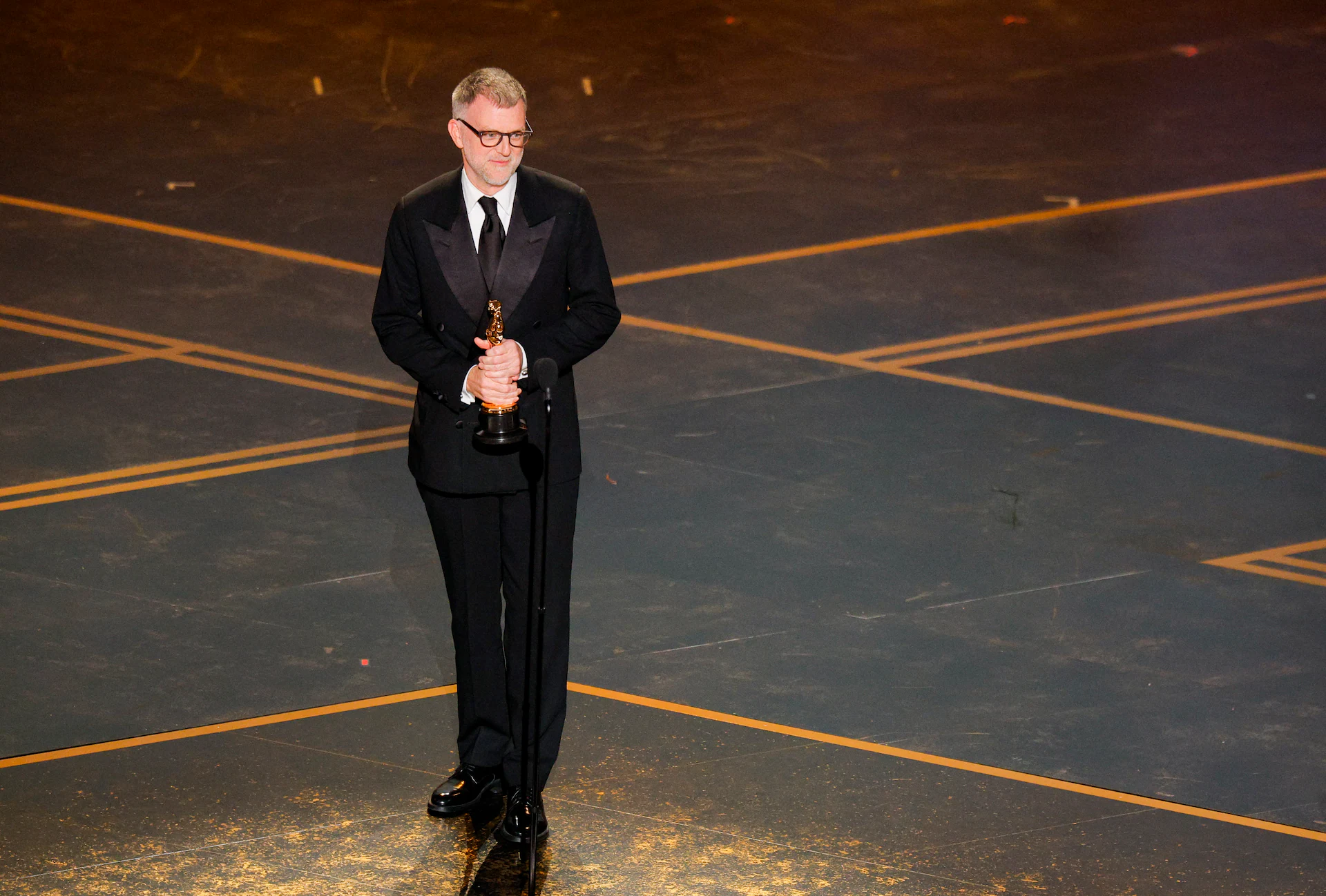
Photography by Mike Blake
A couple of exceptions last night were when actors and filmmakers such as Javier Bardem, Paul Thomas Anderson, and Joachim Trier used their moments on stage to express their views. No amount of films, statements, or speeches is going to resolve the conflicts unfolding outside the Dolby Theatre. Still, individual voices and opinions matter. Yet, even these interventions often felt compartmentalized, and outside those moments, the familiar script of composure and humility remained. This neutral attitude reduces celebrities to simply a medium of information. Unless a statement is deliberately prepared, genuine opinions rarely surface. No single individual is responsible for this. Rather, it is an effect of media training and cancel culture, putting people in the public eye on high alert, making them always play it safe. What’s missing amid all this polite neutrality and the occasional gesture of taking a stand is a real sense of personality. And, quite frankly, it’s pretty boring.
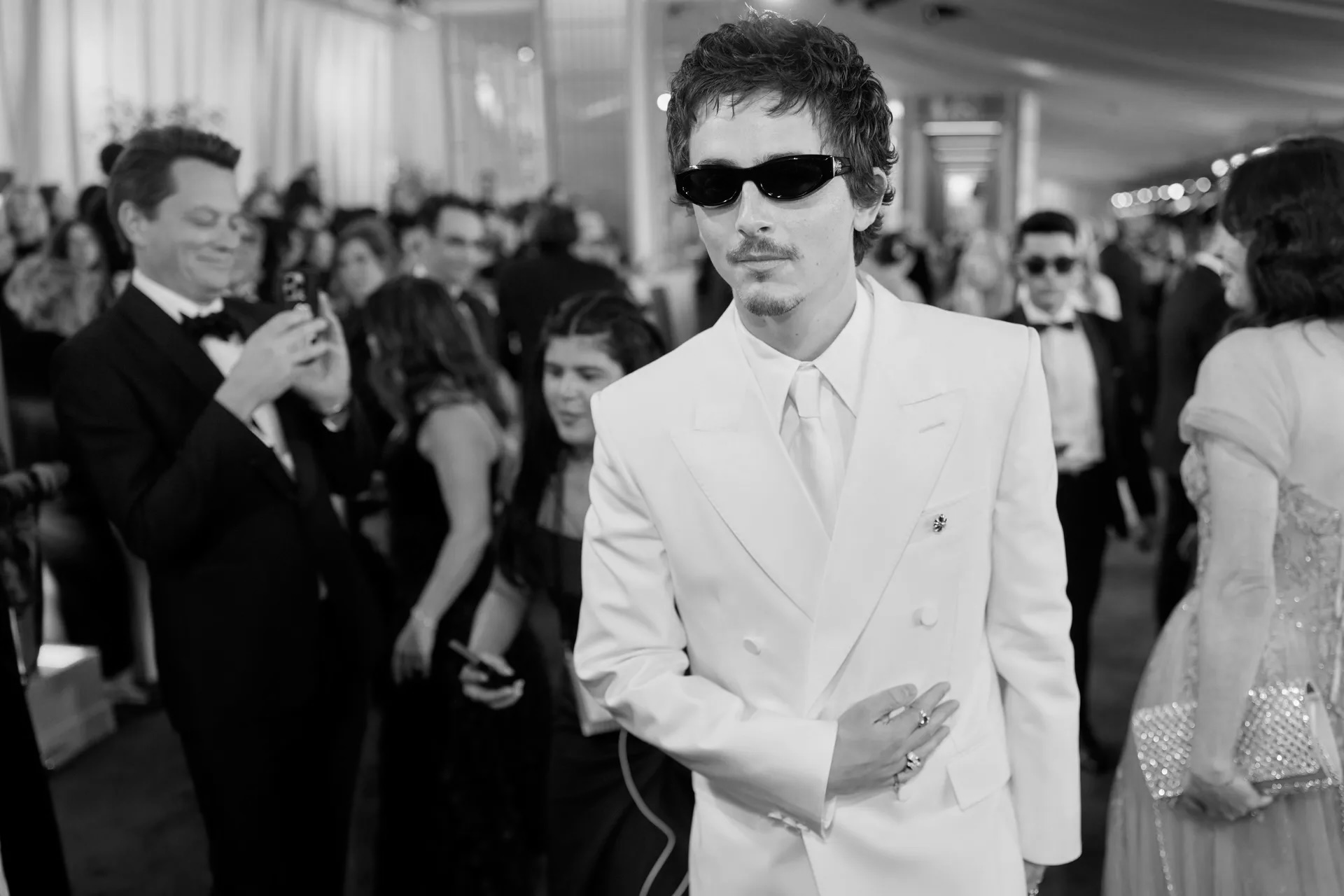
Photography by John Locher
A refreshing exception appeared in Timothée Chalamet, who entered the evening in a close Best Actor race with Michael B. Jordan. Recently, he has attracted controversy for his comments about ballet and opera. People seem to think that through this, he contradicts his SAG Awards speech from last year, in which he spoke about his “pursuit of greatness”. In reality, the two positions are not contradictory at all. While the statement that “no one cares” about Ballet and Opera anymore and that it needs to be forcefully “kept alive” is objectively untrue, this sentence has often been taken out of context. While it could have been expressed more gracefully, his underlying point was clear: he does not wish to devote his career to art forms that remain culturally prestigious but broadly niche. As unfortunate as it is, even the best of the best from the ballet and opera scene rarely achieve widespread public recognition outside their specialized audiences. Chalamet wants something different. He wants to be a star, to be known as one of the greats. And Hollywood remains the most powerful stage for achieving that. This creates a refreshing deviation from the usual “super humble”, polished interview persona most celebrities have adapted. Unfortunately, the whole drama seems to have dimmed his confidence. Within the celebration, especially Timothee faded into the background, becoming the punchline to many jokes. It didn’t help that Marty Supreme did not win any awards.
Ultimately, the 2026 Oscars revealed how essential genuine humanity is to the idea of celebrity. While it was a great year for films, with every best picture-nominated film being a worthy contender, the ceremony celebrating them felt oddly hollow, despite all efforts and costs invested into keeping it exciting. While objectively well-produced and entertaining enough due to the thrill of the award show, impressive performances, and intact spectacle, it simply lacked real authenticity. The staged “spontaneous” jokes with audience members, repeated year after year, have begun to feel mechanical. While the Oscars remain spectacular, spectacle alone is no substitute for personality.