Text by Ria de Borja
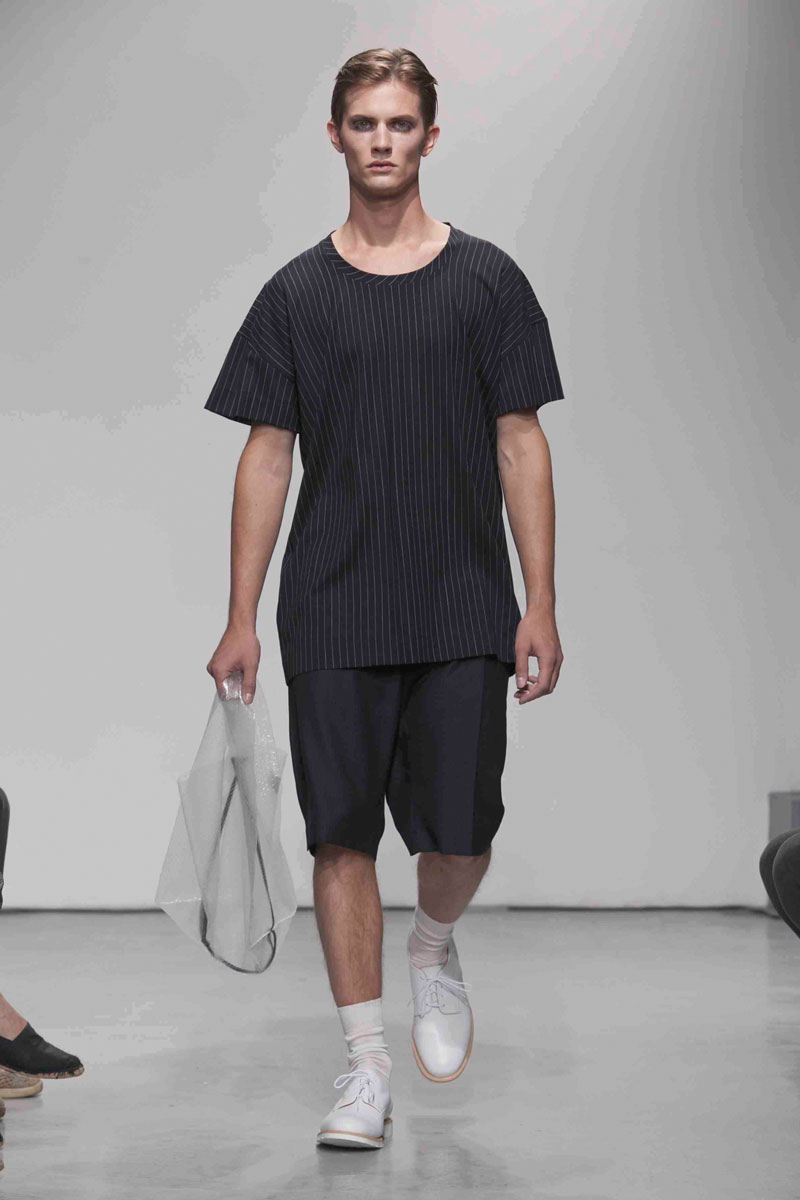
This season at Paris menswear we noticed a lot of prints, Yves Klein blue and colour-blocking in the some of our favourite collections for menswear week. Among some of our favorites was Düsseldorf-based unisex label 22/4 Hommes Femmes who showed at a repurposed warehouse. The show began with a distinct vision: pleated cotton was designer Stephanie Hahn’s fabric of choice for the season. Jackets were laden with flat origami-like folds tied for closure with a small ribbon. The image conjures up aprons, but with the pinstriped fabric falling softly on the body the looks were not meant to be entirely practical. Basketball mesh displayed fit torsos and had a breezy air – the dress could function just as well in the hectic of city life and on a seaside vacation. The show notes read that the collection aimed to give traditional menswear details a “twist: a necktie is sewn into a collarless button-down, and elsewhere collar stays in mother-of-pearl are applied externally.” These tiny details added panache to a lithe and light collection.
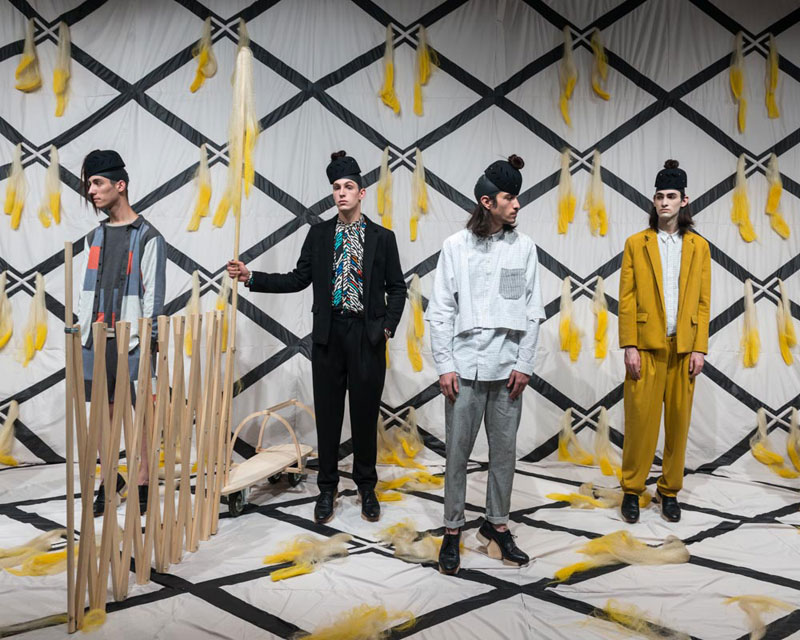
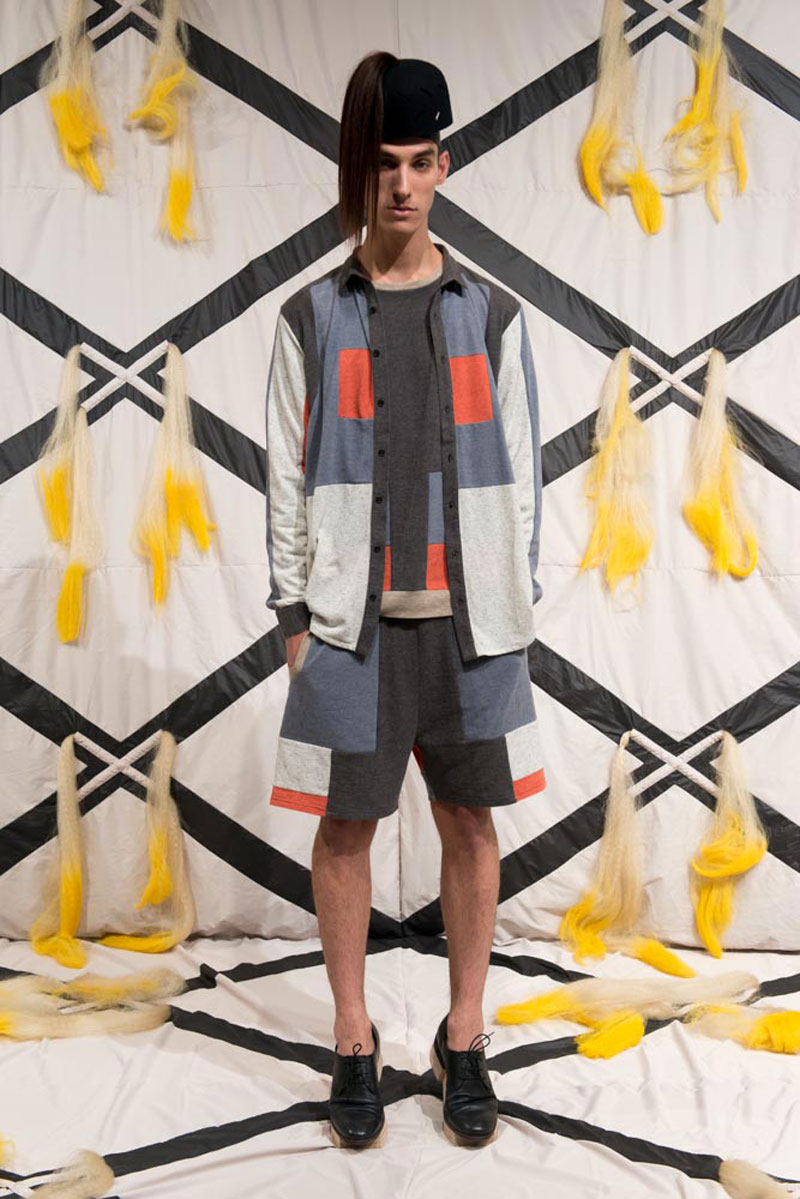
Next up was the artful installation by Henrik Vibskov. The show space was meant to evoke, among other things, a giant bathtub, and the models lined its floor in graphic ensembles. Vibskov used fabrics such as Indian cotton, neoprene and linen to convey his commentary on a world overloaded with visual disorders and dysfunctions. The collection, however – and especially compared to past ones – was clear on what it displayed: attire more wearable than what we’re become accustomed to from Vibskov. Jackets and shirts were printed with colourful, disfigured lines and paired with black or mustard pants. Coats were slightly oversized and looked comfortable enough to pair with jeans in summer climes. A colour-blocked Mondrian-like shirt-jacket was the star piece of the show.
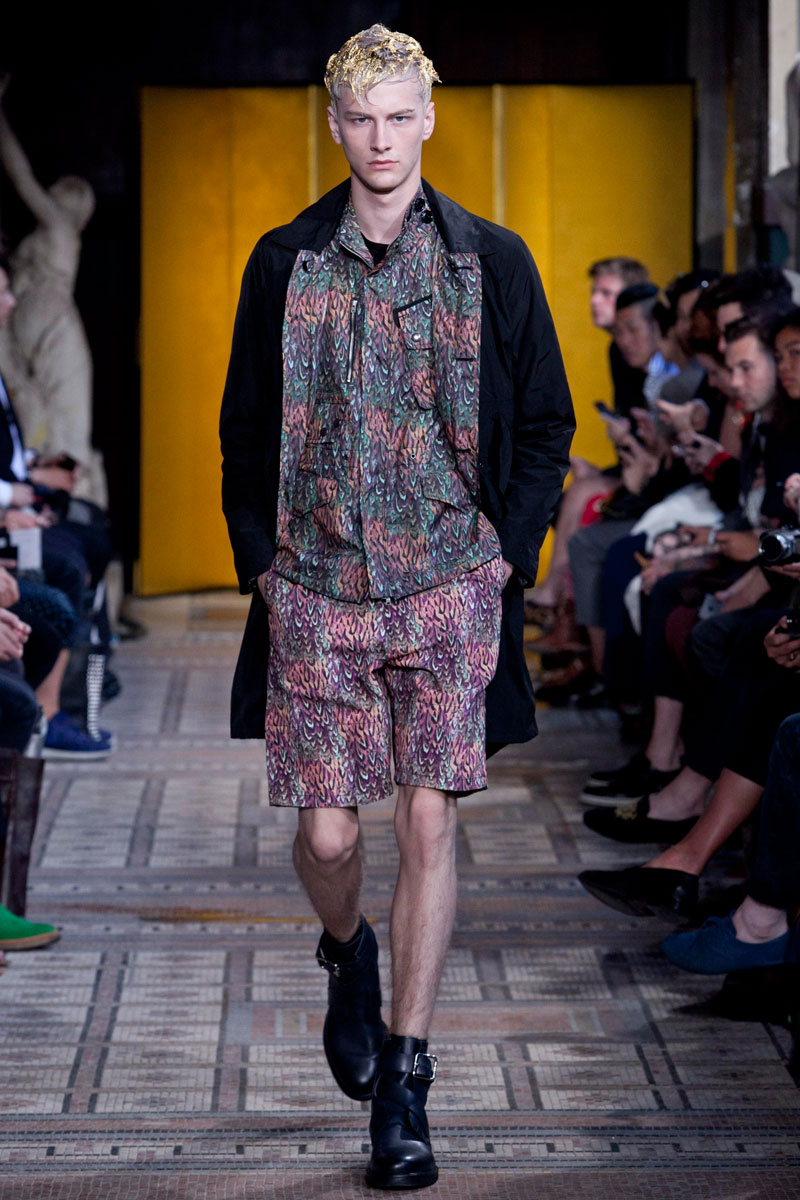
Miharayasuhiro’s SS 14 collection was an evolution of last season’s, down to the word “Japan” printed on the back of a jacket. Continuing FW 13’s bird themes, this time the collection was inspired by the phoenix, which could be seen in various ensembles: subtly embroidered on the pockets of black pants, or its wings drawn on graphic T-shirts. More prints on shirts and shorts ranged from blues with tiny florals to more colourful reds and greens in obscure little lines. The result was lovely and elegant. Yasuhiro, who began his career as a shoemaker and continues to push the envelope on shoe design, also included floral prints on footwear, which added an elegant touch to the collection. The show also included Sukomo dyed leather pieces, made with natural dyes from the fermented leaves of mature indigo. From start to finish, the show notes states, the process of making Sukumo takes a whole year. Last but not least were the printed black skorts, almost – but not quite – reflecting a checked grunge aesthetic. In Yasuhiro’s hands all were elegant and fashion-forward.
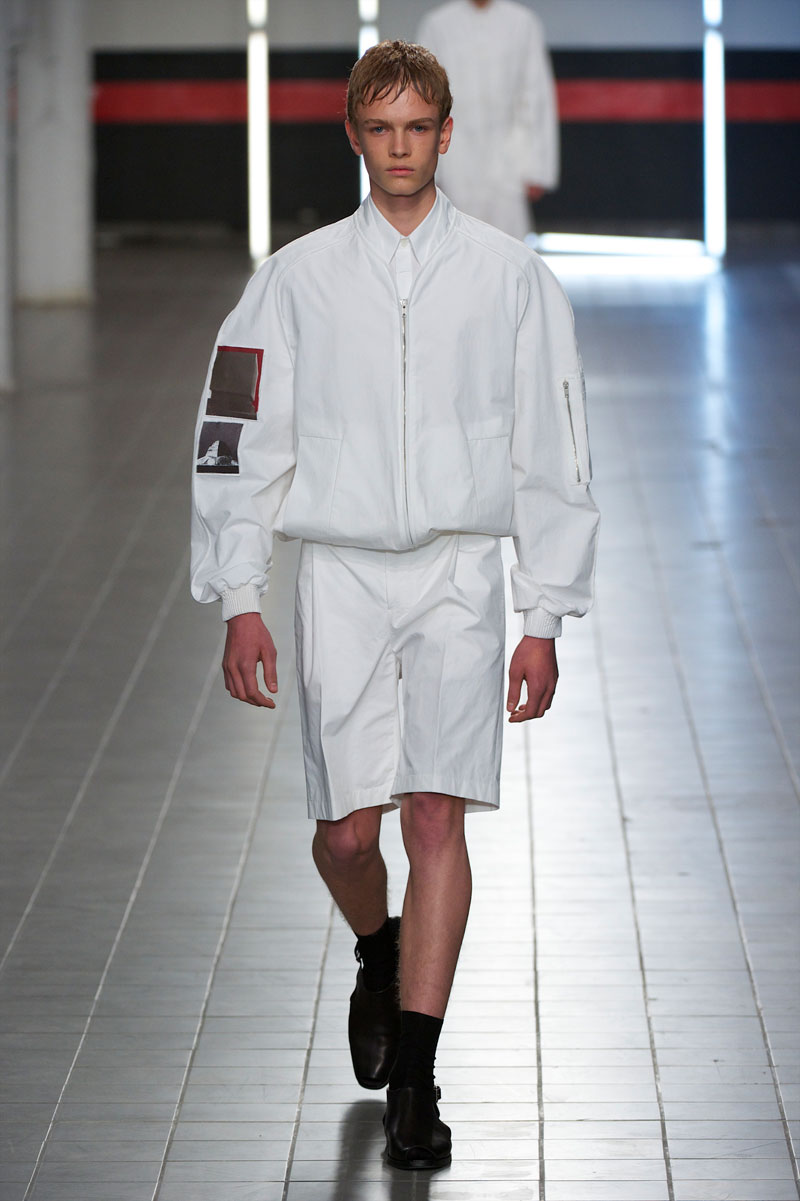
Damir Doma’s show was a surprise. At first it seemed as if there was little of what Doma is best known for: roomier silhouettes, and fabrics that envelope the body and at once give it freedom. But in the latter part of the show, it became apparent that the designer reinterpreted his signature silhouettes in seamless-shouldered jackets which hung loosely and boxlike on the models’ torsos. The thrust of the show seemed to be in the clean and almost-industrial white or light khaki ensembles, which were laden with fresh details: cinched waists, neatly fabricated in a crisp white jacket or high-waisted pants, were a theme that added to create the boxy silhouette, as did woven strips of fabric on a jacket. it remained loose and boxy despite a natural tendency for such an effect to fall flat. The talented designer also included plastic jackets and shirts in his collection, which added a tech-y touch, as did a severe-looking, front-zipped coat. Last but not least was a sharp black and white jacket with a Cubist-print motif, fitting on the body and adding variety to an inspired collection.
Last off, the KENZO collection began with colour-blocked blue and ended with a colour-blocked black coat. All throughout, KENZO offered rich and highly wearable variations on the theme of varied graphic prints. One could see the gradual and orderly breaking down of the colour-blocks into these fragmented prints, which adorned the entire collection. One print that looked like little waves on a beach were made even more graphic when ensconced in little rectangles. The feeling was that of precision, and the tight collection played with creating the false impression of haphazard prints. When the Yves Klein-blue ensembles ended, black and white prints began; they looked young and fresh. The collection was bold and youthful, with bright red shorts and pants striped with white, and those bags printed with wave prints – it was a hip schoolboys dream wardrobe.