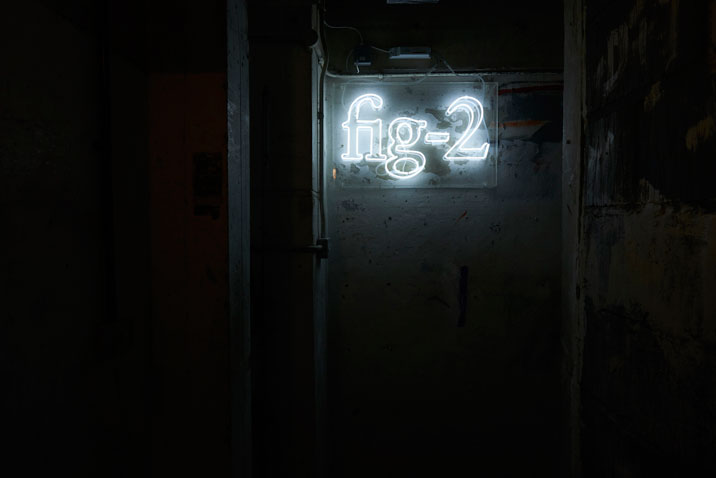
 Photo by Sylvian Deleu
Much has changed in arty London in the past fifteen years. Since British art rose to fame and fortune in the 90’s, the capital’s art market has mushroomed. We are now in an era of Savile Row galleries, multimillion pound art fairs and diamond skulls, where celebrated artists often seem more at home on superyachts than in East London squats.
All these changes, however, make the game of contrast and comparison an interesting one to play. And a new exhibition at the ICA in London provides the perfect reason to do just that. This week it has launched “fig-2” with the Outset Contemporary Art Fund, a revival of “fig-1”, a yearlong project first dreamt up by Mark Francis and Jay Jopling back in 2000.
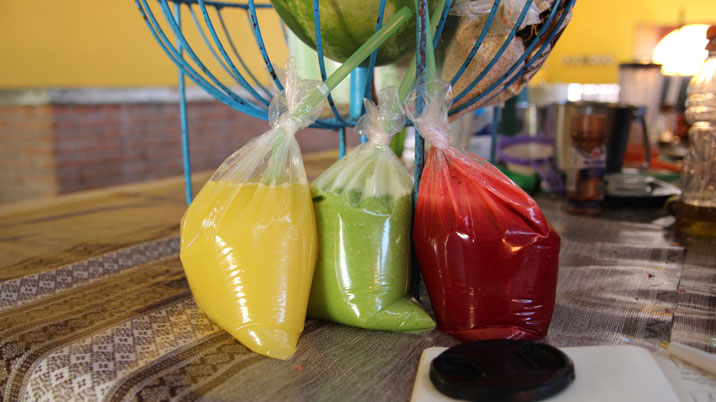 Laura Eldret, Bags of Juice, 2014
Though a number of aspects have changed – the project’s original Soho venue has, for instance, been flattened to make way for the Crossrail – the project’s concept remains the same: 50 shows in 50 weeks. Each exhibit allows one artist to use the space for a week, and then the next moves in. Openings take place every Monday night from 6pm, and residents might be from a number of diverse fields: writers, dancers, architects and performers are all welcomed. Similarly, big names might be sandwiched between lesser known artists fresh out of art school.
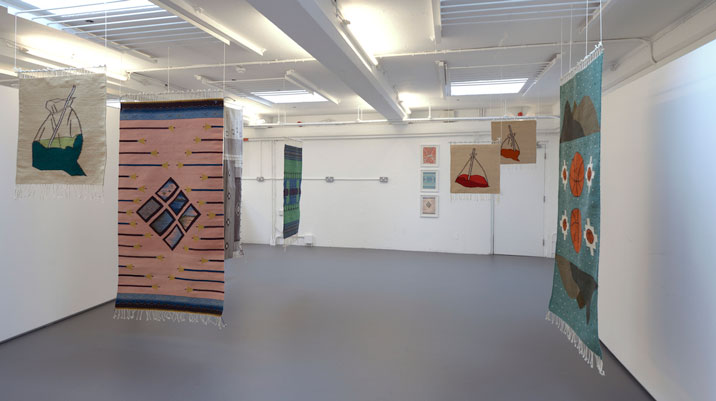 Laura Eldret, 3, The Juicers, 2015 photo by Sylvain Deleu
The ambitions of the project don’t end there. Another important aspect of it is its openness; much of the programming will take place during the year in order to retain an element of spontaneity. Curator Fatos Ustek, recently back from the Gwangju Biennale in South Korea, wishes to let her choices evolve as the year progresses. At the moment, only two participants have been announced: current occupant Laura Eldret, who kicked it all off this week with her strikingly beautiful collaborative textiles, and Charles Avery, who starts next Monday.
As Eldret’s residency reaches its final weekend, we took the opportunity to speak to Fatos about her vision for the 49 weeks ahead, and the differences she perceives between the project now and its original incarnation.
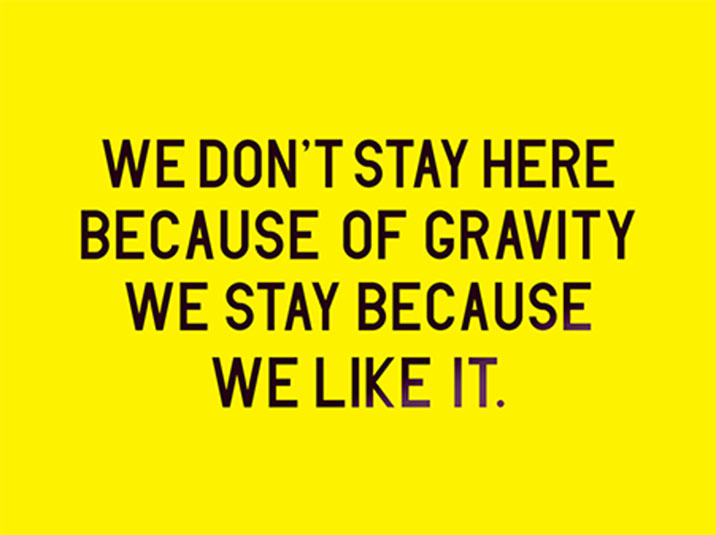 Charles Avery
How different a place is London for artists now to London in 2000?
It was a time when the Tate Modern had not yet opened, and the cultural landscape was skinnier, with fewer art institutions and galleries in operation. Today, London is the melting pot of ideas and artistic input. Most importantly, London is a hub of motion, welcoming a confluence of interests and practices into its body. It is a city where a lot happens all the time, and where what is new in the domain of the arts is introduced (as well as in sciences and humanities, too).
What about the original project have you decided to build on or change, and what was it important for you to retain?
I kept the original structure intact. One additional element I am introducing to the body of “fig-2” is space for collaborative projects. I am inviting two artists who have not worked together before for an joint exhibition, and I am commissioning a sculptor, a painter and a dancer to produce a performance work. I have kept the structure of starting with a work in progress, and ending with the finalised project, too. Laura Eldret will be bookending “fig-2”. It is significant for me to keep the structure as it is, but add dimensions to the existing body of “fig-1”.
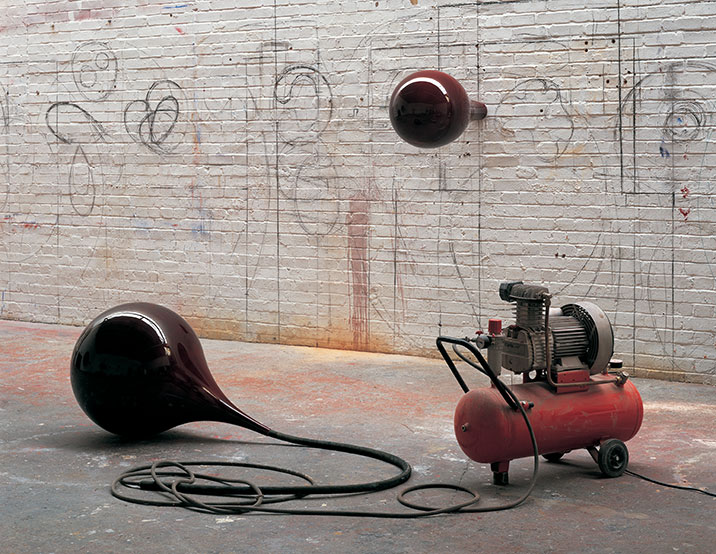 Anish Kapoor, 2014, Blood, Solid II, 2000. Photo by Dave Morgan
What new departures and trends in art do you think have emerged since that original show that are likely to have a stronger presence in “fig-2”? Will they be given more prominence during the course of the year?
I reckon each decade introduces something new. With the rapid growth of the internet, we can say that virtuality is now embedded in our lives, which also finds its reflection in art. Currently I observe a growing interest in the image, and its production as that of an object, an artifice, where image is no longer representation of something in its absence, it is (or can be) produced as a presentation of something. Thus, digital interrogations by various artists are a trend that we can see emerging post-2010.
Additionally, artists are now announcing their set of interests, drawn from various themes and disciplines, more loudly, in a way in which a work of art becomes a composite of its set of influences – whether it be from literature or music, dance, even quantum physics. I can promise that I will be giving more prominence to the latter development, so you will be experiencing works of art that have a trans-disciplinary nature.
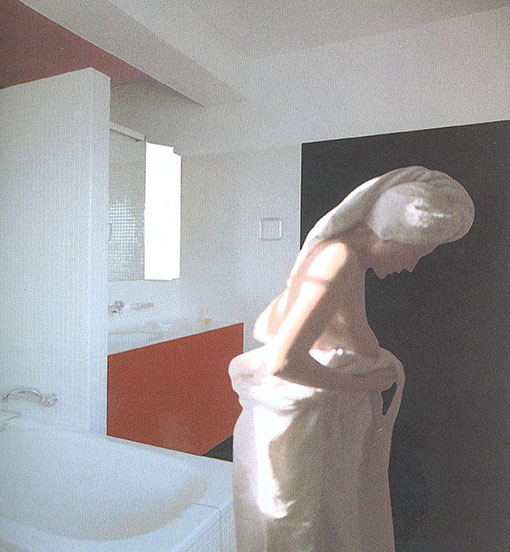 Richard Hamilton (1922-2011) Bathroom – fig.2 1998 Digital print on paper 400 x 400 mm Tate © The estate of Richard Hamilton
How important is it to you that each individual part–each fiftieth of the show–relates more widely to the whole? Is that something you plan to leave up to the artists to decide or wish to define?
I am structuring the program as that of a holographic constellation. There will be a consistent thread of production/interrogation/investigation/elaboration that surfaces if you see one project or several projects or all of the fifty projects. Each project will be unique, yet connects to its predecessors and successors at various levels. I am also compiling the programme around various cluster points. At times, those thematic curatorial investigations will emerge; at times, they will feed into the overall picture. In other words, I am imagining “fig-2” as a composite that is formed of 50 complex projects, each of which introduces a dimension (if not more) to the holographic image of “fig-2” that I wish to leave as a trace.
What do you think established and emerging artists gain from sharing this space during the course of the year? How much do you hope or believe the space will enable a kind of cross-pollination between artists who have never met?
I believe “fig-2” will be a venue where young art students, up and coming artists, will meet established artists, as well as players in the art world, from curators to museum directors. As I mentioned earlier, I am also planning collaborative joint exhibitions by artists that have not worked together before.
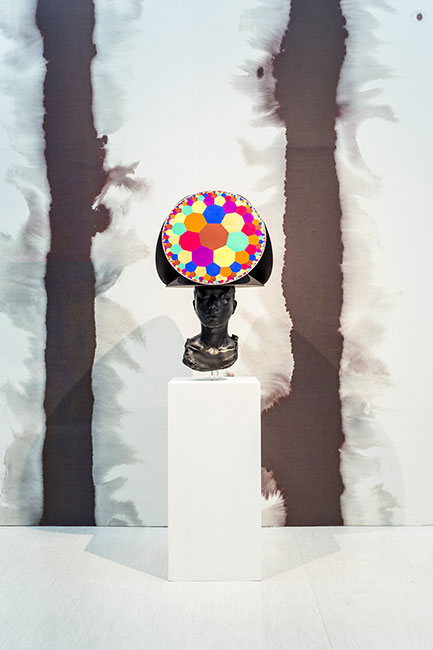 Charles Avery
“fig-1” took place in a room in Soho, whereas “fig-2” will be held in the ICA, an established institution. Part of Francis’ original inspiration for the project was freedom from any institution and the pressures this exerts on a curator. Has collaboration with a gallery had any influence on the overall project?
I find it very exciting to be located at ICA, a very significant art institution with an astonishing history of programming for London, and internationally. “fig-2” operates independently from ICA, thus I am the only person who compiles the program. ICA has been very open and supportive, especially given the fact that they have agreed to host “fig-2” without knowing its programme, and the content that it will generate throughout the year. “fig-2” is also in association with Outset International Contemporary Art Fund, and I would like to highlight that the program is curated independently from any influences by the supporting bodies of “fig-2”. All our supporting bodies are very much in support of the independent voice of the project.
What do you envisage happening to the work after each show?
I would be glad if the new commissions would be displayed at different cities in UK and in the world. Momentarily, I am in contact with some institutions to raise funds towards a project wherein their venue will exhibit the works after they have been realised at “fig-2”. And most significantly, Outset aims to introduce “fig-legacy”. Wherever appropriate, they would like to place the works created for “fig-2” in public institutions across the UK. I find “fig-legacy” an exciting dimension of “fig-2” ,where the new commissions will have a longer breath of outreach to public. I should add that “fig-legacy” is an intention, and will be developed in conversation and with the consent of the “fig-2” artists.
Text von Imogen Greenhalgh
Weiterlesen exclusive interviews on Sleek