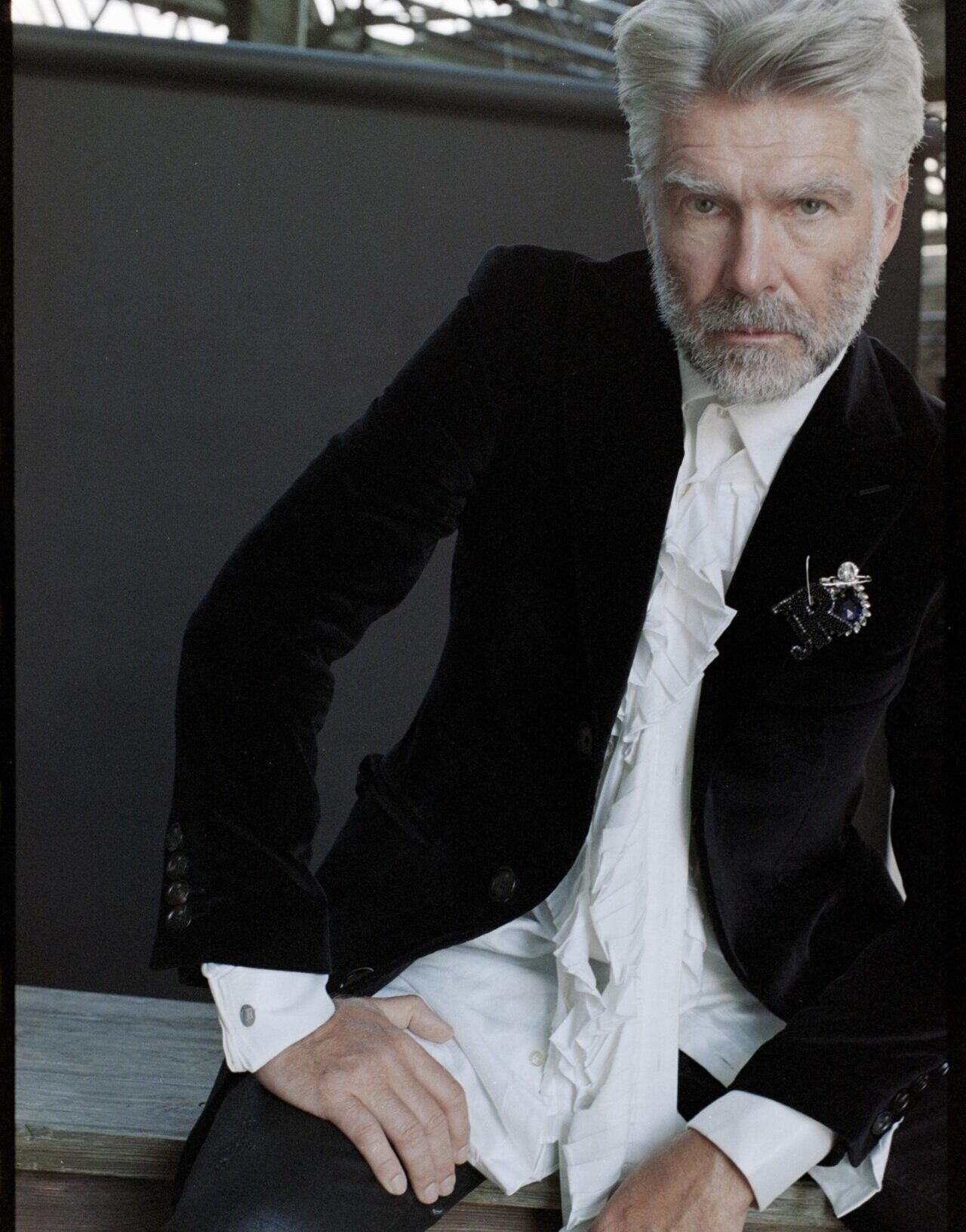
Photography by Sven Marquardt
LIEBE FREUNDE VON SLEEK,
It began, like so many good ideas, with a question we couldn’t shake. What is it that makes us pause? What stays with us when we’ve already tried to move on? We call it beauty, talent, charisma. More often than not, though, it’s seduction – and we have no idea when it began.
Seduction is the world’s oldest form of communication. And perhaps its least understood. We have confused it with desire, with manipulation, with sex. But seduction is none of these things – it comes before them all. The sentence that stops you mid-scroll. The idea that shifts something inside you before you even realise it. You cannot seduce someone who is not free to say no. That is the difference between seduction and coercion. And that is precisely why it fascinates us: it depends on freedom. It is always a conversation.
For this issue, we asked ourselves what seduction means today – in a world where algorithms anticipate our desires before we can even articulate them. Where brands no longer seduce but personalise. Where democracies compete for attention like pop stars. Where beauty is everywhere and scarcity has to be manufactured. Is seduction still possible under these conditions? Or have we reached a point where we are being seduced without even realising it – and have no desire to resist? The answers we found in this issue are far from unanimous. And that’s a good thing.
In Nisha Merit’s portrait Inside the Machine, Sara Cwynar reveals how images awaken desire. In her film Baby Blue Benzo, a car that is almost impossibly expensive is brought so tantalisingly close through images that we begin to wonder whether the image alone might be enough. Seduction has an infrastructure. Cwynar makes it visible, while also allowing us to feel why it works so well.
In The Economics of Desire, our conversation with Michael Kliger, we explore how desire becomes a business. Kliger describes a contradiction that luxury retailers grapple with every day. They want to sell more while preserving the sense that they are offering access to something exceptional. To do so, they organise trips, encounters with designers and exclusive evenings. But the moment guests realise they are part of a carefully staged experience, the spell is broken.
In his essay Seduction – Luring and Tempting, Ulrich Seibert shifts the focus to the person being seduced. In Thomas Mann’s Death in Venice, Aschenbach interprets Tadzio’s smile as an act of seduction. But what he sees in it is a product of his own imagination. How much of what seduces us do we project onto ourselves?
To allow yourself to be seduced is not a weakness. It is an openness. A willingness to let something in. To let the world rearrange your priorities, if only for a moment – or perhaps forever. SLEEK is interested in that moment. Not in what we chase, but in what we cannot get out of our heads.
So, let yourself be seduced.
Christian Bracht
Verleger und Geschäftsführer, SLEEK