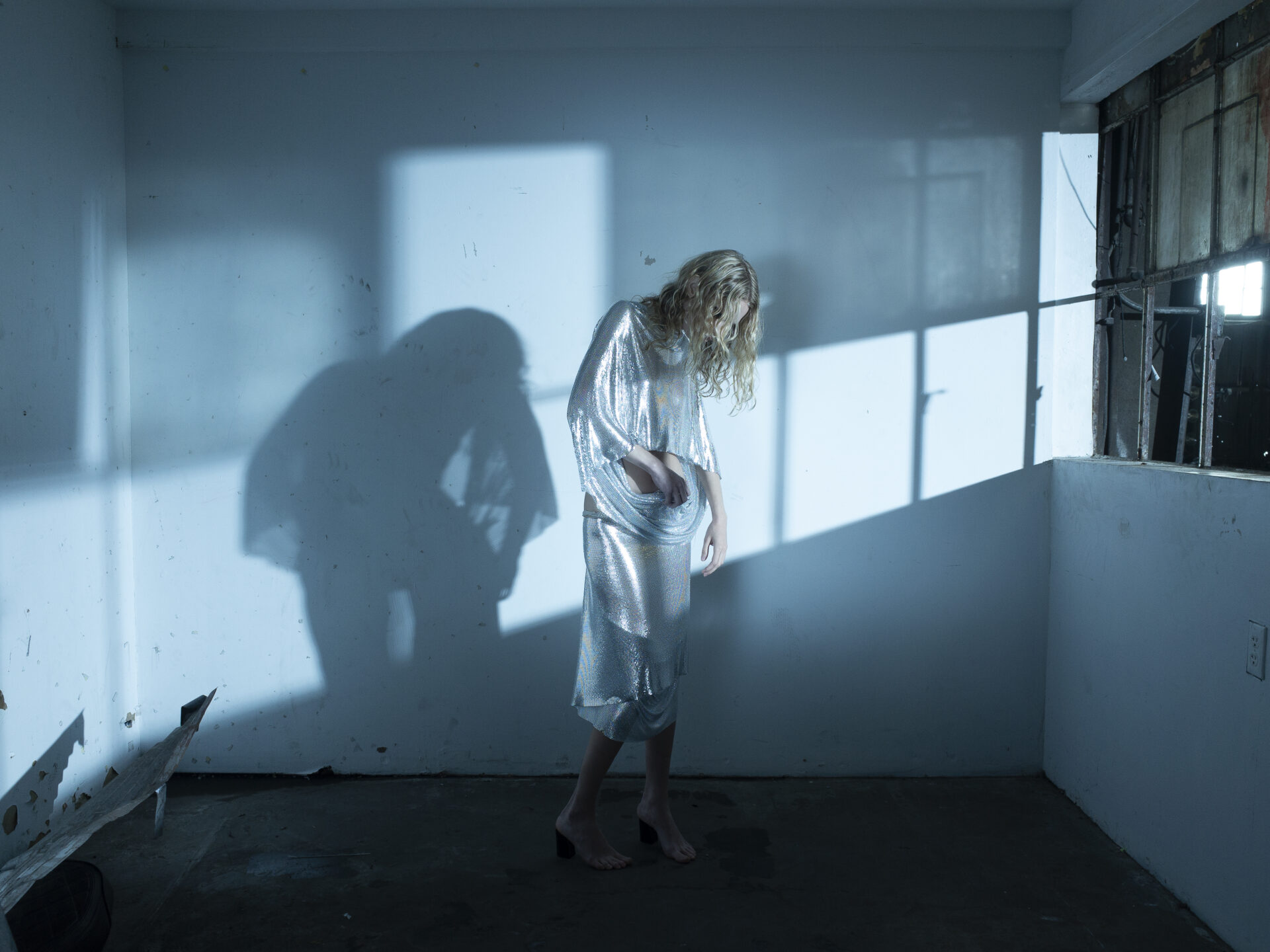
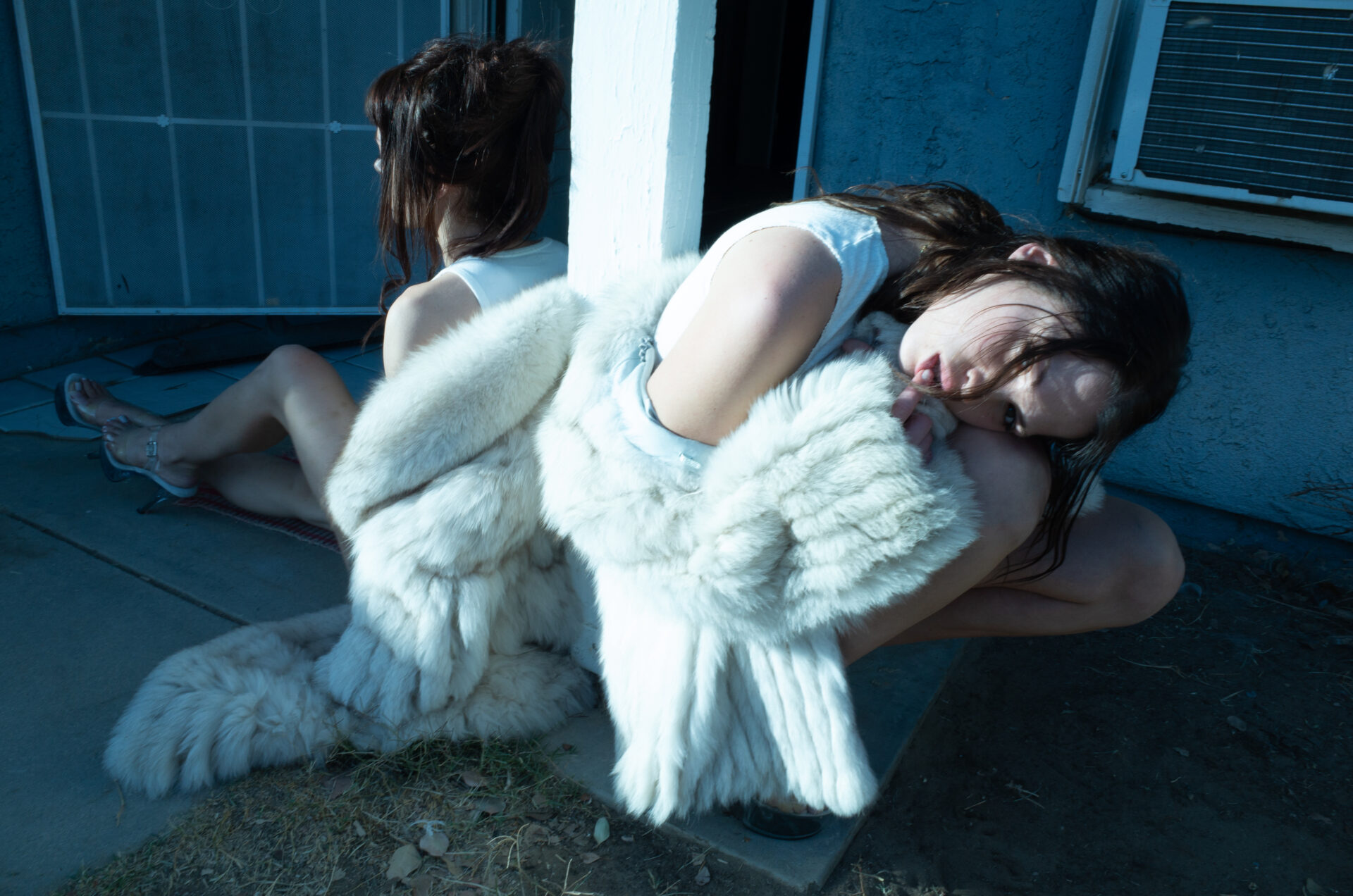
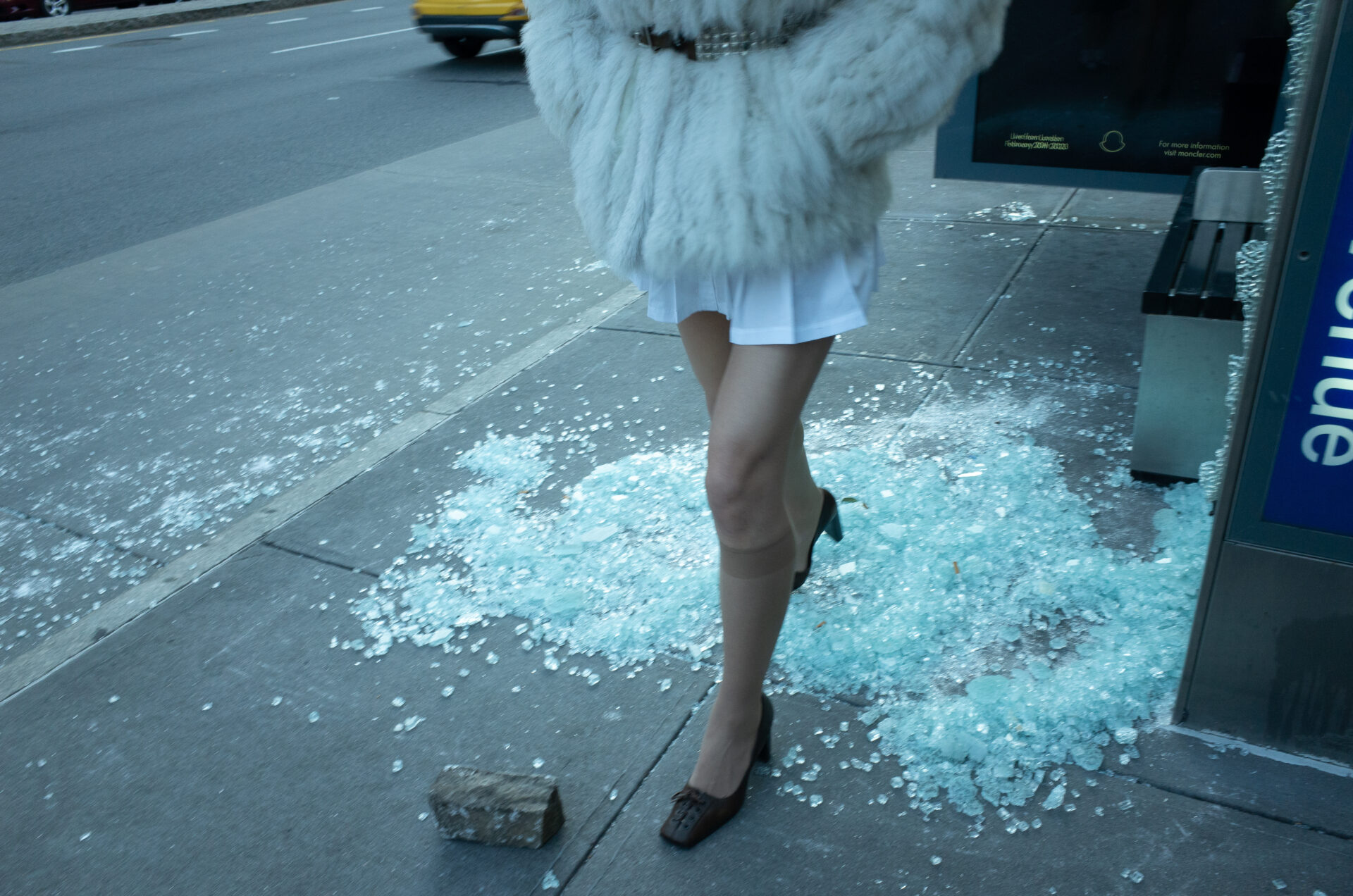
When looking at Maya Spangler’s photography, it leaves you with a lingering feeling of escaping the silence of a fever dream. The yearning, intimate yet distant, cool-toned visual language encapsulates the tension between wanting to be seen and wanting to disappear. Her girls are not staged, but simply perceived: carefree, unapologetic, detached. They are, as she admits, the version of herself she wishes she could be. The 26-year-old, who grew up lonely on the outskirts of LA, was discovered through her Tumblr blog and has been shooting full-time for almost five years. Her debut book Stolen Besos, made while grieving her father and escaping home across a dozen cities, creates a playful world to flee the pressure of performing while expressing the melancholy of unresolved girlhood. We talked about being an outsider, the accidental blue visual langue that became her signature, how much of herself is mirrored in the girls she captures and how to stay uninhibited as her work grows more professional.
HANNAH KLINGER How would you describe the characters in your photos?
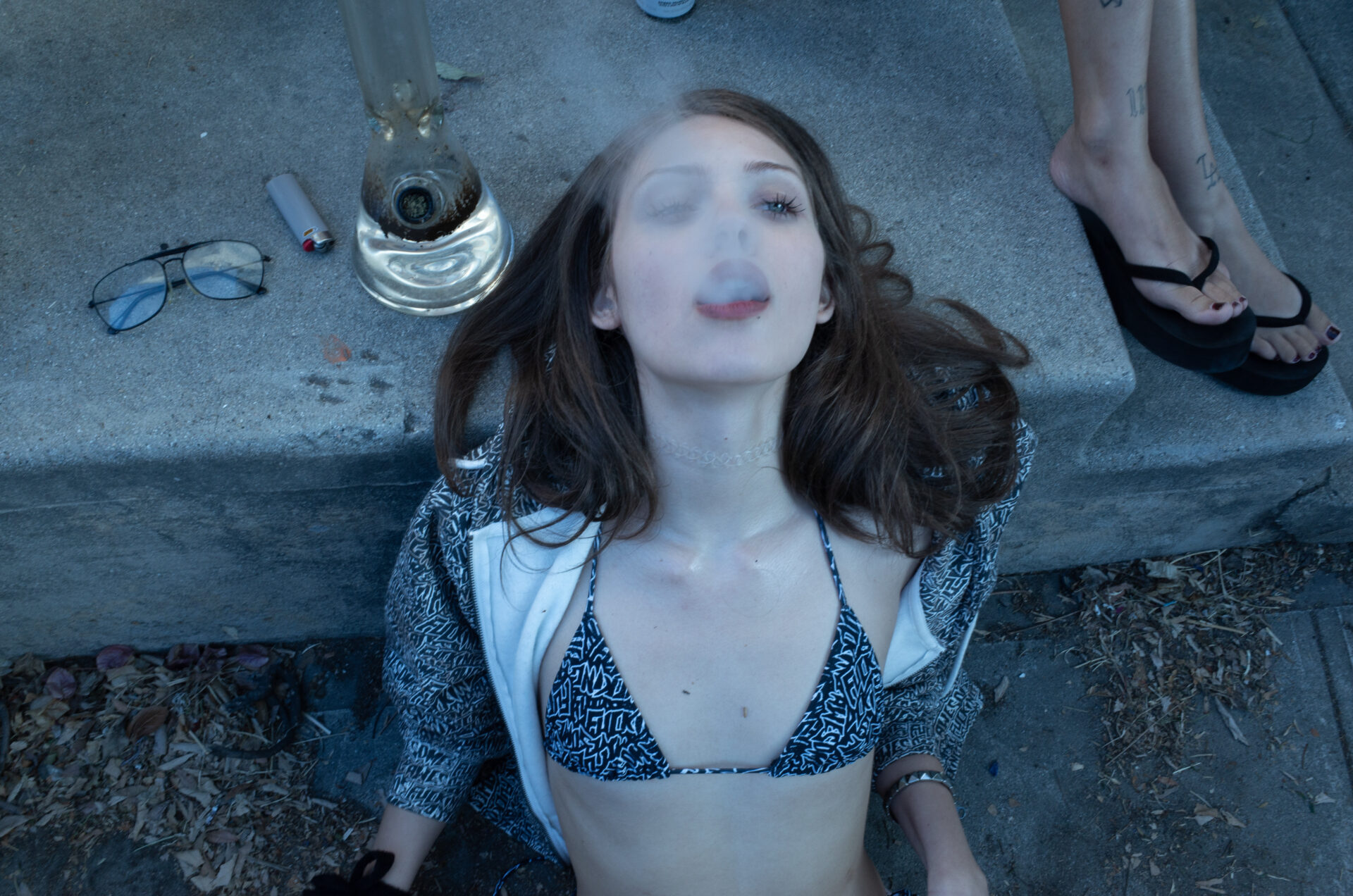
MAYA SPANGLER There’s a version of the girl that she presents to me, which I capture, and there’s a version I create through my selects and the story I tell. I’m not trying to change anyone, but the kind of girl I create is the version of myself I want to be: detached, confident, cool, with a strong spirit. I like seeing them run around, carefree and unapologetic. I wish I could be shot the way I shoot girls, but I’m too self-aware and too self-conscious about everything.
HK How much are your photographs a mirror of yourself?
MS I want to say 100%, but realistically half of it is a mirage. It’s what I want to be, what I think I am, and also not me at all. It’s what I’m projecting onto the person.
HK You’ve described your work as capturing the tension between wanting to be seen and wanting to disappear. Do you feel that often?
MS It’s what I grapple with daily. Some days I think, “I don’t want to do this anymore, I want to run away.” But then I love it so much that I wonder what it would mean to actually do that. I think everyone wishes they could just do what they want without having to face anybody.
HK Does photography help you hide or show things you can’t otherwise?
MS Both, and I’m really grateful for it. I haven’t tried any other medium, but it’s the only way I know how to make something, and I can hide behind it, not having to show myself on Instagram. I love posting my work instead of myself. It’s too much pressure.
HK You’ve described your photographs as “emotional landscapes of unresolved girlhood”. Is something unresolved in your own girlhood?
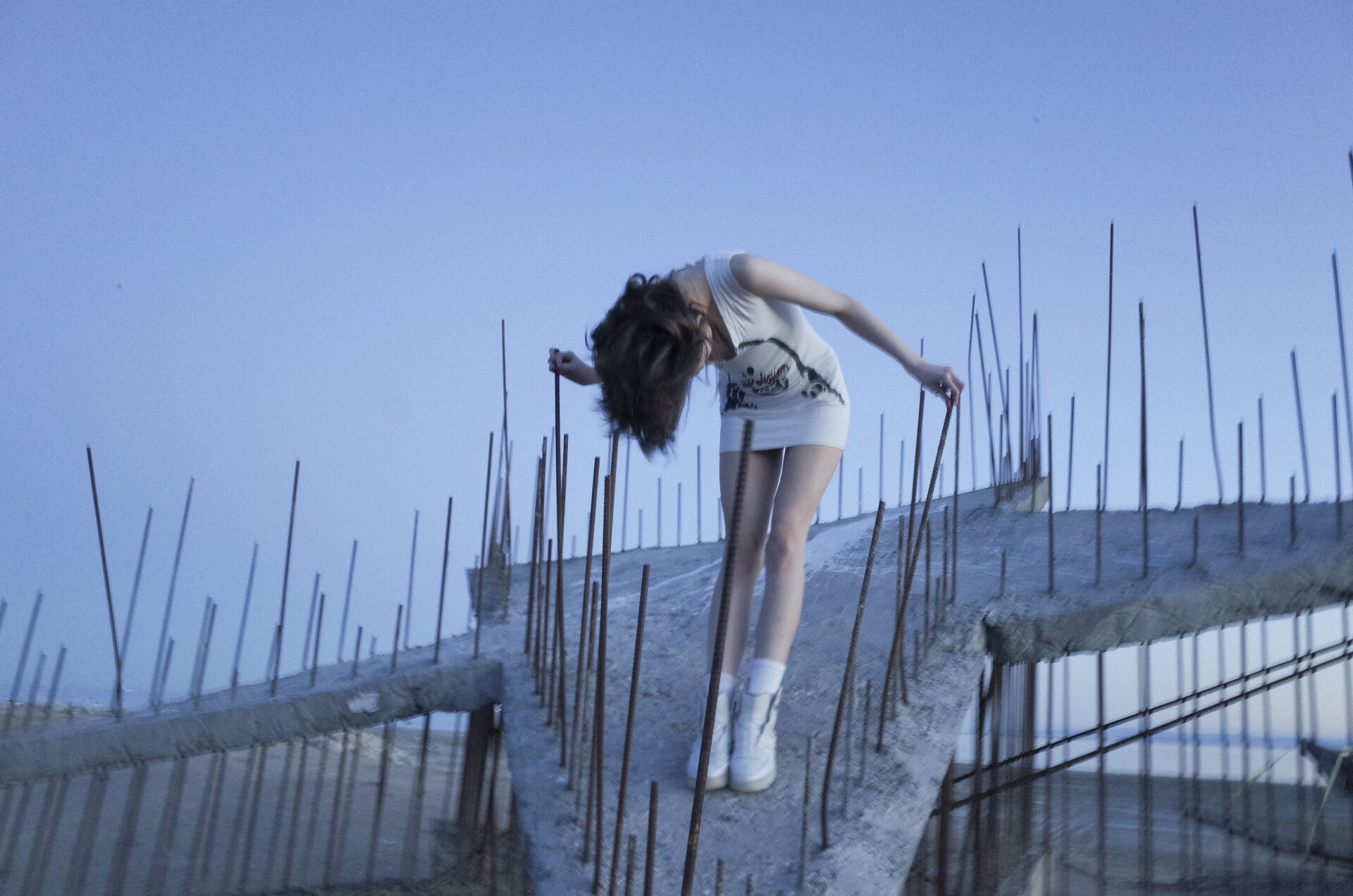
MS I said that in reference to my book ‘Stolen Besos’, which is full of those feelings. It was shot at a time when I was dealing with my dad’s death and a really bad breakup. I felt estranged from everyone, suddenly suspended in adulthood without knowing what I was supposed to do. So I created a world where you don’t have to perform. You can just play. It also connects to what I said about feeling so lonely as a girl. I was ashamed, and went to a Catholic all-girls school where I felt repressed, judged and weird, unable to express myself. It’s only now, in my twenties, that I can process that and feel confident enough to express myself.
HK Did you feel like an outsider?
MS Yes. There were hardly any kids, not even on my street. Everyone kept to themselves, just a lot of old people. I was so lonely, always playing in the backyard by myself, talking to myself, taking lots of photos and videos of myself. I always liked taking pictures, but I didn’t have a subject, so I photographed my dogs, or me.
HK What was it like growing up near LA?
MS I grew up on the outskirts of LA, about half an hour away. I still had a fantasy of what LA would be like. In high school we’d take the train into the city. I’m glad I didn’t grow up there, because it still feels magical to me, like the movies. Sometimes I drive down a street I’ve never taken before and think, “Wow, I should shoot here.” If I’d grown up in the city, it would probably mean nothing to me. I never go back to the place I grew up in, and I’d never want to shoot or hang out there.
HK How does your family react to your work?
MS A lot of my mom’s side is extremely Catholic. They’re not really interested in fashion photography and don’t understand what I’m doing, or why the girls I shoot look ‘so sad.’ They’ve literally told me it looks like I’m holding girls for ransom, that it’s the devil.
HK How did you start photographing?
MS When I visited my grandparents in Arizona on holiday, my grandma would give me a disposable camera and get it developed for me at the end of the summer. I took pictures of everything. When I was a bit older, I went to the Echo, a venue in LA, and shot bands there. But I didn’t really have friends, so I couldn’t take the pictures I wanted to. It wasn’t until I was 22 that I put myself out there, committed to photography, reached out to people and started developing my own taste and style.
HK Who were you when your blog ‘coldstonedreamery’ was still running?
MS I started it in sixth grade, when I was 11 or 12, and became much more active around 20 to 22. I was such a girl blogger, edgier and more carefree, posting so much of my personal life, divulging everything: relationships, the details of my day, diary entries. I was living in the moment not thinking about my career or where it would lead. But it got me really far, and a lot of my first jobs came from Tumblr because people liked my work.
HK What was your life like when you were making your debut book ‘Stolen Besos’?
MS I was travelling a lot and was far from home. I shot a lot of it in New York, then Warsaw and Krakow, the outskirts of Austria, Paris, London, Spain, Seoul, Miami and Texas. I shot at an abandoned church in Europe, cars, abandoned houses, bedrooms and the streets of different cities. Not much is from LA. I had no ties to home at the time and was trying to not be there at all, escaping.
I wasn’t shooting with the book in mind. It includes selected work from when I was 22 to 23, and what I shot in 2024 and 2025 was made with the intention of a small book. At first it was meant to be a travel diary, but I kept saving images until it became something bigger.
HK Was putting together your book ‘Stolen Besos’ emotionally challenging?
MS It happened in two parts. First, I laid everything out on my floor and was let down. I’d had a completely different vision of my work in my head, and I’d been comparing myself to my inspirations. Seeing it all together, I thought maybe I wasn’t as good as I believed. I’d imagined my colors differently, and there isn’t much blue in the book. But I kept going and made my sequence, and then I thought, “Thank God I did this.” It was such a relief.
When I had a show and saw the photos printed large for the first time, framed on the wall, they looked so good, making me realize I hadn’t been aware of the story I had been building all along. I thought, “This is literally how I see things. Why didn’t I trust myself before?” I also hadn’t thought about whether people would come to the show, and seeing that they did felt so wholesome.
HK What draws you to such a blue-toned color palette?
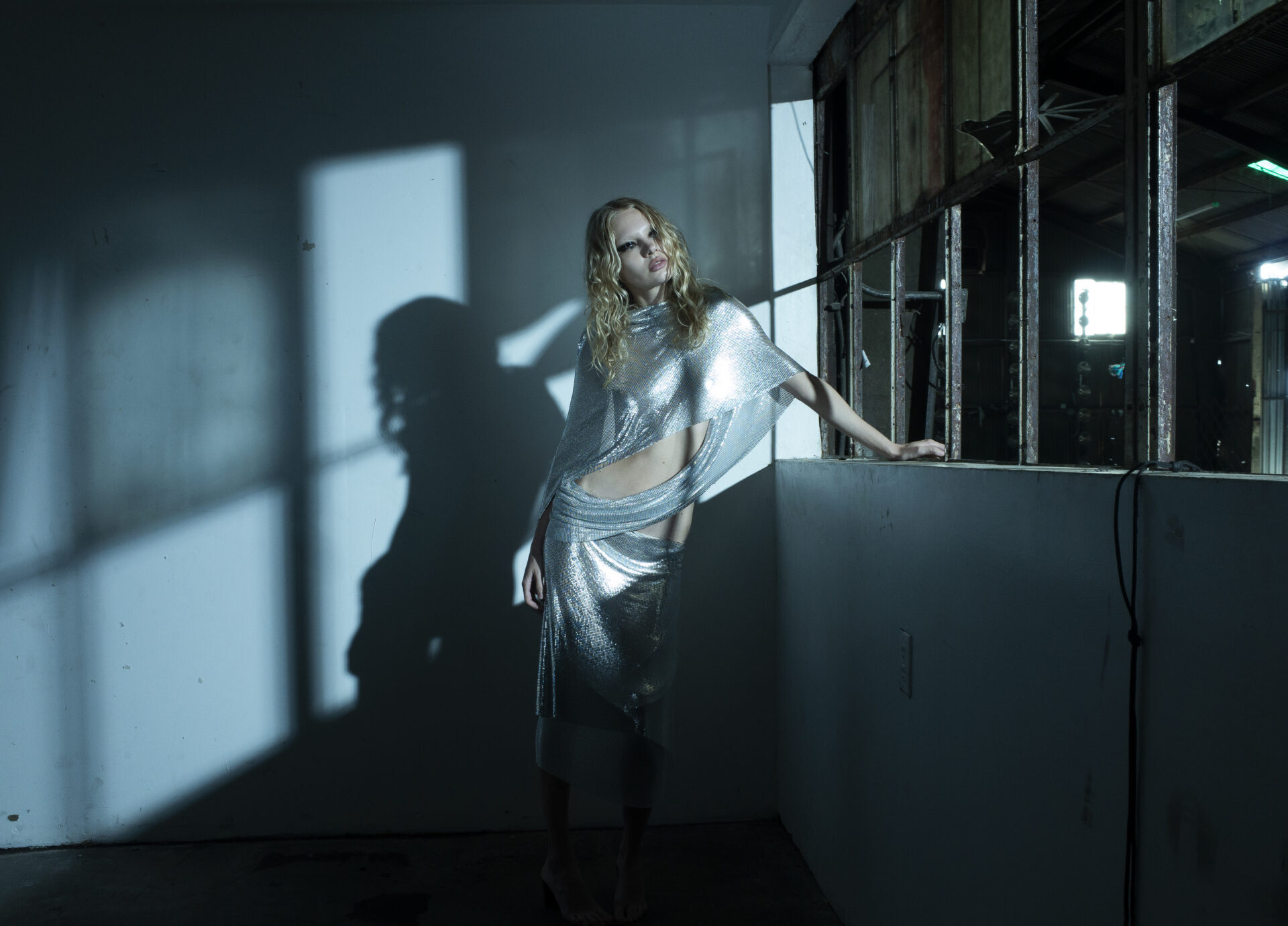
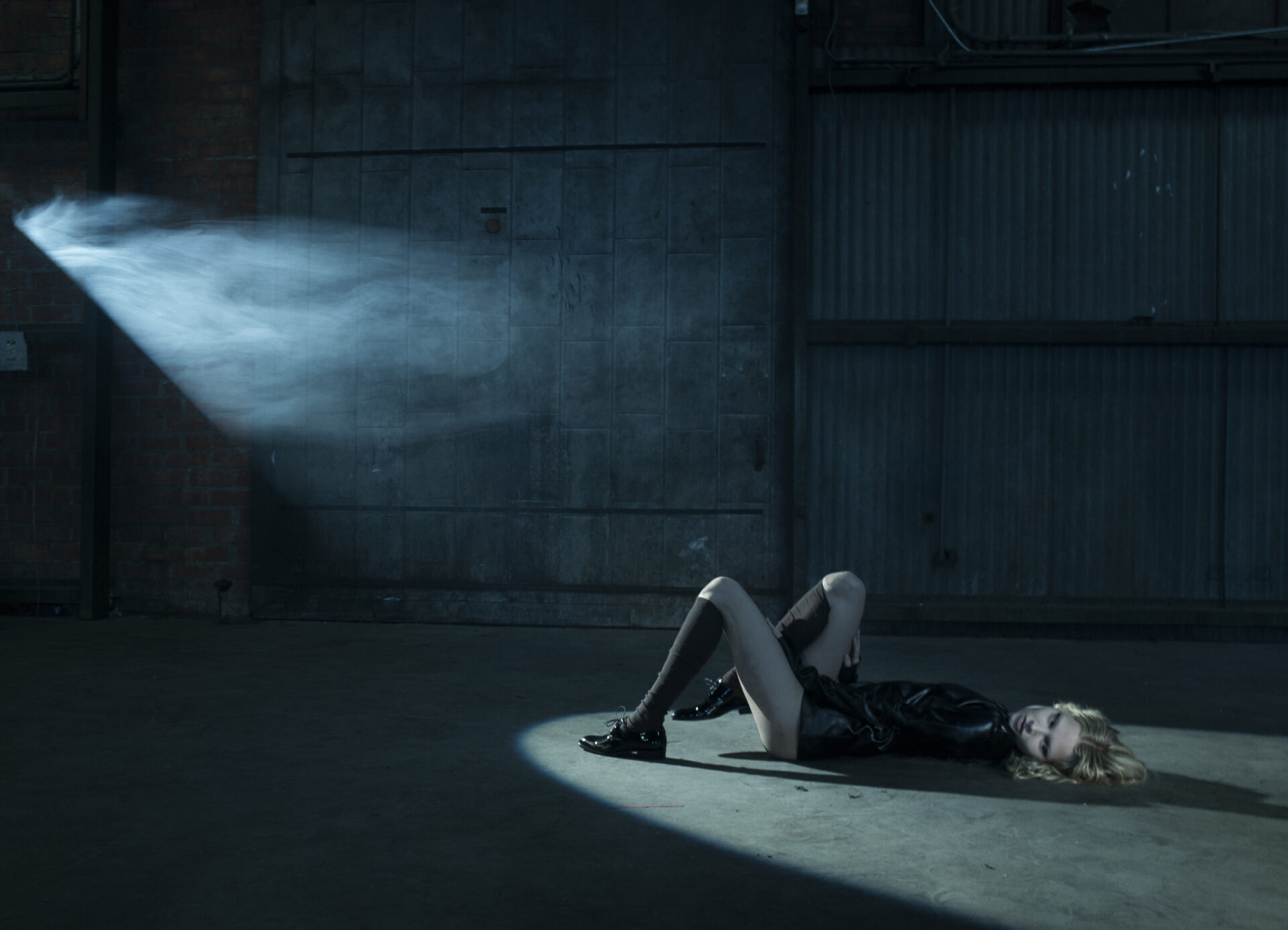
MS It wasn’t always that way. When I started, I was known for flat colors, low contrast, very pale, but never blue. They were neutral. Then one day it happened by accident. I posted a set of a girl outside an ice cream truck with an old man, those were the first photos I edited that blue. I think the caption even was “Is this too blue?” Ever since, I’ve felt it’s better to shoot this way. The coldness makes sense to me, it’s what I’m trying to capture.
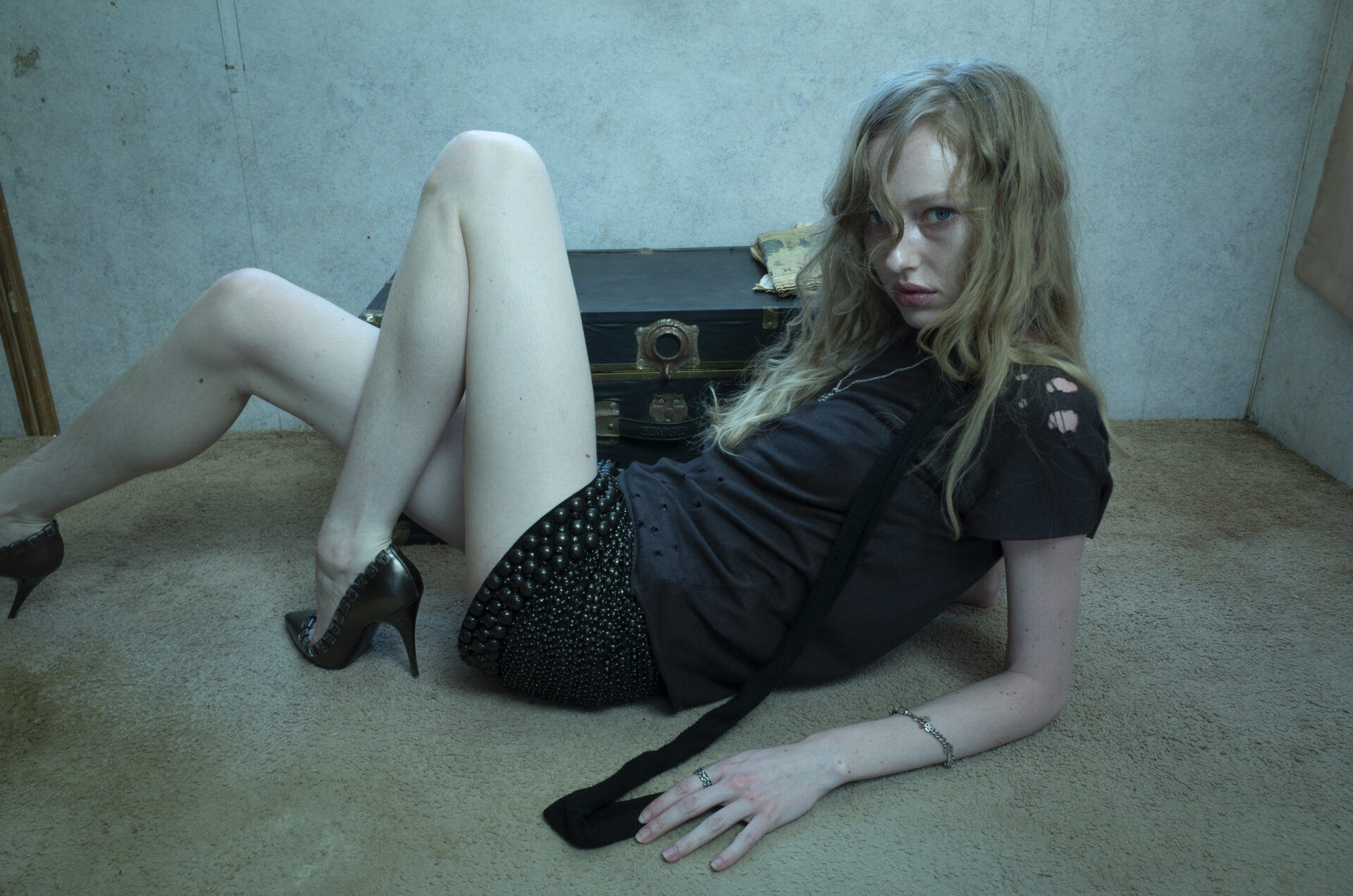
HK Your pictures look so intimate. How do you interact with models on set?
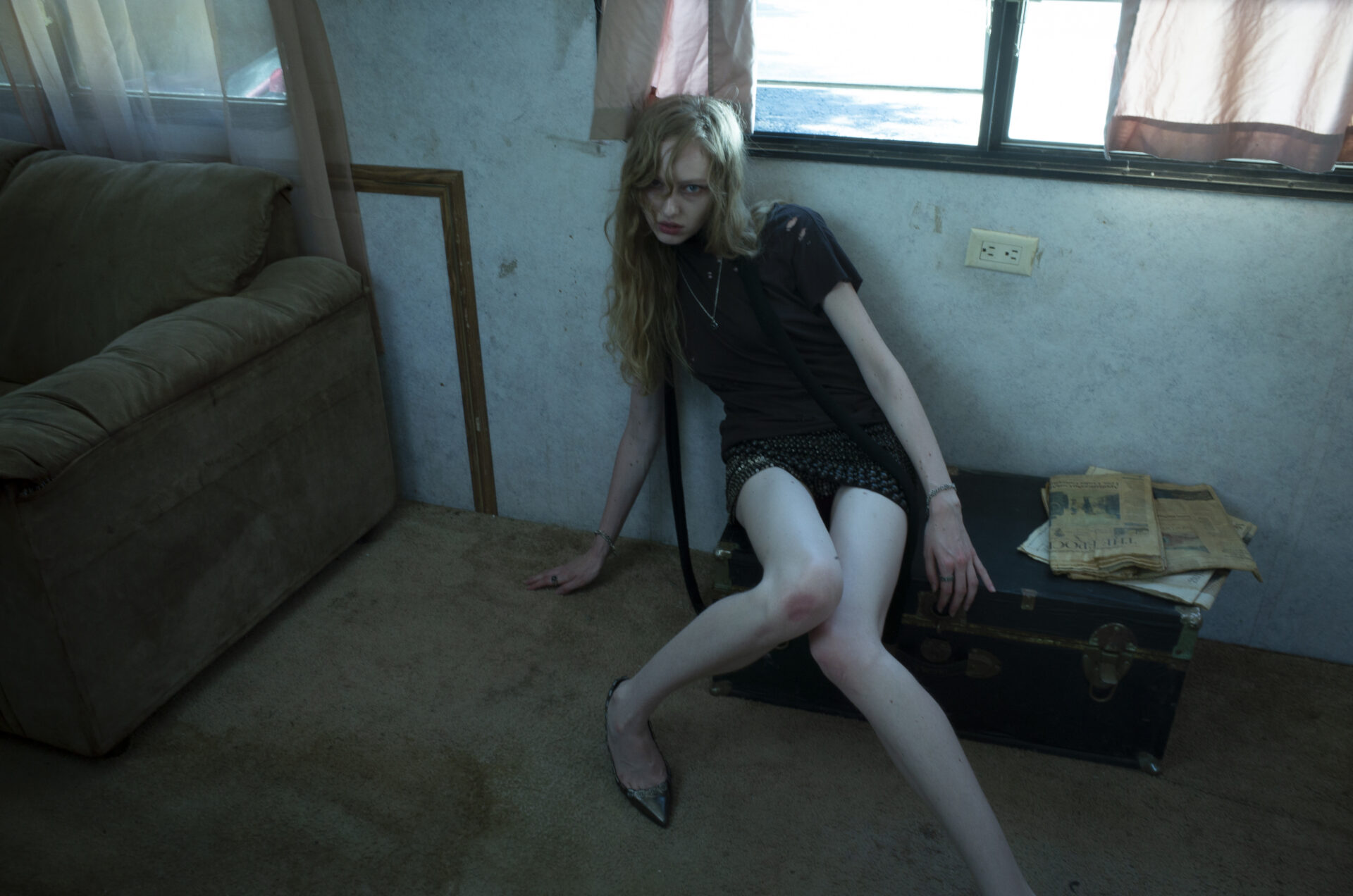
MS I’m honestly under-directing. I’m waiting for them to relax and let go. I feel uncomfortable directing people, especially in my personal work. We talk, I say “Oh, that’s cute,” and I chase them around: “Okay, let’s go over there now.” I look sporadic and shoot really quickly, maybe for an hour. In my personal work I almost never use equipment. Sometimes I will bring lighting tech, but it’s usually just me and the model, which is the best situation for me.
HK How do you choose who to collaborate with?
MS I’m not interested in celebrities. I don’t think of myself as a portrait photographer, and celebrities have such a strong identity that it’s a different kind of work. I prefer shooting people who are less discovered, or my friends, or occasionally a muse I become obsessed with and want to shoot every day. There are girls I shoot repeatedly because we have such a vibe together. With celebrities there’s always a distance, and I’m naturally shy and soft-spoken, without a commanding presence, so directing someone so big is hard.
HK Do you manage to stay true to your vision, or can you also get distracted?
MS I definitely get distracted, especially when I’m doing a lot of commissioned work. I have to make sure the client is happy, so I’m thinking about that first rather than what I want to shoot. Sometimes I catch myself thinking I’d do it completely differently, or that I’d want to shoot somewhere else. It’s hard to balance the two, but I always try to take a few photos on every job that I’d be proud to put in my own portfolio.
HK Is it also helping you heal?
MS I’ve had to confront some things, yes. In my personal work I feel I’ve already addressed that part of my life and faced those feelings. But I’m 26 now, and I can’t live in that mindset forever. I have to mature, and my work should mature with me. I’ve been shooting professionally full-time for almost five years, so I feel pressure to fine-tune it, maybe graduate to a better camera or better gear to make it more sleek. That pressure may be self-imposed, I don’t know. I liked the edge.