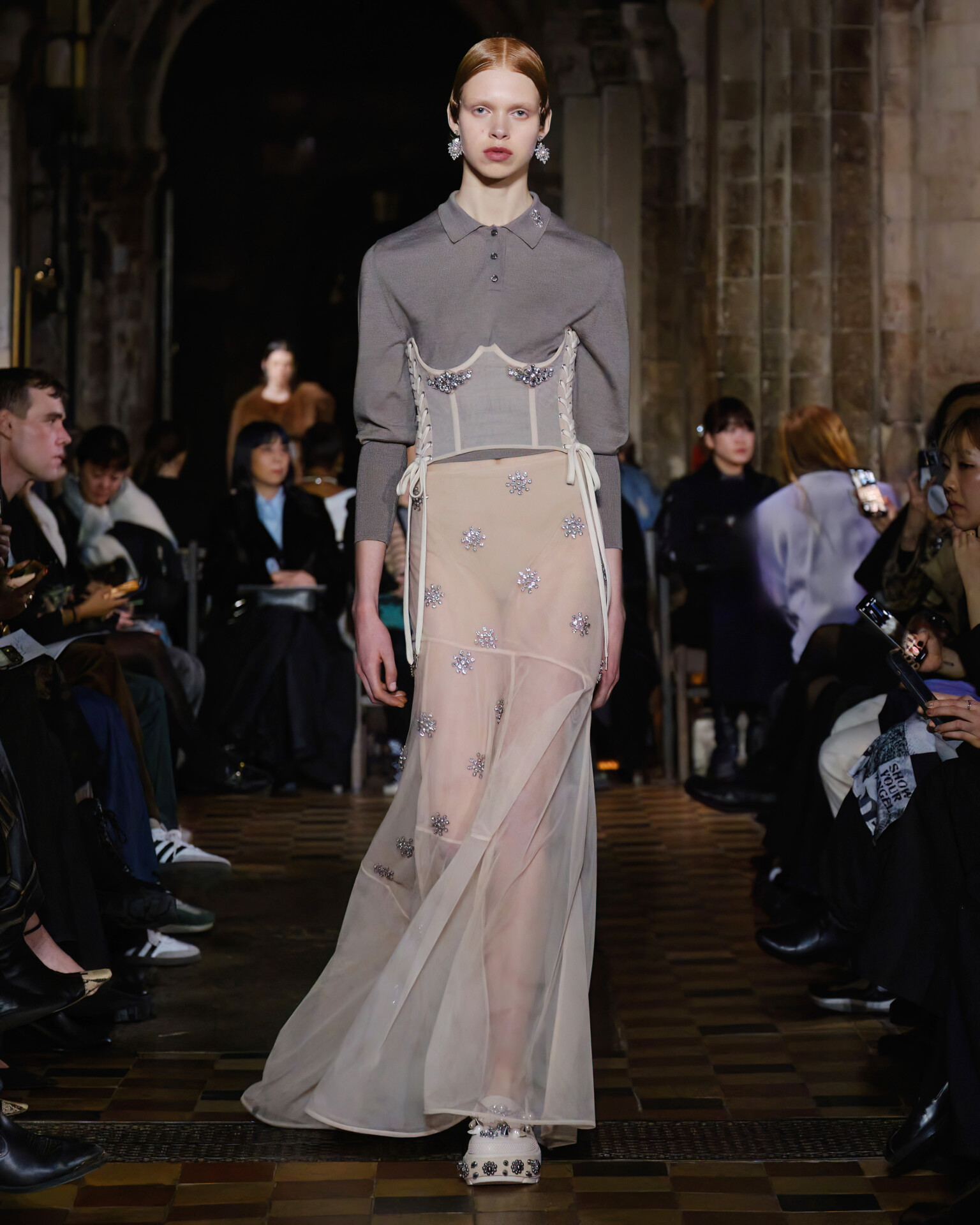
Simone Rocha Fall/Winter 2024. Image courtesy of Simone Rocha.
Is time itself our elite’s new luxury item? The wealthy and their clingers-on are binging on botox, stockpiling reverse-aging skincare and supplements, and maximizing their REM cycles. Even Hollywood’s fitness craze has been replaced by an Ozempic epidemic, the diabetes drug obviating both the time-consuming needs to eat and to exercise. As surgeries and medications replace tasks of bodily maintenance, idolization of the artificial has come to dominate in the cultural sphere: body modification as an art and tight, immobile features as a status symbol.
The collective cultural consciousness has started to envision a world where natural forms are mere memory: synthetic produce, manufactured public space, and bodies that have become mediums for the sculptural craft of fillers, fat transplants, and botox. Recent couture and ready-to-wear have both imagined this future, with frozen silhouettes and sculptural embellishments: bodies compressed in latex and leather, metal-wear and corsets, extended and reconstructed limbs. The Met Gala’s upcoming theme “Sleeping Beauties: Reawakening Fashion” also reflects the push for transcendence from the physical— built around 15 pieces from fashion history that are too fragile to ever be worn again. The gala’s dress code evokes the same movement, based on J.G. Ballard’s short story “The Garden of Time”.
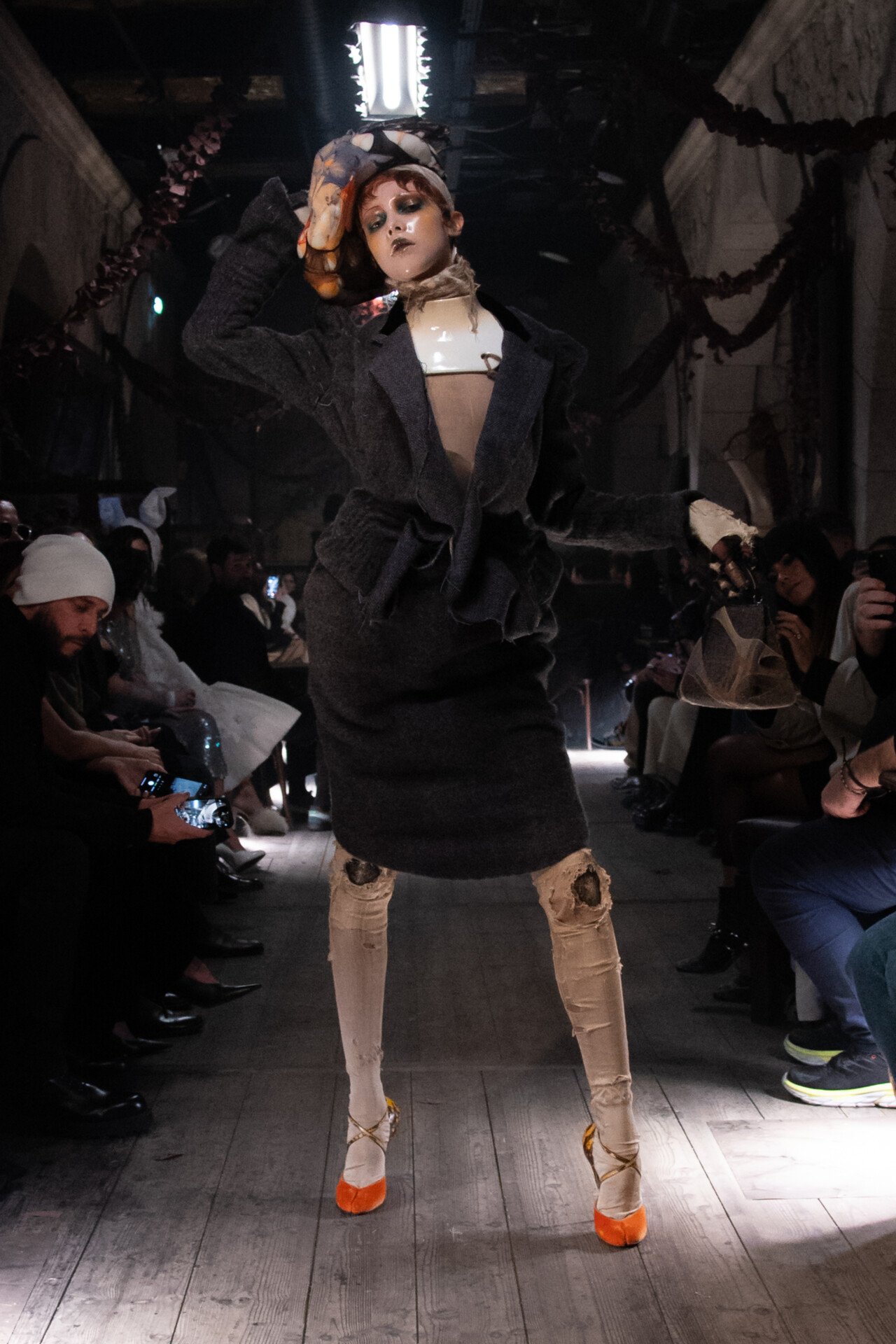
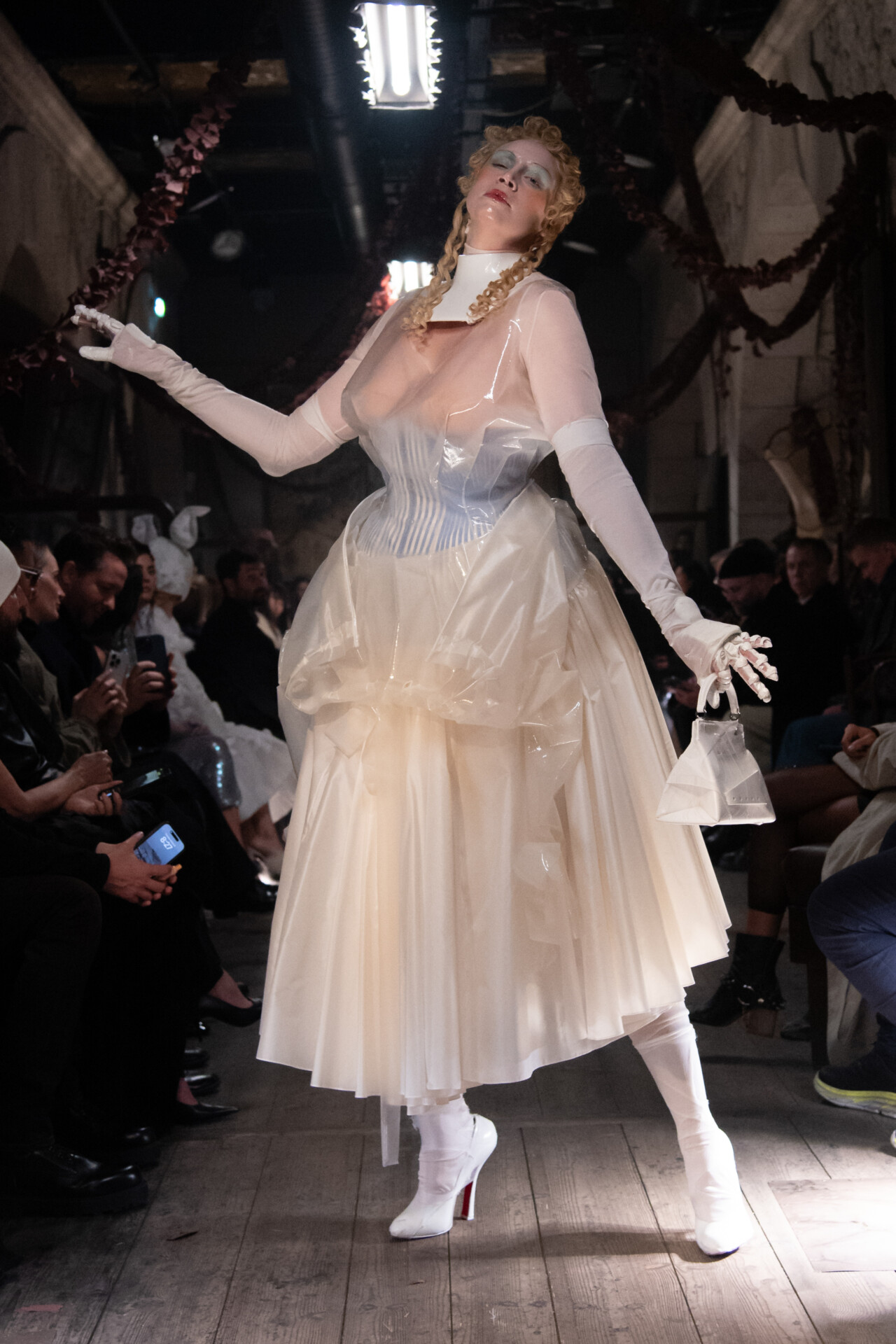
All looks Maison Margelia Couture Spring 2024. Images courtesy of Maison Margelia.
Flickering between the past and the future, Maison Margelia’s Couture Spring 2024 drew a parallel between old modes of confinement and the stiffening of modern forms. Theatrical and creepy, John Galliano’s spectral runway conjured up the dark underbelly of 19th century Paris. Characters of social dereliction slunk through the foggy street-scene, some twitchy and bandaged, one clenching an unlit match in his teeth. Beyond the clothes— exaggerated corsets, gauze-drapery dresses, patchwork suits with visible, thick seams— makeup artist Pat McGrath developed a latex-makeup technique, with shiny lacquer over glittering features to achieve a stiff, doll-like look.
Simone Rocha’s debut for Jean Paul Gaultier SS24 and her own FW24 show also drew on styles of confinement: snug embellished balaclavas, body-restructuring shapewear, and crinoline skirts. Echoing the spring/summer themes, many looks on the fall/winter runways this year also explored bodily compression and frozen silhouettes, like Seán McGirr’s first show for Alexander McQuen. His runway opened with a laminated jersey dress that encased the model’s hands and maintained details of bondage throughout the show: crisscrossing knots along jean bottoms, wide circumference shoulders creeping up past the models’ faces, hard-shell plastic dresses.
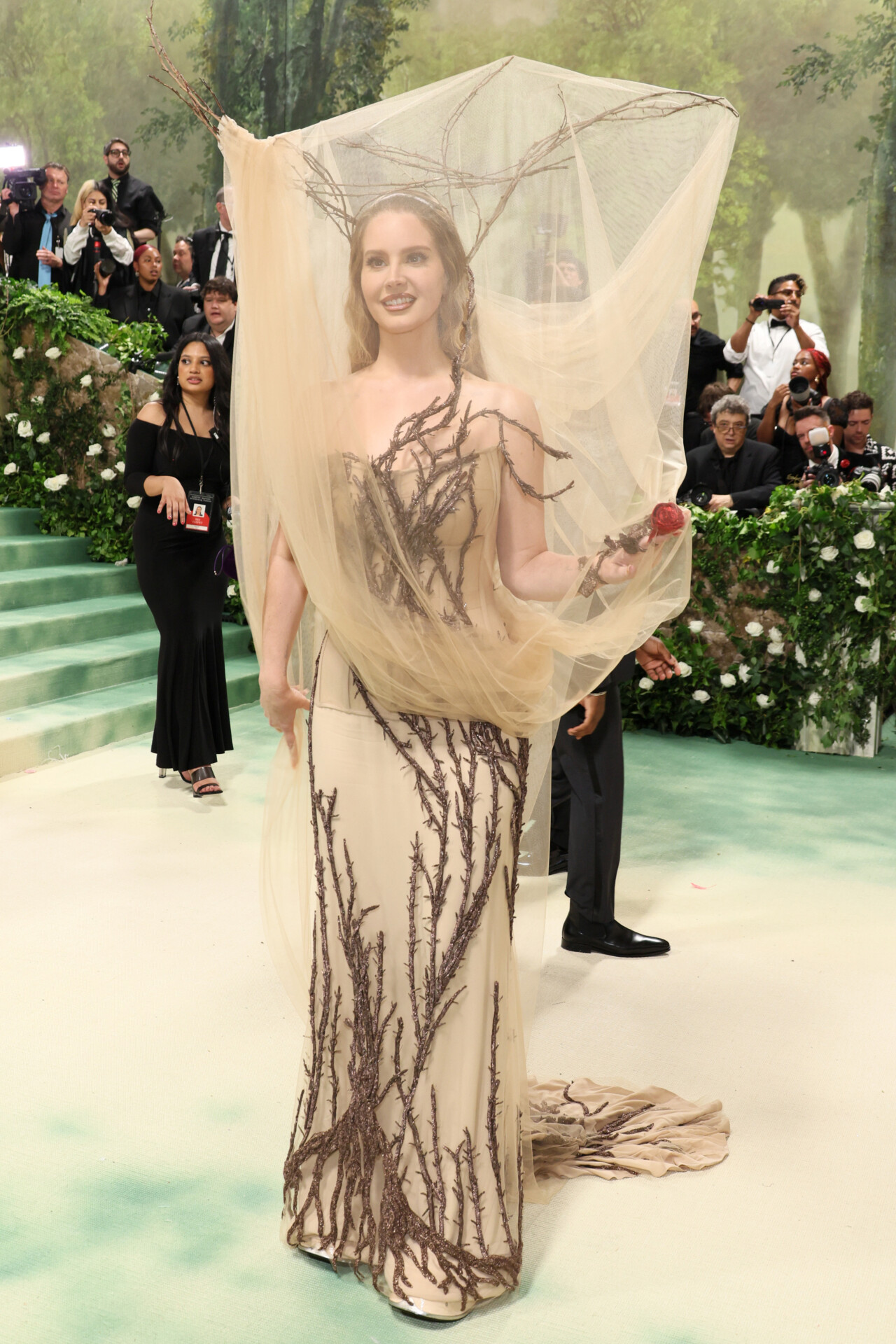
Lana Del Rey wears FULL LOOK Alexander McQueen.
Building up to the Met Gala, the Metropolitan Museum hosts have directed guests to dress to the theme of a short story by J.G. Ballard from the 1960s, called “The Garden of Time”. The author’s name has since become synonymous for dystopic modernity and artificial, post-apocalyptic landscapes. Following an aristocratic couple who seem to be living at the end of the world, the short story relishes in juxtaposing the protagonists’ elegant and sophisticated taste against an angry, poverty-stricken mob who attempt to breach the grounds of their mansion.
The husband, Axel, keeps the crowd at bay each night by plucking a “time flower” from his garden. When picked, a flower sends the couple back in time— a few days per larger blossom, a few hours for a smaller one— expelling the mob back behind the horizon line. As the garden’s blossoms begin to dwindle, Axel and his wife slowly prepare for the inevitable, packing away their precious books, dusting picture frames and vases. When it comes time to pick the last flower, Axel and the Countess are transformed into stone statues, standing in a thicket of the garden too dense to be reached by the crowd picking their way through the ruins of the manor.
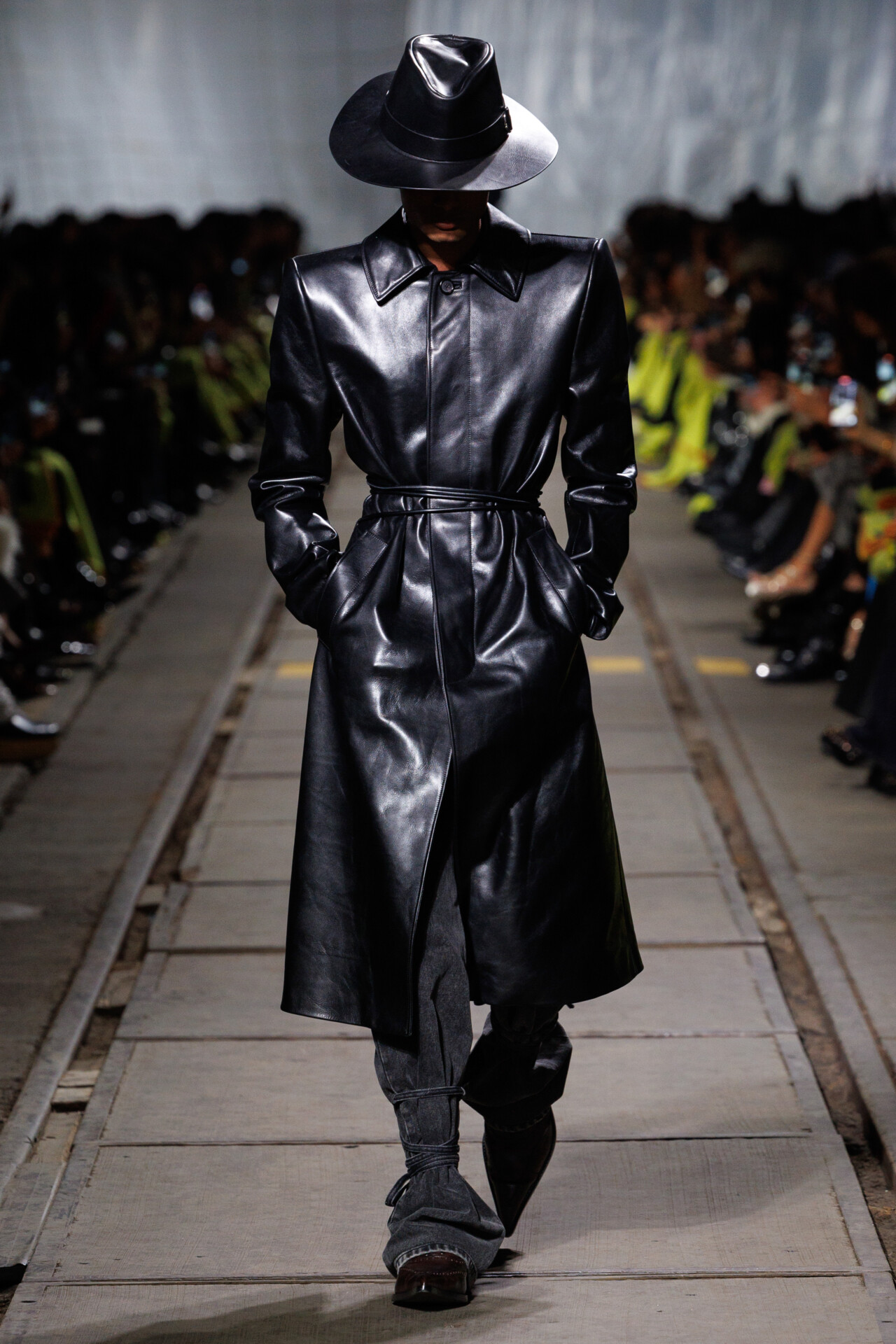
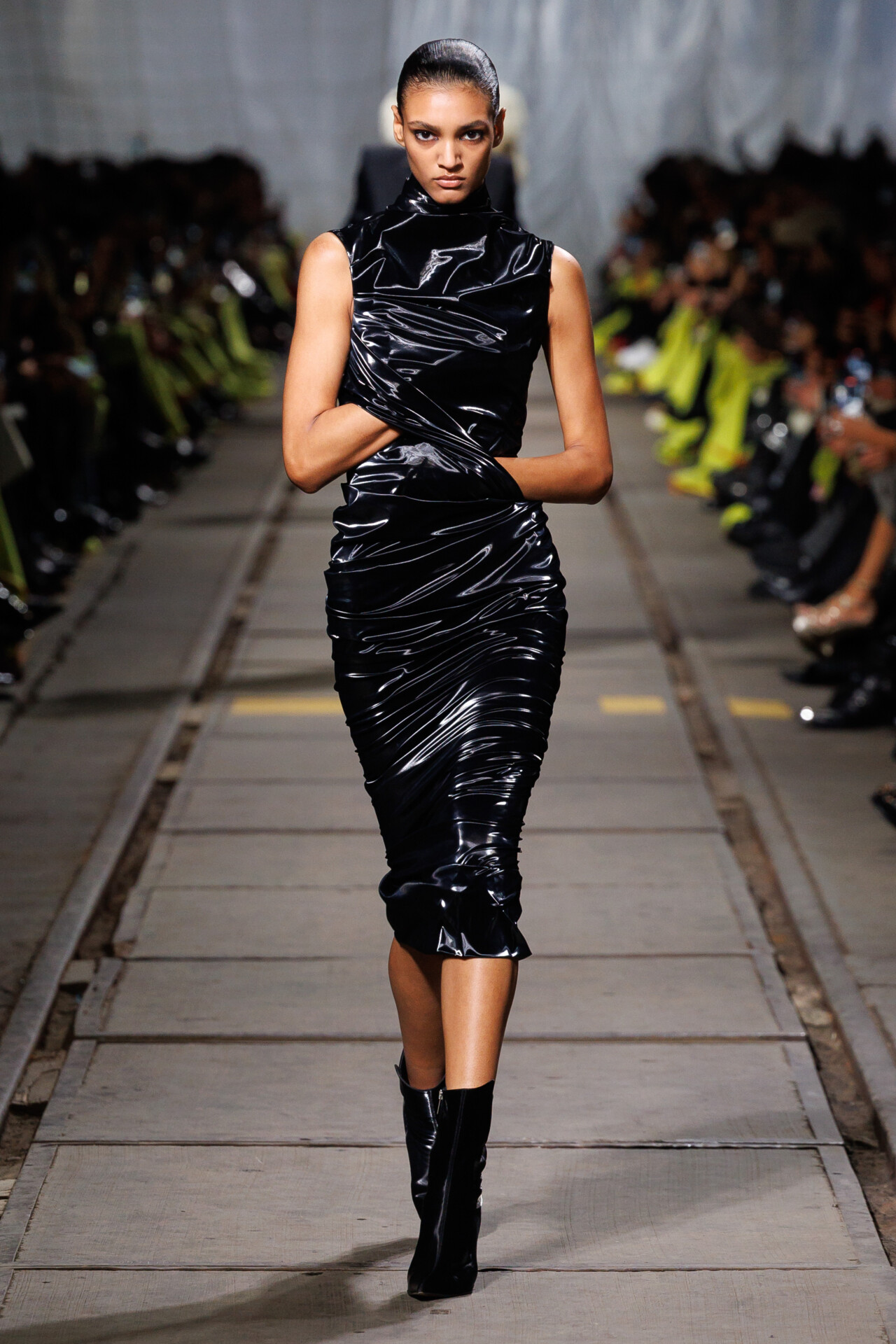
All looks Alexander McQueen Fall 2024 Ready-to-wear. Images courtesy of Alexander McQueen.
Motifs from “The Garden of Time” have already sprung up in the recent constellation of FW 24 fashion week runways in Paris, New York, and Milan. From Schiaperelli’s heavy ornamentation with golden flora and carved wooden hands to Balmain’s focus on crystalline berry clusters and hand bags filled with painted artificial fruit, an undercurrent of frozen, nontemporal life ran through many of the shows. Ferragamo und Mugler also used waxy leather pieces to make molded human sculptures and a raised breastplate dress. Cage-like metal work supported silhouettes, construction processes made visible with thick seams, and organic shapes made into accessories, contribute to a feeling of immobile, statuesque forms.
Immobility in the bodily sense signifies the purchase of time— features frozen with botox and filled to prevent wrinkles, days in bed to recover from body-reshaping surgeries, fake teeth that will stay blindingly white forever. The elements of bodily restructuring and restraining seen in the fashion world now are only indicators of the impulse to exert control over the movement of time. Negating time by way of technology and making a relic out of the organic, these trends construct an ideal for new possibilities of form.