The Invisible Space for Dreams

A rich inner world is the key to produce unique work and grow into one’s own artistry, just like the Danish fashion designer, artist, curator and musician Henrik Vibskov. Since graduating from Central Saint Martins back in 2001, he has since been establishing himself in multiple creative practices. His creativity is rooted in solitude. He believes in the power of the visual. Together with SLEEK, Vibskov talks about the magic of the night, truth in fashion and the rituals that keep him going.
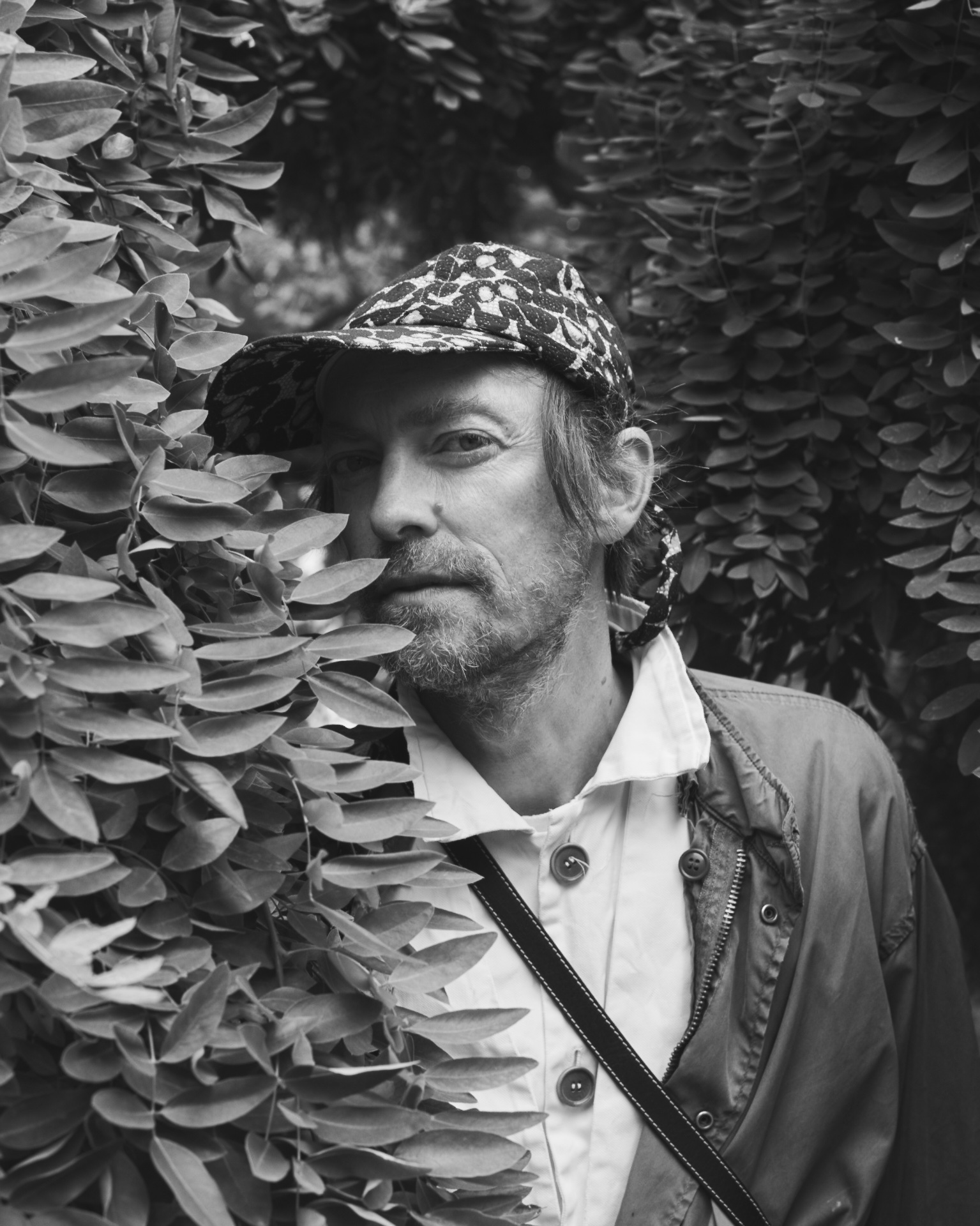
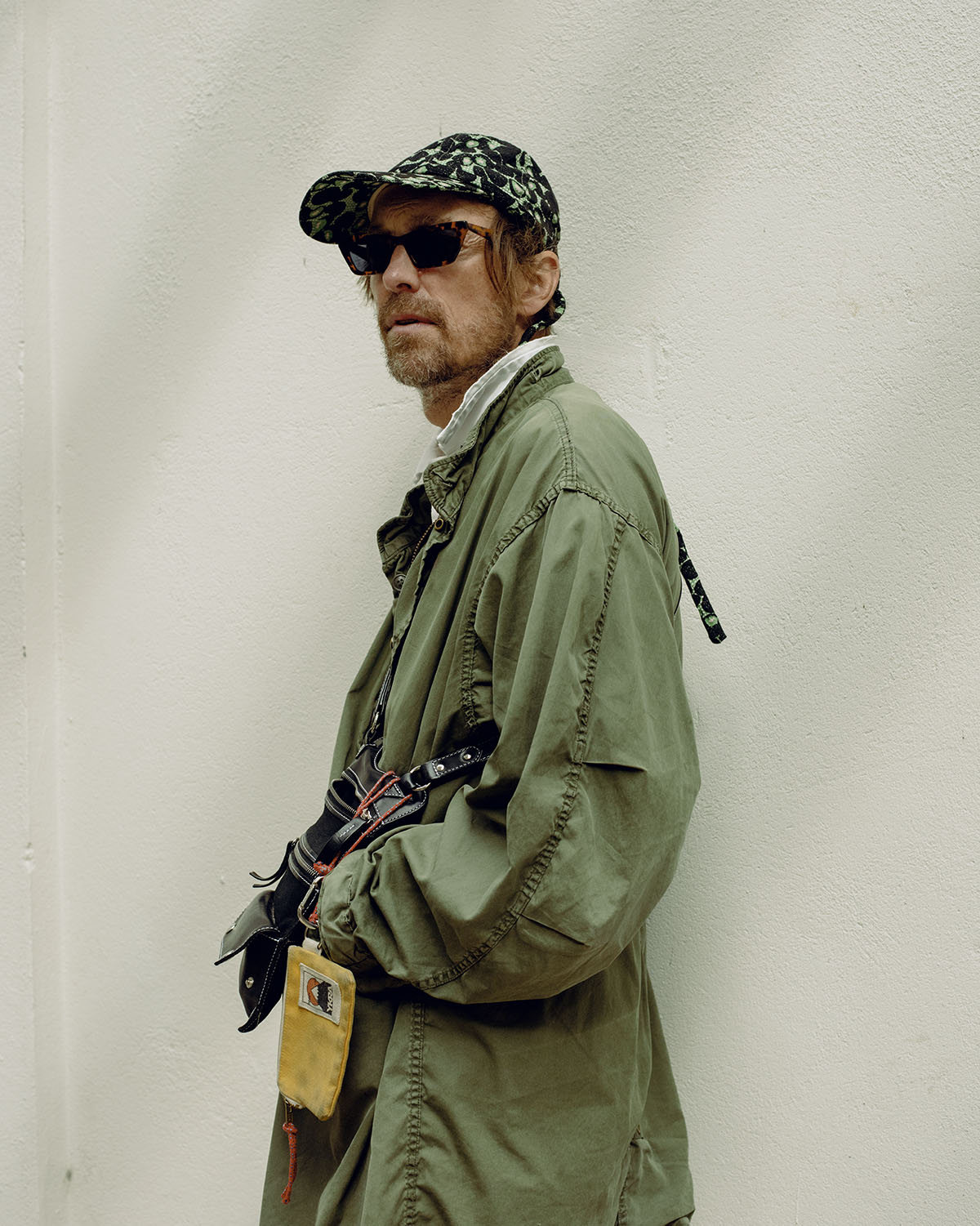
Henrik Vibskov photographed by Simon Baungård

“Nighttime is more important to me now. I need peace and time to myself to be creative,” says Danish designer Henrik Vibskov. The 48-year-old is explaining how he enjoyed being alone even as a child, a time when he would let his imagination run away with him and gain the space he needed for himself and his emotions. Solitude remains fundamental to his creativity to this day, he says, be it in his music, art, craft, or design. It lets him tackle the bigger questions in life, to reflect, challenge, and find the truth in his own creations.
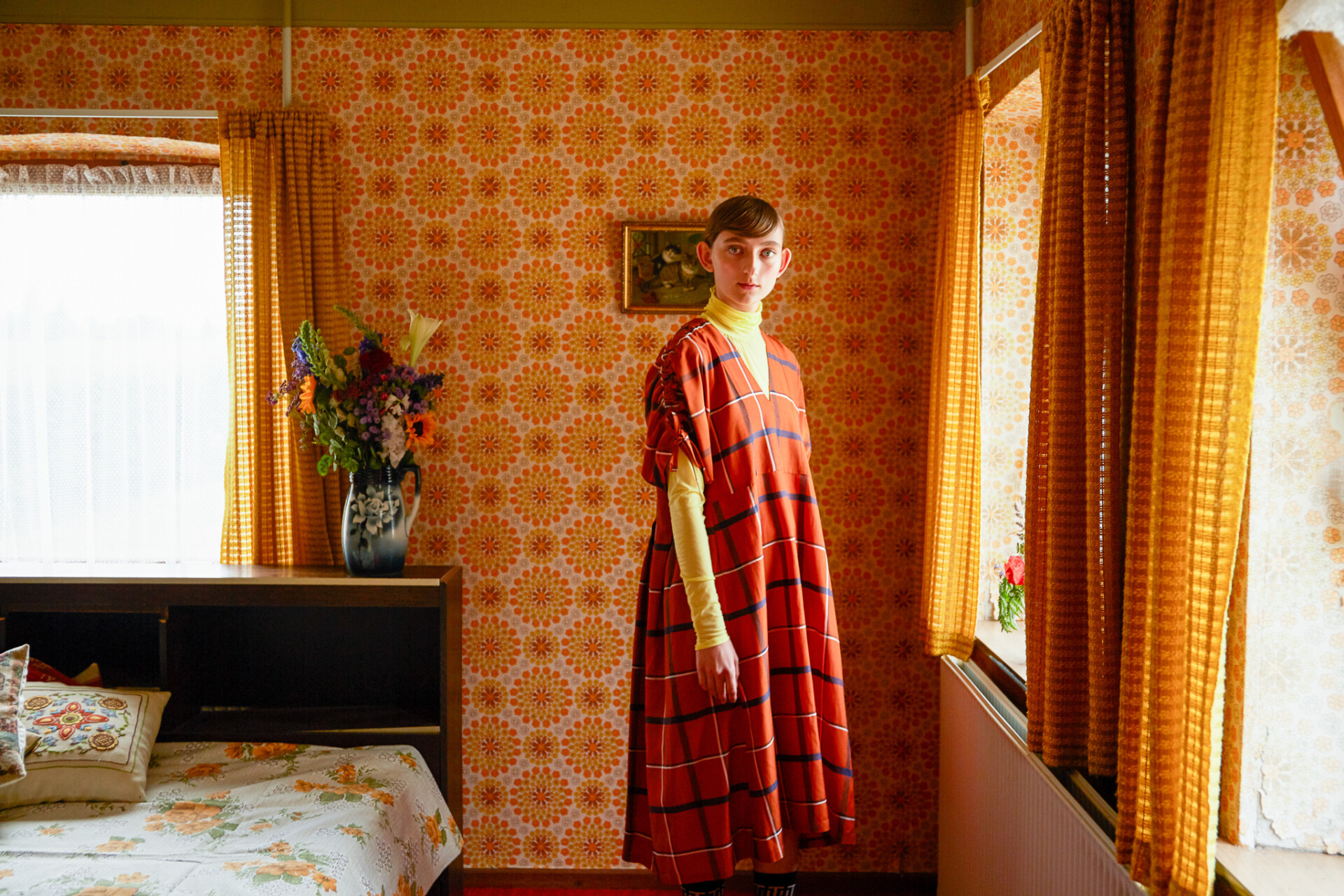
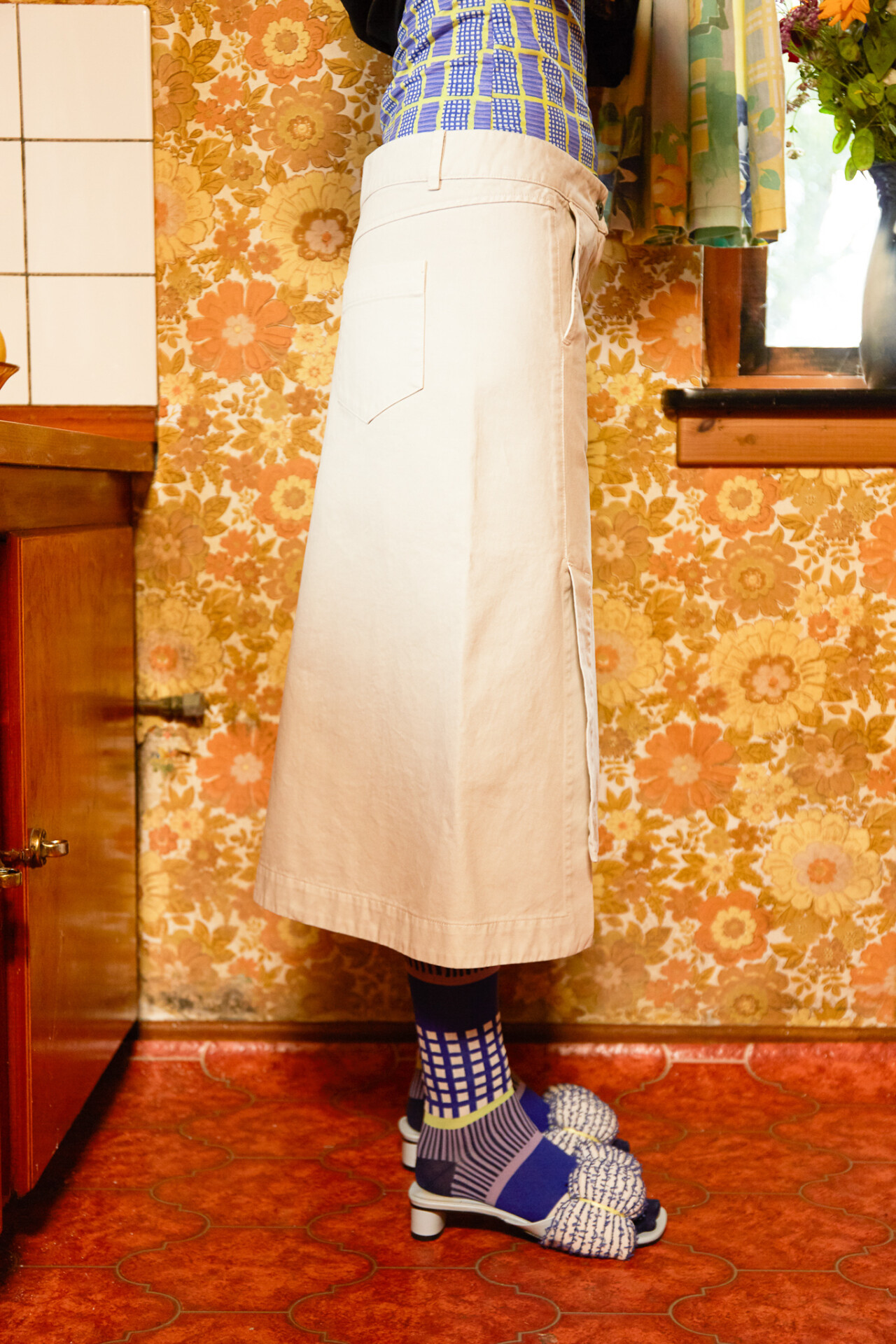
But where’s the truth in fashion design?
When Henrik graduated from London’s Central St Martins College of Art and Design back in 2001, he didn’t yet know. But today he has several ways of explaining what he has always found so fascinating about fashion. “Fashion is a form of expression,” he says. “You can be at a really loud concert and still feel attracted to someone even though it’s too noisy to talk to them. Through their expression alone; their facial expression, haircut or of course their clothes.” Clothes are a means of expression and of finding a language of your own that works beyond verbal communication. But they also have a function, the most fundamental being to clothe and protect people from the cold, dirt, or water. The mental protection they provide is also important: “A big hoodie, for instance, that covers your face can also be a form of mental protection and boundary setting.”

Image courtesy of Henrik Vibskov

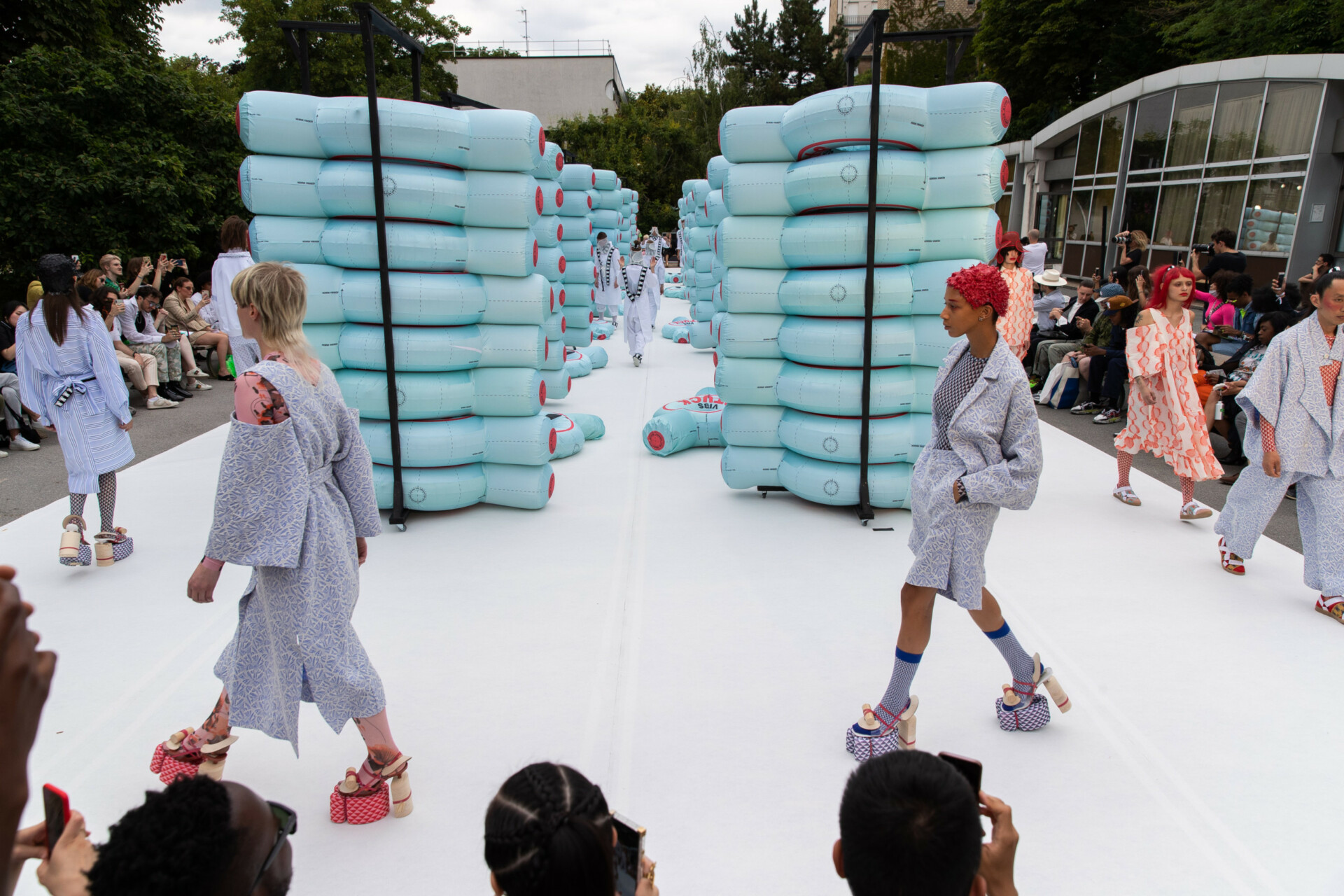
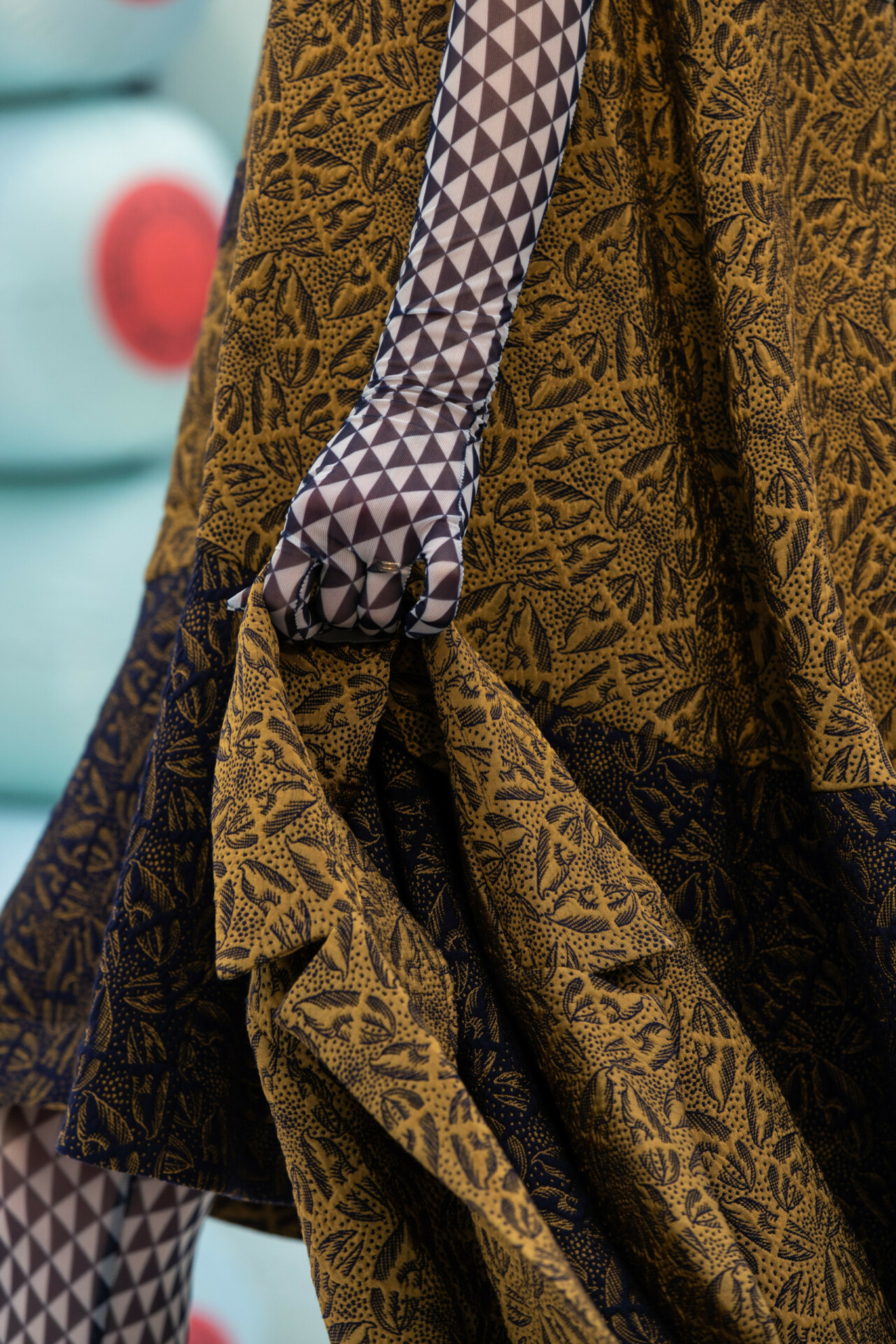
Clothes are expressions. But can they be art as well? “Sometimes,” says Henrik laconically – and somewhat indecisively. There are moments when fashion design becomes art, in the majestic one-off pieces he has created as a costume designer for the opera and theatre, perhaps, or his own fashion shows, which are often more like performance art. Instead of walking up and down the runway, his models lie on the floor, dance, or work in a factory – as is the case in his Spring/Summer 2022 show, where they stand around a round table holding handcrafted pieces of porcelain in sync with each other and in time with the ticking of the factory clock. The fact that they were wearing the latest line by Henrik Vibskov seemed almost secondary. The garments were unisex, oversized, voluminous, functional, and wearable, and so fulfilled Henrik’s demands for clothing: to do what it is supposed to do. And yet these garments – with their Vibskov-style vibrancy, prints and textures – are also a means of expression for the wearer. In our conversation, however, he is sure that first and foremost, clothes remain clothes. “And surely, that’s enough,” he adds. “I’ve had enough of the words ‘art’ and ‘artist’. Suddenly everyone’s an artist.”

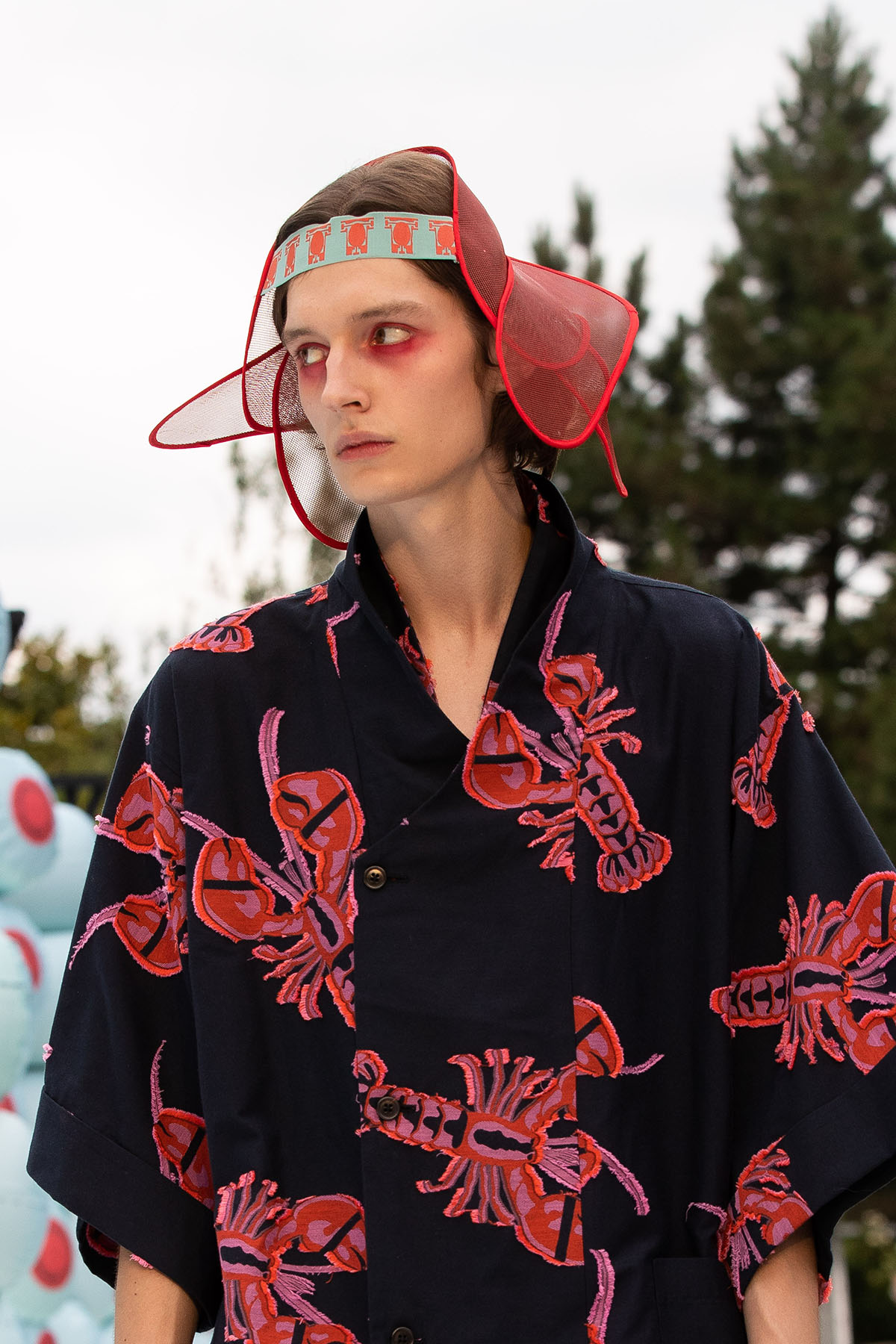
Henrik Vibskov SS20

Maybe not everything has to be art. More and more, Henrik refers to himself as a designer or craftsman. And craftwork has far too low a standing anyway – even though it’s the most honest form of art there is. It lives by creation. It’s the work and the outcome. Far too often, art is none of those things. It’s hardly ever the actual making of something. “If art is there, you can feel it,” says Henrik. Whether in a performance, a play, a ballet or an artwork, when art gets you dreaming, its goal has been achieved. When the space starts to fill with the audience’s honest feelings, reality fades and thoughts drift off into fantasies, that’s when art is there – in its full uniqueness and with all the questions it might throw up. Questions that, rather than needing answers, provide the invisible space for dreaming – just like the peaceful, solitary nights that give Henrik’s thoughts and feelings the space they need to unfurl.
Every Monday, Henrik plays the drums.
Drums have been a part of his life since the age of one – and remain an important element of it to this day. After many years in various bands, such as Luksus, he now prefers to play by himself. “Playing the drums is liberating,” he says. “Drumming – whether ritual or musical – is about pure, fundamental rhythm.” Even in waltzes. The special 3/4 rhythm of a waltz is why Henrik drums to them every Monday. He films himself doing it so he can see his own mistakes and learn to play more accurately. He holds his mobile up to the camera on his laptop to show me some of his videos. You can see him bashing the drums with all his might as waltz music plays at full blast. But he actually looks more like a conductor – Maestro Vibs – who forgets everything around him and gets completely lost in the music. He seems liberated, and moves his stick so naturally it’s almost as though he was walking or speaking. Instead he just says, “People probably think my head is full of nothing but rubbish.”

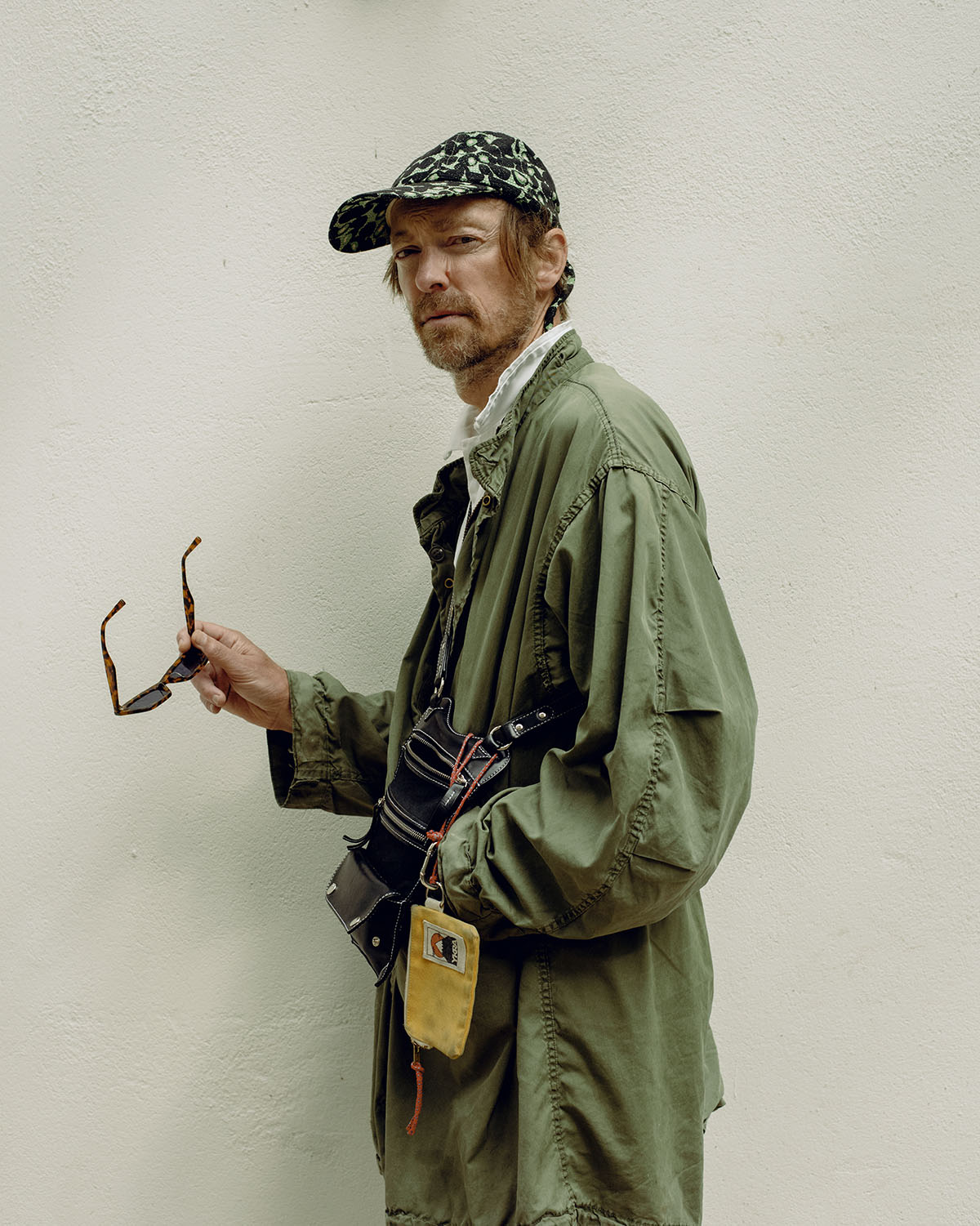
Henrik Vibskov photographed by Simon Baungård

When I see him, Henrik is actually alone, but normally he can’t do anything without an audience. “I would be lying if I said you create things purely for yourself, even if your mother is the only person in the audience.” Abraham Maslow, the famous American psychologist, and Henrik would probably have agreed on that point – because the honesty with which he speaks seems eminently compatible with Maslow’s ‘hierarchy of needs’. This theoretical psychological underpinning explains human motivation and needs, postulating that the desire for social esteem is anchored deep within us and a prerequisite for our own self-actualisation. Strength lies in balance. And in this case, balance refers to the harmony between the strength to draw from your own creative process on the one hand, and the acceptance that social recognition is part of what drives you on the other. But the search for acceptance is mainly an inner search – an acceptance of the fact that you can’t always fulfill society’s expectations. And that you fail, and that failure is a part of winning, and that experimenting is the most honest form of self-acceptance. If you don’t risk landing flat on your face from time to time, you will never find your inner truth.


When we talk about truth, you find it everywhere and nowhere. The truth in art is intangible. But Henrik’s devotion to his craft is the most honest answer to the question of where his truth lies: truth lies in creation.